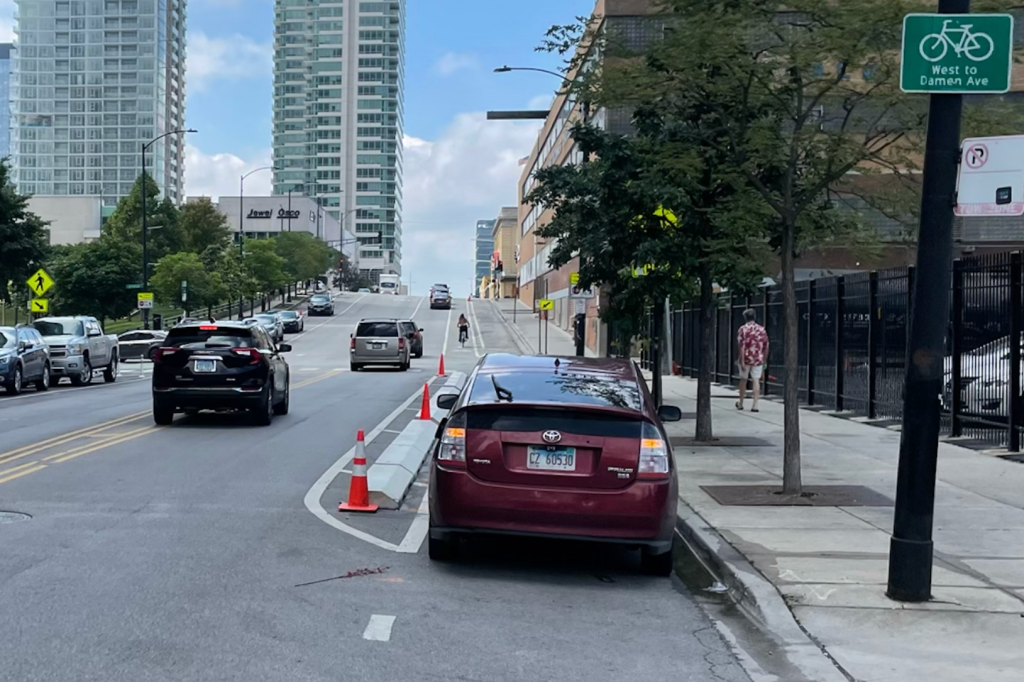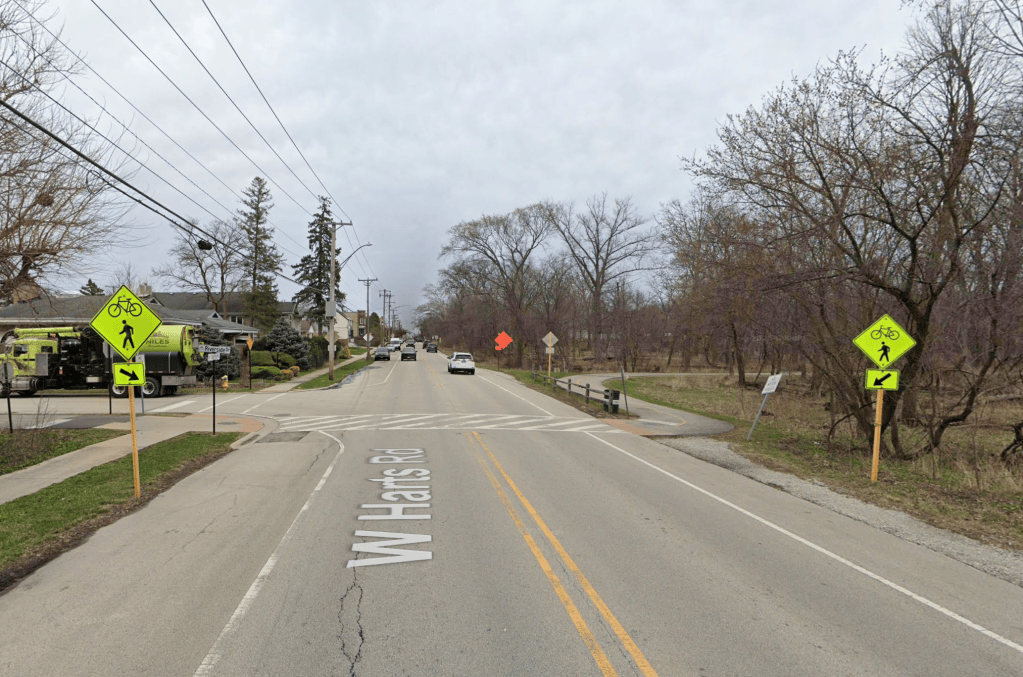
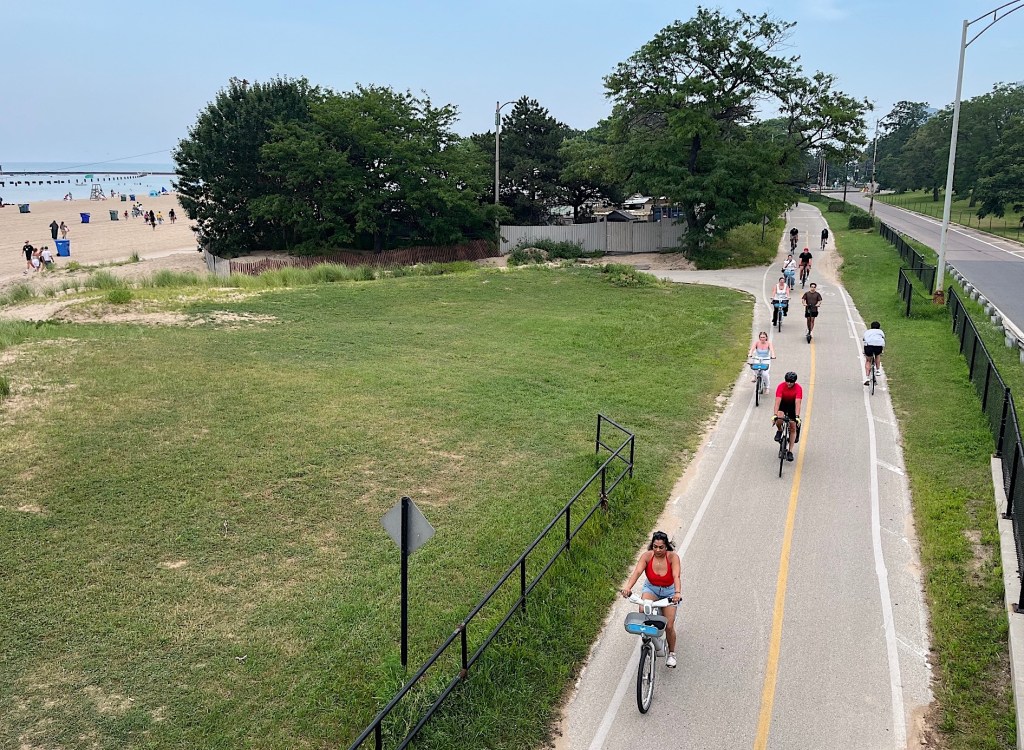
Many locals say People for Bikes rating Chicago as tied for worst was wrong. But what *should* we do to improve cycling?

Check out People For Bikes’ 2026 City Ratings report here.
Check out their 2026 ratings for Chicago here.
As I recently discussed, the Boulder-based, bike industry-funded nonprofit People for Bikes previously ranked Chicago as one of the worst U.S. cities for cycling with a population of at least 300,000 in 2020, 2021, 2022, 2023, 2024, and 2025. In this year’s PFB City Ratings study, the group really went for the brass ring by putting us in last place, tied with El Paso, out of 73 large American cities.
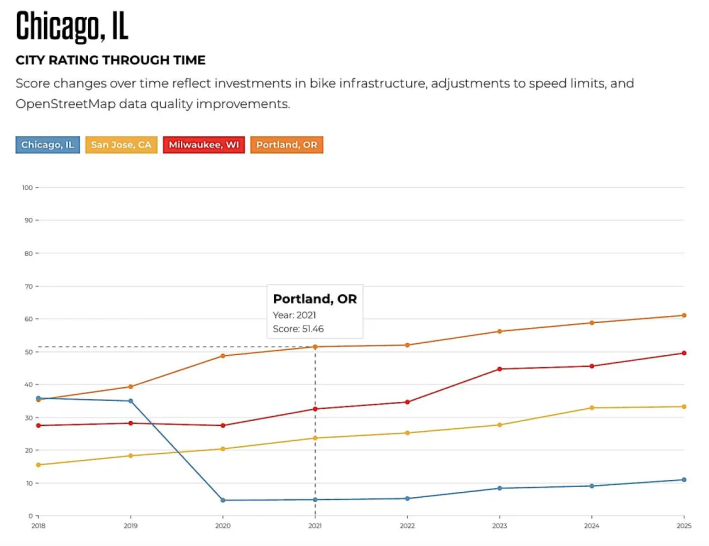
As I pointed out, this dismal position is largely due to the fact most of Chicago’s speed limit signs have a “30” printed on them, rather than a “25.” And a People for Bikes staffer once mentioned to me that if our city simply lowered the default speed limit by 5 mph (something SBC has strongly advocated for), our city would be ranked near the top of their list. That’s illustrated by this PFB chart from last year that shows how our rating plummeted in 2020 when they started giving a lot more weight to speed limits.
My recent article about this year’s rankings gave the Chicago Department of Transportation a chance to defend itself. They provided a list of recent accomplishments that have made our city more bike-friendly, ranging from surpassing 500 miles of bikeways, to setting a new a record Divvy bike-share ridership record, to distributing nearly 5,000 free bicycles to lower-income Chicagoans.
But, as promised, here are some reactions to the new People for Bikes rating of the Windy City from regular folks, collected via the SBC Facebook page.
Chicagoans weigh in on the PFB ratings
“[The 2026 PFB Chicago critique] is obviously a ridiculous rating,” commented Cynthia Hoyle on our FB post. “Yes, Chicago needs to improve its bicycle network and reduce speed limits, but the cities they ranked higher, like Nashville, or Tulsa leaves their rankings without credibility. They don’t include crashes or fatalities or even bike trips in the rankings so people’s lives don’t count, only infrastructure and speed limits. As a transportation planner of over 40 years I find their rankings ludicrous.”
“Do we really care?” responded Justyn Frank, co-owner of Jefferson Park’s Cosmic Bikes. “I’ve been cycling in Chicago (and getting thousands of people cycling in Chicago) since 1994. Some things have gotten worse. Some things have gotten better. Welcome to Planet Earth.”
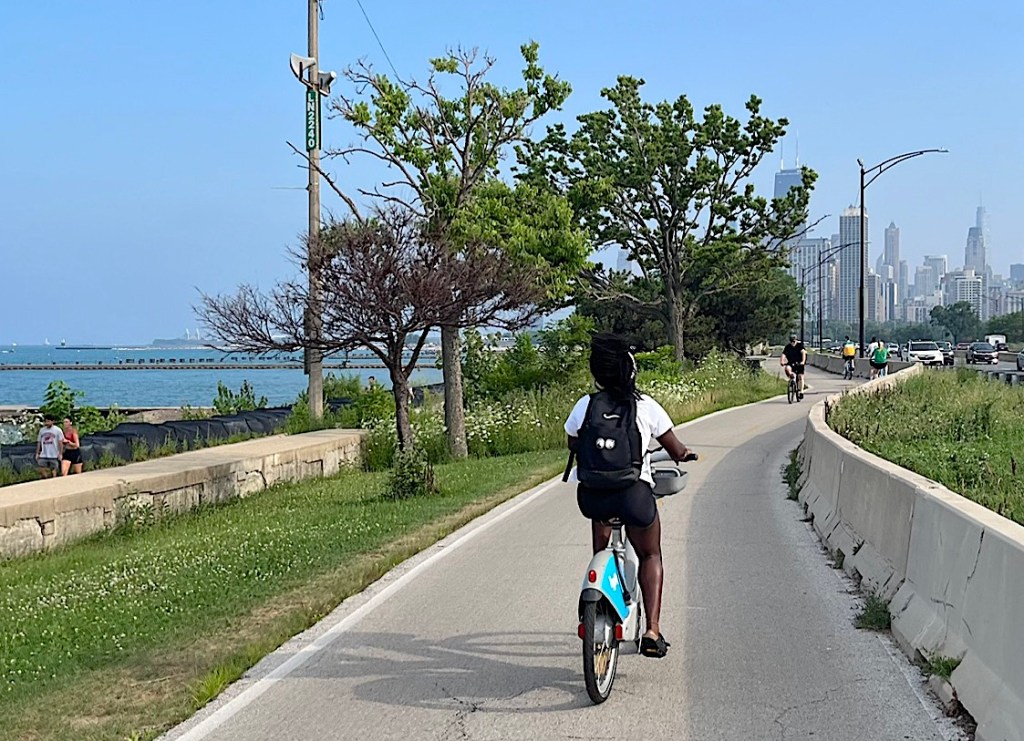
“While reducing the default speed limit is important, having this single measure be so heavily weighted in their rating system produces results that may bear little resemblance to actual riding conditions on local streets and trails,” opined “Sylvie Cat” on our FB post. “The network of bike routes, how many miles are buffered, bollard-protected, or curb-protected bike lanes and the continuity of the route network should be seriously considered. If that isn’t done, their ratings will continue to have little credibility.”
PFB does put some emphasis on the quantity and connectivity of low-stress bikeway (off-street paths, protected lanes, and traffic-calmed side street routes, aka Neighborhood Greenways). But judging from the above chart, it appears that speed limit is the main deciding factor nowadays.
“This is incredibly dumb and they should be embarrassed,” posted Kaveh Hemmat on Facebook.
“They are obviously clueless fools,” wrote Steve Magnone.
OK, that last one may be going a little overboard. But it seems like the general consensus among our readers is that People for Bikes’ atrocious rating of Windy City cycling was off-base.
Tribune readers talk about how to improve Chicago cycling
But now that that issue seems to be resolved, here’s a more important one. If Chicagoans also generally agree that our city has lots of room for improvement before it becomes a truly safe and pleasant place to ride bikes, what do we need to do make that happen?
Earlier this month, the generally car-centric Tribune opinion page was actually a great source of discussion about ways to improve Chicago cycling. Here are a few of the highlights.
“Chicago needs a connected citywide network of protected lanes, not isolated segments that disappear where riding becomes dangerous,” wrote James Pelton on Friday, July 3. “Build them in every part of the city. Maintain them year-round. Design intersections so protection continues through the places where crashes are most likely. It can be done, and this is a city that can do it.”
On Saturday, July 4, Jadie Oldfield mourned CDOT Planner Riley O’Neil, 35, who was fatally “doored” a month earlier in a paint-only bike lane on Halsted Street in Bridgeport. “What could have happened on June 5 if Riley’s route home was bike-friendly?” Oldfield asked. “What could have happened if there were concrete barriers or bollards between traffic or parking spots and where he was riding? Riley wouldn’t have been doored… He probably would have returned home safely.”
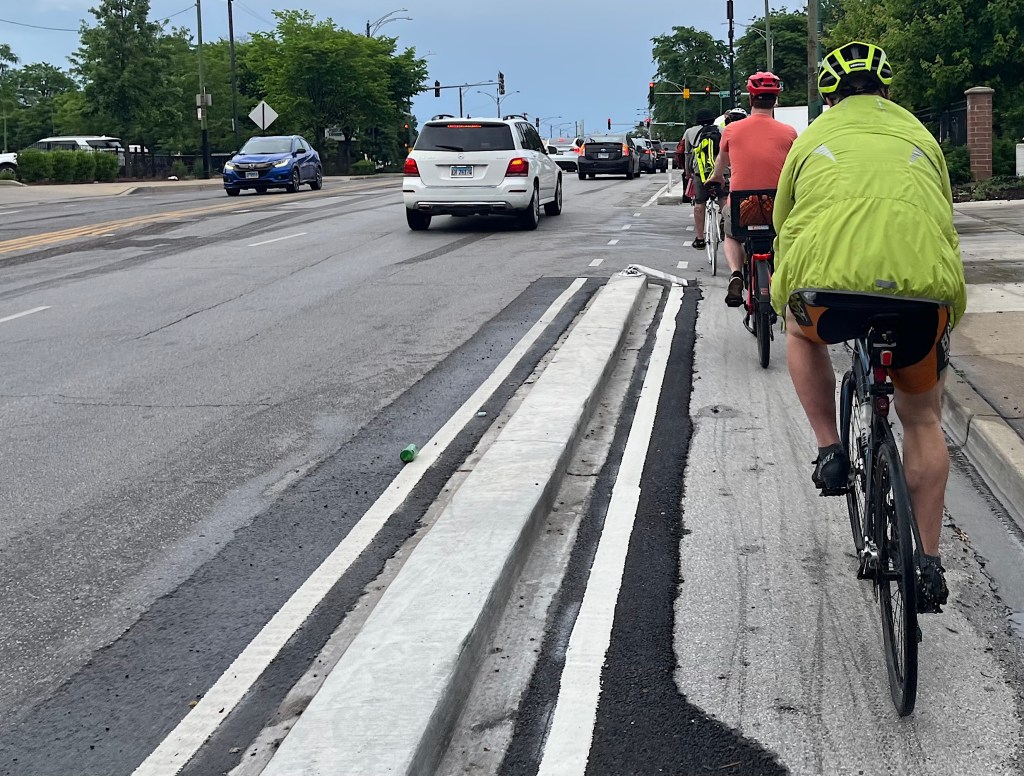
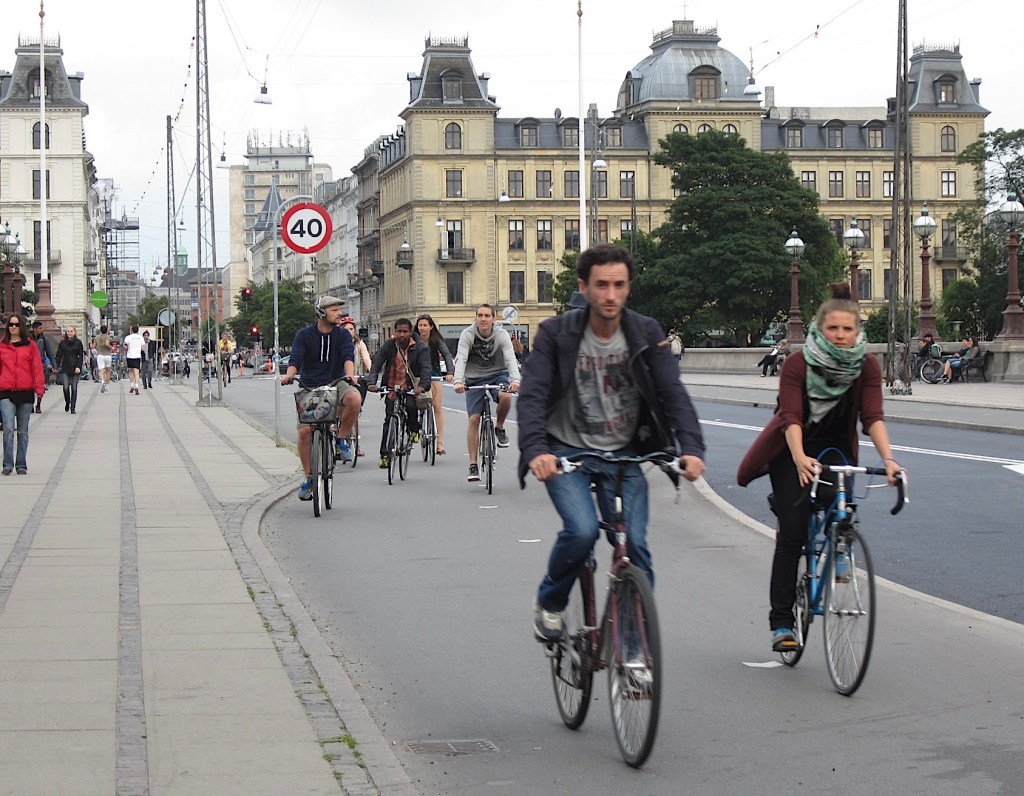
“I am sure that on many major streets [in Chicago], an accommodation for a raised bike lane would be possible and might save lives,” wrote Copenhagen native Karen E. Knutson on July 5. “The bike lane is raised a little from the street, and then the sidewalk is raised a little from the bike lane.”
“I own a car,” Benjamin Burton wrote on July 6. “I do not own a bicycle. We need more bike safety infrastructure, and drivers needs to be forced to slow down. Bike lanes, pedestrian refuge islands, traffic diverters and curb bumpouts all need to be expanded throughout the entire street system.”
“A 2024 study sponsored by the city’s Department of Transportation showed that Chicago experienced a 119 percent increase in biking citywide between fall 2019 and spring 2023, the highest growth rate among the 10 largest cities in the United States,” wrote Molly Fleck on July 7. In 2025, Chicagoans took 6.8 million trips on Divvy bikes. “What is the city willing to do to continue growing that number? Are our leaders willing to reimagine our streets as places for all kinds of transportation?”
“Chicago needs a citywide connected network of bike lanes and safe pedestrian crossings, and we won’t get one as long as every mile of it depends on a single alderman’s mood,” noted Tony Adams on July 8, the final day of the series. “Right now, aldermanic prerogative means each of the city’s 50 wards decides on its own whether to build, expand or block this infrastructure.”
These statements about how to improve Chicago cycling are all important food for thought. And that’s definitely a better use of one’s brain power than worrying too much about People for Bikes’ assessment of our city!
Check out People For Bikes’ 2026 City Ratings report here.
Check out their 2026 ratings for Chicago here.

If you appreciate Streetsblog Chicago’s livable streets reporting and advocacy, please consider making a tax-deductible donation to support our work. Thank you!

Read More:
Streetsblog has migrated to a new comment system. New commenters can register directly in the comments section of any article. Returning commenters: your previous comments and display name have been preserved, but you'll need to reclaim your account by clicking "Forgot your password?" on the sign-in form, entering your email, and following the verification link to set a new password — this is required because passwords could not be carried over during the migration. For questions, contact tips@streetsblog.org.