Current CTA board members say their farewells, approve Safe Ride Specialist and violence deescalation pilots

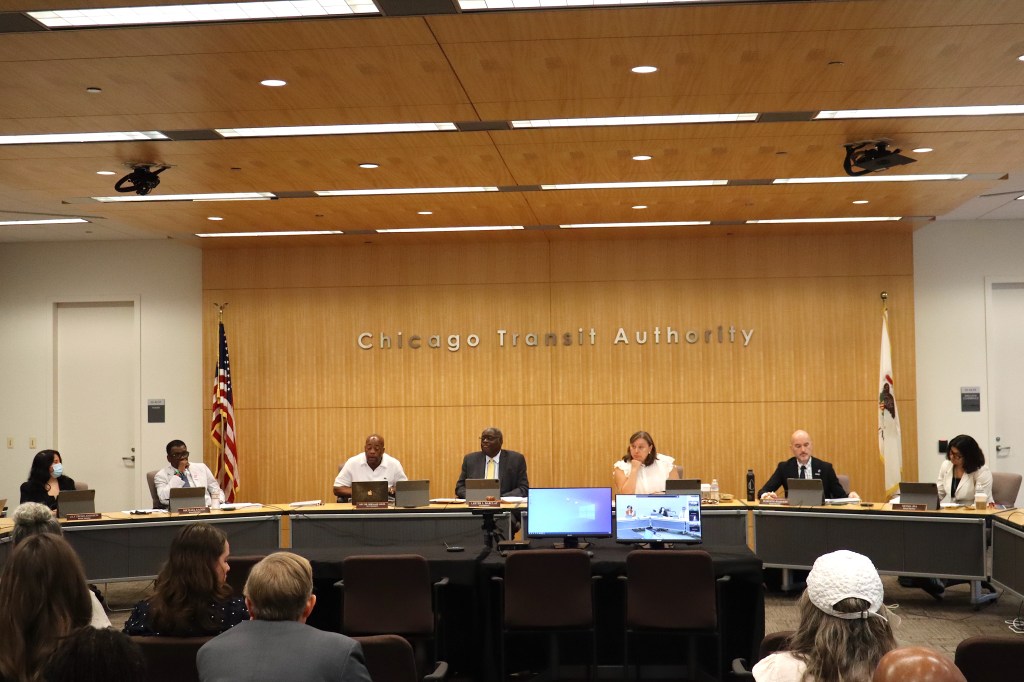

While the Chicago Transit Authority’s board isn’t going away, its August 12 monthly meeting was its last one in its current configuration.
Effective September 1, the CTA board will go from four directors nominated by Chicago mayors and three mayors chosen by Illinois governors, to three directors picked by the mayor, two tapped by the Illinois governor and two selected by the Cook County Board President. That structure that gives the suburbs CTA serves locally nominated representation for the first time, while also taking away the mayor’s narrow majority. The North American Transit Authority Act also makes some members of the new NITA board double as CTA, Metra and Pace directors.
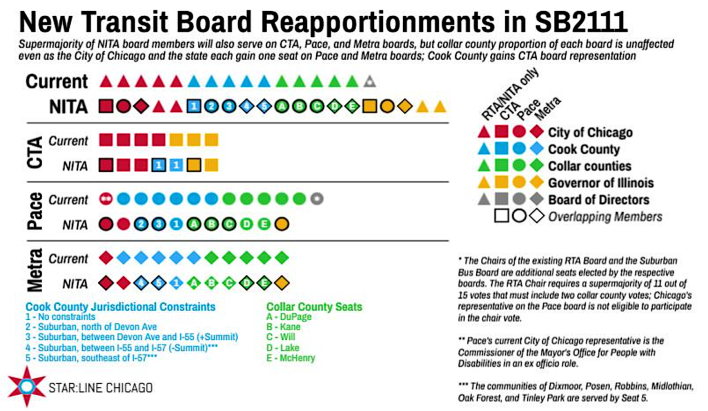
The old and new governing structures of the four Chicagoland transit agencies, as mandated by the NITA act. Image: Star:Line Chicago
To clarify, NITA isn’t replacing the current Regional Transit Authority umbrella agency. What the NITA Act did was rebranded the RTA as the NITA, changed the makeup of its governing board, and has it gradually assume more powers. Nobody on staff is getting fired just because the agency is getting a new name.
While there were plenty of reminiscences and reflections at yesterday’s meeting, there were also votes. Most notably, the board passed measures to improve outreach to riders experiencing homelessness, mental illness, and/or addiction – extending and expanding existing contracts – and approved four pilot projects to provide services and help reduce violence on parts of Blue, Green, and Red lines.
CTA outreach services votes
For the past few years, the CTA has contracted with the Chicago Department of Family and Support Services to provide outreach to riders in crisis. DFSS contracted substance use disorder and mental health treatment services organizations Haymarket Center and Thresholds to provide services on the Blue and Red lines, respectively.
During Wednesday’s meeting, the CTA Board approved a one-year contract extension with a one-year renewal option, with the transit agency paying $4.2 million a year. The directors also amended the contract to, most notably, reserve 30 shelter beds for rider use.
Board member Lily Diego-Johnson, who is legally blind, said she wants the CTA to be mindful of challenges that riders who shelter on the ‘L’ and have disabilities face, and urged the transit agency to take their needs into account.
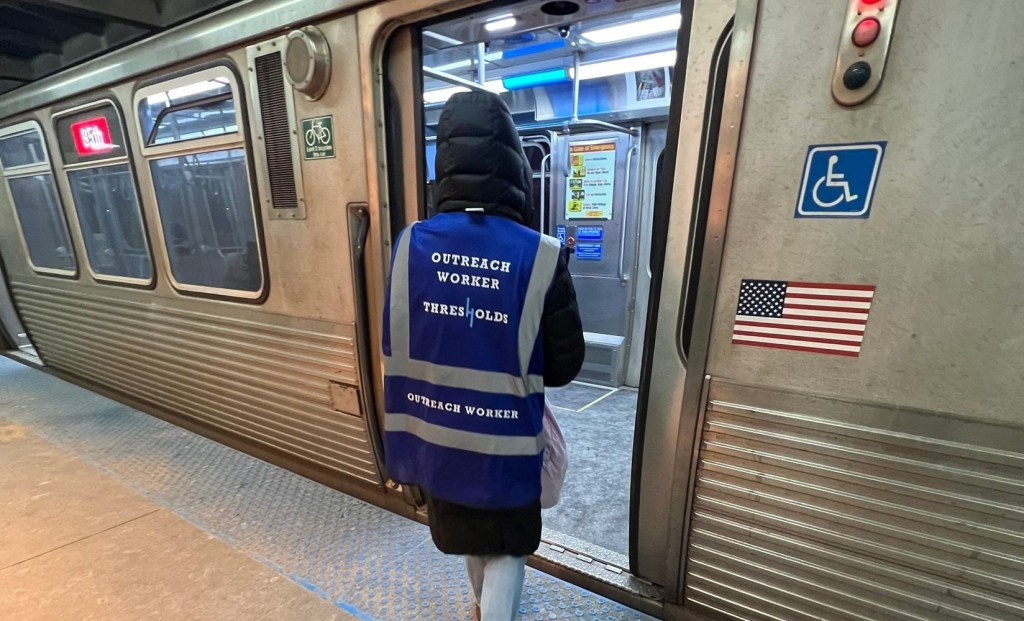
The CTA board also approved three different one-year Crisis Intervention Safe Ride Specialist pilots. The outreach workers will serve a similar function as what Haymarket and Thresholds staff are already doing, except on smaller sections of the system. According to the CTA, the pilot areas were chosen based on feedback from staff and riders, as well as proximity to supportive services.
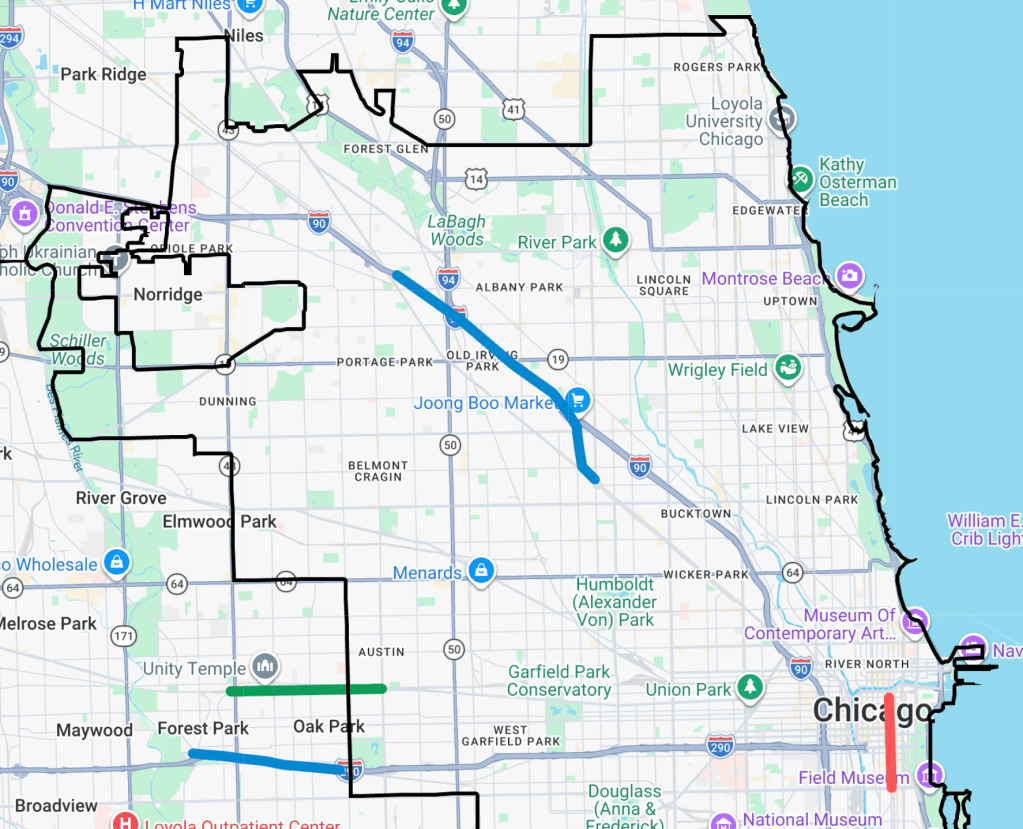
Housing Foward, a Maywood-based homelessness services organization, will get $991,087 to send teams on trains and stations on the two-mile segment of the the Green Line between Harlem/Lake and Centra stations. They will work with Loyola Street Medicine to provide services, and six beds in Housing Foward’s emergency overnight shelter in Oak Park, near Austin Station, will be reserved for any riders who are interested. The outreach workers would also help riders connect to National Alliance on Mental Illiness Chicago and Thrive Counseling Center for mental health services.
The Harlem/Lake-Central service includes Oak Park and about half of Chicago’s Austin neighborhood, with the Harlem/Lake station located at the junction of Oak Park, River Forest, and Forest Park. All three villages have historically reported a high volume of 911 calls for opioid overdoses, crimes, and mental health emergencies. It isn’t unusual to see homeless individuals take shelter at the bus stops and the passageway connecting the ‘L’ station and the Oak Park Metra station, which is located on the same embankment.
Healthcare Alternatives Systems, a West Humboldt Park based mental health services provider, got a $545,982 contract for the roughly four-mile section of the Blue Line’s O’Hare Branch between Logan Square and Jefferson Park stations. CTA Chief Innovation Officer Molly Poppe told the board that outreach workers will operate on weekdays at 9 a.m. to 5 p.m. HAS, she said, operates a Living Room facility, which provides an alternative to going to an emergency room for those experiencing a mental health crisis or who need less intensive support, near the Belmont Blue Line station.
Street Samaritans homeless services outreach program got a $1.285,081 contract to provide services on the approximately two-mile stretch of the Blue Line’s Forest Park Branch between Austin Station and the Forest Park terminal. It is the only pilot area that’s mostly outside Chicago. The providers plan to park a van at the station’s commuter lot where riders can get telehealth-style counseling services.
Forest Park Station has similar issues as the Harlem/Lake stop, which are only amplified because Forest Park is a major Pace bus hub, and the Blue Line runs 24/7. Thresholds and other service providers already do outreach and support services there, but have acknowledged that they are resource-constrained.
Finally, the board also approved a $6.679,087 community violence intervention contact with Metropolitan Family Services’ Metropolitan Peace Initiatives for the roughly mile-long section of the Red Line between the Roosevelt and Lake stations. Unlike the other four contracts, these outreach workers will focus on deescalating tense situations.
Molly Poppe said the four pilot contracts are worth a total of around $9.6 million. Most of that was set aside in the CTA’s original 2026 budget, with $2 million coming from RTA allocations of additional revenue expected to come from a recent regional sales tax increase of 25 cents per $100 purchase, as mandated by the NITA Act.
The CTA indicated that the teams will launch their outreach in September, but they didn’t provide the exact date.
Board director Pastor Michael Eaddy, whom Mayor Brandon Johnson recently re-nominated for the remixed CTA board, wondered how much follow-up there would be on the engagement efforts.
Poppe’s response echoed something I’ve heard from outreach organizations over the years: Not everyone they interact with will be ready for, or interested in, getting services right away. Successful engagement may require multiple attempts, and oftening starts with workers building trust by distributing items like hygiene supplies, photos, and harm reduction tools. “What we know is presence is key, and continuing to show up is key, and when someone is ready to [access] resources, having those resources ready in advance is key,” she said.
Discussing the violence intervention pilot, Eaddy wondered if armed security guards at stations might end up escalating situations that outreach workers are trying to defuse. CTA Chief Security Officer Joe Bird said the agency made sure everyone is on the same page about when security officers should give outreach workers space, and when they can intervene.
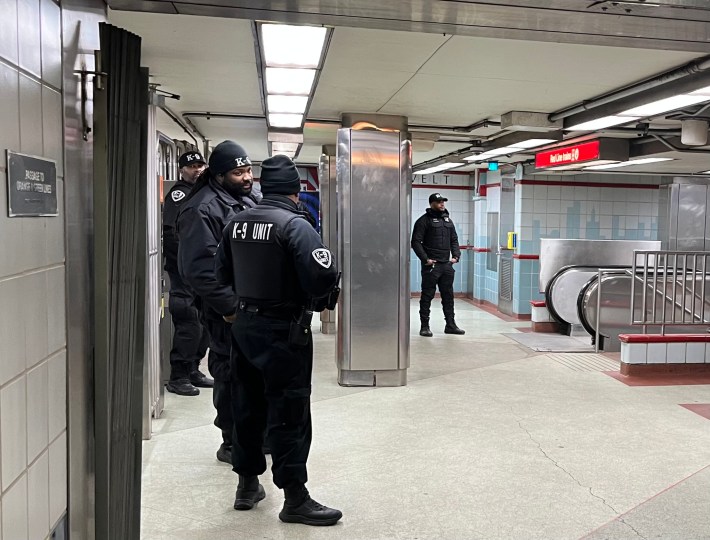
CTA Board transition
The lineup of the next CTA board hasn’t been entirely solidified. Last month Chicago’s City Council confirmed Mayor Johnson’s reappointment of Eaddy and current Board Chair Lester Barclay, despite pushback from some alders and advocates. Barclay will double as a NITA Board member. The Council also confirmed current RTA director Oswaldo Alvarez’s appointment to NITA and CTA boards, which didn’t face opposition
Cook County President Toni Preckwinkle nominated current RTA board director Thomas Kotarac to the NITA and CTA boards, and Columbia College Associate Vice President of Facilities and Construction Ann Kalayil to the CTA board. Gov. JB Pritzker hasn’t announced his picks yet.
At the end of the board meeting, Board Secretary Georgette Greenlee introduced an honorary resolution recognizing all current directors for their service.
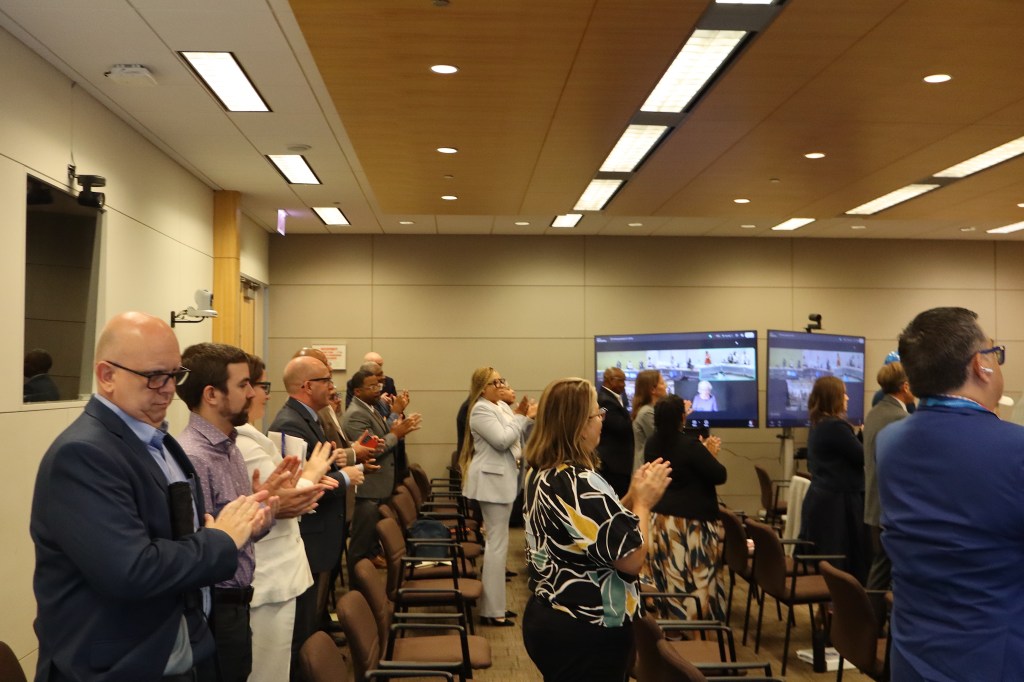
Director L. Bernard Jakes, a gubernatorial appointee, had to leave thehearing before the final farewell, but he hugged most board members (except Diego-Johnson, who was only appointed in May). Barclay recalled that when he was a summer intern at the CTA in 1979, “the gentleman who trained me said, ‘Get here on time, work hard, and someday you might just be the chairman of the board.” He added, So, 40 years later, i answered that call when the mayor [Lori Lightfoot] reached out,” he said. “I’m probably the only chair that’s worn the uniform, as I was conductor on the train one summer.”
Barclay praised the board and CTA staff for doing their parts in getting the agency through the pandemic and the threat of the fiscal cliff, while also advancing the long-awaited Red Line Extension and other projects. “To my colleagues on the board, thank you,” he said. ”Each of you brought unique experience, perspective, and commitment to public service to this board. We may not have always agreed, we do not always approach the issue from the same perspective, but to me, that is part of the value of the strong board. Our decisions are better when they are informed by a thoughtful discourse and diverse points of view.”
Board member Rosa Ortiz said several times that she was humbled to have the opportunity to serve on the board. “I couldn’t be more thankful, and grateful… to be among all of you and serve in this role,” she said.
Director Roberto Requejo reflected on the progress the CTA made in recovering ridership since he was appointed around 2.5 years ago. “We also lived through very hard moments,” he said. “For me, the hardest one was [an act of] violence in our system. I would say Labor Day will never be the same for me, the day we experienced the horrible mass shooting and killing of four of our riders.”
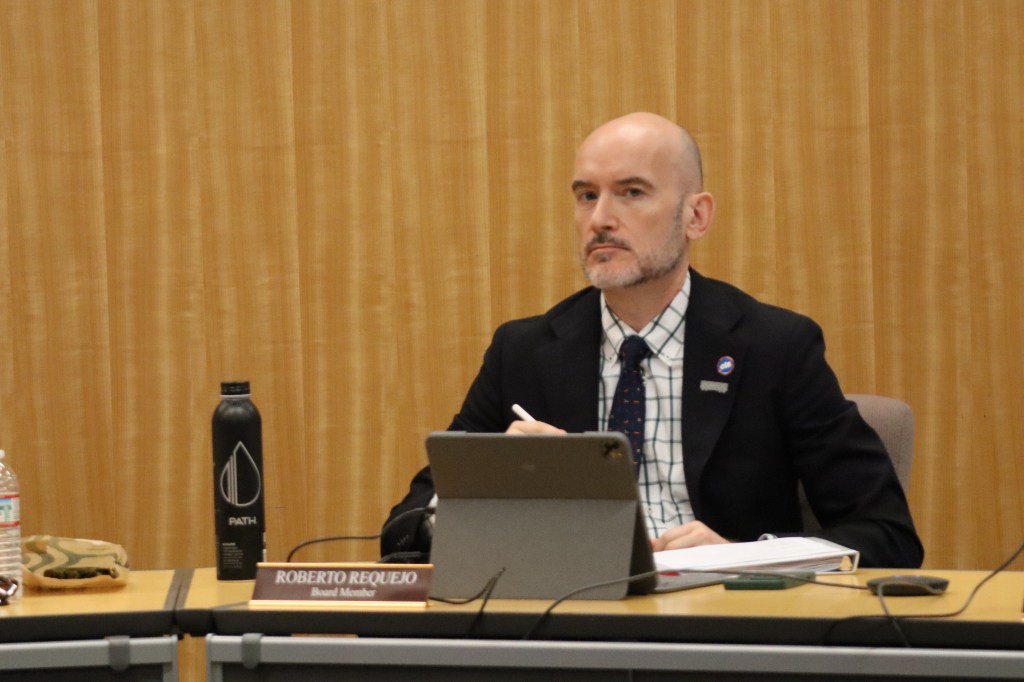
The incident, Requejo said, drove home the importance of increasing the presence of outreach teams and supportive services “beyond the binary of police and security guards.” That was something that he pushed for even before the incident, but he said it made him more determined to keep advocating for alternatives to improve safety in the system. “I’m proud of CTA for embracing this push,” he said.
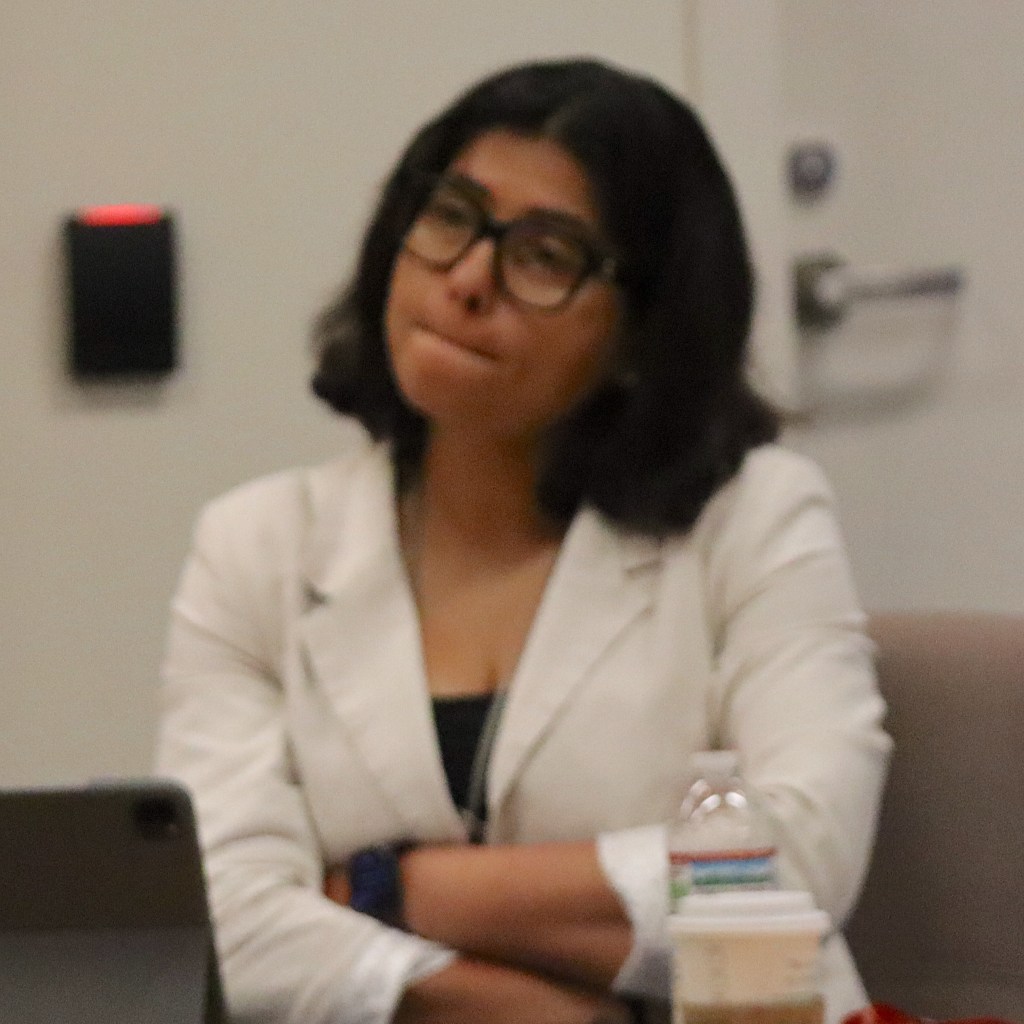
Gubernatorial appointee to the current board Neema Jha talked about how, on a recent weekend, she took the 72 North bus all the way to North Avenue Beach. While she had taken the route before, seeing first-hand how convenient the route is for reaching the beach, and watching kids get excited about going to the beach, drove home how important the CTA service is. “Happiness and joy and access – all of us deserve that,” Jha said. “Being part of this organization is something I will always carry.”
Diego-Johnson said that she appreciates that the CTA board and staff made her feel welcome and helped get her up to speed during her brief tenure. She added that she looks forward to the launch of the Safe Ride Specialist pilots, because she wants to see “non-police alternatives continue growing.” Diego-Johnson encouraged the remaining board members to look into the needs and concerns of riders with disabilities, “like maybe attending the ADA advisory committee meeting. They are really insightful.”
When Johnson first nominated Eaddy to the board in 2024, there was opposition from alders and transit advocates who noted that while he had political clout, he had little or no transit expertise. That backlash helped sink fellow West Side Pastor Ira Acree’s nomination for the RTA board.
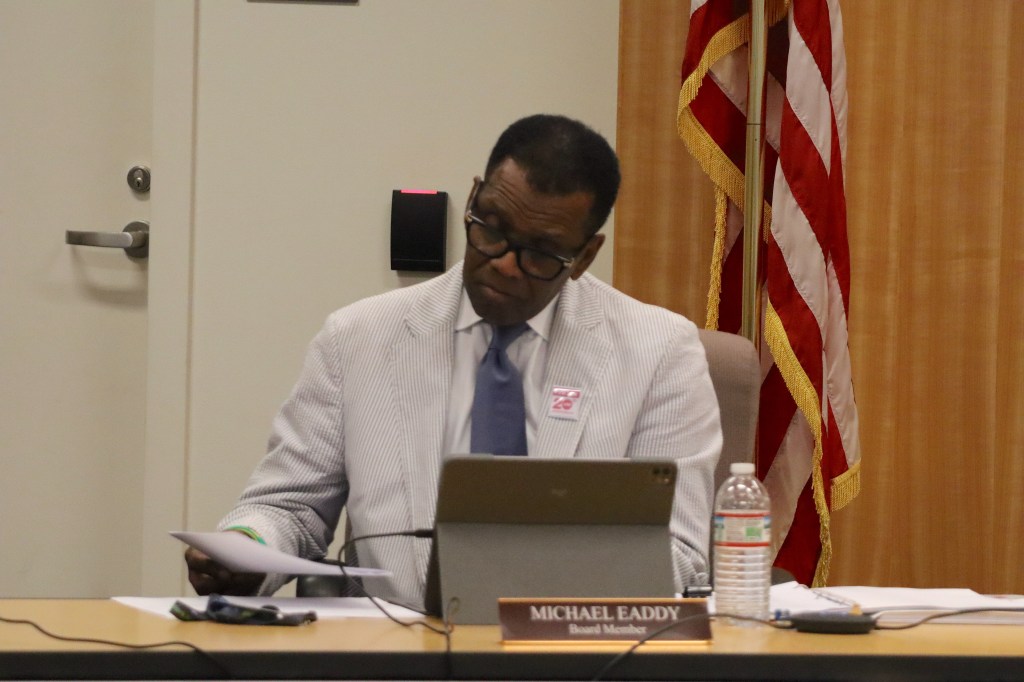
As his time with the current CTA board came to a close, and he gets ready to join the new one next month, Eaddy said he appreciates everything the staff has done, thanking several department heads and other officials by name. “It’s been a great learning experience for me,” he said. “The briefings that we received over this time have been like an institute… It has certainly allowed me to grow greatly around transportation and what it all represents. It’s been a great ride.”

If you appreciate Streetsblog Chicago’s livable streets reporting and advocacy, please consider making a tax-deductible donation to support our work. Thank you!

Streetsblog has migrated to a new comment system. New commenters can register directly in the comments section of any article. Returning commenters: your previous comments and display name have been preserved, but you'll need to reclaim your account by clicking "Forgot your password?" on the sign-in form, entering your email, and following the verification link to set a new password — this is required because passwords could not be carried over during the migration. For questions, contact tips@streetsblog.org.