How Omari Bektemba’s campaign for a more people-friendly Fullerton inspired him to run for 35th Ward alderperson

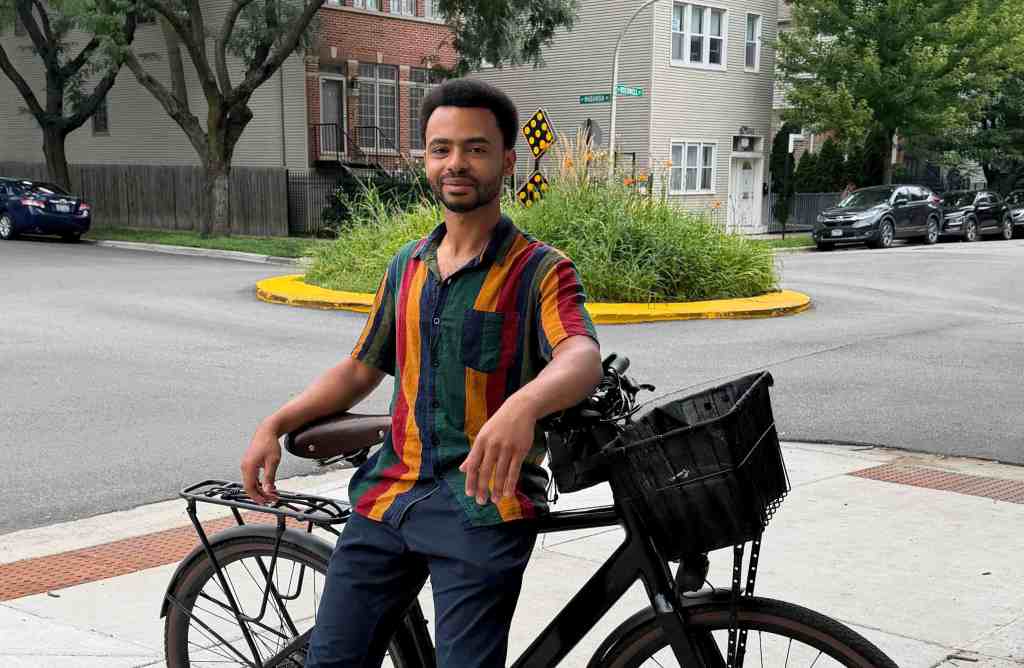

I”ve been acquainted with Omari Bektemba, 32, a senior project manager at a local affordable housing nonprofit, through the Chicago sustainable transportation advocacy and urban planning scenes for several years. He lives near Fullerton and Kimball avenues in Logan Square, and recently was involved in a Complete Streets effort to make Fullerton safer and more pleasant for all road users. He reached out to Streetsblog Chicago to discuss that experience indicating that it motivated him to run for alder of the 35th Ward – which includes parts of communities like Irving Park, Avondale, Logan Square, and Hermosa – in the February 2027 election.
(All Chicago aldermanic and mayoral hopefuls are welcome to pitch an interview or guest op-ed on walk/bike/transit and traffic safety issues to Streetsblog Chicago.)
This transcript has been lightly edited for clarity and brevity.
John Greenfield: Can you tell me in a nutshell why exactly are you running for 35th Ward alder?
OB: I’m running because I’ve been getting the sense that a lot of progressives in the city are well-intentioned and have big hearts, but are sort of missing the moment when it comes to priorities and fine details around things when it comes to transportation policy, infrastructure planning, city budgeting, and housing policy. And I think there’s room for someone who’s a strong collaborator to reach all over City Council to lots of different types of folks, find common ground, and just be efficient problem solvers for day-to-day issues that are very urgent.
[That includes] land safety issues or urgent issues that affect the long term, like our city’s debt and pension crisis, economic development, longterm impacts of climate change, and how that’s going to impact future generations of Chicagoans. So I’m looking to add a much more well-rounded approach to what’s otherwise progressive politics.
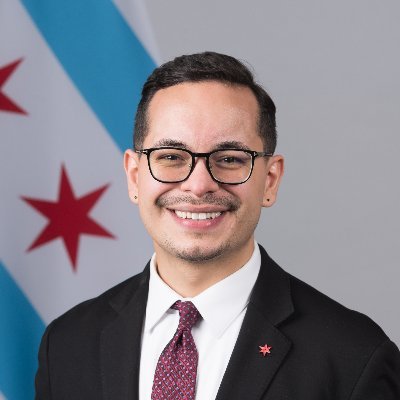
JG: So [incumbent Ald. Anthony] Quezada has been in office for what, a year or two? [He assumed office in April 2025.]
OB: Yeah, I think something like that.
JG: So he was [35th Ward neighborhood services director for former Ald. Carlos Ramirez-Rosa], who’s now the superintendent of the Chicago Park District. Carlos had a pretty good record on sustainable transportation issues. Streetsblog didn’t agree with him on everything. For example, [in June 2022] he decided not to do a robust Complete Streets project [with protected bike lanes] on Milwaukee northwest of the Logan Square circle. His thinking was that he didn’t want to convert any curbside car parking spaces because he was worried about the impact on local merchants.
But Carlos definitely got some good protected bike lanes and Complete Streets projects done in his ward. He had a lot to do with the the conversion of the Logan traffic circle. He got great protected bike lanes built on Belmont and Kedzie avenues, and some other some other streets in the ward. Disclosure: He spoke at a Streetsblog Chicago fundraiser once, where he actually opened for the singer-songwriter Jill Sobule, who tragically passed away last year.
But enough about Carlos. Let’s talk about Ald. Quezada, a guy who is probably somewhat of a disciple to Carlos. He seems to have a similar position on sustainable transportation issues. So let’s start things off on a positive note. You’re in his district. Can you tell me any things that he has done that you think were good decisions? He hasn’t been in office that long, but does anything come to mind that you could say you respect about what he’s done?
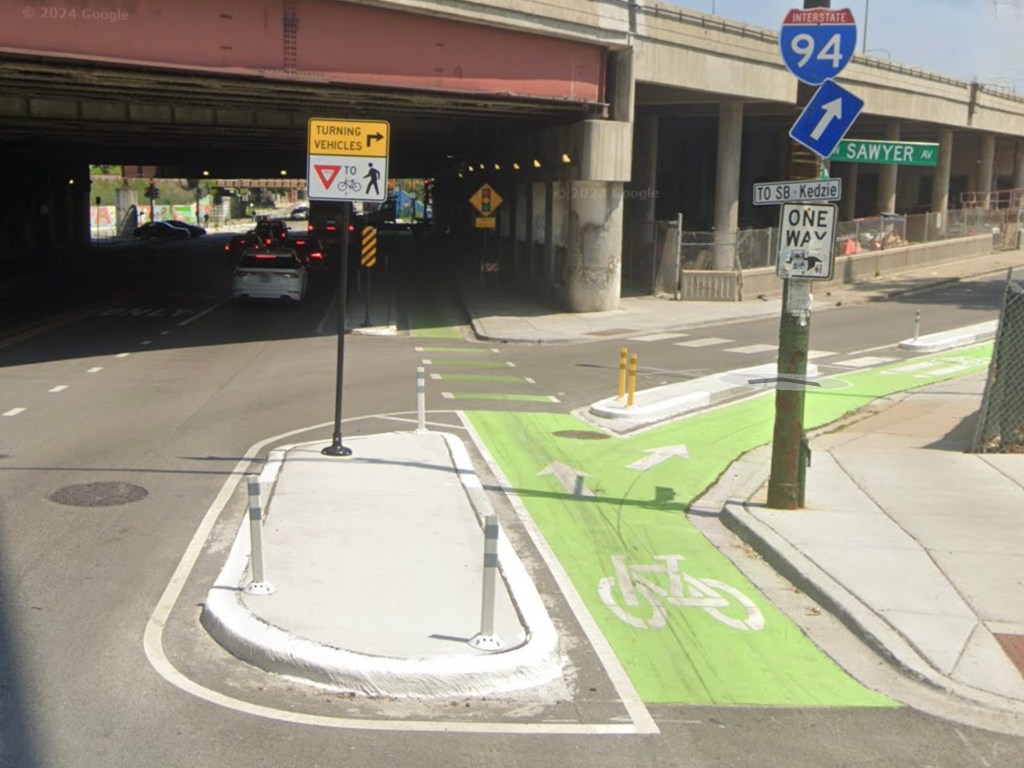
OB: Sure. I would say probably nothing new that hadn’t been in the works for a number of years through the prior alder. But but like you rightfully say, Kedzie Boulevard, north of Wrightwood Avenue, going towards Belmont Avenue, those protected bike lanes have been an improvement, as well as the the Belmont underpass where it meets Kedzie and continues north towards Addison. That’s had an impact on my ability to run errands in the neighborhood. So that’s that’s certainly been positive, for sure
JG: It sounds like the the differences that you have with the incumbent Ald. Quezada, in terms of transportation, is not that big a parting of the ways. Or is there stuff that you would say that you would do differently in terms of sustainable transportation and safe streets than Ald. Quezada is currently doing?
OB: No, I think I can offer a lot more leadership and attention to detail when it comes to specific transportation improvements. When you live in a neighborhood like Logan Square, and which includes a street like Milwaukee Avenue, that already has had a long-standing population of folks who are are cyclists and advocates, and certainly make up a certain portion of the voter base, it certainly makes sense politically to keep them at least somewhat at peace. You can’t ignore these folks.
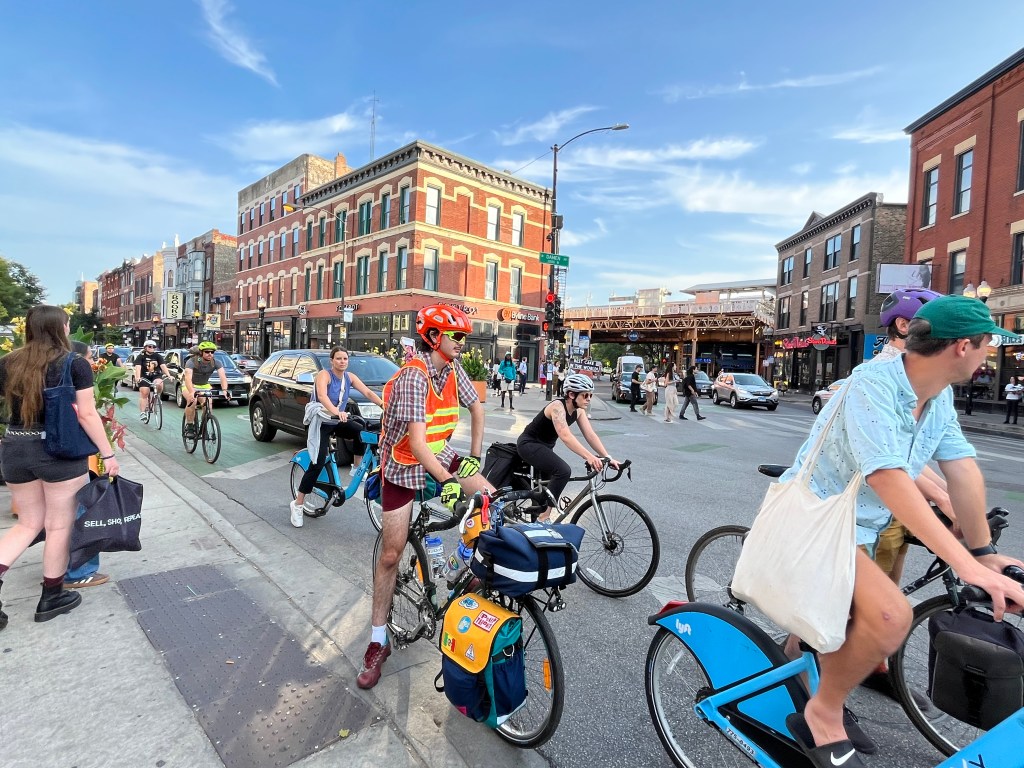
But when I when I travel even close by like the 1st Ward [represented by Ald. Daniel La Spata, chair of the Council’s Pedestrian and Traffic Safety Committee], and I see contraflow bike lanes and and bump-outs on certain streets, especially around where I used to teach at Goethe Elementary. When I’m up in the 47th Ward [represented by Ald. Matt Martin] or 48th ward [represented by Ald. Leni Manaa Hoppenworth], 47th especially, I think has been a gold standard over the last eight years or so, including difficult, controversial projects too, including some that have removed parking. But also with an eye for detail and making important connections, whether that’s to Metra stations, CTA hubs. So I think there is a lot of room for improvement.
And you mentioned Milwaukee Avenue going northwest from the Logan Square Monument intersection. It’s obviously quite a bit different on the other side. Once you get a little bit further south parking’s only on one side of the street. It’s a bit easier there in this lower density, I guess, politically a lift. But stepping back in an urban planning lens, it’s natural to be concerned about small businesses who rely to some extent on easy car access during the day, with customers who just do not have the habit of walking super far from their cars. However, when there’s clearly underutilized and underzoned lots all over the ward, those are opportunities to add shared parking facilities.
I think there is a development going on further south in Bucktown on Milwaukee Avenue, where developers proposed a mixed-use development where a certain percentage is private parking, but some of it’s public. It’s just such a more efficient land use, and it achieves the goal of giving people easy access to parking and being able to support local businesses. So I think things like that are probably the ultimate goal. It’s a bit more challenging. You have to collaborate with more stakeholders, but I think it’s a much better long-term solution. And I think we’ve also seen that some of the data that [the Chicago Department of Transportation] has rolled out in the past few months, talking about the positive effects that cycling infrastructure has had on small business communities.
So there is definitely a certain amount of time it takes for once the infrastructure goes in for people to know about it, get comfortable using it, see how it fixes and their daily machines and habits, etc., before you start to get that critical mass of riders, and then eventually patrons to stores. And my sense is that every summer in Chicago, you’re seeing even more casual cyclists, who will ride in spring, summer, and great weather, often to concerts or street festivals, etc., who don’t ride year round. Every year, you’re getting a little bit more people riding, and then the infrastructure continues to justify itself. So it does take a little bit longer for people to get used to that infrastructure.
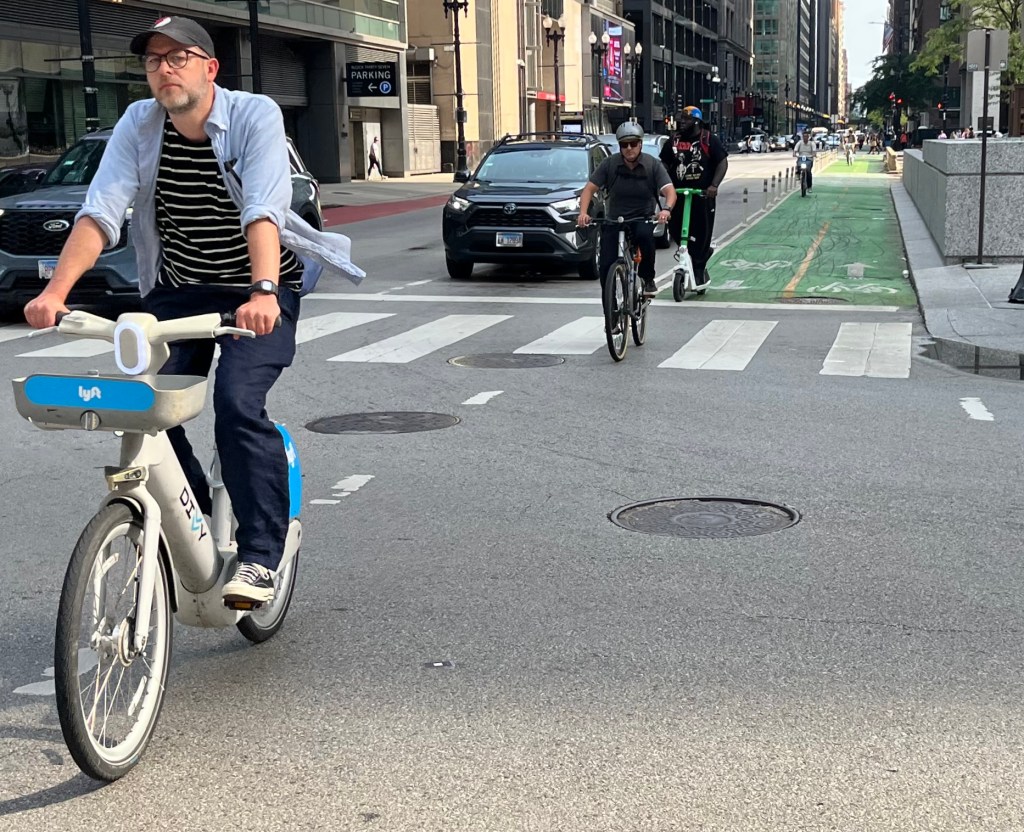
JG: I was just up checking out the e-scooter geofencing up at the end of the north end of the Lakefront Trail up at Ardmore Avenue and Sheridan Road recently and tons of bike and scooter riders were coming off the trail. It was perfect biking weather. But it does seem like things are booming. I’d love to see some bike counts from CDOT.
I agree with you that 47th Ward has really done a good job with sustainable transportation stuff. Tragically, I was just I was just spreading the word about a fatal e-scooter / truck crash that happened in his ward, around Belle Plaine and Western avenues. (The victim was Alex Blacio, 16.) It was a very sad case. It was a 16 year old boy, and I don’t know if he was aware of safe bike and scooter routes around there. Berteau Avenue is an east west street a block north of there that’s good, low traffic street that I believe is signalized at Western.
So anyway, one good thing that Martin did in terms of parking and housing and transit-friendliness was there was a parking lot across the street from the Western Avenue Brown Line station in Lincoln Square. He built an an all-affordable building, and then it’s got public parking on the first couple of floors. So that that helped cool people off who were upset about losing a parking lot. So that that sounds like a good way forward, combining public parking with housing, ideally with plenty of affordable housing.
So you’ve talked about some of some of the things you’d like to do in terms of sustainable transportation. Anything else you want to add about that or traffic safety?
OB: You mentioned the crash of the teenager with the scooter, and I heard you say lyou don’t know if he was aware of safer routes. That’s the end goal when it comes to Complete Streets design and design that’s friendly for for everybody. It takes a good amount of knowledge and experience to be able to ride in the City of Chicago comfortably, which is to say, you really have to know which routes and which particular intersections, especially around underpasses, over highways, or on bridges. These kinds of things can be super limiting, and you know when people say, “Oh, they can just ride on the side streets,” well, that’s fine for a couple blocks until you get to a major intersection that doesn’t have a signal for you. So the end goal is that the casual riders can ride a bike as comfortably as they would feel driving a car or walking across the street.
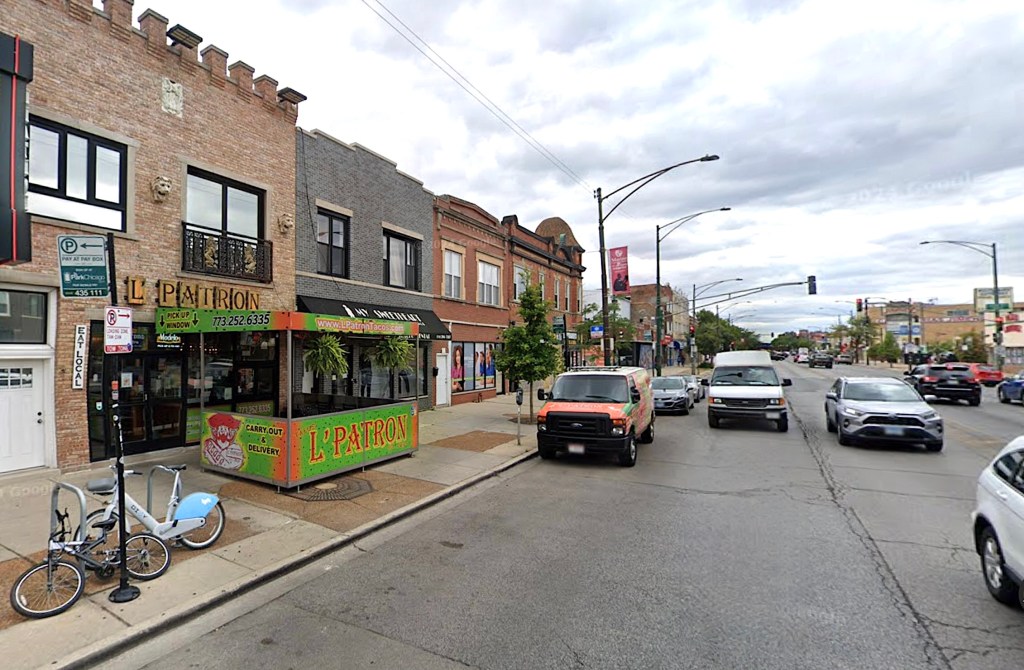
I live on Fullerton Avenue, and Fullerton in Logan Square is a horrendous road. It’s terribly outdated. You could have built the same roadway in 1950. This was actually something I tried to engage with Ald. Ramirez-Rosa about, and I spent the better part of the year trying to organize because when I went to his office and said, “Fullerton is such a dividing point in the neighborhood. It affects people’s behaviors. People choose not to patronize businesses on the other side of Fullerton, or they choose not to run a route for exercise because it crosses Fullerton. Have you folks looked into Fullerton specifically? Have you engaged CDOT? Have you done community planning processes?”
And the answer was no. And when I said, “Hey, how can we get the ball rolling on this?”, the former alder said,”Go out and do the work, go build a coalition, and come back to me, and then we can start talking about that.”
So I spent the better part of the year organizing with people in 35, some folks in the 1st Ward. I think I contacted the chamber of commerce and I told them, “This is a foot traffic and economic development issue because. People don’t hang out and patronize multiple businesses if it feels physically unsafe to be on that street. And Diversey Avenue is another streets like that, and Western Avenue and Pulaski Road.
And I got sort of a small but important group of of stakeholders. And I got a verbal sign from the ward, like, “Yes, we’re interested in this, we’ll study it.” And then I found out after the fact that it’s a County-controlled road. I didn’t realize County-controlled any roads. And so Quezada was the Cook County Commissioner for that area of Fullerton, and so again I spent multiple months coordinating with him and his staff about what we could do to at least start a visioning. I’m not asking to spend all this money, and we don’t know how to spend it, etc. But at least let’s start at least a community visioning session and study the street. And you study the street, studying the the weaknesses, the strengths, etc.
What that resulted in was just a bunch of intermittent emails over the course of months saying, “Oh, there might be there might be CDOT funding coming, but we’re not sure about it. So check in in a couple months.” And “Oh, actually, there’s an arterial resurfacing project, so we might wait for that. So it was a lot of hemming and hawing. And so today, if you go out on Fullerton, you’ll notice that they are repaving the roadway, and I assume as part of the arterial resurfacing program. And when I talk about collaborating and having the bigger picture in mind, and in terms of long-term planning – I’m sure you know this – it’s so much more cost-effective to make roadway upgrades when you’re already doing major infrastructure projects like resurfacing or underground utilities.
So whenever the next time neighbors want to look at Fullerton to do Complete Streets improvements – unless we wait for the next time we have to repave the whole roadway – we’ll inevitably be paying a significant amount more to do those improvements, unless we try to plan it a little bit better now. That was certainly a sticking point for me, where I felt disappointed in local leadership.
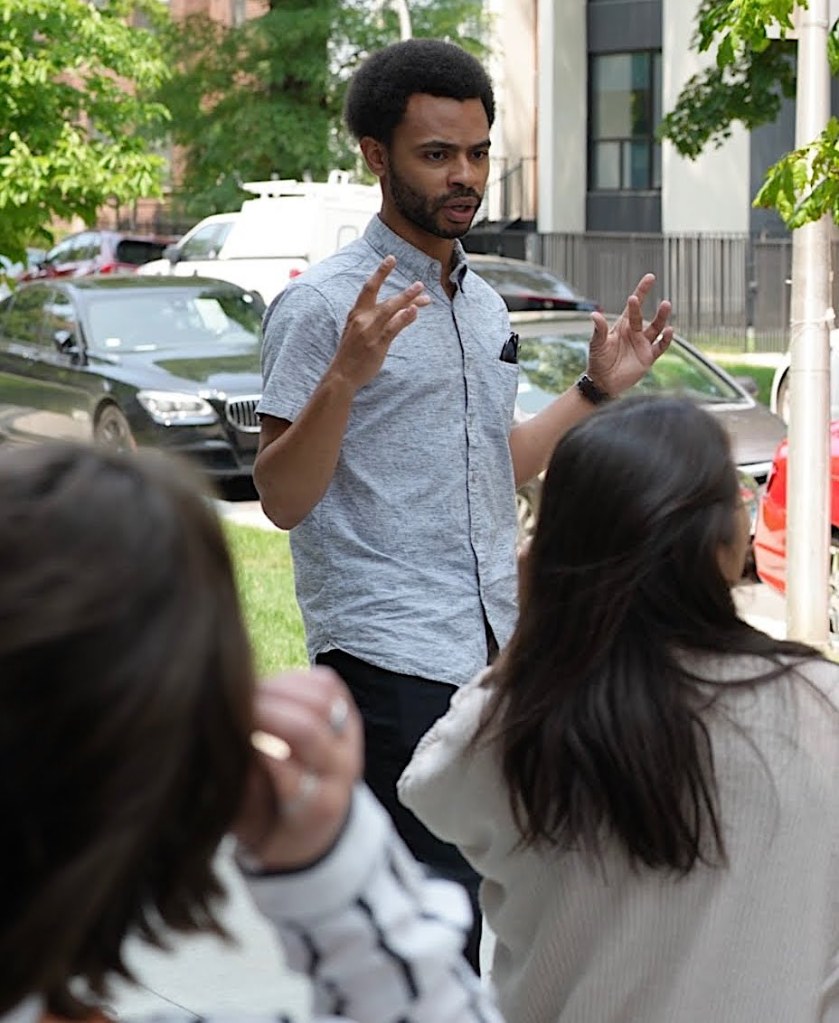
But in terms of pedestrian and bike infrastructure, I’m particularly concerned for legacy, largely Latin American-owned, businesses on Fullerton. I would say starting west of Central Park Avenue. We all know that as gentrification continues to go from east and west, people get priced out of Logan. They move to Hermosa, etc. Development starts moving that way. We know for sure that those legacy businesses on Fullerton, are going to have a much harder time keeping their lights on through gentrification than if we were supporting them today with better infrastructure that encourages the current residents to go out and explore their neighborhood more and patronize more local businesses. So that’s kind of these areas where transportation and economic development and having like robust communities that can withstand forces of displacement is where they intersect.
JG: That seems like a good place to wrap things up. But is there anything important that you didn’t get to say?
OB: Just lastly, in terms of transportation planning, the emphasis really ought to be on schools, train stations, and what should eventually be bus rapid transit stations in terms of where to put bike and pedestrian infrastructure as like an end destination. I always say, specifically for schools, we could totally make a huge impact on rush hour traffic jams if our roadways were safe enough, where even just half the CPS kids felt comfortable walking and biking to school. But, again, you have these big intersections like Fullerton, etc. Not only would you have major traffic improvements, you’d free up parents to have much more flexibility in terms of their work schedule, etc. They don’t have to get their kids to school at times that can often conflict with their work schedule, and have to make difficult decisions on these sorts of things.
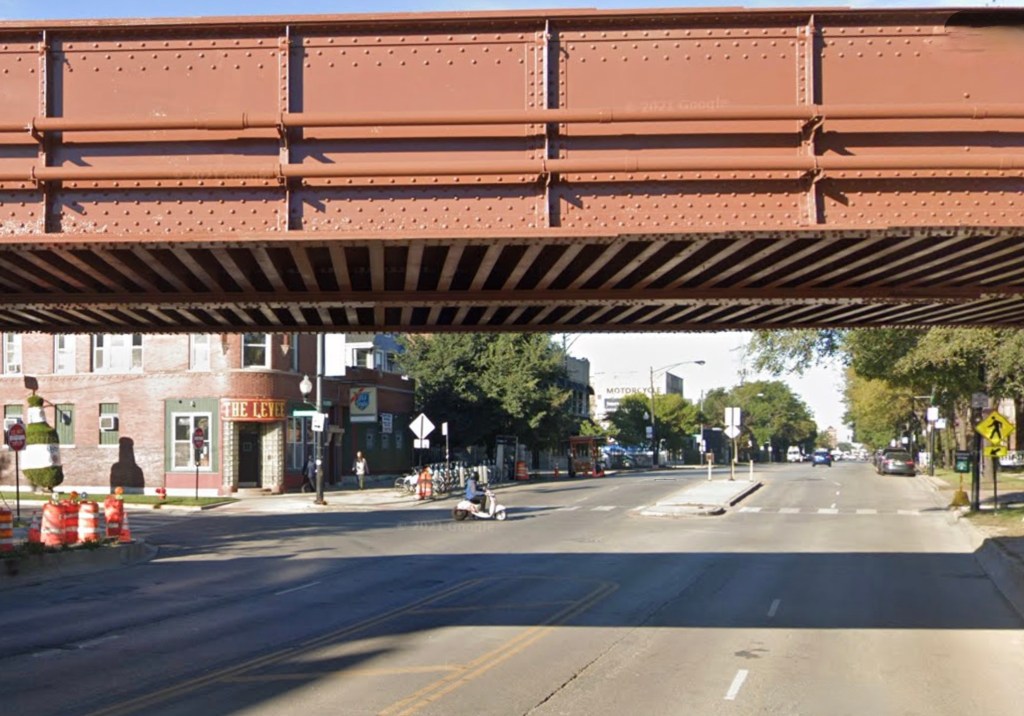
And the same thing with train stations. Last time I was on Fullerton during the week, maybe around 8 p.m., I was surprised at how many people I saw after dark riding their bikes on Fullerton, either in the street or on the sidewalks. And it’s right by the Healy Metra station. It’s kind of on the edge of our ward. Seeing stuff like that, it’s clear the demand is there. And when you have a roadway as wide as Fullerton, clearly there’s space for it, and there needs to be a comprehensive way to view these roadways for the long way, for the long term.

If you appreciate Streetsblog Chicago’s livable streets reporting and advocacy, please consider making a tax-deductible donation to support our work. Thank you!

Read More:
Streetsblog has migrated to a new comment system. New commenters can register directly in the comments section of any article. Returning commenters: your previous comments and display name have been preserved, but you'll need to reclaim your account by clicking "Forgot your password?" on the sign-in form, entering your email, and following the verification link to set a new password — this is required because passwords could not be carried over during the migration. For questions, contact tips@streetsblog.org.