Op-ed from mayoral candidate Joe Holberg: “Chicago deserves a safe, clean CTA. Here are five commonsense solutions from a daily rider.”

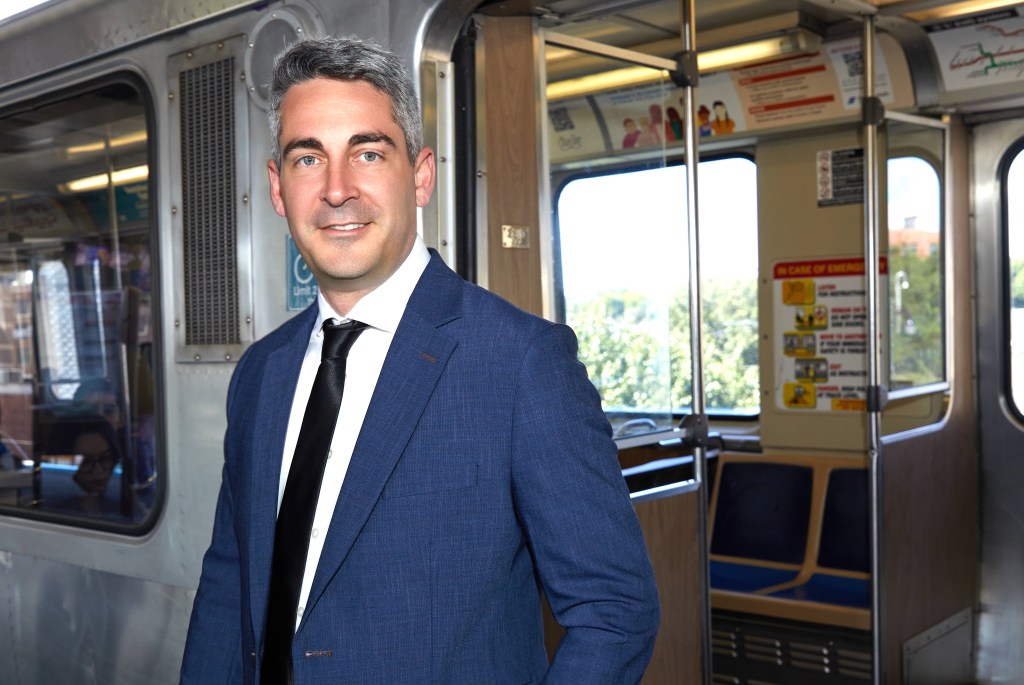
Other mayoral hopefuls are welcome to submit statements of up to 1,200 words on sustainable transportation and traffic safety issues to Streetsblog Chicago for possible publication. As guest op-eds, these pieces will not necessarily reflect the viewpoints of SBC staff. To learn more about Joe Holberg, you can check out his campaign website and Wikipedia page.
The CTA has been failing Chicago’s residents, commuters, and visitors.
Last year, aggravated assaults and batteries on the system hit a 24-year high, with nearly 2,900 crimes reported at CTA stations and platforms, almost double the rate of a decade ago.
Last week, Acting CTA President Nora Leerhsen stated that, according to Chicago Police Department data, in June 2026 major crime on the system was down 45 percent in comparison to June of the previous year. However, last month, the Cook County Sheriff’s Police reported fare evasion rates of 80 to 90 percent on some CTA lines, which is highly troubling.
The response to these challenges from Mayor Brandon Johnson administration has followed a predictable pattern: deny, deflect, and minimize. A woman was set on fire on a Blue Line train in November 2025, and that December, the Federal Transit Administration rejected the CTA’s initial “security surge plan” response.
(The CTA submitted a “Revised Security Enhancement Plan” in March, and the FTA acknowledged receipt of the document. – John Greenfield, editor.)
“Violence continues to be a challenge on the CTA, but progress has been made,” Mayor Johnson told CBS Chicago last January, not long after the FTA had turned down the transit agency’s original proposal. “There’s more work to be done. No one is patting themselves on the back.” Later in the interview he told the network, “These incidents certainly provide us with that much more motivation to ensure that there’s a holistic approach,” referring to efforts such as providing more affordable housing and job opportunities.
But that offers little comfort to anyone waiting alone on a platform after dark. You don’t need a report to understand the problem. Hop on any train, at any time of day, in any direction. Cigarettes and cannabis are smoked openly in cars next to strollers and the elderly. Customers switch between ‘L’ cars or bail at stations to avoid unruly riders. The smell and the anxiety have become as much a part of the CTA experience as service delays.
I ride the CTA every day. Like millions of Chicagoans, I’ve witnessed screaming commuters, and trash and human waste on floors, seats, and windows. I’ve seen riders moving freely between railcars hawking goods, drinking openly, harassing fellow passengers, and committing acts of violence. The problems range from annoying to life-threatening, and they are accelerating. What I’m proposing isn’t based on “holistic approaches” or costly studies. These are commonsense solutions that work in practice in cities across the country, and they can be implemented now.
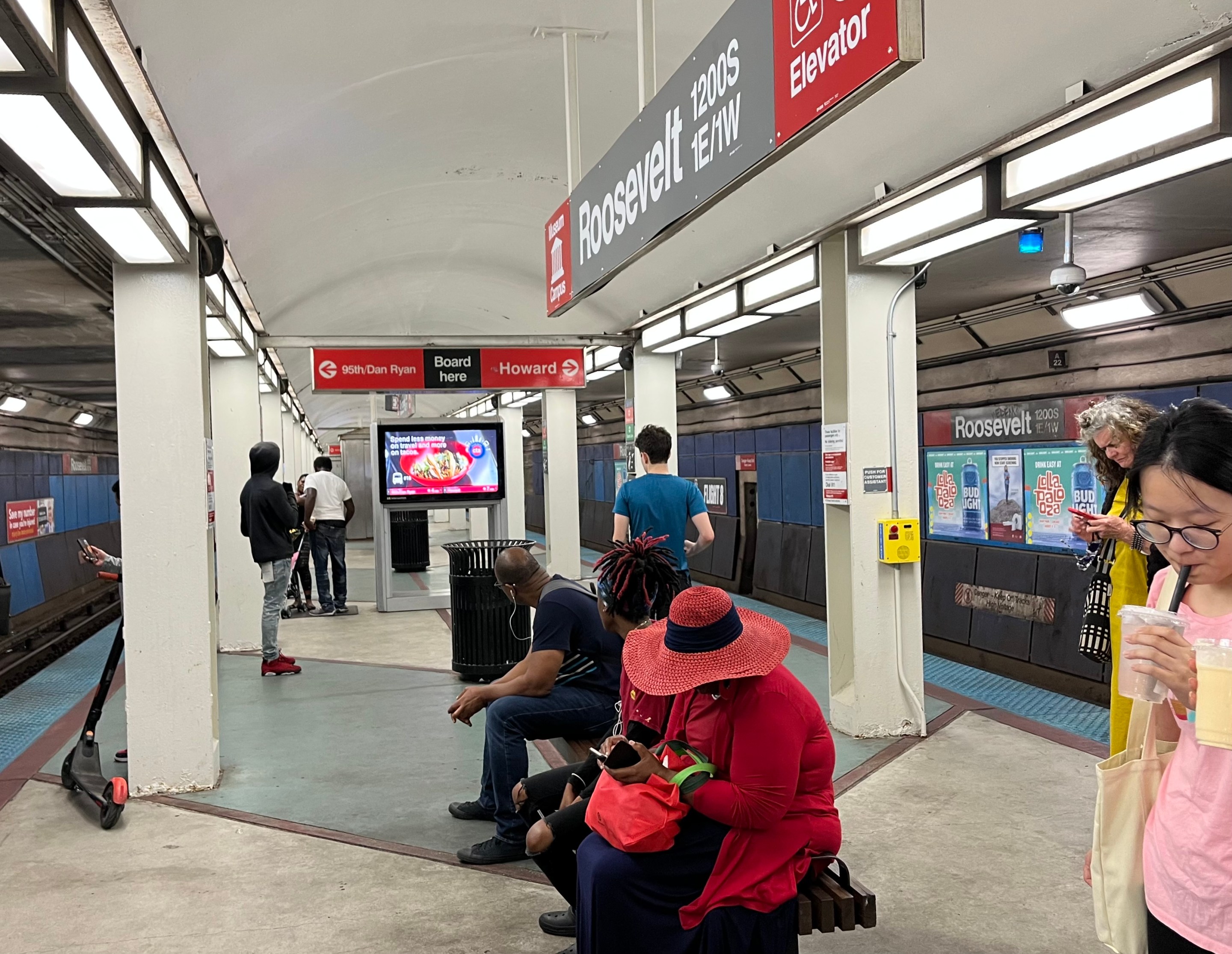
First, clean the trains. When riders sit in cars that reek of urine, their first thought is whether they can take an Uber next time. That choice is expensive for riders and catastrophic for the system. Low ridership makes the CTA less financially viable, which leads to worse service, which drives more riders away. The fix is a fleet of roving cleaners who board and exit mid-route rather than waiting until terminal turnaround. Spot-cleaning the worst cars in real time costs far less than losing riders permanently.
Second, modernize the station gates. Fare evasion is too easy, and CTA station employees are neither prepared nor equipped to stop groups jumping turnstiles. Chicago should install floor-to-ceiling entry gates like those deployed in New York. They open when fare is paid, they’re harder to defeat, and they’re actually more accessible for riders with mobility needs. Controlling entry to the system is the root of the problem. Fix the door, and you change who gets through it.
(Today the CTA announced, “a new problem statement through its Innovation Studio, seeking proposals that enable CTA to proactively improve the fare payment experience in rail stations through new faregates or other innovative fare entry features.” – Ed.)
Third, install smoke sensors. The CTA has cameras throughout the system but no smoke sensors. Being hotboxed on the way to work or breathing secondhand cigarette smoke across town is not acceptable, and it’s preventable. NYC, Denver, and Albuquerque have all installed sensors that alert conductors and transit security to smoking in real time. It’s a low-cost, high-yield intervention that can produce results quickly.
Fourth, put more security on the trains. Most major incidents happen on trains, not on platforms where officers are typically stationed. We’re resource-constrained, so blanket coverage isn’t realistic, but data-driven, randomized deployment is. Concentrate security on the routes and times with the highest incident rates, but randomize it enough that riders never know when an officer might step through the door.
Berlin, a system comparable in size to the CTA, has operated this model for decades. Fare evaders and disruptive riders face an on-the-spot fine of roughly $65. The system is clean, it’s safe, and the psychology is straightforward: If you think an officer might walk through at any moment, you’re less likely to break the rules or commit a crime.
Fifth, build a rapid-response technology layer. The CTA already has cameras. Add smoke detector feeds, a simple rider-reporting app for flagging issues in real time, and door sensors to track movement between cars.
(In April 2024, the CTA officially launched the Chat with CTA chatbot, “a new virtual automated… communication tool [that] allows riders to report issues, provide feedback, and receive answers in real-time,” although it’s accessed from a website, rather than a smartphone app. – Ed.)
Centralizing these inputs gives dispatchers an actual picture of what’s happening on the system at any given moment and the ability to respond before a situation escalates. Other cities have built versions of this. We have the infrastructure to start. We need the will to connect it.
These are tested solutions. The next mayor of Chicago must make the CTA a priority, not a talking point. One million people ride this system every day. They deserve to feel safe doing it. The psychological fabric of this city runs through its transit system, and any mayor worth the office should know that, ideally because they ride it themselves.

If you appreciate Streetsblog Chicago’s livable streets reporting and advocacy, please consider making a tax-deductible donation to support our work. Thank you!

Read More:
Streetsblog has migrated to a new comment system. New commenters can register directly in the comments section of any article. Returning commenters: your previous comments and display name have been preserved, but you'll need to reclaim your account by clicking "Forgot your password?" on the sign-in form, entering your email, and following the verification link to set a new password — this is required because passwords could not be carried over during the migration. For questions, contact tips@streetsblog.org.