Dozens braved the rain to learn what Chicago, Bike Grid Now! has done in the past year, and their goals for 2027


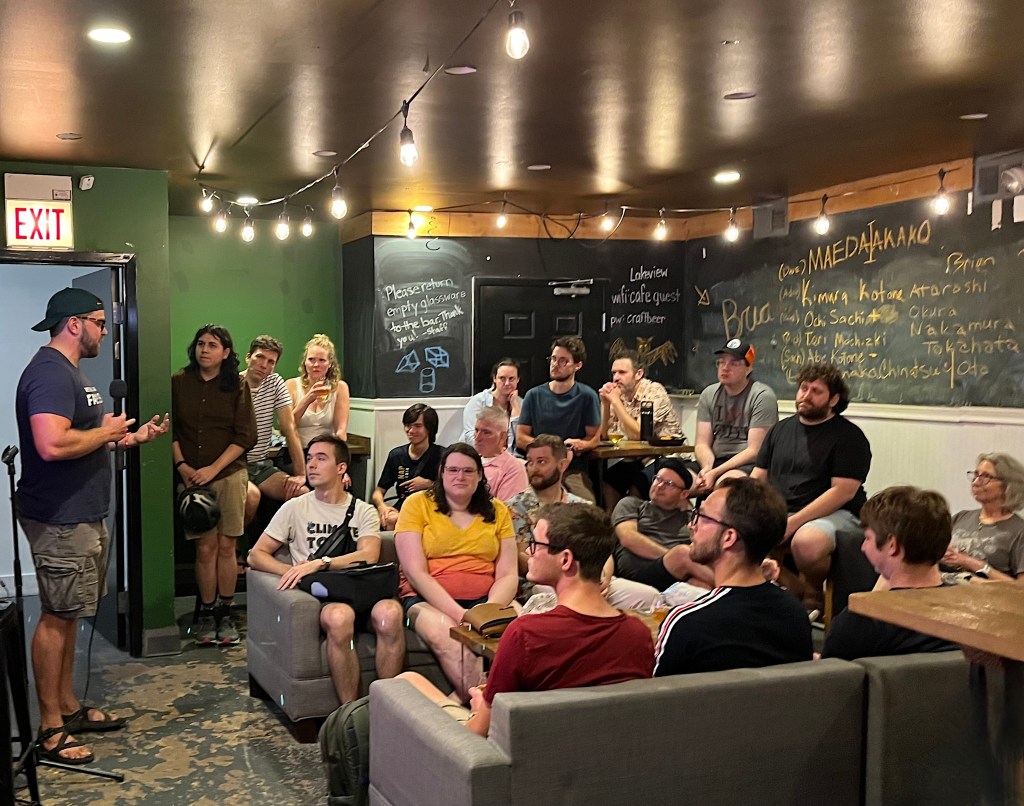
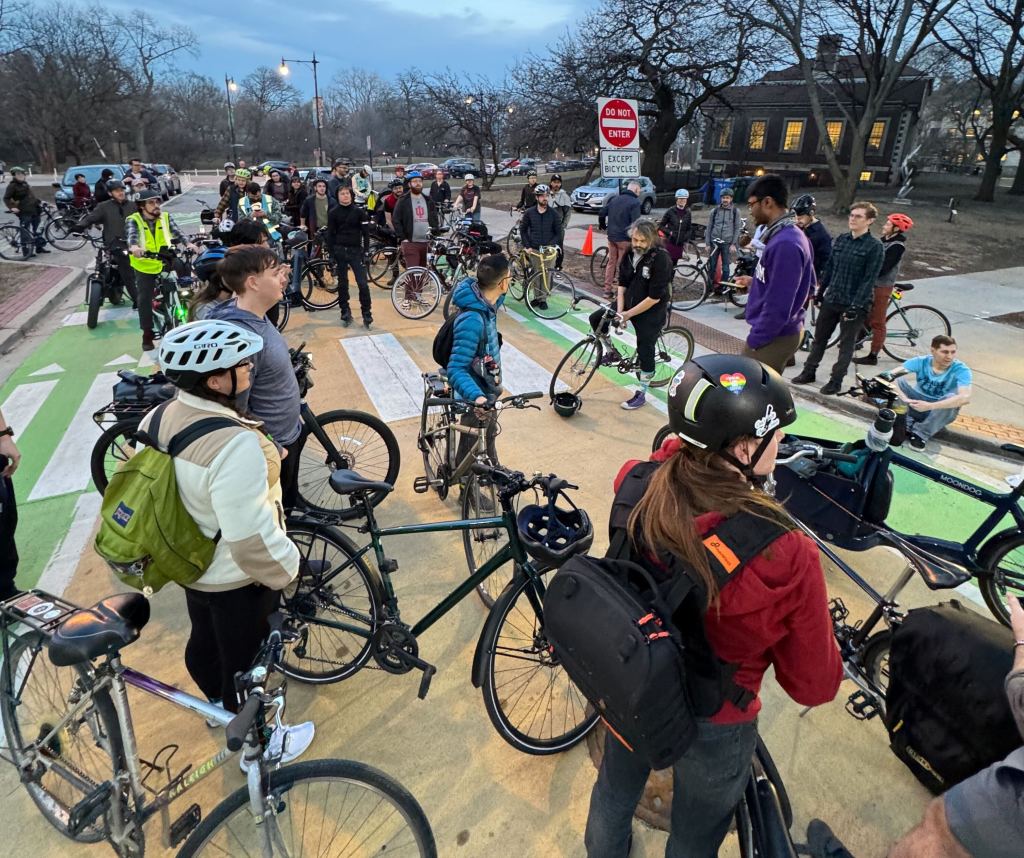
Last Wednesday evening, rainy weather didn’t stop dozens of people, many of them on bikes, from showing up to the annual Chicago, Bike Grid Now! event Getting the Grid. The purpose of the meeting was “to update coalition members on steps taken this year and how new volunteers can get involved.” It took place at Beermiscuous beer cafe, 2812 N. Lincoln Ave. in Lakeview.
(Fun fact: Beermiscuous co-owner and cicerone Austin Harvey, met his wife Annie Woudenberg-Harvey almost 20 years ago on the now-defunct Wicker Park Critical Mass bike ride.)
The crowd gathered in the cafe’s basement for a presentation by Bike Grid steering committee members, starting with Chris Buie-Gentry. (Some quotes in this article have been edited slightly for clarity and brevity.)
“I joined Bike Grid Now about three months after it started, mostly because I got mad at the city’s bike infrastructure and the pace it’s growing,” Buie-Gentry said. “One of the big frustrations for me has been, at the current speed we’re going at, we’re going to have meaningful bike infrastructure by the time I die. And that sucks, and that’s just unrealistic for the world we’re trying to build… Bike Grid exists because we know there’s an answer to Chicago’s lack of Safe Streets infrastructure. We just need our electeds and our City officials to make it happen.”
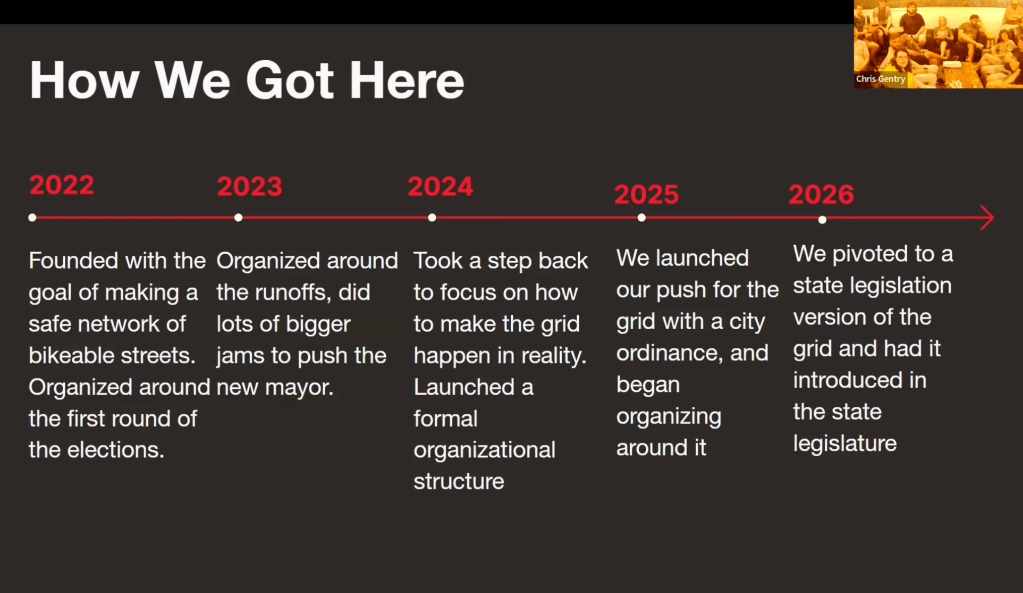
Buie-Gentry added that CBGN’s goal is to create a citywide network of bike-and-pedestrian-priority routes on 10 percent of Chicago Streets. “At its core, the Grid means speed softened Neighborhood Greenways, because we know that a lot of cyclists are scared,” he said. “Even if we put protected infrastructure on a major road, it’s still scary. There are lots of cars. Those cars are moving fast. We want the least amount of conflict points with drivers possible, and that’s why our preference is for speed softened Neighborhood Greenways.”
“That being said, sometimes you can’t do that,” Buie-Gentry acknowledged. “There’s places I want to go. There’s bridges I need to cross. So in cases like that, that’s where we want to have protected arterials.”
Next, Nik Hunder (who has written for Streetsblog Chicago) talked about Bike Grid’s legislative efforts. He said the group started working at at the City level by him writing a municipal ordinance to mandate completing the Bike Grid by 2033. However, they realized “it’s a bad time to do anything bike-oriented,” he noted. “Unfortunately, the Archer [Avenue traffic safety project has] kind of scared alders, even though it’s not only about bike lanes, it was also about a major water [and sewer] upgrade.”
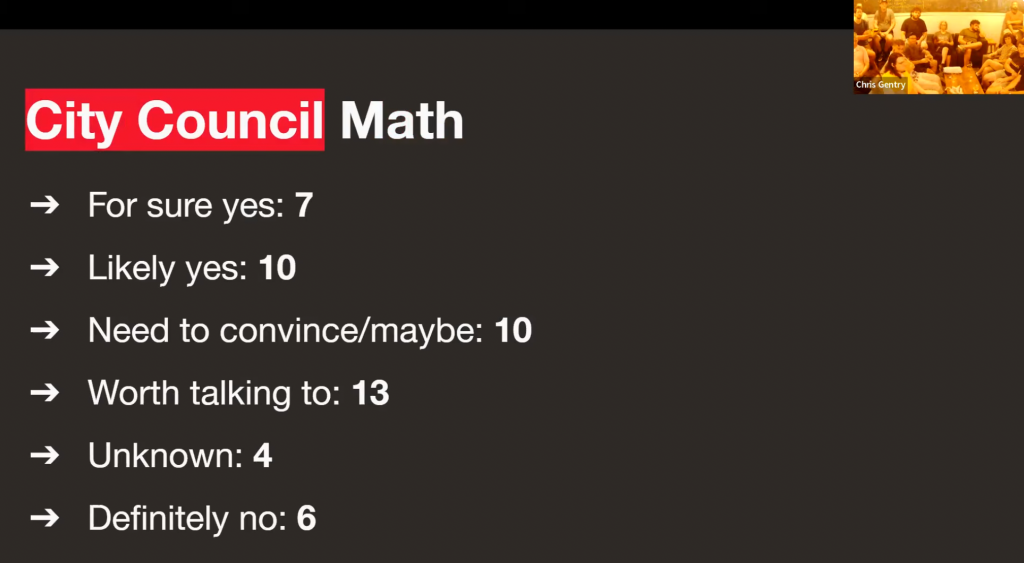
Hunder discussed the likelihood of passing the City ordinance. He said 17 City Council members are likely to vote for it, which is less than the 26 needed to make it law. “There are 23 that are ‘Need to convince’ and ‘Worth talking to,'” he noted, since these politicians have allowed bike lanes to be installed in their wards. “We think there’s somewhere between six and 10 people who will never vote for that. Think of your [Ald.] Ray Lopezes [15th] of the world.”
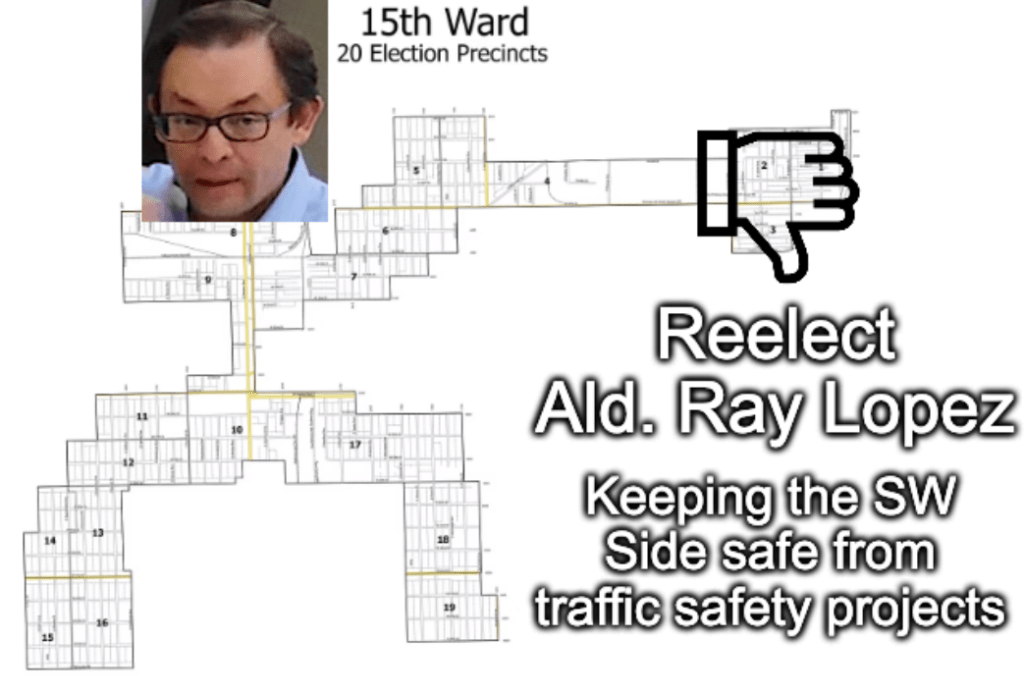
“So realizing that it was a bad time, we went to the State because the State loves to dunk on the City, and we got a much better reception in the statehouse,” Hunder added. “It also allowed us to expand the scope, so rather than focus only on the city, we were able to incorporate communities on the border, like your Oak Park, and your Evanston, because you notice a lot of those bike networks don’t actually line up.” State Senator Mike Simmons has been championing the bill in Springfield.
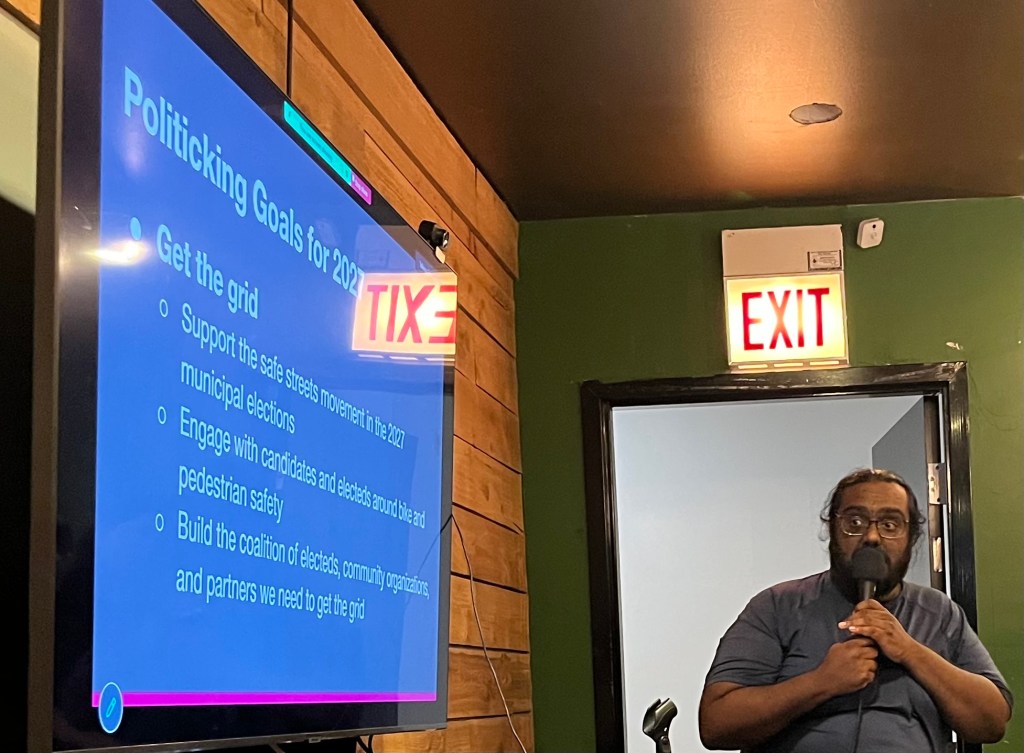
After that, steering committee member Sahal Ansari discussed politicking strategies. “The whole goal of our organization is to get the bike grid that we deserve, and in order for us to do that, we have some political goals for 2027,” he said. “Obviously to get the grid, we need to support the Safe Streets movement in the 2027 municipal elections; engage the candidates and electeds around bike and bike safety; and build the coalition of elected, community organizations, and partners.” While CBGN doesn’t endorse candidates, they do encourage and publicize politicians who support their goals. They’re also allying with organizations that do more direct candidate support and engagement, such Chicago Bike PAC, which is putting together a questionnaire for politicos.
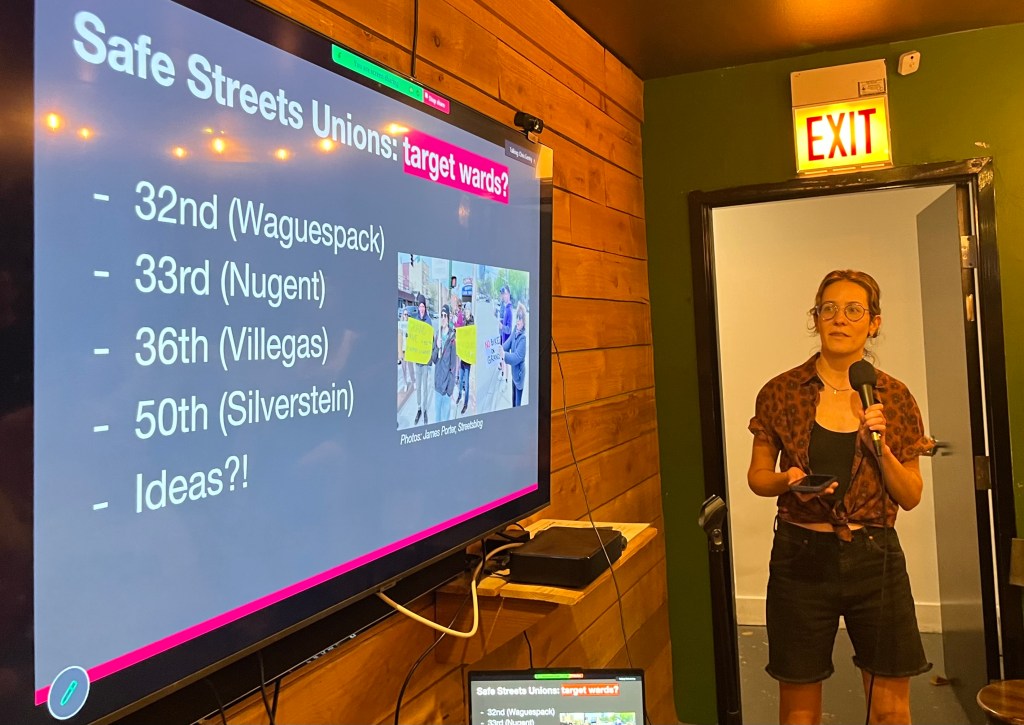
Alyssa Edes discussed Bike Grid’s efforts to help launch Safe Streets Unions in various communities. “As you can see from the name, these are more pedestrian-forward,” she said. “That’s politically helpful since it can be politically unpopular to be talking about bike lanes all the time. Also, pedestrians are very much part of the same goal, same vision, and it’s important to keep that front and center, especially at a hyper-local level.”
“Why have state streets unions if we already have Bike Grid Now?” Edes continued. “The biggest difference is that these are neighborhood-led. So having community members lead these groups, people who already have relationships with alders, other neighbors, and other coalitions in the neighborhood, helps to kind of further that sustainability in the long term. For example, our Bike Jams will go to a place that we’re really mad and do a protest there, and talk to the alder about it, and rile people up, but then leave and do a Bike Jam somewhere else. The Safe Streets Unions stay. So these are folks that keep that fight going in the long term.”
Finally, steering committee member Charna Albert talked about “Comms” (communications). “You can tell from this long and informational presentation that we do many different things with Bike Grid Now, and we need a way to get this information out, and also just to refocus it a little bit,” she said. “The purpose in doing this big information session is that we want to impose some more order on our organization, and recruit more volunteers and future leaders.”
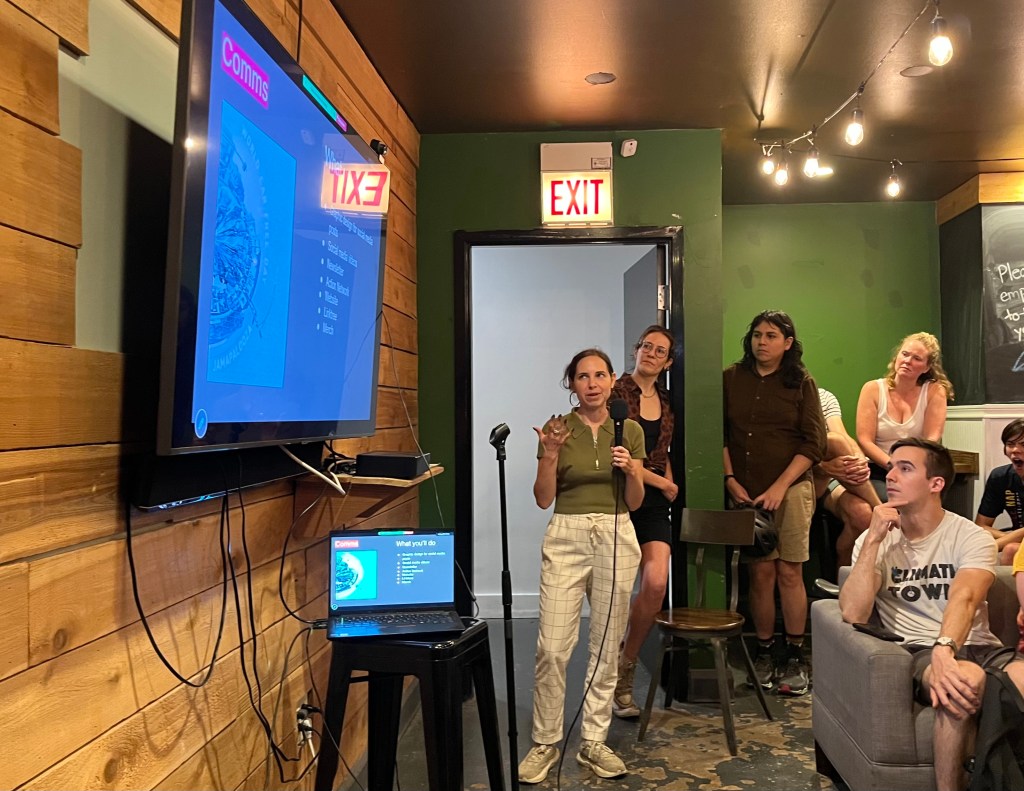
“One way we’re planning to do that is by breaking into formal committees,” Albert added. “Rides will be one of them. Comms will be another. We need help with so many different things. Graphic design for social media posts. We’re exploring our pivot to short video… We need to restart our organizational newsletter or action network. Imagine some anti-bike legislation comes up, and we need to get the word out quickly to oppose it.”
Obviously, this was a very information-dense event, and this writeup just scratches the surface. So I’d encourage you to set aside an hour to watch the above video of the presentation, perhaps while enjoying your favorite libation.

If you appreciate Streetsblog Chicago’s livable streets reporting and advocacy, please consider making a tax-deductible donation to support our work. Thank you!

Read More:
Streetsblog has migrated to a new comment system. New commenters can register directly in the comments section of any article. Returning commenters: your previous comments and display name have been preserved, but you'll need to reclaim your account by clicking "Forgot your password?" on the sign-in form, entering your email, and following the verification link to set a new password — this is required because passwords could not be carried over during the migration. For questions, contact tips@streetsblog.org.