An ex-Chicago resident says the problematic Wall Street Journal article about the Archer Avenue debate has been making the rounds in Northampton, MA


Former Chicagoan Jenn James used to ride bicycles in our city and write about family cycling here. Years ago, during the first phase of community outreach for the Chicago Department of Transportation’s Streets for Cycling Plan 2020, she collected community feedback for that document, working with someone who was employed at Working Bikes. “Out region was roughly a pie slice from the University [of Illinois Chicago] pushing out from Harrison Street at one angle to Archer Avenue towards Midway Airport,” she recalled.
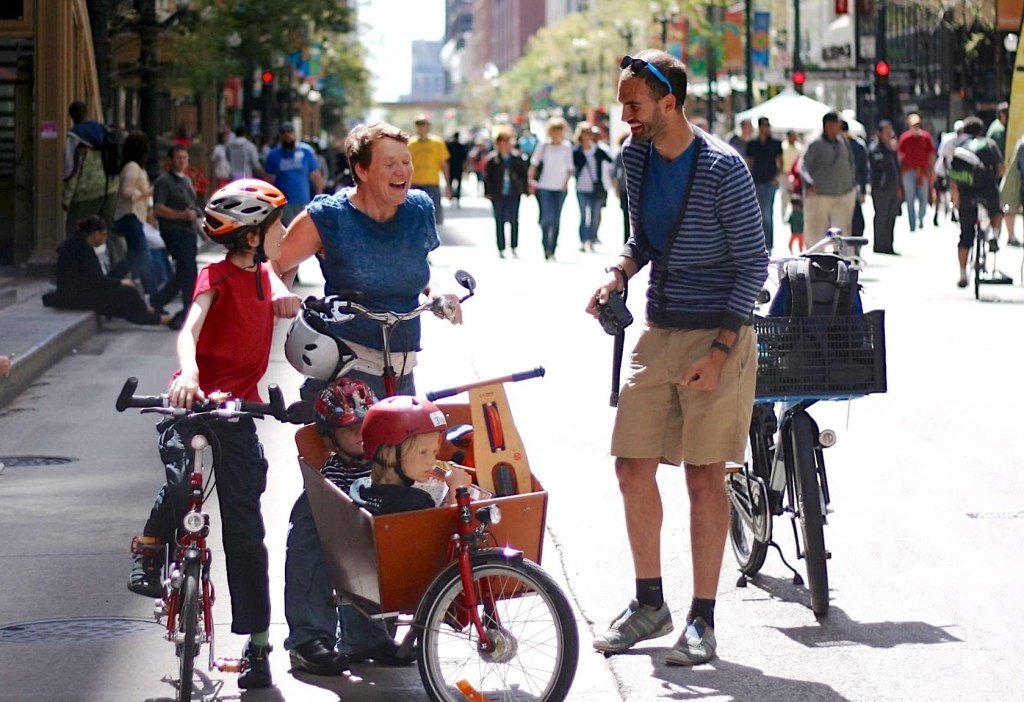
Nowadays, Jenn lives in the western Massachusetts college town of Northampton, and writes the Substack BikesNOWnorthampton. It features “Practical advice for transportation cycling and working towards better infrastructure in Northampton, MA, now.”
Today she sent me a blog post with her thoughts on the Archer Complete Streets project in Chicago’s Brighton Park neighborhood, which has the goal of making transportation on foot, e-scooters, bikes, and buses, and in motor vehicles safer and more pleasant.
Streetsblog Chicago readers are aware that on July 30 there was a new Wall Street Journal article about the Archer initiative by Chicago-based reporter Joe Barrett titled “Chicago’s New Bike Lanes Spark a Rebellion from Businesses.”
The next day, SBC responded with a thorough deconstruction of the piece. I noted that Barrett amplified the “Archer Guardians” project opponents blaming the new protected bike lanes on Archer for traffic jams, without mentioning the real culprit: a massive utility project. I also called out the paper for labeling the Guardians’ many months of weekly protests, in front of or near the local City Council member Ald. Julia Ramirez’s (12th) office, a grassroots “rebellion.”
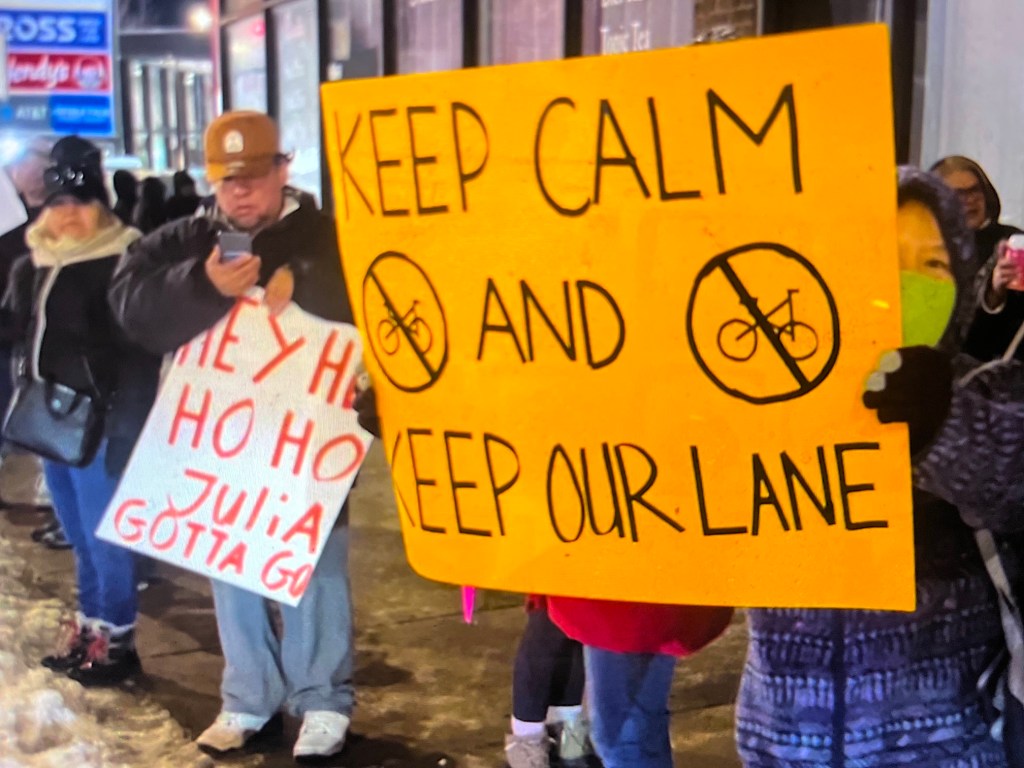
In reality, the demonstrations were an Astroturfing strategy promoted by the “moderate to conservative,” Trump-friendly lobbying group Urban Center, with the goal of defeating the progressive incumbent in the next election.
To WSJ’s credit, after I pointed out a major factual error in Barrett’s reporting, they made a correction.
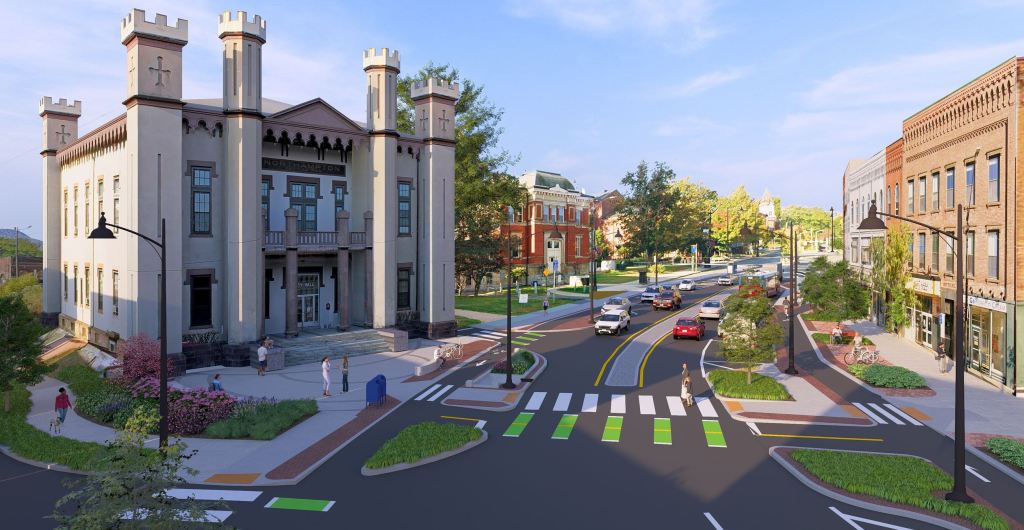
Interestingly, Jenn told me today, “The WSJ story is being used a variety of ways in Northampton right now,” That’s in regards to Picture Main Street, a project to redesign the town’s chief thoroughfare, aka State Route 9. The iniative’s website says the goals are to improve safety, accessibility, vibrancy, and climate resilience. She gave me permission to syndicate her Substack piece, edited for our Windy City readership. – John Greenfield, Streetsblog Chicago editor
Bikes vs. business? About that Chicago bike lane article reposted from the Wall Street Journal
Come closer so I can spill the tea. I was in the room where it happened. Chicago’s now Internet-famous Archer Avenue traffic safety project, that is.
Or more correctly, rooms. Many, many rooms. Archer Avenue was in my region when I was asked to volunteer to collect community input for the first version of the Chicago Department of Transportation’s Streets for Cycling Plan 2020 in the mid-to-late 2010’s. I spent a little over a year working with my multilingual project partner under CDOT and the Active Transportation Alliance advocacy group. We spent time organizing, promoting, holding, and documenting public meetings to collect input, which the planners used to propose Chicago’s bike network.
Is the Archer project – which includes pedestrian safety infrastructure, protected bike lanes, bus boarding islands, and new turn lanes – the proverbial unappetizing “vegetables” that community members have to eat for their own good? No. Good urban planning doesn’t have an answer before the community has asked and answered all the questions together. It’s not top down, and our work for CDOT wasn’t either.
CDOT first pitched the idea for the recent Archer project, as well as a similar initiative on Kedzie Avenue, at a community meeting in June 2024. After modifying the proposal based on community input, the transportation department presented revised plans in June 2025. Overall, more than 500 people provided feedback. – Ed.
Just to give a quick picture, Archer Avenue is an extremely long, flat, wide, truck-filled diagonal avenue in classic Midwestern city form. It runs from the Near South Side, at the edge of the downtown Loop, for miles of treeless concrete and asphalt, dividing the hearts of neighborhoods — from Chinatown, through a huge mix of many kinds of Chicagoans, all the way to Midway Airport and beyond. When I lived in Chicago, biking or walking on Archer Avenue was a hectic, dangerous, dust-eating experience.
The Streets for Cycling Plan 2020 input gathering I was involved with took place in schools, churches, and shopping areas. People told us that they wanted to be able to walk or ride to destinations more peacefully.
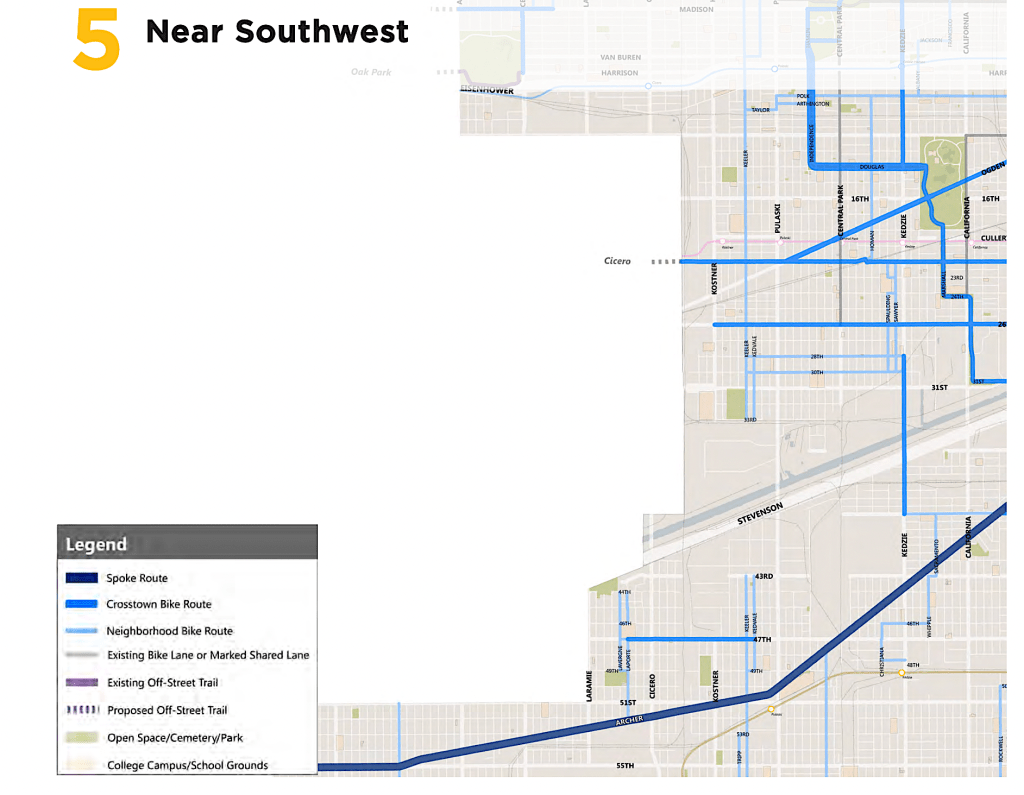
As the avenue divides neighborhoods along its path, it has to be dealt with by people of all ages and mobilities, multiple times a day. Residents were angry and frustrated about the impact of living near such a dangerous street on their day-to-day lives. Crashes and fatalities were a painful community norm. Speeders using the street as a route to Midway, to avoid the nearby Stevenson Expressway especially complicated locals’ ability to get from their homes to daily needs across the street.
Meetings were hosted in the friendliest community-owned spaces we could find. We organized at various times of day to accommodate the schedules of every kind of worker and at-home attendee. The events took place at breakfast, lunch, and dinner hours, in as many languages as we had resources to translate. We were lucky to gather tons of good information for the City about where people wanted the streets to change.
Larger business organizations and the airport staff typically worked directly with CDOT. But individual shop owners were usually at our meetings to share their diverse opinions. We used mapping to let attendees show where and how people wanted to move across and around the neighborhoods Archer serves. We never introduced models of what could be used.
While the Wall Street Journal piece implies that almost everyone along Archer drives, many people I met could not afford cars. Safely getting to public transportation — from waiting for buses to getting to CTA Orange Line trains — was constantly shared as sadly complicated and extremely wearing.
None of the mainstream reporting I have seen investigates any of the quality of life benefits gained by the people I met. A half generation after that first input, I hope that changes on Archer that we are not hearing about in the Wall Street Journal, that were less controversial, made life better for the people who so emotionally shared the changes they wanted.
Read more about the Picture Main Street project on Streetsblog MASS.

If you appreciate Streetsblog Chicago’s livable streets reporting and advocacy, please consider making a tax-deductible donation to support our work. Thank you!

Streetsblog has migrated to a new comment system. New commenters can register directly in the comments section of any article. Returning commenters: your previous comments and display name have been preserved, but you'll need to reclaim your account by clicking "Forgot your password?" on the sign-in form, entering your email, and following the verification link to set a new password — this is required because passwords could not be carried over during the migration. For questions, contact tips@streetsblog.org.