Take a virtual ride on Chicago’s new Michigan Avenue bus-only lane


In May 1994, on the last day of my Columbia College music school classes, I turned in my final exam and strolled out of the building, then located at 11th Street and Wabash Avenue. I was greeted by late spring sunshine and three buddies who were visiting from the North Shore suburbs. We walked towards the lake and crossed Michigan Avenue to chill under the trees in Grant Park and enjoy the beautiful weather. School was out for summer.
After a while, we started to get hungry, so in a flash of inspiration I suggested we head to the legendary Billy Goat Tavern, located downstairs from the Wrigley Building at 430 N. Michgan Ave., for some cheeseburgers and beers. My out-of-town friends were excited about the idea.
We headed to a northbound Michigan Avenue CTA bus stop, waited a bit, boarded, and started what should have been a brief 1.5-mile trip just past the river bridge at Wacker Drive. However, it was evening rush hour, the road was clogged with drivers, and what I assumed would take maybe ten minutes instead dragged on for nearly half an hour. By the time we arrived I was so ravenous, I was ready to gnaw my own arm off, and my friends were so frustrated, they were about to bite my head off.
Congestion on Michigan Avenue, one of the busiest thoroughfares in the city, is the stuff of legend. It shouldn’t take a half hour to go 14 blocks by bus, but many CTA riders have simply accepted this hardship as a given.
However, this seemingly intractable scenario may have just changed for the better. On September 30, Mayor Brandon Johnson and local agencies announced that a new dedicated bus lane would be implemented on northbound Michigan Avenue between Roosevelt Road and Wacker Drive. They noted that every weekday, roughly 22,000 bus passengers pass through this stretch. The project is a collaboration between the CTA; the Chicago and Illinois transportation departments; and the recently launched Northern Illinois Transit Authority.
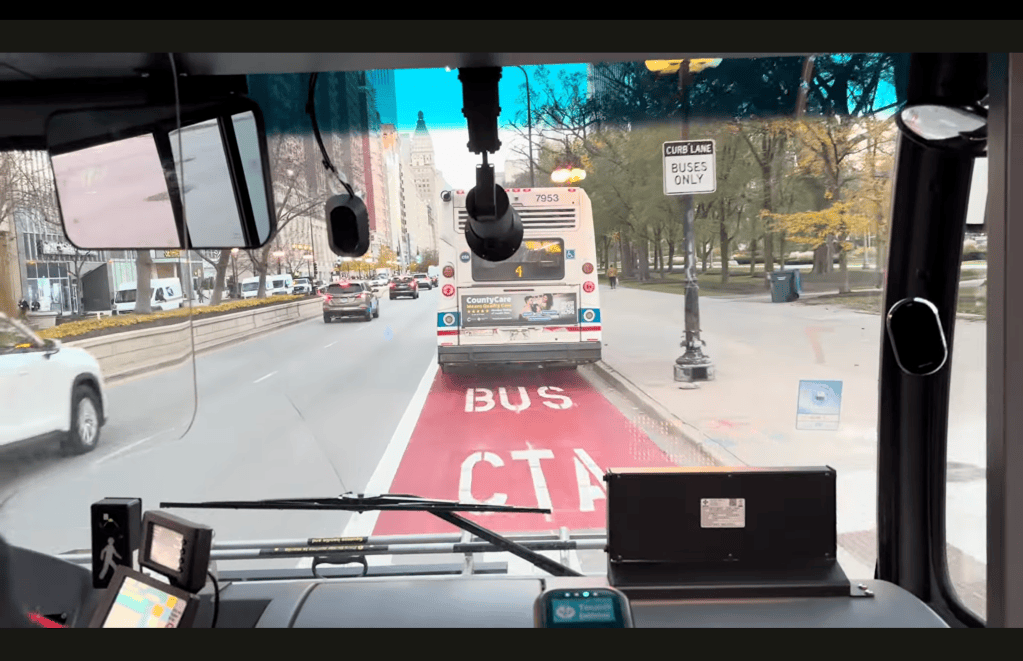
Last month, the new bus lane was completed. It’s a curbside route hugging the east edge of the avenue, partially painted red and labeled “CTA BUS ONLY.” Portions of the lane allow for right-turns towards Columbus Drive and DuSable Lake Shore Drive as well, but otherwise private motor vehicle drivers are prohibited from using the lane.
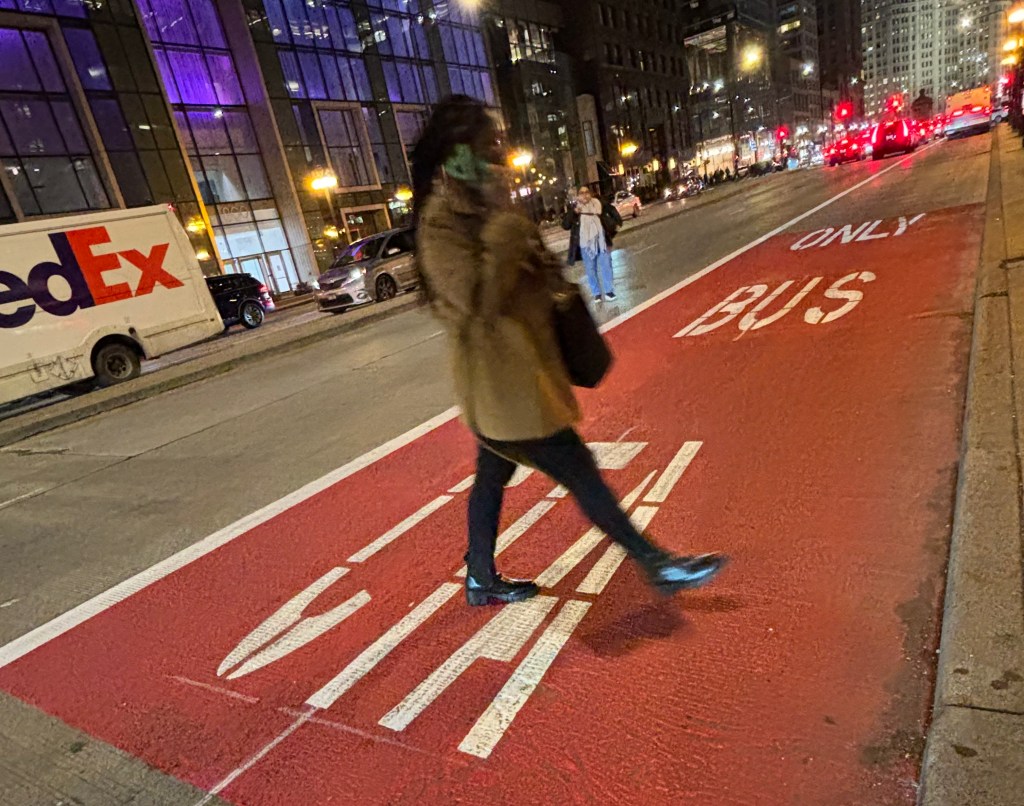
Of course, the bus-only corridor wouldn’t be much of a benefit for transit riders if other motorists were regularly violating that ban. Fortunately, the restrictions on standing and parking in the lane are being enforced by cameras mounted on buses and City vehicles as part of the Smart Streets initiative. (Camera enforcement of the law against driving in the lane would require new Illinois legislation.) That pilot program, currently focused on the central city, was made permanent last month and will eventually be expanded citywide.
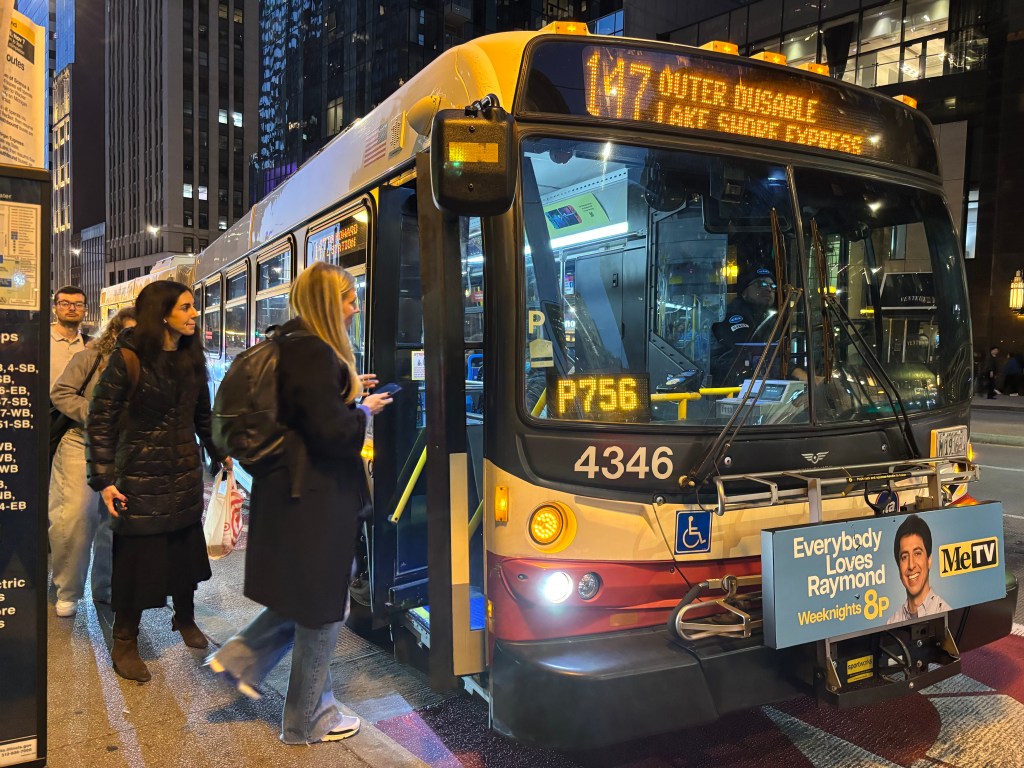
During last Thursday’s evening rush, I caught a #3 King Drive bus from Roosevelt and rode it the length of the new lane up to Wacker to see how the bus fared, no pun intended. It was the peak time for downtown bus service, and the double-length accordion bus was packed like a sardine can, with multiple commuters hopping on and off at almost every stop.
Yet the new dedicated lane mostly did its job. The total ride time from the south end of Grant Park to the Michigan Bridge was a reasonable ten minutes, a marked improvement over what I’d previously experienced.
In general, non-CTA road users seemed to respect the brand-new lane and comply with the restrictions.
As we approached Randolph Street next to Millennium Park, our driver honked multiple times at a person on a bicycle who was riding in front of the bus. Streetsblog is checking with the authorities about the legality of cycling in this bus lane. Previously, there was a northbound protected bike lane on that block, to help cyclists navigate between PBLs on Washington Street and Randolph to access the Lakefront Trail.
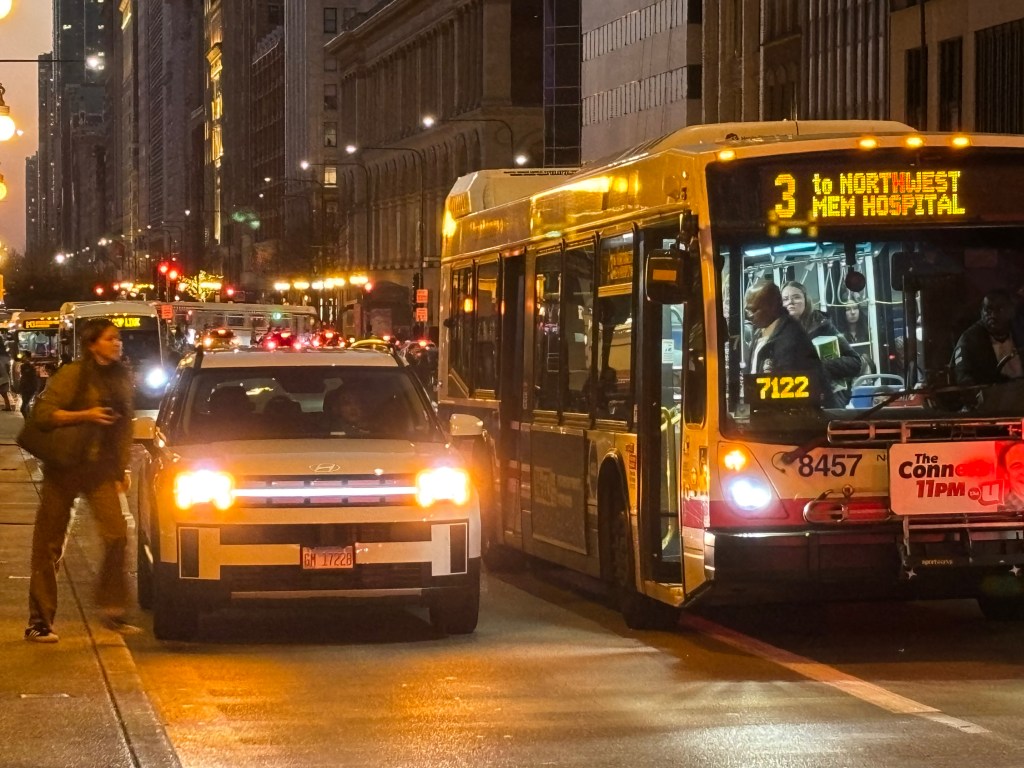
As we got near South Water Street, there were a couple of vehicles standing in the bus lane with their hazard lights flashing. I assumed these drivers were either doing deliveries, or waiting to pick up their partners from work.
All in all, the dedicated northbound bus lane seems to be a success. If cutting down significantly on Michigan Avenue travel times was the goal, the coalition of agencies responsible for this idea appear to have achieved their objective.
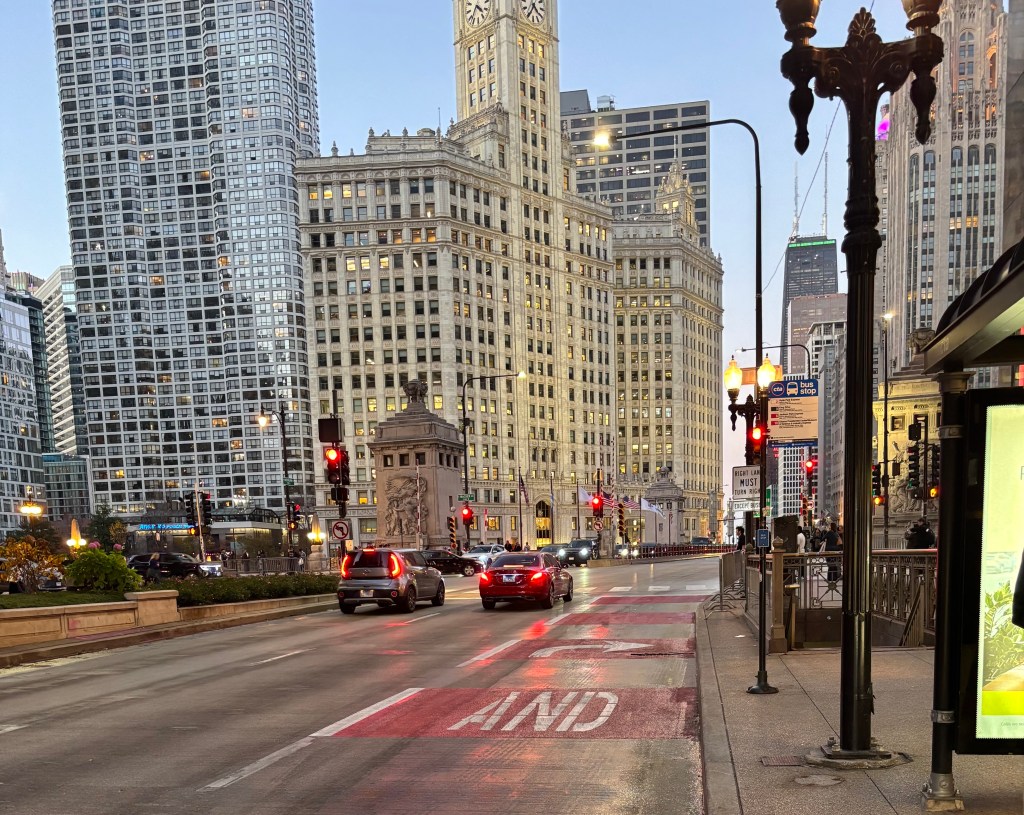
The next obvious step is to put in a complementary dedicated southbound bus lane. This isn’t an equivalent proposition, however, or a simple one. Compared to the east side of the street, which has attractions like Grant Park, The Art Institute of Chicago museum, and Millennium Park – there’s a lot of retail, lodging, and housing on the west side. The speed at which the northbound lane went into effect shows that while it was a good idea, it wasn’t difficult to pull off. A southbound lane would be a heavier political and logistical lift.
If you enjoyed this article, you might find the following video interesting as well.
When I reached the Tribune Tower and the end of my test ride, it was nearly dinner time. I hopped down the back stairs of the bus and – thinking of a memorable day over thirty years go – I crossed the street and walked downstairs to the Billy Goat on Lower Michigan. My mind was echoing with the catchphrase from the Saturday Night Live skit the tavern inspired: “Cheezborger cheezborger cheezborger.”

If you appreciate Streetsblog Chicago’s livable streets reporting and advocacy, please consider making a tax-deductible donation to support our work. Thank you!

A lifelong Chicagoland resident and the author of R.E.M’s Murmur, part of the 33 1/3 book series, J. has also contributed music and arts writing to the Chicago Reader and nationally syndicated Village Voice Media alt-newsweeklies, among many other print and online outlets.