Trib editorial and Triibe op-ed weigh in on the best strategies to improve CTA fare compliance and rider safety

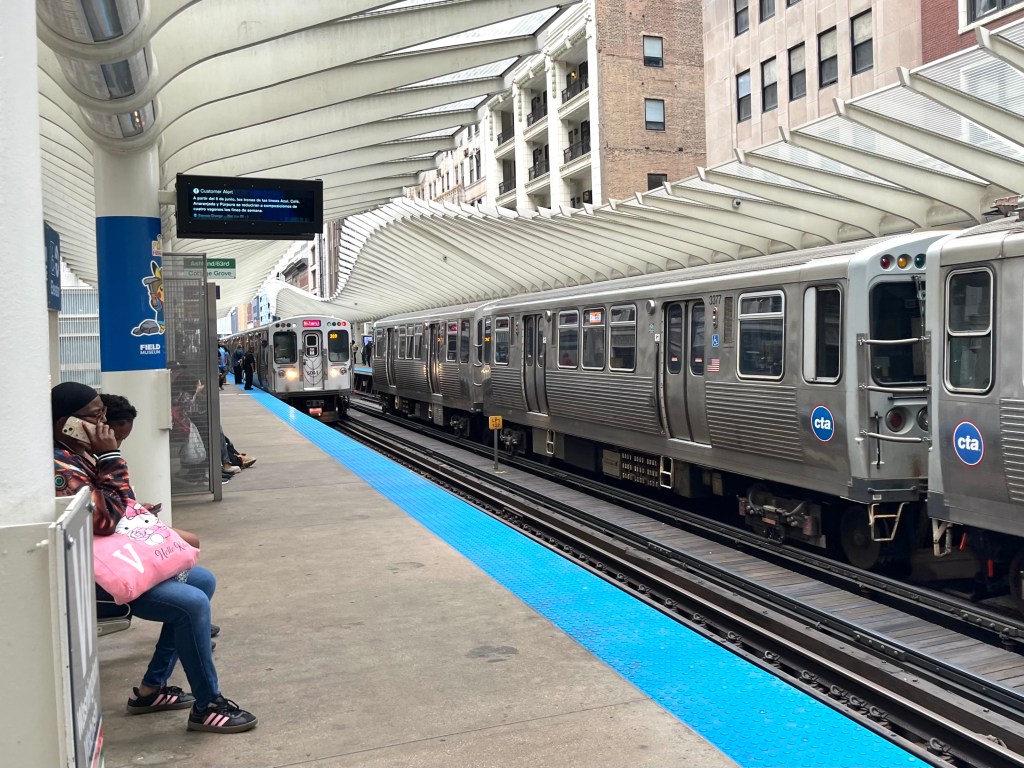

This morning as I was compiling our Today’s Headlines link stack, I noticed a couple of interesting opinion piece about ideas to make the CTA system more sustainable and safe, coming at the issue from different angles.
The first, by the Chicago Tribune Editorial Board, focuses on fare evasion with the title, “136,000 CTA scofflaws a day! Time to stop the free rides.” The other, an op-ed published in The Triibe, is a discussion of a new anti-violence ad campaign from the transit agency and the Cook County State’s Attorney’s Office, titled, “A warning is not a safety plan.”
The Trib piece
This Tribune editorial board notes that many CTA riders aren’t paying fares, “How many?” they write. “More than 6 million train rides, to be more precise, in unpaid or underpaid fares last year, according to CTA data. That doesn’t include unpaid or underpaid fares on city buses, which tally in the tens of millions.”
“On an average weekday in 2025, the CTA recorded more than 136,000 instances of passengers skipping or failing to pay the full fare on the bus or train,” the Trib continues. “The problem is especially pronounced on certain rail lines, as recent WGN reporting revealed, including an estimated 2.4 million unpaid or underpaid rides last year on the Red Line, 1.1 million on the Green Line and 300,000 on the Blue Line.”
The paper calls for emulating New York City’s strategy of installing taller, glass, saloon-style gates with sensors to detect whether or not a fare has been paid. The MTA has credited this approach with a 70 percent drop in fare evasion at some of the 20 stations where it’s been piloted.
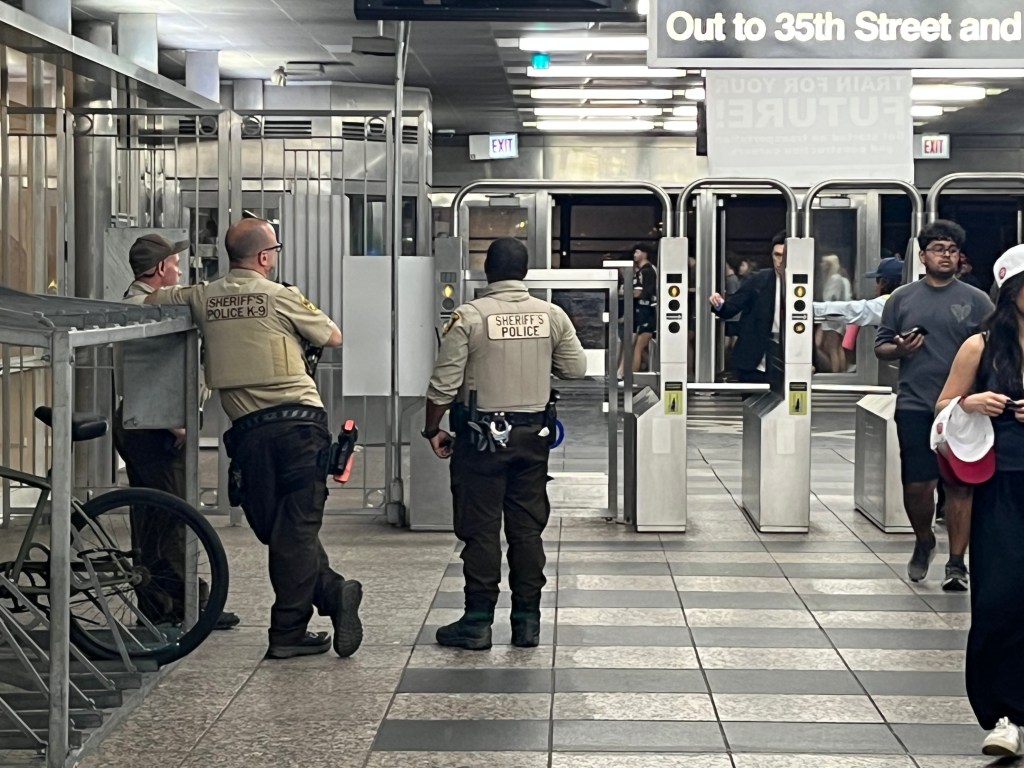
Meanwhile, at Monday’s CTA board meeting, staff reported that full-year estimates found that roughly 5.5 percent of ‘L’ trips were unpaid, but 20 percent bus riders didn’t pay fares. Video footage at some rail stops documented fare evasion rates of about 16 to 29 percent at locations with no police, sheriff’s officers, or guards, but only zero to 5 percent at locations with visible security personnel.
The CTA is planning to try out new fare gates at ten train stops. Proposed vendors will be presented to the board this January, and then there’ll be a pilot for 18 months to two years.
The editorial notes that this is a step in the right direction. “But with the CTA estimating tens of millions of underpaid bus rides annually, the agency also needs a strategy for actually collecting the fares on buses, one that does not put employees at risk.” That’s a tougher nut to crack.
The Trib argues that better fare enforcement would help reduce crime in the system. “To be sure, by no means do all fare-evaders go on to commit further crimes on transit,” they write. “Still, gates that make it harder for people who haven’t paid to catch the train will make folks feel safer, if nothing else, helping to reestablish a sense of order on our beleaguered transit system.”
The Triibe piece
The Triibe op-ed was written by Dion McGill, who works in nonprofit communications and marketing, and was elected district councilor for the 7th Police District – Englewood. He implies that he felt time was wasted at the District Councils’ quarterly meeting on September 26, with complaints about e-bikes and scooters. And I chuckled at this line: “I saw multiple sticky notes calling for fewer bike lanes and more car-focused infrastructure (insert: a middle finger from me).”
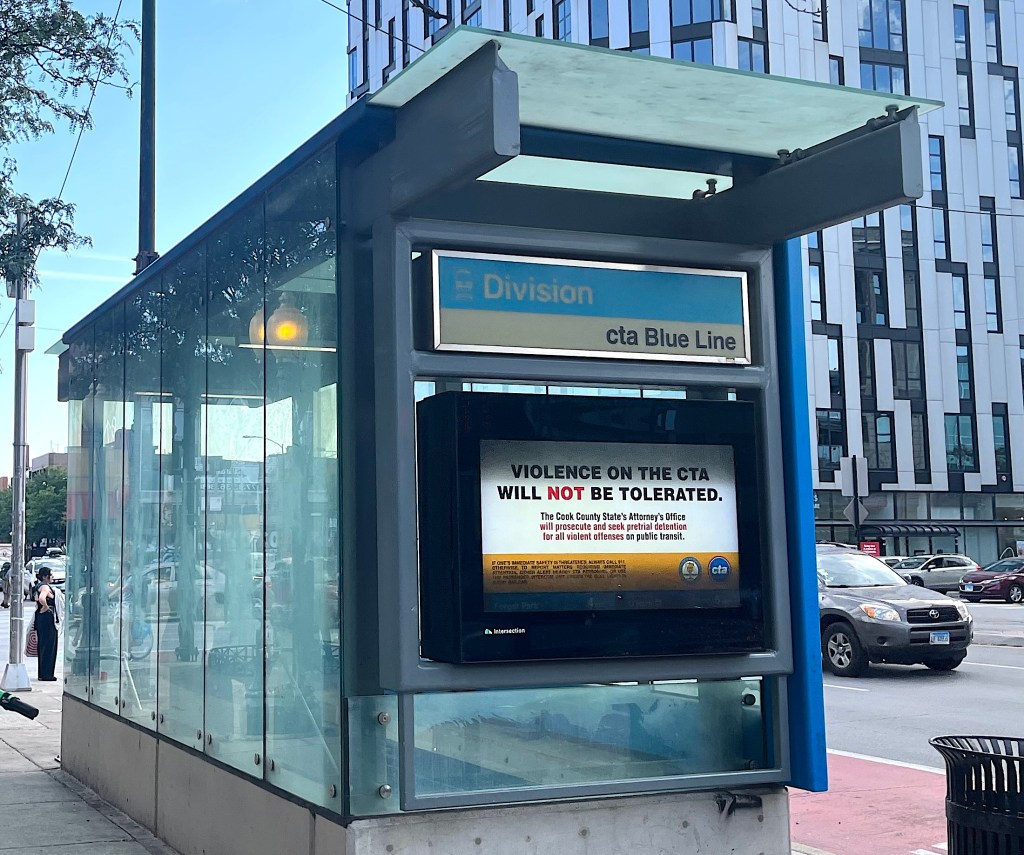
But the focus of his piece was his thoughts about the ad campaign from the State’s Attorney’s Office and the CTA. “While making my way home from the meeting on the Chicago Transit Authority bus, I looked up and saw a sign, declaring in all caps, ‘VIOLENCE ON THE CTA WILL NOT BE TOLERATED,'” McGill wrote. “Underneath it, a written promise: ‘The Cook County State’s Attorney’s Office will prosecute and seek pretrial detention for all violent offenses on public transit.'”
“People should be safe on public transportation,” he noted. “They should be able to ride the Red Line home from work without being assaulted. A teenager should be able to take the bus to school safely, a CTA operator should not have to accept violence as an occupational hazard, and an older adult should be able to travel to a doctor’s appointment without fear.”
“But look closely at what that sign actually promises riders: prosecution and pretrial detention,” McGill added. “Almost everything on this enormous sign describes something the government promises to do after violence has already occurred.”
Of course, the intention of the 7,000-sign campaign is to something before violence occurs. The idea is that people will think twice before committing crime on the CTA, because if they are arrested for a violent crime, prosecutors will ask the judge for pre-trial detention, which would be an immediate disruption of their lives.
But McGill argues that there’s evidence this strategy won’t be effective for preventing violent offenses. “The National Institute of Justice summarizes decades of research on the subject rather plainly: The certainty of being caught is a substantially more powerful deterrent than the severity of the eventual punishment,” he says. “Increasing the severity of punishment does relatively little to deter crime.”
“Think about what that means on the CTA,” McGill adds. “If someone believes they can assault another person on an empty train car and disappear at the next station, a poster promising what a prosecutor will ask a judge to do days later does not solve the fundamental safety problem.”
One thing that complicates that argument is the fact that security cameras are ubiquitous on the CTA. It’s likely many riders are aware that if they commit a crime within the transit system, they won’t just disappear, because it’s likely the authorities will get images of them. That makes it more likely they’ll be arrested than if the offense took place elsewhere.
“Chicagoans deserve more than a promise about what the government will do after they become victims,” he concludes. “They deserve a transportation system designed to keep them from becoming victims in the first place.”
So McGill doesn’t seem to agree with the new transit crime prosecution approach or PSA campaign. But presumably he can get behind some of the CTA’s other new safety strategies. These include the Safe Ride Specialist outreach and violence deescalation program, and an upcoming mobile app that will allow you to discreetly notify the authorities about emergencies and issues on trains, rather than calling 911 or pushing an emergency button.
Read the Tribune editorial “136,000 CTA scofflaws a day! Time to stop the free rides” here.
Read The Triibe’s op-ed “A warning is not a safety plan” here.
This piece includes previous reporting by Ellen Steinke.

If you appreciate Streetsblog Chicago’s livable streets reporting and advocacy, please consider making a tax-deductible donation to support our work. Thank you!