The CTA removes 13 Damen stops in bus reliability push, plans new fare-gate pilot

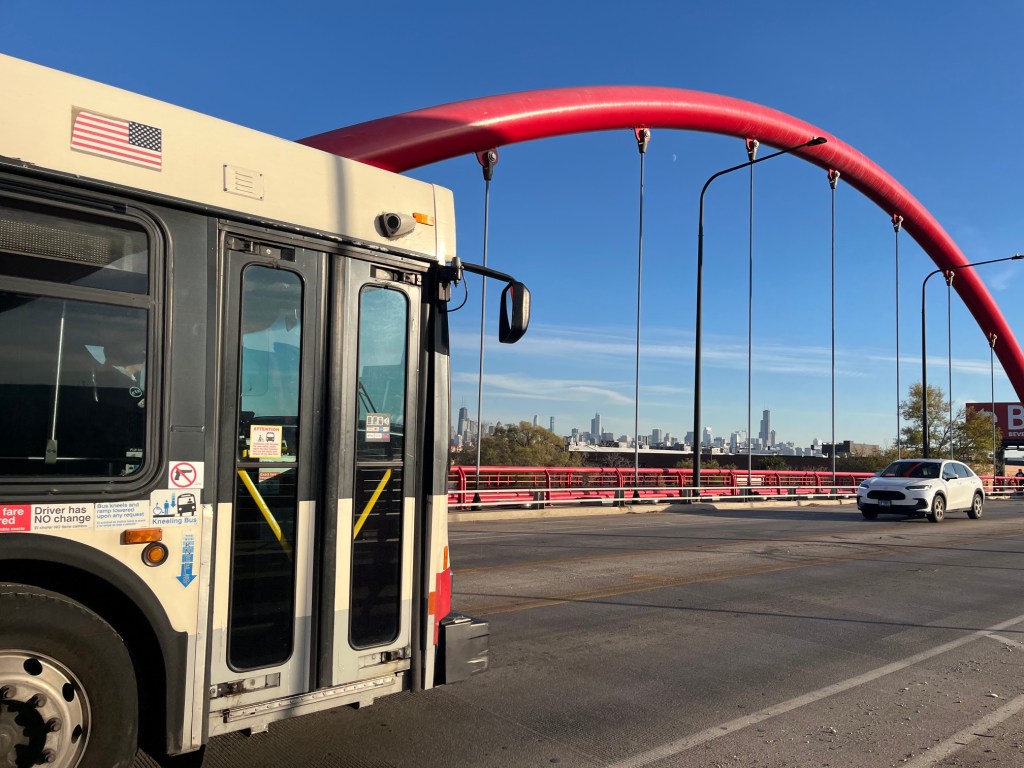

The CTA is taking a more granular approach to bus reliability, including eliminating 13 stops on the #50 Damen and adjusting schedules route by route, while preparing to test a new generation of fare gates at 10 rail stations next year.
Those initiatives were among a wide range of service, safety and budget updates presented at today’s monthly board meeting. The agency also reported 34 million rides in October, its highest monthly ridership of the year, and said Part 1 crime (serious offenses) on the system was down 29 percent through October compared with the same period last year.
Budget and Staffing
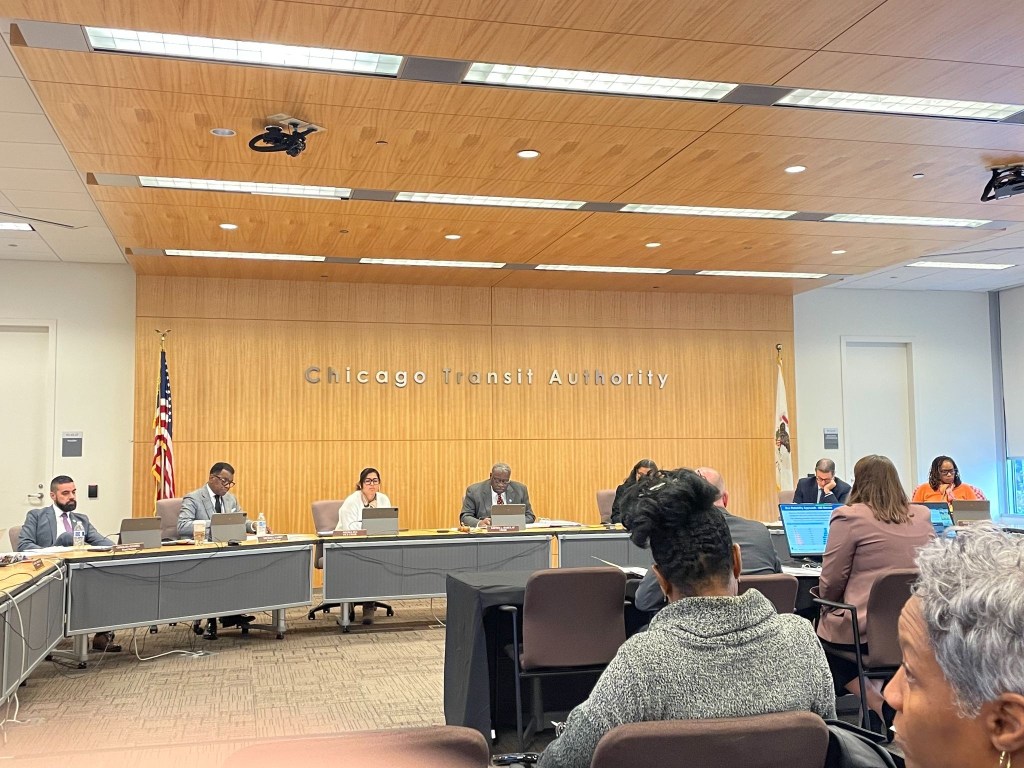
Before the regular board meeting resumed, the CTA’s Finance, Audit and Budget Committee reviewed the agency’s proposed 2027 budget for referral to the Northern Illinois Transit Authority.
The budget proposal would increase bus service hours by about 4.5 percent, including support for expanded frequent service, while moderately increasing rail service. It also includes another $10 million for targeted slow-zone work; a full year of funding for the recently launched Safe Ride Specialist program; additional station cleaning and power washing; more escalator rehabilitation; and a new crew focused on bus stop signage.
CTA officials said the agency has identified more than $60 million in proposed efficiencies and cost savings as part of the regional budget process. NITA is scheduled to consider adoption of the regional budget and five-year capital program in December.
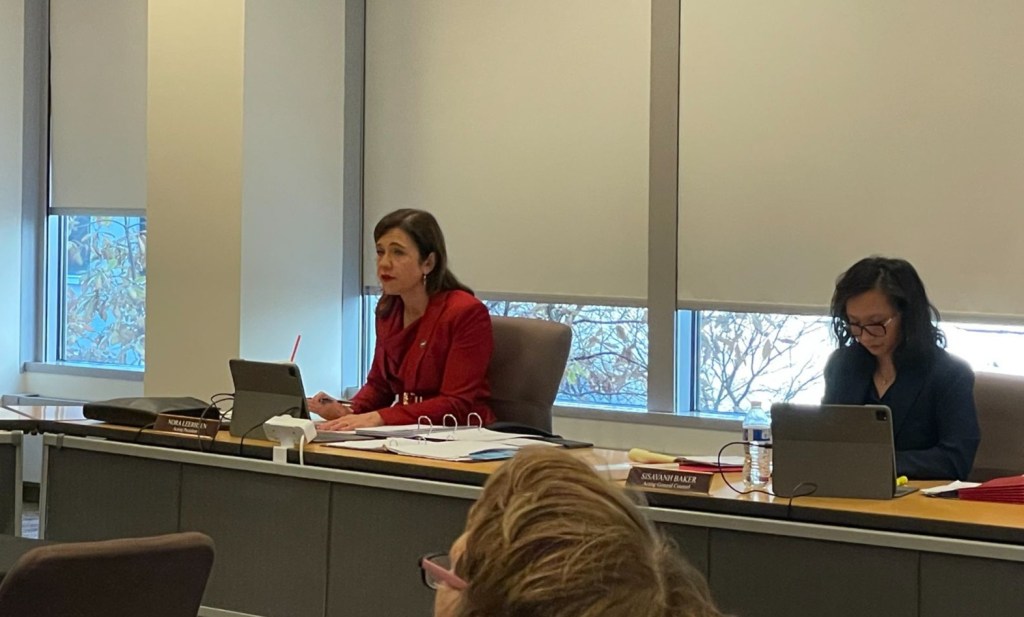
During Acting CTA President Nora Leerhsen’s performance report, she said rail service remains near its highest level of the past year despite disruptions from the Lake Street Bridge closure. The CTA carried more than 122,000 passengers on replacement shuttle buses during the closure, she said.
The CTA has also reached 900 rail operators, 20 more than in 2019, Leerhsen reported. Bus operator staffing remains above pre-pandemic levels as well. But she emphasized a distinction board members raised at the previous meeting: Putting 99 percent of scheduled buses onto the street does not mean riders experience 99-percent reliability.
#50 Damen route
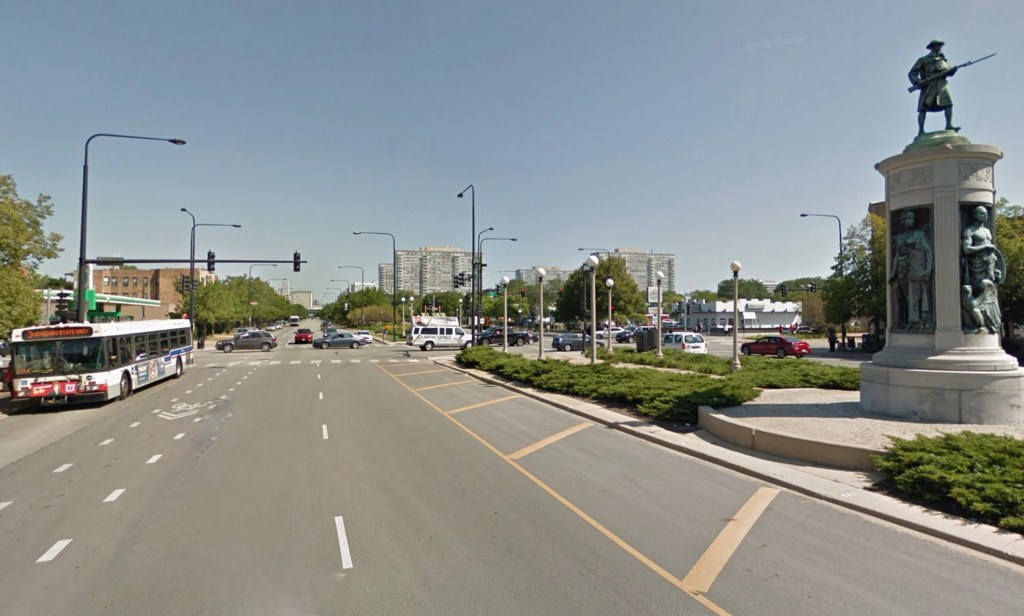
Chief Planning and Innovation Officer Molly Poppe used the #50 Damen as an example of how CTA is trying to close that gap. Rather than evaluating a route only from terminal to terminal, the CTA analyzes running times, bunching, and gaps between buses at individual “timepoints” along the route. Officials said schedule adjustments made on the 50 this summer reduced large service gaps by 5.3 percent and bus bunching by 7.3 percent across the route.
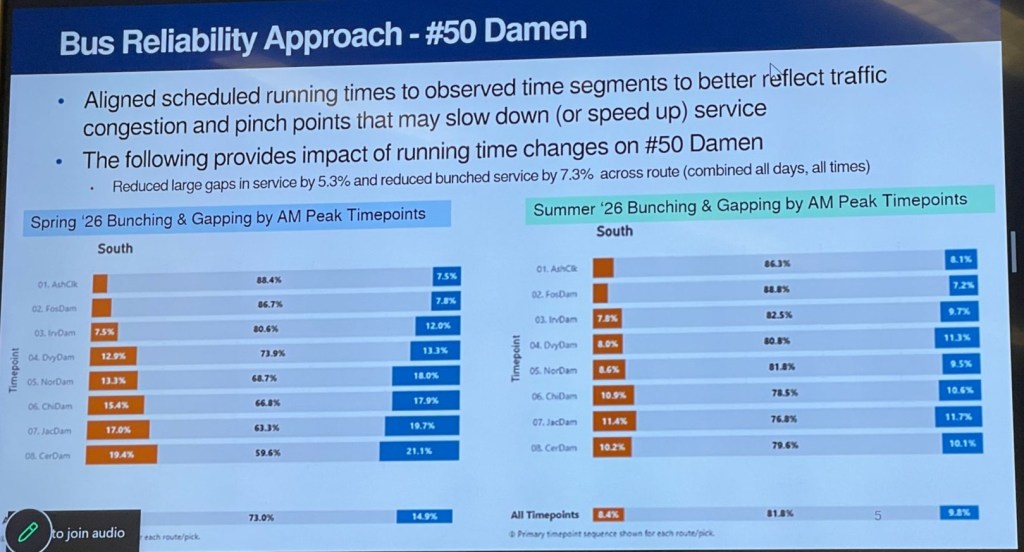
But reliability remained weaker on the southern portion of Damen, where stops were unusually close together. Poppe said the CTA identified 23 pairs of stops less than one-eighth of a mile apart, with some separated by only about 300 feet.
Effective Monday, the CTA eliminated 13 #50 stops and relocated two others. The agency maintained closer stop spacing near destinations including the Jesse Brown VA Medical Center.
Poppe said CTA will monitor travel times and reliability over the coming weeks. If the change does not produce enough improvement, the agency could consider other tools such as queue jumps or transit signal priority, and could restore stops if necessary.
Leerhsen acknowledged that stop removal can have major accessibility consequences. “These are really serious decisions to make about removing a bus stop,” she said, noting that the CTA consulted with accessibility advocates and examined nearby senior facilities and other community needs before making the changes.
Board members repeatedly pushed staff to connect agency performance percentages with riders’ actual experiences. Vice Chair Neema Jha described encountering a crowded #49 Western bus that passed waiting students because there was no room for them, while less-crowded #X49 Western Express buses passed the same stop. She urged CTA to publish clearer performance targets and actual underlying counts alongside percentages.
Staff said the CTA is also experimenting with more immediate rider feedback. QR codes aboard buses link to an “on-the-spot” survey that can associate responses with a specific route and time of day.
The service discussion came as the CTA reported continued ridership growth. October generated 34 million rides, up 7.5 percent (about 2.4 million trips) from October 2025. Leerhsen said the system’s 10 strongest ridership weeks since 2019 have all occurred since late August.
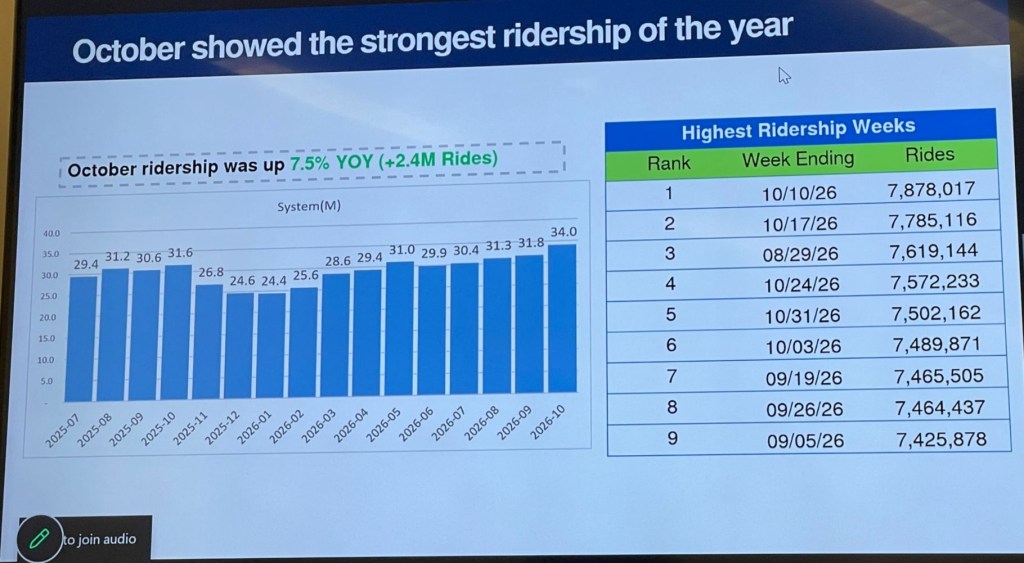
The agency attributed that growth partly to increased service. More than 45 bus routes have received significant service investments during the past two years, according to the CTA. Staff said changes to the #53 Pulaski and #53A South Pulaski routes are generating about 18,000 net new rides each month, while changes to the #93 California/Dodge are producing about 11,000.
Security
The discussion then turned to security, with staff reporting 1,013 Part I crimes from January through October. This number is down 29 percent from 1,420 during the same period in 2025 and 51 percent from 2016. They also said violent crime was down 31 percent and robbery down 45 percent year over year.
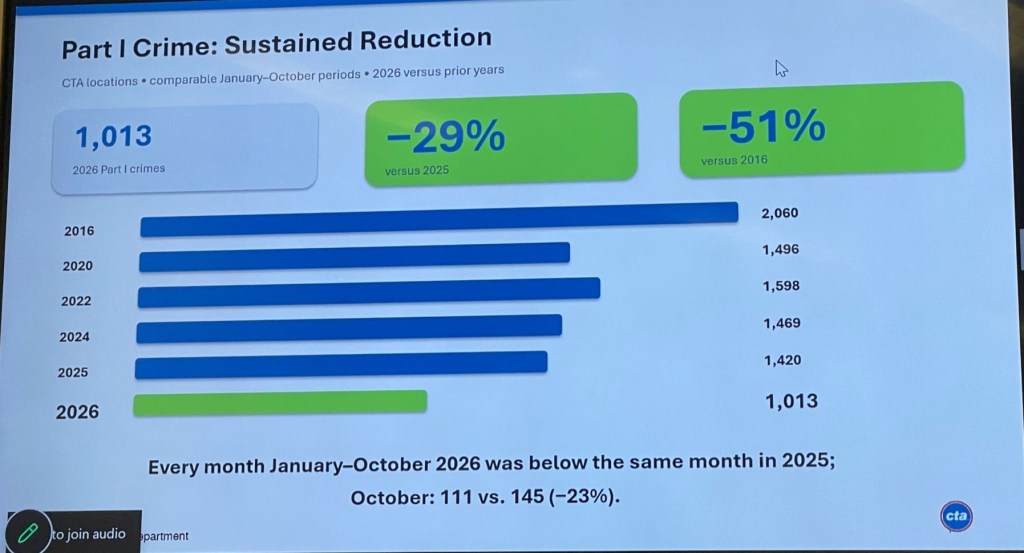
Stats on serious crime.
Leerhsen and Chief Security Officer Joe Bird attributed the decline in part to increased coordination with the Chicago Police Department and the Cook County Sheriff’s Office. The CTA has previously reported a 75 percent increase in law-enforcement hours on the system this year, alongside its new community-based Safe Ride Specialist teams.
Bird said CTA-location arrests increased to 3,296 through October, up about 24 percent from 2025. The figure does not include every arrest connected to a CTA crime, because suspects arrested later away from transit property are recorded differently.
The presentation then turned to fare evasion, a safety and revenue issue. The CTA said its most recent full-year estimates put fare evasion at about 5.5 percent on rail and 20 percent on buses. Staff said video sampling at selected rail stations found evasion rates of roughly 16 to 29 percent when security was absent, compared with zero to 5 percent during periods when police, sheriff’s officers or security teams were visibly present.
Poppe acknowledged that the CTA cannot station officers at every entrance around the clock, and the agency plans to test new fare-gate designs at 10 stations. The agency expects to bring proposed vendors to the board in January, followed by an 18-month to two-year pilot.
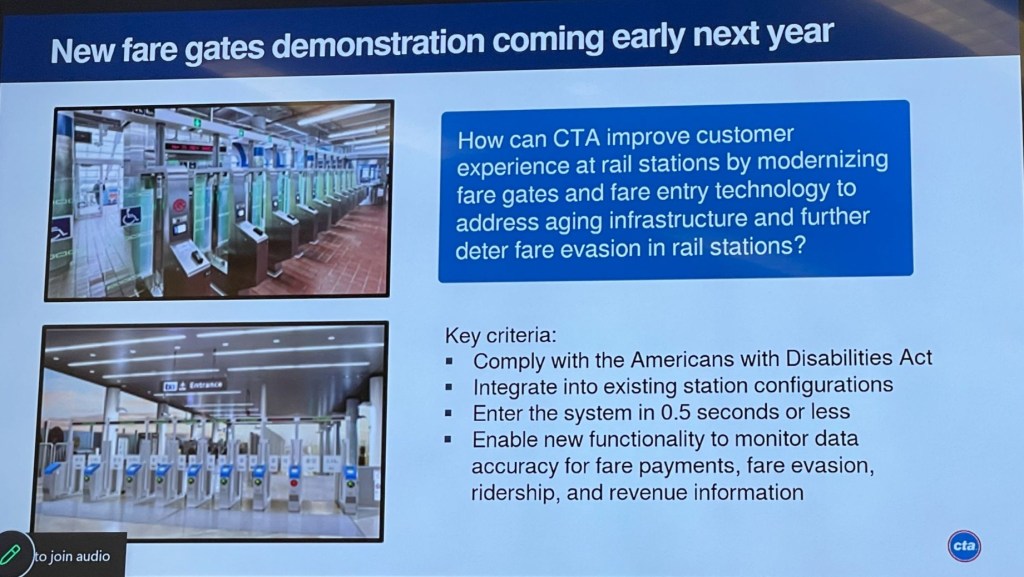
The new gates will be evaluated for accessibility, whether they can physically fit into CTA’s sometimes-cramped station layouts, how well they deter evasion and whether riders can move through them quickly. CTA’s stated goal is an entry time of roughly half a second or less.
The pilot will be part of a broader fare-evasion strategy that also includes high-barrier gates, improved data collection, enforcement targeted using station-level data, and efforts to make fares more affordable.
Altogether, the discussion suggested an increasingly data-focused relationship between CTA staff and the new board. The already collects detailed information on service delivery, rider feedback, ridership and safety. Now, board members are pushing staff to make that information more actionable so they can better identify problems and direct resources where they are most needed.

If you appreciate Streetsblog Chicago’s reporting and advocacy on local sustainable transportation issues, please consider making a tax-deductible donation here. Thank you!