Tales from the transit trenches: Public transportation veterans Fernandez and Rogoff give the NITA board a pep talk



Earlier this month there was a major landmark in the ongoing Northern Illinois Transit Authority saga as the bakery-fresh public transportation agency unveiled its Proposed 2027 Regional Transit Operating Budget and Five-Year Capital Program. Streetsblog previously shared some initial thoughts about the plan from local advocates and experts.
NITA is encouraging Chicagolanders to submit online feedback about the proposal, and invited residents to attend today’s board meeting in person or online. The hearing took place at the agency’s office at 175 W. Jackson St. in the Loop.
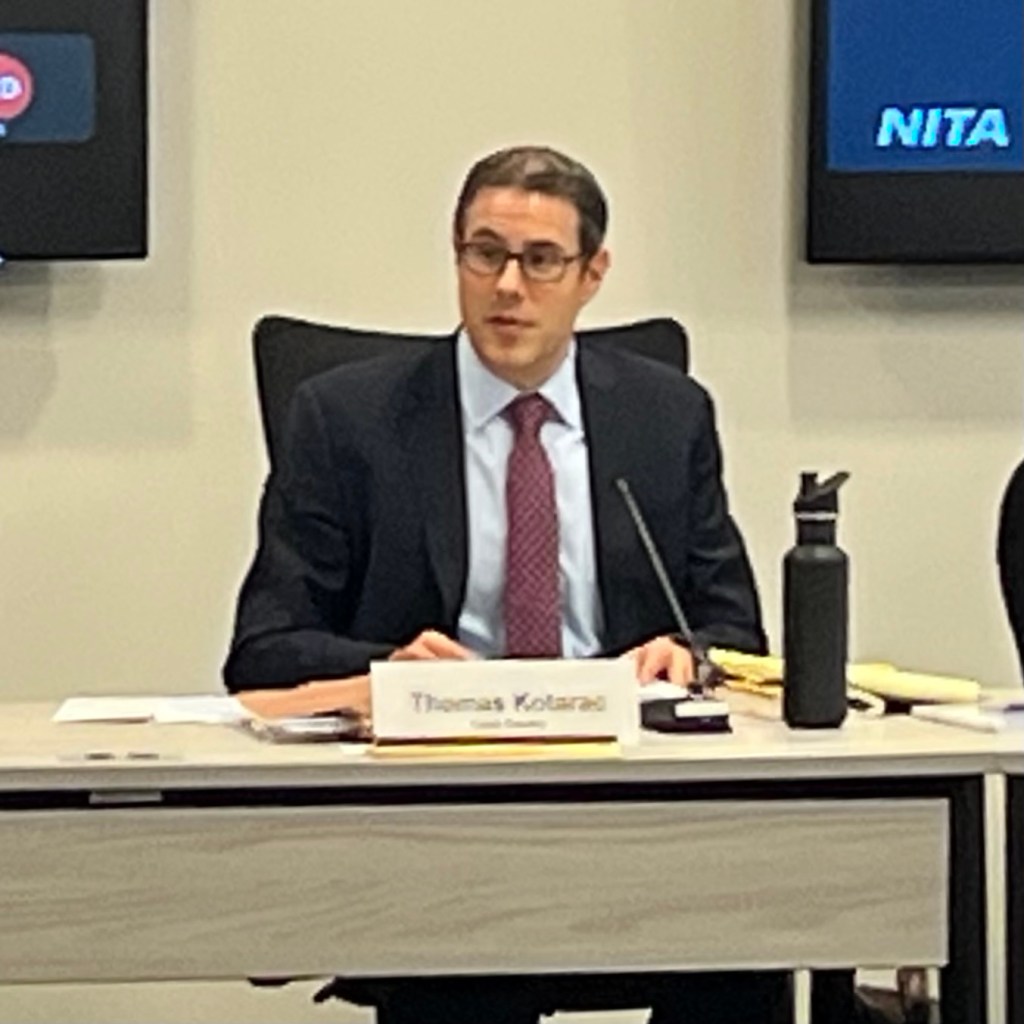
I’d like to focus on something interesting that took place early in the meeting, when the NITA board invited two veterans of other transit systems to share words of wisdom for running the new bureau. NITA Board President Tom Kotarac introduced them by noted that cities around the country and the world have being paying attention to Chicagoland’s efforts to accomplish a public transportation revolution. “We thought it would be good in a public setting to have some international experts spend some time with us, just to sort of engage on what they think we should be doing at the board level,” Kotarac explained.
One was Nuria Fernandez, a civil engineer who has previously worked at the CTA, Washington Metropolitan Area Transit Authority, Metropolitan Transportation Authority, and the Santa Clara Valley Transportation Authority. She served as the Federal Transit Administrator during the Biden presidency. Fernandez has been involved with many other transportation projects, including a tenure as Chicago’s aviation chief in the late 2000s.
The other was Peter Rogoff, who also took a shift as Federal Transit Administrator under President Obama. During that administration, he was also the Under Secretary of Transportation for Policy at the USDOT. He was also the CEO of the Seattle area public transportation agency Sound Transit. Prior to that, he served as the clerk and the head of the Senate Transportation Appropriations Committee.
Nuria Fernandez’s presentation
Fernandez, who grew up in Panama, referenced Kotarac calling her and Rogoff “international experts.” She quipped, “I am from the international city of Alexandria, Virginia.”
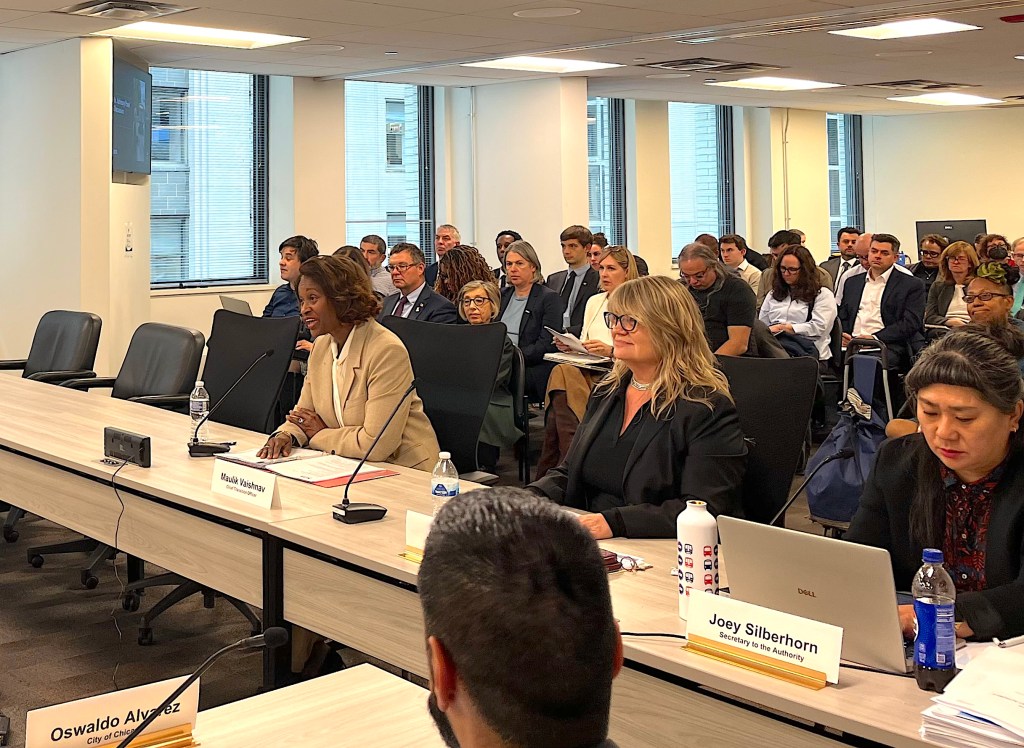
Fernandez thanks the board for inviting them “to share a few observations at this pivotal moment for public transportation in northern Illinois. She noted that she has served in a senior executive capacity in multiple transit agencies. “I can say that one of the lessons that continues to go back again and again is that transformation happens when [there is] a change in how decisions are made. It also happens when the resources are allocated to make that difference, but most importantly, when results are delivered and their outcomes are measured.”
She offered three main observations. “One of the most important duties is to establish the foundation for effective performance, governance, and public trust with a single purpose,” she said. “I know that… you all bring different perspectives from different communities and assignments. But the the purpose of the goal is to provide one clear direction that speaks from a regional perspective, and that decision is going to benefit the entire region. The [NITA Act] provides the framework, and that is very important because you can legislate organizations for sure.”
“But this board needs to establish a culture that is keen on delivering, is keen on recognizing that the public trust has to be earned, and it’s earned when the service that’s provided is safer, faster, reliable,” Fernandez added. “That it best connects the network so that it benefits everyone.”
“The second point I want to make is delivering the improvements to the riders, and you need to include improvement that they can experience, so that they feel that something different has happened,” she said. “And it’s not going to be easy.”
“Just looking at each of the service boards and the agencies, the infrastructure is aging.” Fernandez continued. “The travel patterns have changed, costs are rising, and institutional habits are not going to disappear just because a law changed. The public will judge whether or not this organization is successful, and that success can be marked, again, by safer, more reliable, frequent service… that’s also accessible.”
“The third is selecting the permanent executive director, and that may be the most consequential early decision that you make,” she said. Sitting next to her was Acting NITA Executive Director Jamie Rhee, who also recently served as our city’s aviation commissioner. “You need a skilled transit professional that is also a strategic thinker and leader; one that is a change manager; one that can build teams and build trust; who can navigate the very complex institutions that [NITA is] overseeing; and make and have the courage to make difficult decisions. Competition for that type of talent is not only national but also international.”
“The compensation always comes up, and I’ll just touch on this very lightly to say that it needs to reflect the assignment, and it needs to be competitively benchmarked to the future scale and complexity of this position,” Fernandedz added. “It needs to be transparent, and it needs to be tied to results.”
“But even the most talented leader means something more than money can make possible and cannot replace, and that is a board that provides clear direction, respects management’s role, and holds itself accountable,” she added. “Those are the trademarks that are going to define success.”
“The legislation created NITA, but your leadership is going to determine its legacy,” Fernandez concluded. “You have a very rare opportunity to show how much better this region can work for the people that it serves and who depend on it when there is strong regional governance, sustained investment, and most importantly, accountability.”
“We’ve got to condense some of that down,” Kotarac said afterwards. (He’s welcome!) “So many good guiding principles for us.”
Peter Rogoff’s speech
Rogoff participated remotely. “I’m currently, ironically enough, at the Clara Valley Transportation Authority, presenting to their board, an agency that Nuria used to run,” he said. That agency serves San Jose, California, and Silicon Valley. “And I have to say that it may sound like Nuria and I collaborated in our remarks before we started because some of the things that I was going to point out she’s already touched on, but I’ll touch on them quickly.”
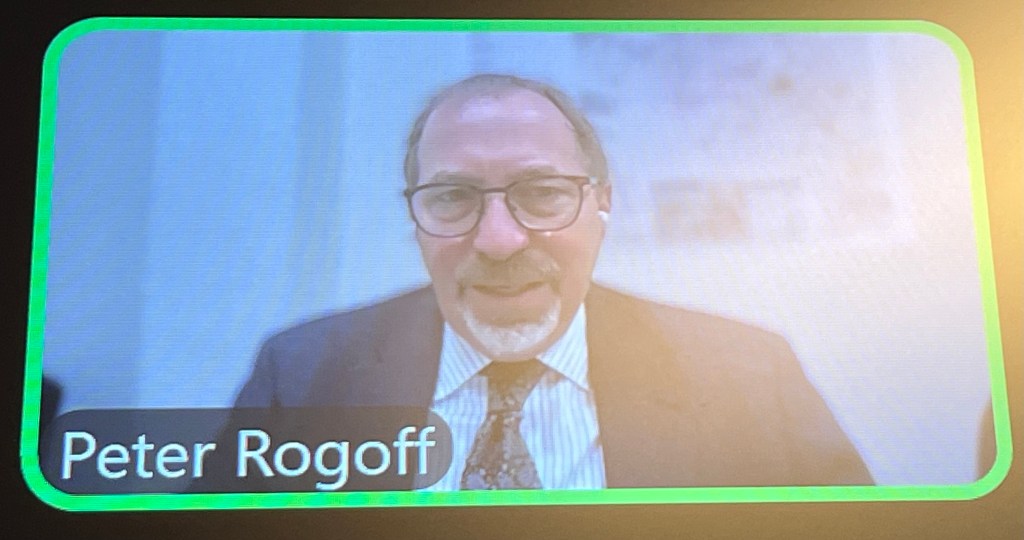
He started by discussing his experiences as CEO of Sound Transit, which he said “covers a very wide town area with very diverse mobility points… I had 18 board members that were like yours, spread from all around the region.”
“But the importance of thinking regionally [and being] invested in each other’s success and not view your role on the board as just battling your own jurisdiction is critically important,” Rogoff added. “There has already been enough, if you will, elbow throwing and territoriality between CTA, Metra, and Pace without just trying to do the same through the NITA board. I know that the vast majority of you actually sit on the boards of CTA, Metra, and Pace.“
“We had the same model in Seattle,” he explained. “It was extraordinarily helpful because we got the board members to recognize that their role on being dual-hatted in both boards was to help make conflicts go away, not to introduce new conflicts. And I would really encourage you all to think about it the same way. Change is hard, and the NITA Act envisions change. And you’ve got a little bit of a runway, but it’s not very long before people go, ‘Hey, I wonder what ever happened with that billion-and-a-half dollars a year.”
“And if you find yourself being coached by the service board representatives that you work for in the other hat you wear, and being told you need to go into that NITA board meeting and fight all of these new newfangled approaches, you need to ask a lot of tough questions,” Rogoff continued. “The NITA Act was adopted for a reason, and that was to change things to improve service and bring about reliability.”
“There was at the Washington [D.C.] Metro system – and Nuria will remember this – we used to have a board structure that we referred to as the mutually assured destruction pact,” Rogoff recalled. “Where in order for Virginia to get something, Maryland had to get something, and DC had to get something, and that just kept persisting year after year after year. Stupid decisions were made as a result. Money got wasted as a result, and it has subsequently been reformed, but please avoid the temptation to go down that road.”
“Nuria spoke to you about the importance of the executive director,” he continued. “I associate myself with everything she said, but there’s an important role for you about executive director that I think all of you [board members] need to remember. You’re going to get briefings from dozens, if not hundreds, of staff, and you’re going to become familiar with their names and and get regular briefings from them on topics that are important to you. Please remember that none of that NITA staff works for you. They work for the executive director, and the executive director works for you.”
“And the executive director needs to make sure that you’re getting all your questions answered… in a timely and accurate way,” Rogoff said. “And if the answers are not ready to be had right now, then we need to be able to tell you when you’re going to get answers to your questions. But please avoid the temptation that I experienced and had to kind of shut down in the Seattle area, and that is board members… shopping around to different staff to try to get the answer they want. No agency can really run that way, and it just gives rise to confusion and chaos and lack of accomplishment.”
“Very importantly, I also want to share a mistake that I made when I first got to Seattle,” he added. “I was hired, as so many new general managers and CEOs are, to make change, and I got the impression that the only people who really were there to make change and would be willing to make change are the new people that I brought into the organization.”
“That was a mistake,” Rogoff continued. “What I actually learned, in the first about two years, is the people who are really ready and able and skilled and knowledgeable to help you make change [are] kind of the old guard. The people who’ve been there and have been through these debates over and over again for three, five, ten, twenty years. There’s a lot of knowledge there, and just because they’ve been there, and NITA was passed on top of that organization, doesn’t mean that the [Regional Transportation Authority, NITA’s predecessor] staff doesn’t have a lot to offer you in terms of helping you make the changes you need.”
“And changes need to be made because expectations for NITA are very high,” he said. “You really need to identify some near-term wins that you can go out to folks and say, ‘Even in this first tranche of money, here’s how we’ve improved things. Here’s how we’ve improved the service. Here’s the capital projects we’ve launched.’ You know, a billion and a half dollars, in some ways it’s a lot of money. And in other ways, it’s not a lot of money.”
“And I will tell you that I’m out here doing a presentation in California, and I’m reporting on capital projects that have just a cost increase over the last 18 months of a billion and a half dollars.,” Rogoff said with a laugh. “So I know this this money can get eaten up very quickly.”
“You really need to identify how it is going into service – and not other expense categories – that people see,” he continued. “And then you need to use not only your public affairs staff but your government affairs staff to trumpet those changes and those wins from the highest mountain, because… people are cynical, and they’re going to think that this whole new thing really didn’t result in much change, unless you prove that otherwise.”
“I appreciate the opportunity to share these thoughts,” Rogoff concluded. “I apologize. I sounded a little peachy. Part of that is just informed by experiences where it wasn’t done right needed to be informed, and I really hope we can help you not make some of the pitfalls and mistakes that most of us have.”
“Peter, as always, incredibly direct and clear,” Kotarac responded. “And for folks that don’t know him, that’s him taking it down a few notches.” The crowd laughed.
Download the Proposed 2027 NITA Regional Budget Executive Summary here.
Download the Proposed 2027 NITA Regional Budget here.
Check out “Proposed 2027 Budget Highlights” here.
Submit a comment about the plan here.

If you appreciate Streetsblog Chicago’s reporting and advocacy on local sustainable transportation issues, please consider making a tax-deductible donation here. Thank you!