CTA accessibility has improved, but riders still face barriers.


As the Chicago Transit Authority undertakes the long, expensive process of making its rail system accessible, disability advocates are pushing the agency to invest not only in new elevators and other infrastructure, but also in maintenance and basic accommodations that allow riders to navigate the system independently. Of the CTA’s 146 rail stations, 110 are currently ADA accessible. The agency’s bus system has been fully accessible since 2005.
Yet an accessible station or bus does not necessarily mean an accessible trip. Over the past five years, the CTA received 3,770 complaints involving accessibility and the treatment of disabled riders, with the number rising by roughly 42 percent between the first and fifth years. The largest categories included employees passing up disabled passengers, discourteous treatment, and failures to provide accessible bus service. For disabled riders, advocates and researchers say, accessibility depends not only on whether an elevator or ramp exists, but whether it works, whether employees use it properly, and whether riders can actually get where they need to go.
For Carolee Stanmar, a disability rights advocate with ADAPT Chicago, and a public transportation rider with over 20 years of experience with spina bifida, genuine accessibility means being able to navigate the system independently rather than having to plan around broken equipment, seek out employees, or find alternative transportation.
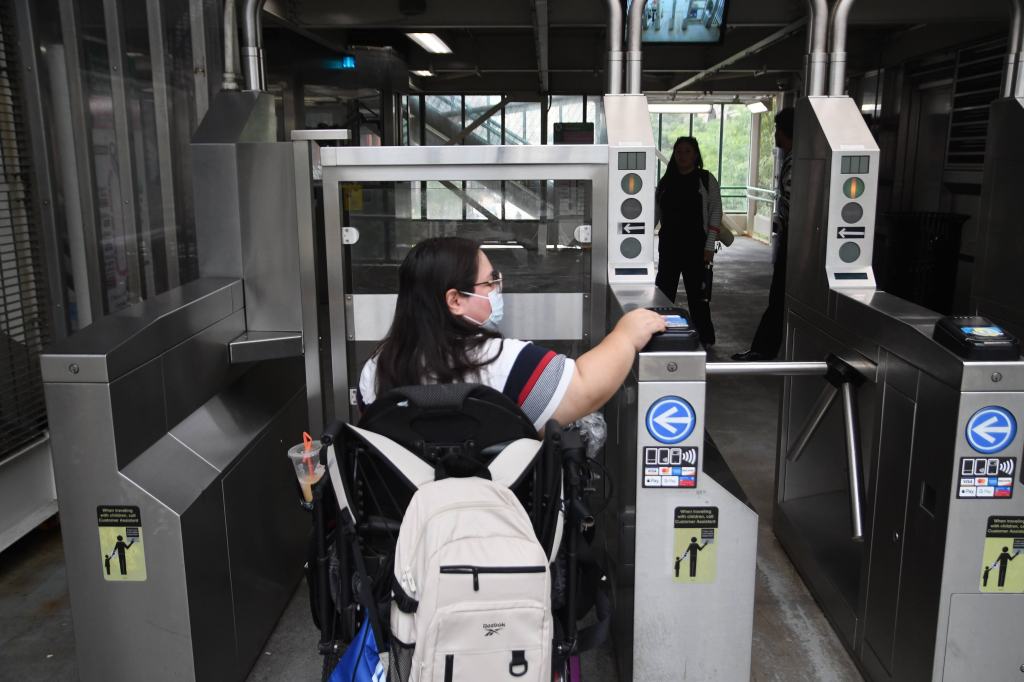
Stanmar said that she rides the Red Line frequently to get downtown, and the first obstacle is the accessible gate. The gate is heavy, and Stanmar said she needs to use her power wheelchair to open it, and that there is not always an operator at the station.
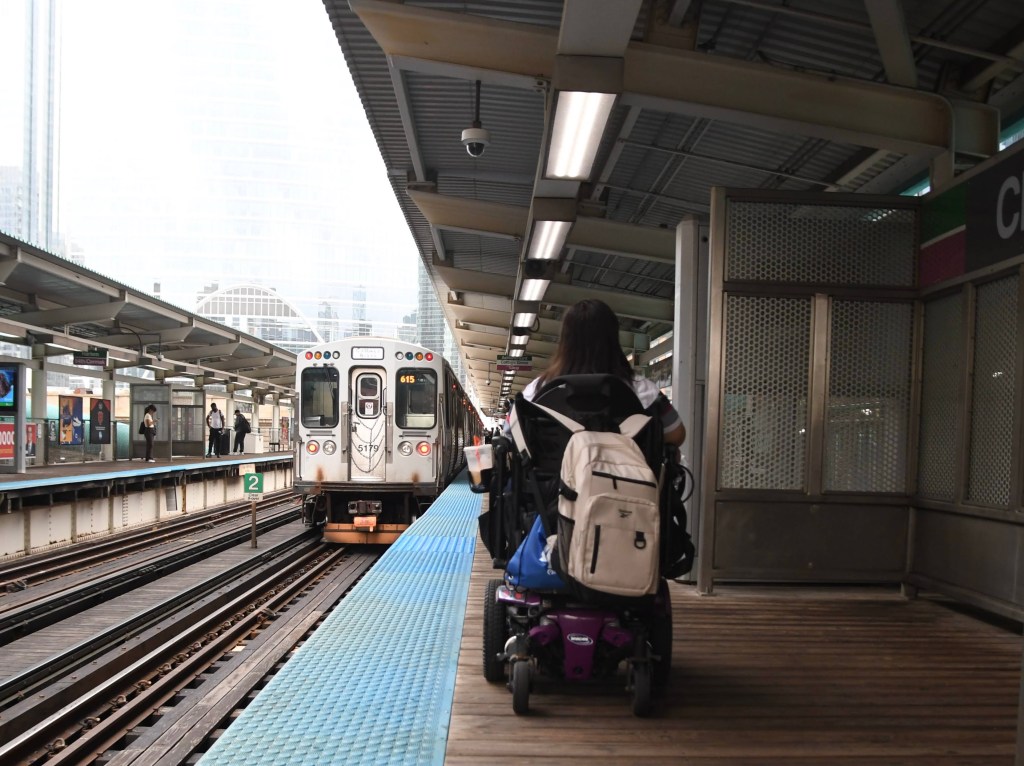
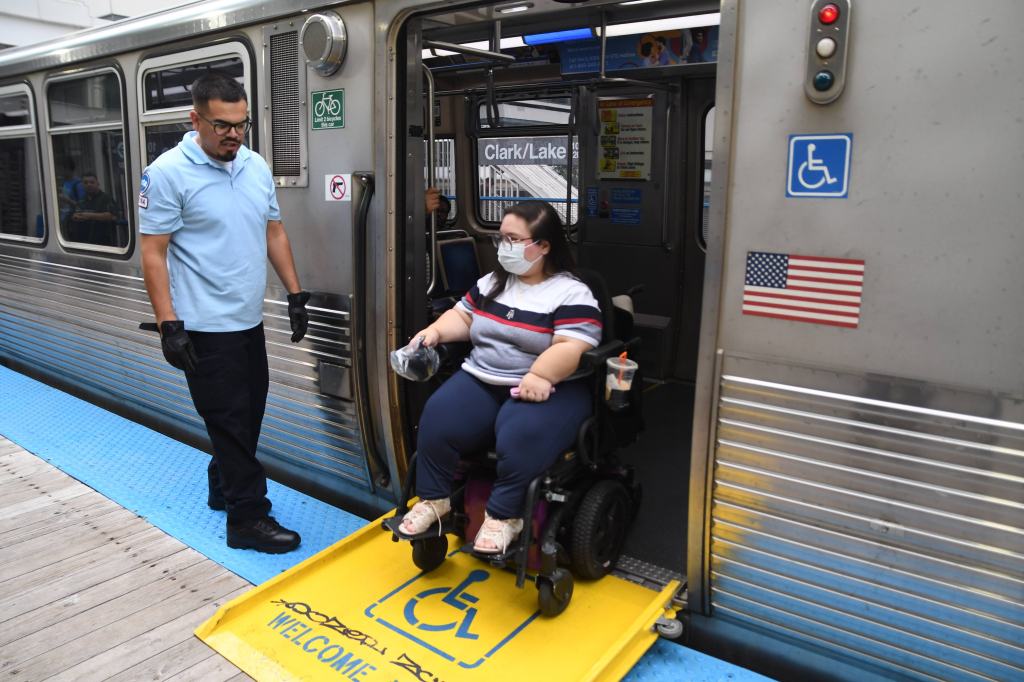
On the platform, the height of the train often does not match up with the platform, and an operator is needed to bring up a ramp. Stanmar said she has used public transportation in cities like Washington DC where the ramp is not necessary because the platform matches the train’s height.
“I shouldn’t have to take all those steps,” Stanmar said. “I should be able, like everybody else, to just step onto the train and get off when I need to. They need to realize that that is how we get around. A lot of times, owning a car is not possible. As people with disabilities, we understand you’re trying to get to work or wherever, but so are we.”
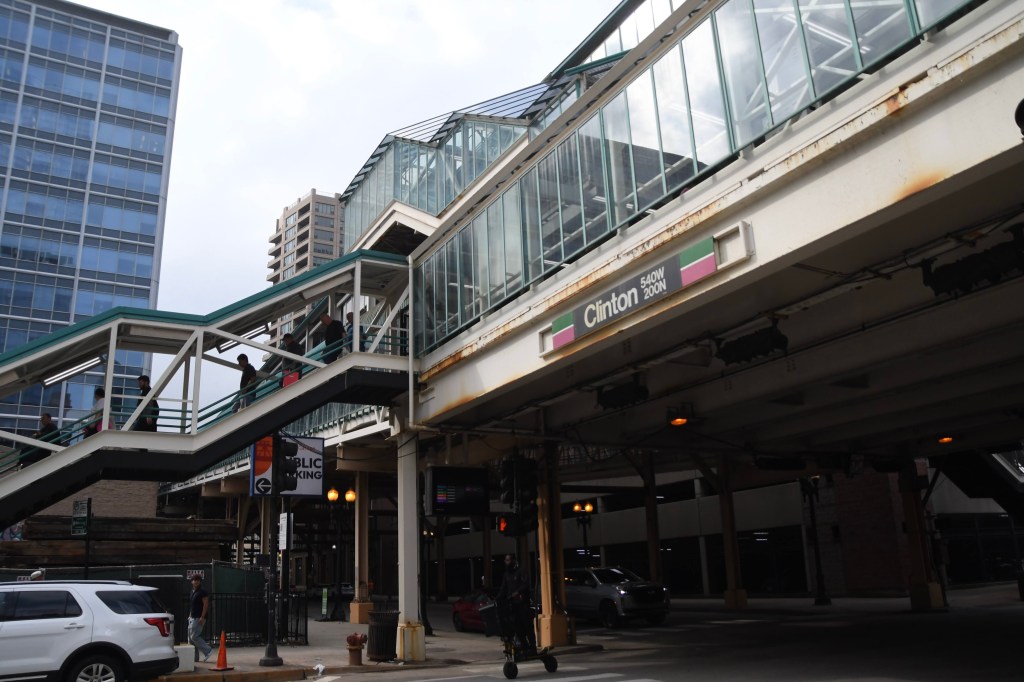
University of Illinois Chicago Professor Yochai Eisenberg said that he found in his research that transportation access for people with disabilities affects their ability to access healthcare and maintain employment. Frequent complaints include being passed by a bus or not having a ramp lowered. Inaccessible sidewalks, even around otherwise accessible stations, can also pose problems, leading people to feel they cannot use public transit, Eisenberg said.
For people with disabilities, accessibility extends beyond the transit system itself. “People want to be able to get to grocery stores, parks, recreation, social activities, and not think about who owns which piece of that,” Eisenberg said. The CTA has made some efforts to improve sidewalks around bus stops and stations, he said.
Stanmar said she has also encountered poorly shoveled areas around bus stops in winter, creating another barrier before riders even reach the transit system.
Paratransit also presents a barrier to spontaneous travel. While some pilot programs are testing alternatives, riders generally must book trips 24 to 48 hours in advance. “People with disabilities feel that it’s unfair that they don’t have the same level of opportunities, the same access to spontaneous travel as people without disabilities,” Eisenberg said.
Eisenberg added that researchers are increasingly interested in “forgone trips” – journeys people with disabilities do not take because of accessibility barriers. Some may rely on family or friends instead of transit, while others may simply stay home. Improving accessibility, he said, could increase not only transit use but people’s ability to participate in their communities.
CTA ADA Advisory Committee member and former CTA board member Kevin Irvine worked as an advocate with Equip for Equality in 2000 to sue CTA for accessibility. As part of the settlement, CTA centralized their complaint process, automated stop announcements on the buses, and standardized the process of using gap fillers on trains.
The lawsuit came after decades of advocacy over CTA’s failure to provide accessible transportation. Irvine said that in the 1970s and 1980s, some CTA leaders argued that disabled riders could rely on paratransit rather than requiring the agency to make its fixed-route system accessible. Activists protested, filed lawsuits, and brought complaints to the Illinois Human Rights Commission. The CTA was eventually forced to purchase buses with wheelchair lifts shortly before the Americans with Disabilities Act took effect.
When Irvine and his wife moved to Albany Park in 2003, most Brown Line stations outside the Loop were inaccessible. The Brown Line renovations in the 2000s were a “game changer” for the couple, Irvine said, allowing them to travel to destinations that previously required a bus, car, or taxi – or were effectively out of reach.
Irvine said the problems that prompted the lawsuit have not disappeared entirely. His wife still uses gap fillers to board trains, and he said rail personnel sometimes struggle to deploy them properly, adding delays to their trips.
Accessibility features ultimately depend on the employees responsible for operating them, Irvine said. He said most CTA personnel do their jobs well, but complaints remain important because ramps, gap fillers, and boarding procedures can fail when employees do not follow their training. In one recent incident, Irvine said, a bus operator stopped in the street rather than properly pulling to the curb, forcing him to enter the street to board.
CTA Manager of ADA Compliance Programs Irma Gomez-Fierro said about 90 percent of CTA elevator outages are resolved within an hour, though repairs can take longer when replacement parts are needed from manufacturers. She said riders can be particularly frustrated by the time it can take to make an inaccessible station accessible or restore an elevator to service. The problem can extend trip times for riders who live near a station they cannot use, forcing them to travel to another accessible station. The All Stations Accessibility Program is intended to address those gaps by making the entire rail system accessible, she said.
Accessibility delays can carry a social cost as well as a practical one, Irvine said. “When you have those delays and they’re related to accessibility, then it adds just the stigma that disabled people feel,” he said. Riders can become uncomfortable using the system because they feel other passengers are frustrated when they need additional accommodations.
According to Gomez-Fierro, the ASAP Program plans to make all CTA stations accessible within the next 20 years.
Gomez-Fierro said that the CTA inherited a train system that’s over 100 years old, presenting significant engineering challenges. She added that four stations on the Red Line – Berwyn, Bryn Mawr, Argyle, and Lawrence – recently reopened as fully accessible. The Austin Green Line station is among 14 stations that are recently opened, or are currently funded and in various stages of planning, design or construction as part of the accessibility initiative, according to a news release. The CTA is still seeking additional sources of funding to fully complete the project, the transit authority said.
LCM Architects’ Accessibility Consultant Barbara Padilla, who was diagnosed with multiple sclerosis in her mid-30’s and is a member of the CTA ADA Advisory Committee, said she relies on buses because she can’t walk longer distances like she used to.
Padilla said that architecturally it is difficult to redesign many of the older stations and put in an elevator. Particularly challenging, she said, are stations with ticketing partway between the street and the track platform.
Several CTA stations, including the Green Line Austin/ Lake Station implemented accessible ramps rather than an elevator. According to Padilla, designs like this avoid elevator maintenance and waiting for elevators.
While Irvine said he is happy with the strides CTA has taken towards accessibility and that the system fares well compared to other legacy transit systems like New York, further progress is hampered by a lack of funding. He added that the gaps in the system directly affect his family, limiting the stations they can use.
It’s likely the roughly $1.5 billion a year allocated for public transportation under the Northern Illinois Transit Authority act that passed the Illinois Legislature on Halloween 2025 will make a difference for improving accessibility
According to Irvine, the CTA as a system must balance deteriorating stations and the resources it distributes – it cannot simply pour everything into accessibility.
“It’s a very large and expensive system, and to make all the stations accessible is going to take billions more dollars,” Irvine said. “I believe we will [reach 100 percent accessibility]. The only entity that has the resources to make this a reality is the federal government.”
Eisenberg said accessibility standards have historically focused more heavily on mobility and visual disabilities, while the needs of people with intellectual and developmental disabilities have received less attention. Researchers are also increasingly examining how transit systems can better accommodate people with psychiatric and other disabilities.
The CTA provides services for deaf and blind riders, at stations, and on trains and buses. According to Gomez-Fierro, the CTA developed tactile braille signage through a partnership with The Chicago Lighthouse and National Federation of the Blind. The signs came out of the ADA Advisory committee eight years ago. Audio announces real-time arrivals. On the bus there are internal and external visual and audible announcements.
For riders who cannot rely on audio announcements, those visual cues can be essential. Irvine said a 2000 lawsuit helped push the CTA to provide both audio and visual information about bus stops. Older railcars also used flashing lights to signal when trains were going express. Newer cars increasingly use LED displays for the same purpose.
Jack Austin holds a master’s degree from Northwestern University’s Medill School of Journalism, specializing in Health, Environment, and Science Reporting. His work has appeared in The Chicago Reporter, Contratiempo, Planet Forward, Newcity, The Daily Northwestern, The Fulcrum, and The Allegheny Front, among other outlets.

If you appreciate Streetsblog Chicago’s livable streets reporting and advocacy, please consider making a tax-deductible donation to support our work. Thank you!