Transit experts and advocates share first thoughts on NITA’s 2027 budget, hoping it’s got what it takes to change the game

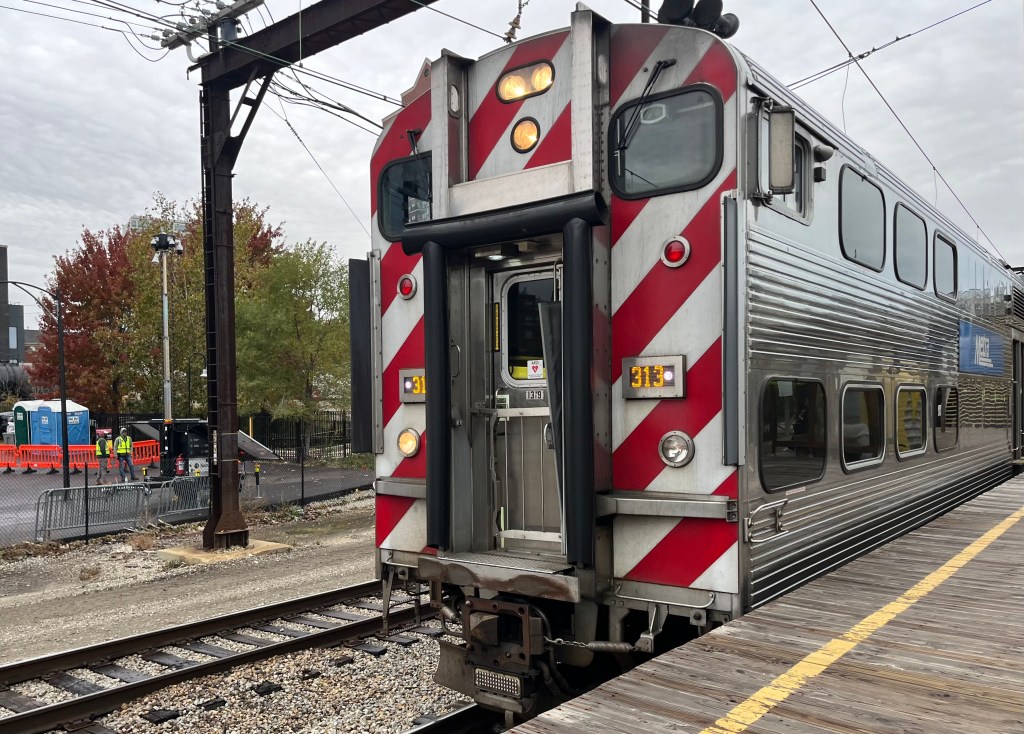

It’s just over a year since Illinois’ “Halloween Miracle” prevented Chicagoland transit from turning into a pumpkin. In the wee hours of October 31, Springfield lawmakers rescued the system from the fiscal cliff, and overhauled its governance structure, by passing the Northern Illinois Transportation Authority Act.
In past 12 months we’ve reached several public transportation-related landmarks in the Chicago region. these have including the launch of NITA on September 1 as a beefed-up replacement for the old Regional Transportation Authority, plus the debut of new NITA, CTA, Metra, and Pace boards.
Yesterday was another big milestone as the new umbrella agency released its Proposed 2027 Regional Transit Operating Budget and Five-Year Capital Program. NITA invited residents to provide feedback on the plan online, and register for a public meeting on November 12, 1 p.m. CST. You can show up in person at the bureau’s office, 175 W. Jackson St. in Chicago, or attend via Zoom.
“In 2027, our promise to riders is to put your experience at the center of regional decisions,” NITA says in the intro to its webpage for the budget proposal. “You should be able to count on transit that gets you where you need to go, connections that work, information you can trust, and services you can afford and use. This budget backs that commitment with investments in safer trips, more reliable service, and a more accessible system.”
Two Halloweens have passed since Illinois legislators determined that public transportation shouldn’t just play a stepchild role in the state budget.
There’s a lot to digest in the near 300-page budget document (download it here), but a few highlights that caught the eyes of the Streetsblog Chicago team upon a first perusal. (Thanks to the Daily Herald’s Marni Pyke and the Tribune’s Talia Soglin, whose reporting on this subject influenced this article.)
• While the regional transit operating budget for 2026 is $4.35 billion, NITA proposes increasing that to $5.04 billion next year, thanks to the new funding.
• The RTA’s budget was $48.8 million for this year, NITA is pitching a $401 million budget for itself next year, now that’s it is tasked with developing a financial strategy for all four agencies. But roughly half of that money will be passed on to CTA, Metra, and Pace, or used by NITA to implement system reforms.
• Proposed service improvements include a 7.3 percent increase in Pace fixed route service hours (p. 106), a 4.5 percent increase in CTA service (p. 80), and 22 new weekday trains on the Rock Island District Line (p. 96).
• There would also be an unspecified increase in trains on Metra’s BNSF, Milwaukee District North, and North Central Service lines (p. 36). However, Metra has been waiting for host railroad approval for more MDN and NCS runs since 2024.
• The budget talks about fare capping, which they are required to implement by June 1, 2028. It says they will prepare for it in 2027, alongside introduction of Ventra 3.0. And the budget has an appendix of the fare capping policies of three peer agencies.
Streetsblog reached out to just about all of the prominent Chicagoland transit experts and advocates we could think of for their takes, and a few responded by press time. If we hear from any others, we’ll add their comments as an update.
Here are some takeaways provided by Dr. P.S. Sriraj, director of UIC’s Urban Transportation Center.
• “Increased sales tax regionally and an increased apportionment from the state gas tax receipts bodes well for transit operations in Northeastern Illinois.”
• “A move toward performance-based funding at some level (based on passenger miles, vehicle revenue miles, vehicle revenue hours, and ridership) is a welcome step. However, it remains to be seen how they will agree on estimating passenger miles given that Metra has a zonal fare system and CTA and Pace have a fixed fare without an ability to capture how far people travel in their system.”
• “There is dedicated funding for system/regional safety as well as some funding for transit-oriented development-type initiatives that go with possible service enhancements. This has largely been a unfunded mandate for so many years and it is good to see some dedicated funding toward TOD.”
• “Farebox recovery: This metric is finally going down from 50 percent (pre-pandemic) to manageable proportions (25 percent now and tapering down to 20 percent starting in 2029. That will keep the Chicago system on par with other major systems around the country who have similar farebox recovery ratios mandated.”
• “NITA funding is also angled toward making this a regional transit network by placing emphasis on coordination pertaining to safety, fare integration, and coordinated planning.”
“These were the main points I noticed,” Dr. Sriraj concluded. “There are plenty of other details that need to be sifted through. It will be interesting to see how this is operationalized into the future.”
Here’s some feedback from Dr. Joe Schwieterman, director of DePaul’s Chaddick Institute.
• “Avoiding fare increases will make the headlines, but funding efforts to accelerate system-wide fare integration will be more of a ‘game changer’. We’ve been waiting a long time for true fare integration.”
• “Having a dedicated budget line to promote transit-oriented development is really exciting. Finally, transit providers can do more than the exert the ‘power of persuasion’ to get municipalities to create denser and more transit-friendly environments.”
• “More Sunday service on Pace will create an instant ridership boost – many service workers with weekend shifts rely on its buses.”
• “The list is impressive but daunting. Breaking the inertia that has long affected transit planning will put staff to the test. They will feel the pressure.”
• “Some of the budget items, such as battery-electric Metra trains, reflect actions begun long before NITA, but there are still many pleasant surprises.”
And here are some initial thoughts from Oboi Reed, executive director of the mobility justice organization Equiticity.
“NITA’s proposed 2027 budget creates an important opportunity to strengthen the connection between physical mobility and upward social mobility in Black and Brown communities,” Reed said via email. “We welcome the commitments to no fare increases, expanded service, transit ambassadors, and cleaner vehicles, alongside investment in the Red Line Extension and design funding for reopening the Racine Green Line station in Englewood.”
“Racial equity, mobility justice, and environmental justice must guide how these resources are invested and how success is measured,” he added. “That requires prioritizing neighborhoods experiencing the deepest transportation inequities, reducing pollution in overburdened communities, and creating safe, accessible, dignified, and engaging connections across CTA, Metra, and Pace, and between transit, walking, and biking. Safety must include protection for riders and workers, trained ambassadors, violence prevention specialists, and health and social services.”
“NITA should publicly report whether investments shorten trips, lower transportation costs, and improve access to jobs, education, healthcare, quality grocery stores, and recreation, with results examined by race, neighborhood, income, and disability,” Reed stated.
“To deliver on NITA’s promise, the agency should also invest in Neighborhood Mobility Models that integrate physical infrastructure with the social infrastructure residents need to navigate the region with confidence. This includes neighborhood mobility hubs, drawing on Equiticity’s The Go Hub model, at all four Red Line Extension stations and the planned Racine Green Line reopening, connecting transit with shared e-bikes, e-cargo bikes, e-scooters, adaptive bikes, and other mobility services.”

“Sustained funding for community based organizations led by Black and Brown people should support public transit excursions that deliver practical transit travel training across multiple modes and agencies, alongside paid transit ambassador and mobility navigator roles for neighborhood residents,” he added.
“Community ownership of transportation planning requires residents and CBOs to have decision-making power over priorities, investments, and evaluation, with compensation for their time and expertise,” Reed concluded. “Station investments should also advance community ownership of land and businesses and protect longtime residents from displacement. Our measure of success must be whether this budget strengthens community power and improves life outcomes in racially marginalized communities.”
Obviously, this is an exciting time for transit in Chicagoland. And clearly all of us advocates and experts have got our fingers crossed that, now that there’s a sustainable funding and governance model, NITA will live up to its potential to revolutionized regional transit.
Download the Proposed 2027 NITA Regional Budget Executive Summary here.
Download the Proposed 2027 NITA Regional Budget here.
Check out “Proposed 2027 Budget Highlights” here.
Submit a comment about the plan here.
Register for the November 12 public meeting here.

If you appreciate Streetsblog Chicago’s reporting and advocacy on local sustainable transportation issues, please consider making a tax-deductible donation here. Thank you!