NITA way to report safety issues on transit discreetly? Experts and advocates weigh in on new app for CTA, Metra, and Pace


Want evidence that the Northern Illinois Transit Authority, which officially launched less three months ago, is serious about its mission to make long-requested upgrades to the Chicagoland public transportation system, in an efficient manner? On Thursday, the agency released the Ride Safe app and text number design for the CTA, Metra, and Pace. It’s designed to make it easy to notify the authorities about potentially dangerous situations on trains and buses, and in stations. And you can now do that without having to talk on the phone or press an emergency call button, which could attract an unwanted response.
“With Ride Safe, riders can report what they see on any train, bus or platform in the region, through the app or by texting 312-313-9015, without making a phone call or drawing attention,” NITA’s press release states. “Riders choose from a short list of report types on a single screen, and each report is routed through Metra Multimedia Analytic Center, a central hub where trained staff review it, follow up if they need more details and send it to the right emergency or non-emergency team.”
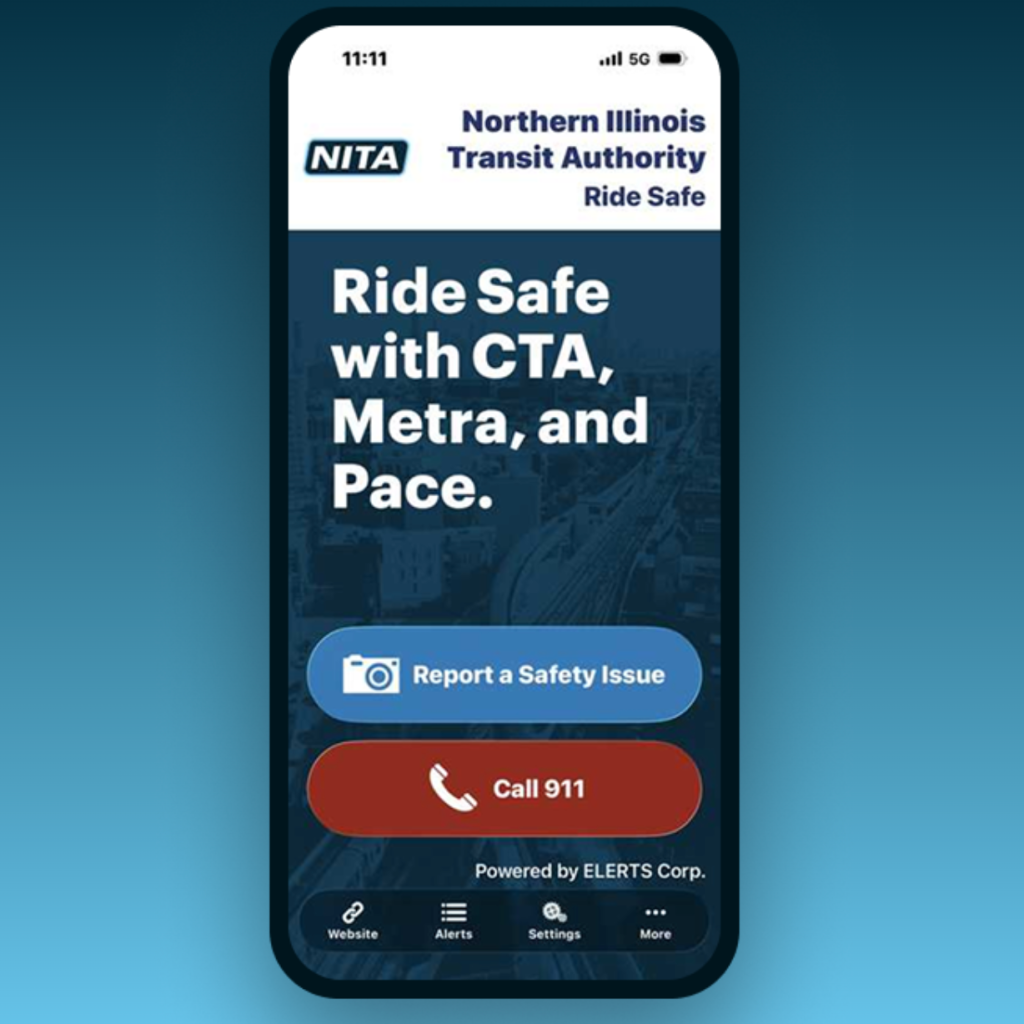
“Improving public safety is one of NITA’s core responsibilities under the NITA Act, and Ride Safe is an early example of that responsibility in action,” said NITA interim Executive Director Jamie Rhee. “Ride Safe makes it easier for riders to report concerns while giving transit agencies a more consistent, coordinated way to respond.”
Metra already had its own COPS application for reporting emergencies. But since there is now one app to rule them all, COPS will automatically update to Ride Safe.
NITA emphasize that dialing 911 is still the right move under some circumstances. “Riders should call 911 if someone is hurt or in immediate danger, a weapon is being used, a fire is spreading or a crime is in progress, and they can call safely,” the news release says. “Riders should use Ride Safe for situations where they can’t safely or discreetly call, or that are ongoing but not life-threatening, such as harassment, threatening or disruptive behavior, a suspicious or unattended item, drug use, vandalism or a person in crisis.”
Over the weekend, Streetsblog reached out to a wide array of local public transportation scholars and advocates to get their take on this new development. Here’s who’s responded via email so far.
P.S. Sriraj, director of UIC’s Urban Transportation Center
“NITA’s Ride Safe app is a step in the right direction to improve passenger safety and security across all three service providers in northeastern Illinois,” Sriraj wrote. “This app builds on Metra’s existing safety-reporting platform and extends it to CTA and Pace, creating a unified portal for passengers to discreetly report about a wide range of issues from safety concerns, including harassment, suspicious activities, to any other safety related incidents. The app ensures anonymity of the reporter which should allow for people to report without fear of any repercussions. It also seems to allow people to upload photographs and other media as well as providing offline capabilities. This is a step toward improving interagency coordination in northeastern Illinois. While the capabilities of the app are impressive, it will be interesting to monitor the effectiveness of this app in improving safety and security of our transit system.”
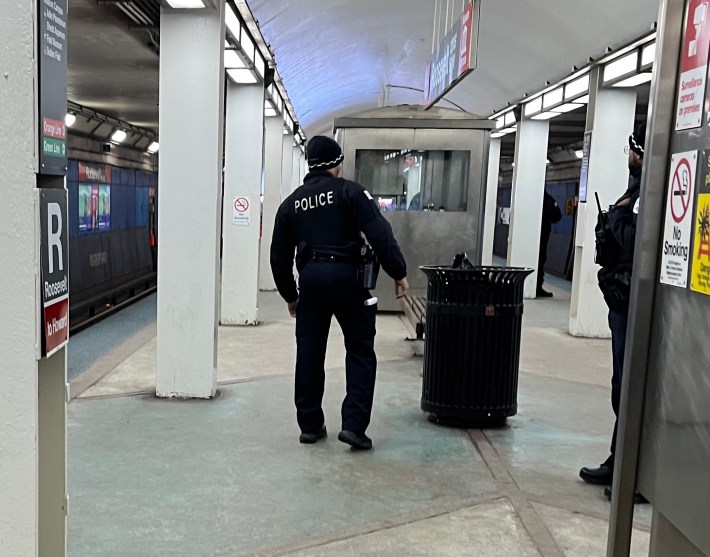
Police officers on the Roosevelt Station Red Line platform last February. Photo: John Greenfield
“Fostering confidence in the public to continue using the app can be influenced to a great extent by enabling the app to provide updates on submitted issues and how they were resolved in a timely manner,” Sriraj added. “I am not sure if the current version is multilingual and that would be a logical next step in the app’s next iteration. It will be equally important to create appropriate performance metrics that can help quantify the improvement of safety and security over time. While not all of the improvement may be attributed to the app, the app would still serve as the portal for reports and thus serve as a credible addition to improving this aspect of transit in northeastern Illinois. “
Joe Schwieterman, director of DePaul’s Chaddick Institute for Metropolitan Development
“This is long overdue and makes it far easier to educate riders on how to respond to incidents,” Schwieterman state. “Region-wide awareness campaigns directed at CTA, Metra, and Pace are now more viable.”
“The hard part will be making sure users trust that incidents reported in the app will be taken seriously,” he noted. “Many are likely cynical that transit officials can act quickly enough to help them when dangerous situations emerge.”
“A big risk is that the number of incidents overwhelms the system,” Schwieterman concluded. “Let’s hope overzealous users don’t report, say, three or four incidents in one day.”
CTA Karens and Chads, please take note.
UIC urban planning associate professor Kate Lowe
“One of NITA’s mandates was to increase coordination around and focus on public safety,” Lowe told me. “The launch of a coordinated app so quickly after NITA’s constitution reflects timely progress on one of the agency’s mandates.”
“Unfortunately, U.S. public transit agencies face the symptoms of massive underinvestment in housing, education, communities, and social services. In the U.S., we underinvest in solving root causes of interpersonal violence, homelessness, and untreated substance use and mental health distress,” she continued. “Sometimes privileged riders mistake seeing the effects of poor social policy with personal violence risk. In other words, seeing unhoused riders is often not a safety issue but gets grouped under the safety umbrella.”
“I applaud the new CTA programs for social services and violence prevention but would like to see a bigger share of safety dollars go to those programs over increased policing and privatized security ,” Lowe added. “In the past, the CTA has reported strong outreach to unhoused riders, but the reality is that there is far too little housing those who need it.”
“I am hopeful the new app will help focus energy on and coordination of outreach and de-escalation to improve the rider experience,” she concluded.
Active Transportation Alliance Campaign Organizer W. Robert Schultz III
“I look forward to seeing how the data received by CTA will be used to improve safety – real and perceived,” Schultz wrote. “Nine times out of ten trips I make are on CTA, so I will pay more attention to its impact on CTA.”
“Since CTA buses and trains are my primary way of travel around the city, I’m sure there will be times I would find utility in making a digital report on the app,” he continued. “No doubt riders will do as well. During this initial period, it will be critical of NITA’s agencies to roll out effective engagement and education so the public can learn how to best utilize the tool.”
“I have a couple of concerns that will no doubt resolve over the course of time,” Schultz shared. “As an advocate familiar with systems and reporting, expectations for immediate change should be tempered by the fact that this is a new tool both for users to report and for CTA to respond.”
“I hope the public is patient with the rollout and hiccups that will occur as incident information is triaged into categories ranging from urgent to acknowledged response,” he concluded. “In the end, the information aggregated and reported will be as important as the input riders give. As an advocate, I look forward to transparent reporting by CTA, Pace, and Metra as the public and agencies work to have the best public transportation system.”
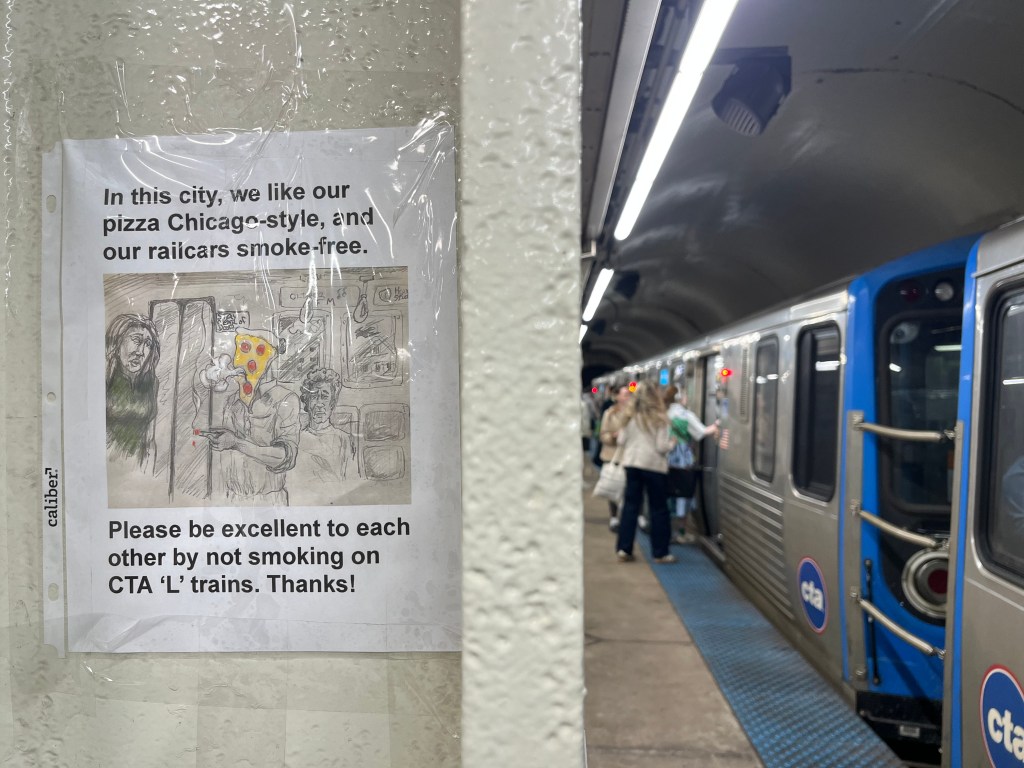
Transit advocate Logan Kulinski, creator of the CTASmokers.com website
“Based on what I’ve seen, [the Ride Safe app] looks pretty good to me,” Kulinski wrote. “It appears to be a rebrand of the Metra COPS app. The existing CTA chatbot does not have a good user experience, which is part of the reason why I built CTASmokers.com. I like that it allows for different types of reports and photos to be uploaded, too.”
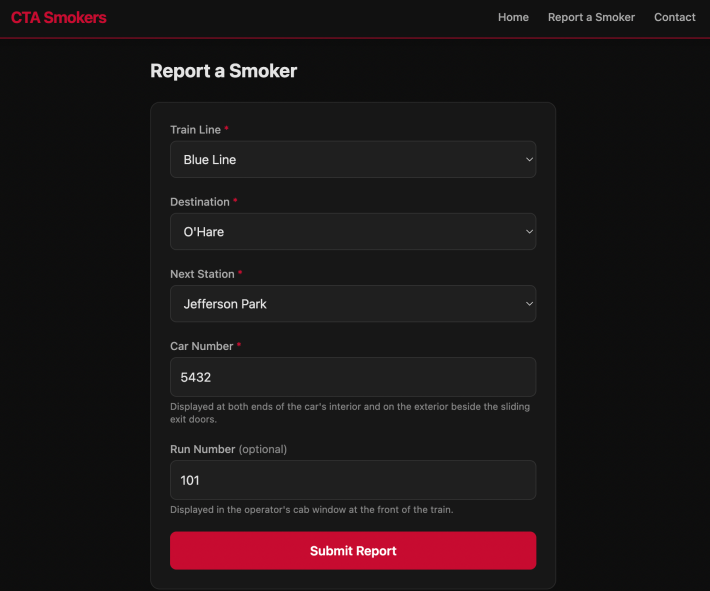
“I am curious how effective [Ride Safe] will be at curtailing the incidents,” he added. “Will they respond to them in real-time? I’m not entirely sure how they respond to the chatbot reports today.”
“It also appears that data/statistics will not be easily accessible, the same as the existing chatbot,” Kulinski continued. “You could always go the [Freedom of Information Act request] route, but that is very slow in my experience.”
“I will probably end up shutting down CTASmokers.com, but people still continue to use it for now,” Kulinski. “I added a banner with new information about the app and the number you can text.”
“My hope is that the app in conjunction with other initiatives like the improved fare gates will increase safety and cleanliness on the CTA,” Kulinski said. “Time will tell.”
Learn more about the NITA Ride Safe App here.
Download the app on Google Play and the App Store at these links.

If you appreciate Streetsblog Chicago’s livable streets reporting and advocacy, please consider making a tax-deductible donation to support our work. Thank you!