At second CTA board meeting under NITA, agency reports early Safe Ride Specialist pilot results, major crime decrease, and ridership gains


At today’s CTA board meeting, directors pushed back on the agency’s first use of a “consent agenda,” bundling garden-variety action items into a package that can be OKed with a single combined vote and one motion. Those board members were concerned about whether the public and directors were getting enough time and context to understand items being bundled together for approval.
Later in the hearing, Acting CTA President Nora Leerhsen reported improved rail service, the agency’s highest monthly ridership since 2019, and early results from the newly launched Safe Ride Specialist program, including two people connected to shelter beds during the first days of deployment.
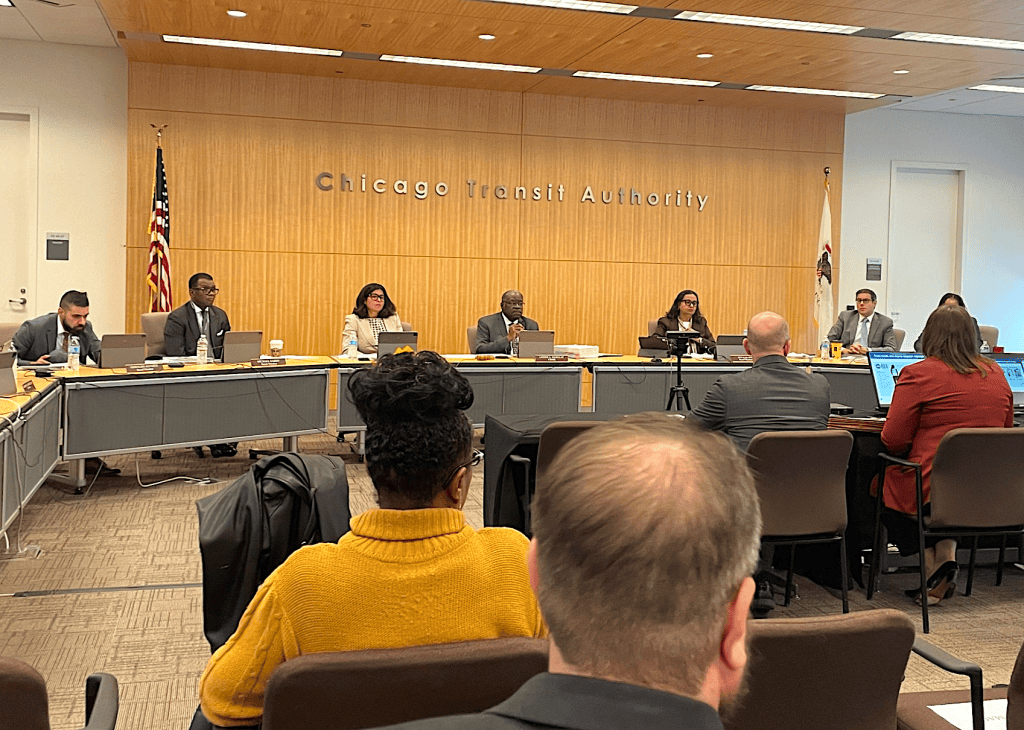
Members of the CTA board (left to right): Oswaldo Alvarez, Michael Eaddy, Neema Jha (vice chair), Lester Barclay (chair), Ann Kalayil, Tom Kotarac, and Nedra Sims Fears (behind CTA Chief Planning and Innovation Officer Molly Poppe, in the red jacket).
The meeting began with public comments, including concerns about bus reliability, accessibility, and delays in paratransit certification.
One commenter, who said he is rehabbing a property near CTA tracks, talked about the difficulty he’s had scheduling the required CTA flaggers for ComEd work near rail right-of-way. He said cancellations have delayed permanent electrical service and are costing him about $15,000 per month in lost income and interest. He called the scheduling process an opaque “black box,” using a contractor management term, and asked the CTA to improve coordination and accountability.
Housekeeping business
The board then moved into its first experiment with a consent agenda, a procedure that allows multiple routine resolutions, ordinances and contracts to be approved together unless a member asks to pull an item out for separate discussion.
Chair Lester Barclay said the goal was to make meetings more efficient while preserving board oversight. But several directors questioned whether the approach could instead make CTA business less transparent.
Director Tom Kotarac praised a related change. For what he said appeared to be the first time, the online CTA agenda linked directly to ordinances and background documents before the meeting rather than making the public wait to get the links until after a vote.
Still, directors focused on how much time people had to review that material. CTA staff said agendas are generally posted 48 to 72 hours before meetings, and that Tuesday’s agenda had been posted Saturday morning.
Vice Chair Neema Jha noted that effectively gave members of the public only one business day to work through a large amount of material. She also called for clearer summaries explaining the significance of lengthy attachments rather than expecting readers to decipher pages of technical documents. “There’s a ton of stuff that I think we can go into,” she said.
The board ultimately voted to move the consent agenda later in the meeting rather than immediately approving the bundled items.
Service performance, crime, and ridership
Leerhsen’s president’s report followed, beginning with service performance.
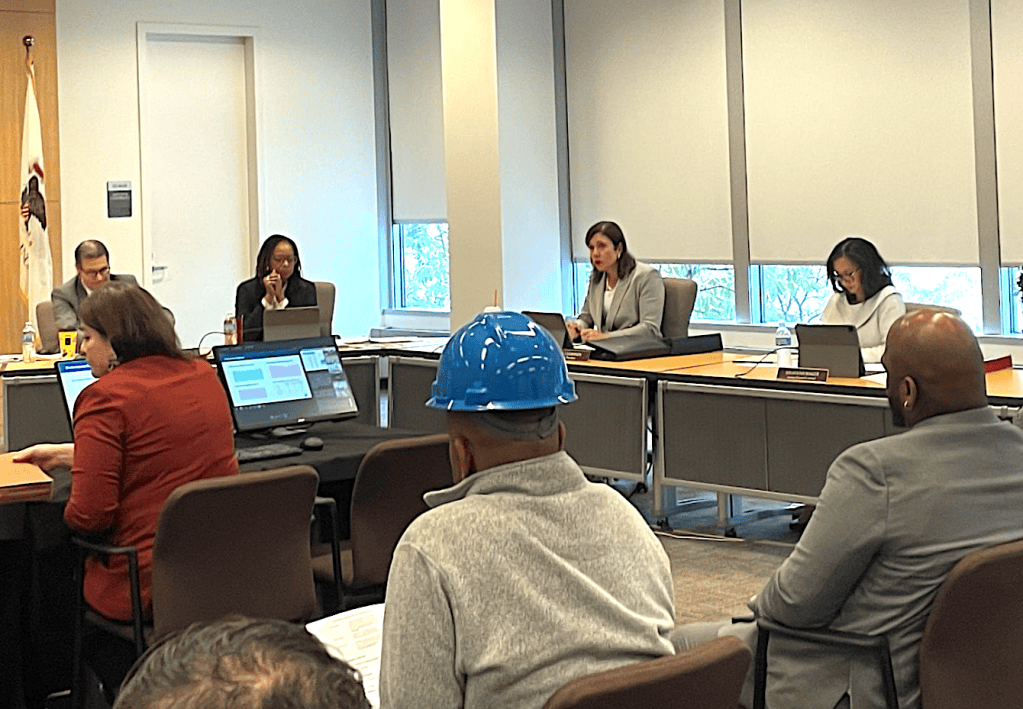
Rail service delivery exceeded 91 percent of scheduled runs in September, its highest level in 12 months, Leerhsen said. The CTA now has 886 qualified rail operators, slightly above its pre-pandemic level of 880. Bus service delivery reached 99.4 percent, although Leerhsen stressed that sending scheduled buses onto the street does not mean riders experience perfect service once congestion and other disruptions intervene. She cited the recently announced Michigan Avenue bus lane as an example of the street infrastructure CTA says it needs to make scheduled bus service translate into reliable trips.
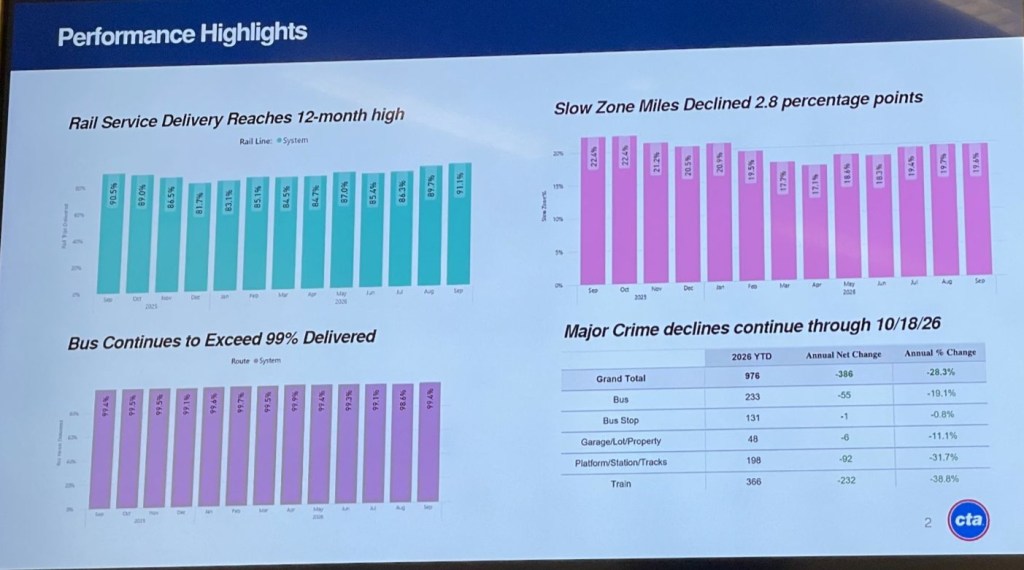
Leerhsen also reported that major crime was down about 30 percent systemwide compared with 2025. She said the decline follows an already downward trend and credited coordination with the Chicago Police Department, Cook County Sheriff’s Office and the CTA’s growing set of non-police safety programs.
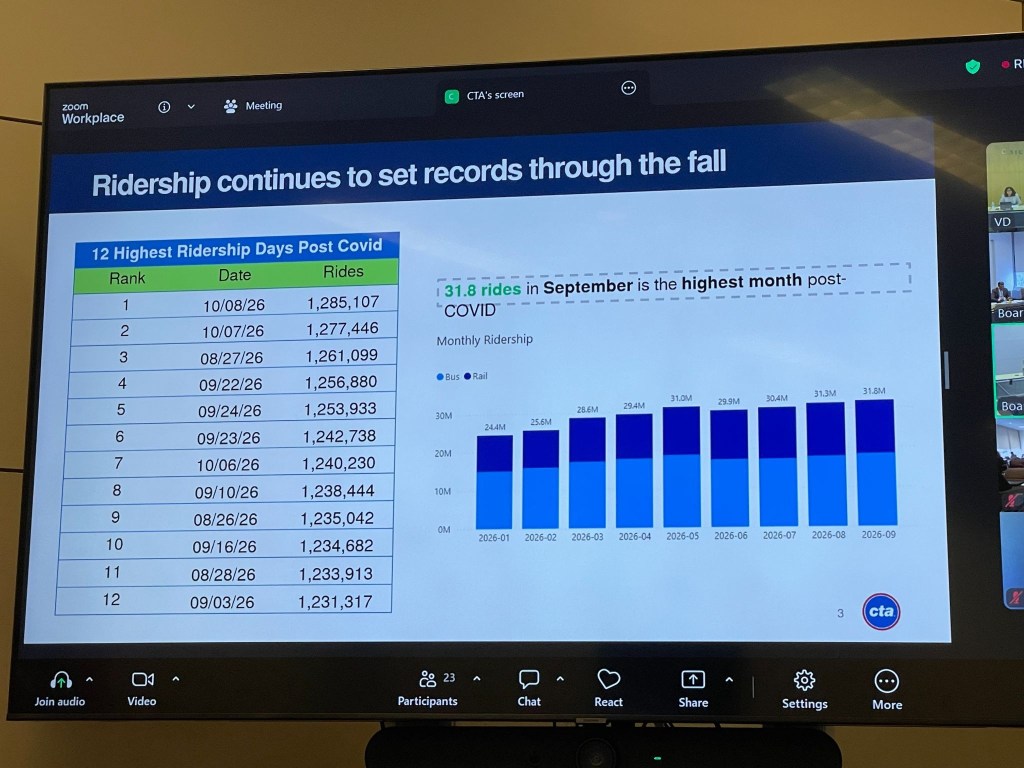
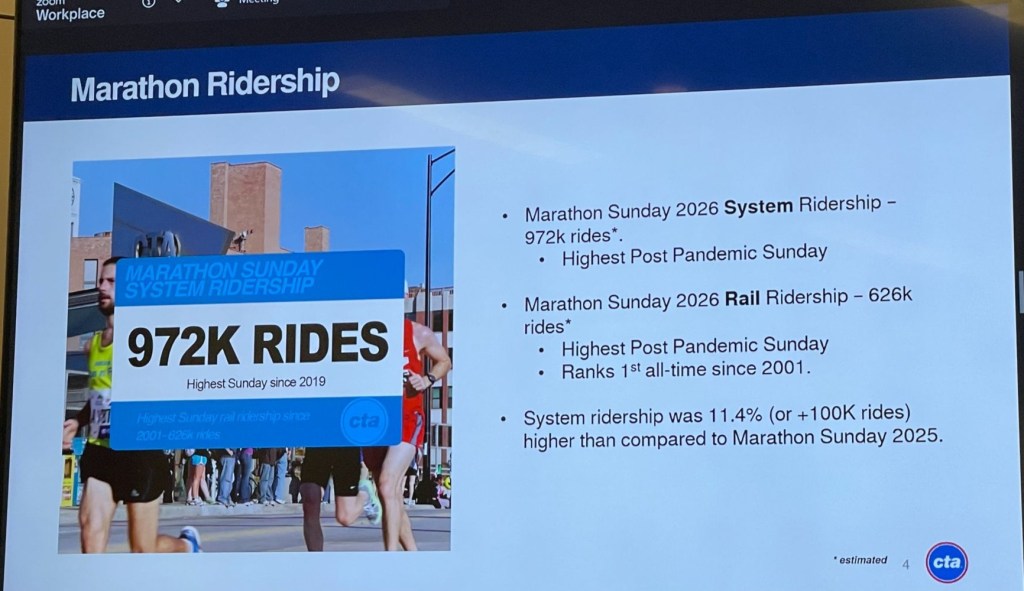
Ridership is also continuing to recover. September was te CTA’s highest-ridership month since 2019, Leerhsen said. Marathon Sunday was the busiest Sunday on the system since 2019, while rail recorded its highest Sunday ridership in 25 years.
Safe Ride Specialists
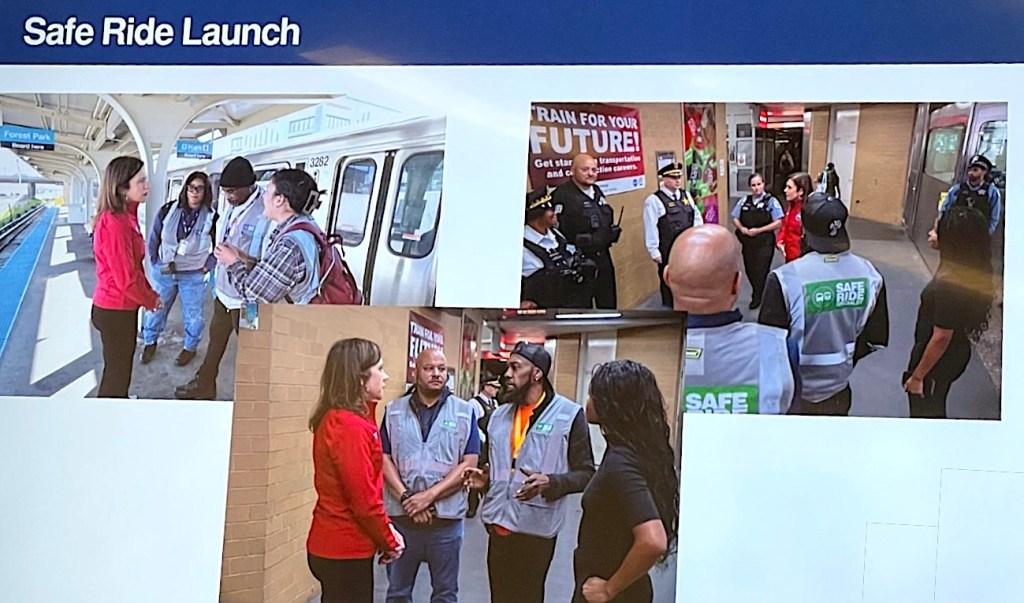
Much of the discussion then focused on CTA’s Safe Ride Specialists, non-law-enforcement outreach teams that began deploying this month on parts of the Red, Blue and Green lines. The pilot brings together four community organizations, and the workers include mental-health clinicians, peer-support specialists, crisis-intervention workers, and violence-intervention specialists.
Leerhsen said seeing the teams in person had changed her understanding of their role. “This is an element that changes the chemistry of the system,” she said, describing specialists de-escalating situations and bringing “a sense of calm” to stations in the early morning.
At Roosevelt, she said Metropolitan Peace Initiatives workers also focus on the broader “hospitality” of the station, greeting riders, maintaining a visible presence and intervening before problems escalate.

If you appreciate Streetsblog Chicago’s reporting and advocacy on local sustainable transportation issues, please consider making a tax-deductible donation here. Thank you!
CTA Chief Planning and Innovation Officer Molly Poppe said the agency is tracking 35 performance indicators for the one-year pilot, including referrals to services, safety incidents, service disruptions, and rider perceptions.
Some results came almost immediately. Housing Forward connected two people with shelter beds during its first two days of deployment, Poppe said. The organization has access to six initial shelter beds and can help people transition into longer-term housing.
Street Samaritans initially spent most of its time proactively approaching people, Poppe said. Within several days, some riders began approaching the workers themselves after seeing them repeatedly on the system. The teams sometimes begin by offering food or other basic assistance before discussing services, allowing workers to build trust over repeated interactions.
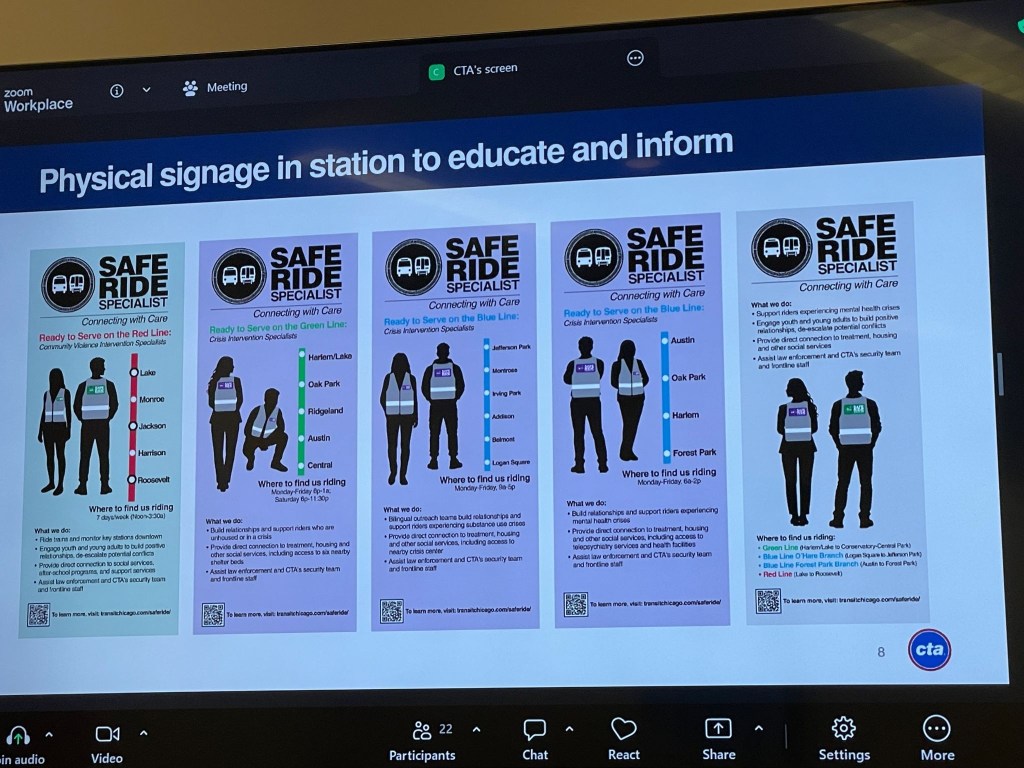
Board members pressed the CTA on how the pilot locations were selected, how success will be measured, and whether the program could eventually expand. Staff said locations and hours were chosen using incident data, rider complaints, and the type of intervention being offered. Downtown Red Line stations, for example, were selected in part because of concentrations of youth-related incidents.
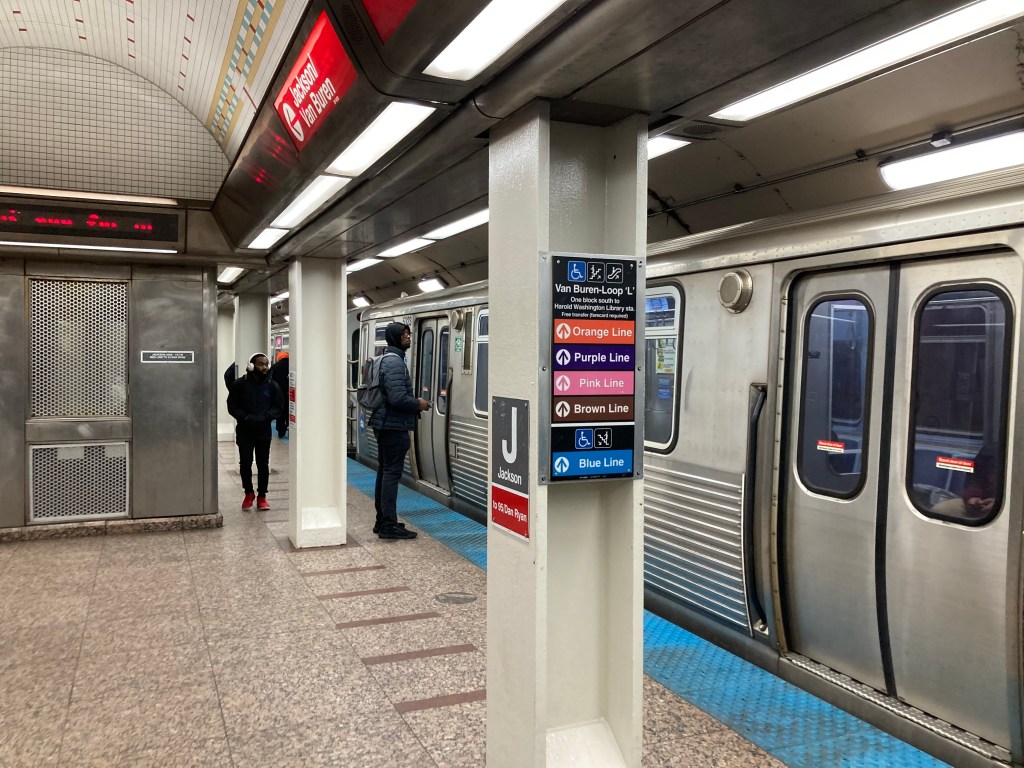
The specialists are contractors rather than CTA employees, but the CTA trains them. Officials emphasized that their role is supportive, not punitive. And this is one reason CTA publicly posts when and where the teams can be found.
Kotarac noted that the pilot could help inform the regional transit ambassador program required under the new Northern Illinois Transit Authority Act.
Rider surveys
The CTA then turned to its rider surveys, which the agency now conducts twice a year after finding that quarterly results changed too little to justify the previous frequency. Poppe said the surveys show a significant post-pandemic change: For the first time, riders are using the system more for personal business and errands than for traditional work commutes, strengthening the case for more midday, evening and weekend service.
Safety remains one of the weaker areas of customer satisfaction, and staff said the next survey (launching this week) should begin capturing rider reactions to recent investments, including increased policing and Safe Ride Specialists.
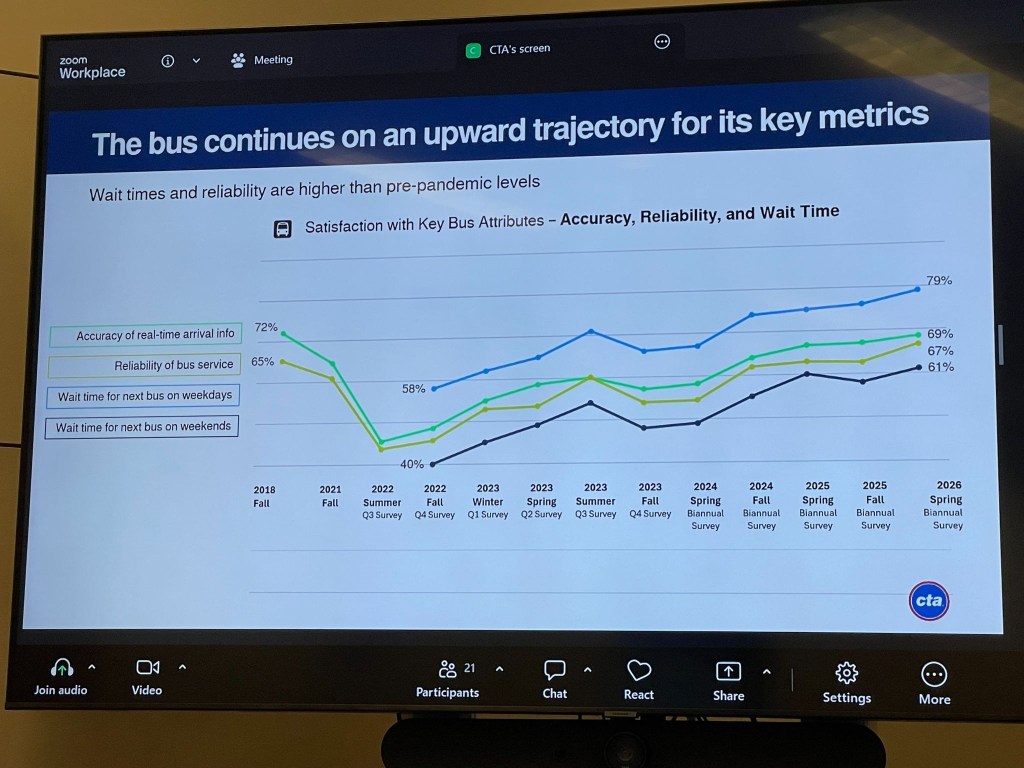
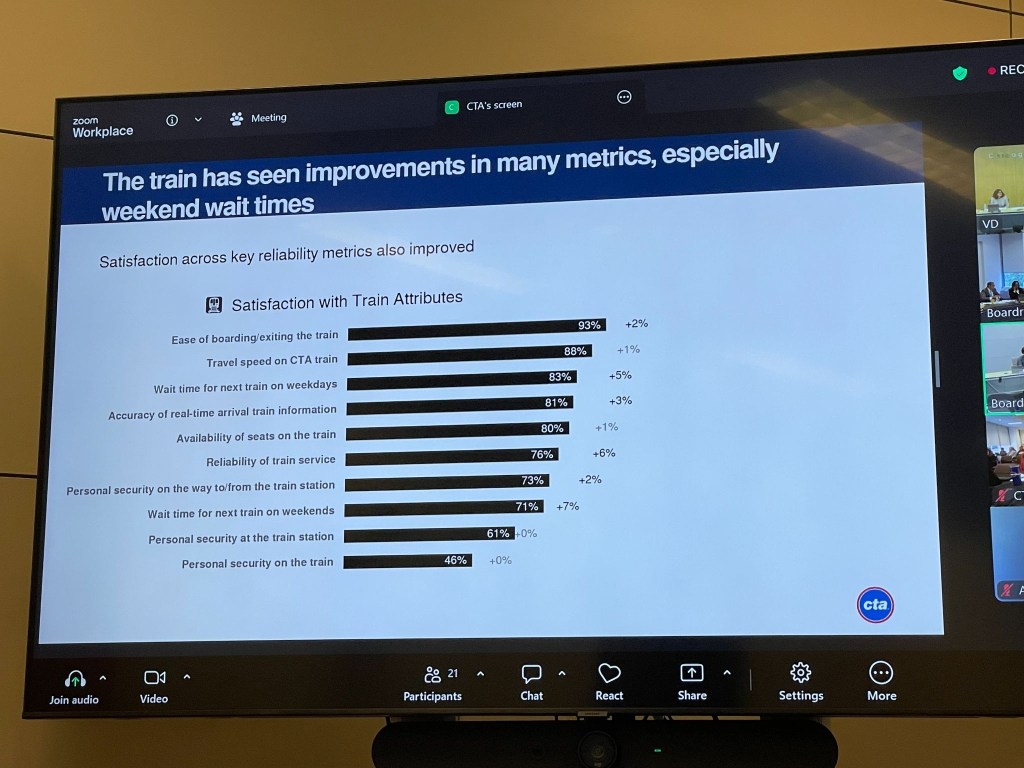
Jha urged the CTA to present raw numbers alongside percentages and to drill more deeply into individual rail lines and bus routes so riders can connect systemwide performance statistics with their own day-to-day experiences. Leerhsen agreed that future reports could provide more route-level examples.
Financial report and Blue Line upgrades
The meeting then moved into its financial report. CTA officials said revenues through August were running close to budget, aided by stronger-than-expected ridership, while operating expenses were about $7.9 million below budget for the month.
Board members also returned to the long-running need to rebuild the Forest Park Branch of the Blue Line. Barclay argued that the project should remain a major regional funding priority, noting that the line serves not only Chicago but western suburbs and O’Hare.
The meeting reflected a CTA board still working out how it wants to exercise oversight under the region’s new transit governance structure. The organization is not only asking whether service and safety indicators are moving in the right direction, but also how much information riders and board members need to decide whether the numbers match their experience.
If you appreciate Streetsblog Chicago’s reporting and advocacy on local sustainable transportation issues, please consider making a tax-deductible donation here. Thank you!

Read More:
Streetsblog has migrated to a new comment system. New commenters can register directly in the comments section of any article. Returning commenters: your previous comments and display name have been preserved, but you'll need to reclaim your account by clicking "Forgot your password?" on the sign-in form, entering your email, and following the verification link to set a new password — this is required because passwords could not be carried over during the migration. For questions, contact tips@streetsblog.org.