2027 Complete Streets staffing stays flat, as some alders request more bikeways, others want “nothing to do with bike lanes”

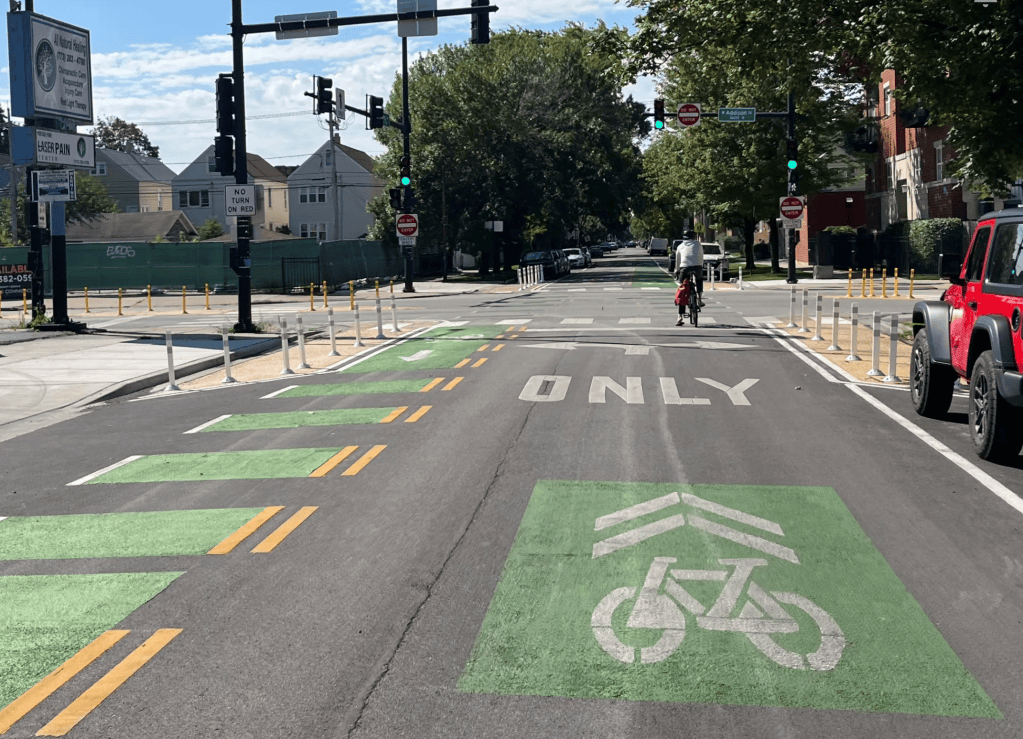

Chicago’s proposed 2027 budget would keep the Chicago Department of Transportation’s Complete Streets staff at only three positions. That’s as some alderpersons continue to ask the agency for pedestrian infrastructure upgrades, bike lanes, and other traffic-safety amenities in their wards. However, a few other alders say they don’t want any bikeways in their districts at all.
Mayor Brandon Johnson’s budget recommends $356,940 for Complete Streets personnel, up from $346,548 in the 2026 revised budget. The subsection would continue to fund one Coordinating Planner II, one Program Manager, and one Projects Administrator. It’s likely the roughly 3 percent increase would simply cover cost-of-living raises for the three exisitng staffers, but no new positions would be funded. That budgeted headcount is unchanged from 2026, but down from four positions in 2025.
That line item does not represent all of Chicago’s spending on pedestrian improvements, bike lanes, or other traffic safety projects. Construction can draw from several City, state and federal funding sources, while some smaller improvements are funded through CDOT’s citywide Complete Streets program.
But staffing became an explicit question during CDOT’s Oct. 29 City Council budget hearing. Ald. Andre Vasquez (40th) asked Commissioner William Cheaks Jr. what it would take to fully staff the Complete Streets program compared with what is included in the proposed 2027 budget.
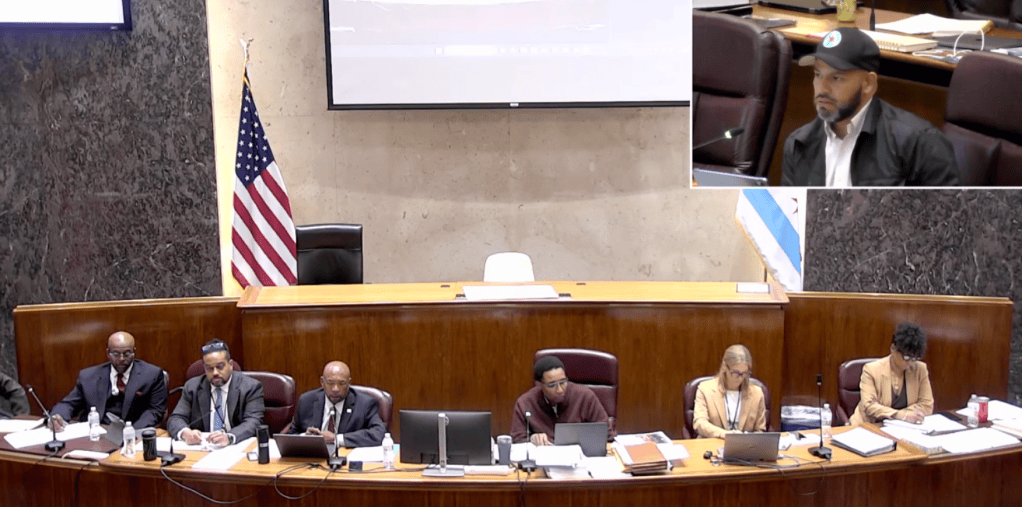
“This year I’m fine,” Cheaks responded, adding that the department is evaluating its staffing and could return to City Council next year if it determines more positions are needed.
That relatively steady budget comes as CDOT continues to expand Chicago’s bicycle network. Cheaks told alders the department expects to install about 26 miles of bike lanes this year. Exactly where future bike infrastructure should go, however, produced some of the hearing’s starkest disagreements.
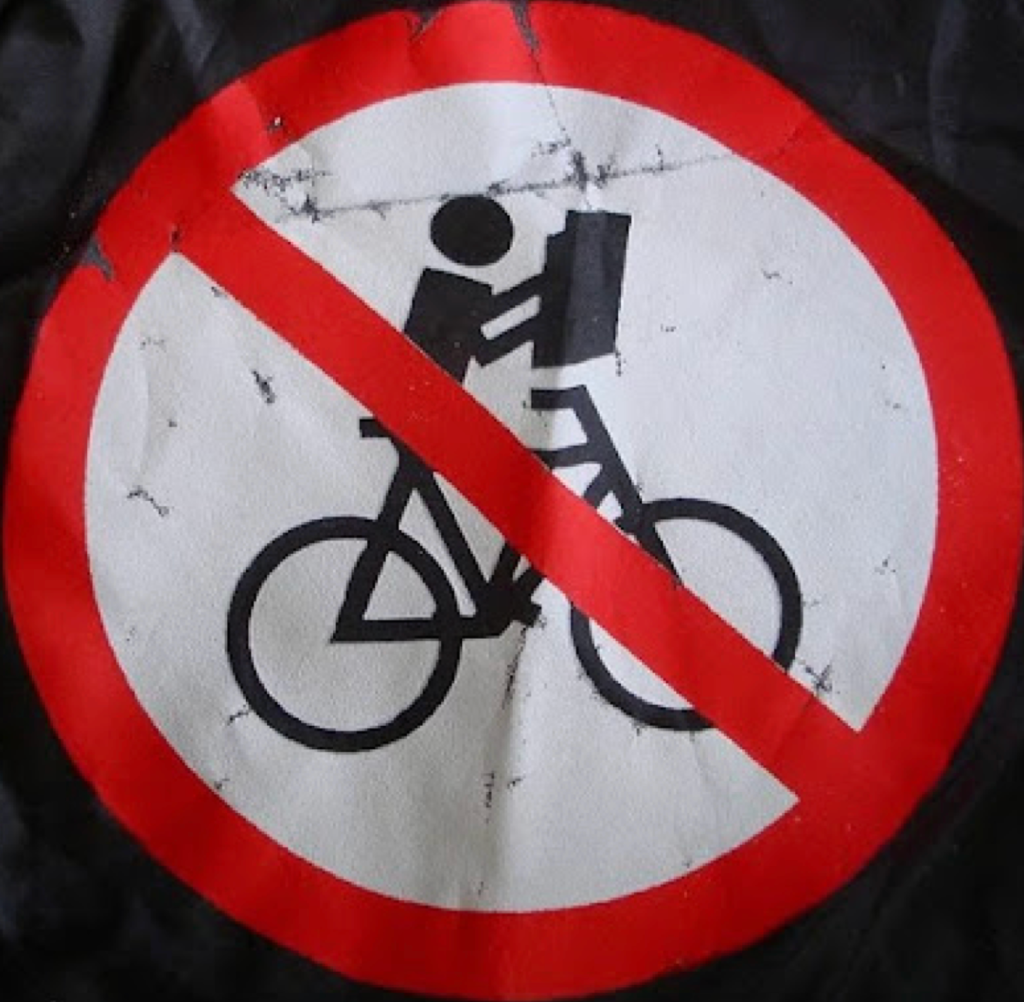
Ald. Marty Quinn (13th) bluntly put his opposition to bike infrastructure on the record. “The 13th Ward is not interested in bike lanes anywhere,” he said. “No bike lanes.”

Tragically, on June 24, 2023, a left-turning motorist struck and kiled Józef Strus, 67, as he bicycled at 57th Street and Natchez Avenue in Quinn’s ward.
Ald. Anthony Napolitano (41st) echoed Quinn later in the hearing. “The 41st Ward wants nothing to do with bike lanes,” Napolitano said, arguing that streets that might appear suitable for bike lanes often provide needed parking in his predominantly single-family-home ward.
Ald. Stephanie Coleman (16th) joined them near the end of the hearing, saying her ward did not want bike lanes and suggesting they be directed instead to wards whose alderpersons support them.
In another tragic case, on July 5, 2025, a hit-and-run Audi driver fatally struck Shaheed Muhammed, 56, on his bicycle at 63rd and Halsted streets in Englewood, within Coleman’s district.
Budget Committee Vice Chair Nicole Lee (11th) acknowledged that bike lanes are controversial, but framed the discussion around safe transportation regardless of mode. Lee mentioned Riley O’Neil, a CDOT Complete Streets planner who lived in her ward and whom a negligent driver fatally “doored” on Halsted Street in Bridgeport on June 5. “We’re all committed to safety, to the ability to travel safely in and around this city, no matter how you travel, whether you’re walking, driving, cycling,” Lee said.
Ald. Leni Manaa-Hoppenworth (48th) thanked CDOT’’s Complete Streets staff for helping make her ward one of the city’s most bike-friendly. She said connecting gaps in the network remains a priority. “If there is a bike lane we want it to be connected,” she said. “It’s weird when it just ends.”
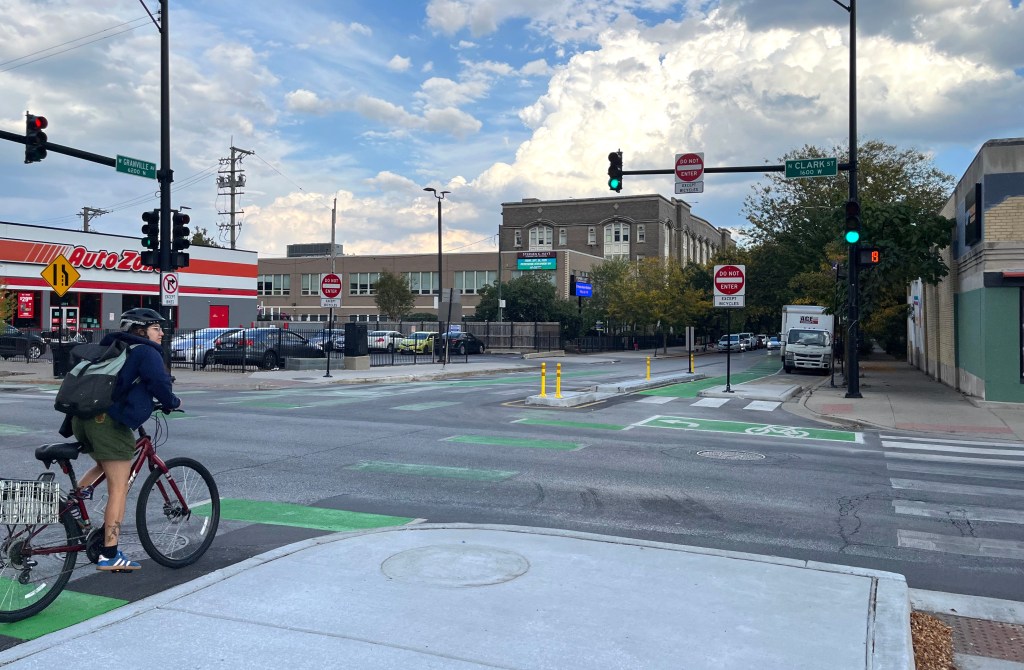
Ald. Ruth Cruz (30th) similarly thanked the Complete Streets team for its work installing bikeways.
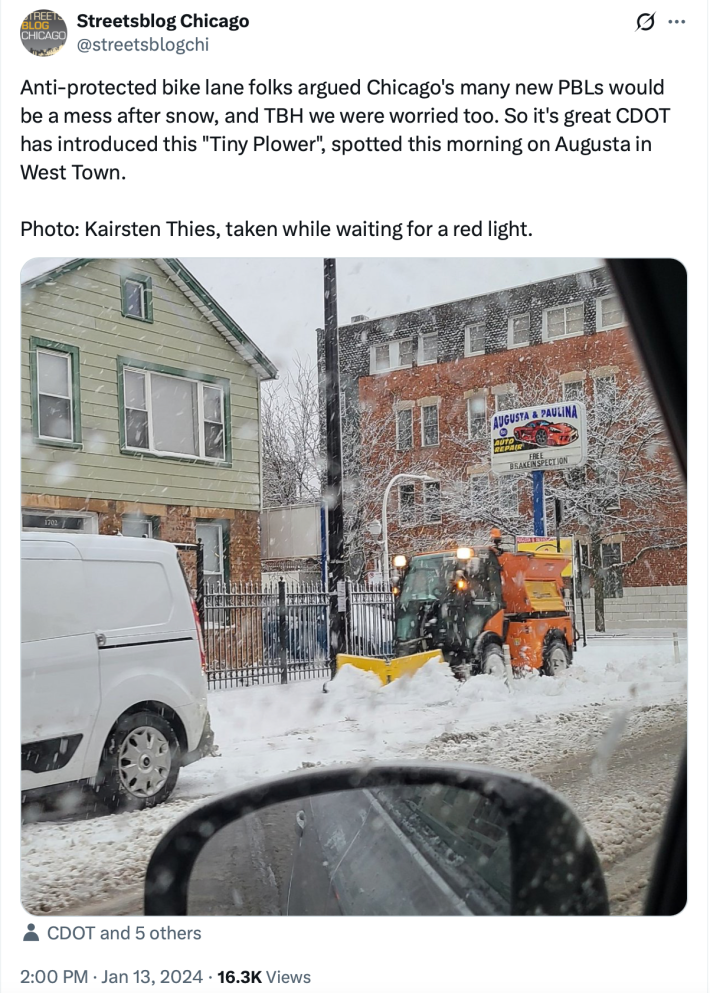
Some alders asked whether the city has enough resources to maintain the infrastructure it builds. Ald. Pat Dowell (3rd) asked CDOT about sweeping and snow removal after hearing complaints from residents about protected lanes that weren’t properly cleared. Cheaks said the department has eight sweepers and eight snowplows that are compact enough to maintain protected bike lanes, with a cleaning schedule posted online. CDOT staff said the overall bicycle network now totals about 522 miles.
Ald. Julia Ramirez (12th) urged CDOT to consider maintenance capacity as it adds new lanes, while Ald. Brendan Reilly (42nd) questioned whether the specialized machines are consistently operational. Cheaks said all 16 pieces of equipment are currently working.
Much of the hearing also demonstrated that Complete Streets projects include more than bicycle infrastructure. Traffic Safety Committee Chair Ald. Daniel La Spata (1st) questioned how CDOT identifies hazardous sidewalks, and whether the city has enough information to determine where repairs are most urgently needed.
Ald. Scott Waguespack (32nd) asked for more traffic-calming attention around schools and parks.
Manaa-Hoppenworth discussed pedestrian refuge islands, raised crosswalks and a forthcoming pedestrian hybrid beacon, while noting that people are still being injured on streets in her ward despite its Vision Zero efforts.
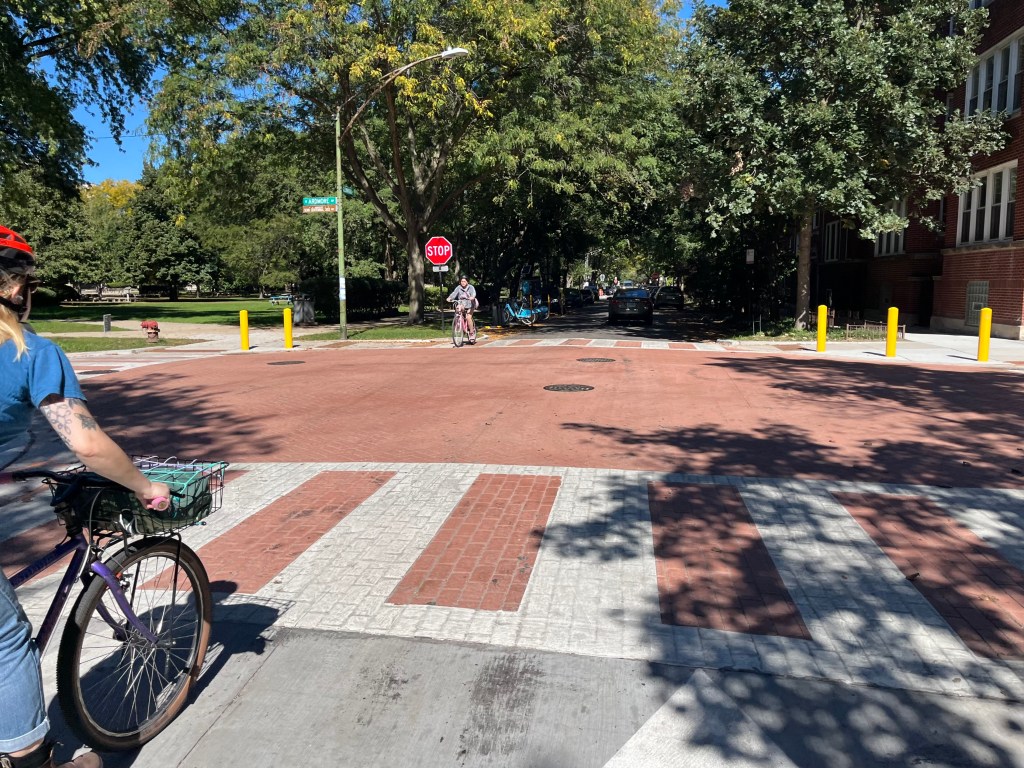
Vasquez later mentioned an intersection near a Metra station where he said a driver struck a person badly enough to cause brain damage. He argued that improvements such as raised crosswalks and better signage should not have to be assembled piece-by-piece from an alderperson’s discretionary “menu” infrastructure budget.
CDOT Managing Deputy Commissioner Vig Krishnamurthy said the department tries to match projects with several sources of funding. Smaller safety improvements can come from the citywide Complete Streets program, which prioritizes locations including major schools and transit stations.
The City is also requiring more from private development through strengthened Transportation Demand Management rules. Improvements such as raised crosswalks, curb extensions and pedestrian refuge islands can help developments satisfy those requirements, Krishnamurthy said, while federal, state and earmarked funding can support more unusual projects.
This means the three-position Complete Streets budget line does not tell the whole story of how Chicago pays for safer streets. However, the hearing illustrated another constraint that may be harder to quantify in a budget: political support.
Some alderpersons are asking CDOT to connect the bike network, accelerate pedestrian improvements ,and find more systematic ways to pay for safety projects. Others are explicitly asking the department to keep bike lanes out of their wards.
For 2027, the mayor’s proposed budget largely preserves the Complete Streets team as it is. The bigger question may be what Chicago will ask those three staff members and the rest of CDOT to build.

If you appreciate Streetsblog Chicago’s reporting and advocacy on local sustainable transportation issues, please consider making a tax-deductible donation here. Thank you!