“SBC versus smoking on the CTA” part five: Posting pizza-themed PSAs against puffing on the ‘L’ at every Blue stop provided a slice of Windy City life


It’s time for the fifth installment of our series “Streetsblog Chicago versus smoking on the CTA.” This is an effort to find holistic solutions (not simply more policing) to the aggravating problem of smoking and vaping inside railcars. Take a look at part one for an intro to my perspective on the issue. It’s common knowledge that smoking on the ‘L’ is a major hazard for people with disabilities, seniors, and young kids. It’s also unhealthy and annoying for the rest of us, and it causes people to instead choose modes like driving and ride-hail, contributing to crashes, pollution, and congestion.
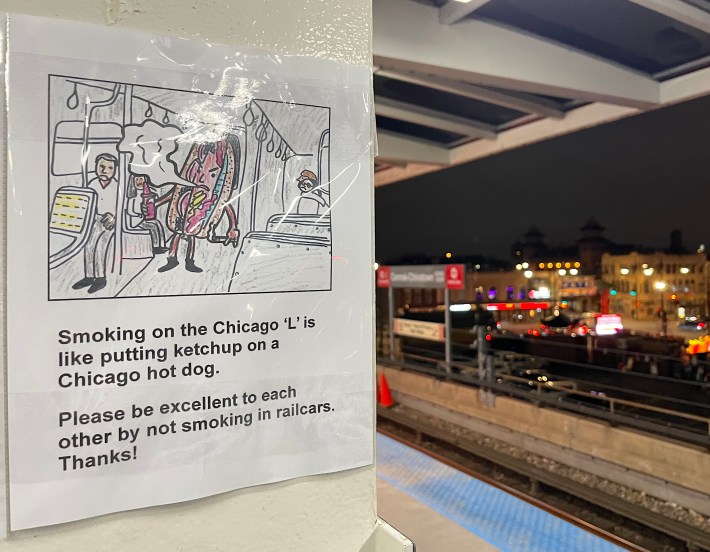
Streetsblog readers will recall that last month, encouraged by SBC reader survey results, I did some “guerrilla urbanism” by visiting every Red Line station from Roseland to Rogers Park and posting hot dog-themed anti-smoking flyers. Since I’m not quick enough on the draw with packing tape to exit a train, hang the PSA, and re-board the same run, this required me to wait for a different train run for each station, so it was time-consuming.
The posters seemed generally well-received. Even a security guard, whom I thought was going to bust me for breaking the CTA’s official post-no-bills rule, instead said, “Thanks for doing that.”
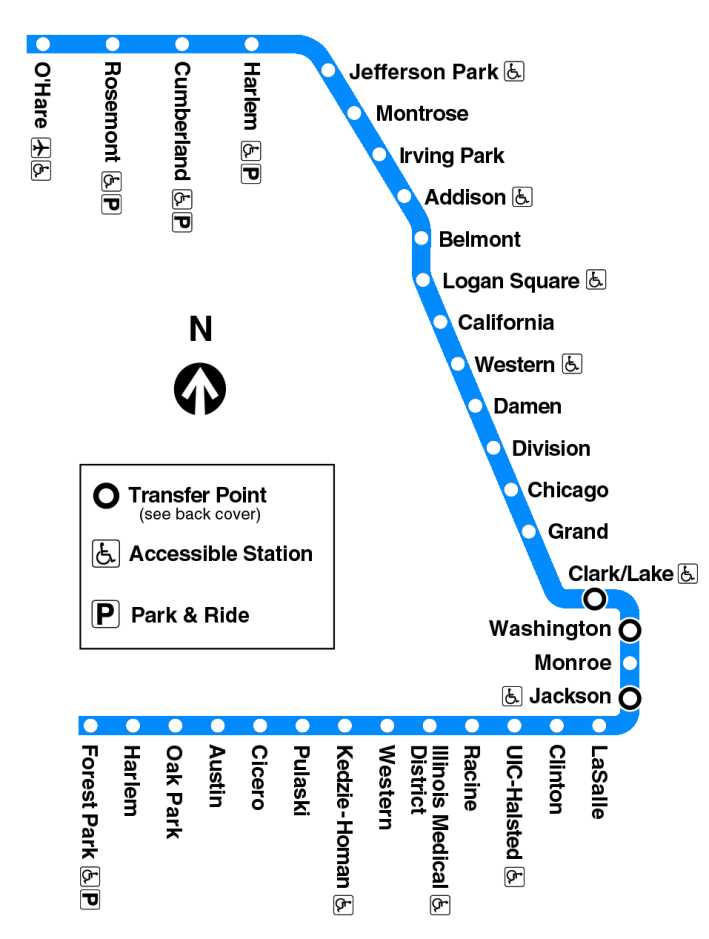
Earlier this month, I gave it another go on the Blue Line, which travels between O’Hare and west-suburban Forest Park, with a detour through the Loop. Like its Red sibling, it’s a 24-hour route where it’s common for people experiencing homelessness, addiction, and/or mental illness to seek shelter overnight, and it has a high rate of smoking.
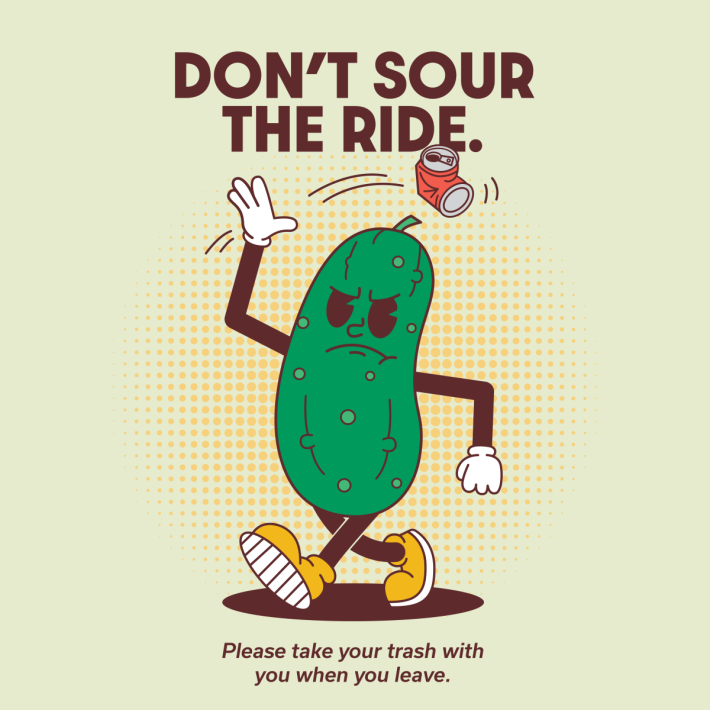
Rather than demonizing smokers, my idea for the flyer campaign was to humorously spread the word that smoking inside ‘L’ cars is widely understood to violate the social contract. Inspired by Pittsburgh Regional Transit’s Rider Etiquette campaign featuring a grumpy gherkin breaking the system’s rules, I opted for PSAs also featuring misbehaving anthropomorphic food items.
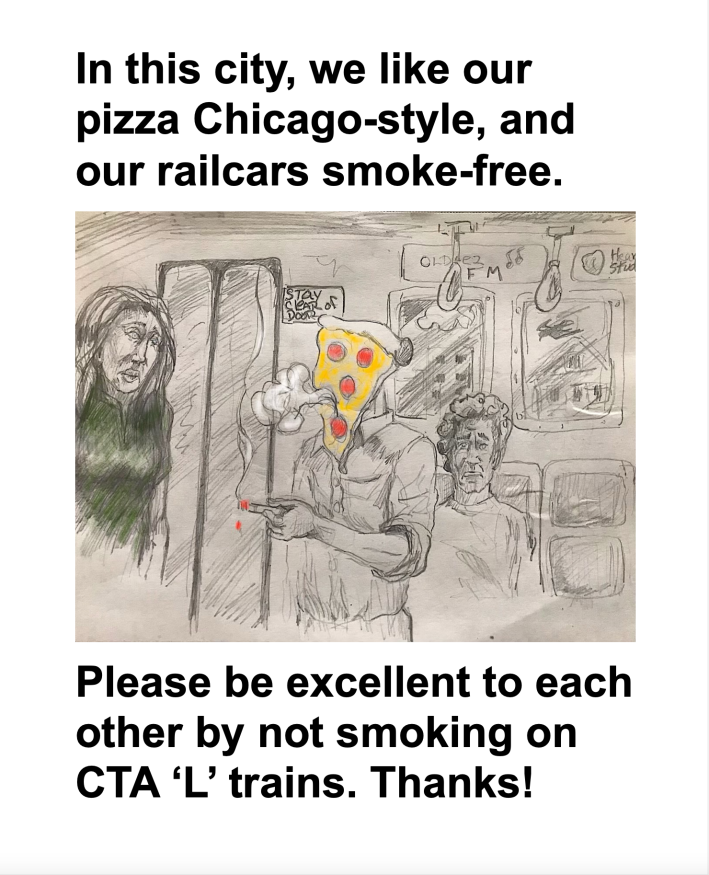
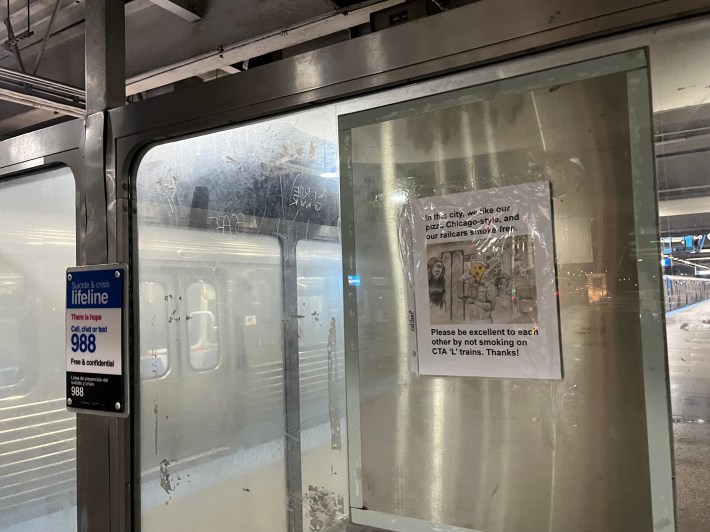
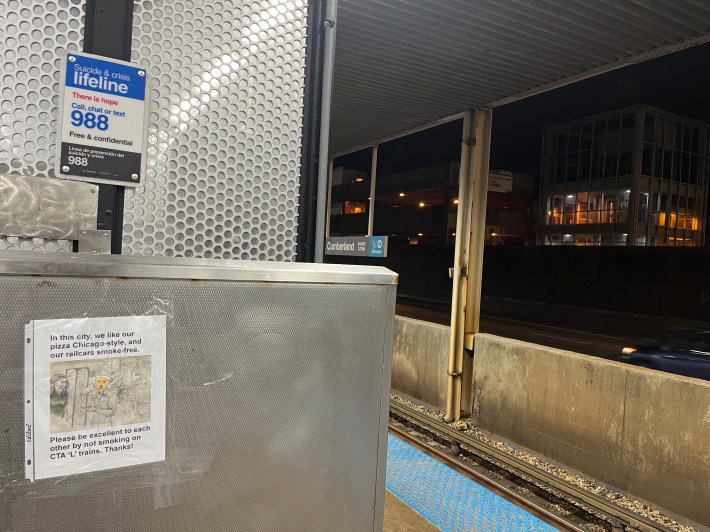
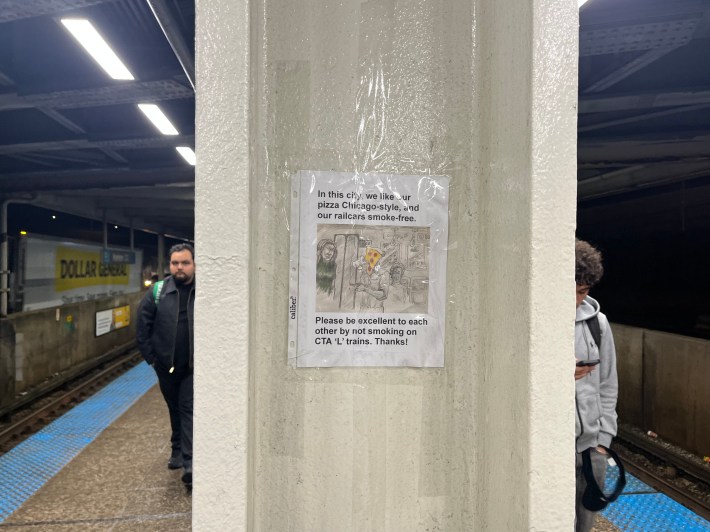
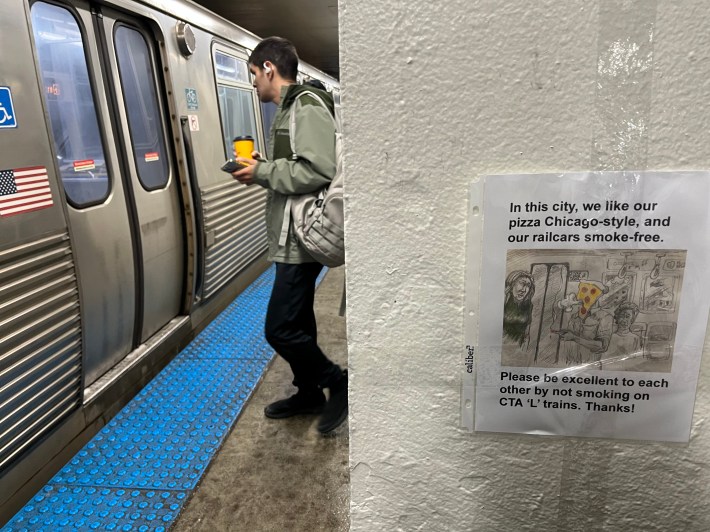
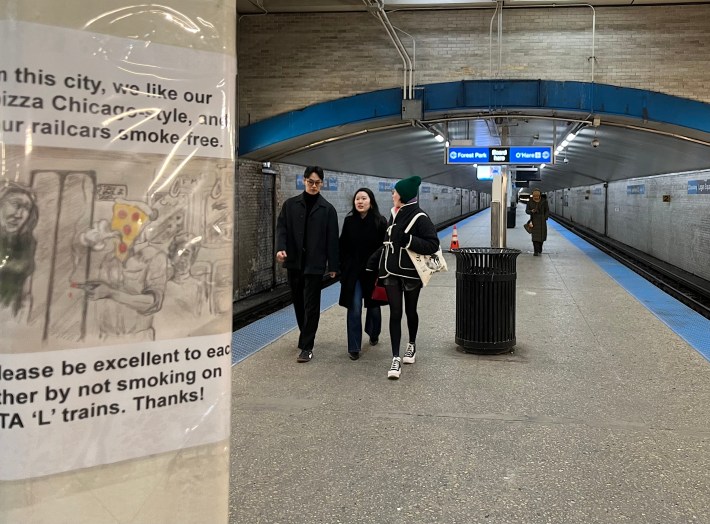
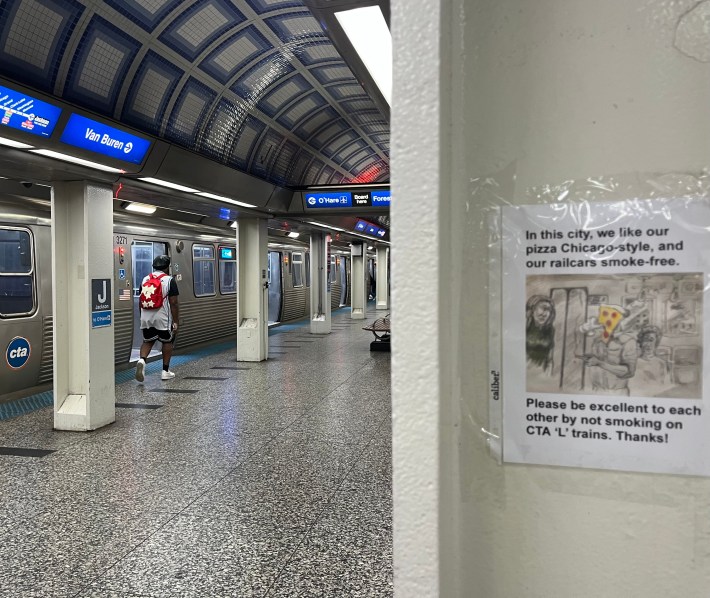
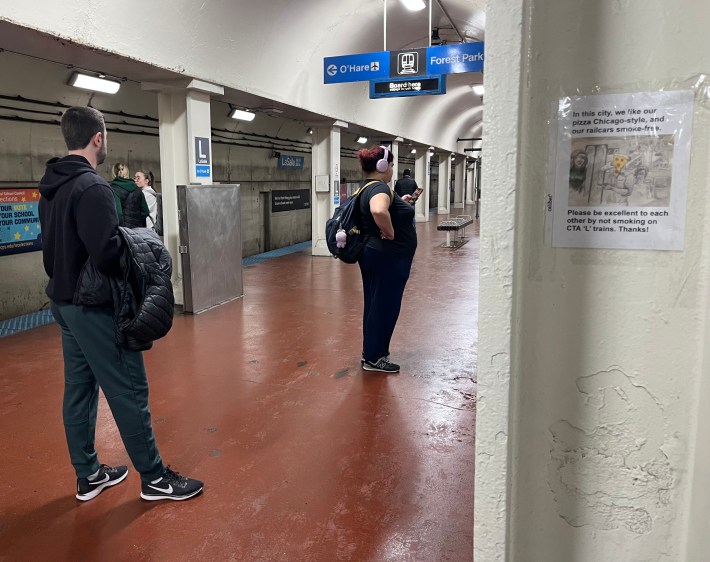
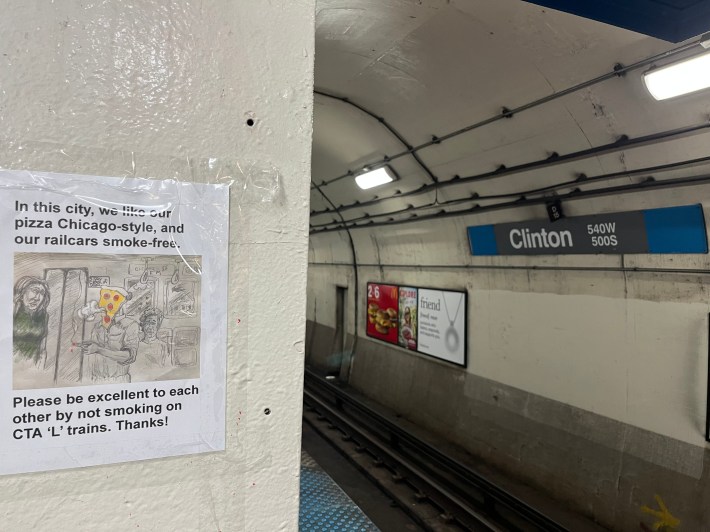
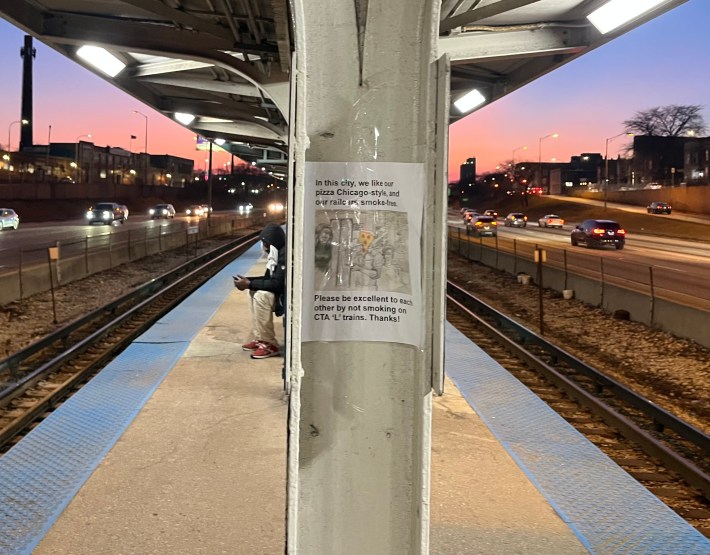
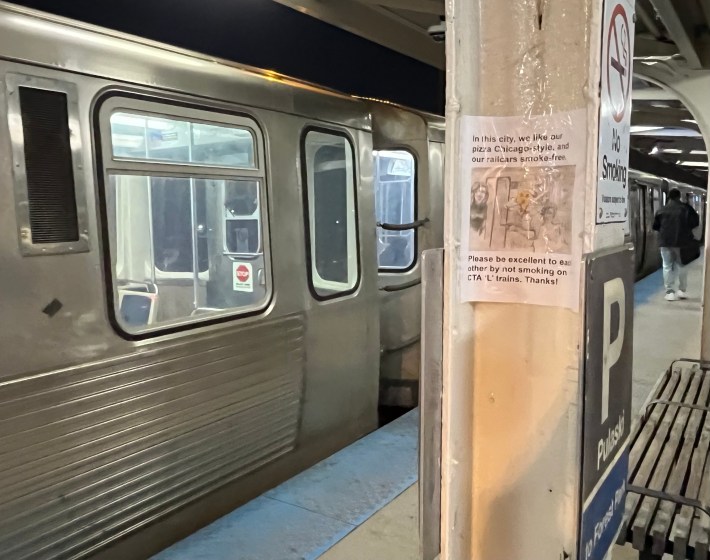
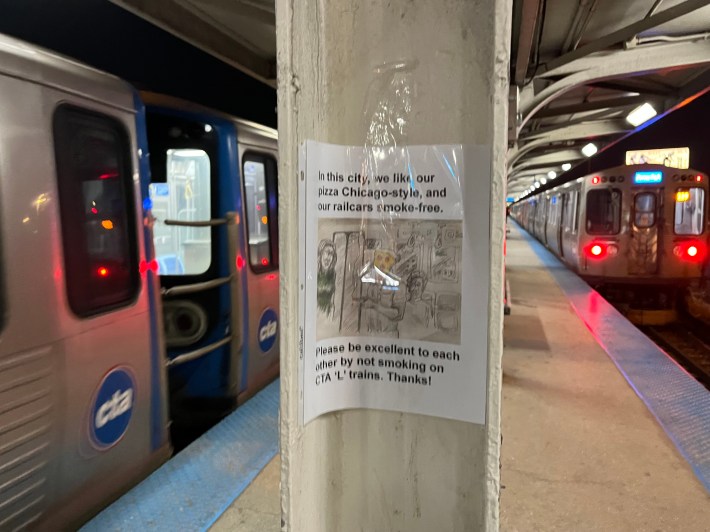
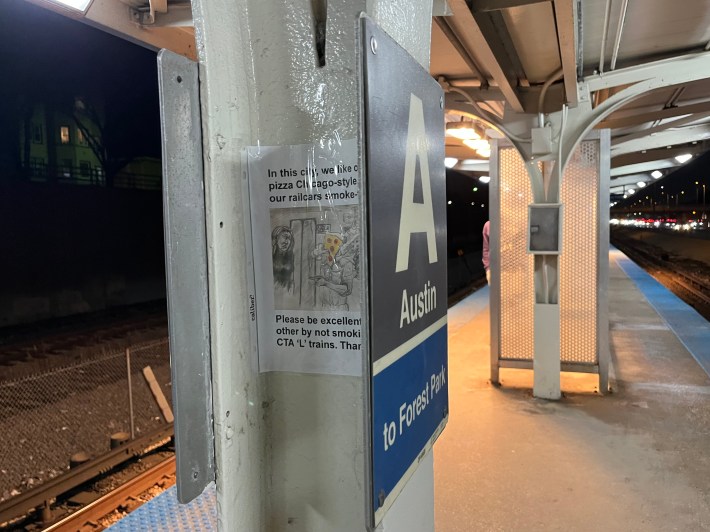
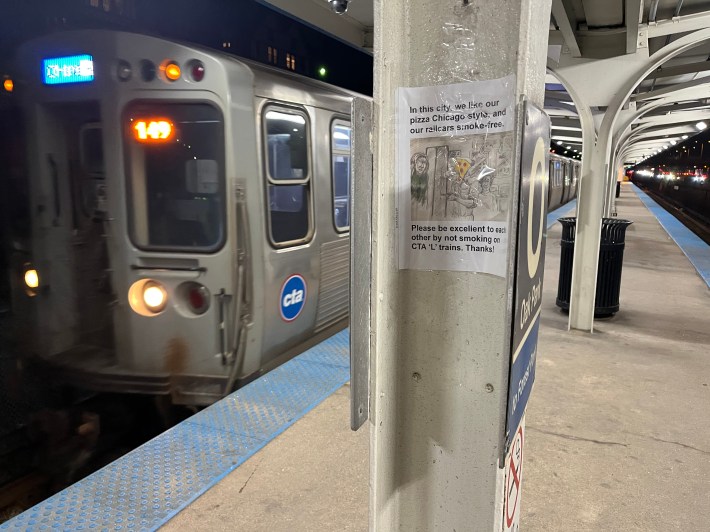
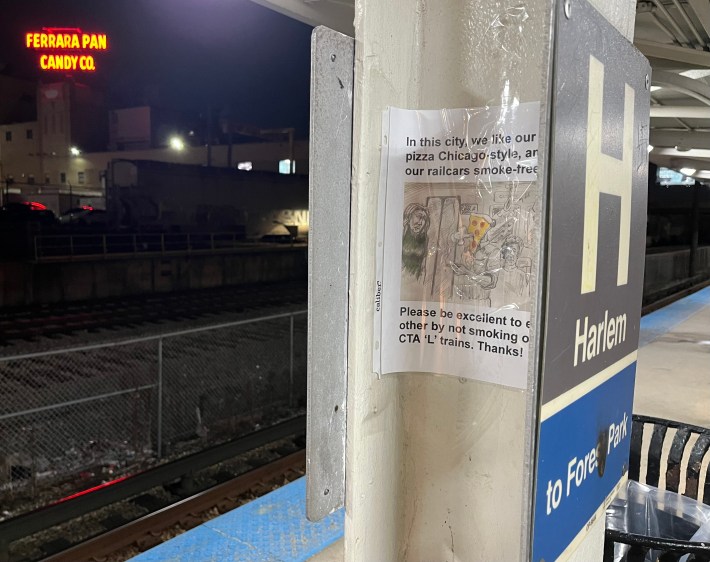
As you can see from the frankfurter-themed flyer, my own drawing style is an example of naïve art. This time I decided to go with something more sophisticated, by recruiting SBC’s in-house illustrator Jonathan Roth for the job. I asked him to depict a character with a slice of New York-style, triangle cut, thin-crust pizza for a face, smoking a cig on the ‘L’, to the dismay of other passengers. Here’s what he came up with. I was pleased: His rendering was anything but cheesy, at least figuratively.
As with the wiener cycle, I covered the Blue Line in a few stages. On the evening of Sunday, March 1, I bicycled from SBC HQ in Uptown to Montrose Station, locked up my bike, and covered all the stops southeast to Division Station. I grabbed a bite partway through the train trip at Sweet Rice Chicago, a pan-Asian restaurant at 1904 N. Western Ave., conveniently located directly below the Western (and Armitage) station in Logan Square.
On Friday, March 6, later at night, I pedaled to Jefferson Park Station, locked up, and posted PSAs at the stations on the way to O’Hare. There, I was planning to hang out at the Gaslight Club in the lobby of the airport Hilton. This trapped-in-amber piano bar, whose decor resembles a late-1800s Paris bordello, is one of my favorite drinking establishments in the entire city. No, I’m not gaslighting you. Sadly, it had already closed when I got there around 11 p.m., so I wet my whistle at the airport-style tavern at the other end of the lobby before riding the train back to Jeff Park.
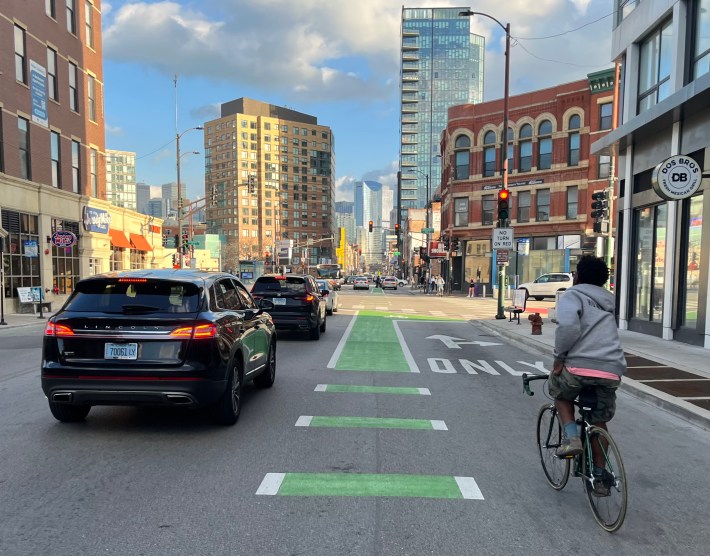
On Monday, March 9, it was a lovely Fool’s Spring day with weather in the 60s. (Not long after that, it snowed again.) I wrapped up my mission by riding Divvy to the Blue Line’s Chicago Station, taking the train southeast to the Loop, and then west to the Forest Park terminus.
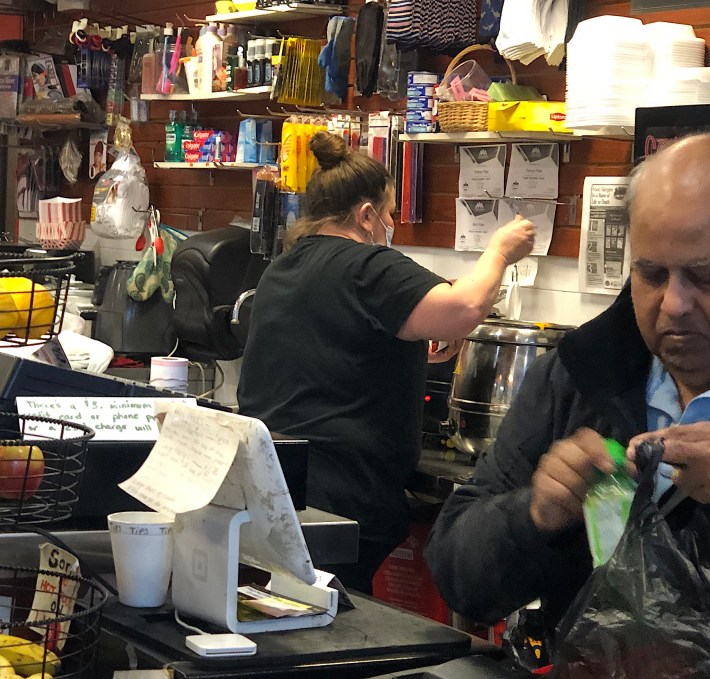
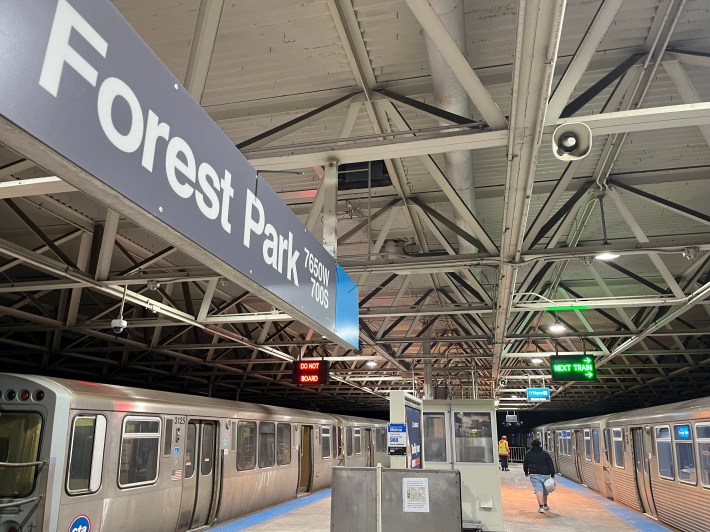
Once there, I hoped to pick up a walking taco at the in-station snack shop, which Streetsblog contributor J. Niimi wrote about in his Holiday Train travelogue. Unfortunately, they’d already turned off the nacho cheese warmer, so I picked up some of their many interesting-looking bags of potato chips and bottles of tropical punch and rode the Forest Park Branch back to the Red Line.
Interestingly, I didn’t actually encounter that much smoking on the many Blue Line runs I took for this project. Someone lit a cigarette on the train I boarded at Illinois Medical District Station on the Near West Side. I also encountered a smoker on my way to Pulaski Station. On another run towards Austin Station in the eponymous neighborhood, a couple walked through the train, each smoking cigs. But that was about it.
That’s not to say I didn’t see some troubling stuff on the West Side. The Forest Park Branch of the Blue Line runs through the Eisenhower Expressway corridor where opioid use is tragically common, which is why police call the road the “Heroin Highway.” On my way back into the city, a man entered my car with both feet and lower legs swaddled in rags, which seemed to indicate that was where he’d been injecting himself.
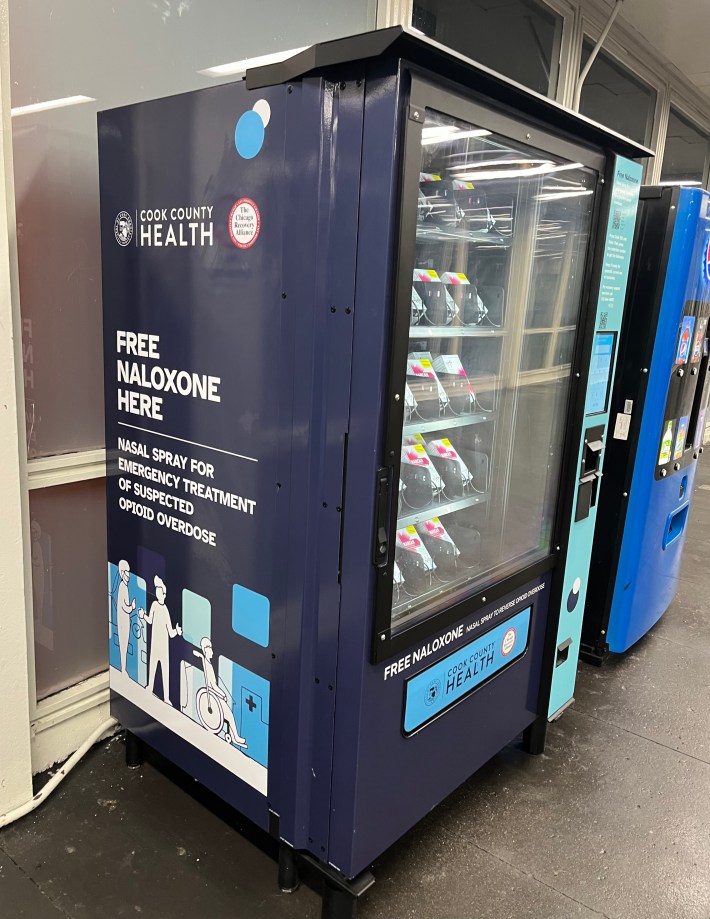
In June, the CTA board took a step to address the system’s opioid issue by approving an intergovernmental agreement with the Cook County Health system to install vending machines with overdose-reversing Naloxone, also known as Narcan. The pilot, which launched in September and continues for six months, includes Jefferson Park, the Harlem/Lake Green Line station, the Howard Red/Purple/Yellow stop, the Central Park Pink station, and the 47th Street Red stop.
Another incident I witnessed was tragicomic. As I was waiting on an ‘L’ car to leave Forest Park, an elderly bearded man indignantly stormed into the carriage with his pants at his ankles. A female station sanitation worker, also older, yelled at him as she followed him to the train. Apparently, she caught him using the platform as a toilet. The employee radioed security, and a K-9 patrol guard showed up and stoically escorted the man out of the station after he’d hitched up his trousers.
As SBC has previously discussed, the CTA and other local public spaces would be more sanitary if public bathrooms were easy to access, as is the case on many Asian and European transit systems. There was a bit of progress on that front earlier this month when Ald. Daniel La Spata (1st) announced that Chicago’s first freestanding automatic bathroom will be placed at Polish Triangle plaza, upstairs from the Division Blue station.
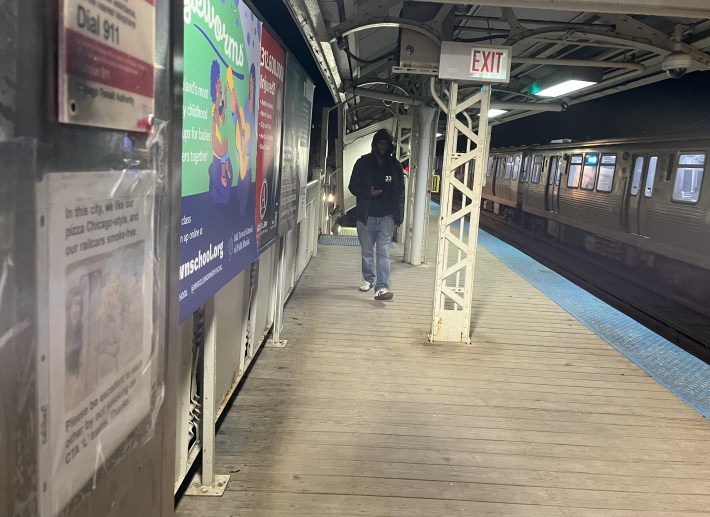
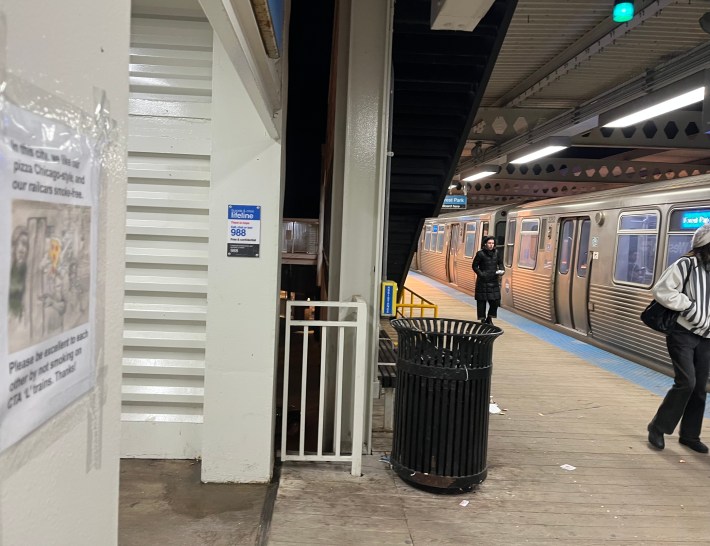
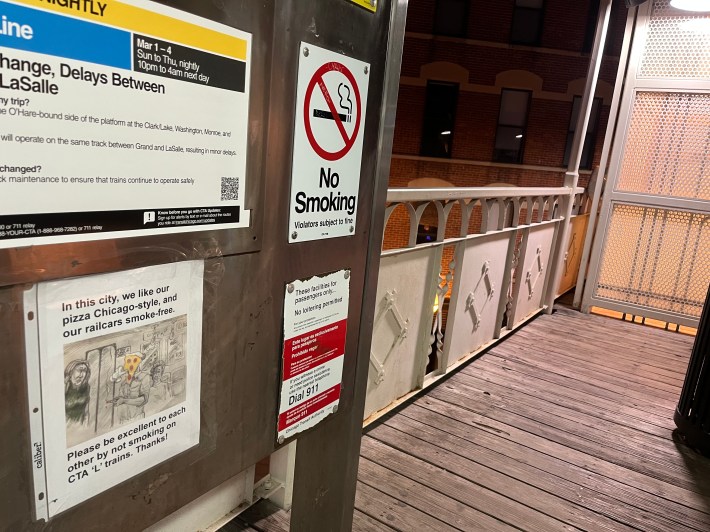
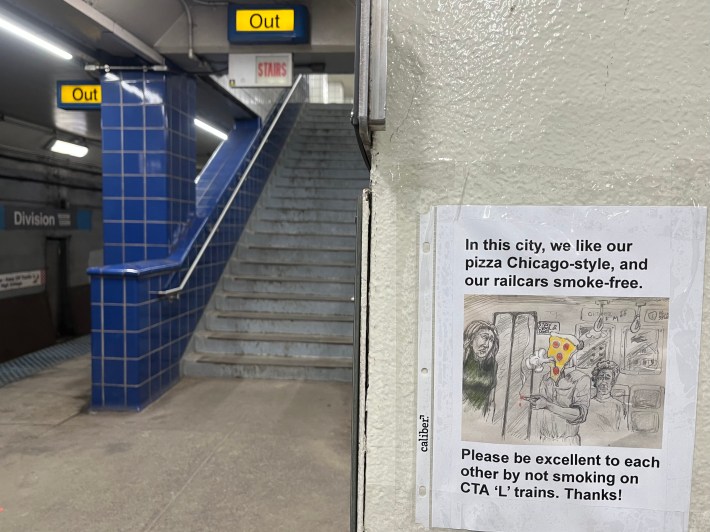
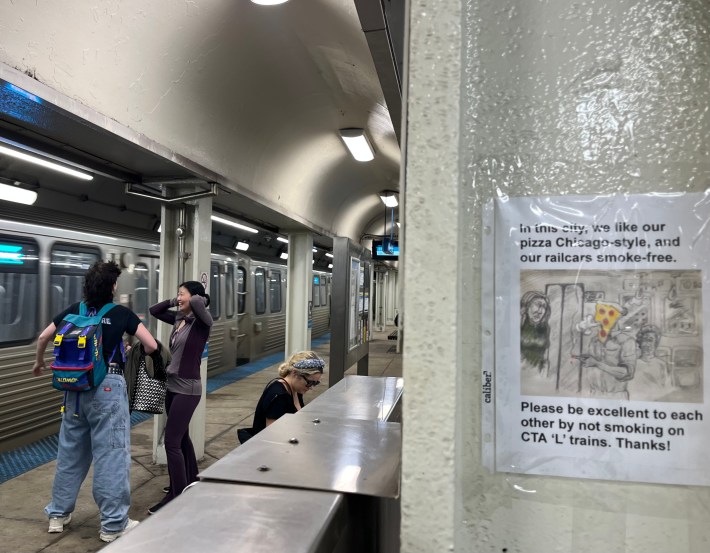
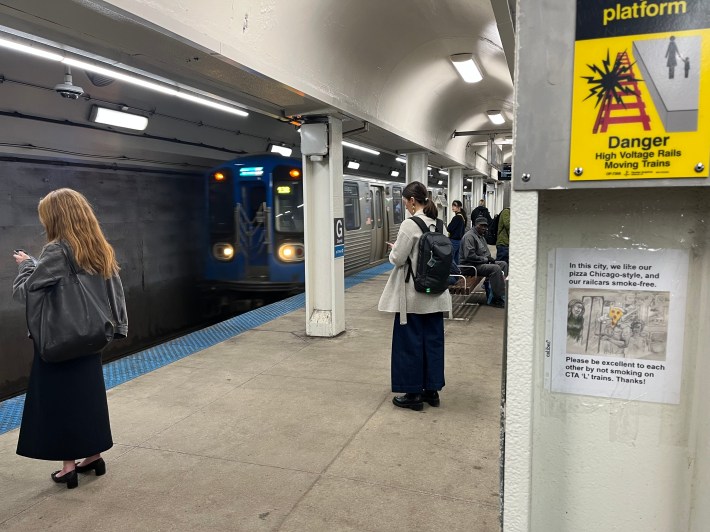
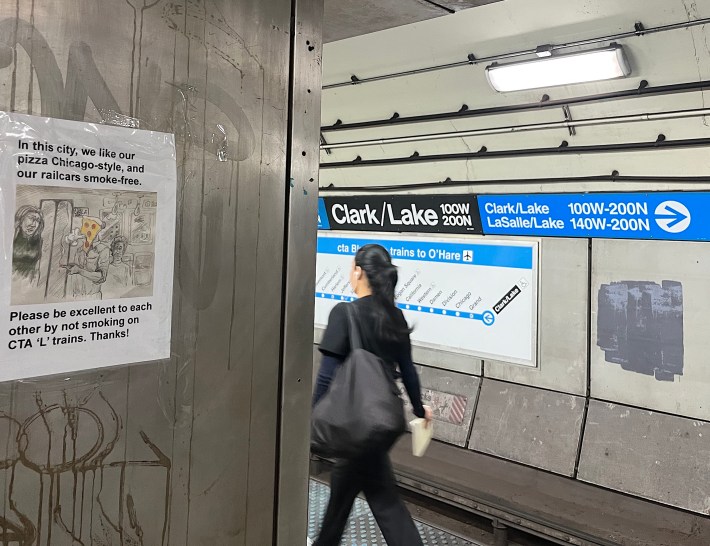
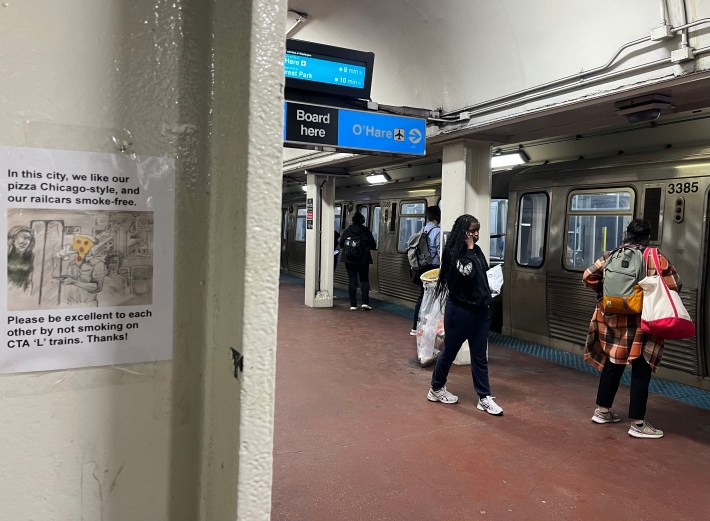
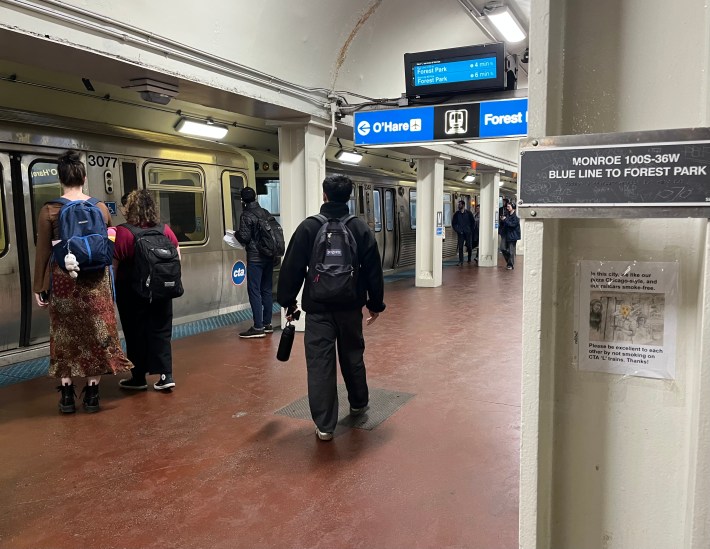
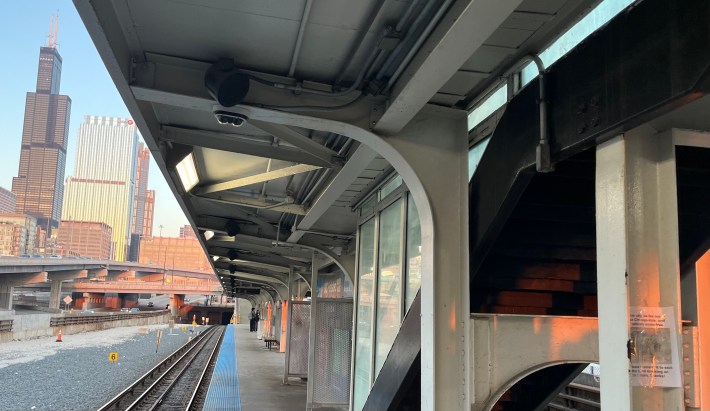
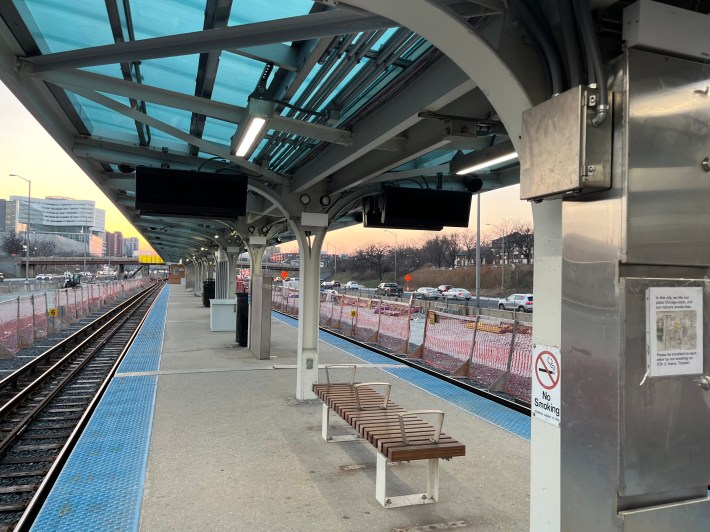
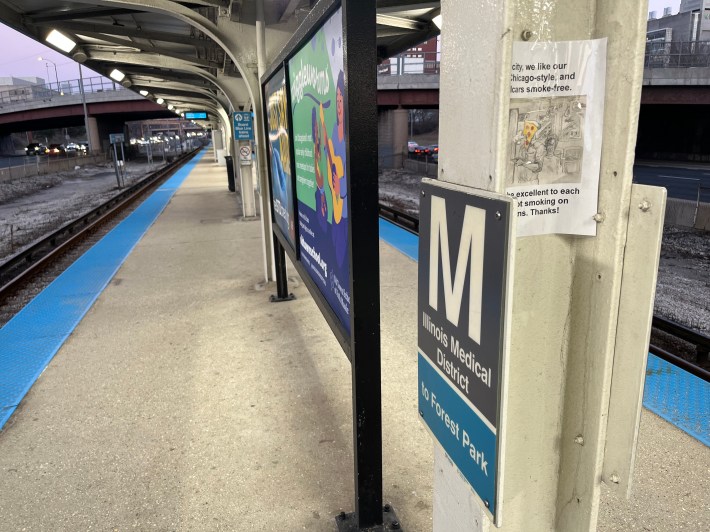
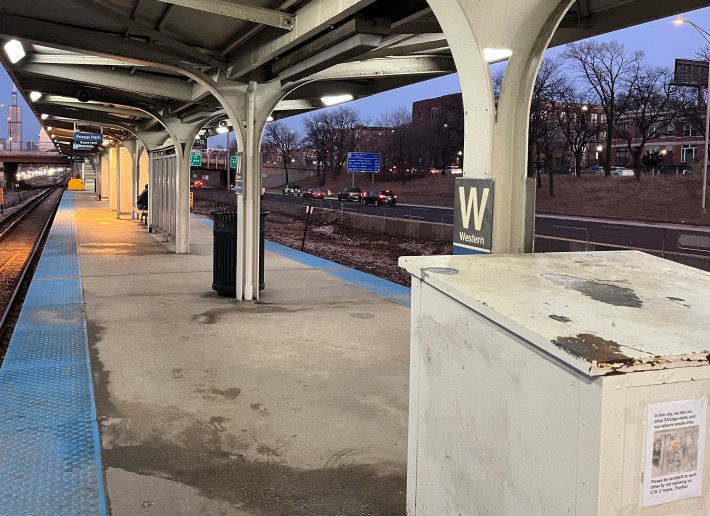
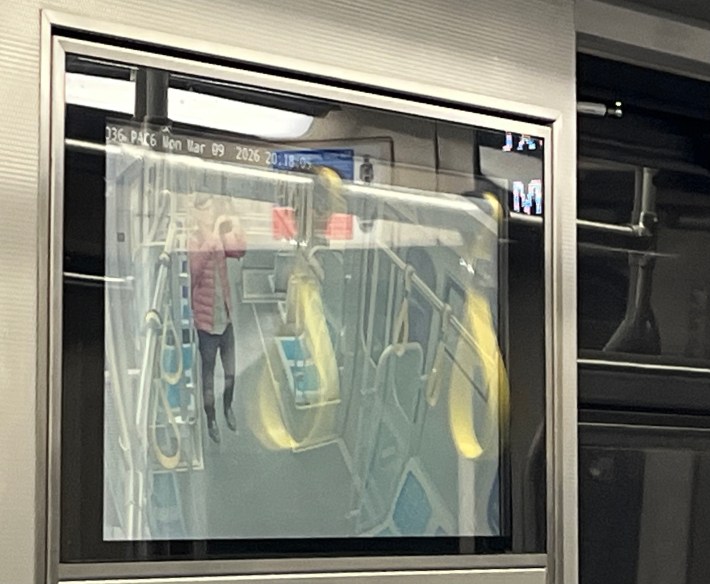
But otherwise, my journeys were fairly uneventful. What follows is a gallery of the flyers, in geographic order from ORD to Forest Park. All photos are by yours truly.
Investigate part four, in which I conduct an interview with a smoker, here.
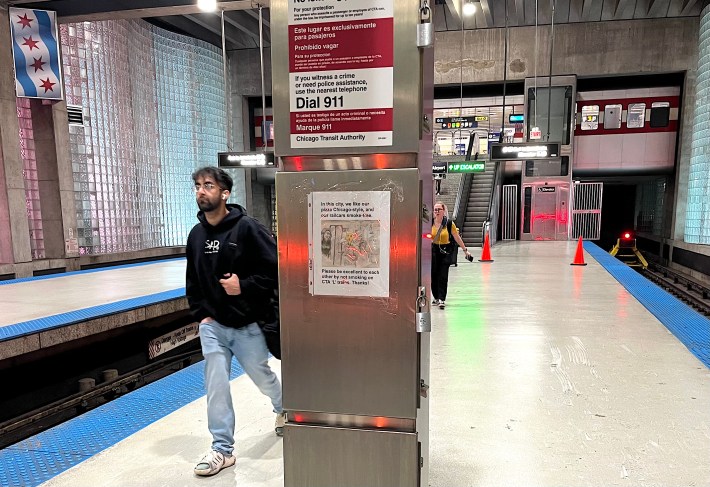
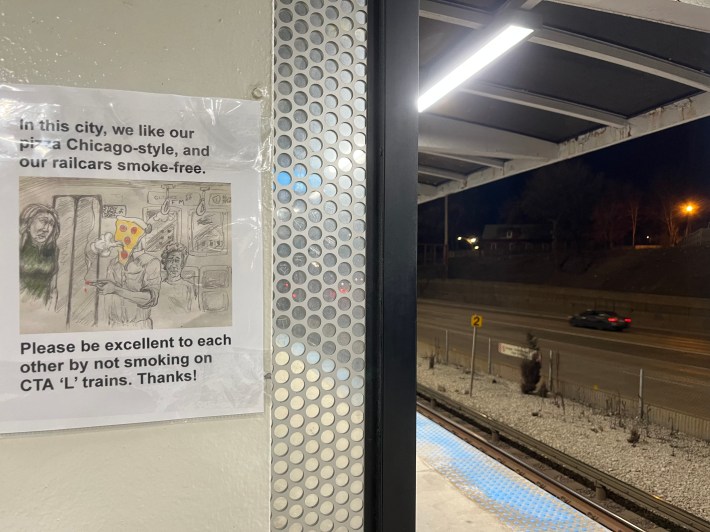
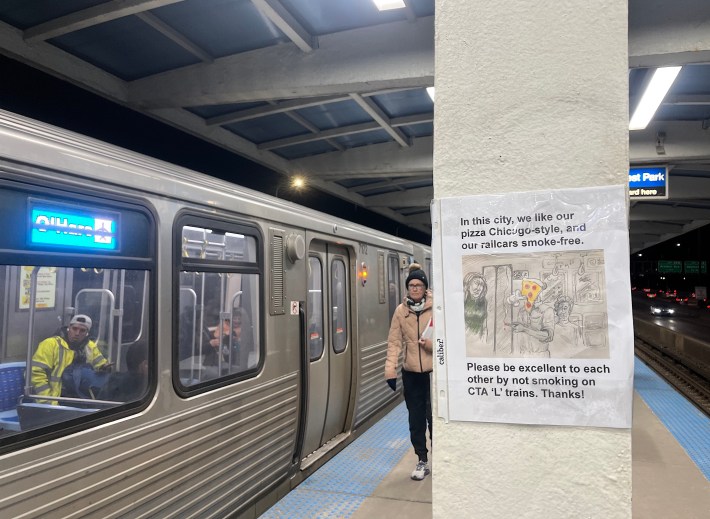
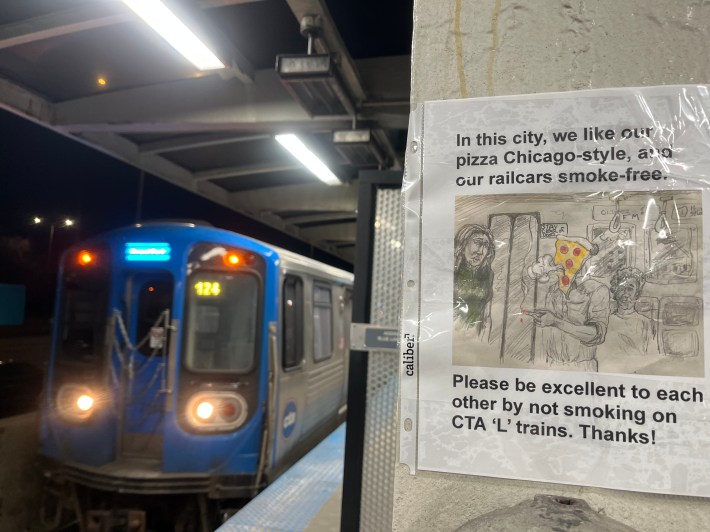
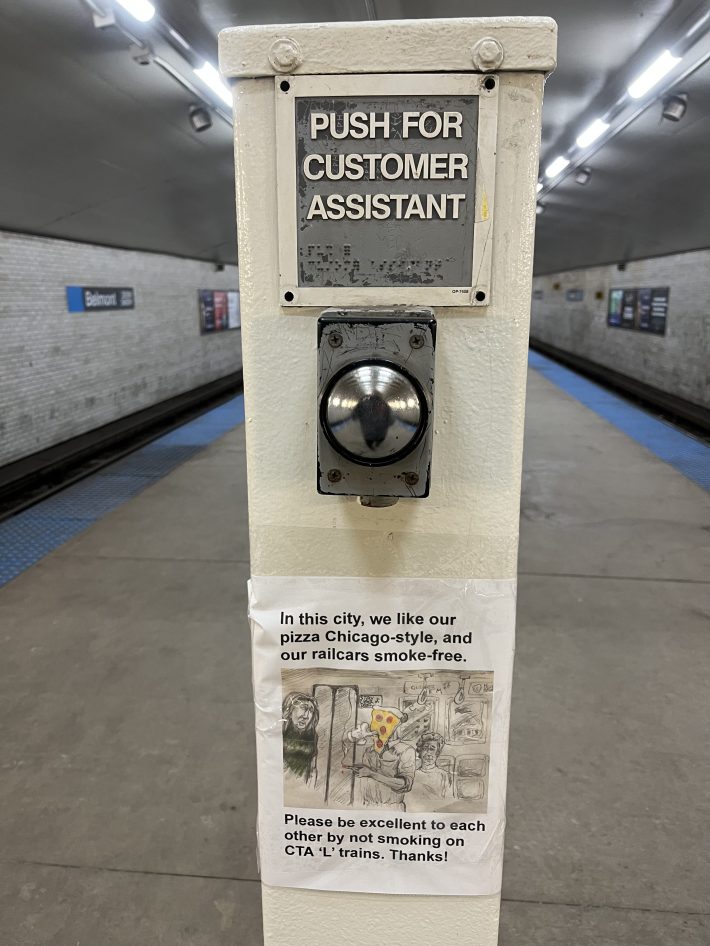
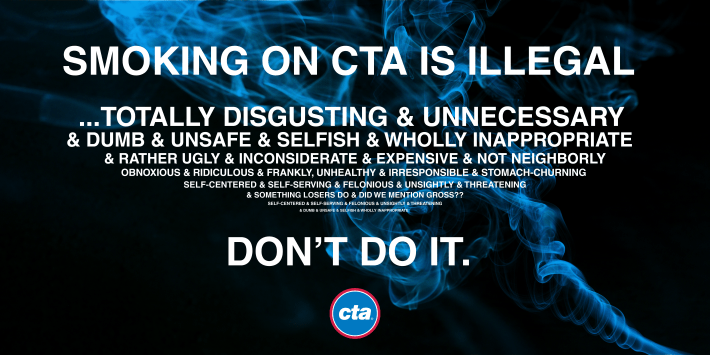
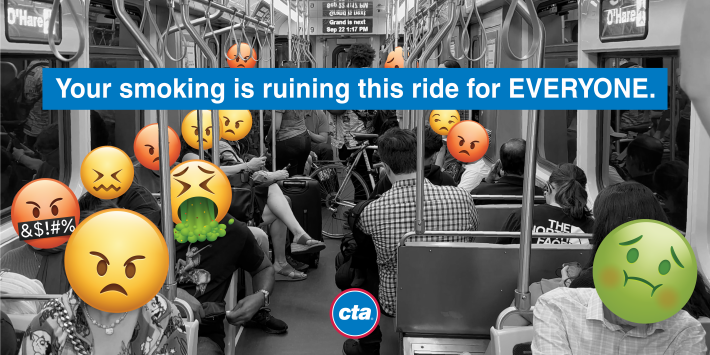
At California, I saw a CTA anti-smoking PSA that I hadn’t noticed before, occasionally appearing on a screen located between the staircases to the inbound and outbound platforms. When I later asked CTA Media about it, a spokesperson said, “I believe you’re referring to these ads which CTA introduced both on digital rail station signs systemwide and in physical car cards on trains and buses last March.” It was good to hear that the agency is also using humor to address this issue.
Investigate part four, in which I conduct an interview with a smoker, here.

On November 12, SBC launched our 2026 fund drive to raise $50K through ad sales and donations. That will complete next year’s budget, at a time when it’s tough to find grant money. Big thanks to all the readers who have chipped in so far to help keep this site rolling all next year! Currently, we’re at $29,052 with $20,948 to go, ideally by the end of March.
If you value our livable streets reporting and advocacy, please consider making a tax-exempt gift here. If you can afford a contribution of $100 or more, think of that as a subscription. That will help keep the site paywall-free for people on tighter budgets, as well as decision-makers. Thanks for your support!
– John Greenfield, editor

Read More:
Streetsblog has migrated to a new comment system. New commenters can register directly in the comments section of any article. Returning commenters: your previous comments and display name have been preserved, but you'll need to reclaim your account by clicking "Forgot your password?" on the sign-in form, entering your email, and following the verification link to set a new password — this is required because passwords could not be carried over during the migration. For questions, contact tips@streetsblog.org.