“Streetsblog Chicago versus smoking on the CTA,” part two: A sociology student, a lung health advocate, and a transportation expert share their POVs



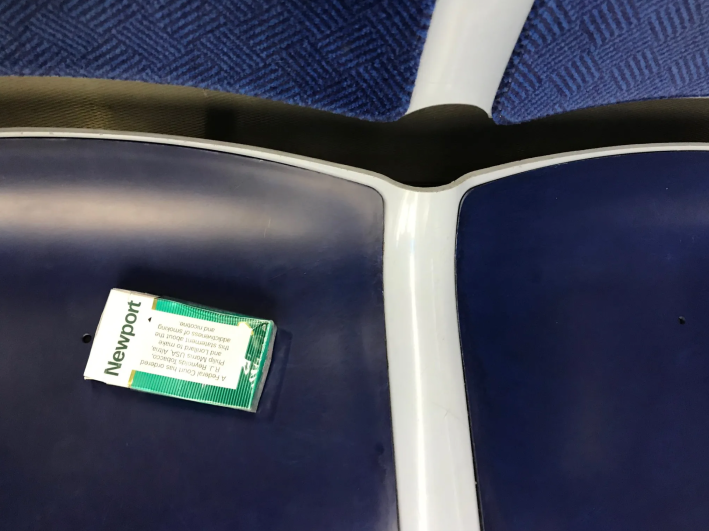
Welcome to the second installment of “Streetsblog Chicago versus smoking on the CTA,” our unconventional effort to find holistic solutions (not just more policing) to the vexing problem of smoking inside ‘L’ cars. Read part one to get up to speed on my perspective and approach to this topic. As many people are aware, burning tobacco or cannabis, or vaping, in an enclosed space is a serious danger for people with respiratory issues, seniors, and young kids. For the rest of us, it’s also unhealthy, and a major annoyance and deterrent to using transit.
Some feedback from SBC readers
The first SBC post seemed to get a fairly positive response from readers who are fed up with people puffing on public transportation, although viewpoints on the best ways to deal with the issue vary. Some comments on one of our Facebook posts of the article had fairly “tough-on-crime” attitudess.
“I don’t think there is a way out of strict enforcement of non smoking policies,” wrote one person. “Smokers, who are caught [should] lose their CTA privileges, and… have to perform community service (i.e. cleaning a train car) to regain them.”
“It’s gonna keep happening off-peak until ridership goes back up to pre-COVID levels, [hope that helps],” said another. “Cops are still more than willing to give out plenty of quality-of-life tickets if they think the offender is just a simple ID check instead of babysitting/paperwork.”
“The people who smoke on the ‘L’ know it isn’t allowed,” a third reader said. “Smoking on the CTA has been banned for at least 40 years. Nobody smokes accidentally. They’re just [inconsiderate jerks]. They’ll continue to be [inconsiderate jerks] until they’re thrown off the train and out of the station.”
A sociology scholar weighs in
On the other hand, DePaul University sociology grad student Nick Hornsberry voiced a totally different perspective on this subject. He didn’t even agree with how I presented the topic of railcar smoking in my first article. “This whole issue and the frameworks by which the people who are the biggest mad about it are not [the right approach],” he posted on Bluesky.
“I’m all ears,” I responded. “Please share your POV on this issue.” What followed was a fairly cordial exchange, which was refreshing for a social media interaction.
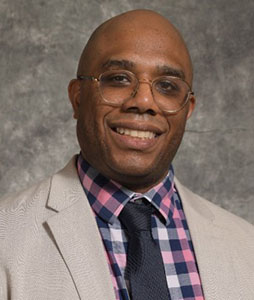
Hornsberry said he had read the first SBC first post. That included my statement that “I planned to (cautiously) interview smokers [on the the ‘L’] about why they’re doing it, and if they think there’s anything, aside from better social services, that would encourage more people not to smoke in railcars.”
“As a social scientist, talking to folks to understand why they smoke on the train is great,” he said. “But approaching those conversations from a lens of ‘How do we reduce the behavior’ and not a ‘What’s encouraging this behavior’ obscures more than illuminates what we do to help people.”
“This reply is the crux of my objection to the framing,” he explained. “We risk further marginalizing people in focusing on getting them to do different (whether smoking or playing music or whatever) instead of trying to understand people’s relationship to shared space.”
Hornsberry particularly objected to my idea of asking ‘L’ smokers if they thought we could “persuade people to at least do their puffing on the platform, where it’s less of a respiratory health danger and nuisance to others.”
He said, “It refocuses the whole thing on the behavior itself, and that in turn reproduces a very specific relationship between person and space that I think obscures how we address the root issue here: Is everybody actually allowed to take up space in public?”
An American Lung Association staffer shares her thoughts
I also recently talked with the American Lung Association’s Illinois Director of Advocacy Kristina Hamilton. She lives in Oak Park and takes the the Forest Park Branch of the Blue Line to her downtown office a couple times a week. “Typically when I am on the train, maybe at least once or twice a week, I do see someone
smoking,” she reported.

I asked her to explain how smoking in railcars impacts people with lung issues. “There’s no safe level of exposure to secondhand smoke,” she replied. “We’ve known that for many years. The American Lung Association and numerous health partners have advocated for smoke-free air under the Chicago Clean Indoor Air Ordinance that’s been in effect for over 20 years, and the Smoke-Free Illinois Act been in effect for over 15 years. We know that secondhand smoke is harmful to all people. We should be breathing clean air, but it’s particularly dangerous for people with asthma, COPD and other chronic conditions.”
I noted that CTA smoking seems to be most common on the 24-hour Blue and Red Lines, where its common for people to seek shelter for the night. “So aside from spending more money on affordable housing, mental health clinics, and addiction services… and also, [SBC is] not going to be advocating for more police enforcement of the law, can you think of any other strategies that might be useful for encouraging people not to smoke inside train cars?” I asked.
“More signage and announcements about the smoking policy would be helpful,” she replied. “In addition to distributing materials to help people quit smoking, there are free services available for people who are addicted to tobacco products, like the Illinois Tobacco Quit Line. So expanding knowledge of those programs, and awareness about the smoke-free policy would be lower-cost ways to reinforce the smoke-free policy that’s been in effect for a really long time.”
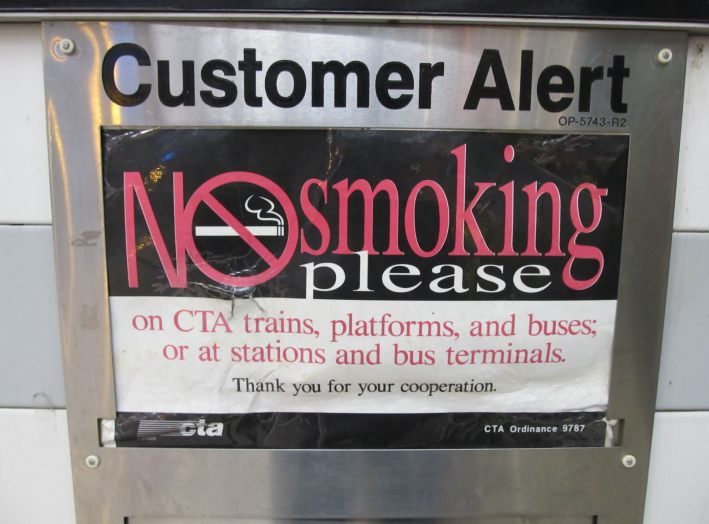
I asked if she has any theories about why smoking has become more common on on the CTA in recent years. “I think because of ridership declining during COVID, and there’s still lack of ridership. No smoking policies are about social change, and it’s very socially accepted that indoor public places are smoke free, but you also need people around to expand socialization of that and with having fewer riders on the trains, I think the social acceptance of [the ban on] smoking, isn’t as prevalent because there just aren’t as many riders. And then given that [service on the Blue and Red lines is] 24 hours, there’s just a higher possibility for there to be people that may violate the smoke free policy.”
“In recent years, we’ve sort of developed a culture where people expect there’s going to be smoking on the CTA,” I argued. “I’d estimate that about half of the people smoking seem to have mental health issues, but half do not. Of those who don’t have appear to have mental health issues, it seems like there’s more of a sense that it’s okay to smoke on the CTA, and that there won’t be any consequences. So in terms of addressing that, I guess what’s relevant is what you said earlier – more announcements and signs and things. Do you have any any other thoughts about changing the culture?”
“As a public health organization, we know that education is a really important piece of behavior change and behavioral health change,” Hamilton replied. “So we do think that there could be more signage, more education on quit smoking resources, and that just reminding people and educating that this is a policy that’s been in effect for a really long time, and smoking negatively affects other people’s health.”
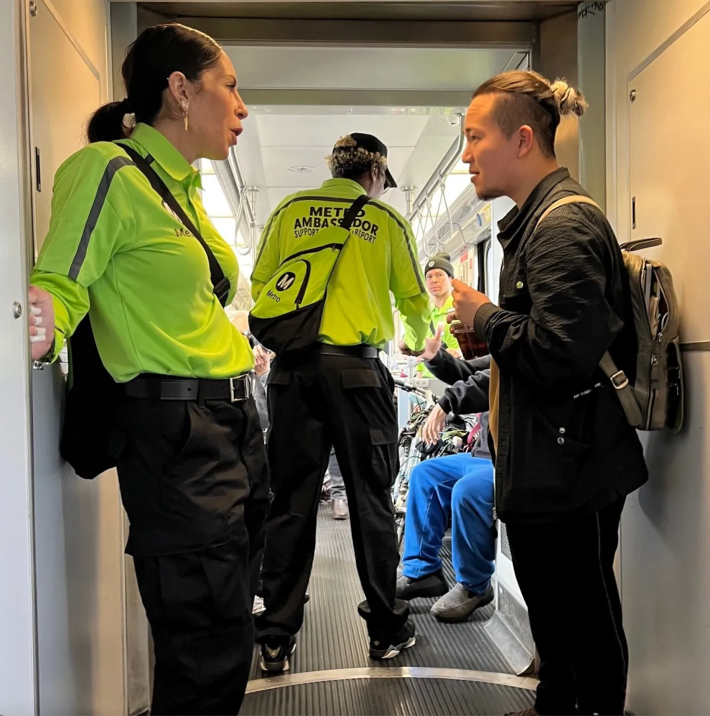
“So just finding ways to reinforce that and having staff available to spread that message as well the CTA,” she concluded. “It’s really challenging for a train operator to, you know, be able to enforce that, but if there’s like other staff support that can address behaviors like smoking on the on the train, that would be helpful too.”
A transportation guru gives his take
We asked Professor Joe Schwieterman, director of DePaul University’s Chaddick Institute for Metropolitan Development, for his thoughts on this subject. “This is an interesting topic,” he said via email. “An important aspect about smoking bans is that infractions are almost always clear-cut. There isn’t a grey zone, as there is for unruly behavior, which is much harder to define.”

“I’d put smoking near the top of the unwelcome things I encounter when riding CTA trains,” Schwieterman added. “It not only affects your breathing. It creates an ‘anything goes’ atmosphere that makes everyone around you uneasy. The contrast is stark: There is essentially no smoking on Metra or South Shore Line trains [which have conductors], but it is pervasive on the ‘L’.
“Requiring people who smoke to immediately exit the train is sometimes the best remedy,” he continued. “It isn’t disproportionately harsh to violators and solves the problem for those onboard – and the violator only has to wait a short time for the next train.”
“You could make a strong case for having technology (sensors) to alert security personnel about smoking,” Schwieterman said. “That would make enforcement seem less random and ad-hoc.”
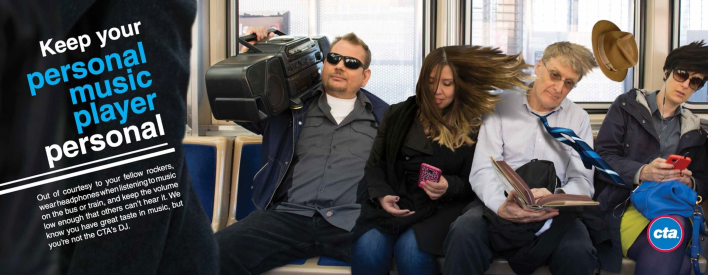
He was skeptical about whether more signs or announcements would be helpful. “I wish I could way a courtesy campaign would have much effect, but I’m doubtful,” he wrote. That strategy would work better for preventing people from playing loud music or offering priority seating for older riders.”
“The fumes on some Red Line trains have been reminiscent of being in the lounge car of a long-distance passenger train in the 1970s,” Schwieterman concluded. “Smoke is everywhere.”
And trust me, if you smoke on a train, you will not look as cool as Cary Grant and Eve Marie Saint in the 1959 Alfred Hitchcock spy thriller “North by Northwest.” However, that film does include a scene at Chicago’s Palmer House hotel.
Stay tuned until next week for the next installment of this series, which will involve some on-the-‘L’ fieldwork. Or is that trainwork?

On November 12, SBC launched our 2026 fund drive to raise $50K through ad sales and donations. That will complete next year’s budget, at a time when it’s tough to find grant money. Big thanks to all the readers who have chipped in so far to help keep this site rolling all next year! Currently, we’re at $21,990 with $28,010 to go, ideally by the end of February.
If you value our livable streets reporting and advocacy, please consider making a tax-exempt gift here. If you can afford a contribution of $100 or more, think of it as a subscription. That will help keep the site paywall-free for people on tighter budgets, as well as decision-makers. Thanks for your support!
– John Greenfield, editor

Read More:
Streetsblog has migrated to a new comment system. New commenters can register directly in the comments section of any article. Returning commenters: your previous comments and display name have been preserved, but you'll need to reclaim your account by clicking "Forgot your password?" on the sign-in form, entering your email, and following the verification link to set a new password — this is required because passwords could not be carried over during the migration. For questions, contact tips@streetsblog.org.