Introducing “Streetsblog Chicago versus smoking on the CTA.” In part one of our series, editors from other cities and our transit agency weigh in.

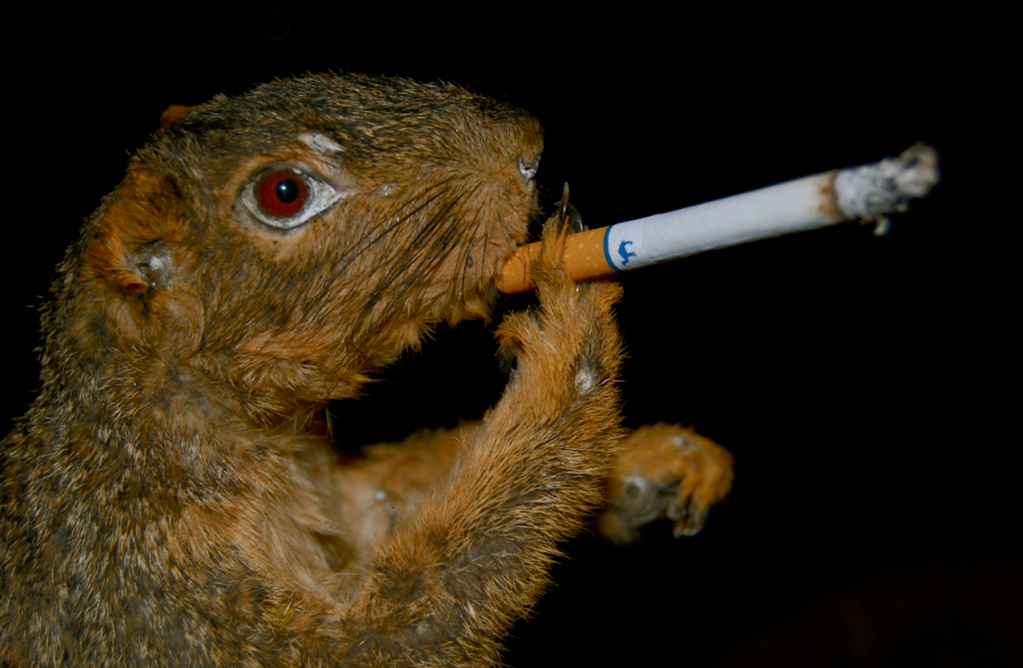

“Now, [Streetsblog] don’t you fill me up with your rules
‘Cause everybody knows that smokin’ ain’t allowed [on the ‘L’]”
– “Smokin’ in the Boy’s Room” by Brownsville Station, 1973
Recent headlines about violent crime on the CTA, including a “major incidents” rate that spiked during COVID-19 and hasn’t returned to pre-pandemic levels, are highly troubling. I’d wager that most passenger agree that more has to be done to improve public safety in the system if we’re ever going to return to 2019 ridership levels. We’re still only at about 70 percent of that level.
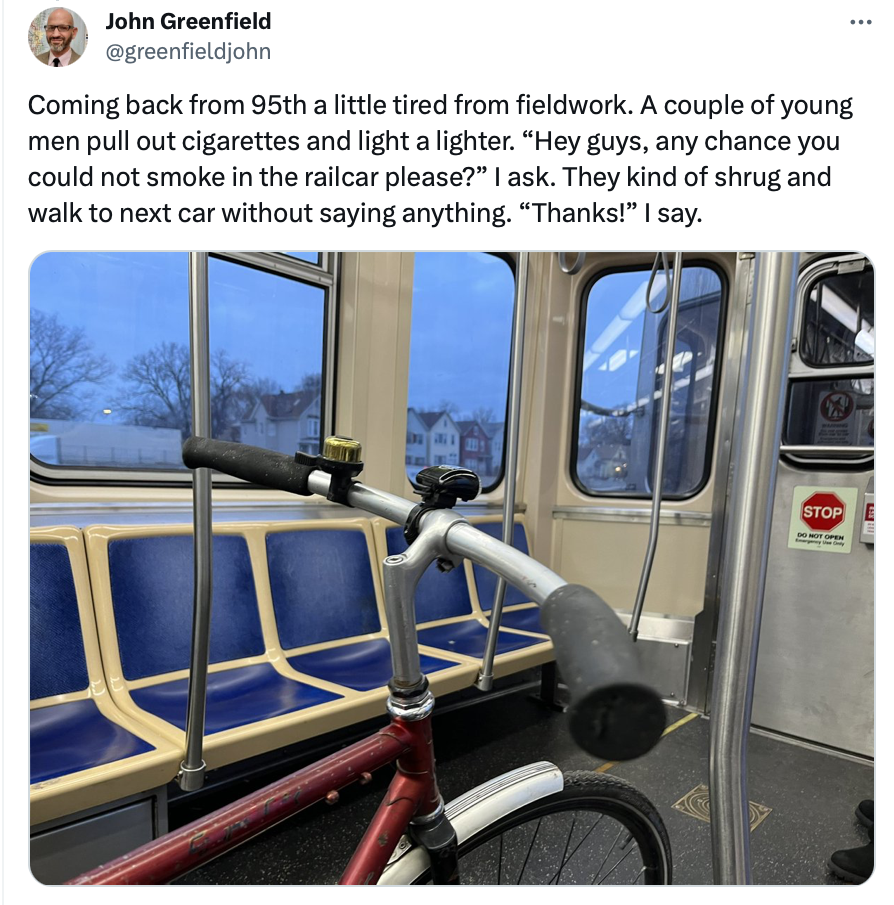
But as someone who has ridden the ‘L’ all over Chicago, at all times of night, during my 36-plus year of living here, I don’t recall ever feeling seriously at risk physically. Nowadays, my chief personal concern on CTA trains is not dangers, but annoyances. My main pet peeve is people illegally smoking inside railcars. When I ride the 24-hour Red and Blue lines at night, it seems like there’s about a 50 percent chance I’ll encounter this behavior.
Input from readers
I know I’m not alone in feeling this way, so I posted surveys on Bluesky and Twitter asking what readers thought about this publication launching a new series called “Streetsblog Chicago versus smoking on the CTA.” Between the two platforms, dozens of people responded, and the reactions were generally positive. I also brought up the idea to friends on Facebook, who were mostly enthusiastic.
Some folks thought it wasn’t a great idea for me to approach strangers on the ‘L’ and try to talk to them, particularly smokers. But I reassured them that I have some experience with this kind of after-hours research, and if a potential interviewee responded with hostility or obvously seemed to have mental health challenges, I would let them be.
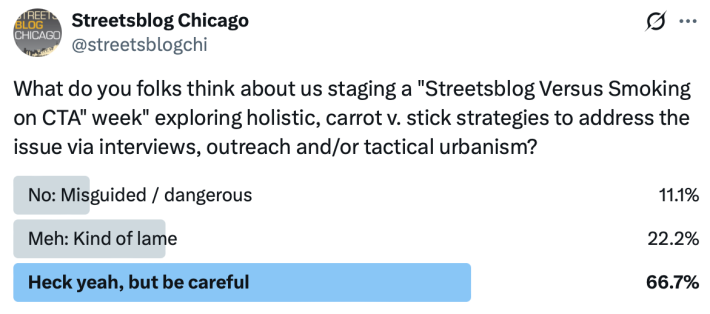
Other people told me they weren’t interested in reading interviews with non-smokers on trains complaining about the tobacco and cannabis crowd, especially if they used the topic to gripe about marginalized communities. Fair game, I said. Everyone who doesn’t smoke on trains knows it’s a drag, literally and figuratively, when others do, so there’s no need to quote smoke-free civilians about that.
Rather, I planned to (cautiously) interview smokers about why they’re doing it, and if they think there’s anything, aside from better social services, that would encourage more people not to smoke in railcars. For example, could we persuade people to at least do their puffing on the platform, where it’s less of a respiratory health danger and nuisance to others?
What are things like in peer cities?
I started this journey by asking my counterparts at other Streetsblog frachises if smoking on transit is a major problem in their local systems in the post-COVID era. New York Editor Gersh Kuntzman said no. “Smoking is such a minor part of the NYC subway experience that I barely notice it,” he told me.
Los Angeles Editor Joe Linton reported there was a modest uptick in smoking on Metro when ridership dipped significantly during the early days of the pandemic. “I run into smoking very rarely now – maybe once a year pre-pandemic, twice a week at pandemic outset, and now maybe once a month.”
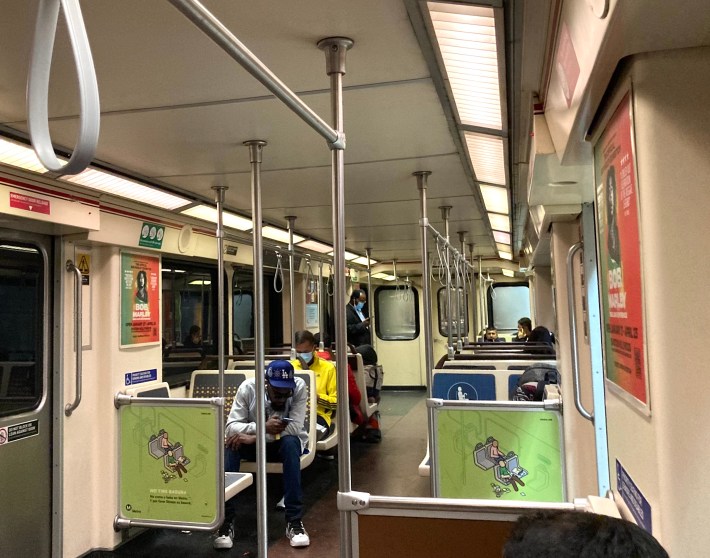
“Same here,” echoed San Francisco Editor Roger Rudick. “I’ve very, very rarely seen people smoking on BART or Muni.”
As I suspected, smoking on trains appears to largely be a Chicago-style problem, analogous to the way my colleagues view deep-dish stuffed pizza and Malört.
Questions for the CTA
My next move was to contact the transit agency directly, so I sent CTA media a heartfelt email on the subject. “Obviously, since the pandemic, smoking [on trains] has become a big problem, especially at night, particularly on the CTA’s 24-hour lines,” I wrote. “As you know, it’s harmful to children, seniors, and people with respiratory disabilities, and unhealthy for all of us. Moreover it makes riding the CTA unpleasant, and can make it feel unsafe.”
“I’m wondering if there are things that could be done – in addition to the obvious-but-expensive fixes of more affordable housing, mental health clinics, and addiction recovery services – to encourage people not to smoke on the train. Here are some ideas that have been floated so far.”
– A fun, Pittsburgh-style courtesy campaign, similar to what CTA did a decade ago
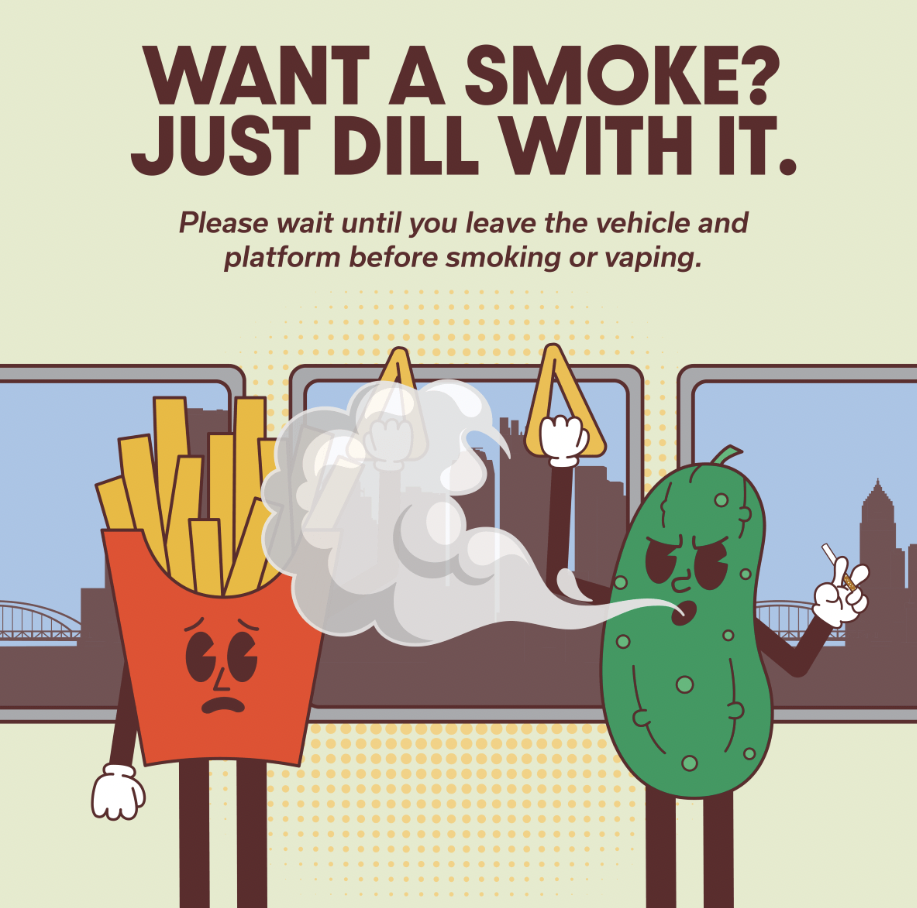
– Legalizing smoking on platforms, or at least outdoor platforms, maybe with a designated smoking area that non-smokers can avoid
– Offering a designated Smoking Car at night
“I’m aware of the CTA’s recent air filter pliot announcement,” I added. “I think a lot of customers were a little annoyed by that strategy of trying to mitigate, rather than prevent, smoking on the ‘L’. I suppose proponents would say it’s ‘harm reduction.'”
I asked the CTA for useful stats to inform Streetsblog’s coverage, such as the prevalence of smoking in the system, and the current number of citations issued by police for it. And I wanted to know about any other smoking mitigation or prevention strategies in the works.
The agency’s response.
“Addressing smoking aboard CTA vehicles is a top priority for our agency,” a spokesperson replied. “We have approached this issue through the targeted, data-driven deployment of security resources and specific, mission-based activities, along with systemwide messaging, to ensure riders know that smoking on all CTA properties is prohibited.”
They added, “By using data and rider feedback, including input from the CTA Chatbot, we are now strategically deploying teams of [Chicago Police Department] officers and contracted security through several programs, including:”
- “Anti-Smoking Missions: Conducted two-to-three times per week and led by CTA security teams and backed by CPD at targeted locations.”
- “Code of Conduct Missions: Daily patrols of the Blue Line by K-9 security teams to educate and enforce CTA’s Code of Conduct.”
- “Transit Rider Interaction Program (TRIP) Missions: Conducted twice daily by CPD officers who check in with riders and personnel, and board trains to travel to adjacent stations to continue these efforts.”
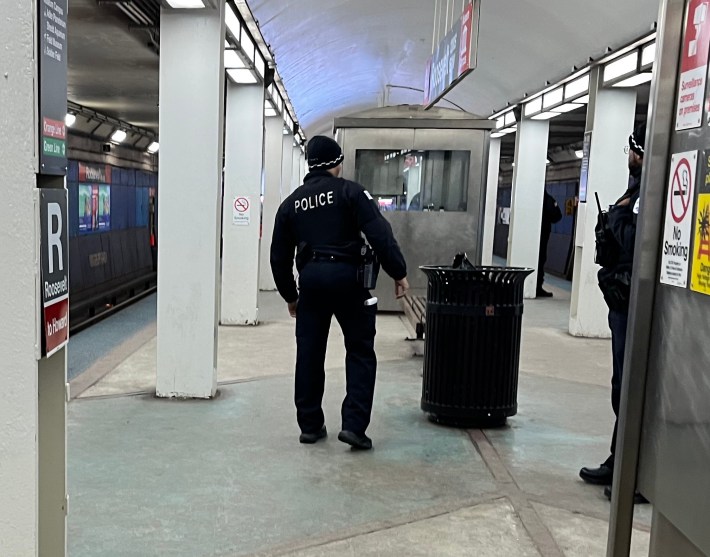
“These recent security missions and other targeted police deployments across the system are making an impact,” the spokesperson asserted.
- “Crime Reduction: Overall crime on the Blue Line was down 16 percent in 2025. Systemwide, transit crimes have dropped 8 percent since January 2025, while property crime have seen a 23 percent reduction.”
- “Increased Visibility: Between April 2025 and January 2026, there were 65 missions conducted resulting in 642 citations for smoking violations. The missions to combat smoking led to a 50 percent increase in ticketing by CPD last year.”
“We continue to research the industry’s best practices and seek out other measures to deter smoking, including our recently launched challenge statement as part of our Innovation Studio aimed at mitigating the impact of secondhand smoke on buses and trains.”
In 2024, one of these challenges was “Mitigating the Impact of Smoking.” It stated, “Over the past few years, CTA has experienced a significant increase in the number of people smoking on vehicles. As transit riders have returned to the system, customer surveys indicate smoking is one of the top issues that riders are concerned about. Smoking on transit vehicles is not only a violation of CTA’s Code of Conduct, it also degrades the rider experience and creates a strong incentive for riders to choose modes other than transit if they are able.
Last June, the CTA held this info session to discuss the smoking and air quality challenge, which eventually resulted in the current air filter pilot.
So that’s was the agency said it’s doing about this crucial issue for health and ridership. I’ve reached out to just about every relevant local expert and advocate I could think of to discuss this subject. In the next installment of “Streetsblog Chicago versus smoking on the CTA,” we’ll hear from a couple of them.
Until then, next time you ride the ‘L’, please don’t “smoke ’em if you got ’em.”

On November 12, SBC launched our 2026 fund drive to raise $50K through ad sales and donations. That will complete next year’s budget, at a time when it’s tough to find grant money. Big thanks to all the readers who have chipped in so far to help keep this site rolling all next year! Currently, we’re at $21,527 with $28,473 to go, ideally by the end of February.
If you value our livable streets reporting and advocacy, please consider making a tax-exempt gift here. If you can afford a contribution of $100 or more, think of it as a subscription. That will help keep the site paywall-free for people on tighter budgets, as well as decision-makers. Thanks for your support!
– John Greenfield, editor

Read More:
Streetsblog has migrated to a new comment system. New commenters can register directly in the comments section of any article. Returning commenters: your previous comments and display name have been preserved, but you'll need to reclaim your account by clicking "Forgot your password?" on the sign-in form, entering your email, and following the verification link to set a new password — this is required because passwords could not be carried over during the migration. For questions, contact tips@streetsblog.org.