New CDOT report finds that while bike lanes improved safety, they didn’t harm businesses, and may help make corridors more economically resilient

By Ellen Steinke
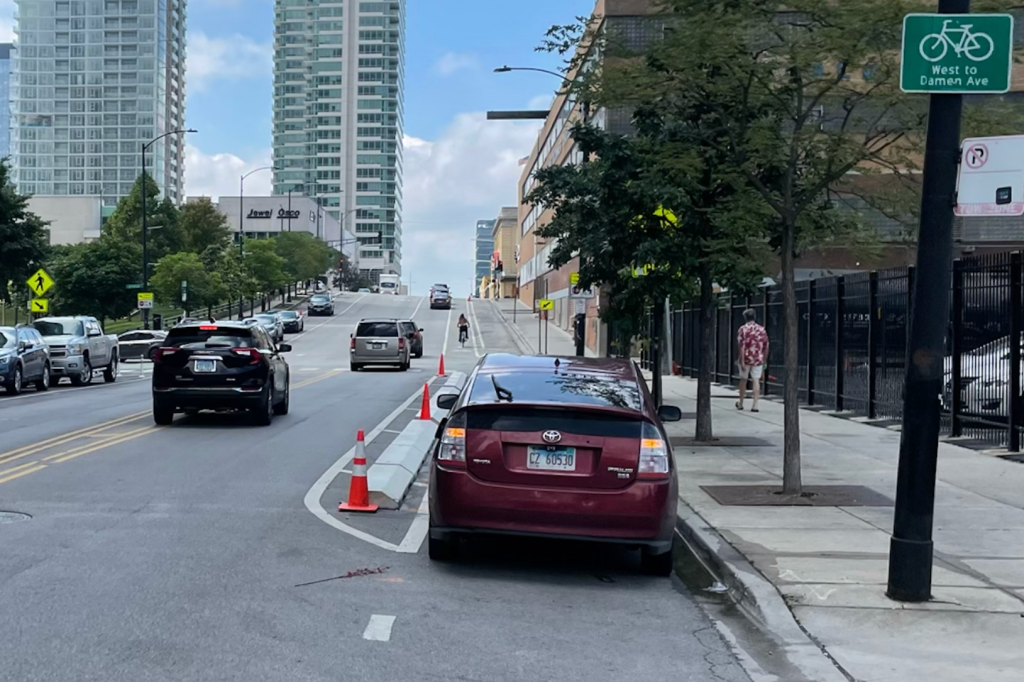
For years, one of the most common arguments against bikeways in Chicago has been that they will devastate local businesses. At nearly every public meeting about protected bike lanes, opponents warn that parking conversions to make room for the new facilities, and/or improve sight lines at corners, will scare away customers, hamper sales, and leave commercial corridors struggling to survive.
But a new report from the Chicago Department of Transportation paints a far more complicated — and far less catastrophic — picture.
The new “CDOT Economic Impacts of Bike Lanes Study” examined six Chicago corridors where bike lanes were installed and compared them to nearby “control” corridors without bike lanes. While the report stops short of claiming bike lanes directly caused economic growth, it repeatedly found that bike lane corridors performed similarly to — or in several cases better than — their comparison corridors on measures like employment, commercial vacancy, sales tax revenue recovery, and property values.
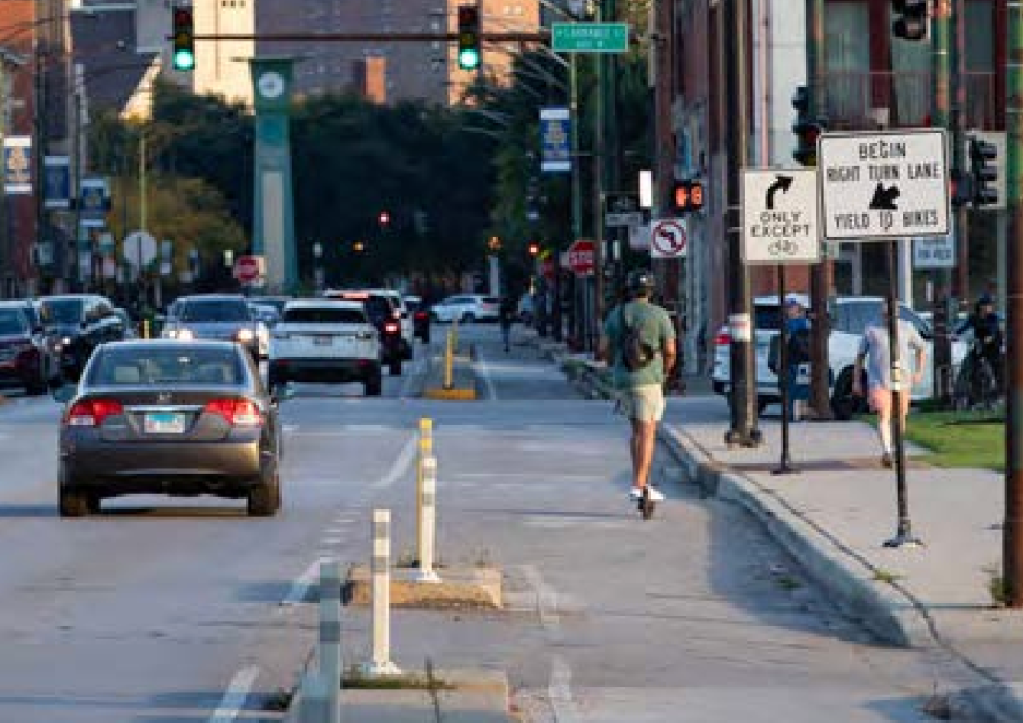
In other words, despite years of warnings, the study found little evidence that bike lanes harmed business districts. That does not mean the study is perfect. The report itself repeatedly acknowledges that “it is difficult to distinguish causation and correlation between bike lanes and economic activity.”
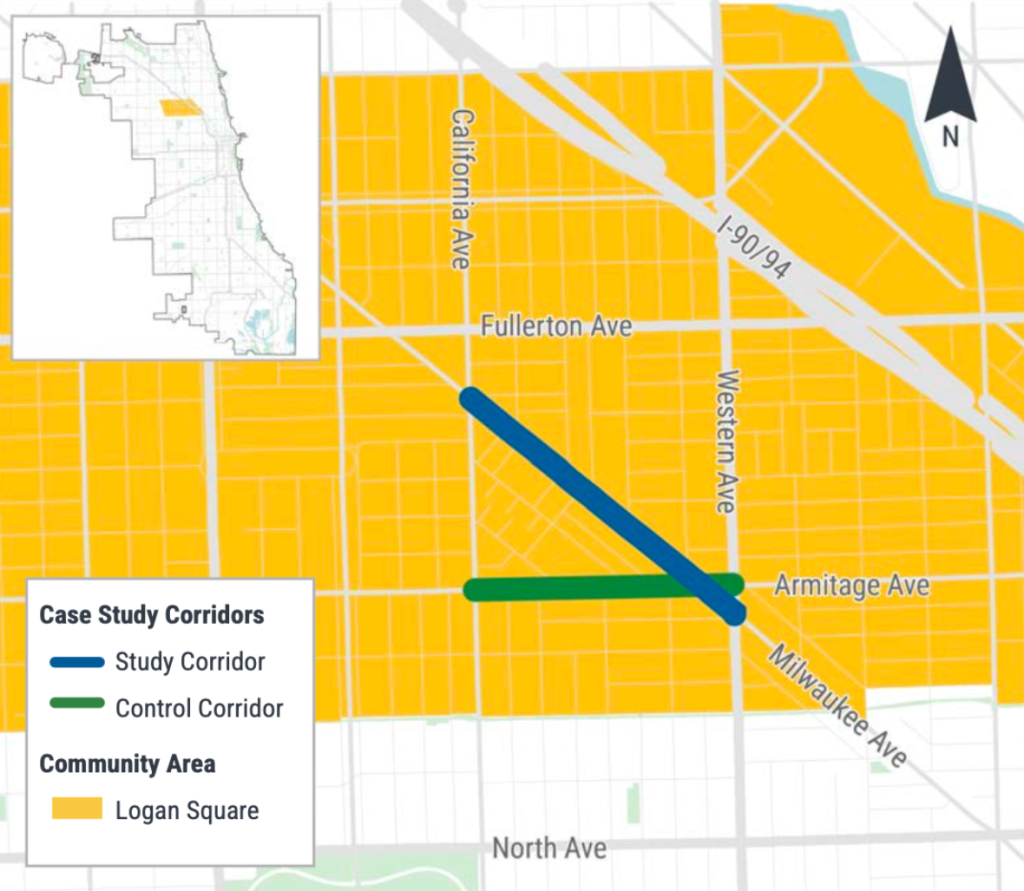
And frankly, there is room for criticism. Each study corridor was compared to only one nearby control corridor, and some of those comparisons were imperfect. Milwaukee Avenue, for example, was compared to Armitage Avenue — two nearby streets with relatively different traffic environments, business mixes, and urban forms. Streets that appear geographically similar can function very differently economically.
The study also spans the COVID-19 pandemic and recovery period, which heavily disrupted commercial activity citywide. Construction, changing shopping habits, remote work, and broader economic conditions all likely played major roles in the trends CDOT observed.
Still, even with those limitations, the report undermines one of the strongest political claims regularly used against bike infrastructure, that bike lanes inevitably destroy commercial corridors. Instead, the report found that corridors that received bikeways generally remained economically stable; continued attracting businesses and customers; and in many cases improved on several economic indicators.
On Milwaukee Avenue between Western and California avenues in Logan Square, where protected bike lanes were installed in 2020, the corridor saw:
- Private-sector employment increased 37 percent after installation
- Commercial property values increased 49 percent
- Sales tax revenue steadily recovered, increasing by 66 percent following the pandemic
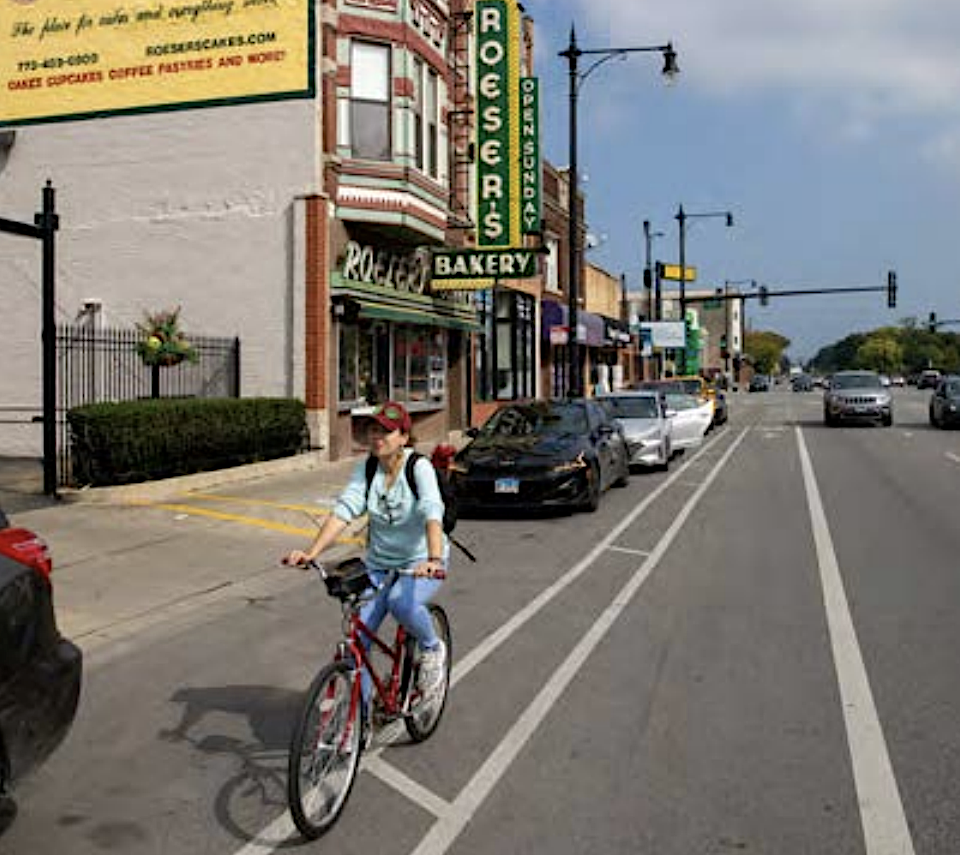
On North Avenue between Central Park and California avenues, commercial vacancy rates decreased 20 percent while the control corridor saw vacancies increase 12 percent.
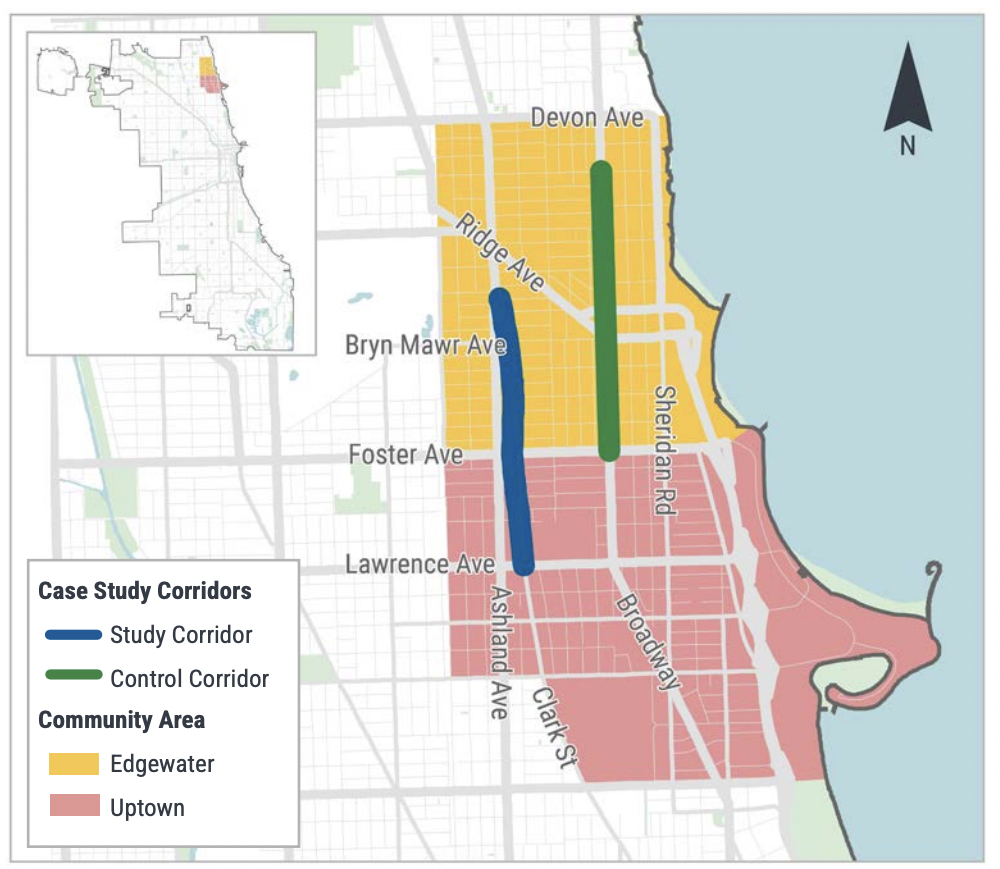
On Clark Street in the Andersonville district of Edgewater and Uptown, commercial vacancies decreased 18 percent while sales tax revenue recovered to pre-pandemic levels.
Even on corridors where sales tax revenue or employment declined, the declines often mirrored or outperformed the control corridors. The report also found that bike lanes increasingly function as an amenity, not just for cyclists, but also for residents, employees, and developers.
Several developers interviewed by CDOT described bikeways as indicators of connectivity and livability that help modern neighborhoods remain competitive. One South Shore developer offered perhaps the report’s most striking quote, warning that communities without bike lanes risk becoming “functionally obsolete.”
Importantly, the study suggests bike lanes may help businesses in ways that go beyond attracting cyclists customers specifically. Bikeways provide another way for employees and customers to access corridors without relying entirely on cars. They can make streets feel calmer, safer, and easier to navigate. They also contribute to broader “people-oriented” street environments that encourage walking, lingering, shopping, and outdoor activity. That may help explain why residents and visitors consistently ranked sidewalks, bike lanes, bus access, and bike racks as more important than parking in many survey responses.
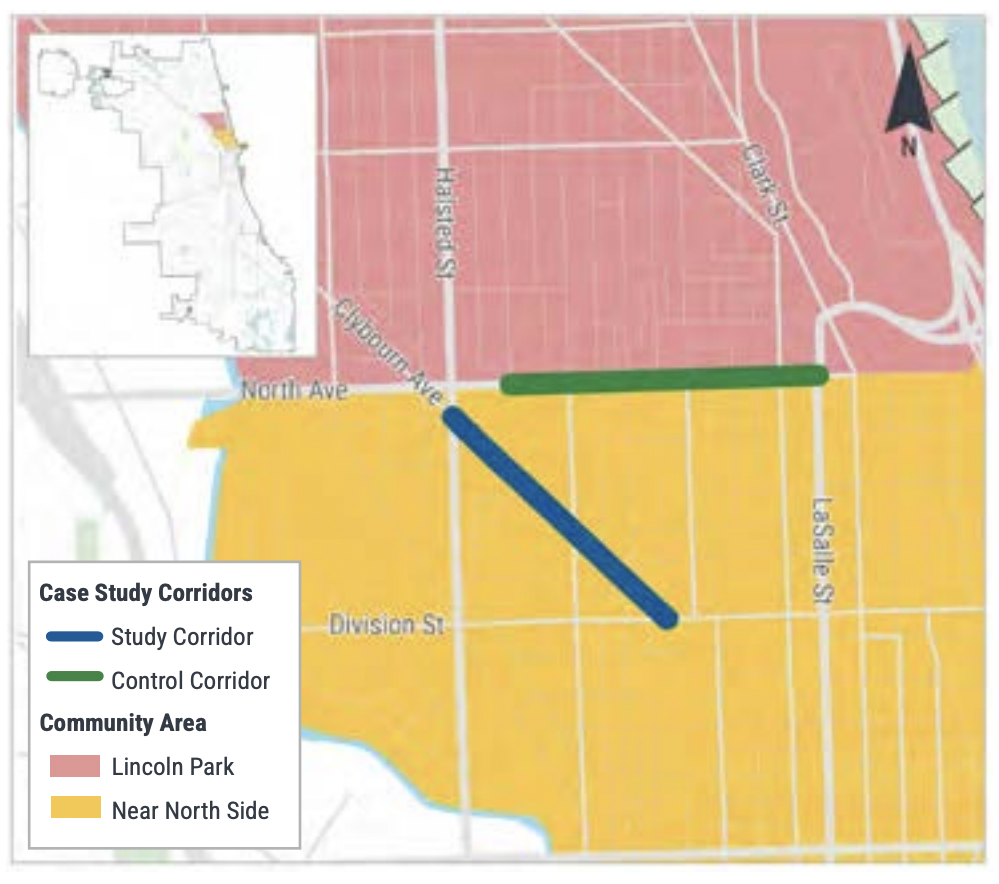
Ironically, some of the strongest findings in the report were not economic at all, but instead were about safety. Several corridors experienced substantial reductions in crash costs after bike lane installation. On Clybourn Avenue, crash costs dropped 56 percent while the control corridor saw crash costs increase 98 percent. On Milwaukee Avenue, crash costs fell 44 percent. That matters economically too.
Crash costs include emergency response, medical care, insurance claims, property damage, lost productivity, disability, and death. Safer streets reduce both human suffering and economic losses. In that sense, the report suggests bike lanes may not simply make corridors more “bikeable.” Instead, they may also help make them safer, calmer, and more attractive places to spend time — all of which matter for commercial success.
The study revealed another important nuance often lost in public debates: Many business concerns centered less on bike lanes themselves and more on curb management. Merfchants repeatedly raised concerns about loading zones, delivery access, ride-hail pickups, double parking, and inconsistent parking configurations. On Milwaukee Avenue, businesses complained that alternating parking arrangements created confusion for drivers and bike riders alike.
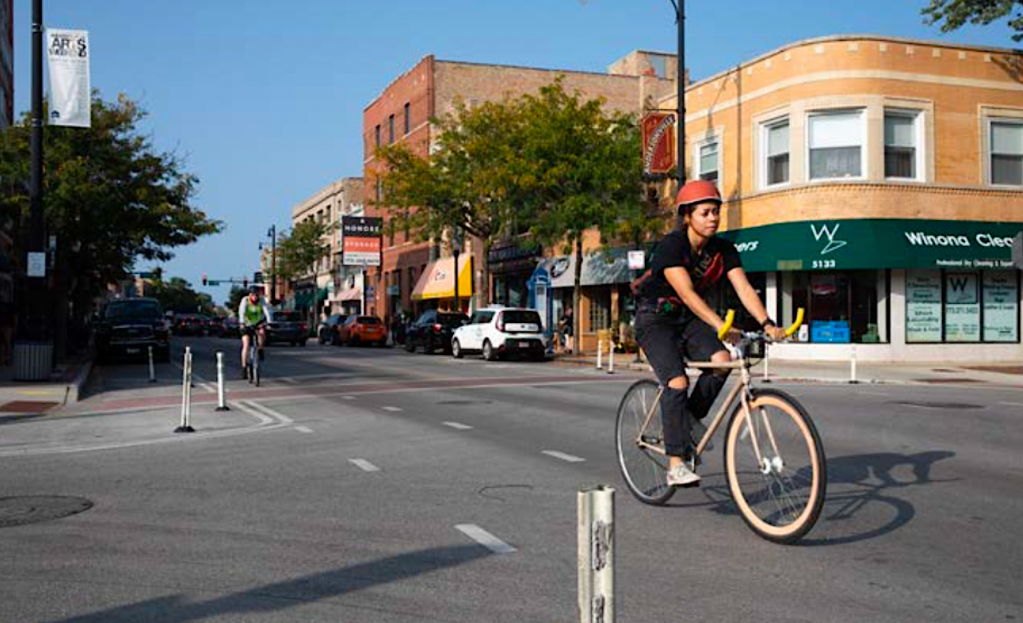
That distinction matters because it suggests the real challenge may not be “bike lanes versus business,” but how Chicago manages increasingly contested curb space on dense commercial corridors trying to accommodate deliveries, buses, ride-hail drivers, private car drivers, people on bikes, and pedestrians simultaneously.
Ultimately, CDOT’s report does not definitively prove that bike lanes create economic growth. The methodology has limitations, and the City itself appropriately avoids making sweeping causal claims. But neither does the study back up assumptions that bike lanes harm businesses, the result of business owners overestimating the percentage of their customers who get to their establishments by car.
If anything, the report suggests the opposite: bike lane corridors generally remained economically healthy, often improved on key indicators, and in many cases became safer at the same time. For a debate that has long been dominated by worst-case scenarios, that may be one of the most important findings of all.
Check out the new “CDOT Economic Impacts of Bike Lanes Study” here.

On November 12, SBC launched our 2026 fund drive to raise $50K through ad sales and donations. That will complete this year’s budget, at a time when it’s tough to find grant money. Big thanks to all the readers who have chipped in so far to help keep this site rolling to the end of 2026! Currently, we’re at $32,796 with $17,204 to go, ideally by the end of May.
If you value our livable streets reporting and advocacy, please consider making a tax-deductible gift here. If you can afford a contribution of $100 or more, think of that as a subscription. That will help keep the site paywall-free for people on tighter budgets, as well as decision-makers. Thanks for your support!
Streetsblog has migrated to a new comment system. New commenters can register directly in the comments section of any article. Returning commenters: your previous comments and display name have been preserved, but you'll need to reclaim your account by clicking "Forgot your password?" on the sign-in form, entering your email, and following the verification link to set a new password — this is required because passwords could not be carried over during the migration. For questions, contact tips@streetsblog.org.