
Five years after City of Chicago signed off on a policy plan, the “State of ETOD in Chicago” report notes progress creating transit-friendly affordable housing



Five years ago, the City of Chicago adopted its first policy plan dedicated to Equitable Transit Oriented Development, a strategy for increasing affordable housing density near transit hubs. A coalition of city planners and advocates recently released a report on the City’s progress on this plan so far and a set of recommendations to continue making transit-served areas of the city more walkable, vibrant and affordable to live in.
The plan was created in response to Chicago TOD projects from 2013 to 2015, which poured disproportionate resources into North Side neighborhoods and accelerated displacement of longtime residents. Elevated Chicago – an organization committed to advancing ETOD – and the Transportation Equity Network – a coalition of advocates and organizations dedicated to mobility justice, were formed. Elevated Chicago and the Mayor’s Office developed the Equitable Transit Oriented Development Policy Plan. Adopted by the City Council in 2021, the document prioritized underserved communities for investment and laid out 42 policy recommendations for a more livable, equitable city.
The report states that positive steps have been made on all counts. The authors – from Elevated Chicago, Center for Neighborhood Technology, IFF, Rudd Resources and the DePaul Institute of Housing Studies – state the City has made “significant progress” on 22 of the recommendations in the plan and “progress” on the remaining twenty. Changes at the City government and policy levels to support and make ETOD projects attractive make up the bulk of the report. This included the creation of the ETOD working group co-chaired by Elevated Chicago and the Mayor’s Office. It also included the passing of the 2022 Connected Communities Ordinance – zoning reform that speeds up affordable housing approvals and reduces minimum parking requirements near transit. Another major win was the historic passage of the Northern Illinois Transit Authority Act last year.

The Connected Communities Ordinance built on the ETOD Policy Plan by expanding the TOD zone to a half mile radius of CTA and Metra stations. It also extended TOD incentives to include corridors with frequent bus service, eliminating one-size-fits-all parking mandates for high-density housing developments near transit, and capping on-site parking in new residential developments. It also prevented deconversions of two and three flats near transit into single family homes in communities facing displacement.
The NITA Act fully funds regional transit and replaces the Regional Transportation Authority with the more streamlined and empowered Northern Illinois Transit Authority. Included in that legislation is the ability for transit agencies to partner with developers to build on land they own. This has the multi-pronged benefit of transit agencies spurring community development, increasing housing density near transit stops and stations, and generating revenue.
Other steps in creating an ETOD-friendly Chicago cited in the report include direct city support of ETOD projects through grants and technical assistance. Since adopting the Policy Plan, Elevated Chicago and the City have awarded grants and provided technical guidance to 29 ETOD projects. According to the report, 24 of these have acquired their sites, seven have broken ground and seven have been completed.
Arts and culture projects that add to the vibrancy and walkability of transit hubs were also noted. In 2025, a new Culture Near Transit Program – sponsored by Elevated Chicago and the MacArthur Foundation – provided eight grants totaling $340,000 for art installations and place keeping activities near transit stations. Three more transit culture projects in 2026 – awarded to Mandala South Asian Performing Arts, Endeleo Institute, and the McKinley Park Development Council – were recently announced.
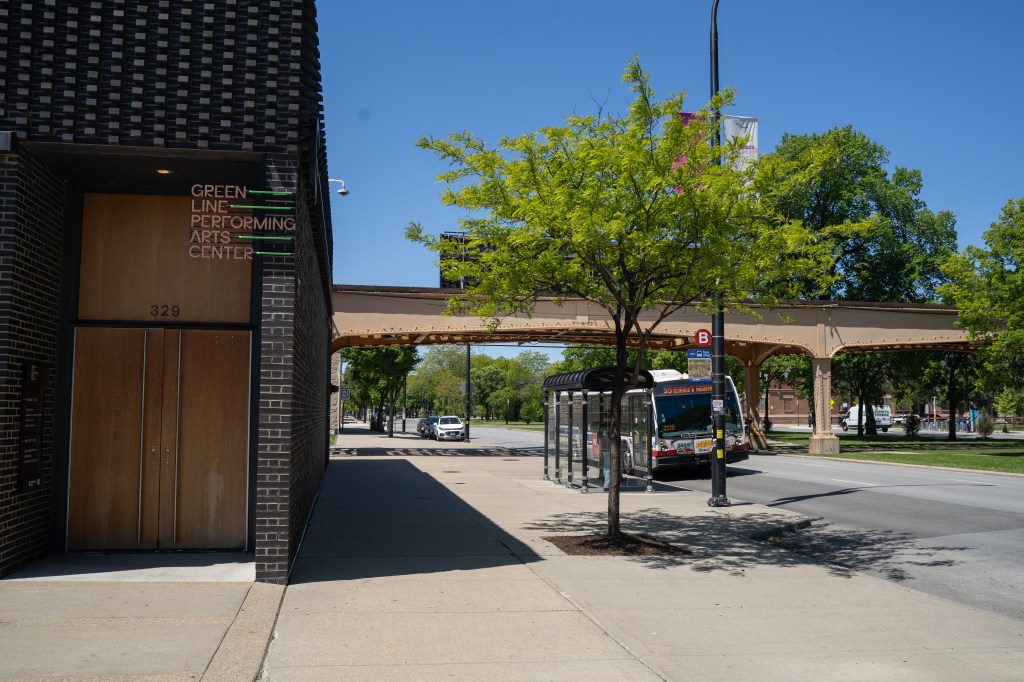
ETOD community engagement and outreach efforts have included walking tours for elected officials and policymakers, outreach to alderpersons, engagement in schools and universities, and educational materials like posters and a series of short videos explaining what ETOD is and the benefits of right-sizing parking.
The ETOD Policy Plan included recommendations for data collection and research, and progress was made on these fronts as well. The Center for Neighborhood Technology and Metropolitan Planning Council created the ETOD Social Impact Calculator, which helps developers measure the value of transit-oriented development. Likewise, the Metropolitan Planning Council released a scorecard for community organizations to evaluate proposals from developers through the lens of ETOD. The DePaul Institute of Housing Studies, along with institutional and community partners, conducted a study of vacant lots near transit and their impact on quality of life in the South and West sides.
The report provides maps of ETOD projects and other projects that benefitted from the Connected Communities Ordinance. These project stretch to the north, west and south reaches of the city, and appear more evenly distributed citywide.
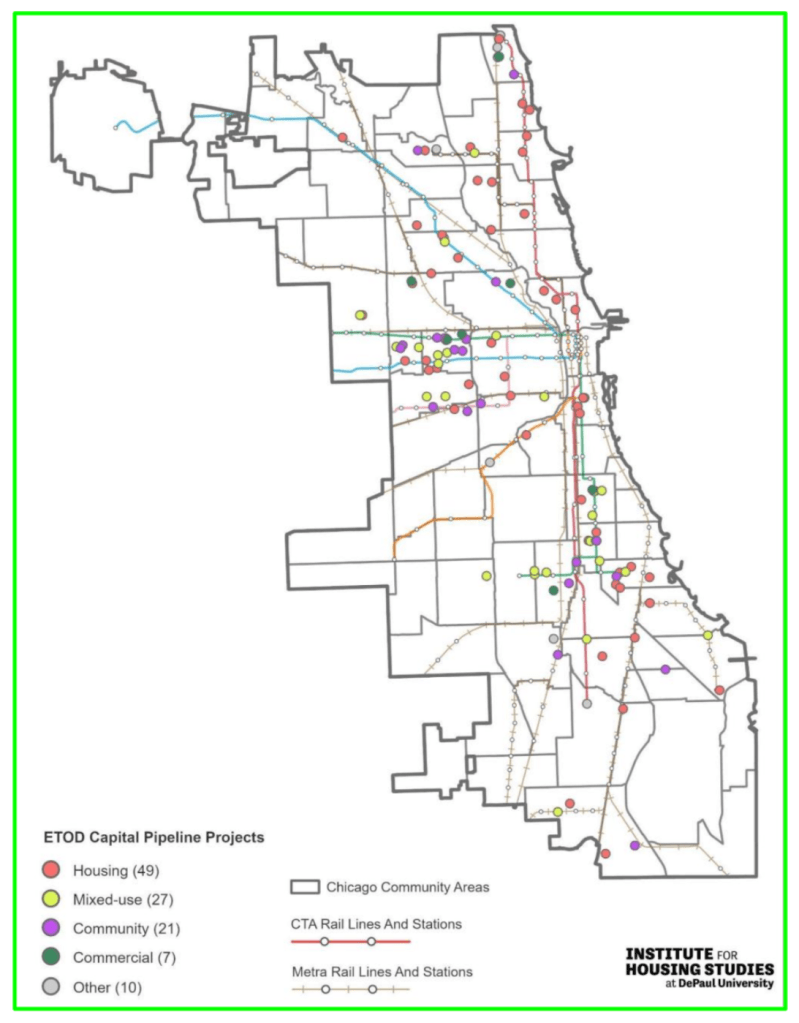
The report concludes with recommendations for the next five years of ETOD policy and action in Chicago and beyond. Strengthening policies to prevent displacement, preserve affordable housing stock while building more multiunit housing near transit, increasing accessibility and walkability, and investing in cultural activities and community investment near transit top the list. The authors encourage the city to continue collaborating with advocates and private partners as administrations change, continuity vital for long term equitable development projects to come to completion. They also note that equity should be a guiding principle in bus service and infrastructure improvements the city committed to last year and recommend ETOD strategies be pursued near transit hubs outside city limits.
The report comes on the eve of Chicagoland’s transition to NITA and concludes with an appeal for the new authority to prioritize equitable TOD. The authors recommend that NITA adopt the strategies listed. This includes hiring dedicated ETOD staff, partnering across public and private sectors, immediately investing in ETOD projects, and supporting community developers with technical assistance.
Over the last half decade Chicago has, according to the report, laid the foundation for a more connected, vibrant, affordable and equitable city.
Check out “The State of Chicago ETOD” report on the Elevated Chicago website.

On November 12, SBC launched our 2026 fund drive to raise $50K through ad sales and donations. That will complete this year’s budget, at a time when it’s tough to find grant money. Big thanks to all the readers who have chipped in so far to help keep this site rolling to the end of 2026! Currently, we’re at $32,796 with $17,204 to go, ideally by the end of May.
If you value our livable streets reporting and advocacy, please consider making a tax-deductible gift here. If you can afford a contribution of $100 or more, think of that as a subscription. That will help keep the site paywall-free for people on tighter budgets, as well as decision-makers. Thanks for your support!
– John Greenfield, editor

Streetsblog has migrated to a new comment system. New commenters can register directly in the comments section of any article. Returning commenters: your previous comments and display name have been preserved, but you'll need to reclaim your account by clicking "Forgot your password?" on the sign-in form, entering your email, and following the verification link to set a new password — this is required because passwords could not be carried over during the migration. For questions, contact tips@streetsblog.org.