The Cubs defended their revised Wrigleyville parking lot expansion plan, but neighbors are still calling foul

By Ellen Steinke
Chicago Cubs representatives defended a revised proposal Tuesday night to expand the team’s Camry parking lot near Wrigley Field. They argued the additional parking would help accommodate fans who drive, while reducing congestion on nearby residential streets.
But the plan continues to face growing opposition from neighborhood residents and urbanist groups. They assert that the expansion, which would add hundreds of new parking spaces in one of the most transit-accessible neighborhoods in the country, would undermine our city’s broader goals around transit-oriented development, housing, and walkability.
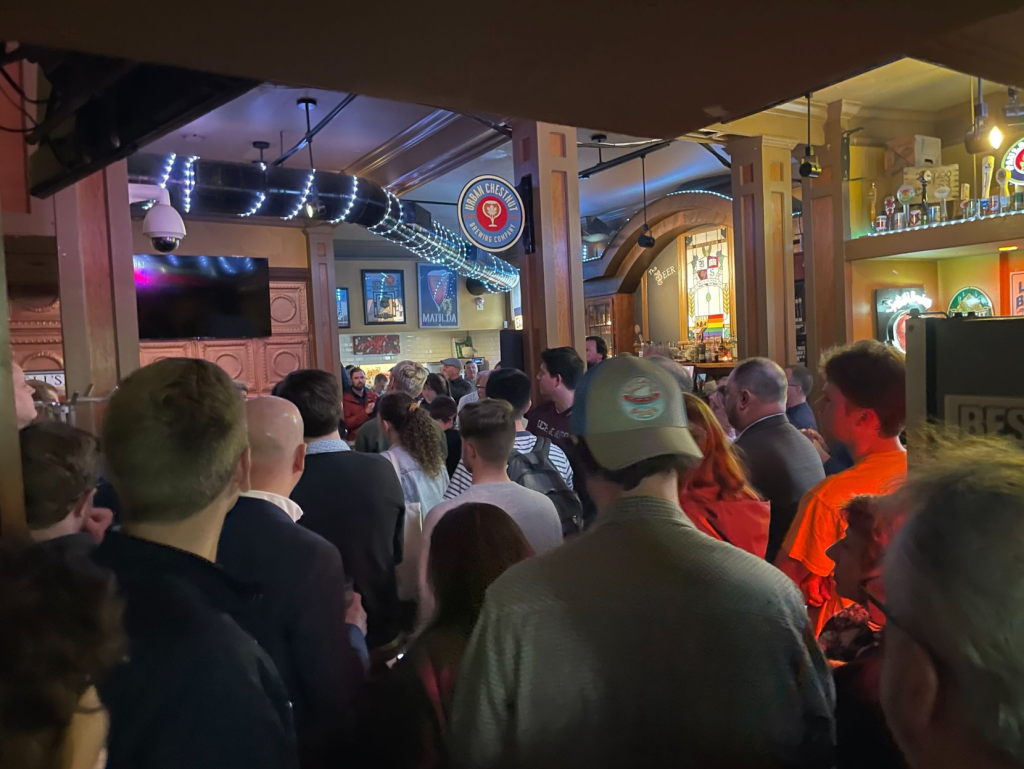
The updated proposal was presented at an East Lakeview Neighbors meeting Tuesday evening, where Cubs reps outlined several changes that were made after an earlier community meeting drew criticism from nearby residents and advocacy groups. The revised plan includes additional tree canopy around the perimeter of the lot, a new western traffic exit intended to reduce congestion on neighborhood streets, dedicated shuttle access for elderly and disabled fans, and planned nearby traffic-calming improvements.
The Cubs currently want to add about 260 parking spaces to the Camry Lot, located north of Grace Street and east of Clark Street. Representatives said the team is not adding more seats to the ballpark, but instead trying to better accommodate existing parking demand.
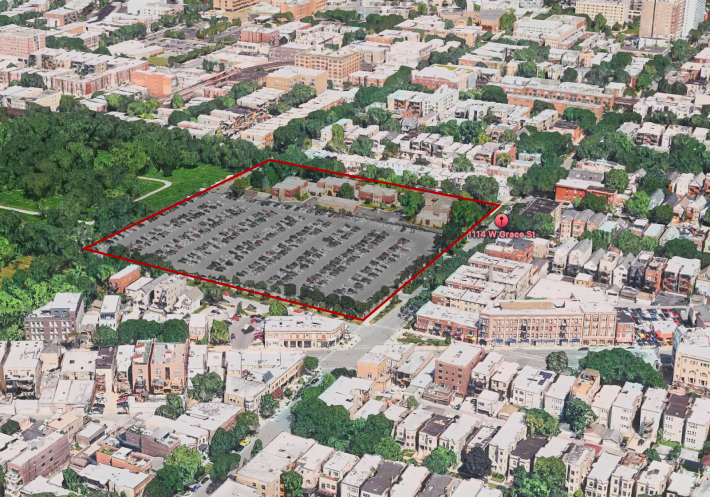
The current Camry parking lot, and the land the team recently bought including the former location of Catholic Charities of the Archdiocese of Chicago’s House of the Good Shepherd. Image via 44th Ward.
“We have one parking space for roughly every 26 fans,” one Cubs rep said during the meeting, contrasting Wrigley Field’s parking supply with that of other professional sports venues in Chicago and around the country.
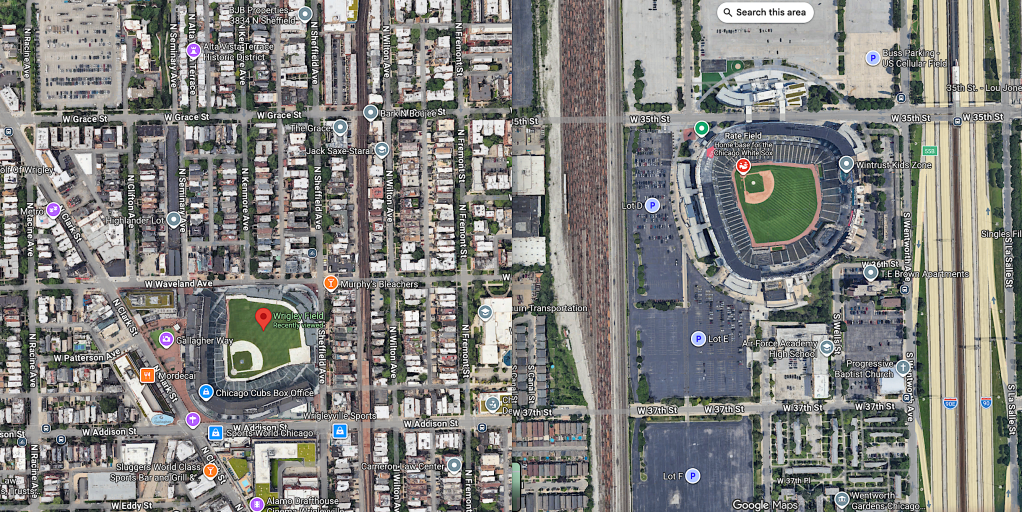
The team also pointed to parking that has been removed from the surrounding area over the past decade. That included the former surface lot that was replaced by the Gallagher Way open-air plaza, and parking formerly associated with the McDonald’s across from Wrigley Field.
The representatives argued that while transit remains the easiest way to reach Wrigley Field for many fans, a significant number of attendees still rely on cars, particularly suburbanites, seniors, and those with mobility limitations.
The team cited internal survey data indicating that roughly 35 percent of game attendees travel from more than 50 miles away. They also discussed shuttle services currently operating between the Camry lot and the stadium for elderly and disabled attendees.
At the same time, Cubs reps acknowledged that the share of fans driving to games has declined in recent years. “I think our demand for driving is dropping,” one team member said. “We still have more people driving than we have spaces to accommodate them.”
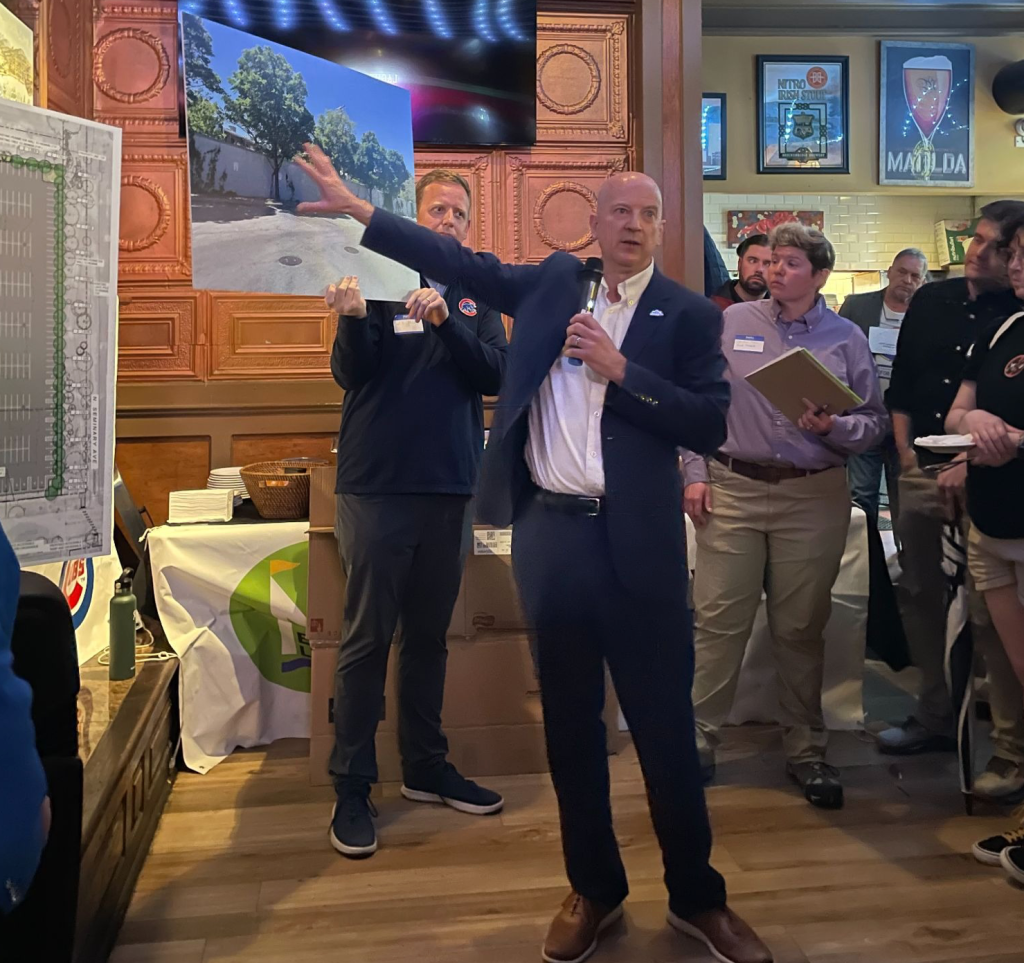
The proposal has become a flashpoint in a broader debate over land use and transportation policy in Chicago neighborhoods near transit. Opponents of the expansion say that adding more surface parking near the CTA Red Line, multiple bus routes, and dense mixed-use development runs counter to the city’s stated efforts to encourage transit-oriented development and reduce car dependency.
Lakeview Urbanists, one of the groups organizing opposition to the project, argues that the site could instead support housing or mixed-use development in a neighborhood facing rising rents and limited housing supply. They also dispute the Cubs’ claim that more parking would meaningfully reduce neighborhood traffic or residential street parking demand.
Opponents also note the site sits in a transit-rich area covered by Chicago’s Connected Communities ordinance, which is intended to encourage denser development near transit.
The debate also reflects changing approaches to stadium development nationally. In recent years, several major sports franchises have shifted away from large surface parking lots in favor of mixed-use districts emphasizing housing, retail, public space, and transit access. Lakeview Urbanists and other opponents have pointed to projects surrounding Fenway Park in Boston, the Atlanta Braves’ Battery development, and the United Center’s proposed “1901 Project” as examples of stadium districts moving toward denser, more pedestrian-oriented development patterns.
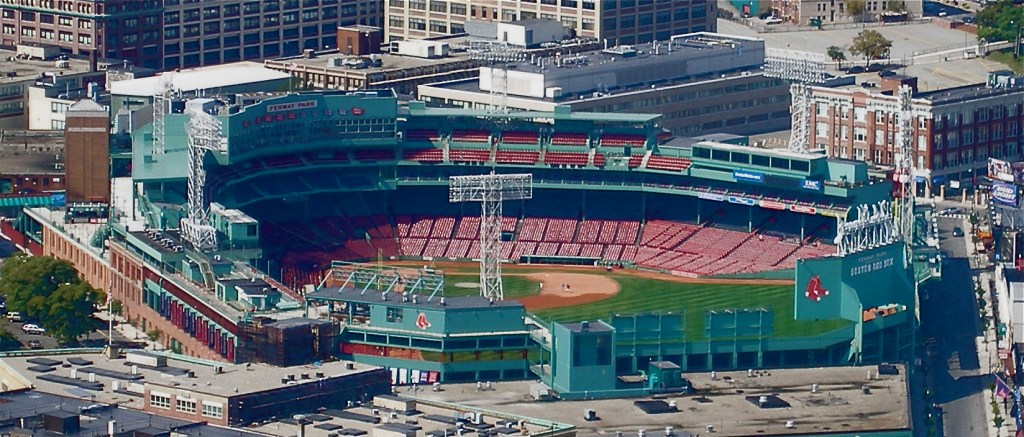
During Tuesday’s meeting, Cubs representatives made clear that housing is not currently being considered for the site. “We’re not planning to build housing on the lot,” one speaker said in response to concerns raised by opponents of the expansion.
Representatives also addressed worries about lighting spillover, tree removal, and traffic flow. According to the Cubs, the revised proposal would result in a net increase in trees on the site and would include additional landscaping around the perimeter of the lot. The team also said it is conducting a lighting study and exploring traffic-calming measures including raised crosswalks near the site entrance.
Attendees questioned why the Cubs are pursuing additional surface parking rather than structured parking or other forms of development. One resident asked directly during the meeting why the organization was “taking more land” instead of building a parking garage.
The proposal must still proceed through Chicago’s public approval process, including review by the Chicago Plan Commission and City Council. Ald. Bennett Lawson (44th), a generally sustainable transportation-friendly City Council member whose ward includes the site, has not publicly taken a formal position on the proposal. According to organizers involved in the opposition campaign, Lawson’s office has indicated community feedback will play a role in the final decision.
Lakeview Urbanists said its online petition campaign has generated roughly 2,600 letters to elected officials and the Cubs from approximately 2,000 participants so far.
Residents can submit feedback to Lawson’s office or sign Lakeview Urbanist’s petition organized by Lakeview Urbanists opposing the parking lot expansion.

On November 12, SBC launched our 2026 fund drive to raise $50K through ad sales and donations. That will complete this year’s budget, at a time when it’s tough to find grant money. Big thanks to all the readers who have chipped in so far to help keep this site rolling to the end of 2026! Currently, we’re at $32,759 with $17,241 to go, ideally by the end of May.
If you value our livable streets reporting and advocacy, please consider making a tax-deductible gift here. If you can afford a contribution of $100 or more, think of that as a subscription. That will help keep the site paywall-free for people on tighter budgets, as well as decision-makers. Thanks for your support!
– John Greenfield, editor
Streetsblog has migrated to a new comment system. New commenters can register directly in the comments section of any article. Returning commenters: your previous comments and display name have been preserved, but you'll need to reclaim your account by clicking "Forgot your password?" on the sign-in form, entering your email, and following the verification link to set a new password — this is required because passwords could not be carried over during the migration. For questions, contact tips@streetsblog.org.