Bronzeville Trail open house draws big crowd as community-led rail-trail plan moves forward

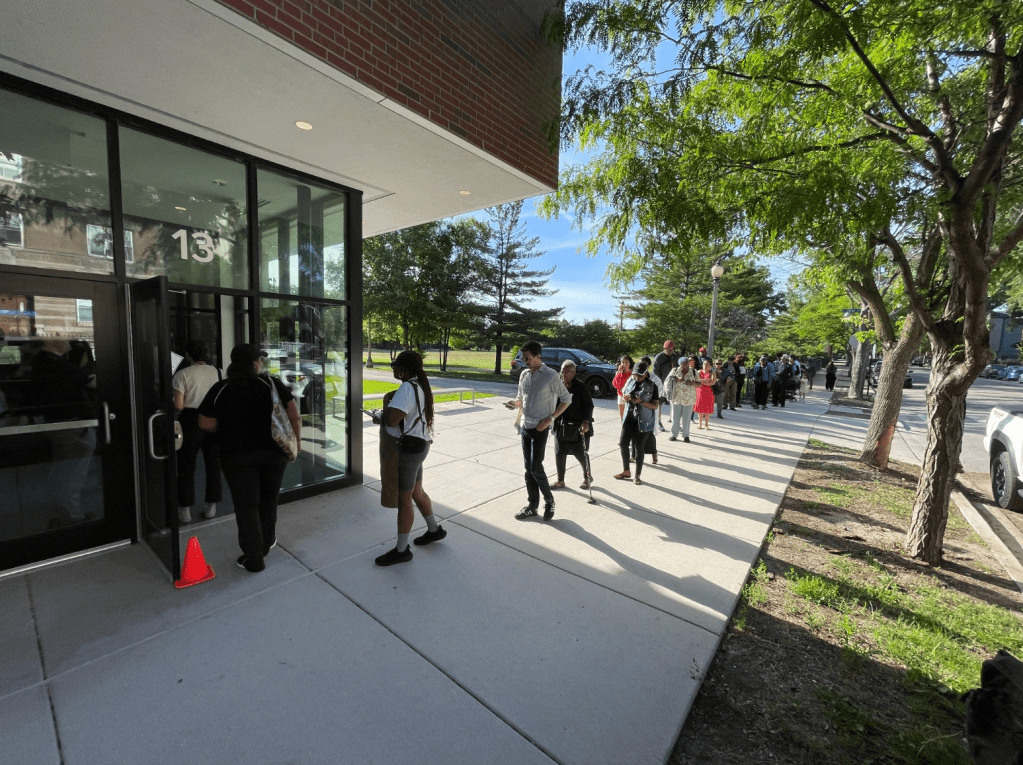
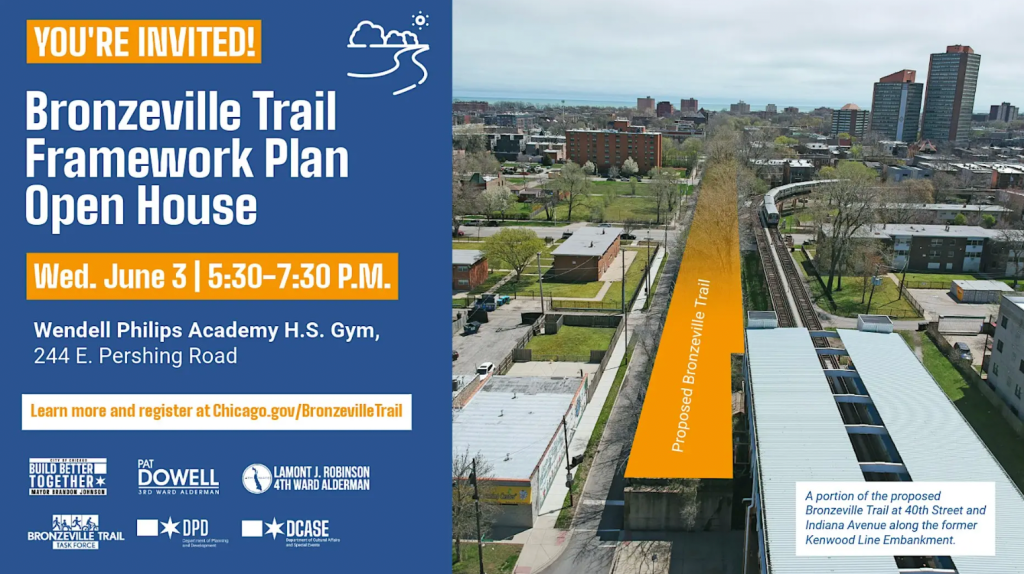
A line stretched out the door Wednesday evening at Wendell Phillips Academy High School, 244 E Pershing Rd., as residents, advocates, City staff, and elected officials gathered for the first public open house for the Bronzeville Trail Framework Plan.
The June 3 meeting, hosted by the Chicago Department of Planning and Development, was the latest step in the years-long effort to transform the former Kenwood Line embankment into an elevated walking, biking, and gathering space through the heart of Bronzeville. Organizers estimated the crowd at well over 150 people, with attendees filling the high school gym, circulating between feedback stations, and lining up for food catered by the Bronzeville institution Pearl’s Place.
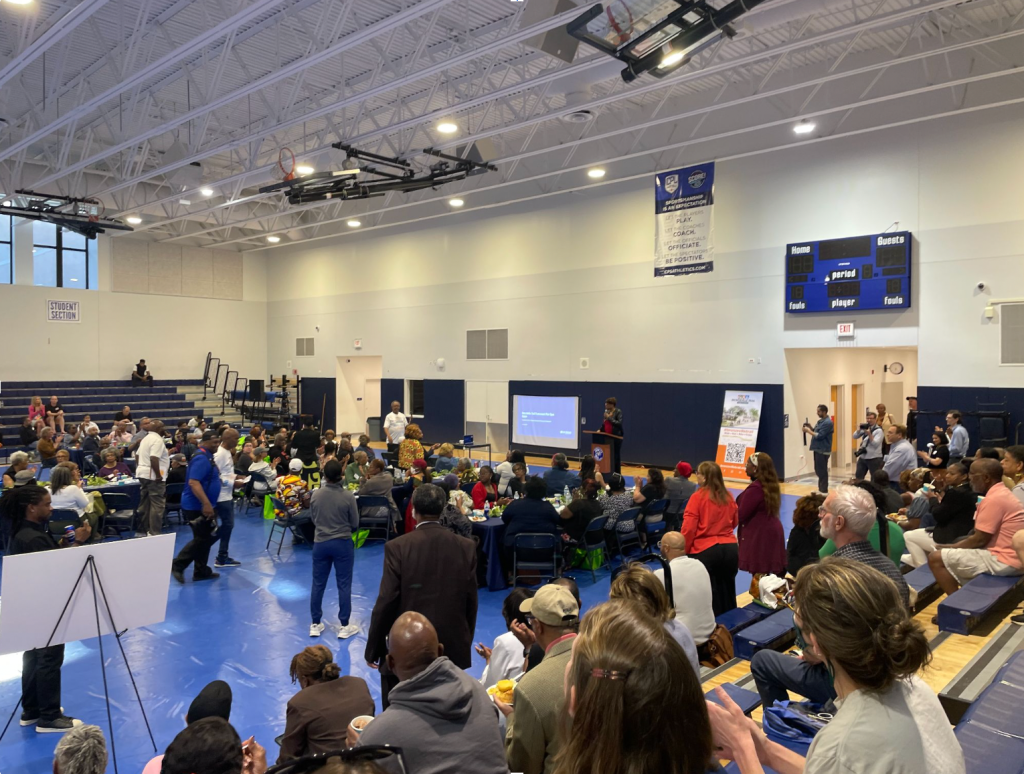
The turnout suggested something that transportation and planning meetings do not always generate: genuine community excitement.
“This is an important project, the Bronzeville Trail, and I want our community to rally around it,” Ald. Pat Dowell (3rd) told attendees during opening remarks. Dowell called the trail a “historic infrastructure investment” and emphasized that the process should protect seniors, support affordability, increase property values, and ensure jobs and contracts connected to the project benefit the community.
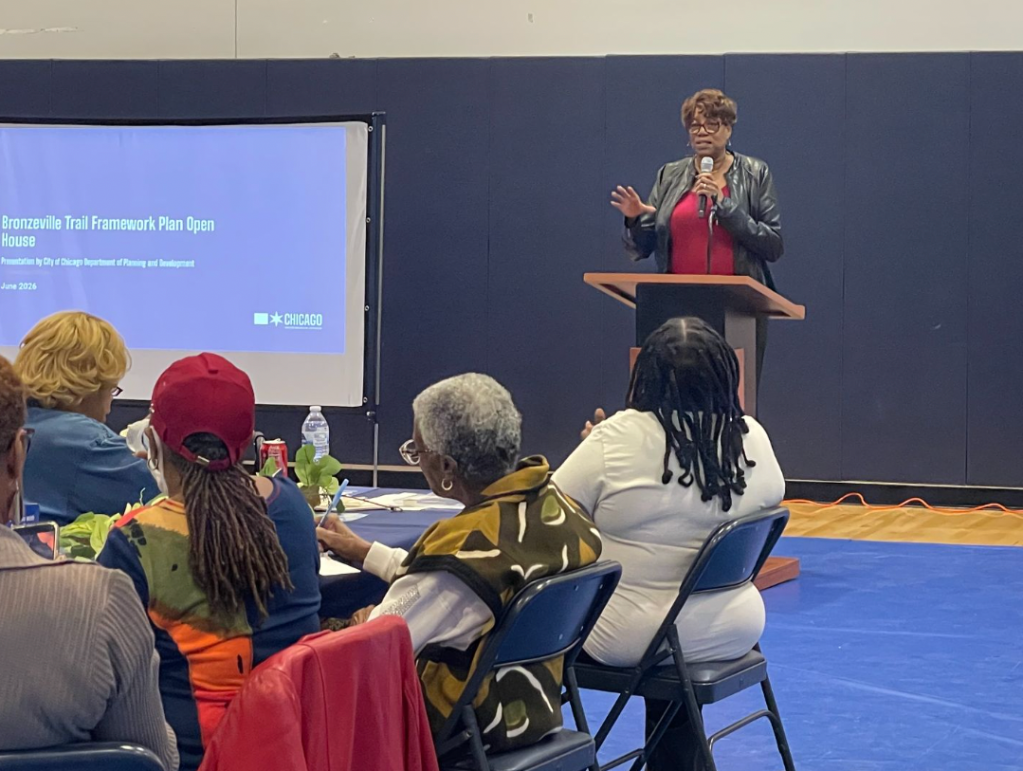
Ald. Lamont Robinson (4th) also voiced strong support, telling the crowd, “We are about to make history.”
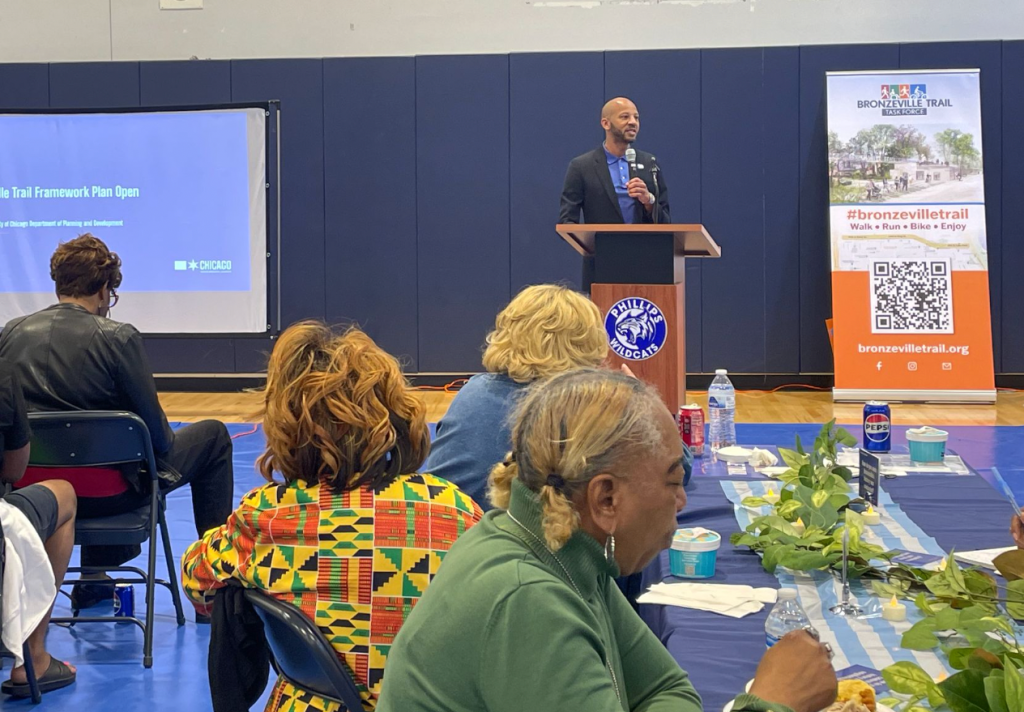
The proposed Bronzeville Trail would repurpose the abandoned Kenwood ‘L’ line embankment, a roughly 1.5-mile concrete structure running east-west near 40th and 41st streets from the Metra Electric tracks toward Lake Park Avenue and the 41st Street pedestrian bridge. The Bronzeville Trail Task Force describes the vision as a walking, running, and biking trail and linear park that could connect the neighborhood to the lakefront without requiring residents to navigate traffic-heavy streets.
DPD planner Will Holland said Chicago already has about 55 miles of off-street trails, and in 2022 the Chicago Department of Transportation announced a vision for 48 additional miles. But he also cautioned that rail-trail projects are complex and typically unfold on long timelines.
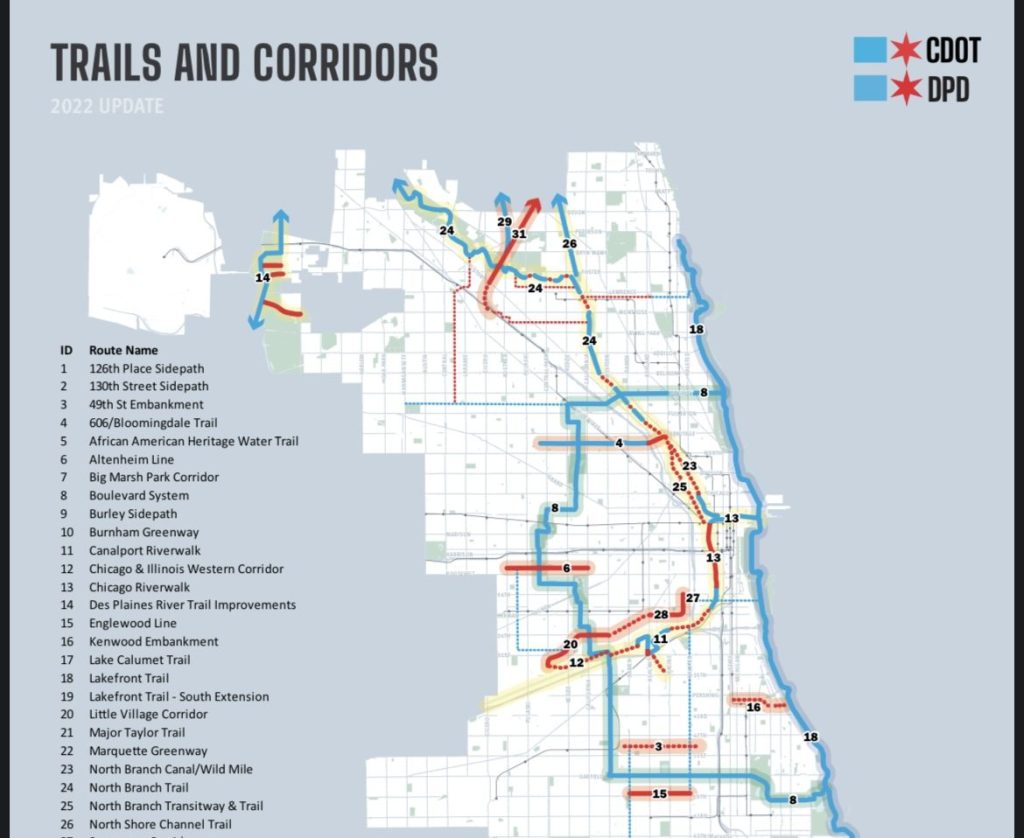
An overview of the planned locations for the announced tentative trails announced in April 2022, including the Bronzeville Trail, labeled “Kenwood Embankment.”
“These are big projects,” Holland said. “The City works across multiple agencies to make them happen, and they’re generally on 10- to 15-year timelines.”
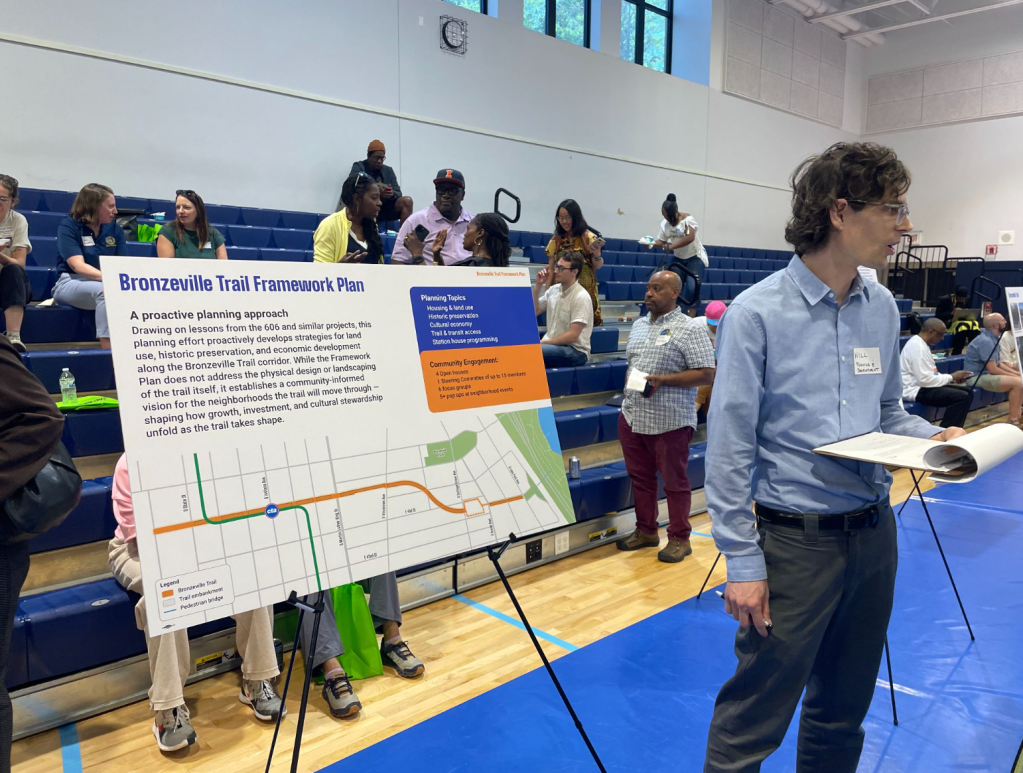
That timeline may be one of the project’s biggest challenges. Holland said the current framework plan will go to the Chicago Plan Commission for adoption and guide future city decisions. After that, CDOT is expected to begin Phase 1 preliminary design and Phase 2 final design and engineering in 2027, with that process expected to take about two years. Construction is currently expected to begin around 2032.
For many attendees, that means the enthusiasm in the room will need to be sustained for years. Still, the project has already advanced beyond the purely conceptual stage. Holland said the City completed a feasibility report in 2023 that studied the condition of the embankment and estimated it would cost at least $83 million to convert it into a trail. The Active Transportation Alliance recently reported that the city Committed $5 million in 2024 toward the framework plan, which is expected to be completed by the end of this year. The framework plan will focus on three major areas: trail access and programming, land use around the corridor, and historic preservation.
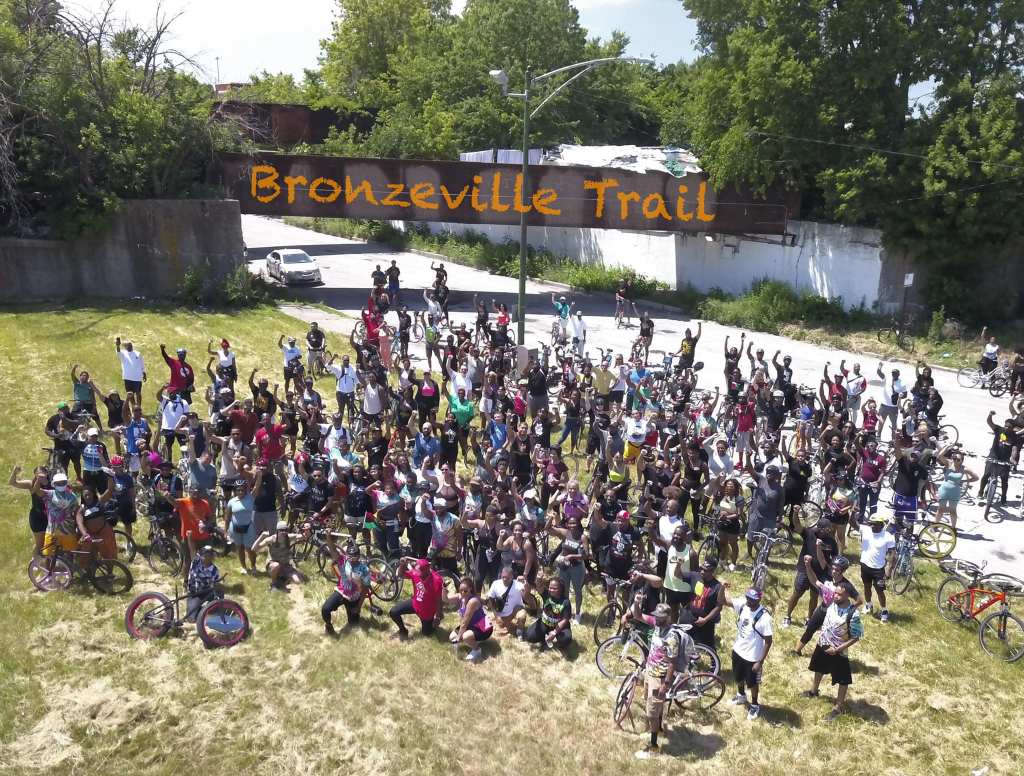
Streets Calling, a Black-focused bike group, visiting the trail corridor a few years ago. Photo: Bronzeville Trail Task Force
The access question is especially important because the embankment is not fully intact. Some bridges have been removed, and some segments have been demolished, including a section between Cottage Grove Avenue and Drexel Boulevard. The City will need to determine where people can enter and exit the trail, how to maintain a continuous route where the embankment is missing, and how the corridor should connect to existing bike, pedestrian, transit, and lakefront access points.
The land use conversation may be just as consequential. DPD asked attendees what kinds of housing, retail, services, parks, and community uses they would like to see on vacant or underused land near the trail. That question matters because major public-space investments can bring new amenities and economic activity, but they can also increase development pressure. Dowell directly acknowledged that tension, saying the community must be “intentional and strategic” to preserve affordability while also making sure Bronzeville benefits from the trail.
Historic preservation was another major theme. Bronzeville’s identity as a center of Black history, culture, music, business, and civic life makes the trail more than a transportation project. Bronzeville Trail Task Force Chair John Adams said what excites him most is the project’s relationship to the neighborhood’s history.
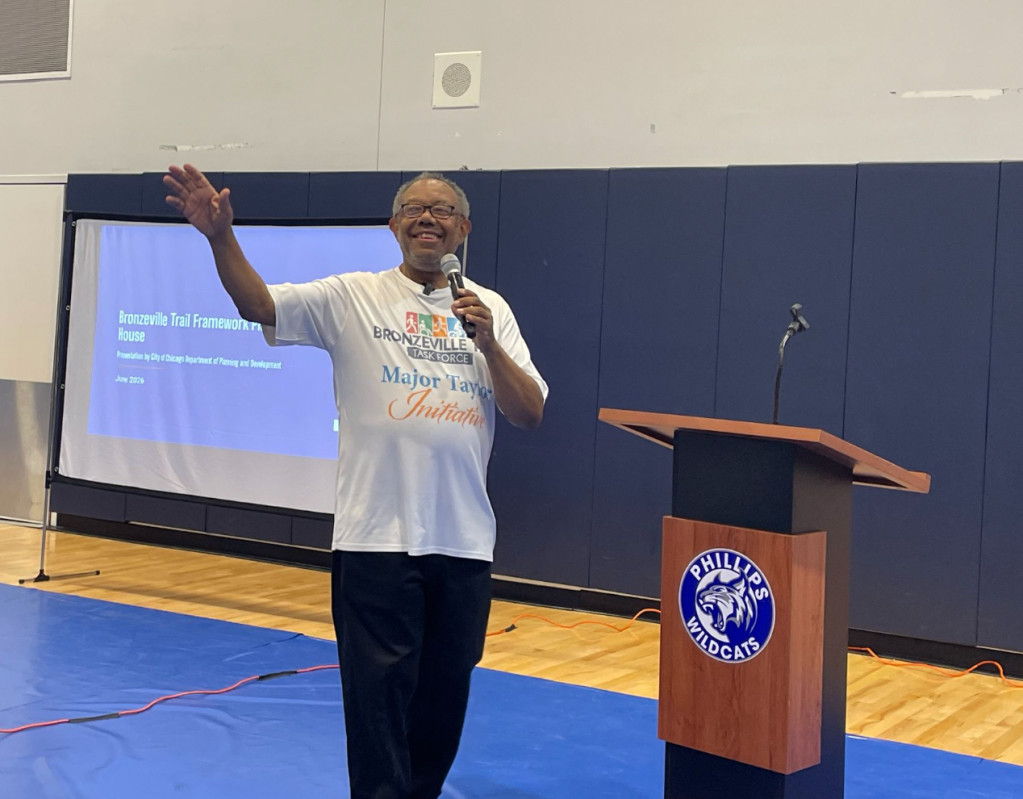
“Fortieth Street runs practically down the heart of Bronzeville,” Adams said, noting that many landmarks are within an eighth, quarter, or half mile of the corridor. The trail, he said, can become “an artery that’s going to connect Black history [and] Black culture that goes back a century.”
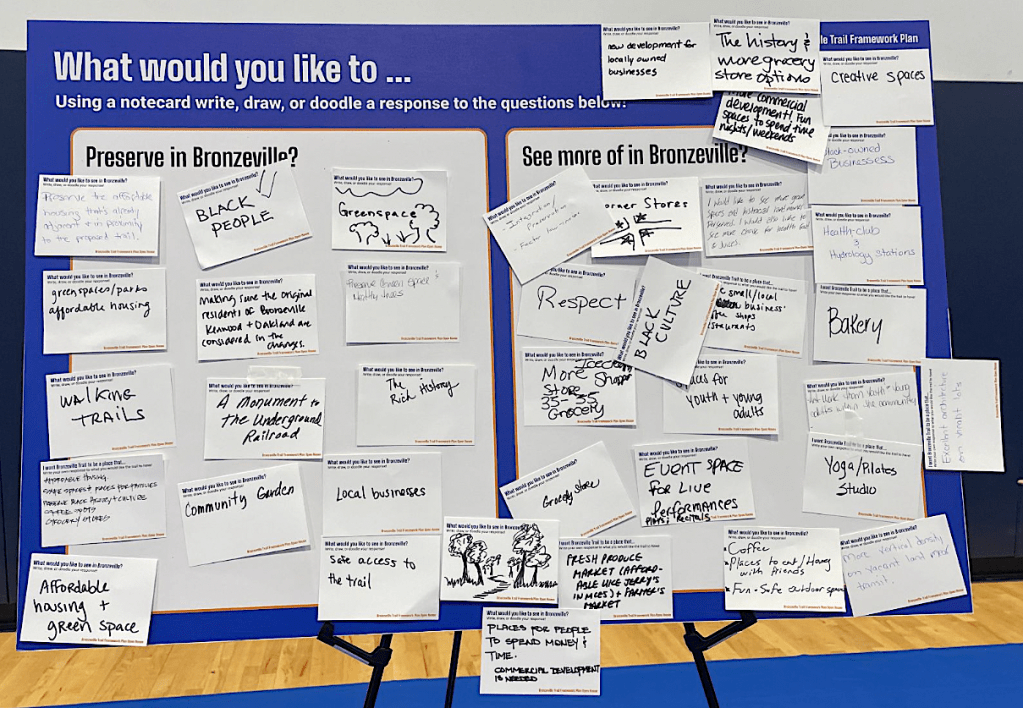
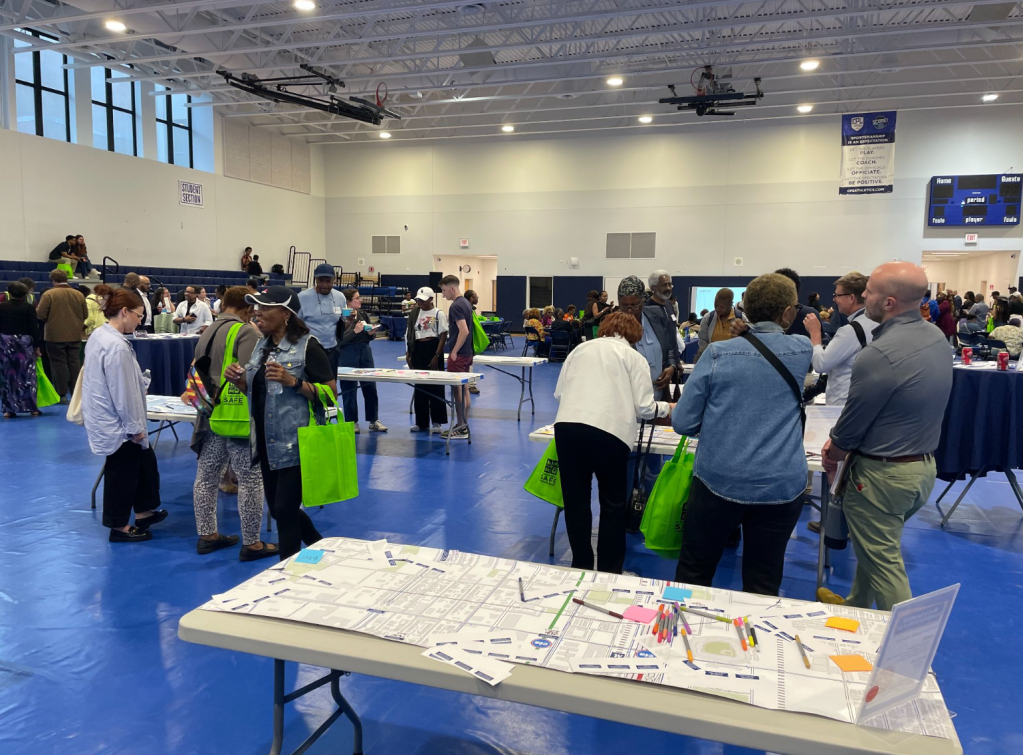
The open house itself reflected that broader vision. In addition to maps and planning boards, attendees were invited to place stickers and write responses to prompts such as what they want preserved in Bronzeville and what they want to see more of. CDOT SAFE Ambassadors were on hand with bike safety information, and organizers held a bike raffle.
The meeting was also notably intergenerational, with families, seniors, students, advocates, and local leaders all represented. That kind of early public buy-in could be crucial for a project that will require multiple layers of public funding, environmental study, property acquisition, design, engineering, construction, and long-term management.
According to Holland, the current open house was only the first of four planned public meetings in 2026. Future meetings will focus on access and connectivity, land use and housing, and local storytelling and historic preservation. DPD also plans to hold pop-ups, focus groups, and other community engagement opportunities throughout the year.
For now, the Bronzeville Trail remains years away from construction. But Wednesday’s meeting made clear that the project already has something many long-term infrastructure plans struggle to build: a visible base of community support.
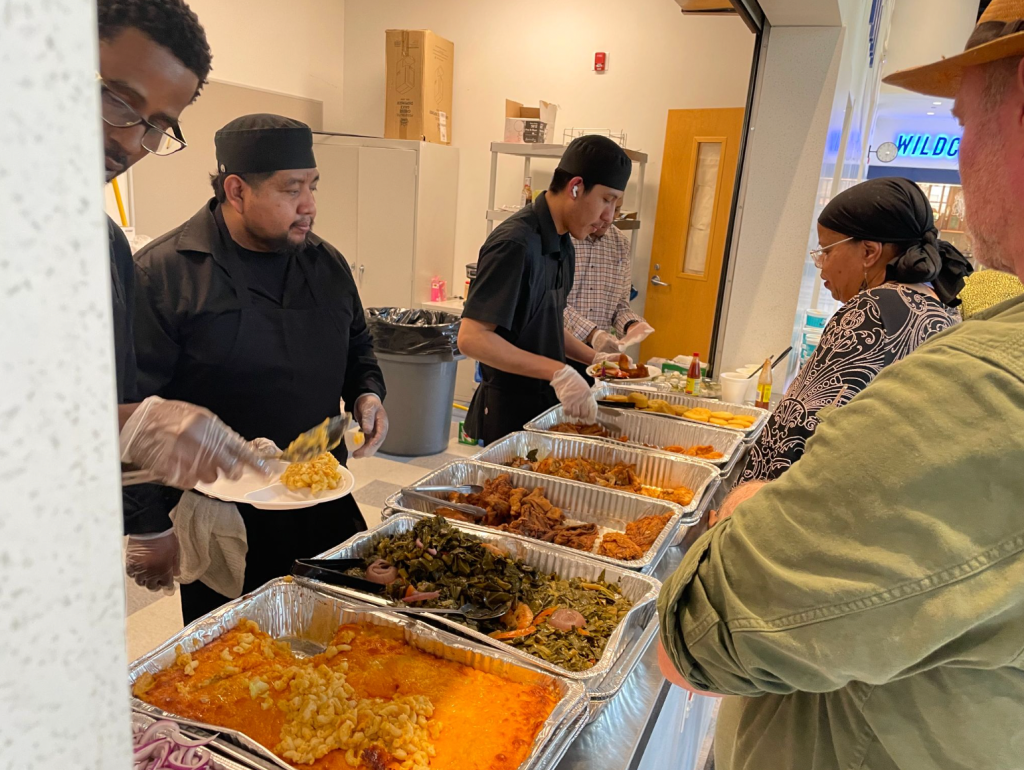
And if the line for food catered by Pearl’s Place was any indication, those planning future meetings may want to prepare for an even bigger crowd.

On November 12, SBC launched our 2026 fund drive to raise $50K through ad sales and donations. That will complete this year’s budget, at a time when it’s tough to find grant money. Big thanks to all the readers who have chipped in so far to help keep this site rolling to the end of 2026! Currently, we’re at $33,836 with $16,164 to go, ideally by the end of June.
If you value our livable streets reporting and advocacy, please consider making a tax-deductible gift here. If you can afford a contribution of $100 or more, think of that as a subscription. That will help keep the site paywall-free for people on tighter budgets, as well as decision-makers. Thanks for your support!

Read More:
Streetsblog has migrated to a new comment system. New commenters can register directly in the comments section of any article. Returning commenters: your previous comments and display name have been preserved, but you'll need to reclaim your account by clicking "Forgot your password?" on the sign-in form, entering your email, and following the verification link to set a new password — this is required because passwords could not be carried over during the migration. For questions, contact tips@streetsblog.org.