Stop the Cubs parking lot expansion: The team’s proposal to add more car storage to Wrigleyville would just make it harder for everyone to get around

By Kalen Luciano
Kalen Luciano is a Lakeview resident and organizer with Lakeview Urbanists where he advocates for projects and policies that build more abundant housing, active transportation, and safe streets. As a guest op-ed, this piece does not necessarily reflect the views of Streetsblog Chicago staffers.
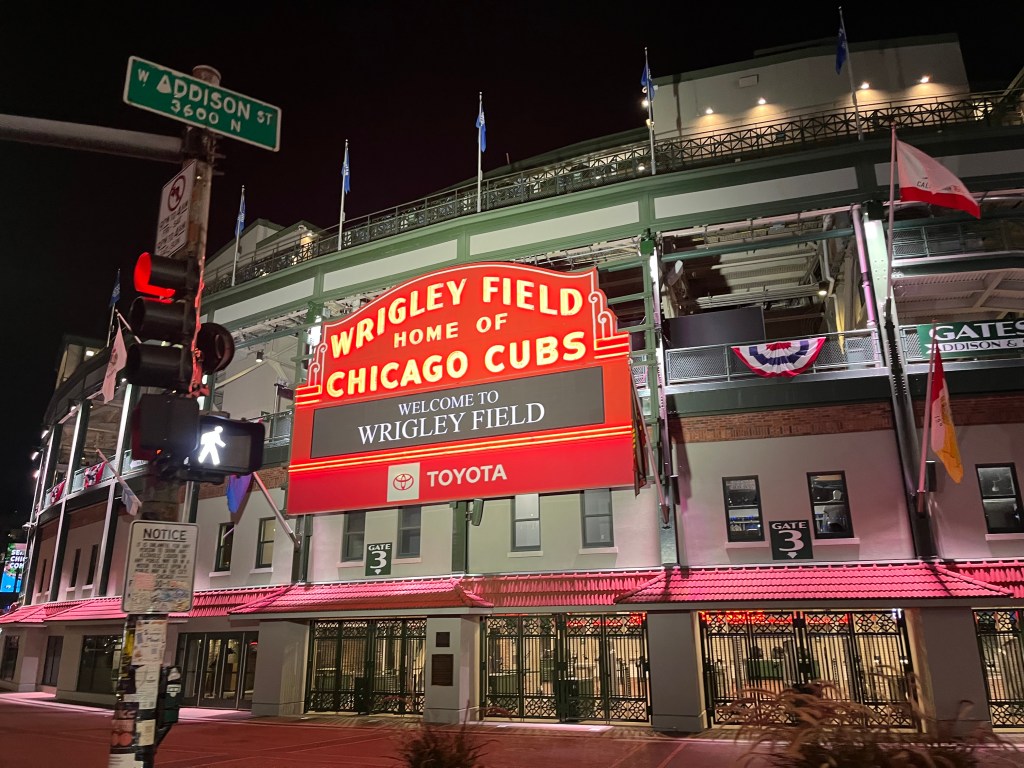
The Chicago Cubs recently proposed expanding one of their parking lots near Wrigley Field, north of Grace Street and just east of Clark Street, by 368 parking spots from 579 to 947. This strategy would increase the size of the lot by adding land the team bought recently, such as the former location of Catholic Charities of the Archdiocese of Chicago’s House of the Good Shepherd.
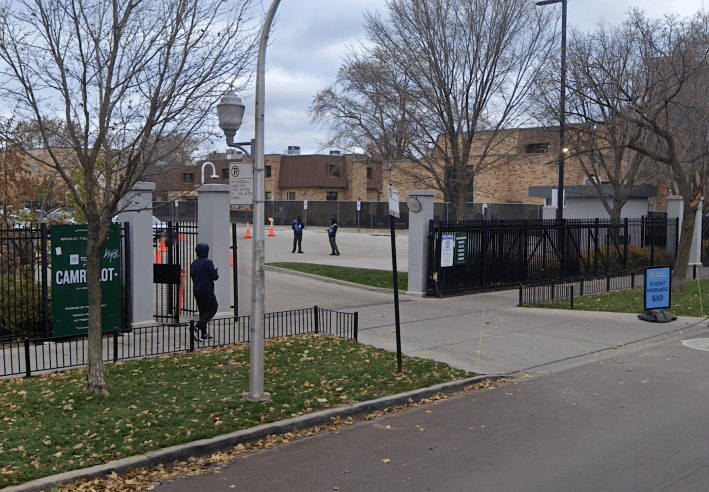
At a recent community meeting, Cubs officials said that this is only intended to meet existing demand and not encourage more fans to drive.
However, it is a well-studied phenomenon that expanding parking induces more demand, creating more traffic in Wrigleyville / Lakeview, an area that is already at its limits on game days. The additional traffic will also create more safety risks for people who live in and travel through Lakeview on foot, bicycles, and e-scooters.
The Chicago City Council has the power to put the brakes on this scheme. Our group, Lakeview Urbanists, created an email campaign you can use to urge your alderperson to reject the proposal, which you can sign here. The campaign will share your opposition to the parking lot with the Cubs as well.
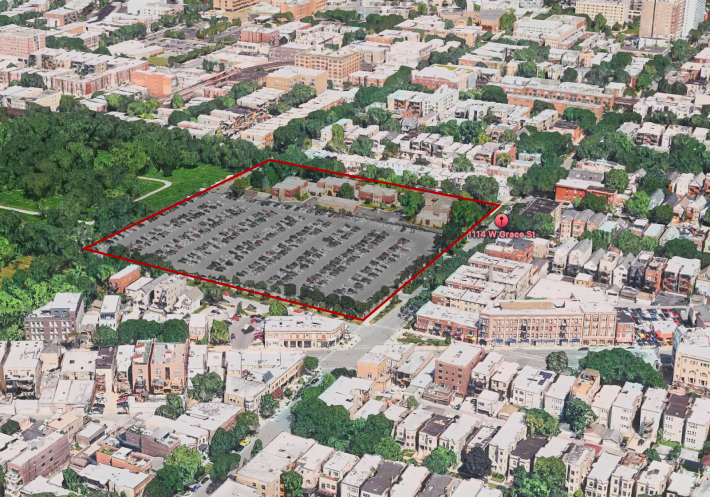
Surface parking lots pose a number of problems in addition to increased congestion and traffic safety risks. Parking lots take away land that could otherwise be used to create or expand housing developments. At a time when more and more Lakeview residents are struggling to find affordable housing, the City Council has a responsibility to alleviate this any way they can.
As it is, the parking lot provides little value or use to residents in the neighborhood. The current lot largely serves out-of-state drivers who worsen congestion on gamedays, and it only fills up to capacity during big game days at the end of the season.
In recent years, the number of fans driving to the stadium has decreased, which will only exacerbate how under-utilized the parking lot is. Residents deserve more than more wasted surface parking lot space, especially in a neighborhood where 40 percent of households don’t own a car.
This expansion would be a disservice to Wrigley Field’s neighbors where many residents get around on foot. Expanding a parking lot reduces walkability, increasing travel distance and decreasing the perceived comfort of walking.
This stadium is iconic for being seamlessly integrated into the surrounding neighborhood. It is one of the most walkable and transit accessible stadiums in the country, directly served by the Addison Red Line station and multiple bus lines. Fans enjoy the unique experience of walking and taking transit to the game. Expanding a massive parking lot would only undermine that.
The Cubs have transformed other lots around the neighborhood with successful mixed-use projects and amenities that further compliment Wrigleyville. One prominent example is the lively Gallagher Way public space, which replaced surface parking right next to the ballpark.
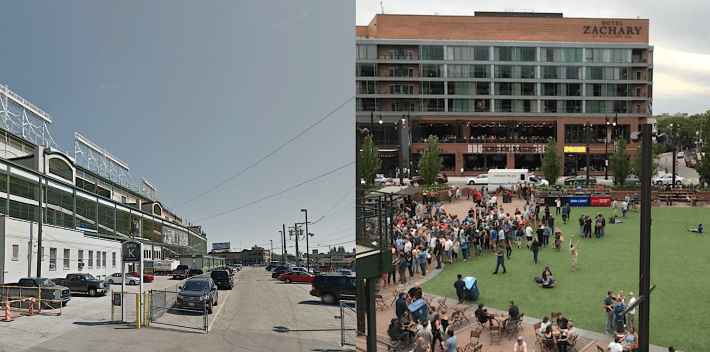
Comparable stadiums like Fenway Park have plans to replace some of their parking with additional homes, retail sites, and pedestrian-oriented streets near the ballpark.
The property in question sits in a high-demand area, just a short walk from the Sheridan Red Line Station. It deserves a forward-looking vision that benefits the neighborhood year-round. Adding 368 parking spaces is a step in the wrong direction.

On November 12, SBC launched our 2026 fund drive to raise $50K through ad sales and donations. That will complete next year’s budget, at a time when it’s tough to find grant money. Big thanks to all the readers who have chipped in so far to help keep this site rolling all next year! Currently, we’re at $29,052 with $20,948 to go, ideally by the end of March.
If you value our livable streets reporting and advocacy, please consider making a tax-exempt gift here. If you can afford a contribution of $100 or more, think of that as a subscription. That will help keep the site paywall-free for people on tighter budgets, as well as decision-makers. Thanks for your support!
– John Greenfield, editor
Streetsblog has migrated to a new comment system. New commenters can register directly in the comments section of any article. Returning commenters: your previous comments and display name have been preserved, but you'll need to reclaim your account by clicking "Forgot your password?" on the sign-in form, entering your email, and following the verification link to set a new password — this is required because passwords could not be carried over during the migration. For questions, contact tips@streetsblog.org.