Next Stop: Public Ownership? Chicago moves closer to buying its intercity bus terminal

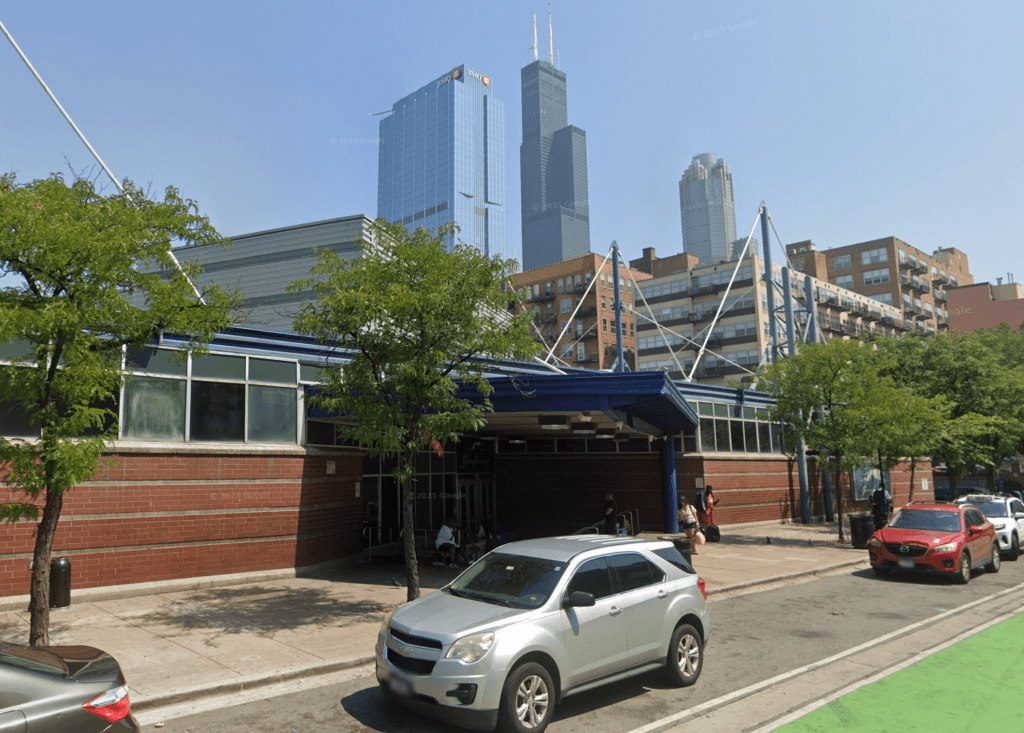

Chicago’s long-endangered intercity bus terminal may be one step closer to becoming a publicly owned transportation hub. At the June 10 City Council Committee on Housing and Real Estate, officials laid out new details on Mayor Brandon Johnson’s plan to purchase the existing Greyhound station at 630 W. Harrison St., preserving intercity bus service in Chicago while opening the door to long-needed upgrades for riders, neighbors, and bus operators.
The proposal would authorize the City to acquire the terminal from G H Chicago Illinois LLC for $19.2 million, below the city’s stated appraised value of $25.7 million. Officials said the purchase, along with planned capital improvements, would be funded through the Canal/Congress TIF district, with total anticipated costs estimated between $39.4 million and $49.5 million.
Officials said, if the sale is approved, they expect to close on the property in August. The City would then assume the existing operations and management lease with Flix North America, the parent company of FlixBus and Greyhound, for one year while preparing an Request for Proposals for a long-term property manager.
The plan marks a major shift for a transportation facility that has long functioned as a critical public gateway without being publicly owned. Greyhound has operated in Chicago since 1928, and the current Harrison Street station has served intercity bus passengers since 1989. But the station’s future was thrown into uncertainty after its current owner acquired it in 2022 as part of a portfolio of former Greyhound properties around the country.
Officials said the property had been marketed as a potential mixed-use development site. Without City action, they warned, Chicago could lose its only dedicated intercity bus terminal, forcing riders to wait for a ride outside and ad hoc curbside pickup areas.
That is not a hypothetical concern. Other cities have already seen the consequences of losing bus terminals, with passengers left outside without restrooms, seating, weather protection, or clear information. In Chicago, advocates have warned that moving intercity buses to curbside pickup near Union Station could worsen congestion, block CTA buses, and create an unacceptable experience for travelers with luggage, mobility needs, children, or long transfers.
At the hearing, officials said the terminal served more than 460,000 passengers in 2025, with an average of 72 arrivals and departures per day. They added that City ownership would make it possible to bring in additional bus operators, improve the physical facility, and address longstanding safety and maintenance issues.
For supporters, the case for public ownership was simple: Bus riders deserve the same basic dignity as air and rail passengers. “Plane, train, and hell, even cruise ship passengers arrive at public facilities when they reach our city,” said Environmental Law and Policy Center Communications & Policy Advocate Lena Guerrero Reynolds during the public comment segment. “Bus riders deserve that same support.”
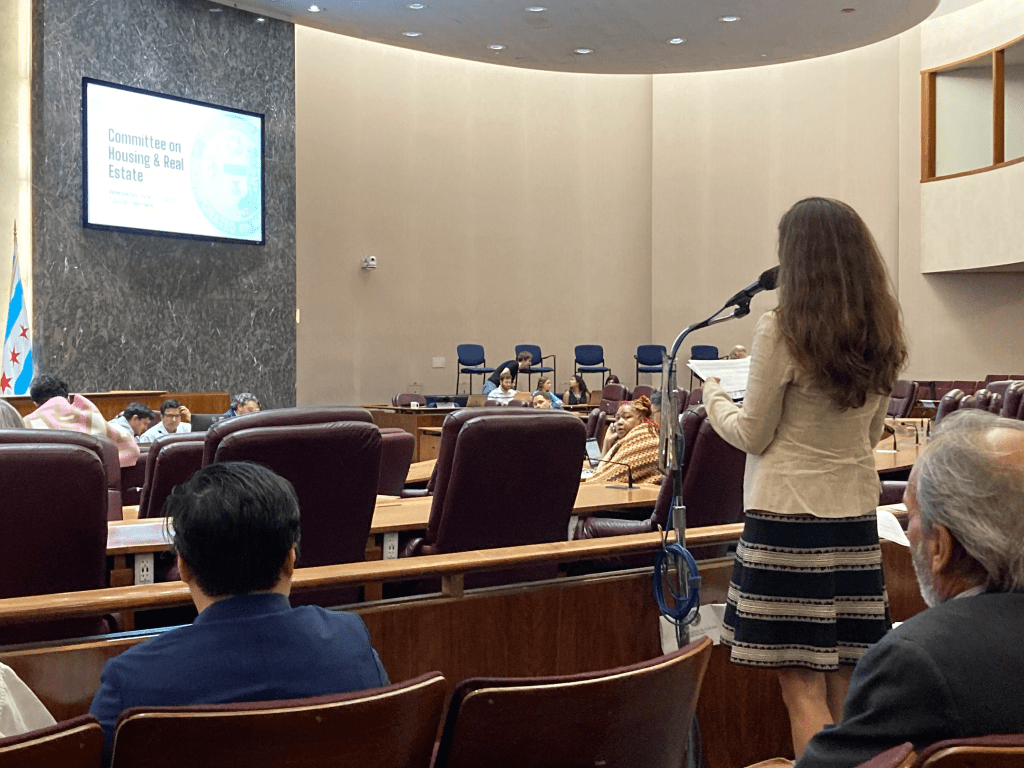
Reynolds said she used Greyhound regularly as a student traveling between Chicago and Urbana, and noted that her husband’s family is from the Quad Cities, a region of nearly 400,000 people without Amtrak service (yet). She also connected the station to access to education, family, jobs, and health care, including reproductive care for people traveling to Illinois from states where access has been restricted.
Other testimony underscored how ordinary and essential bus travel is for Chicagoans without cars. Kalaya Sriver, a Chicago native and Purdue University civil engineering student, said intercity buses have allowed her to attend school in Indiana while maintaining ties to family, community, and professional opportunities in Chicago. She said she has used the terminal more than 30 times over the past three years.
“Like many other CPS students, I grew up without a car, and purchasing a car for college would be an unsustainable financial burden,” Shriver said. Without the station, she warned, thousands of travelers could be forced to wait on the sidewalk “without sufficient protection from the weather and other conditions to which we Chicagoans would never willingly subject ourselves.”
Supporters also stressed that the proposal is not simply about preserving a Greyhound station. Under City ownership, the facility would become a publicly owned intercity bus terminal open to multiple carriers. Advocates argued that could improve competition, expand regional service, and make Chicago a stronger national bus hub.
Kyle Lucas, executive director of Better Streets Chicago, testified that municipal ownership would give Chicago the ability to address neighborhood concerns while modernizing the station for passengers. “When people talk about Penn Station working, it’s because it’s publicly owned,” he said. “We’re not reinventing the wheel here. We’re catching up.”
Still, the hearing was not without skepticism. Several nearby residents and alderpeople raised concerns about safety around the terminal, cleanliness, long-term costs, and whether the City has a sufficiently developed plan for operating the facility after purchase.
Ald. Bill Conway (34th) whose ward includes the station, said he supports the acquisition but acknowledged the public safety concerns are real. He cited the 2022 killing of Greyhound employee Duwon Gaddis outside the station and said neighbors and passengers deserve a clear plan.
Officials said they would maintain two armed security guards at the facility seven days a week, assess 64 existing security cameras, repair exterior lights and entrances, and work with the police and transportation departments on safety improvements. Chicago Department of Transportation officials said the agency plans to survey the area within a two-block radius of the terminal this summer to assess lighting, traffic signals, sidewalks, pavement, and signage.
Other alderpeople focused on the numbers. Ald. Jeanette Taylor questioned whether the City knows how much revenue the station would generate and asked for more details on the future operating model, safety plan, and opportunities for local businesses inside the station. City finance officials said the station is currently “pretty much a break-even” facility and estimated operating costs at nearly $3.5 million, although they said those costs are expected to fall under municipal ownership because the operator would no longer be paying rent or property taxes.
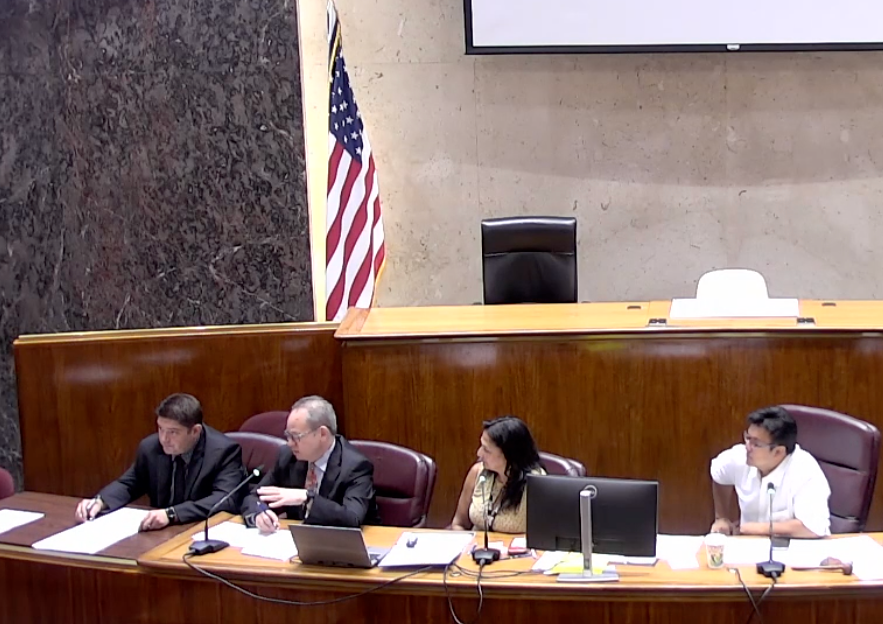
Ald. Marty Quinn (13th) was more blunt, saying he would vote no because he did not believe the city had shown how it would recover its investment.
But Conway argued that doing nothing would be worse. The station, he said, is indirectly owned by Alden Global Capital, the hedge fund known for deep cuts to local newspapers, including the Chicago Tribune. If the City does not act, he said, he worries about the continued degradation or eventual elimination of the station. “The alternative of doing nothing is a disastrous one for the people of the city of Chicago,” Conway said.
The committee also received 144 written public comments ahead of the hearing. According to the chair, all but three were in support.
The ordinance still needs approval from the full City Council. Supporters are urging residents to ask their alderperson to vote yes on public ownership of the intercity bus terminal. Better Streets has created an email form residents can use to contact their alderperson directly – you can email your alderperson here.
For Chicago, the choice is not between the current station and a perfect one. It is between public ownership with the possibility of a safer, cleaner, more useful regional transportation hub or risking the loss of a facility hundreds of thousands of people still rely on.
The bus station may not be glamorous. But for college students, car-free families, people seeking health care, workers, visitors, and Midwesterners trying to get home, it remains one of Chicago’s most important front doors.

On November 12, SBC launched our 2026 fund drive to raise $50K through ad sales and donations. That will complete this year’s budget, at a time when it’s tough to find grant money. Big thanks to all the readers who have chipped in so far to help keep this site rolling to the end of 2026! Currently, we’re at $33,961 with $16,039 to go, ideally by the end of June.
If you value our livable streets reporting and advocacy, please consider making a tax-deductible gift here. If you can afford a contribution of $100 or more, think of that as a subscription. That will help keep the site paywall-free
Share on FacebookShare on X (Twitter)Share on RedditShare via Email

Read More:
Streetsblog has migrated to a new comment system. New commenters can register directly in the comments section of any article. Returning commenters: your previous comments and display name have been preserved, but you'll need to reclaim your account by clicking "Forgot your password?" on the sign-in form, entering your email, and following the verification link to set a new password — this is required because passwords could not be carried over during the migration. For questions, contact tips@streetsblog.org.