At Transit-a-Thon, CTA Acting Prez Nora Leerhsen tells advocates: “I need your pressure”

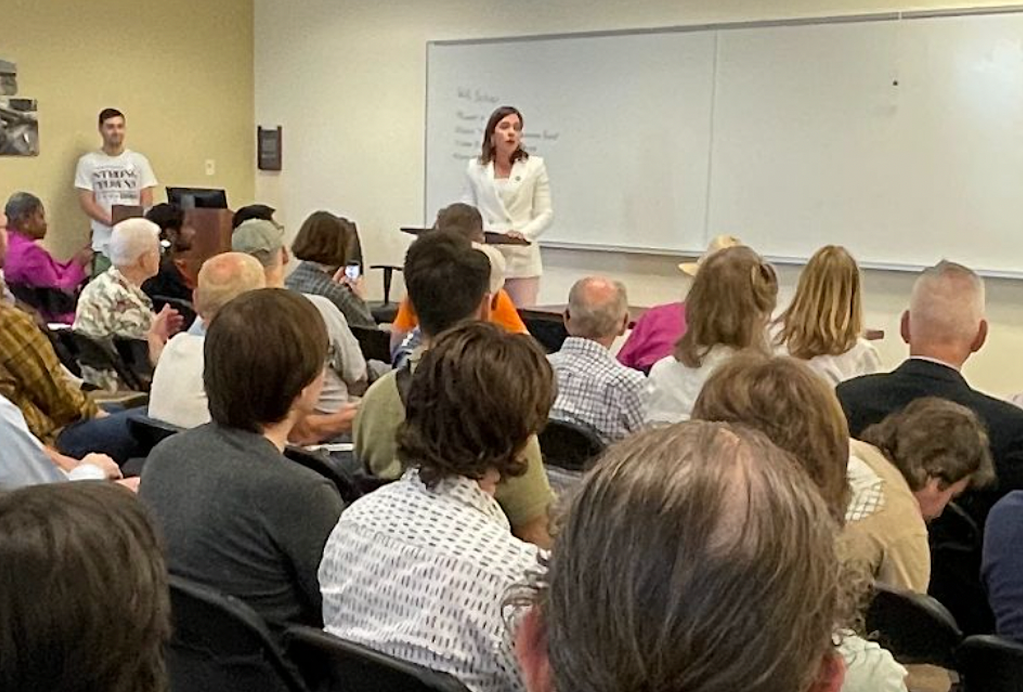

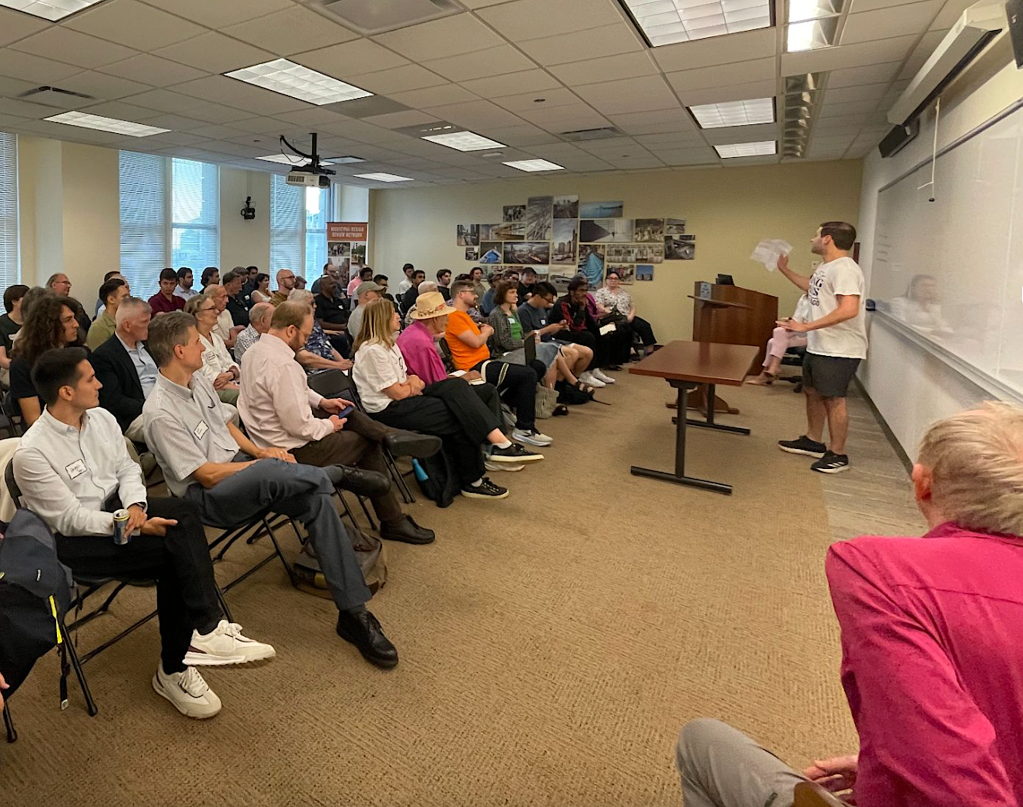
About 80 transit planners, advocates, and curious residents packed a classroom Tuesday evening at DePaul University’s Loop campus for a “Transit-a-Thon” focused less on listening to panels and more on figuring out what better transportation could look like.
The event, organized by Strong Towns Chicago with the Chaddick Institute for Metropolitan Development, Congress for the New Urbanism Chicago, Abundant Housing Illinois, and the High Speed Rail Alliance, featured three rotating workshops, including a regional-rail session led by Star:Line Chicago.
But first, CTA Acting President Nora Leerhsen gave attendees an assignment: Keep pushing. “We really need your imagination right now,” she said. “We really need your narratives and your stories.”
Leerhsen described the transition to the Northern Illinois Transit Authority as a chance to start thinking about transportation as one regional network rather than a collection of individual agencies and projects.
As an example, she pointed to the Blue Line’s slow-running Forest Park Branch, which she called one of her major priorities. “That is not a CTA track project,” she said. “That is a regional project.” Seven Pace routes connect at the Forest Park terminal, Leerhsen noted, while other Pace routes connect Blue Line stations to Metra.
She similarly described the recently renovated Austin Green Line station not merely as a CTA accessibility project, but as part of a larger transit network.
Even projects that seem largely settled, such as the Red Line Extension, still require advocates to imagine what connections and development could grow around them, Leerhsen said.
And advocacy, Leerhsen added, gives agency leaders political leverage. “I need your pressure,” she told the room. “I get a call, I get an email, then I can take that and carry that to a legislator. I can carry it to my team. I can carry it to my board.”
The acting president also argued that transit advocacy is inherently connected to civil rights and economic opportunity, particularly in the United States. “Investment in transit of any kind is equity work,” she said.
How fast and how frequent should Midwest rail be.
After Leerhsen’s remarks, participants divided into groups of roughly 25 and began rotating through the evening’s three workshops.
At the High Speed Rail Alliance session, Jordan Pokorney and James Anderson started by asking participants about their own experiences riding intercity trains. The answers ranged from inconvenient Amtrak schedules and delays, to difficulties bringing bicycles aboard trains. One participant described returning from Indianapolis at 2 a.m. aboard the Cardinal; another debated whether Illinois’ recently upgraded 110-mph service to St. Louis was already fast enough.
The discussion quickly broadened from top speed to frequency and connectivity. Pokorney described high-speed rail, for the purposes of the workshop, as trains capable of at least 125 mph on largely dedicated, electrified rights-of-way. But he emphasized that frequency can be just as important.
Anderson highlighted possibilities closer to home: hourly trains connecting Chicago with Madison, Champaign, Lafayette, and Milwaukee, for example.
Illinois’ High Speed Rail Commission is developing a statewide plan for a high-speed rail line and feeder network connecting Chicago and St. Louis. Participants debated whether future stations should be located in traditional downtowns or farther out near highways. Anderson strongly favored downtown stations. Passenger rail, he argued, should not simply move people between cities. Done correctly, “they are an economic development tool,” he said.
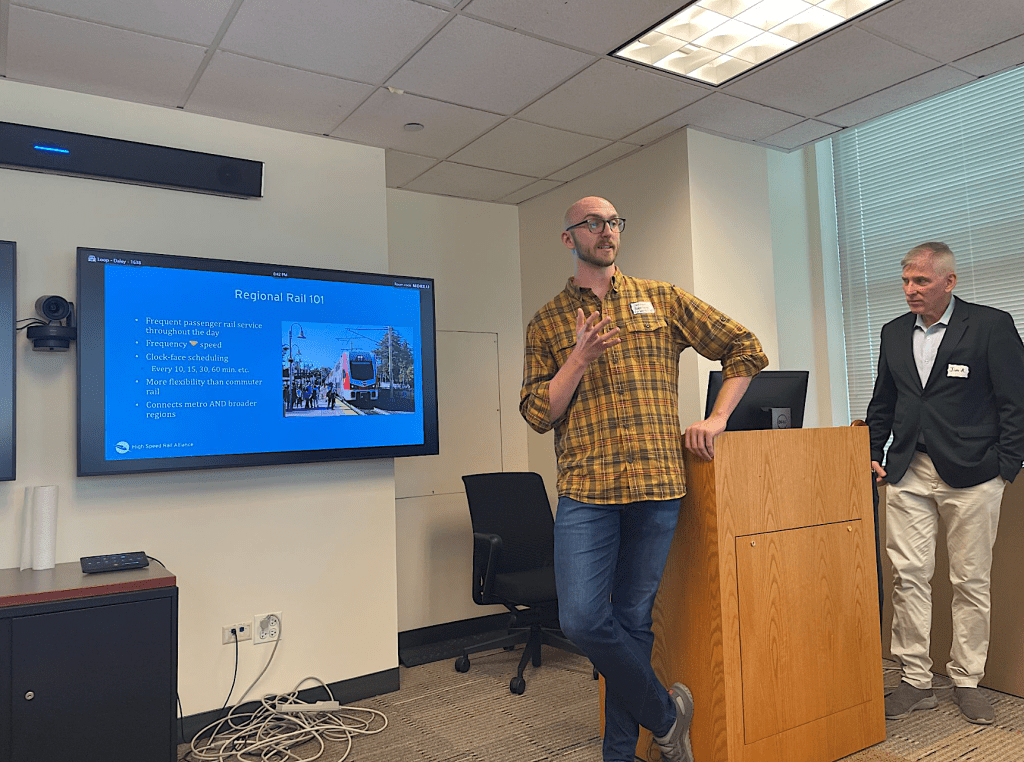
The presenters encouraged attendees to follow the High Speed Rail Commission, attend its meetings, and weigh in on the state’s plans. They also pointed to the NITA Act’s requirement that the region move toward regional rail service, either by transitioning commuter rail or adding regional rail alongside it.
Building for housing for people, not parking
The next session moved from trains themselves to what gets built around them. Meg White of CNU Chicago and housing and transit-oriented-development consultant Kyle Smith asked participants to think beyond “TOD” as a planning buzzword. The basic idea, White said, is to consider what exists within roughly a half-mile of a station. Can people walk and bike comfortably? Are homes, stores, and daily needs close together? And can improvements occur without pricing existing residents out?
Smith framed TOD partly as a household affordability issue. Housing costs are easy to see in a monthly rent or mortgage payment, he said, while transportation expenses are scattered across car payments, gas, insurance, fares, and other bills.
Building more homes near useful transit can reduce those combined costs while giving residents better access to jobs. But doing so remains difficult. Height restrictions, lot requirements, parking mandates, expensive land in high-demand neighborhoods, and difficulty financing projects in historically disinvested communities can all prevent housing from being built near transit.
Different markets therefore require different solutions, Smith said. He pointed to recent Illinois reforms eliminating many parking minimums near transit, along with new joint-development powers allowing transit agencies to participate more directly in development on their land.
“We don’t want to be building housing for cars near transit,” Smith said. “We should be building housing for people.”
What if Metra trains traveled through downtown?
The final workshop took on a more ambitious piece of infrastructure: What if many Metra trains could travel through downtown Chicago instead of terminating there?
Star:Line Chicago’s Scott Presslak presented its “Build the Tunnel” proposal, a regional-rail concept centered on a roughly three-mile downtown tunnel connecting the Metra Electric District line with the Union Pacific North and Union Pacific Northwest lines.
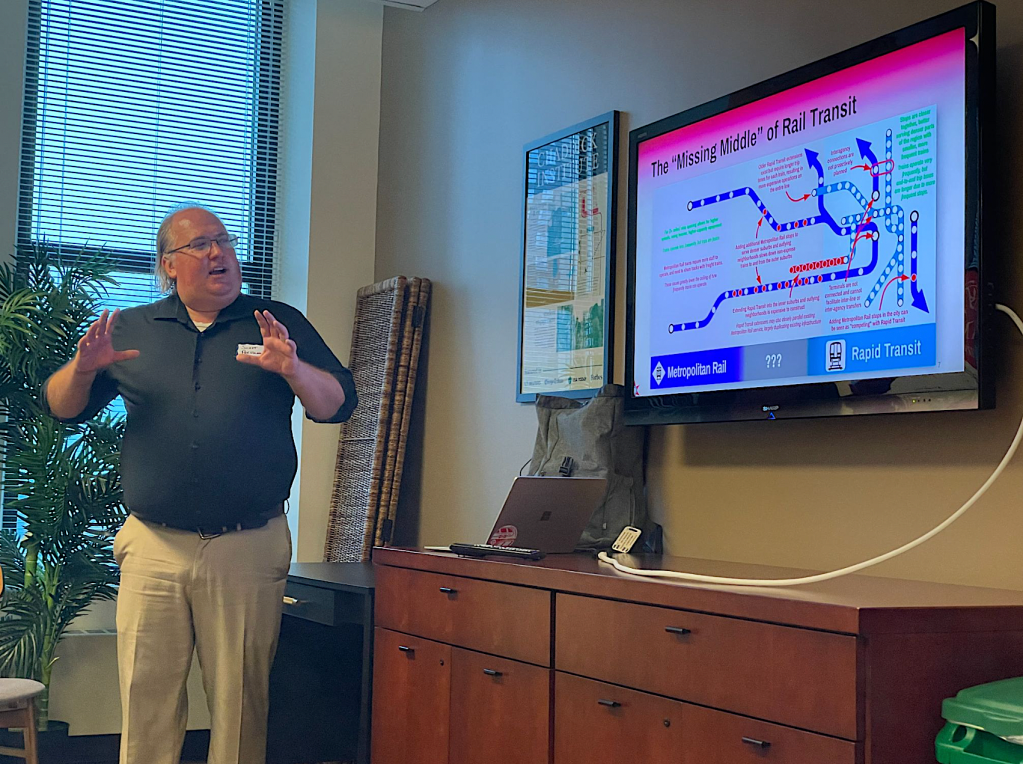
Currently, riders arriving downtown on Metra often have to leave one terminal, walk to the CTA or another Metra station, pay another fare, and continue their journey. Those transfers are particularly cumbersome for trips between the South Side and the North or Northwest sides.
The proposal would pair smaller, faster-accelerating regional trains with through-running service, allowing trains to enter downtown and continue to the other side of the region rather than terminating.
Presslak compared the idea to London’s Elizabeth Line and Munich’s S-Bahn, where suburban rail lines converge through central-city tunnels.
Under the Chicago concept, four overlapping lines through the central tunnel could combine to provide trains roughly every seven-and-a-half minutes between Hyde Park and the Clybourn Corridor while additional routes would run through Union Station.
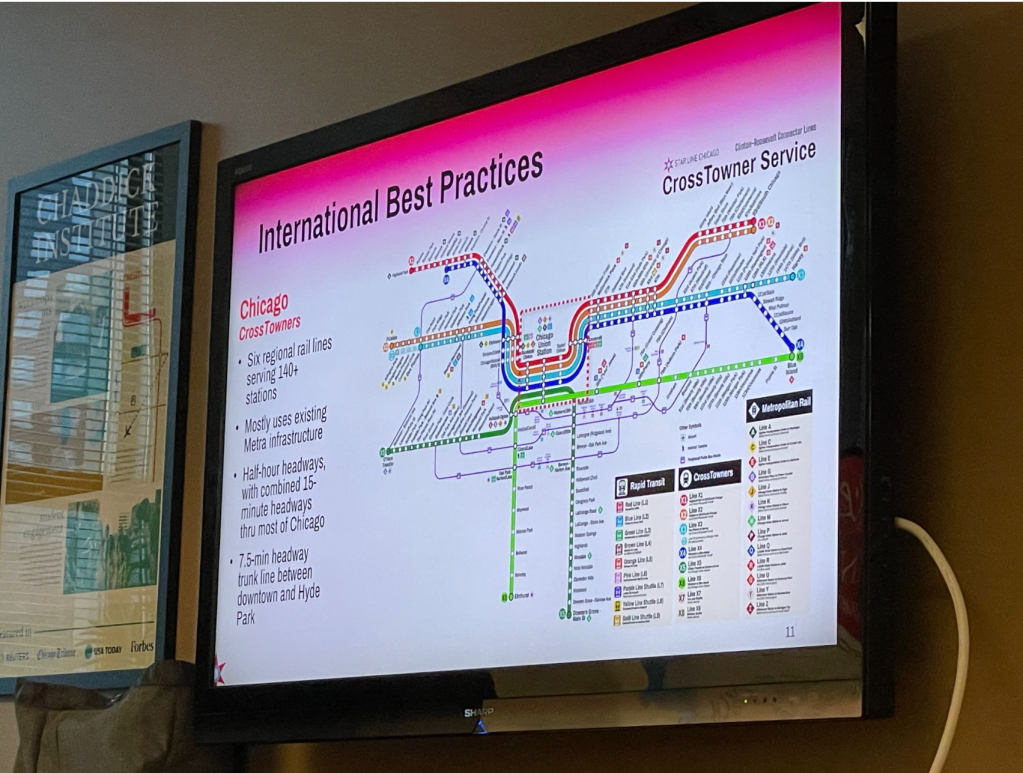
Most strikingly, the proposal’s advocates say approximately 96 percent of the rail mileage involved already exists. The tunnel and several targeted connections would provide the missing links.
“As we get into the NITA era, this is a very exciting time to be in Chicago transit,” Presslak said, arguing that regional rail could help fulfill the new law’s vision of “one network, one timetable, one ticket.”
The ideas discussed at Tuesday’s event ranged from current initiatives, such as building more housing near transit, to much bigger ambitions, like running Metra trains through downtown.
However, Leerhsen’s message applied both to the people in the room and to Chicagoans beyond it: The future of the region’s transit system shouldn’t be left solely to agencies, consultants, and elected officials. Riders and residents have a role to play by sharing their ideas, concerns, and experiences.
“Keep pushing on me,” she said. “Push on all of us, and keep your passion going.”
Disclosure: The author is a board member of Strong Towns Chicago, one of the organizations presenting the Transit-a-thon.

If you appreciate Streetsblog Chicago’s livable streets reporting and advocacy, please consider making a tax-deductible donation to support our work. Thank you!

Read More:
Streetsblog has migrated to a new comment system. New commenters can register directly in the comments section of any article. Returning commenters: your previous comments and display name have been preserved, but you'll need to reclaim your account by clicking "Forgot your password?" on the sign-in form, entering your email, and following the verification link to set a new password — this is required because passwords could not be carried over during the migration. For questions, contact tips@streetsblog.org.