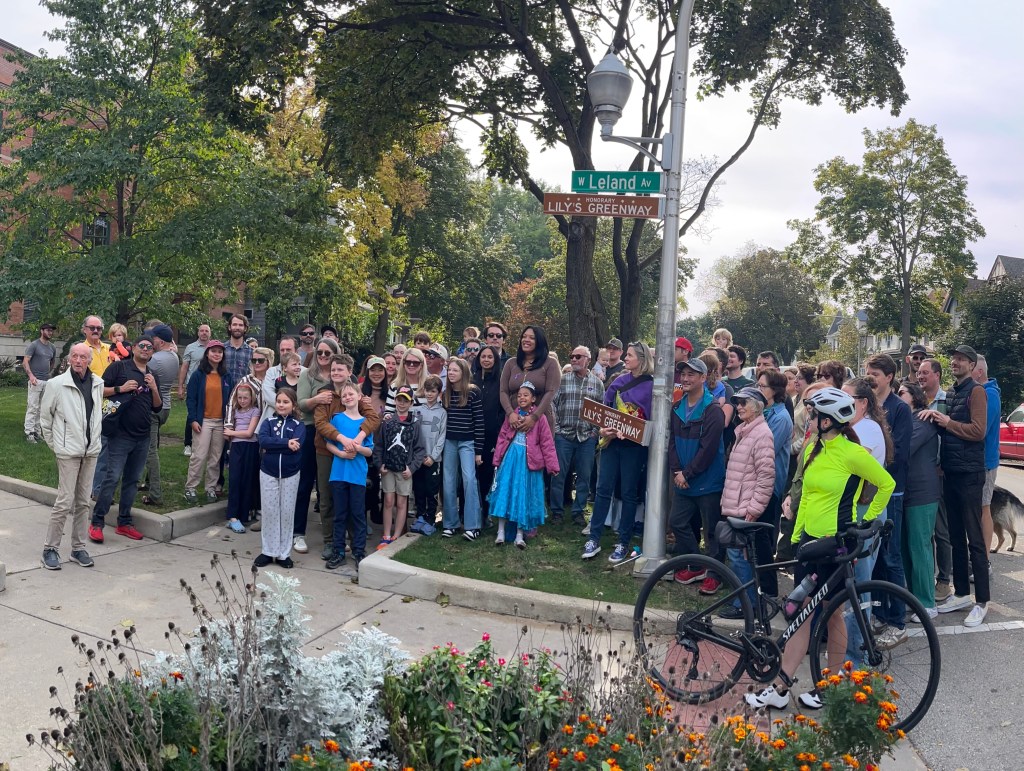
As new CTA board member Lily Diego-Johnson is seated, the CTA board discusses art and crime in the system

Today the CTA board officially welcomed a new member, six months after member Michelle Lee resigned because she was moving to Scottsdale, Arizona.
Lee’s replacement, therapist and disability rights advocate Lily Diego-Johnson will only be in the seat until September, when the Northern Illinois Transit Authority act provisions reorganizing all four transit boards will kick in. There is nothing in the bill to stop Chicago Mayor Brandon Johnson from simply renominating her,
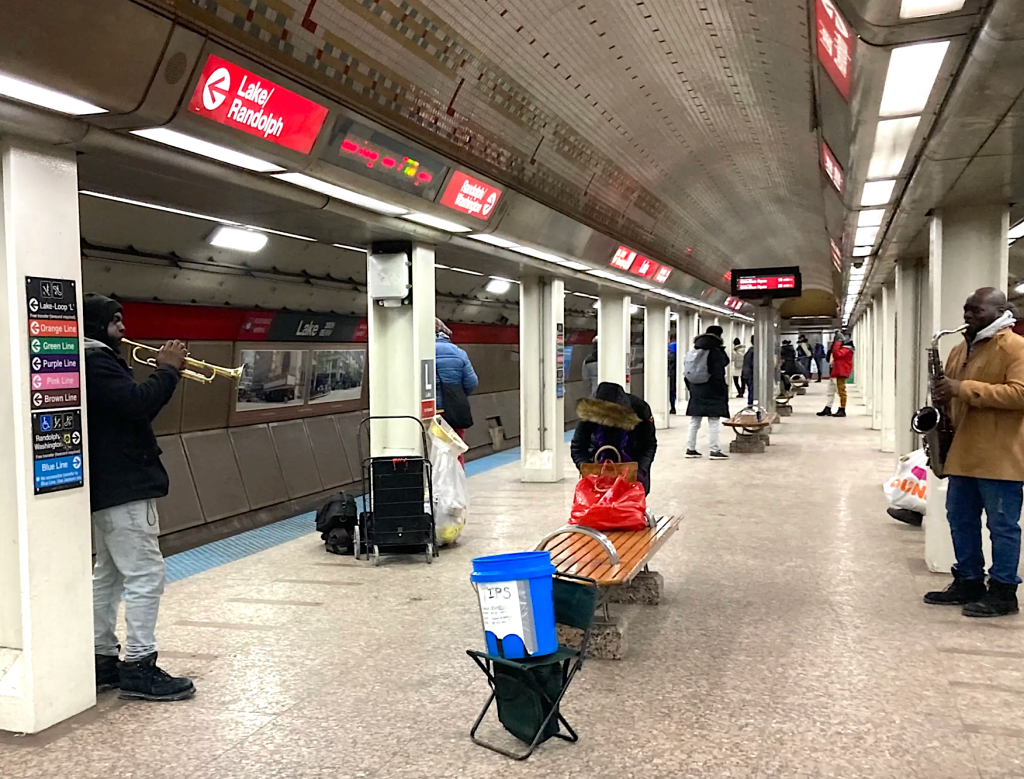
Today’s meeting also saw the board adopt a policy allowing artistic performances and installations at ‘L’ stations outside of the Loop, and adopted a new policy that permits companies to reserve parking spaces in seven Park-n-Ride facilities. The directors also talked about what the CTA is doing to reduce crime, with several board members urging Acting President Nora Leerhsen to provide detailed reports on how initiatives that don’t involve law enforcements are doing.
The new transit board member
Under the rules that will be in effect for another 3.5 months, The CTA board is made up of four members appointed by the Chicago mayor and three members appointed by the Illinois governor. Lee was one of the mayoral appointees.
Effective this September, the board will have three directors appointed by Mayor Johnson, two directors appointed by Gov. J.B. Pritzker, and two directors appointed by Cook County Board President Toni Preckwinkle. Two of the mayoral appointees and one gubernatorial appointees will double as NITA Board directors. There’s nothing in the NITA Act to prevent current directors from being reappointed.
Diego-Johnson is a social worker and psychotherapist at the Lakeview-based therapy practice Live Oak. She is also an artist and a poet. Like Michelle Lee, who uses a motorized wheelchair, Diego-Johnson has a disability – she is legally blind.
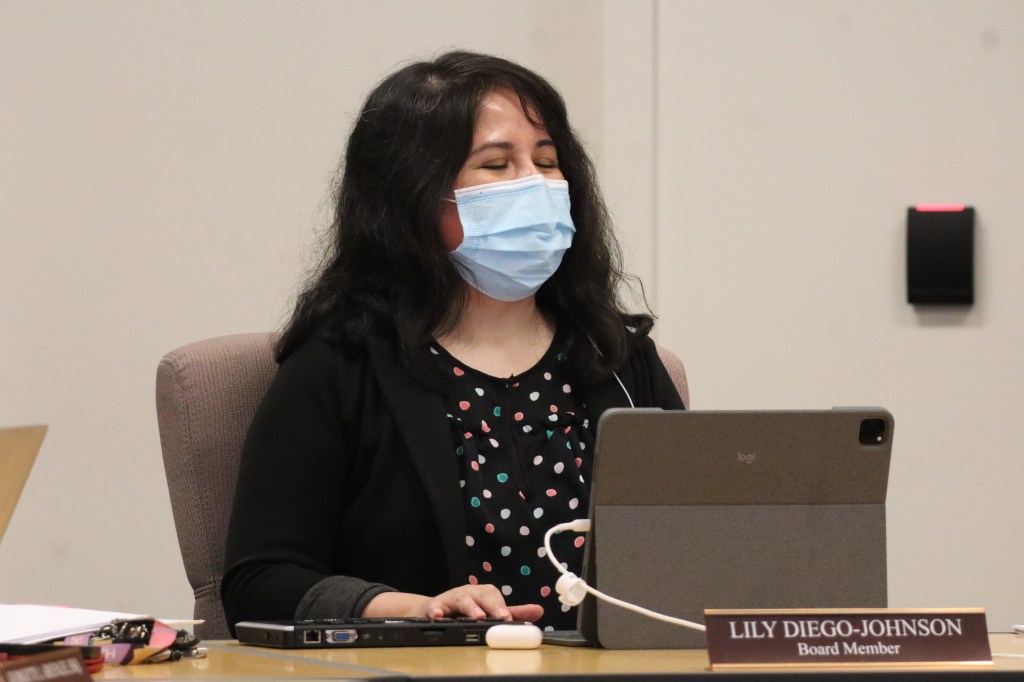
During the meeting, Board Chair Lester Barclay praised Diego-Johnson’s credentials and her activism. “On behalf of the board, welcome, and I look forward to working with you,” he said.
“We’re so happy to have you on the board and we look forward to having your experience in the coming months,” Leerhsen said.
“I’m grateful to serve and be on this board,” Diego-Johnson said. “I’m also disabled myself, so I appreciate being able to share my own experience and that of my community.”
New public performances rules
Until Wednesday’s vote, public performances were only allowed at designated areas on the platforms of the Blue Line’s Washington Station and both the Blue and Red lines Jackson stops. All performers must have a valid CTA Performer Permit.
The amended regulations keep that arrangement at those three stations, while also setting up new performance rules for the 95th/Dan Ryan Red Line stop, the Kimball Brown Line station and the Damen Green Line and Pink Line stop. Those stations notably have larger-than-average lobbies, and the 95th Street station already has a DJ booth in its North Terminal. CTA Chief Infrastructure Officer Bill Mooney told the board that the agency tried to make sure it wouldn’t cluster the performance spaces in any particular part of town, and prioritized stations where the community had already expressed interest in holidng performances.
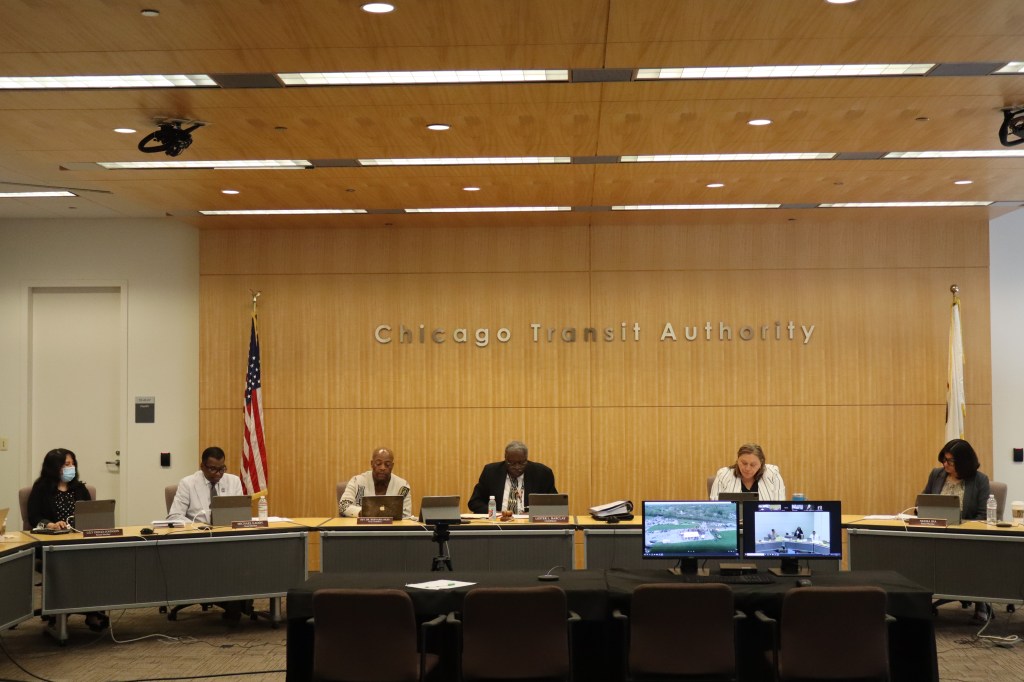
Mooney said that performing at those four stations will require more than getting a permit. Applicants will be screened by a stakeholder committee. He and CTA Chief Innovation Officer Molly Poppe will make the final selection. The performances could be a one-night stand, or they can run for weeks or even months. “We are encouraging people to put out ideas that are not just one-off events,” Mooney said.
Poppe said another difference with the new program is that CTA will help fund the performances.
Board member Rev. L. Bernard Jakes recalled seeing celebrities perform on the New York City Subway, and wondered if the CTA could host performances like that with local talent.
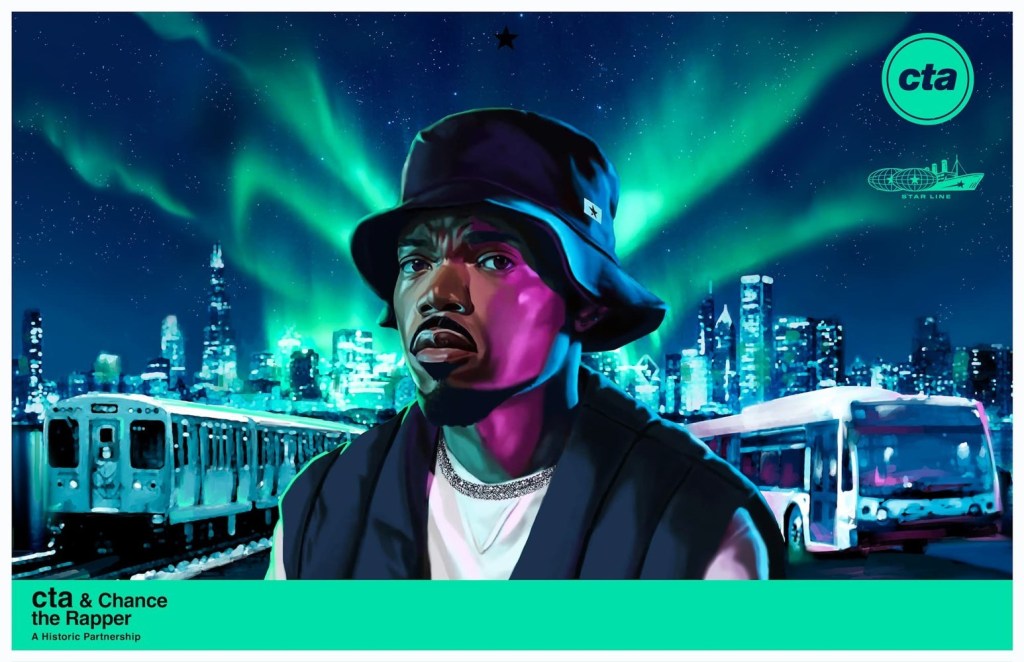
Leerhsen pointed to CTA’s recent collaboration with Chance the Rapper, and promised something involving a sports team is coming later this year.
“Will there be a specific outreach made for disabilities art and inclusion of disability culture?” Diego-Johnson asked. “Often it is overlooked, with people not being aware that there is such a thing as disability culture.”
Poppe said that was a great idea, and that she planned to share it with CTA’s ADA Advisory Committee.
Board member Roberto Requejo, who was a founding director of Elevated Chicago, recalled approaching CTA about doing art installations at ‘L’ stations and heard many reasons why the transit agency couldn’t do it. While he said he was glad CTA relaxed its stance, he was worried that prospective artists would face too many bureaucratic barriers.
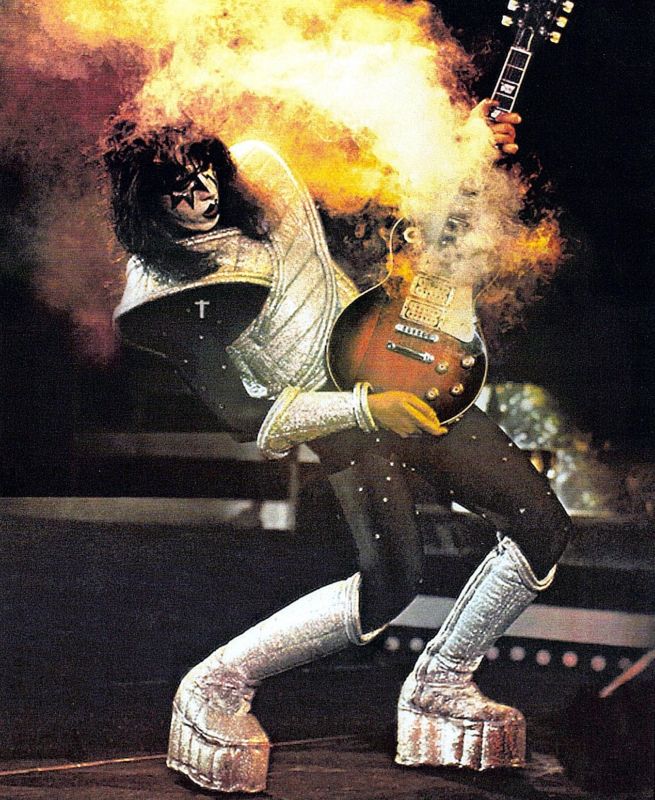
Poppe responded that they tried to make the application relatively simple, and that the CTA wont respond to proposals with a simple yes or no. She gave an example of a rock band that wanted the put on a show with pyrotechnics. “And we may say the rock band is great, pyrotechnics not so much,” she said.
Crime reduction and other stats
During her regular president’s report, Leerhsen acknowledged that while crime on the system has been trending downward, that’s are of little consolation to victims of crimes and their loved ones. But she said it’s still important to acknowledge the progress being made.
Leehrsen said the CTA looked at Chicago Police Department crime data for April 2026 and compared it to April 2025. (Because crime stats fluctuate seasonally, CPD and the CTA tend to do month-to-month comparisons, arguing that’s more of an apples-to-apples comparison).
The acting president said that, according to CPD data, “serious crime” on the Red Line between the Roosevelt and 95th stations was down 70 percent this April compared to April 2025. This was one of the areas, along with the Blue Line, where the police department ramped up enforcement since the middle of 2025.
Leerhsen also credited the Cook County Sheriff’s Police, which started patrolling the ‘L’ stations in March, with driving down the numbers. And she said that investing more money in social service outreach on the Red and Blue lines helped as well. The spending went up from around $1 million a year to nearly $13 million a year.
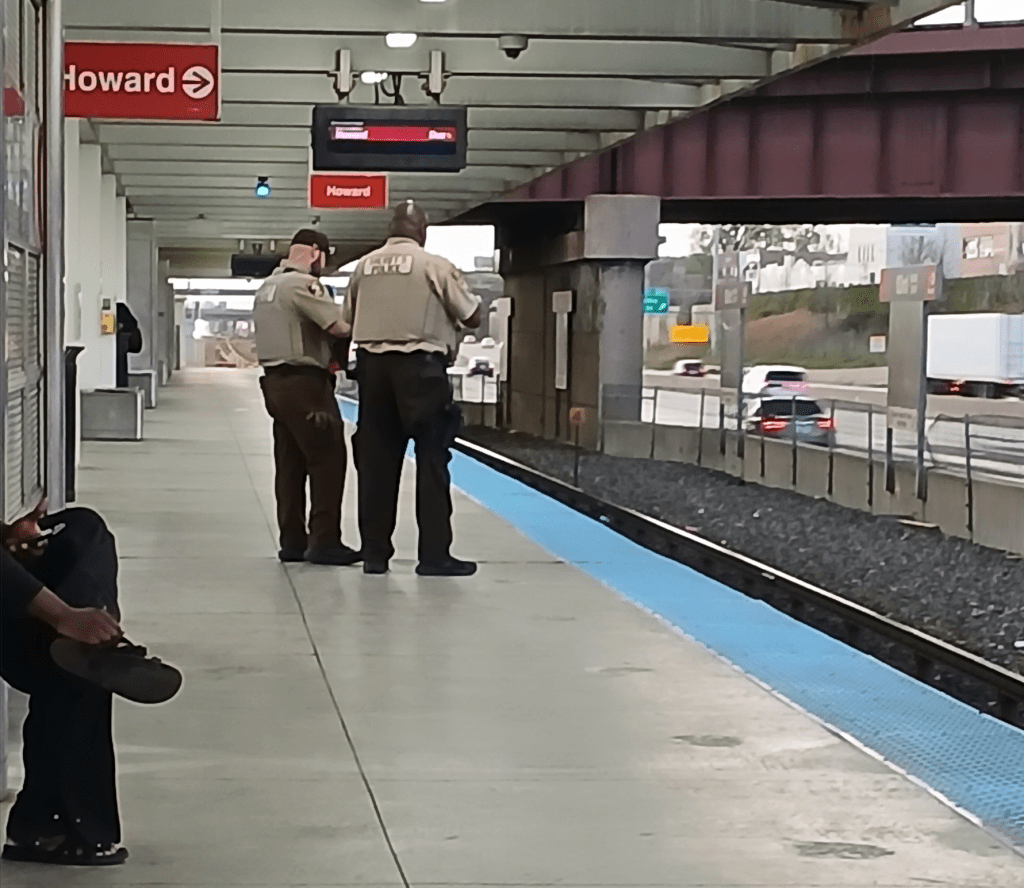
Leerhsen touted the Community Violence Intervention Specialists and Crisis Intervention Specialists pilots that are currently scheduled to launch this fall. Both programs seek to diffuse tense situations before they escalate, and connect riders experiencing homelessness, addiction, and/or mental illness with the resources.
At the same time, CTA is developing its own transit ambassador program, the Safe Ride Specialist program, in-house. Leerhsen noted that the NITA Act already requires the transit agencies set up ambassador programs by July 1, 2027. She said the CTA wants to get an early start. “All of it is just the beginning,” Leerhsen added. “We will continue to engage the new partners.”
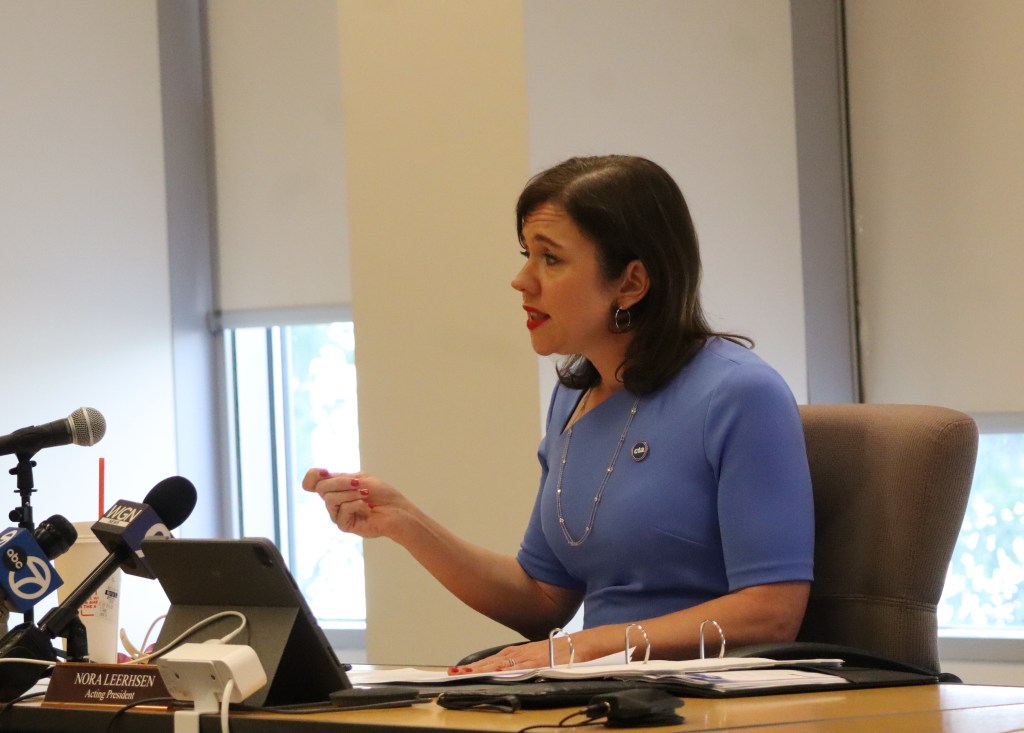
Barclay said that he’s happy with the progress, but emphasized that “the system can be safer statistically, but if the public doesn’t feel safe, we will have a lot of work to do.”
Jakes said that he has seen phone videos on how effective violence interrupters can be, so he fully supported the ppilot. He also asked whether the CTA is coordinating with the Chicago Department of Public Health to reduce duplication in outreach.
Diego-Johnson said she also supported investment in crisis intervention, “because, oftentimes, we found that policing, from systemic standpoint, can create more trauma.” She added that she would like to see the data on how effective that has been. Leerhsen responded that the CTA will provide that info in the future.
Board member Neema Jha said that she would like to see the data for everything CTA is doing to reduce crime and quality of life issues. She added that she would like to see it system-wide, and “It would be great to have a one-pager” with a monthly update at every future meeting.
Board member Rosa Ortiz agreed. “I value the data,” she said. “I know it’s a really hard to get.”

On November 12, SBC launched our 2026 fund drive to raise $50K through ad sales and donations. That will complete this year’s budget, at a time when it’s tough to find grant money. Big thanks to all the readers who have chipped in so far to help keep this site rolling to the end of 2026! Currently, we’re at $32,749 with $17,251 to go, ideally by the end of May.
If you value our livable streets reporting and advocacy, please consider making a tax-deductible gift here. If you can afford a contribution of $100 or more, think of that as a subscription. That will help keep the site paywall-free for people on tighter budgets, as well as decision-makers. Thanks for your support!
– John Greenfield, editor

Streetsblog has migrated to a new comment system. New commenters can register directly in the comments section of any article. Returning commenters: your previous comments and display name have been preserved, but you'll need to reclaim your account by clicking "Forgot your password?" on the sign-in form, entering your email, and following the verification link to set a new password — this is required because passwords could not be carried over during the migration. For questions, contact tips@streetsblog.org.