The crash deaths of transportation planners Riley O’Neil and Louisa Gag should be a turning point for Safe Streets

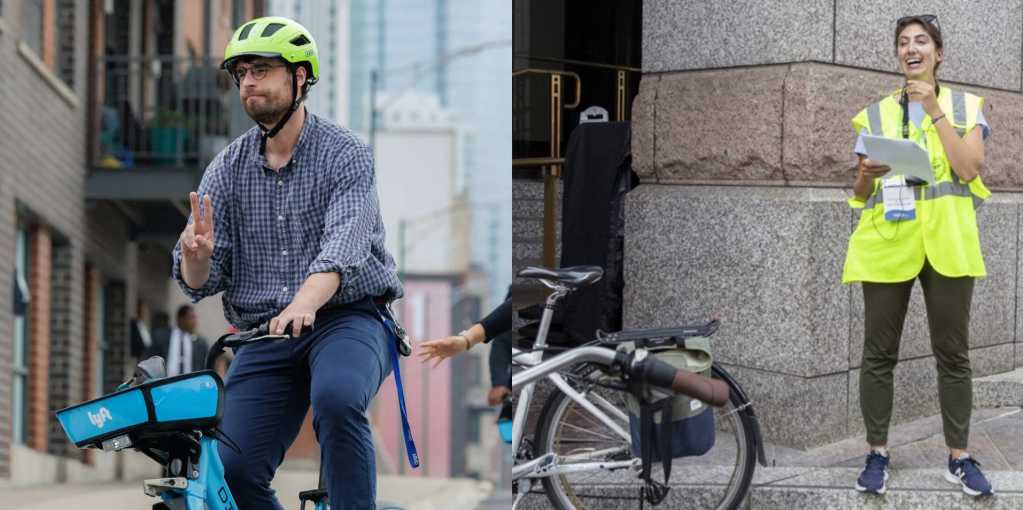

Thanks to StreetsblogMASS Editor Christian MilNeil for his reporting on the Louisa Gag case, and input for this piece.
The last two months have been heartbreaking for sustainable transportation professionals and advocates in Chicago and Boston, where two hauntingly similar bike crashes took the lives of well-loved Complete Streets planners Riley O’Neil and Louisa Gag. But there’s reason to be hopeful that these tragedies will spur new political support for Vision Zero efforts in these cities, and possibly have a ripple effect across the country.
O’Neil’s and Gag’s stories
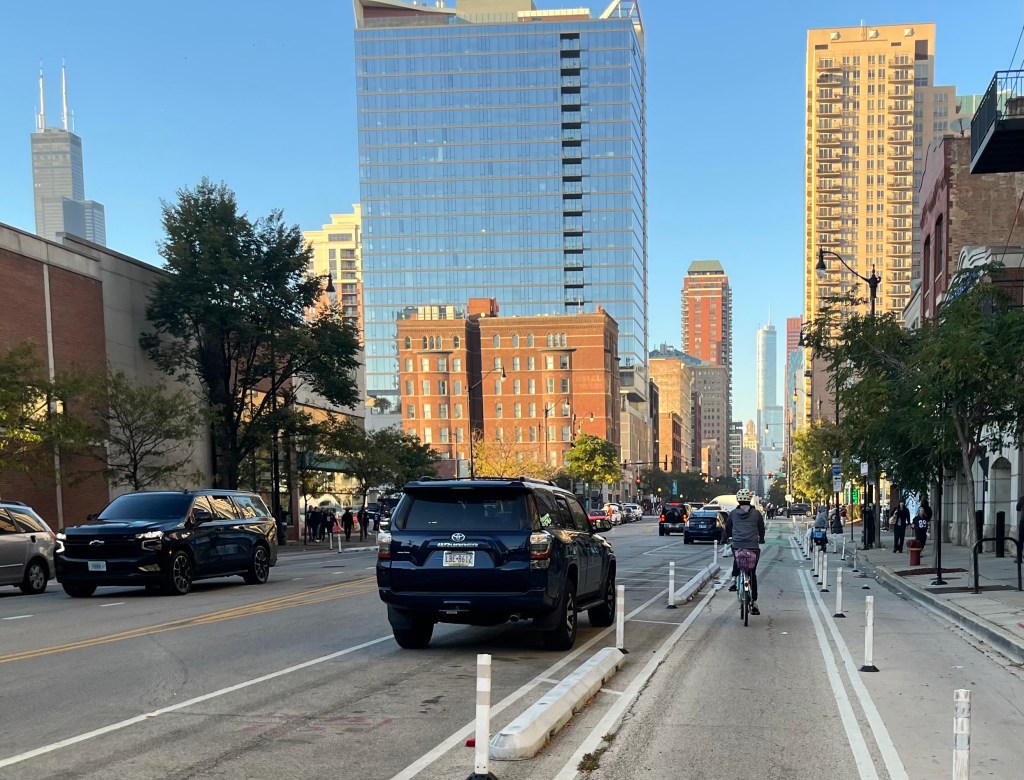
O’Neil, 35, was a planner with the Chicago Department of Transportation. In the afternoon of Friday, June 5, he was cycling home from work on a non-protected bike lane on Halsted Street in the Bridgeport neighborhood, when a car driver opened his door without checking for bike traffic. O’Neil swerved to avoid the door but clipped it, and was thrown under the rear wheels of an oncoming semi. If the bikeway he was riding in had been a curbside protected lane, he would still be alive.
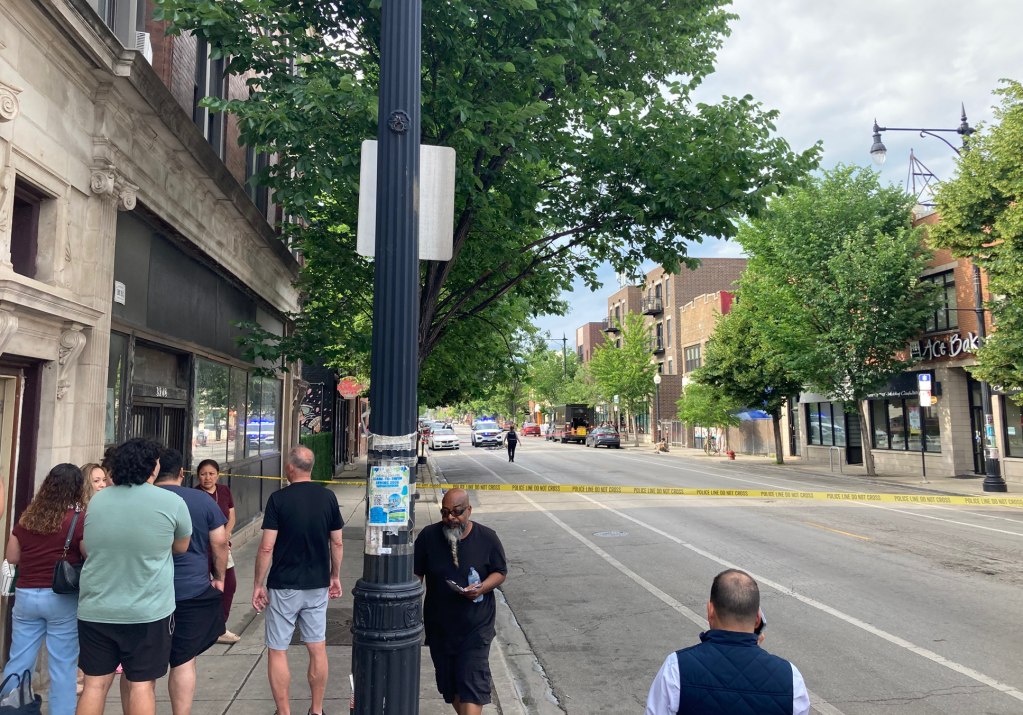
O’Neil’s friend and colleague fellow CDOT planner David Powe posted a eulogy the next day. “Riley O’Neil led Chicago’s bike parking program for several years and completely transformed it,” he wrote. “More recently, he was helping lead both CDOT’s school zone safety work and bus priority projects. He cared deeply about making biking, rolling, walking, and riding better for everyone.”
“Riley could get anyone excited about making Chicago better,” Powe added. “He never met a person he couldn’t immediately connect with. His enthusiasm and love for bikes, transit, infrastructure, and public service was contagious.” Powe said CDOT would start calling the bike parking racks “Riley Racks” as a tribute.
Just over a month after O’Neil’s death, on the morning Thursday, July 9, there were terrible parallels in Louisa Gag’s case. A year older than O’Neil at 36, she also served as a planner at her city’s transportation department. Gag previously worked for several years as a public policy advocate with the Boston area’s LivableStreets Alliance. She was also commuting by bike that day, riding to work in a paint-only bike lane on Tremont Street in Boston’s Mission Hill community. And, like O’Neil, Gag died in a truck collision. The Boston Globe reported today that a recycling truck driver maneuvered around another vehicle before striking her.
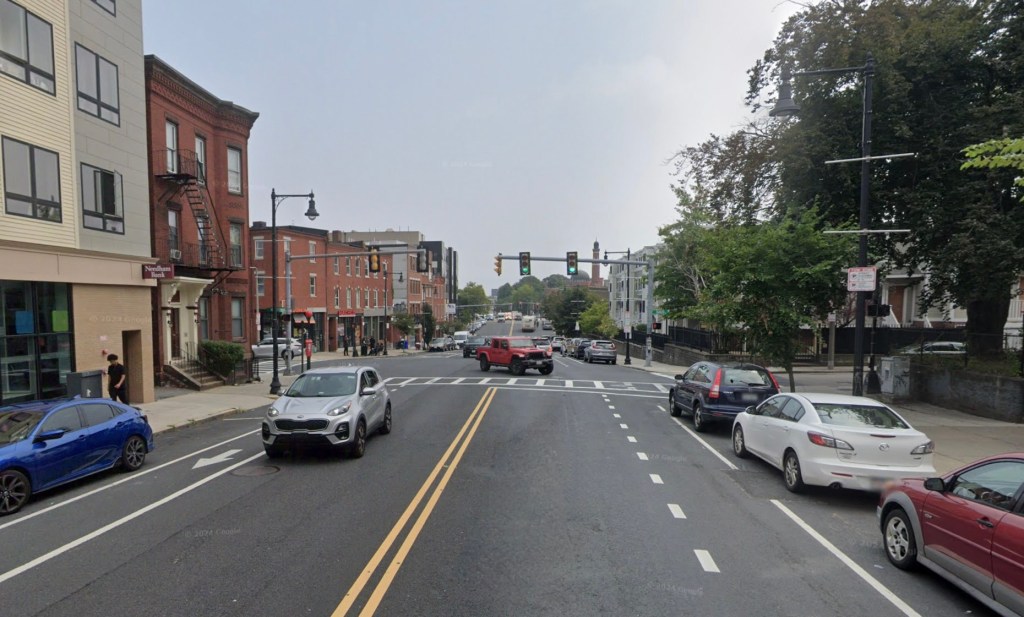
According to StreetsblogMASS, Gag spent most of her career on efforts to make Boston Streets more livable. As an advocate, she worked on projects to promote Vision Zero and hold the City accountable for following through on its 2017 long-range transportation plan. At the Boston Transportation Department, she was involved in initiatives like the Lower Roxbury Slow Streets project, and the expansion of the Bluebikes bike-share network.
“She was the type of person who was so at ease with herself, and grounded in some way that anyone around her would immediately feel more OK,” Gag’s BTD colleague Jen Rowe told StreetsblogMASS. “And she worked to cultivate that to support the people she worked with… She loved people, and everyone on our team.”
Safe Streets advocates respond in Chicago and Boston
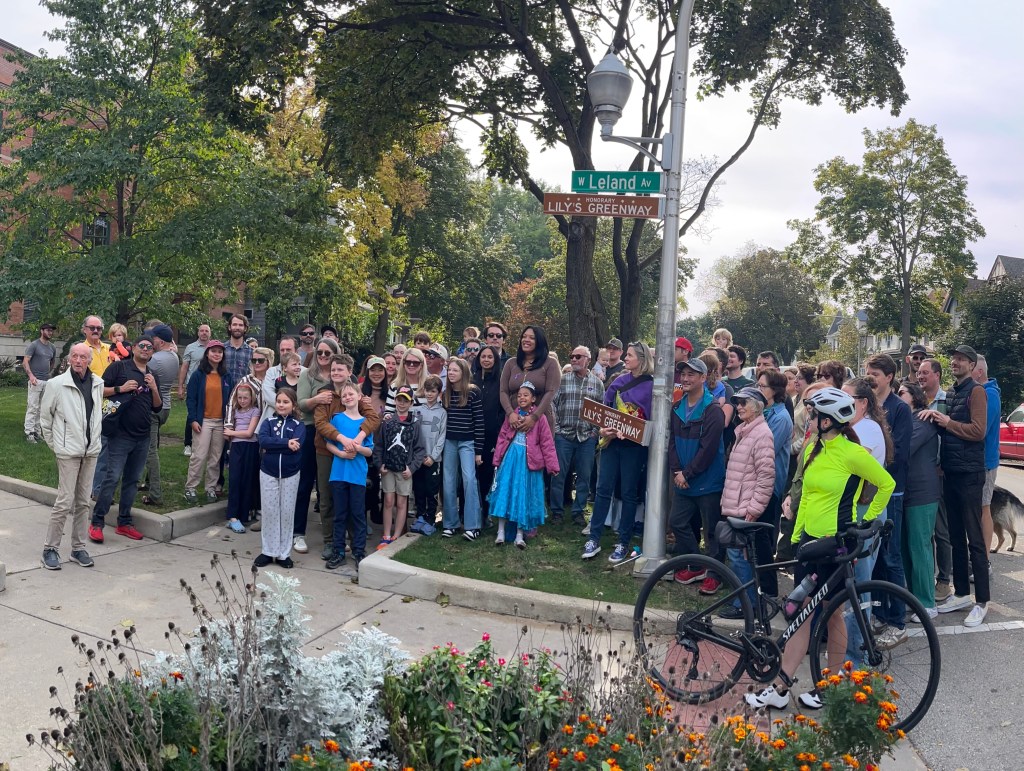
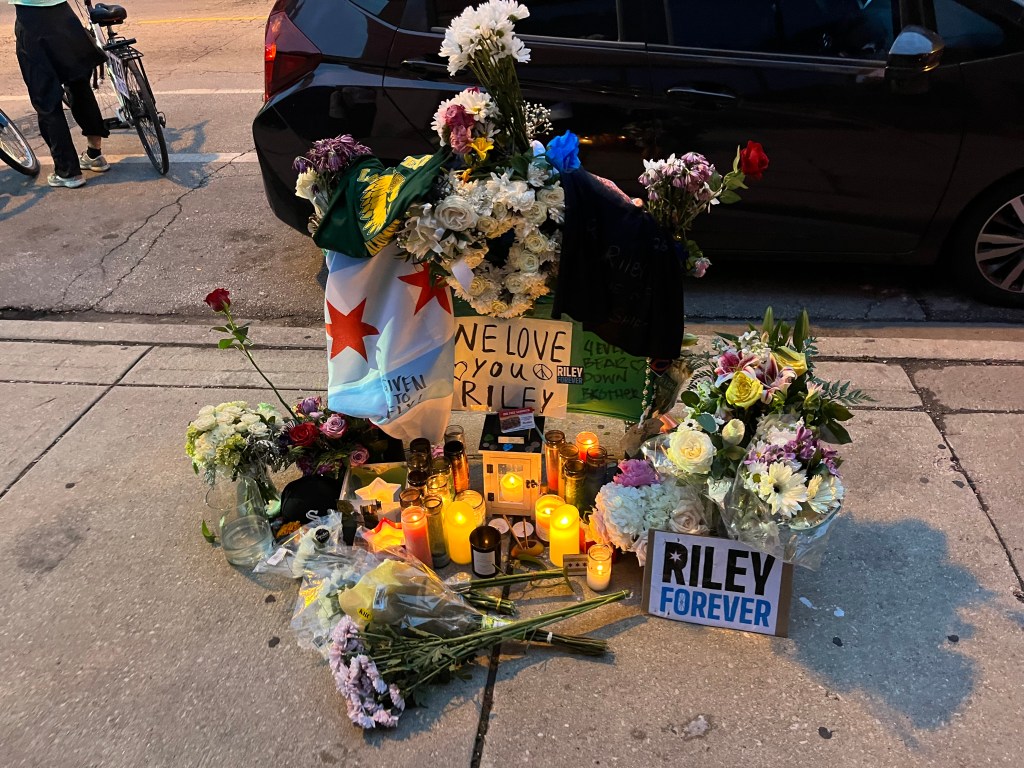
Three days after O’Neil’s death, on June 8, hundreds of Chicagoans hit the streets for a memorial ride and “die-in” at his crash site, organized by the grassroots group, Chicago, Bike Grid Now! They urged City leaders to create a continuous network of safe, low-stress cycling routes. “A preventable incident, not an ‘accident,’ has brought us here today,” said Eli Orozco of the neighborhood bike group Gage Park Cyclists in a speech at the start of the event, also mentioning four other recent Chicago bike and e-scooter crash victims. “There is no reason why families should have ever been destroyed with loss.”
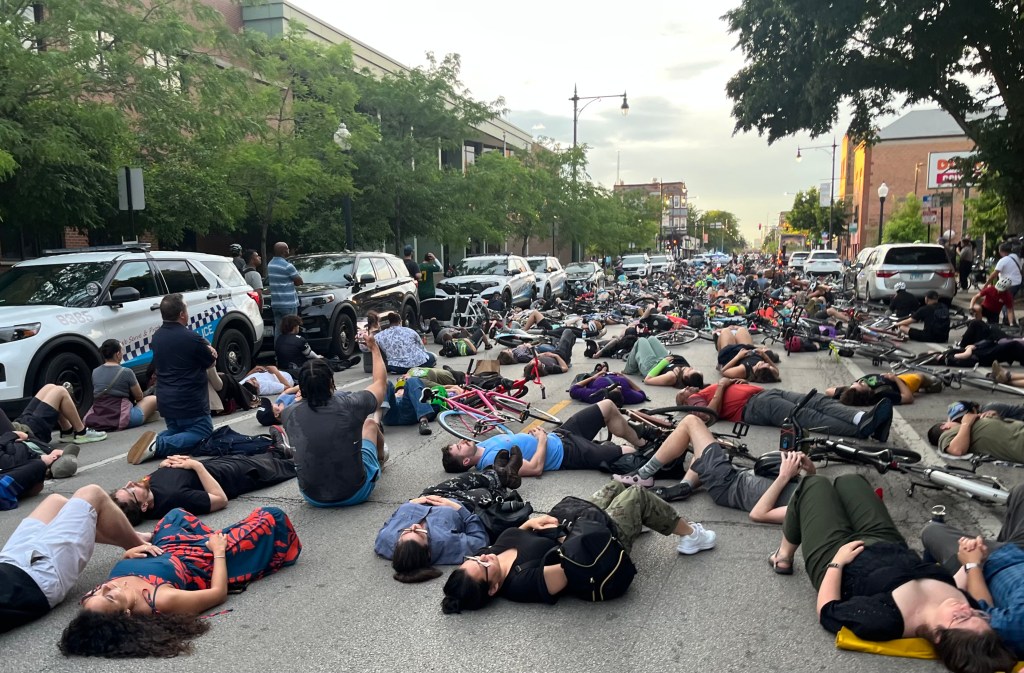
A week later on June 15, dozens of advocates again gathered in Bridgeport for CBGN!’s “Bike Protest for a Bike Grid,” riding to local City Council member Alderwoman Nicole Lee’s office to lobby for safety upgrades on Halsted and elsewhere in her district.
And more recently, the Bridgeport Alliance, a community group which advocates for traffic safety, launched a letter writing campaign so Ald. Lee’s constituents can ask her to support bold street redesigns. The petition has almost 400 signees.
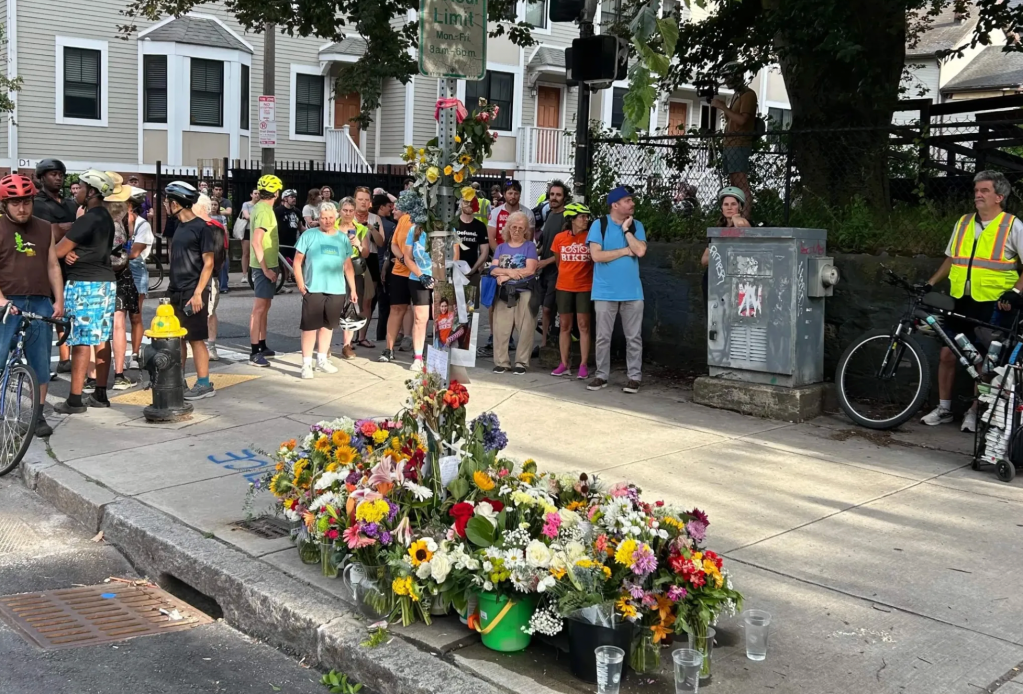
Likewise in Boston, advocates are demanding action on Vision Zero in the wake of Gag’s killing. In a July 14 StreetsblogMASS op-ed, several residents in Boston’s Forest Hills neighborhood blamed the City’s foot-dragging for the recent crash death. “This week, the consequences of inaction were brought home painfully when one of our neighbors, Louisa Gag, was killed by a driver while commuting to work,” they wrote. “Louisa died a block away from a stretch of Tremont Street near the Roxbury Crossing MBTA station where earlier this year, Boston’s Acting Chief of Streets, Nick Gove, postponed a major traffic calming and center-running busway project.”
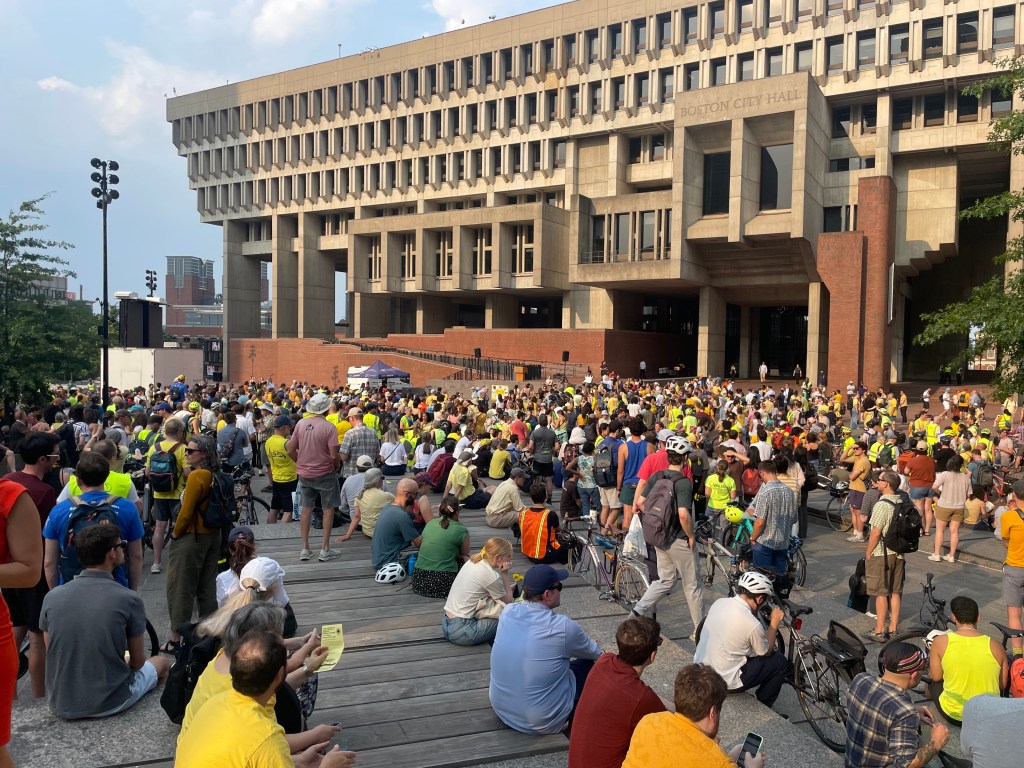
Not unlike Chicago’s “die-in,” on July 16 hundreds of Bostonians converged on the plaza of their City Hall to honor Gag, and put pressure on politicians.
Reactions from local elected officials
In the Windy City, politicians have been taking notice of the Riley O’Neil case, and its significance for Chicago. “Riley O’Neil was an incredible public servant who contributed deeply to the work of making our city a safer and more sustainable place,” said Mayor Brandon Johnson on social media. “A member of the Complete Streets team, Riley was a valued and dedicated advocate whose work touched communities across Chicago.” That statement was later included on the permanent display panel of the “The Riley O’Neil Memorial Station” for Divvy bike-share cycles, located across the street from City Hall.
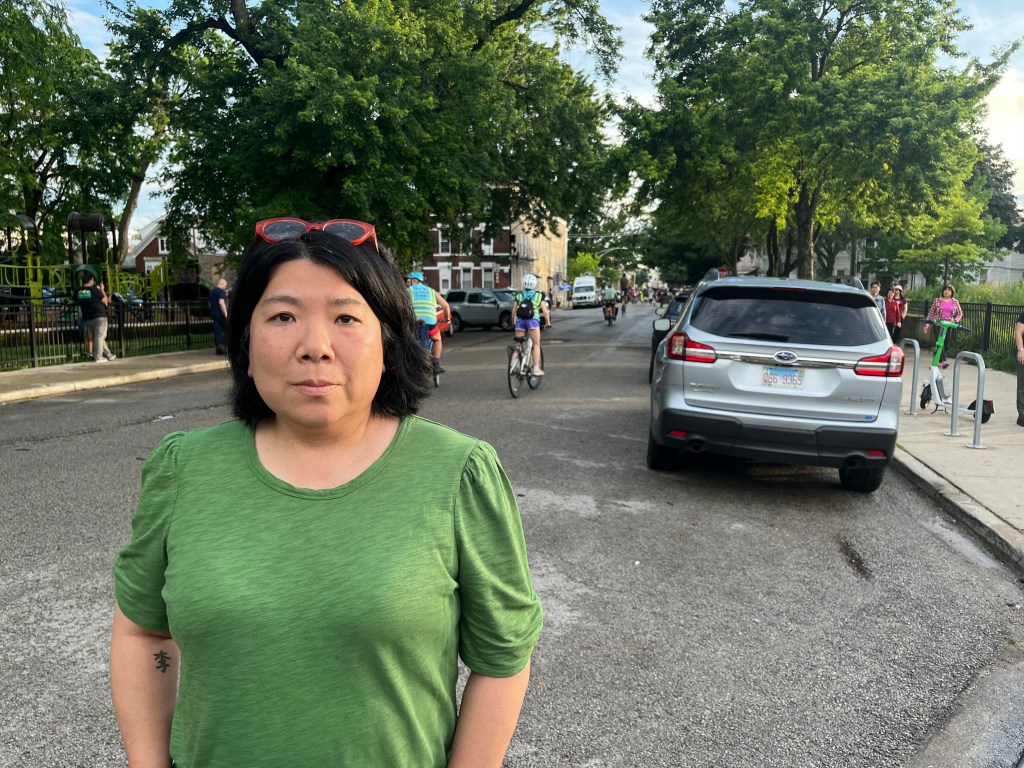
And six of Chicago’s 50 City Council members showed in Bridgeport for the June 8 memorial, with five of them riding bikes. While Ald. Lee didn’t bicycle that day, as the ride departed, she indicated to me that she’s open to a street redesign on Halsted and other roads in her district. “It’s going to take all of us working together to get physical infrastructure that protects people better,” she said. Lee mentioned that her own nephew was recently injured on his bicycle by a negligent driver in Chicago’s nearby Chinatown.
Meanwhile, Boston’s Mayor Wu made a surprise appearance at the July 16 Government Center event. According to StreetsblogMASS, prior to her speech, Gag’s former LivableStreets Alliance boss Stacy Thompson, who was emceeing, asked the frustrated Vision Zero advocates present to follow the fallen cyclist’s example by listening respectfully.
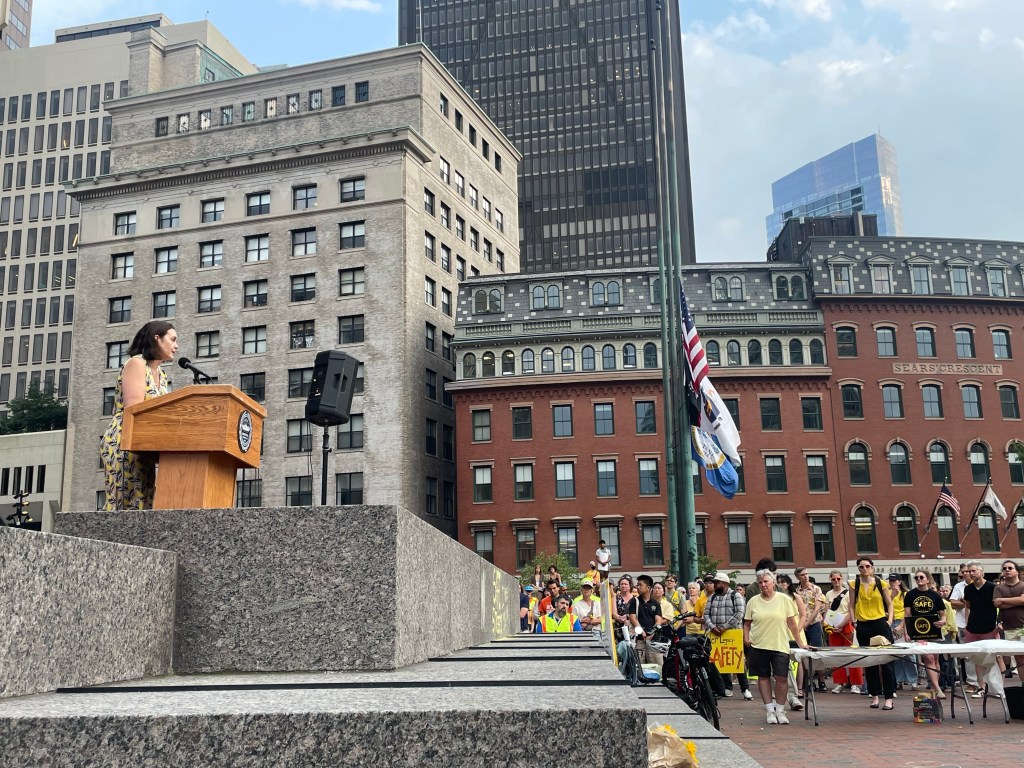
Mayor Wu was contrite, StreetsblogMASS reported. “We owe Louisa more than our grief,” she said. “We owe her our action. We have to do better.” She listed a number of ways “the City is taking action,” including a full analysis of the street design of the crash site, with plans to make that standard practice. She also promised better enforcement of bikeways and crosswalks; more protected bike lane installation and maintenance; and the assignment of two of her key staff members “to accelerate the policies, planning, and capital delivery work that will make our streets safer.”
StreetsblogMASS Editor Christian MilNeil told me, “It’s still early days here but people are fired up, and there may be a shakeup at our City transportation department.”
The ripple effect
There are signs that O’Neil’s and Gag’s stories are attracting the attention of decision-makers across the country. For example, the New York City-based National Association of City Transportation Officials honored each of them in blog posts.
“Transportation planning often involves navigating complex political landscapes and conflicting stakeholder demands,” NACTO said in its tribute to O’Neil. “When facing challenging issues or difficult days with aldermen and community members, Riley’s colleagues turned to him. He was a master of cutting through bureaucracy without creating unnecessary conflict. He maintained an infectious positive attitude, thought creatively, and found collaborative paths forward where others saw roadblocks.”
“Louisa’s work for the City of Boston focused on improving bike-share and street safety, including growing the Bluebikes system by adding 100 new stations across the city and leading engagement for street redesigns in the Allston and Brighton neighborhoods,” NACTO said in its memorial. “Beyond the technical work, Louisa was an integral force in spreading community bike joy, taking over the organization of Boston’s annual Bike to Work Day Festival and teaching Bostonians how to bike.”
Let’s hope that more politicians and city planners – from Seattle to Miami, and from Los Angeles to Portland, ME – take notice of these stories, and are inspired to support progressive street designs and policies to prevent future heartbreak. If that happens, the deaths of Riley O’Neil and Louisa Gag will not have been in vain.

If you value Streetsblog Chicago’s livable streets reporting and advocacy, please consider making a tax-deductible donation to support our work. Thank you.

Read More:
Streetsblog has migrated to a new comment system. New commenters can register directly in the comments section of any article. Returning commenters: your previous comments and display name have been preserved, but you'll need to reclaim your account by clicking "Forgot your password?" on the sign-in form, entering your email, and following the verification link to set a new password — this is required because passwords could not be carried over during the migration. For questions, contact tips@streetsblog.org.