CDOT Planner Riley O’Neil died after being doored in a paint-only bike lane. Chicago, Bike Grid Now! says we must value people over car parking.

This month, safe streets advocates in Chicago have been mourning one of their own.
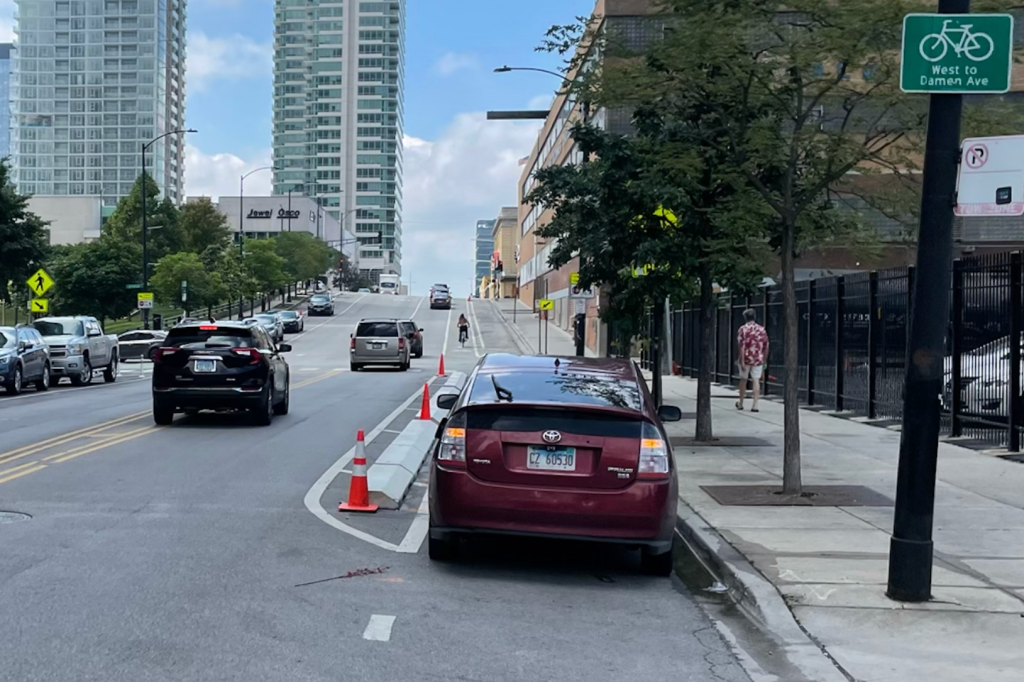
On Friday, June 5, Riley O’Neil, 35, a Complete Streets planner for the Chicago Department of Transportation, was pedaling home to the South Side’s Bridgeport neighborhood. He was riding on Halsted Street, one of the Chicago’s busiest bike commuting corridors, in a non-protected bike lane. A driver in a parked car suddenly opened his door in O’Neil’s path. The skilled urban cyclist tried to swerve out of the way but clipped the door, and was thrown under the rear wheels of an oncoming semi, losing his life.
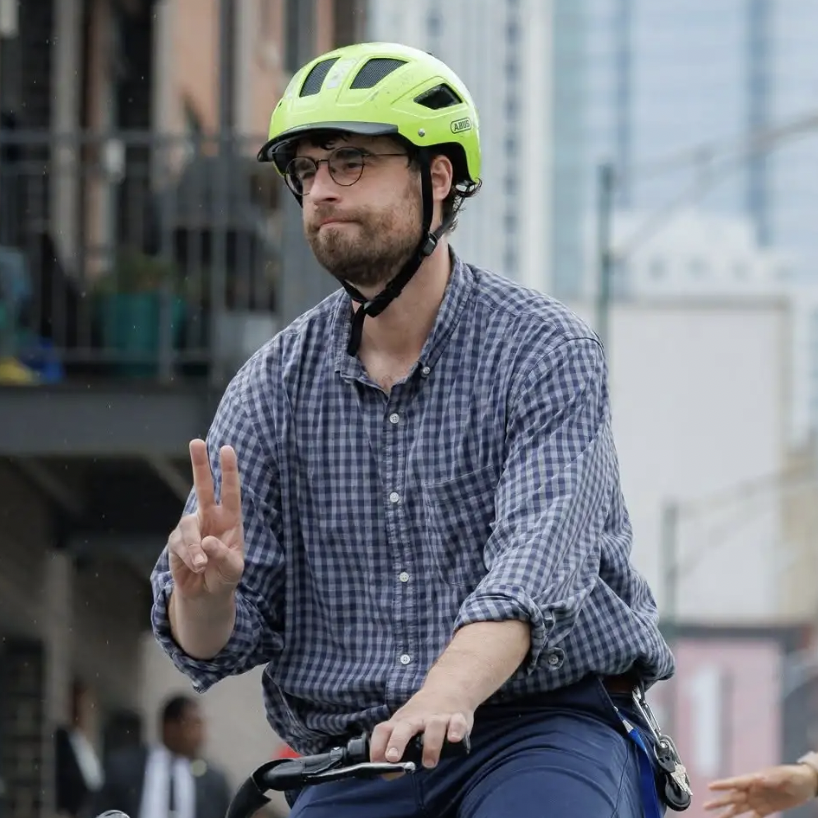
“Riley O’Neil led Chicago’s bike parking program for several years and completely transformed it,” his coworker and good friend David Powe wrote in a eulogy soon after the tragedy. “More recently, he was helping lead both CDOT’s school zone safety work and bus priority projects. He cared deeply about making biking, rolling, walking, and riding better for everyone.” He said CDOT is now referring to the bike racks O’Neil got installed as “Riley Racks” in his honor.
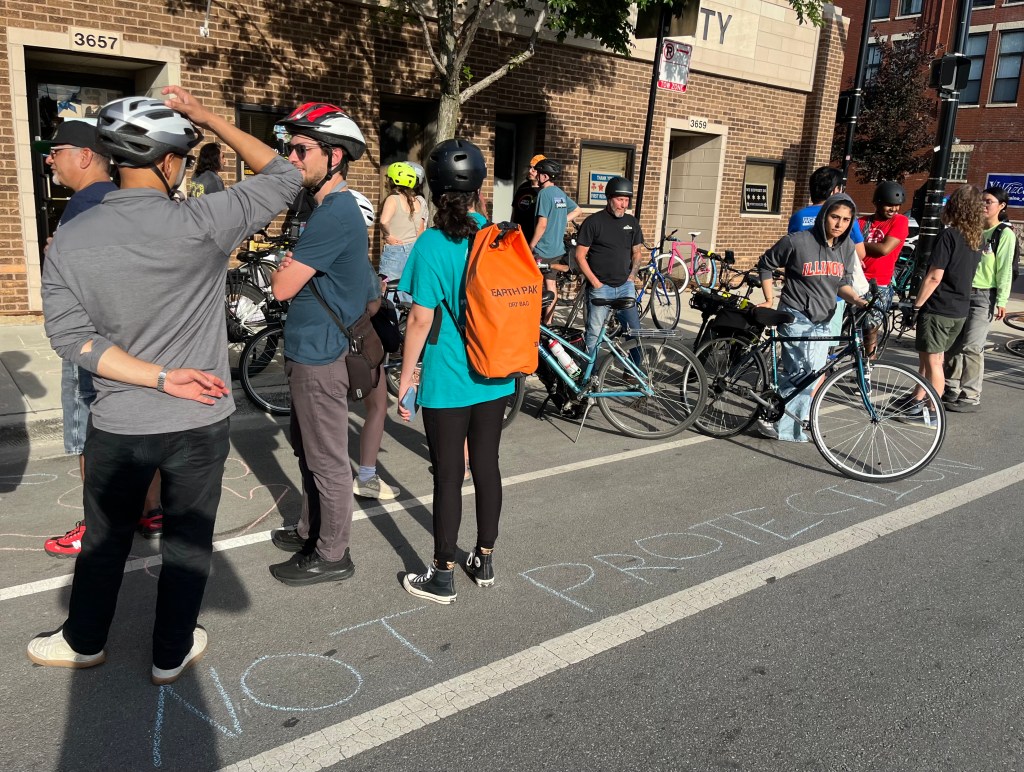
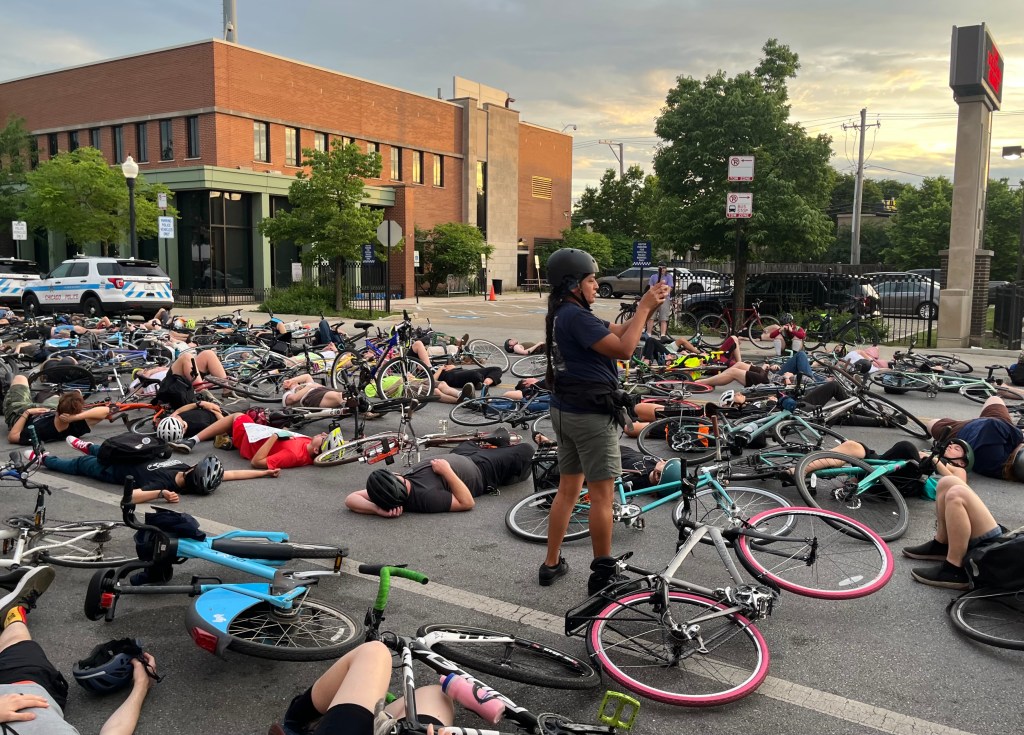
A few days after his passing, on Monday, June 8, hundreds of livable streets advocates, including several City Council members, gathered in Bridgeport for a memorial ride and “die-in” protest at the crash site, which happened to be next to a police station. The event was organized by Chicago, Bike Grid Now!, a grassroots group that is pushing for 10 percent of Chicago’s streets to be transformed into low-stress, pedestrian-and-bike-priority routes.
A proven way to make main streets like Halsted safer is protected bike lanes, which help prevent fatal dooring crashes. Building these facilities involves relocating the bikeway curbside, with a physical barrier such as concrete curbs and/or parked cars to shelter bicycle and e-scooter users from moving traffic.
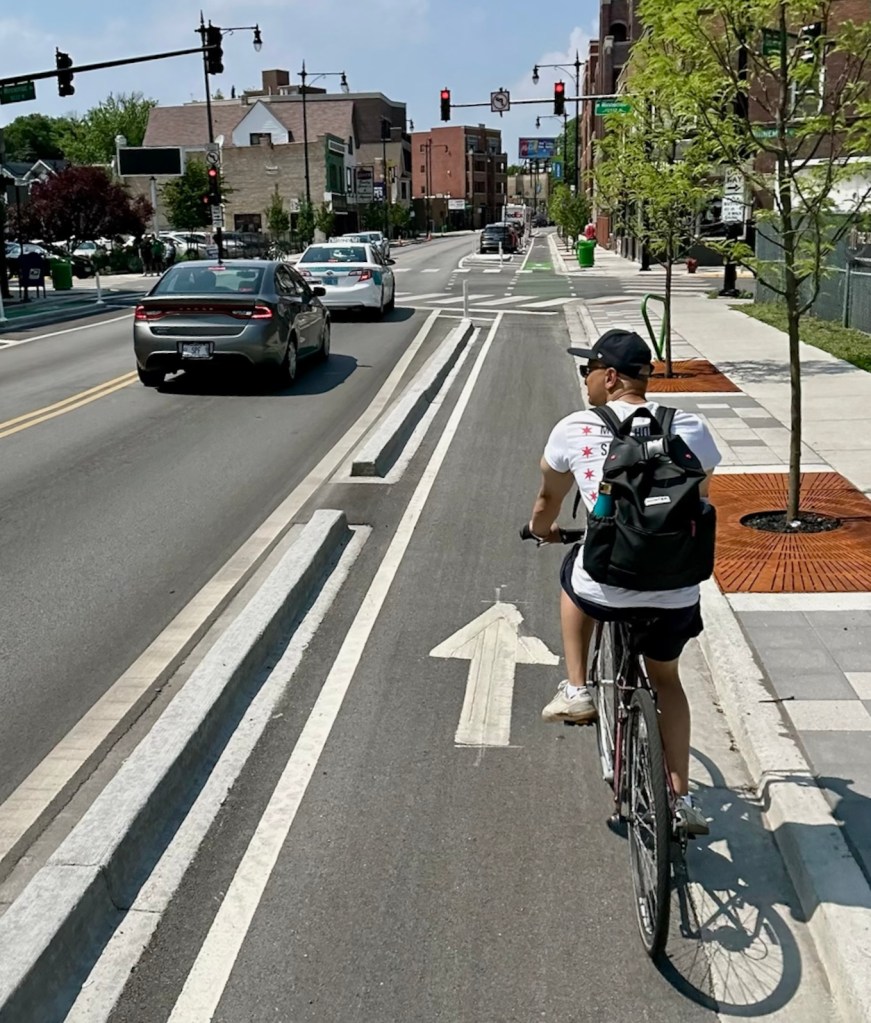
That’s been done on Halsted in other parts of town. If O’Neil had been riding in a protected lane in Bridgeport, instead of just stripes of paint on the road, he’d still be alive to continue his important work.
Residents of cities like Amsterdam, Copenhagen, Mexico City, Bogotá, and most recetly Paris eventually understood that creating walkable, bikeable, transit-friendly streets is worth reallocating some space used for moving and storing large metal boxes. But in the U.S., that’s still generally a foreign concept.
Even in Chicago, a relatively bike- and transit-friendly American city, there’s a battle going on between progressives who support CDOT’s Complete Streets projects, and less forward-thinking residents who insist that no car parking or mixed-traffic lanes be converted. In recent months, there have been weekly dueling rallies by these factions during the Monday PM rush in two different neighborhoods.
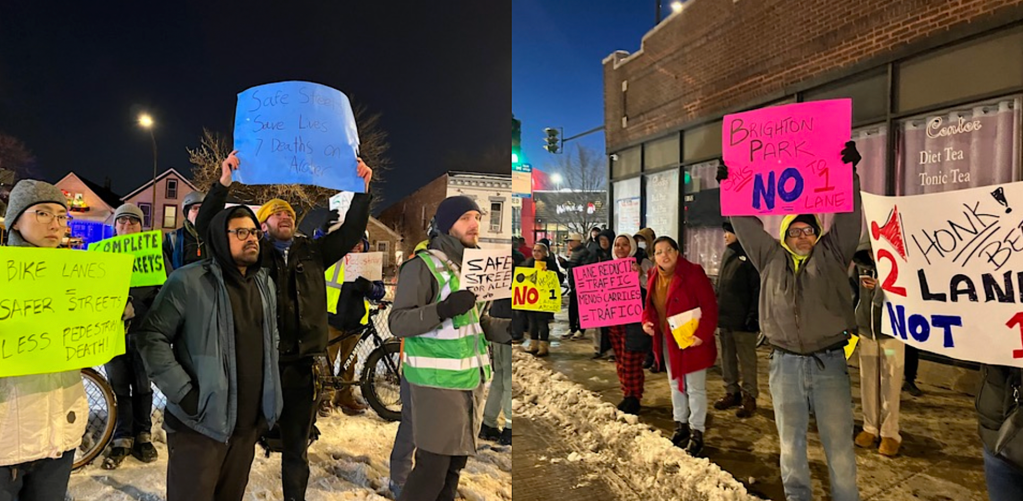
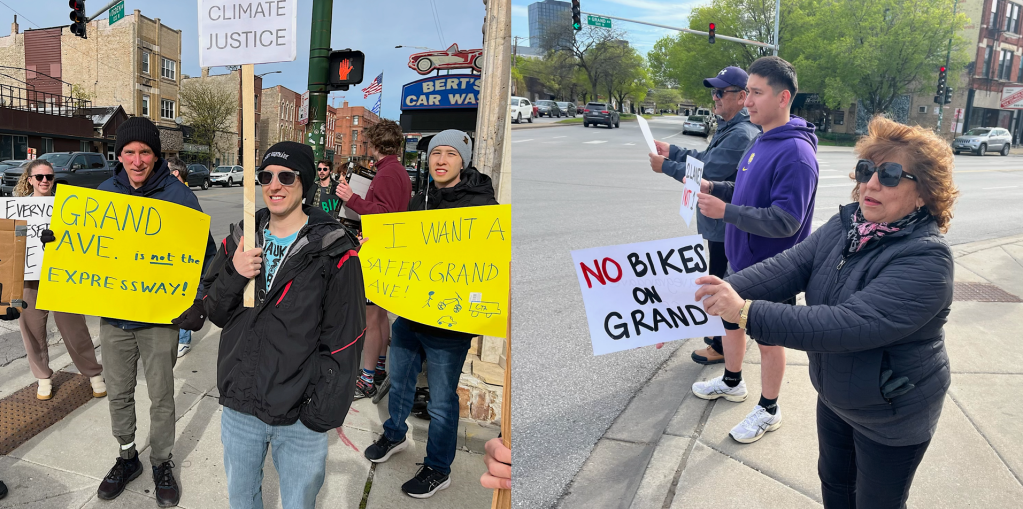
It’s become increasingly obvious that some of opposition to these initiatives is being organized by “moderate-to-conservative” politicos, who are cynically trying to turn lifesaving infrastructure into a wedge issue to win votes. I’m sure this disturbing phenomenon isn’t unique to the Windy City.
Like all Chicago alderpersons, Bridgeport representative Ald. Nicole Lee (11th) has de-facto veto power over transportation projects in her district. She’s a moderate who may see herself as being stuck between a rock and hard place here.
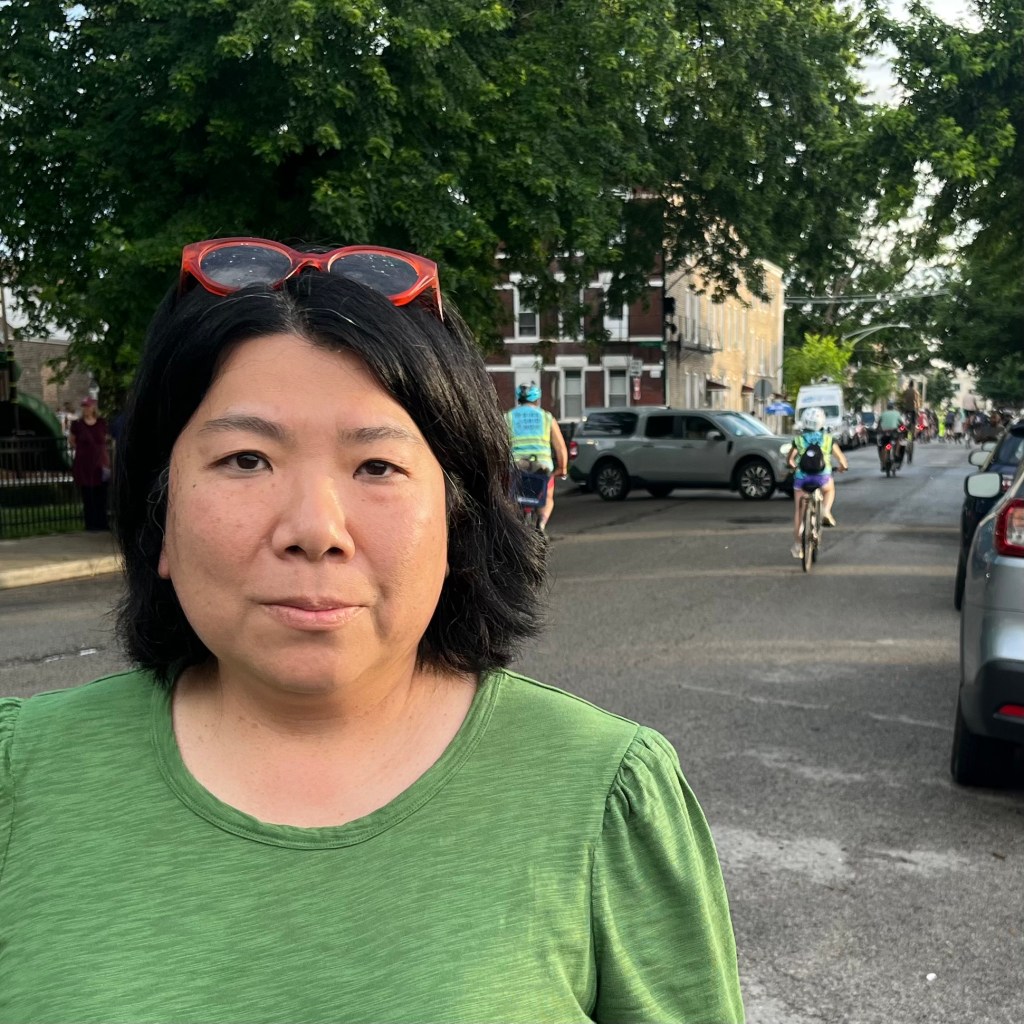
Some of her constituents are demanding that no more human lives be sacrificed on the altar of convenient driving. But, as in other communities, many neighbors and merchants will surely argue that replacing curbside parking spots with protected lanes will doom small businesses. That’s not just due to shady politics, but also sincere, but inaccurate, beliefs about how many customers drive to businesses.
When I spoke with Ald. Lee at the June 8 memorial, she sounded undecided about the parking-versus-protected-lanes issue. “We’re going to continue to listen to everybody in the wake of this tragedy,” she said.
But there were signs she might to be open to persuasion by Complete Streets supporters. She told me a negligent driver recently injured her nephew while he was biking in nearby Chinatown. “It’s going to take all of us working together to get physical infrastructure that protects people better,” she said.
Chicago, Bike Grid Now! and associates are demanding that the City improve safety on Halsted Street.
“While the circumstances around Riley’s death are tragic, the situation is made all the more painful because his death, like so many others, did not need to happen,” said Andrew Mack in a speech at the start of the June 8 event. Mack has previously served as a Chicago, Bike Grid Now! organizer. But he later told me that on this occasion, he identified as simply a “Bridgeport resident,” rather than a spokesperson for the entire organization.
“Halsted Street is a major north-south route for cyclists on the South Side,” Mack added. “There are few bridges over the river or streets without four lanes of fast, heavy traffic, but despite this importance for cyclists, large sections of Halsted remain unprotected.” He later confirmed to me that he is in favor of installing protected bike lanes on Halsted in Bridgeport, and the entire South Side.
“My children visit destinations up and down Halsted, where Riley’s racks now provide parking at Jackalope Coffee, Cermak Grocery, and the Daley Library branch, but we also know there is still so much more work to be done,” Mack said during his June 8 speech. “Just today, another cyclist was doored on the same block where Riley was killed. Thankfully, that cyclist rode away. A person’s route to school, the store, or work is only as safe as the weakest link in the chain, and for those of us who use Halsted in Bridgeport, that chain is effectively broken.
“For too long, elected officials have told us that street parking is more important than the safety of people like Riley, of our children, or our seniors, but the safety of our most vulnerable neighbors should not be up for public debate,” Mack added. “We don’t debate the need for safe drinking water, and we shouldn’t debate the need for safe streets either.”
“Now is the time for our aldermen to show courage,” Mack said. “Now is the time for action. No more people should die in the streets because their lives are not valued as much as driver convenience.”
On the following Monday, June 15, dozens of bike riders again gathered in Bridgeport to lobby Ald. Lee for safety improvements on Halsted and other streets in her ward with CBGN!’s “Bike Protest for a Bike Grid.”
CBGN! organizer and Bridgeport local Chris Buie-Gentry kicked off the event with a speech that echoed some of Andrew Mack’s remarks about Halsted. “We’ve talked about Halsted being [an issue] for years… and every single time CDOT leaders and City leaders say, ‘You’re right, we really should do something about that.’ I don’t want to wait until I’m 55 to have safe streets.”
“We’re here today to remind our City leaders that we deserve safety,” Buie-Gentry later said in his presentation. “20-something percent of this neighborhood doesn’t own a car. Over 25 percent are in households that have one car when there’s two people living there. A lot of people need to get around our community, they need to get groceries, they need to go to school. And they can’t afford a car, don’t want a car, can’t use a car.”
“And those people deserve the right to go to work, to get groceries, to pick up their kids, without the fear of becoming yet another death on our streets in the city,” he added. “And that’s why we’re here today: to make sure that all of our leaders know that we’re not going to look away. Because we lost someone in our city who was fighting to make that city better. And we’re here to make sure that we finish his work.”
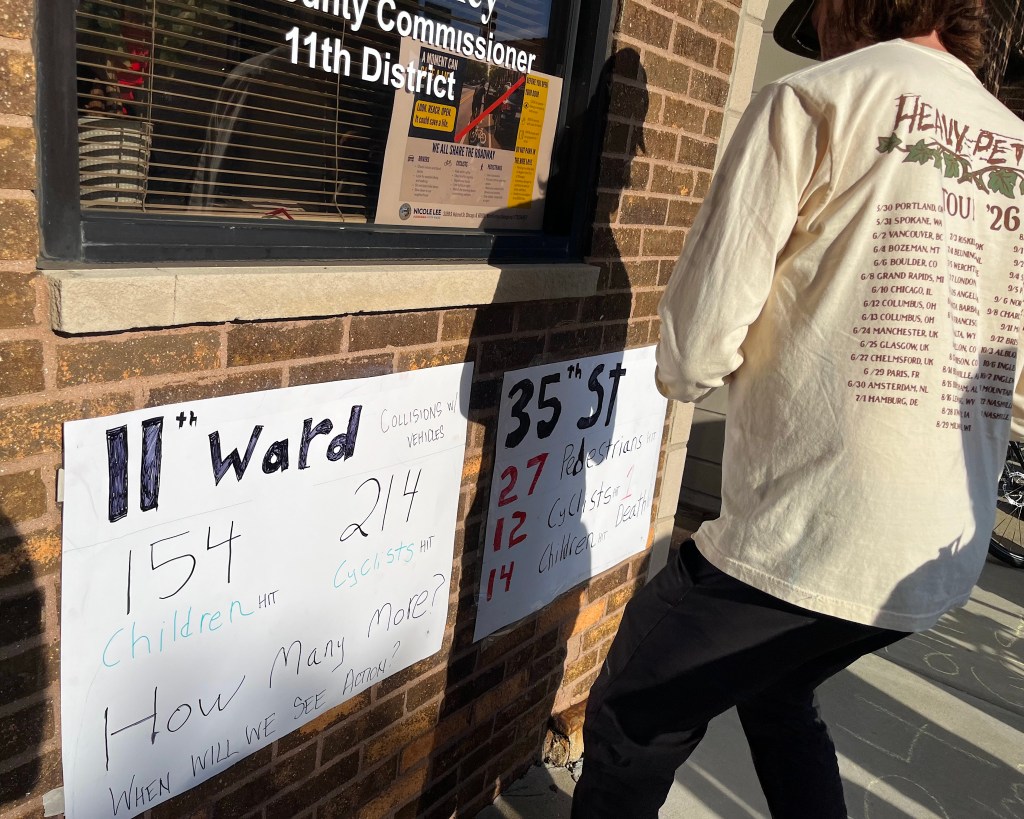
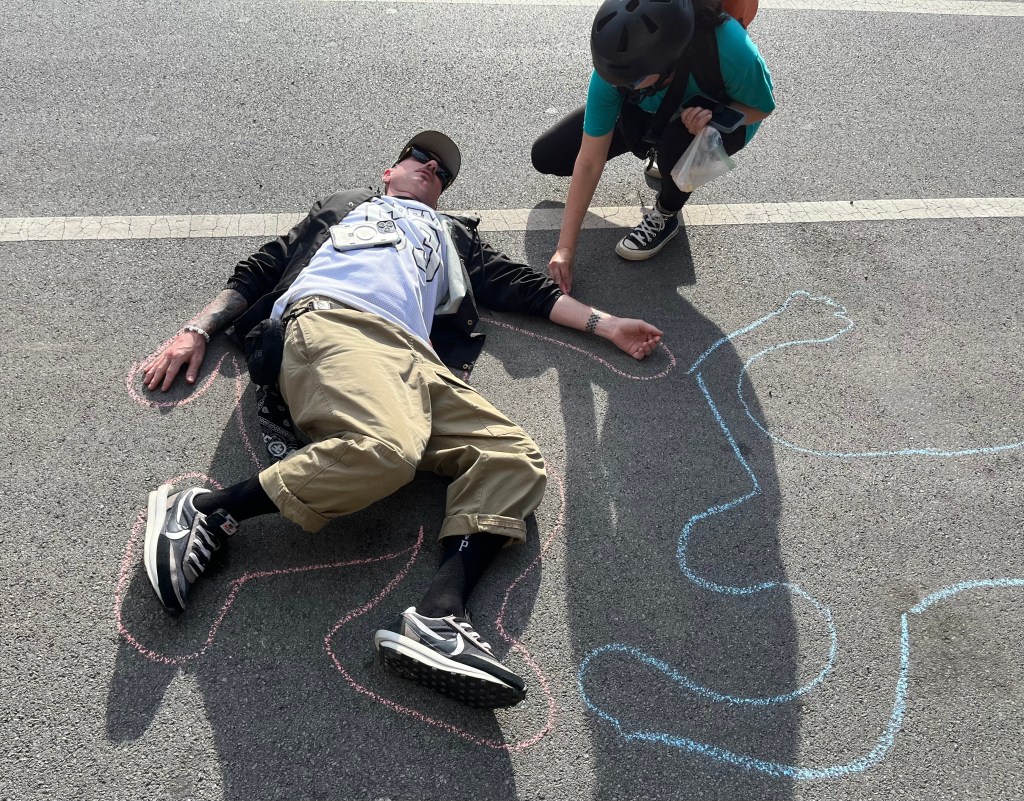
With that, the crowd mounted up, and made their way on Halsted to the 11th Ward Democratic Party building, the historic headquarters for the dynasty of mayors Richard J. and Richard M. Daley. There, participants provided feedback on the street redesign issue to Ald. Lee and passers-by via chants, a petition, Post-It notes, signs, and crash-fatality-themed chalk markings. Here’s a gallery of images from the ride, all of which I shot.
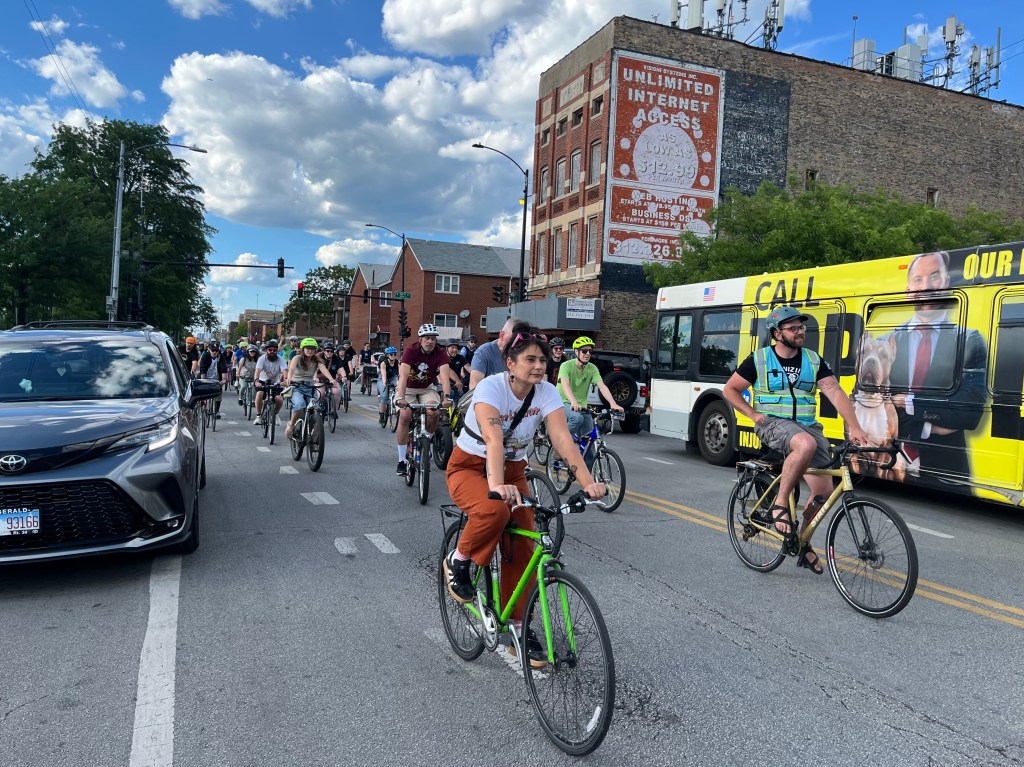
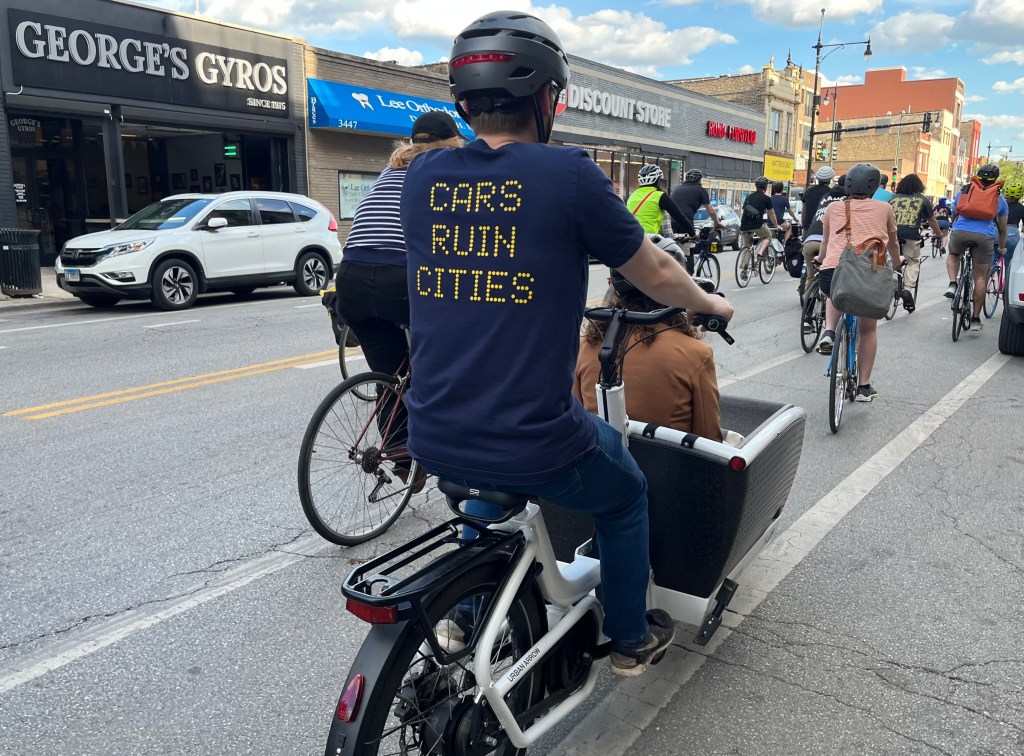
The chant started with “What do we want?” “Bike Grid!” “When do we want it?” “Now!” and ended by honoring the five people killed by drivers while riding bikes and e-scooters in the city of Chicago so far in 2026: Roman Hevelka, 63; Violet Harris, 15; Damian Gomez, 18; Astrid Carrillo Noguera, 17; and Riley O’Neil.
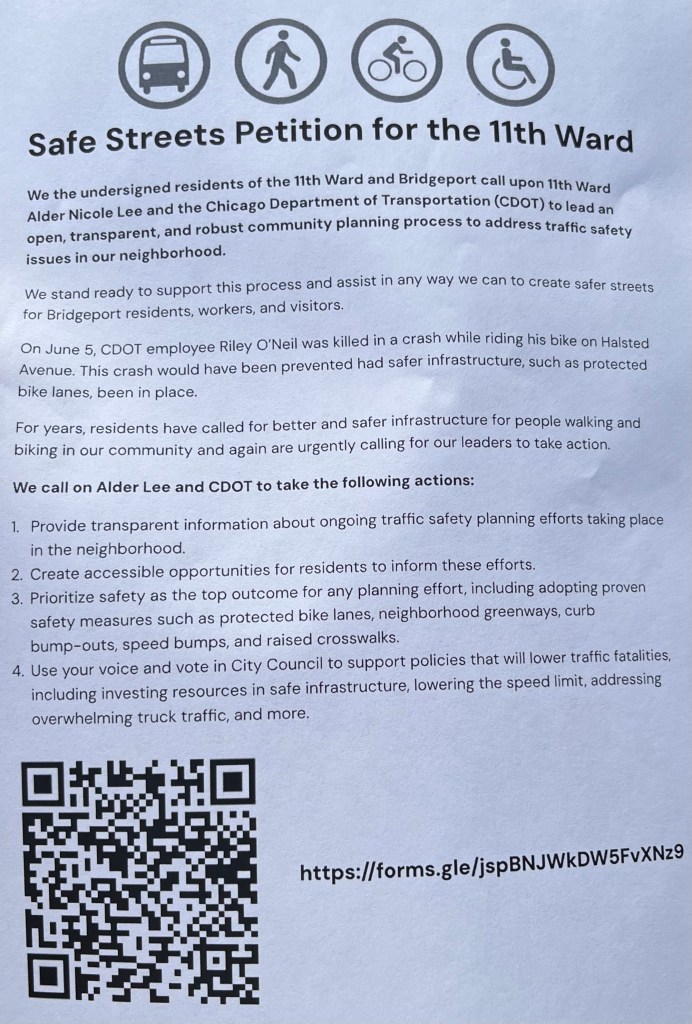
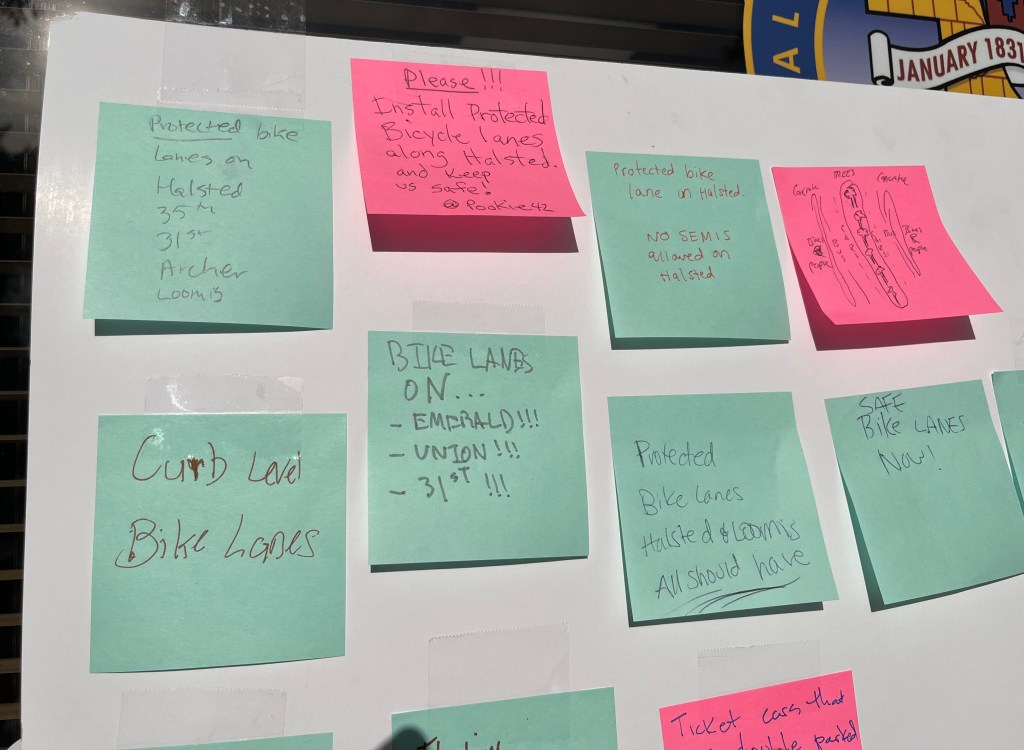
A GoFundMe has been launched to support Riley O’Neil’s partner.
The Riley O’Neil Memorial Fund has been launched at Chicago’s DePaul University to help fund the Chaddick Institute for Metropolitan Development’s “initiatives related to sustainable urban development and the creation of safer cities.”
Clarification 6/17/26, 4:45 PM: After receiving feedback from Chicago, Bike Grid Now! organizer Nik Hunder (also a Streetsblog Chicago contributing writer), I’ve edited the previous sentence, “Specifically, Bike Grid is demanding that the City install protected bike lanes on the entire length of Halsted Street” to “Specifically, Bike Grid is demanding that the City improve safety on Halsted Street.” I’ve also added a quote from Chris Buie-Gentry to that effect; explained that protected bike lanes would achieve that goal; and edited a couple of other statements in the piece to keep things a bit more open-ended.
Update 6/20/26, 10:30 AM: I’ve added quotes and video from CBGN! organizer and Bridgeport resident Andrew Mack’s speech from the June 8 event, and reorganized this article somewhat, to further clarify what the group’s representatives have said about installing protected bike lanes on Halsted.
Update 6/23/26, 6:00 PM: Andrew Mack has previously been described as a “Chicago, Bike Grid Now! organizer.” Today, Mack confirmed that he has organized with the group on many issues. However, Mack told me that for his speech at the start of the June 8 memorial event, he identified as simply a “Bridgeport resident,” rather than a spokesperson for the entire CBGN! organization. He added that it’s possible some current Bike Grid organizers don’t share his position that the City should install protected bike lanes on the entire length of Halsted Street on the South Side. This article has been edited accordingly.

If you value Streetsblog Chicago’s livable streets reporting and advocacy, please consider making a tax-deductible donation to support our work. Thank you.

Read More:
Streetsblog has migrated to a new comment system. New commenters can register directly in the comments section of any article. Returning commenters: your previous comments and display name have been preserved, but you'll need to reclaim your account by clicking "Forgot your password?" on the sign-in form, entering your email, and following the verification link to set a new password — this is required because passwords could not be carried over during the migration. For questions, contact tips@streetsblog.org.