It’s a shame about Ray: Ald. Raymond Lopez parachutes into committee meeting to rant against Archer project, Complete Streets in general

By Austin Busch
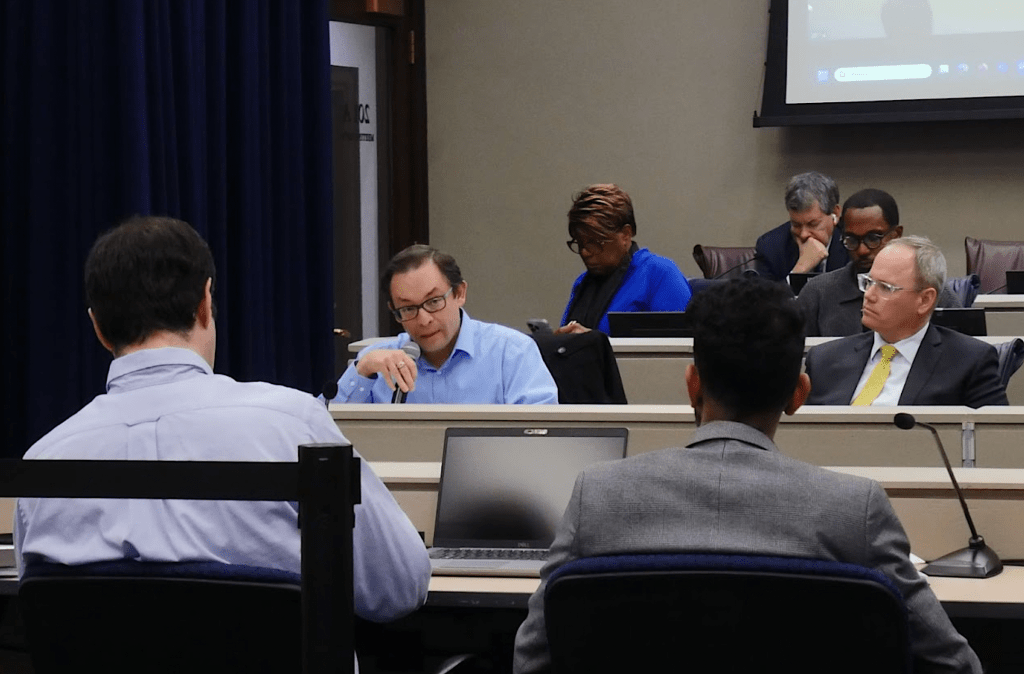
An at-capacity crowd gathered on Monday for the Committee on Pedestrian and Traffic Safety’s annual Complete Streets subject matter hearing. Short debates over proposed ordinances to prevent commercial parking violations, and to increase notifications before bridge repair closures, bookended a Chicago Department of Transportation presentation on the City’s Complete Streets program. And several aldermen from outside the committee joined the meeting to voice support or air grievances.
Don’t wait for death
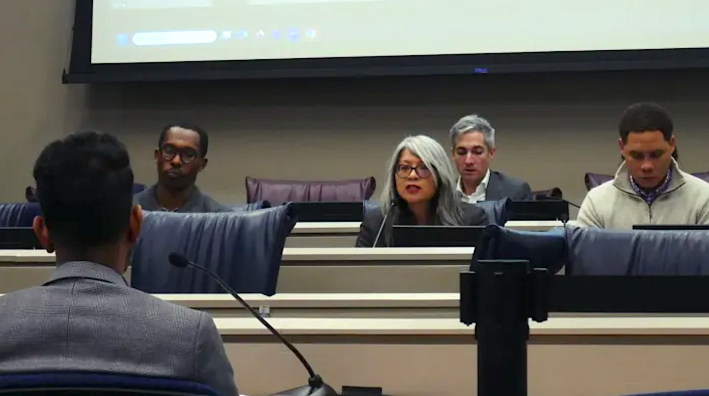
North Side alders Committee Chair Daniel La Spata (1st), Matt Martin (47th), and Leni Manaa-Hoppenworth (48th) discussed the deaths of vulnerable road users Tyler Fabeck, Kevin Clark, Peter Paquette, and Soyfa Athamanah in their wards. Following these tragedies, CDOT made safety upgrades to the streets where drivers fatally struck these residents: Logan Boulevard in Logan Square; Irving Park Road in North Center; and Broadway in Uptown. But the Council members noted that the department should not wait until after a death to improve street design.
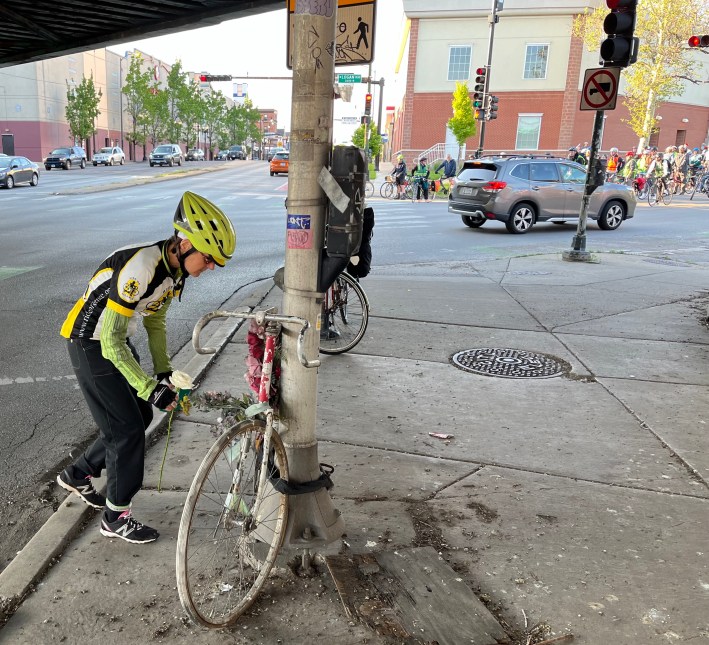
During the 2024 Ride of Silence to honor fallen cyclists, event organizer Elizabeth Adamczyk left a flower and lit an electric candle at the “ghost bike” bike memorial for Tyler Fabeck, 22, at Logan Boulevard and Western Avenue in Logan Square. Fabeck was fatally struck while biking there in 2008. Adamczyk did the same thing at the memorial for Kevin Clark, 32, on the other side of Western. Clark was also struck and killed while biking at this intersection, in May 2021. CDOT recently installed protected bike lanes on the boulevard. Photo: John Greenfield
“We do not need to wait for someone to die to make complete streets infrastructure improvements,” said La Spata. “We shouldn’t wait for people to die to make infrastructure improvements.”
CDOT Deputy Commissioner Vig Krishnamurthy and Assistant Commissioner David Smith said the City has made significant progress in creating livable streets, both compared to past years in Chicago, as well as peer cities.
However, Manaa-Hoppenworth pushed them to work faster. “This needs to be a priority for so many reasons: health and safety, economic development, sustainability,” she noted. “I know you said we were leading already, and yet I feel an urgency to push us to do more, faster, more efficiently.”
Wards of warning
In contrast, some representatives of districts south of Madison Street said they want to put the brakes on Complete Streets projects, or even prohibit them entirely. Ald. Marty Quinn (13th) took the questioning time to deliver a directive against bike lanes in his ward.
“We’re not interested in bike lanes,” said Ald. Quinn. “My constituents have heard all of the stories about what’s going on in and around Kedzie and Archer. Not interested at all. So I want to make that an abundantly clear today: don’t bring that to our neighborhood.”
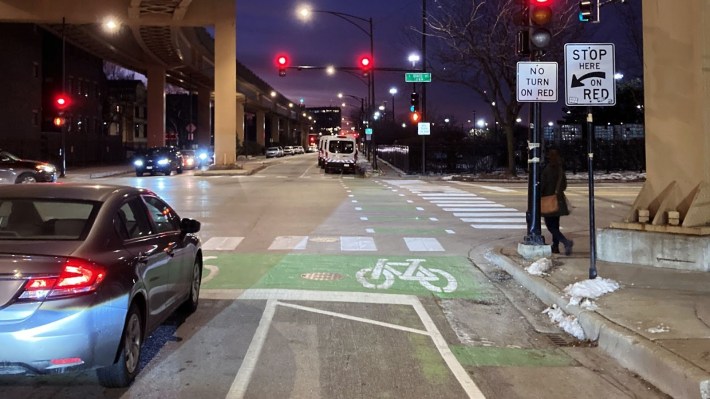
The in-progress Archer and Kedzie Avenue traffic safety projects in the Brighton Park neighborhood do include protected bike lanes. But it’s important to note that they are making these corridors safer and more efficient for all road users. They include AARP-endorsed “four-to-three conversion” road diets with new turn lanes for drivers; pedestrian safety infrastructure like new crosswalks, walk signals, curb extensions, and pedestrian islands; and bus boarding islands.
Such traffic-calming strategies could save lives in Quinn’s ward. For example, sadly, last March, a sedan driver sideswiped another car, then jumped the curb and fatally struck Jamie Cerney, 38, on the sidewalk of the 5200 blog of West 63rd Street, next to Midway Airport in the 13th Ward.
Quinn did say he wants CDOT to upgrade 59th Street in his district, but said he opposes adding bike lanes. That would potentially set up a conflict with Section 10-14-010(b) of the city code requiring “accommodations for all users” in future projects planned by the transportation department.
While not on the committee, Ald. Pat Dowell (3rd) joined the Q & A after committee members to voice mixed feelings about recent projects in her ward. She praised the department for a project on Indiana Avenue between Garfield Boulevard and 31st Street, which includes a road diet, curb extensions, bus bulbs, and a protected bike lane. She said it involved sufficient community input.
“It turned out to be a decent project,” Dowell said. “I don’t get any complaints now, except for whether or not you’re going to remove the snow in the bike lane.”
Dowell then claimed a similar project on 18th Street between Clark Street and Indiana was done without notifying her office or public engagement. “I don’t think you even contact OEMC or the fire department about how those bike lanes and road diets are going to affect the movement of ambulances, fire trucks, and where the police cars are going to park.” said Ald. Dowell.
In reality, CDOT often does reach out to local first responders before redesigning streets. For example, here’s one of the department’s slides from a community meeting about the recent Granville Avenue redesign on the Far North Side, noting that they talked to the Chicago Fire Department.

Ultimately, Dowell used aldermanic prerogative, the de-facto ability of Council members to veto infrastructure projects in their wards, to force CDOT to partly dismantle an already-built protected intersection at 18th and Wabash Avenue. While these structures are common in bike-friendly cities, that would have been the first one in Chicago.
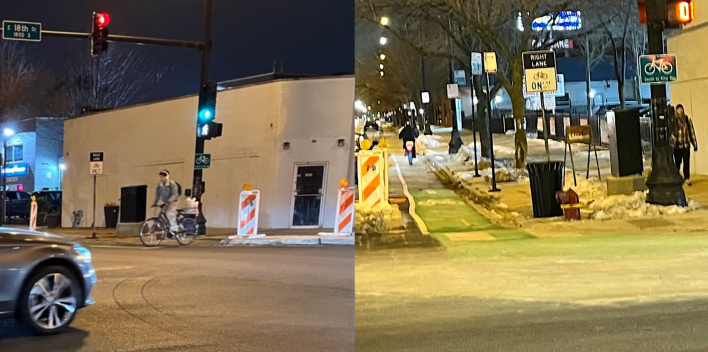
Dowell gave CDOT a similar admonishment as Quinn. “I’m telling you: Do not put another bike lane in the third ward until you have a conversation with me and my constituents,” she said.
Agitation about Archer
While most of the alders addressed projects occurring within their own wards, Ald. Ray Lopez (15th) joined the committee as a non-member to voice issues with the ongoing construction in the 12th ward, represented by Ald. Julia Ramirez. Lopez, representing parts of Back of the Yards and Gage Park, took the mic to criticize the citywide complete streets program in general, and the Archer project in particular.
“It is very important for me to stand up for the community I live in and say, quite clearly, that Complete Streets has been a complete disaster for Brighton Park,” said Ald. Lopez. If he was referring to congestion on Archer during the ongoing construction project, it’s important to note that there’s also a major utility project on Archer between Rockwell and California avenues that is currently slowing down traffic.
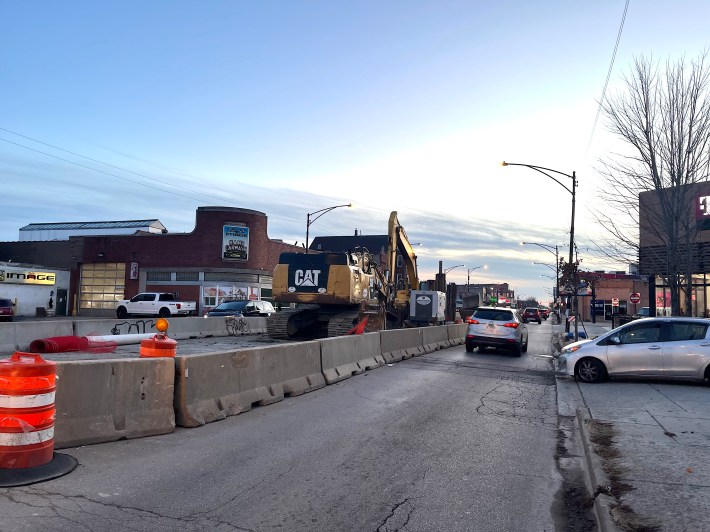
Lopez who, again, doesn’t live in the 12th Ward, went on to ironically opine that there wasn’t enough community input from locals for this project. But the truth is, some 500 residents provided feedback to shape this initiative, including multiple community meetings, before the first shovel hit the ground.
After Lopez aggressively questioned CDOT staff about timelines and data points for the Archer project, Chair La Spata stepped in to clarify the purpose of the hearing was to talk about the Complete Streets Program in general, not fixate on a particular project.
In response, Lopez claimed the Archer and Kedzie projects are representative of what he insisted is unaccountability by the Complete Streets program citywide. “As we just heard, they want to spread this madness to all communities,” he fumed.
Here’s a video of comments from Ald. Lopez and Ald. Ramirez, provided by Bike Grid Now.
Brighton Park’s Ald. Ramirez followed Lopez via Zoom, also attending the committee meeting as a non-member. She began by reminding those present that the Archer Avenue is entirely within her ward’s boundaries. “I would like for folks that are talking about collaboration and communication, such as [Lopez], that if they do have questions, or if they want to be engaged, that he also speaks with the 12th ward alderman: myself,” she said.
As Ramirez continued to speak about her experiences living and working along Archer Avenue, Lopez packed up and left. Quinn, the other Archer project naysayer at the committee meeting, remained for Ramirez’s first question, but left the chamber during the discussion that followed.
Ramirez noted their desertion. “This is really a vision for the region, and it’s unfortunate that two of my colleagues that are also representing the Southwest Side have chosen to leave when the direct alder who is working on this project was going to be on mic,” said Ald. Ramirez. “I invite my colleagues to speak to me directly, so we can figure out how we can make this right, how we can make this work, but really just to keep people safe long-term. This is so much greater than just this area.”
Ramirez reaffirmed her intention to see the project past the construction phase so residents can see it working as intended. “This project is not finished, and I think folks are evaluating for the construction,” she said. “So we really want to be able to see that construction through, and people to be able to utilize it, live in it.”
CDOT’s Smith reiterated that the project is still in-progress due to the utility project in the middle of the corridor. He said construction would continue “until roughly the spring or summer.”
Going public
During the public comment portion at the beginning of the meeting, several frequent Archer rallygoers encouraged the naysaying aldermen.
“These bike lanes are also not being considerate of individuals with low mobility,” argued Eva Villalobos, a former pro-charter school CPS board candidate and co-organizer of the weekly anti-Archer project rallies. After the hearing, she took part in one of the dueling demonstrations between opponents and supporters of the initiative, in front of Ramirez’s office. She’s in the post below, in the the red jacket.
“They are practically making people be on a ditch,” Villalobos insisted. “People with low mobility cannot get on the sidewalk sometimes, and they are forced to have to go around to the point end of the block, so they can go on their wheelchair, or whatever the issue might be.”
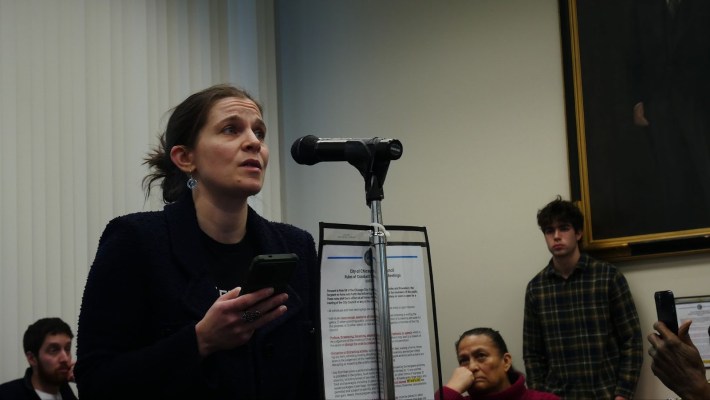
However, a person whose job is advocating for people with disabilities pushed back on that notion. “Disabled people are disproportionately at risk for dangerous driving,” said Access Living Senior Policy Analyst Laura Saltzman. “For folks who mentioned disabled people, I hope that you take disabled people getting around seriously. Again, that means not just driving.”

On November 12, SBC launched our 2026 fund drive to raise $50K through ad sales and donations. That will complete next year’s budget, at a time when it’s tough to find grant money. Big thanks to all the readers who have chipped in so far to help keep this site rolling all next year! Currently, we’re at $21,527 with $28,473 to go, ideally by the end of February.
If you value our livable streets reporting and advocacy, please consider making a tax-exempt gift here. If you can afford a contribution of $100 or more, think of it as a subscription. That will help keep the site paywall-free for people on tighter budgets, as well as decision-makers. Thanks for your support!
– John Greenfield, editor
Streetsblog has migrated to a new comment system. New commenters can register directly in the comments section of any article. Returning commenters: your previous comments and display name have been preserved, but you'll need to reclaim your account by clicking "Forgot your password?" on the sign-in form, entering your email, and following the verification link to set a new password — this is required because passwords could not be carried over during the migration. For questions, contact tips@streetsblog.org.