Of Montreal: What Chicago can learn about winter bikeway maintenance from “The City of Saints”

This article was written by John Greenfield, with additional research by Cameron Bolton
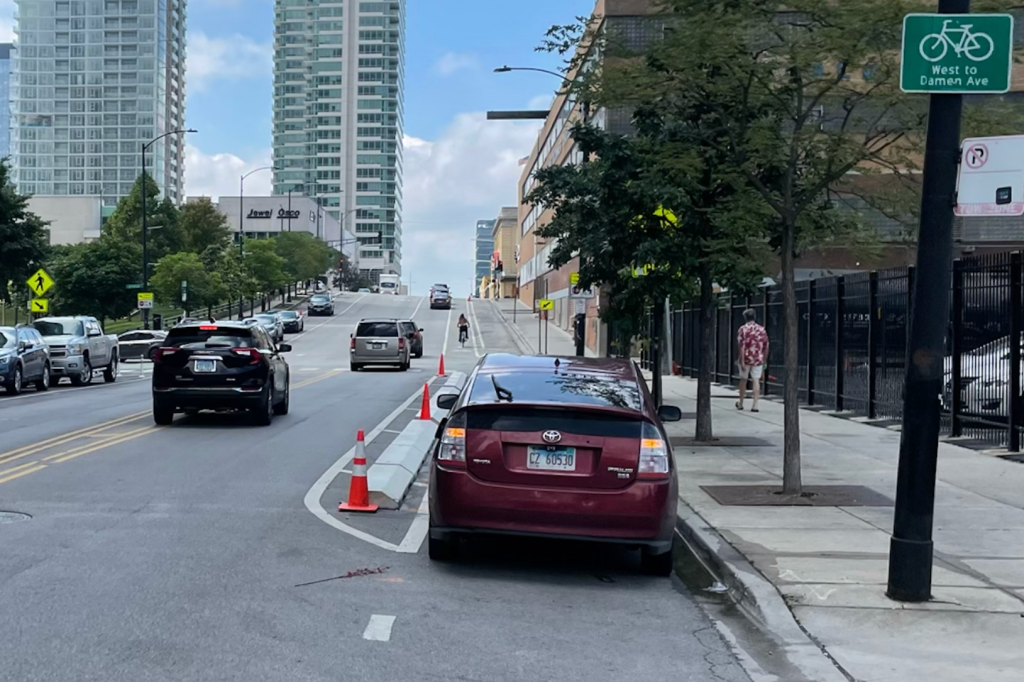
If there’s one thing that Chicago protected bike lane opponents and proponents can agree on, it’s that if these facilities aren’t maintained properly, especially during the winter, they can do more harm than good. As I discussed in early December after a freak post-Thanksgiving snowstorm, when PBLs aren’t promptly plowed, it forces bike riders to share the (usually already cleared) mixed-traffic lane with drivers, which can be unsafe.
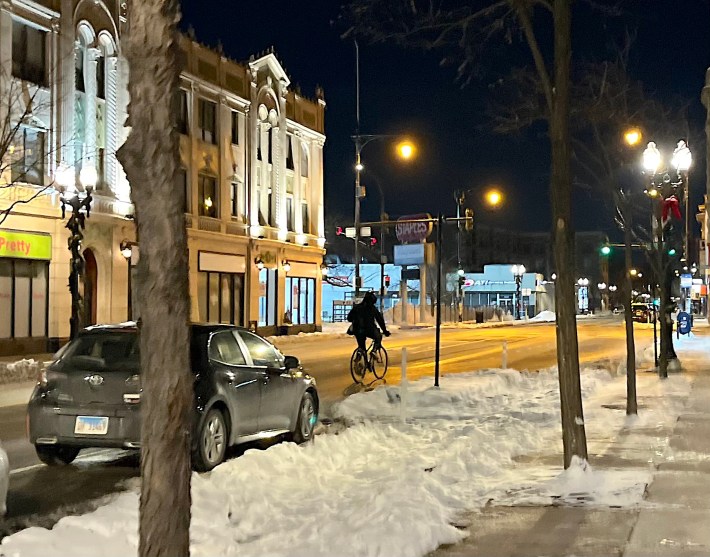
Last December, many Streetsblog Chicago readers weren’t happy about the state of local protected lanes a couple days after the white stuff stopped falling. So I asked the Chicago Department of Transportation for an an update on their current bikeway clearance protocols.
“In-House Construction at CDOT is responsible for managing snow removal across the city’s approximately 70 miles of protected bike lanes,” CDOT Assistant Commissioner Bill Higgins, who handles intergovernmental affairs, told me. Streets and Sanitation, which clears mixed-traffic lanes, is also supposed to plow non-protected, paint-only lanes next to the travel lanes.
“In some [PBL-clearing] cases, specialized equipment or manual shoveling is required, which can add complexity and time to the process as well as a high volume of snowfall in a short time, such as the eight-to-ten inches that fell over the weekend,” Higgins added. “Snow cannot be pushed back into the street or onto sidewalks, so relocating it safely and systematically takes time – especially during continuous snowfall.”
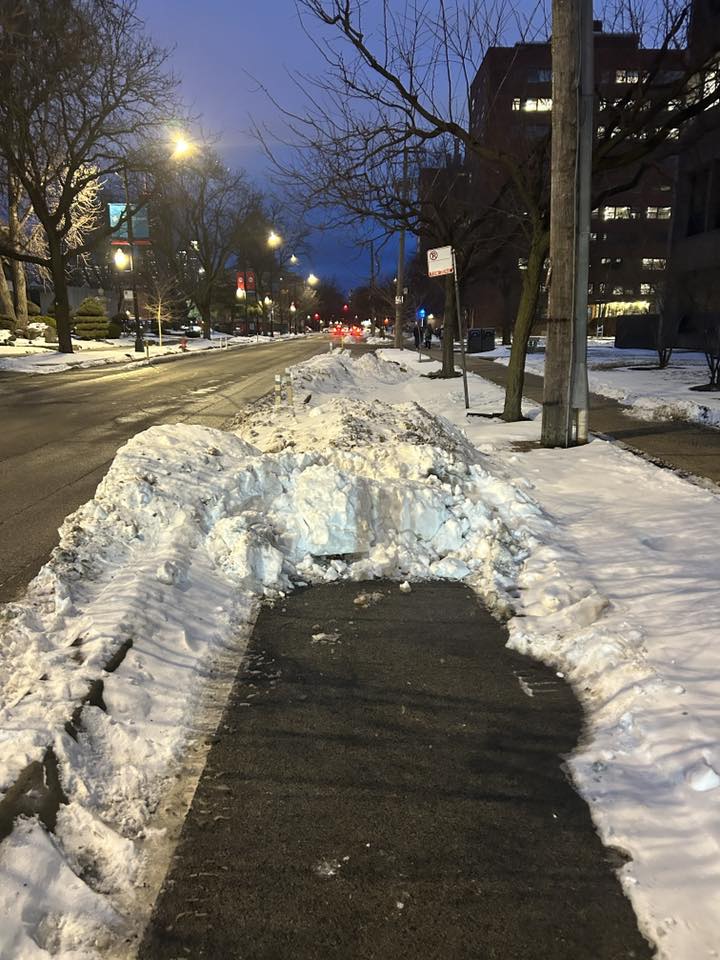
These challenges were evident again on the afternoon of Sunday January 25, after Chicago got several inches of powder that weekend. To its credit, CDOT seemed to have promptly plowed at least one side of the recently installed protected lanes on Clark Street in Uptown, possibly both.
By 3 p.m. the bike lane on the west side of the street between Montrose and Wilson avenues was fairly clear. But there were a couple of inches in the bikeway on the east side, which may have been plowed before the storm ended, or perhaps had snow blown onto it from the sidewalk. Just for fun, I brought a shovel and gave those blocks a touch-up.
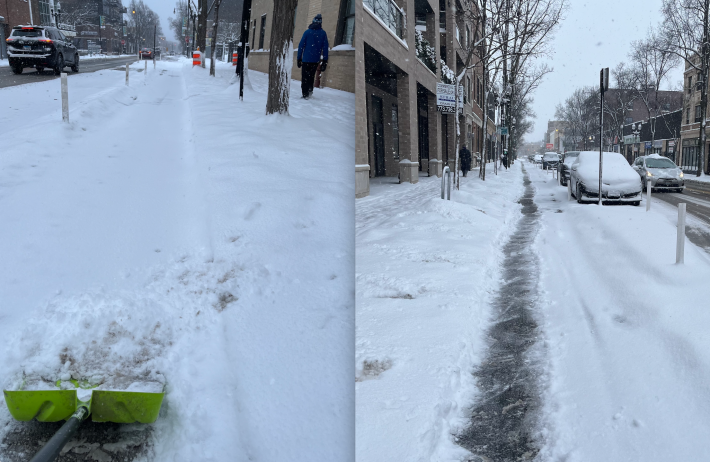
That Monday, when I showed up to a protest against the under-construction Archer Avenue traffic safety project in Chicago’s Brighton Park neighborhood, I was pleased to see that CDOT had plowed them. Or at least they cleared the stretch by the local City Council member’s office, although the Safe Streets opponents were parked in the bikeways.
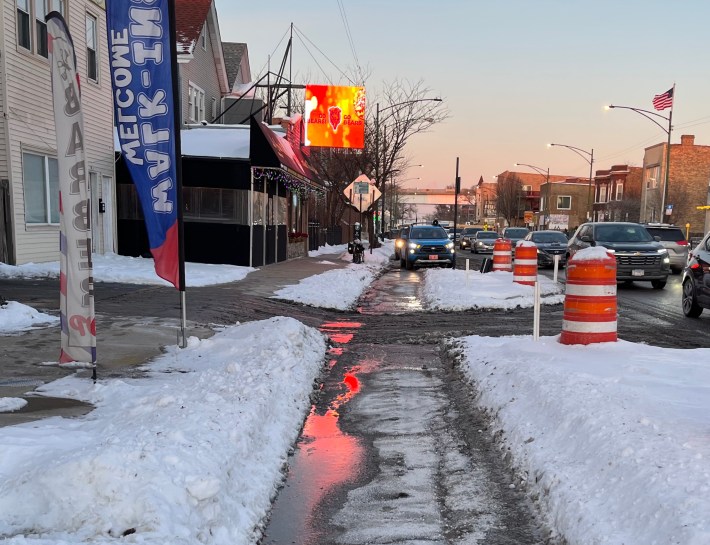
So let’s give CDOT the benefit of the doubt that they’re trying their best nowadays. But Chicago’s protected bike lane practices still seem to be somewhat hit-or-miss.
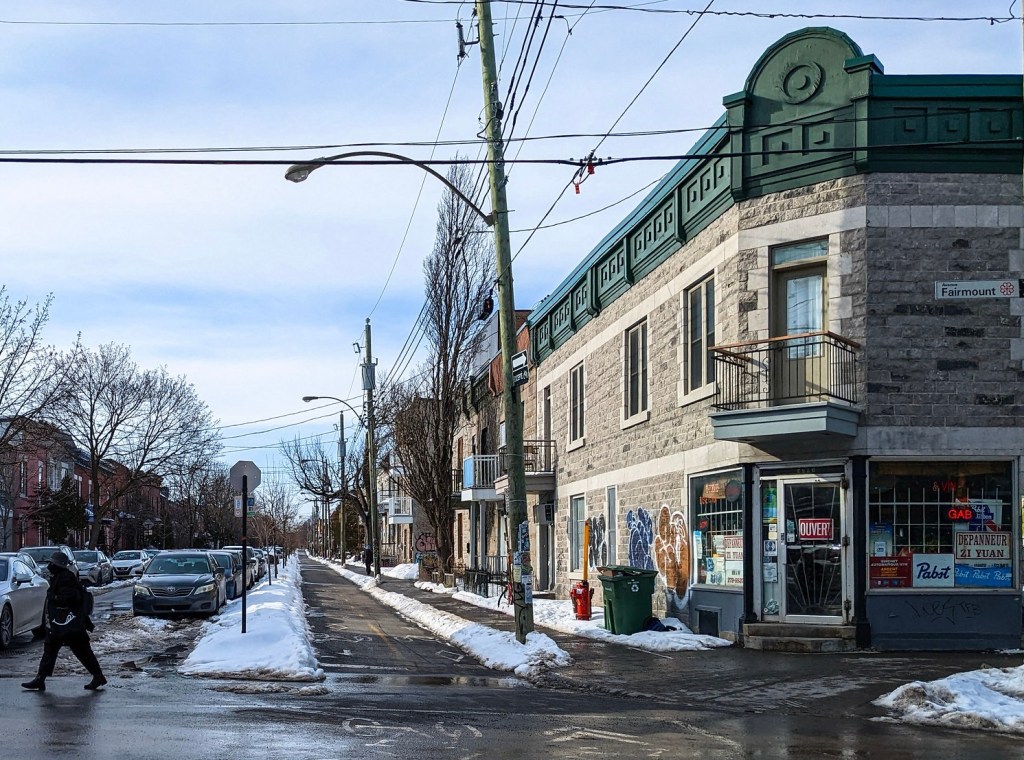
I was curious how PBL maintenance works in Montreal, Canada’s second-largest city. It has an extensive network of protected lanes, with a similar curbside layout as Chicago’s, and it’s an even snowier place. It also happens to be where Ben Gomberg, my old boss at the CDOT bike program years ago, grew up.
I found the February 2021 video “How Montreal Keeps Cycling in the Winter” on the YouTube Chanel Oh The Urbanity!, filmed when its creators were living there. “Montreal’s different kinds of bike lanes require different snow removal strategies,” they explained. “Pickup trucks are what we’ve seen on Montreal’s concrete separated two way cycle tracks like Berri and Rachel streets. [Apologies if I mis-transcribed any spellings.] It’s a funny sight to see, but it’s a reasonably practical solution. The truck is basically the right size and can plow in the front and lay down salt from the back.”
“Another strategy is needed for the one way cycle tracks on each side of Saint Denis, which were recently installed as part of the Réseau express vélo,” Oh the Urbanity! added. “As comfortably spacious as these lanes are, they’re not big enough for a pickup truck. Fortunately, Montreal is a bunch of small and nimble snow plows for clearing sidewalks that it can use here on Saint Denis, we saw these machines working together in pairs, cleaning bike lanes, sidewalks and car parking all the same time.”
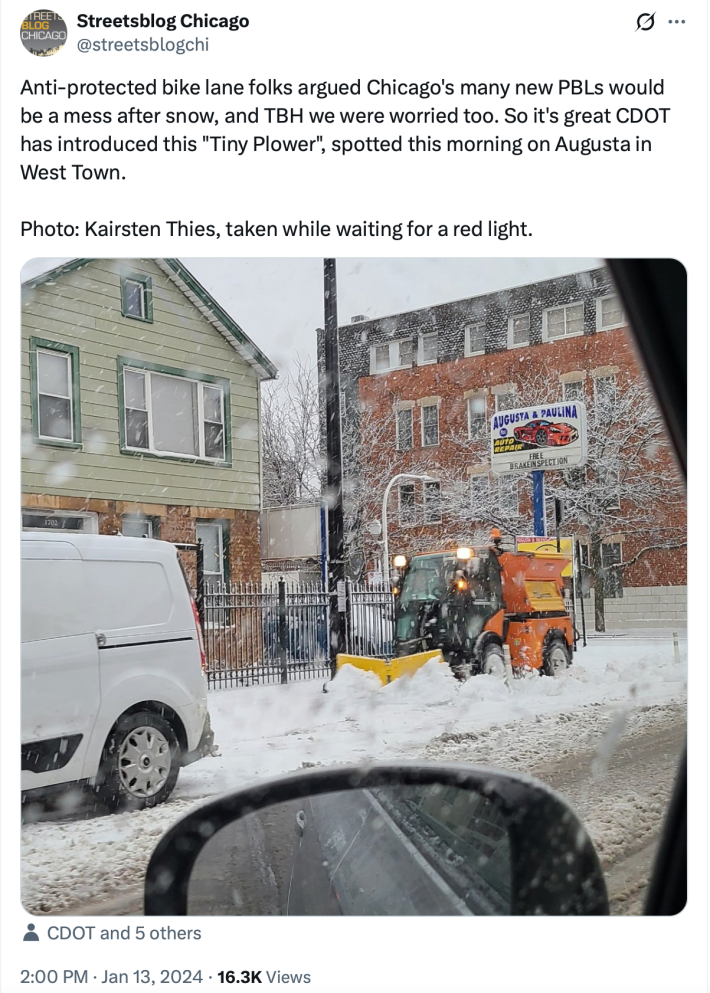
“One thing we noticed is they always did at least two passes on the bike lanes, which really helped the clearing quality,” the video says. That would be a good practice for CDOT to adopt as well.
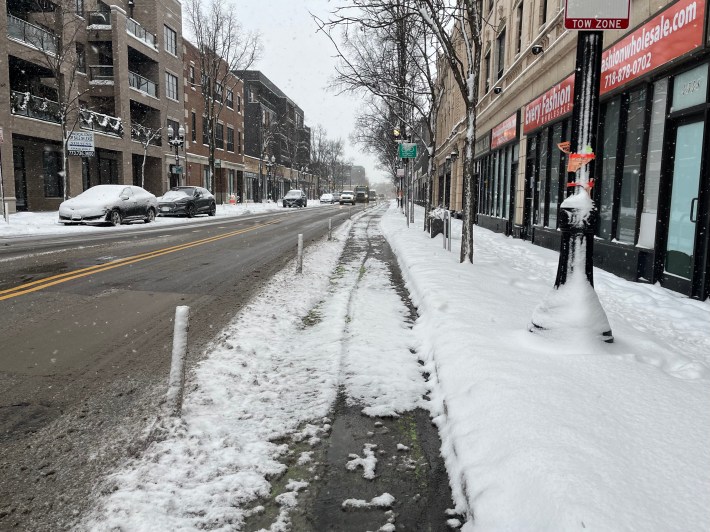
The Oh the Urbanity! folks have a lot more to say about Montreal bike maintenance, so I suggest watching their video for more info. But they concluded in 2021, “Montreal deserves some praise for its bike lane clearing efforts. It can also be an example to other cities in Canada of how it’s not just possible to maintain bike infrastructure in winter. It really can just be a natural extension of also clearing roads and sidewalks.”
Of course, that video was shot five years ago, so Streetsblog checked in with the Ville de Montréal authorities for an update. “In Montreal, bicycle paths are cleared of snow, depending on the area, by City crews or by private contractors under contract with the City,” spokesperson Hugo Bourgoin told us in French. “A bicycle path is cleared with the same priority as the roadway it runs alongside, whether or not the path is protected. Protected paths may be separated by a concrete median or bollards, for example, and are cleared using articulated tractors or tracked vehicles.”
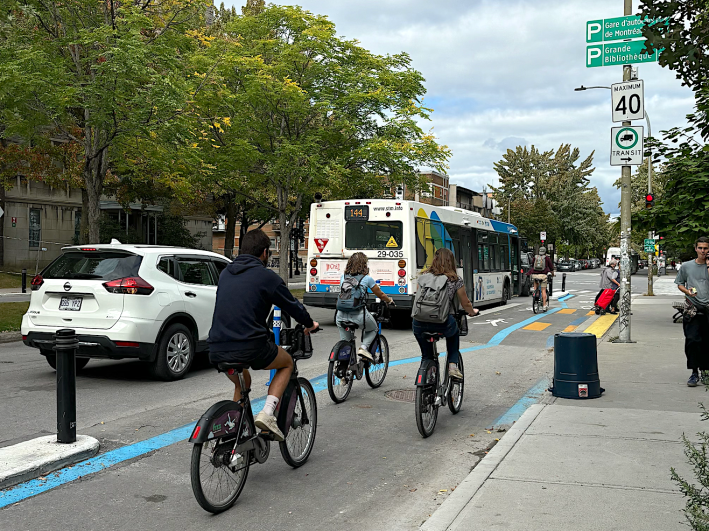
“For the 2025-2026 winter season, 729 kilometers [453 miles] of bicycle paths will be cleared of snow out of a total network of 1065 kilometers [662 miles],” Gourgin added.

For a more candid take on the current state of Montreal winter bikeway maintenance, I checked in with author Taras Grescoe, who lives there and writes about transit and other topics. “We’ve had a new administration in Montreal since November” under Mayor Soraya Martinez Ferrada, he said. “They campaigned on an audit and remove bike lanes platform. And in my experience, they’ve seriously neglected plowing not only bike lanes (which often got priority under former Mayor Val Plante) but also sidewalks. Until last year, I held up Montreal as model; sorry to say, not so much now.”
That’s sobering news. So perhaps the takeaway is that nowadays, for people who ride bikes during the winter in snowy North American cities, things are tough all over?
Let’s hope not. I’ll try to do a little more (figurative) digging to see if there’s anywhere else north (or south) of the 49th Parallel that Chicago cyclists can hold up to CDOT as a role model.

On November 12, SBC launched our 2026 fund drive to raise $50K through ad sales and donations. That will complete next year’s budget, at a time when it’s tough to find grant money. Big thanks to all the readers who have chipped in so far to help keep this site rolling all next year! Currently, we’re at $20,242 with $29,758 to go, ideally by the end of February.
If you value our livable streets reporting and advocacy, please consider making a tax-exempt gift here. If you can afford a contribution of $100 or more, think of it as a subscription. That will help keep the site paywall-free for people on tighter budgets, as well as decision-makers. Thanks for your support!
– John Greenfield, editor

Read More:
Streetsblog has migrated to a new comment system. New commenters can register directly in the comments section of any article. Returning commenters: your previous comments and display name have been preserved, but you'll need to reclaim your account by clicking "Forgot your password?" on the sign-in form, entering your email, and following the verification link to set a new password — this is required because passwords could not be carried over during the migration. For questions, contact tips@streetsblog.org.