
Put real experts in charge of transit: Evidence from high-functioning transit agencies


This piece also runs on the website A City That Works, a newsletter about public policy in the Chicago region. Richard Day co-edits that publication, focusing on transportation issues. As a guest op-ed, this article does not necessarily reflect Streetsblog Chicago staffers’ perspectives on this issue.
A year ago things looked pretty bleak for transit. The system was facing a massive financial cliff as federal pandemic aid expired, and the various agencies were doing little more than asking for handouts.
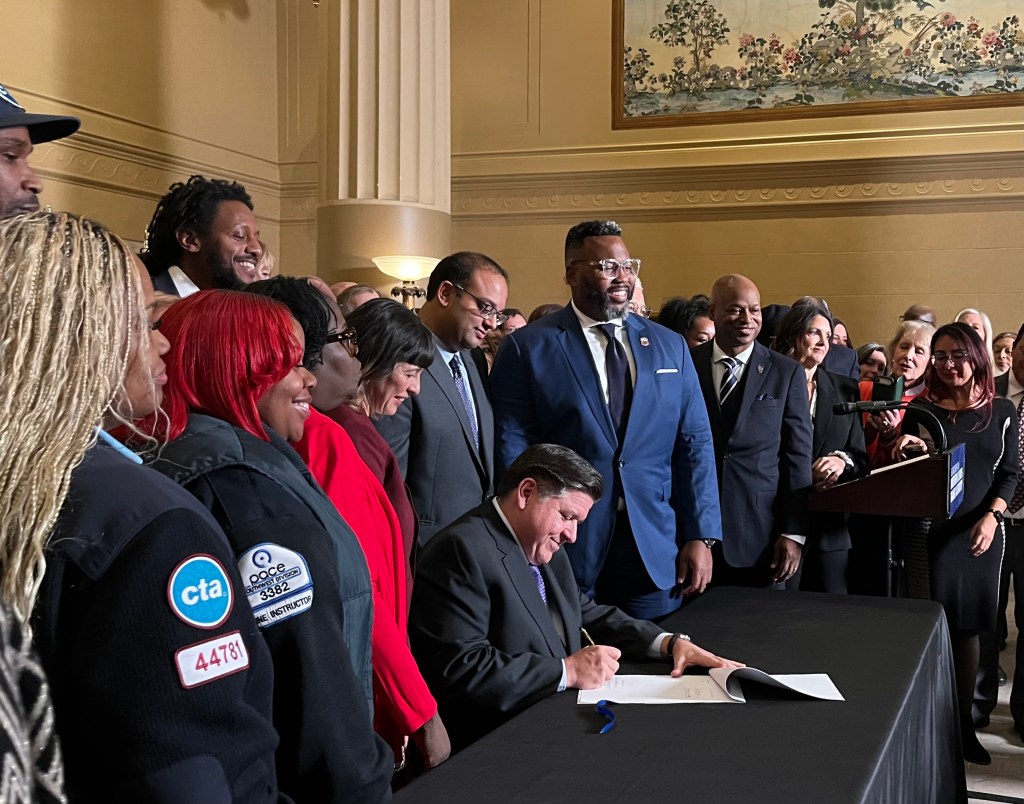
Twelve months later, things look a lot better. The passage of the Northern Illinois Transit Authority Act provided the funding necessary to stabilize the system, and came with a package of governance reforms to try to ensure that CTA, Metra and Pace function better *and* function better together.
The first big change is coming in the next few months, when the governor, mayor, Cook County board president and collar counties appoint new slates of board members to oversee the system. The Act goes into effect June 1, 2026, and elected officials have 120 days to appoint and confirm new board members for the new NITA board (which replaces the current Regional Transit Authority), as well as the CTA, Metra and Pace boards.
It’s really important that we get those appointments right. Strong board members will ensure the reforms in NITA stick and push for operating improvements that can help deliver better service and safety. But board members who are uninterested, or don’t have the requisite knowledge, could easily end up getting steamrolled by a set of service agencies that have been very resistant to change in the past. And the first board members appointed will set the tone going forward – selecting the leaders of the transit authorities and setting future expectations for board performance.
So what makes a good board member? And who should our elected leaders be considering for these seats?
Evidence from well-run transit agencies
There’s remarkably little research on this question. So I thought it might be useful to look at the board compositions of high performing transit agencies – namely, European and East Asian metros. They tend to see far more ridership, deliver better service, and build new stations and lines at far lower cost. It seems like we might have something to learn from them. So I took the largest transit agencies across Europe and Asia, scraped their board members, and then categorized them by background.¹
Asian and European transit agencies are managed by experts. American ones aren’t.
Transit board member expertise, by agency

If a board member’s background includes significant experience managing transit operations or capital projects, they go in the Transit Ops/Management category. If they have a background with complementary skills in areas like finance, IT, or public policy, they’re classified as Other Management/Policy. Specifically designated labor representatives get their own category, as do general advocates for riders or specific demographic groups. The final category is for current elected officials (and recently retired ones without other qualifications).
A few things are immediately visible from the data:
- Asian boards are loaded with transit experts and heavy-hitting complementary skills. Hong Kong’s MTR, for example, includes a range of transit and capital project experience, multiple former partners at big major audit firms, along with legal and finance experts. More than half of the board of the Tokyo Metro has direct expertise working in transit – other board members include the former CEO of Mizuho Financial Group, one of the country’s largest banks, and a former Executive Vice President at Sony.
- Both European and Asian boards have far more engineers than the US ones. Hong Kong’s MTR has eight engineers on the board, with a mix of transit and non-transit backgrounds. Berlin’s 16-member board includes three engineers, plus a Professor at the German Aerospace Center. I count just two board members with an engineering background across the entire set of American transit agencies.²
- US agencies rely far more heavily on community advocates and elected officials. Community or rider advocates aren’t all bad, but they don’t necessarily have the expertise to oversee a large, complex system. Elected officials definitely are. As Alon Levy notes, they almost necessarily prioritize the interests of their specific district over the transit network that serves riders moving in, out and through their municipality.³ And in a complex transit system, they just don’t have the expertise to oversee or assess decisions. Part of the reason small scale projects succeed while large ones fail, is because effective civil servants have less ability to control or manage things that catch the eye of elected officials.
Put it all together, and it’s not hard to see part of the reason American transit agencies struggle: they’re rarely overseen by individuals with the knowledge or skillsets to manage them effectively. And they’re often subject to the whims of local elected officials, who have strong incentives to prioritize something other than an effective regional system.
The current board of the CTA, for example, is made up of two individuals with a background in urban planning, an IT executive, a lawyer who specializes in family law, and two pastors. Individually, I bet these folks are good people, and potentially valuable board members.⁴ But collectively, I don’t think they’re the right group to oversee a $5.75 billion Red Line Extension, push the CTA for a more effective public safety approach, or get to the bottom of the system’s hiring woes.
Fortunately, the new NITA legislation points us in the right direction. It requires that directors for the boards have “diverse and substantial relevant experience” relative to their roles. And it eliminates the old requirement that the PACE board be comprised of individual suburban mayors.
But “diverse and substantial experience” can mean a lot of different things. According to the legislation, it can include anything from experience in capital projects to community organizations. So, to get a bit more precise, I’d suggest that the governor, mayor, and Cook County board president aim to start by ensuring that there are real transit experts on each board – with serious experience managing transit operations or capital projects.⁵
Then, we should add in high-profile, accomplished leaders with complementary skills in areas like technology, finance, and workforce development. It will be important to aim for boards that reflect the diversity of the region. But that will be easier to accomplish if we don’t try to make space for elected officials.
Finally, it will also be important to ensure that these individuals are not just capable, but also motivated, and willing to be aggressive about pushing for the deep operating reforms we need. That’s a trait to check for during the selection process – and it’s also something that elected officials will continue to need to support after the board is seated.
It’s on the Governor, Cook County Board President, and Mayor to make the bulk of these appointments, along with the collar counties. But let’s not let their respective legislatures off the hook. The Chicago City Council has started to push back on some of the least qualified appointments of Mayor Brandon Johnson – and forced some better picks as a result. The Council, State Senate, and County Boards need to set a high bar for nominations from their respective executives.

Tax-deductible donations from readers help Streetsblog Chicago continue to advocate for better walk/bike/transit in the region. Thanks for your support!
This isn’t just about board members
Once these boards are seated, they’ll immediately have to make what’s likely their most consequential decision: who should run the agencies they oversee. Here, a similar set of principles apply. If we want a world-class transit system, we’re going to need people with experience working in world-class transit systems. Very, very few Americans meet that bar.
Running a major transit agency without international expertise makes about as much sense as icing a pro hockey team without Canadians, or organizing a marathon without Kenyans. You can do it. But we’ll be missing out on the best of the best.
This is not a radical idea. One of the most successful US transit leaders in recent history is Andy Byford, who successfully led transit systems in the U.K., Australia and Toronto before being brought over to run New York’s MTA. Byford dug into the basics of service delivery and signal modernization – and brought in other experts from overseas. In two years, on time arrivals jumped from 58 percent to 80 percent.
Notably, Byford was loved by labor and riders alike.⁶ Competence has a way of doing that. Here’s how the New York Times described the scene when Byford left the MTA:
It looked more like a reception for royalty than a farewell party for a bureaucrat.
Throngs of clambering fans fought to take selfies and screamed words of praise. Bagpipers serenaded the crowd. And a modest man in a sharp suit floated through a sea of fans…
It was a strange scene: an outpouring of affection rarely bestowed on any government official in New York, much less one at an agency often disparaged by subway riders and even transit workers.
Want to lock in a durable and growing base of support for transit in Northern Illinois? That’s the sort of outcome we need to realize.
Competence matters more than connections
The rejoinder I think you’ll hear from some in the space is that transit is a very political animal, and executive directors and board members who know and can navigate those politics are more likely to successfully advocate for their agencies. That’s not crazy – the first board members will have a lot to navigate. But we should be willing to pick ambitious and capable transit experts over connected and well-liked generalists.
Metra’s elected board members haven’t stopped it from getting kicked around by Union Pacific or the Chicago Department of Transportation when trying to build infill stations. Dorval Carter touted his connections and relationships in Washington to secure funding for the Red Purple Modernization and Red Line Extension. But that prowess was overrated, and the CTA’s operations and infrastructure rotted during his tenure.
Effective management is going to be more important now than ever before. If we don’t deliver on the promises made to get NITA across the line, thing will get ugly regardless of how politically savvy leadership is.
Finally, it’s a mistake to constantly reason back from what we’ve decided is politically possible today. Thanks to NITA, we’re operating in a new political equilibrium. We don’t know what’s politically possible, and it’s a mistake to surrender or compromise before we find out. Far better to have a transit authority that puts an ambitious plan on the table for service or safety and gets shot down by the powers that be, than a transit authority that continues to paper over problems while ridership flatlines.

An upfront investment worth making
I realize that insisting on a mix of engineering expertise, transit knowledge, and international experience is not the way we normally do things around here. It will be hard to find board members with real expertise, a willingness to sweat the details, and vision to change the system. And plenty of eyebrows will go up if the next NITA or CTA President hails from London, Paris, or Tokyo.
But we just pulled off a brutal political fight to raise an extra $1.5 billion in annual funding, and weaken a series of entrenched political fiefdoms. Telling some village presidents, pastors, and general hangers-on that they aren’t the right people to oversee a multi-billion dollar transit agency may be uncomfortable, but it’s a far lighter lift than what we just went through. And if we don’t get this right, the billions of dollars and hard-fought reforms will be little more than a footnote to the system’s slow decline.
1 This article wouldn’t exist without Claude Code (I would’ve needed a team of researchers or weeks of time that I don’t have), but I spent plenty of time spot checking and testing for accuracy/consistency. The full categorized list is here if you’d like to check my work.
2 Plus a New York City Department of Buildings Supervisor.
4 I know some of them personally, and really like and respect them.
5 Notably, because NITA is focused on systemwide changes and capital projects, it may make sense to prioritize construction/capital projects backgrounds there, and operating experience on the service boards (CTA, Metra and Pace).
6 The only person who hated him was Andrew Cuomo, whose Manhattan-sized ego couldn’t tolerate the idea of someone else getting credit for an improving transit system.
On November 12, SBC launched our 2026 fund drive to raise $50K through ad sales and donations. That will complete next year’s budget, at a time when it’s tough to find grant money. Big thanks to all the readers who have chipped in so far to help keep this site rolling all next year! Currently, we’re at $28,810 with $21,190 to go, ideally by the end of March.
If you value our livable streets reporting and advocacy, please consider making a tax-exempt gift here. If you can afford a contribution of $100 or more, think of that as a subscription. That will help keep the site paywall-free for people on tighter budgets, as well as decision-makers. Thanks for your support!
– John Greenfield, editor

Streetsblog has migrated to a new comment system. New commenters can register directly in the comments section of any article. Returning commenters: your previous comments and display name have been preserved, but you'll need to reclaim your account by clicking "Forgot your password?" on the sign-in form, entering your email, and following the verification link to set a new password — this is required because passwords could not be carried over during the migration. For questions, contact tips@streetsblog.org.