Union criticizes CTA for “leadership vacuum” due to lack of a permanent president. Acting President Leerhsen touts public safety progress.


As the CTA receives new funding and Acting President Nora Leerhsen touted progress on crime reduction, the transit agency is being criticized by one of its own unions for failing to appoint a permanent president.
Leerhsen took the placeholder position in February 2025, so she has been on the job for almost 1.5 years. During the June 10 meeting of the CTA board, two union officials argued that the lack of a permenant president creates a “leadership vacuum” that affected public safety and employee training.
While there is technically nothing stopping the CTA board from choosing Leerhsen as a permanent executive director, or hiring someone else, the board has traditionally deferred to the wishes of Chicago mayors, who have appointed four out of seven members. Current Mayor Brandon Johnson remains noncommittal about any permanent CTA president.
Budget votes
During the meeting, the board officially amended the CTA 2026 budget to include $64.05 million in new RTA Sales Tax revenue. On May 21, the RTA board voted on how to divvy up $132.2 million out of 564.7 million in new funding four transit agencies – included the CTA, Metra, and the RTA, which will be replaced by the new Northern Illinois Transit Authority on September 1 – are expected to get later this year. It will be up to the yet-to-be-announced NITA board to decide how to spend the rest.
The RTA amendment notably includes $20 million to hire more off-duty police officers, $10 million to increase the number of K-9 units and $2 million to help cover the cost of hiring new transit ambassadors called Safe Ride Specialists. It also allocates money for service improvements, most notably earmarking $1 million for bus lane enforcement. $500,000 will allow the Chicago Department of Transportation to add bus priority zones at 40 intersections along Chicago Avenue, 79th Street, Western Avenue, 63rd Street, Belmont Avenue, Pulaski Road, Halsted Street, and Ashland Avenue.
$1 million will help fund the previously approved extension of the Route 10 Obama Presidential Center/Museum of Science & Industry Express extension to the new landmark, which opens to the public on June 19, Juneteenth. Another $750,000 will be used to extend Route 57/Laramie north, and $1.5 million will add routes 8/Halsted, 35 31st/35th, 74/Fullerton and 85/Central to the Frequent Bus Network.
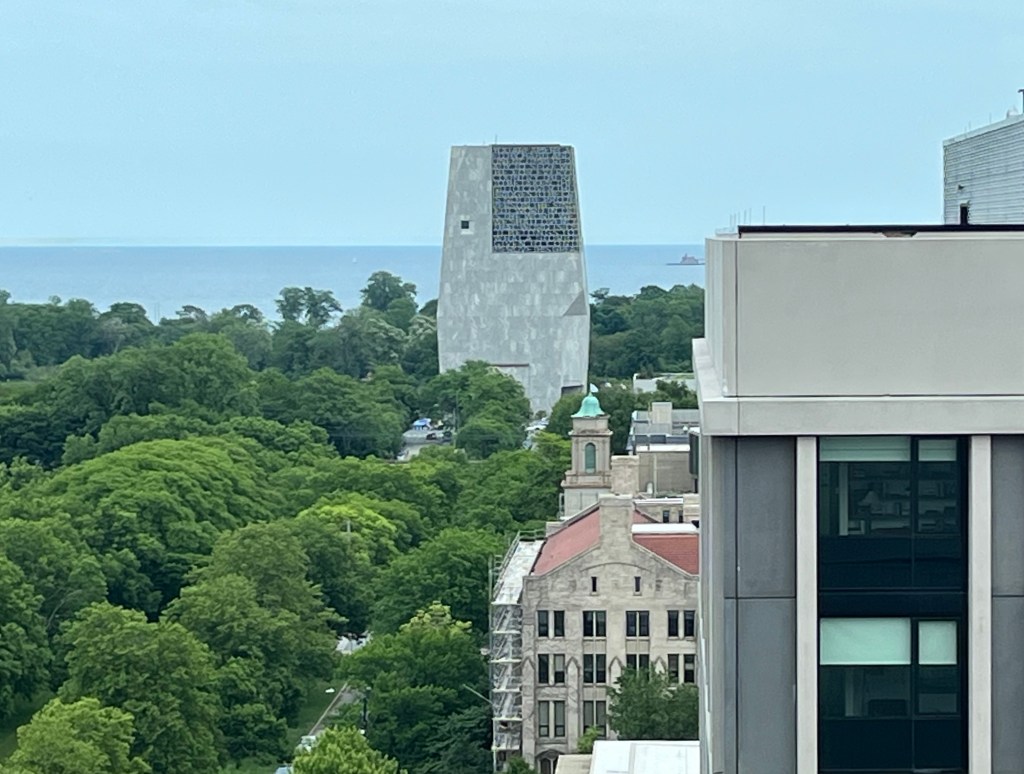
The CTA board vote on the budget amendment is simply a formality to acknowledge that the transit agency will be getting more money than expected last year.
The board also voted to amend the capital budget to account for new Congressional earmarks and other grant funding. That includes $1.8 million for South Side rail station concessions improvements, $2.5 million for improvements to the Halsted/79th Street bus turnaround, nad $1.2 million for upgrades to the Rockwell Brown Line station. It also includes $500,000 for improvements to Belmont Station in Lakeview, and $2 million to reduce slow zones on the notoriously delays-prone Blue Line Forest Park Branch. (That’s especially true on the portion that runs on the Eisenhower Express median between Western and Lathrop avenues.)
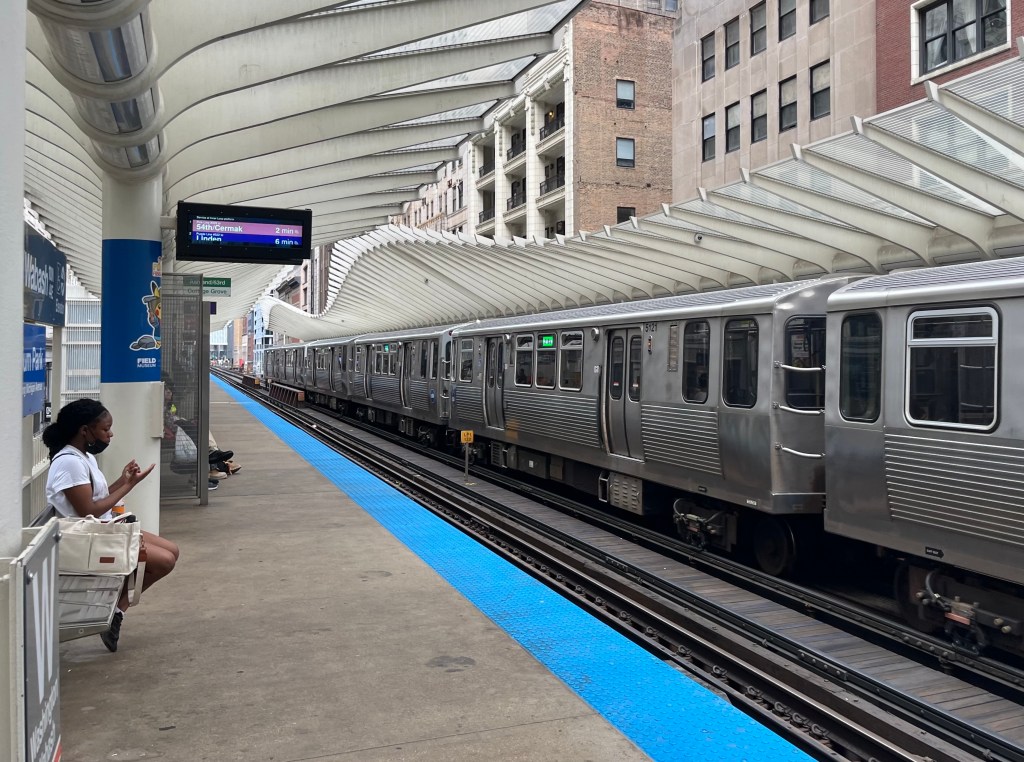
The CTA also got $900,000 in federal funding to add real-time arrival displays. And the RTA is allocating $$256,277 in Innovation Coordination and Enhancement funds to provide local matching funds to study the feasibility of reopening the ong-shuttered Racine/63rd Green Line station. (The RTA used to call this source “ICE funds,” but transit agencies have obviously been trying to avoid that loaded acronym recently.)
One of the mandates legislators tucked away in the NITA Act is the requirement that the Racine Station reopen (if not necessarily in its original form) at the start of 2029.
Director Roberto Requejo said that, while this allocation for the Green Line was helpful, he wonders where the money to handle the actual station restoration would come from. Leerhsen replied that this is something the CTA will urge the NITA board to spend some of the remaining new funding on.
Union criticism
During the public comment period, Amalgamated Transit Union Local 241, said that “the lack of a permanent president is creating a vacuum in leadership – it fails to address the significant [concerns about] safety.” He added that his union, which lobbied in favor of the transit bailout, “has consistently been excluded from discussions” about employee and rider safety. “These are employees who understand safety issues, they face them every day,”
“The current leadership vacuum has contributed to serious deficiencies in the training department,” saidEdward Smith, also of Local 241. “A department that was once regarded as a model for operator instruction has failed, fallen into disarray,.” He added that bus and rail operators are being sent to work without proper training, and “preventable accidents are increasing, and the recommendations of experienced instructors are too often ignored.”
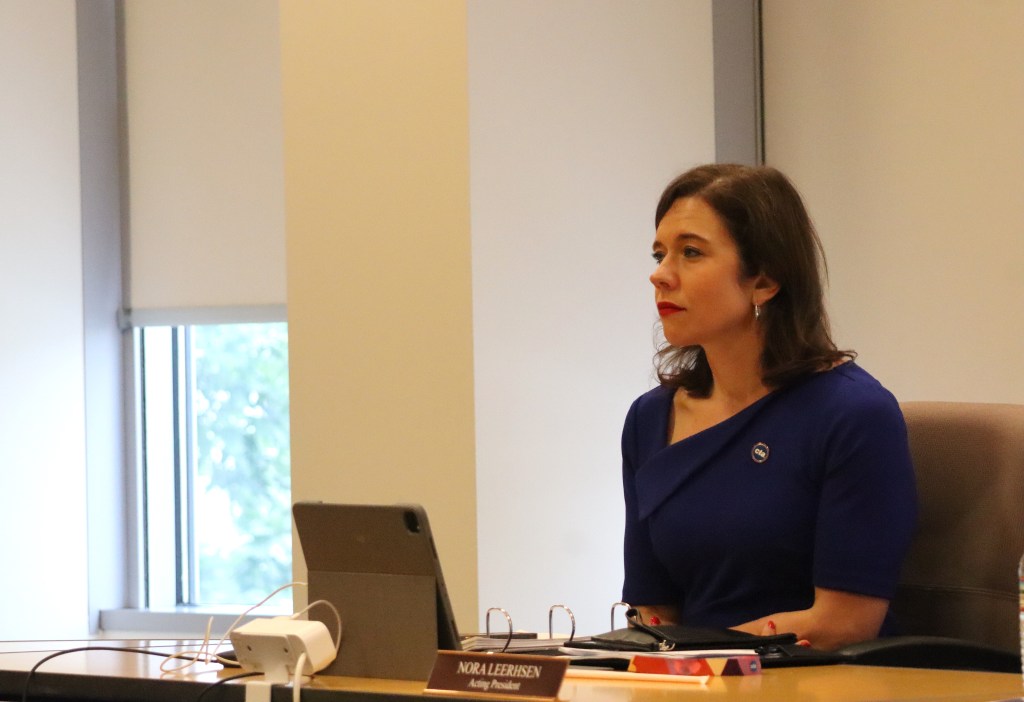
Leerhsen thanked them both for speaking, and she said that she appreciates their viewpoints. She pushed back on the idea that she wasn’t communicating with employees about safety but didn’t directly respond to other points Trimuel and Brown raised.
Other safety and ridership updates
In her regular board report, Leerhsen touched on some of the progress CTA has made, mentioning that bus ridership is around 90 percent of the pre-pandemic level and weekend ridership in particular is higher than before the pandemic. Some of it is due to broader shifts in public transit travel patterns – many public transit systems have seen growth in leisure travel, and CTA is no exception.
Leerhsen also touted public safety improvements, saying that crime dropped 30 percent systemwide this May compared to May 2025, and crime on the Red Line dropped 50 percent compared to May 2025. Violent crime on the Red Line dropped over 70 percent, Leerhsen added. She credited the growing presence of Cook County Sheriff deputies, and more Chicago police officers on buses and at bus stops.
Leerhsen also heralded new crisis intervention specialists and violence interrupters, who are expected to start riding the ‘L’ later this year. She described them as an “additional layer” of CTA’s crime reduction strategy. She noted that less lawbreaking in the system doesn’t just encourage more Chicagoans to take public transit. It reduces delays, making the ‘L’ more reliable. “This is not a victory lap – this is not over – but I continue to update you on [our progress],” she said.
Board director Neema Jha said that the stats Leerhsen cited show that “we have the power to change” the trends. She asked for regular updates on crime reduction “with actual numbers.”
Turning back to the union officials’ comments, boardm member L. Bernard Jakes said that there seemed to be “a disconnect” between what the board is hearing from Leerhsen and what they are hearing from employees. “There’s something missing, and I want to know what’s missing, so that everybody can shake hands and be on the [same] side,” he said. “I can’t say all of them, but I keep hearing – they don’t feel safe. And it doesn’t feel good.”
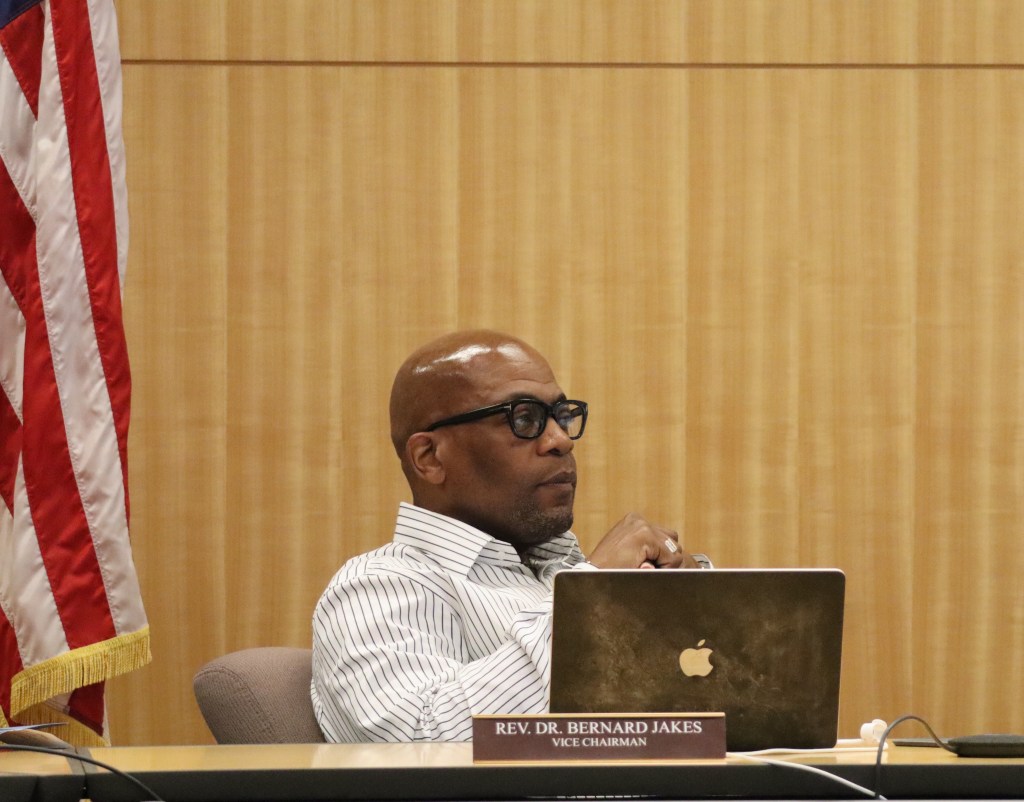
Leerhsen responded that there might be some nuance that doesn’t make it into her board reports, but she plans to present an update on safety, including employee safety, in July.
Director Lily Diego-Johnson, who was sworn in in May, said she would like to see a specific plan about how crisis intervention specialists are deployed, and generally a “long-term strategic plan” for social service and non-police crime reduction initiatives. Leerhsen said that she will touch on that as part of her July update.

On November 12, SBC launched our 2026 fund drive to raise $50K through ad sales and donations. That will complete this year’s budget, at a time when it’s tough to find grant money. Big thanks to all the readers who have chipped in so far to help keep this site rolling to the end of 2026! Currently, we’re at $33,836 with $16,164 to go, ideally by the end of June.
If you value our livable streets reporting and advocacy, please consider making a tax-deductible gift here. If you can afford a contribution of $100 or more, think of that as a subscription. That will help keep the site paywall-free for people on tighter budgets, as well as decision-makers. Thanks for your support!

Streetsblog has migrated to a new comment system. New commenters can register directly in the comments section of any article. Returning commenters: your previous comments and display name have been preserved, but you'll need to reclaim your account by clicking "Forgot your password?" on the sign-in form, entering your email, and following the verification link to set a new password — this is required because passwords could not be carried over during the migration. For questions, contact tips@streetsblog.org.