CTA: “Yes we can… extend the #10 bus to the Obama Center!” Service upgrades, safety concerns dominated the agency’s April board meeting

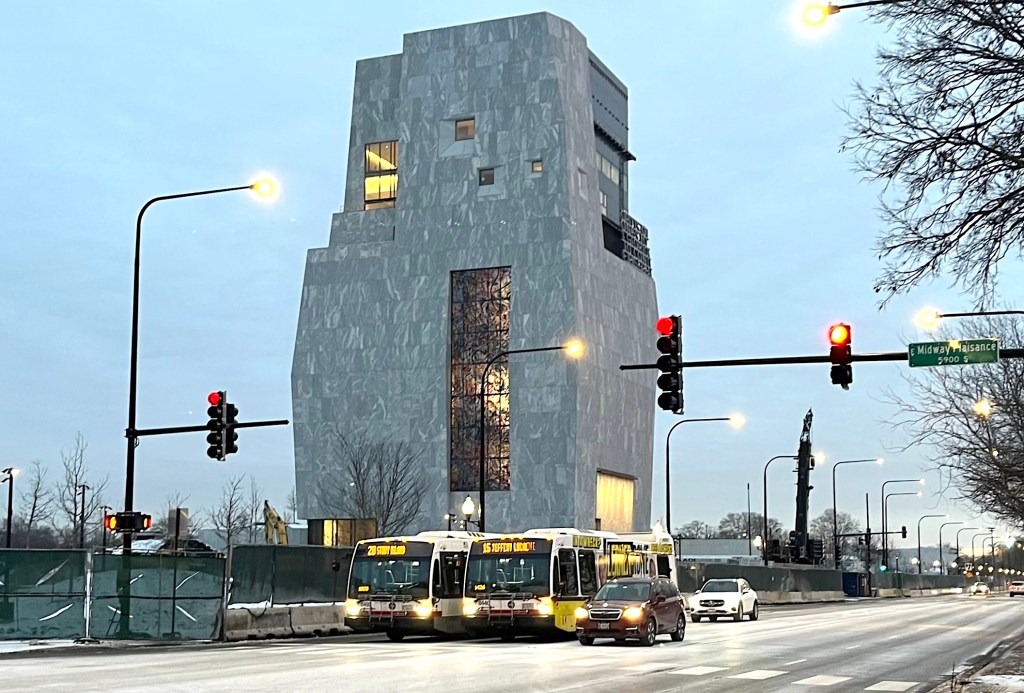

During during today’s monthly CTA board meeting, the directors voted to provide express service to Obama Presidential Center. They also changed the advertising policy to allow more alcohol advertising and explicitly banned religious advertising. In addition, they approved an agreement that will give CTA riders a $5 credit toward Divvy when they buy a monthly past. And concerns about crime on the ‘L’ once again came to the forefront as family and friends of a CTA shooting victim called on the agency to do more to improve safety.
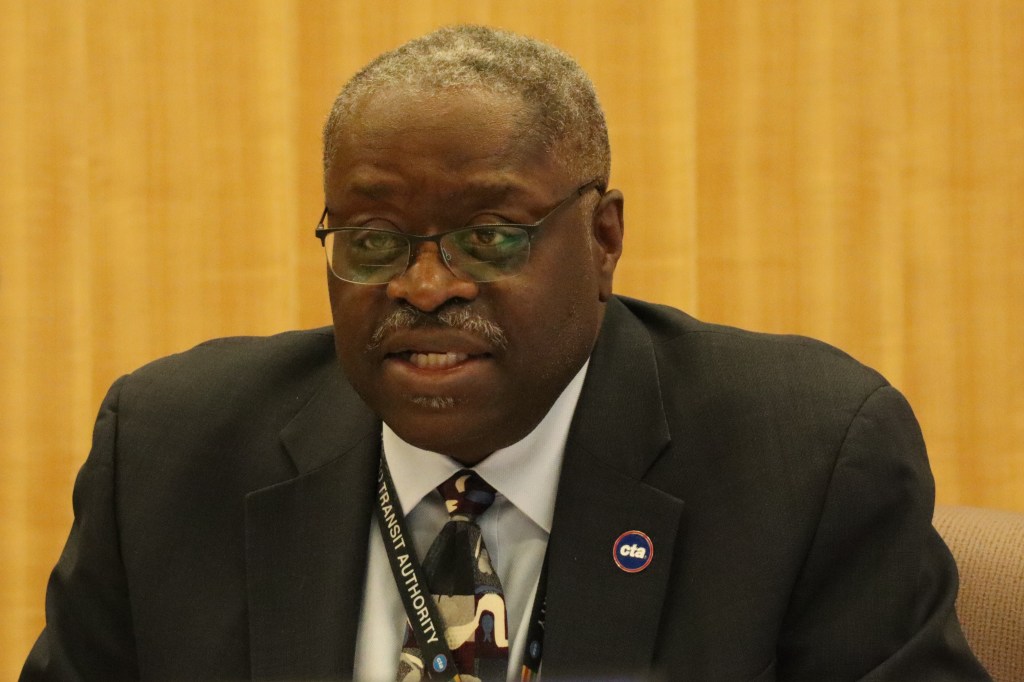
Only four out of the six current board members attended the April meeting – which meant that, when board member Rosa Ortiz stepped outside at one point, Board Chair Lester Barclay had no choice but to recess the meeting because he no longer had a quorum.
The board seat previously held by Michelle Lee remains unfilled. A new CTA board will need to be appointed by September as part of the Northern Illinois Transit Authority transition, and Chicago Mayor Brandon Johnson may well have decided to hold off on choosing new directors until then. But the April meeting shows how the vancy can still impede the board’s ability to conduct regular business.
“The Obama Bus“
CTA Route 10/Museum of Science & Industry currently travels between Water Tower Place and the museum, going express between 11th and 57th streets on DuSable Lake Shore Drive. Like many other routes that serve museums, it operates between Memorial Day and Labor Day, roughly between 8:55 a.m. and 4:40 p.m.
The board voted to make the route year-round, extending the hours to 6 p.m. and, most importantly, extending it to the Obama Presidential Center. The buses, which currently lay over at the museum driveway, will now lay over at the South Side YMCA near Jackson Park.
The changes will take effect on the Memorial Day weekend, a few weeks before the center is scheduled to open. The route will get a new, even longer name – “Route 10 Obama Presidential Center/Museum of Science & Industry Express.”
“I’m sure people would not call it that,” CTA Chief Innovation Office Molly Poppe told the board. “They will call it the Obama route, which is great.” The CTA estimates that the service changes will bring 410 more riders a day, or around 150,000 riders a year, which, she said, “is tripling the current ridership.”
As Poppe acknowledged, there are already several local and express CTA bus routes near the Obama Center site, and she acknowledged Metra Electric line, which provides faster connection from the Loop. She also noted that, once the 59th Street/University of Chicago Metra Station renovations, which will include restoring the 60th Street entrance, will make Metra an even more convinient option. Those renovations are currently expected to be completed by 2030.
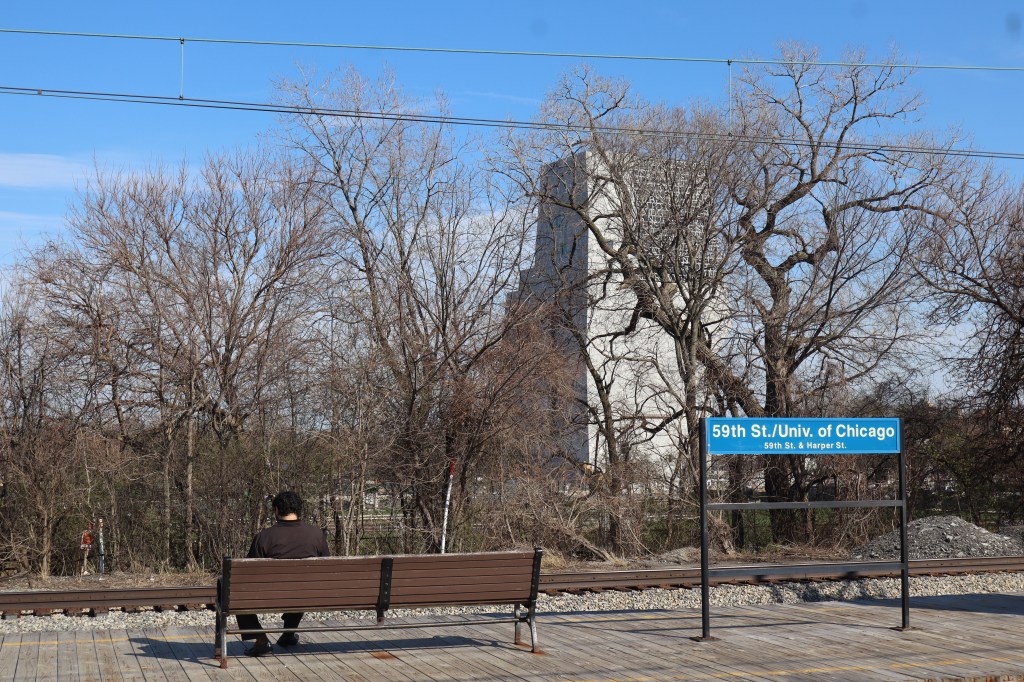
Asked how CTA plans to promote the new service, Poppe said that they are working with the presidential center to promote both Route 10 and Metra Electric as the best options to reach it. “They don’t have a whole lot of parking,” she said. “They are very much focused on suitability on the campus, so promoting transit is important to them.”
Poppe added that the CTA is working with the Chicago Department of Transportation to improve local stops along Stony Island Avenue between the two museums.
Elsa Gutierrez, the CTA’s Vice President of Scheduling and Service Planning, said the agency will keep an eye on ridership patterns for Route 10 and other line serving the center after it opens, and make adjustments if necessary.
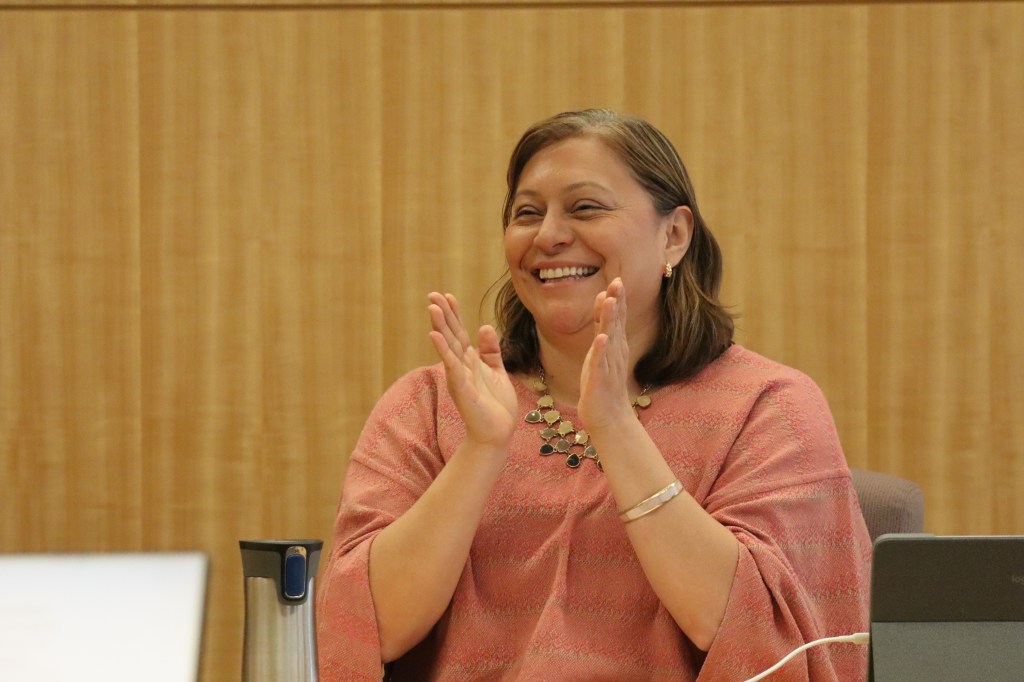
Ortiz lauded the Route 10 extension. “I think our ability to service the OPC, and all of the great benefits and assets that that’s going to bring to the entire city, is absolutely phenomenal,” she said. “So thank you for making that change. I’m excited to see it as a year-round service, and a lot more frequency, and helping connect a lot of our South Side assets.”
Advertising policy changes
The board also approved changes to the agency’s advertising policy. CTA Chief Financial Officer Tom McKone said that advertising is the second-highest source of system-generated revenue, after fares.
He told Streetsblog that the changes doubled the number of ‘L’ railcar wraps that advertised alcoholic drinks, from 15 to 30, and allowed bus wraps to advertise alcohol. There are some limits. Only up to 75 bus wraps at a time will be allowed, and they won’t be allowed on buses that originate from garages for divisions where at least 7.5 percent of all riders are students. McKone said that CTA has seven garages, and the ban will apply to routes originating at three of them: Forest Glen Garage on the Far Northwest Side, Kedzie Avenue Garage on the West Side and 74th Street Garage on the South Side. (Kedzie Garage, by the way, is within walking distance of Marshall High School.)
Another change is to add the language explicitly banning religious advertising. McKone said CTA’s goal is to only advertise commercial products and services. Another concern is that if they allow religious advertising, some advertisers could exploit the situation by claiming that hate speech is part of their sincerely held religious beliefs.
Ventra/Divvy Promotion
The board also approved an agreement with the City of Chicago to pilot what it describes as a “bundled fare product.” By the end of April, riders who have registered Ventra accounts and signed up for the promotion will get $5 Divvy bike-share credit every time they buy a 30-day CTA/Pace monthly pass.
Poppe said Divvy users who already have an annual membership won’ benefit from it but it will apply to Ventra customers who already “autoload” their 30-day passes every month. It will apply to riders who buy monthly passes at Ventra vending machines or add passes to their physical cards using the machines, just as long as they have their cards linked to Ventra accounts.
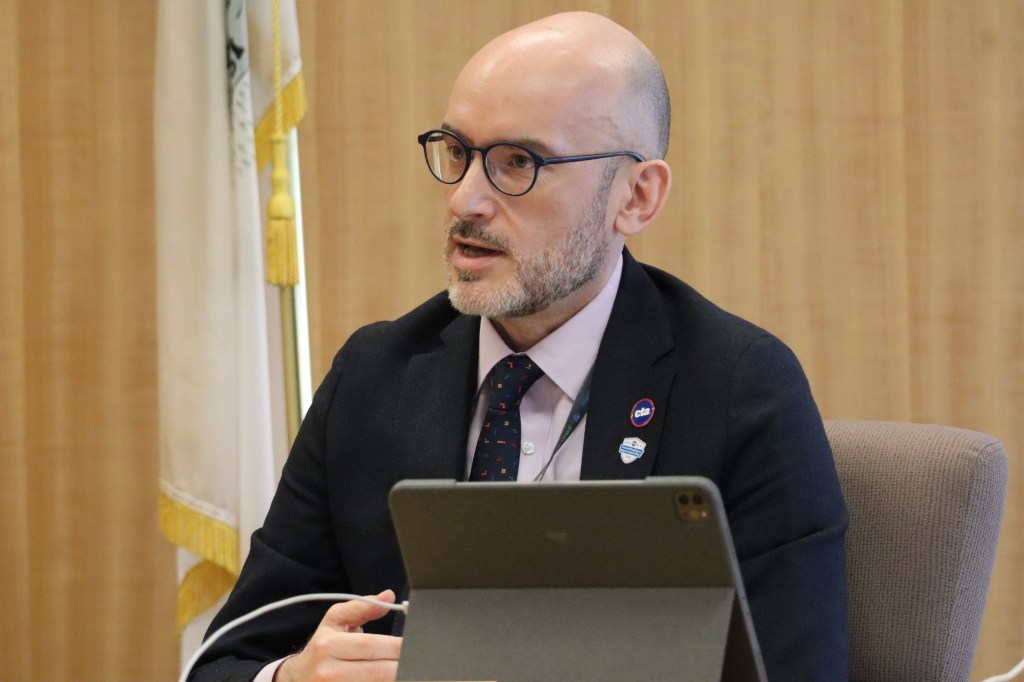
Board member Roberto Requejo asked how the CTA is promoting the new perk. Poppe said that, in addition to digital advertising and the social media outreach, they plan to advertise them at a handful of Divvy stations across the city. She said that, with some 1300 Divvy stations out there, CTA couldn’t advertise on all of them.
The return of the public safety concerns
During the public comment section of the meeting, friends and family of Raymond S. Harrison, who was killed in an altercation on the Pink Line train late last year, pushed for CTA to do more to make the transit system safer.
Harrison was killed on December 23 at around 1:22 a.m., while on a Pink Line train near the Washington/Wells station. According to the Chicago Police Department, he and another man were arguing with a third man who started swinging a knife. One of the first two pulled out a gun, but the third “gained control of the gun” and started shooting, hitting Harrison in the stomach. He was taken to Northwestern hospital, where he was pronounced dead.
Harrison’s wife talked about how living “two houses from the Pink Line” is a constant reminder of what she lost. “I haven’t slept,” she said. “My daughter is turning into an alcoholic. I’m putting back pieces I shouldn’t have to put back.” She said that Harrison’s death showed that CTA isn’t taking the security matters seriously.
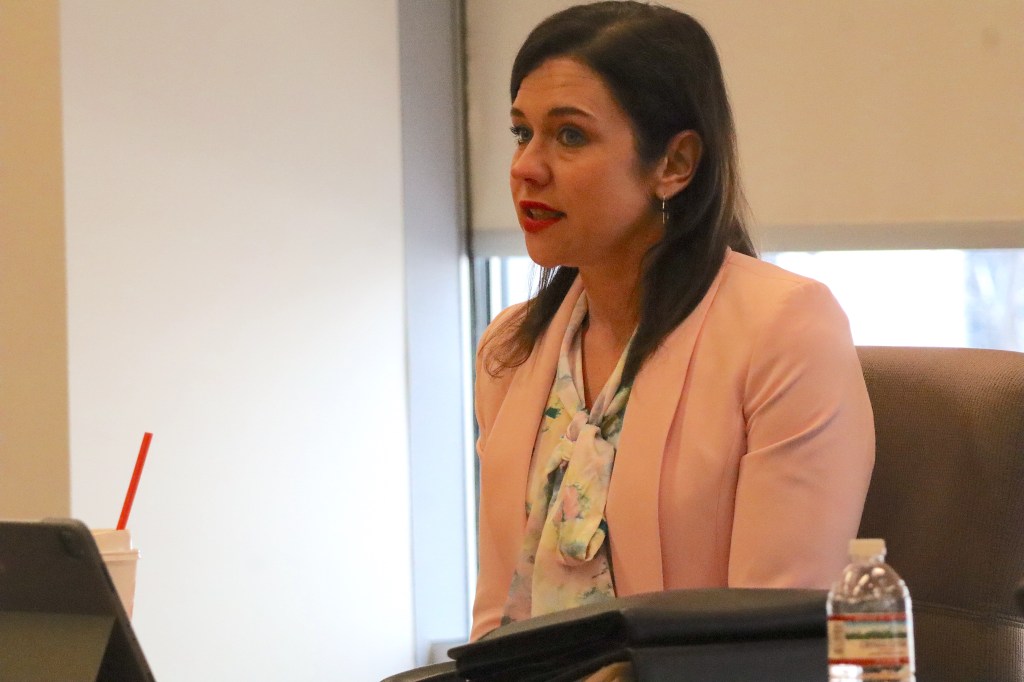
During the recess, CTA Acting President Nora Leerhsen approached the group and talked with them. After the meeting resumed, Barclay said that, while it’s necessary to be careful with words if there is a threat of litigation, the “human touch can go a long way.” Leerhsen agreed.
During her regular report, she mentioned that, when comparing March 2025 and March 2026, crime has gone down. She specifically said violent crime dropped by 30 percent and property crime dropped by 2 percent. But she also emphasized that those numbers don’t minimize the pain families like Harrison’s have experienced, or the progress the agency still needs to make.
Barclay reiterated what has become one of his regular points: Bringing down crime would bring back riders. “We know that we have a lot of work ahead to [restore] public confidence in the safety of our system,” he said. “We heard that loud and clear today in our public comments, as well as in the last few meetings.”
Requejo suggested that, as an interim measure, it might make sense to focus on a handful of stations to improve safety. “I mean, [I’ve spent] two years on the board and [there] hasn’t been a single month where someone hasn’t been killed or seriously harmed in our system,” he said.

On November 12, SBC launched our 2026 fund drive to raise $50K through ad sales and donations. That will complete this year’s budget, at a time when it’s tough to find grant money. Big thanks to all the readers who have chipped in so far to help keep this site rolling to the end of 2026! Currently, we’re at $30,496 with $19,504 to go, ideally by the end of April
If you value our livable streets reporting and advocacy, please consider making a tax-deductible gift here. If you can afford a contribution of $100 or more, think of that as a subscription. That will help keep the site paywall-free for people on tighter budgets, as well as decision-makers. Thanks for your support!
– John Greenfield, editor

Streetsblog has migrated to a new comment system. New commenters can register directly in the comments section of any article. Returning commenters: your previous comments and display name have been preserved, but you'll need to reclaim your account by clicking "Forgot your password?" on the sign-in form, entering your email, and following the verification link to set a new password — this is required because passwords could not be carried over during the migration. For questions, contact tips@streetsblog.org.