
If you've following Streetsblog Chicago's quest for holistic approaches (not just more policing) to encourage people not to smoke on CTA trains, you know why this is an important issue, and have read about my shenanigans on this front. If not, check out more links at the bottom of this post.
For this installment of this series, I'm passing the torch, or cigarette lighter, to contributing writer Igor Studenkov. As a native of Russia, he knows a thing or two about smoking. - John Greenfield, editor
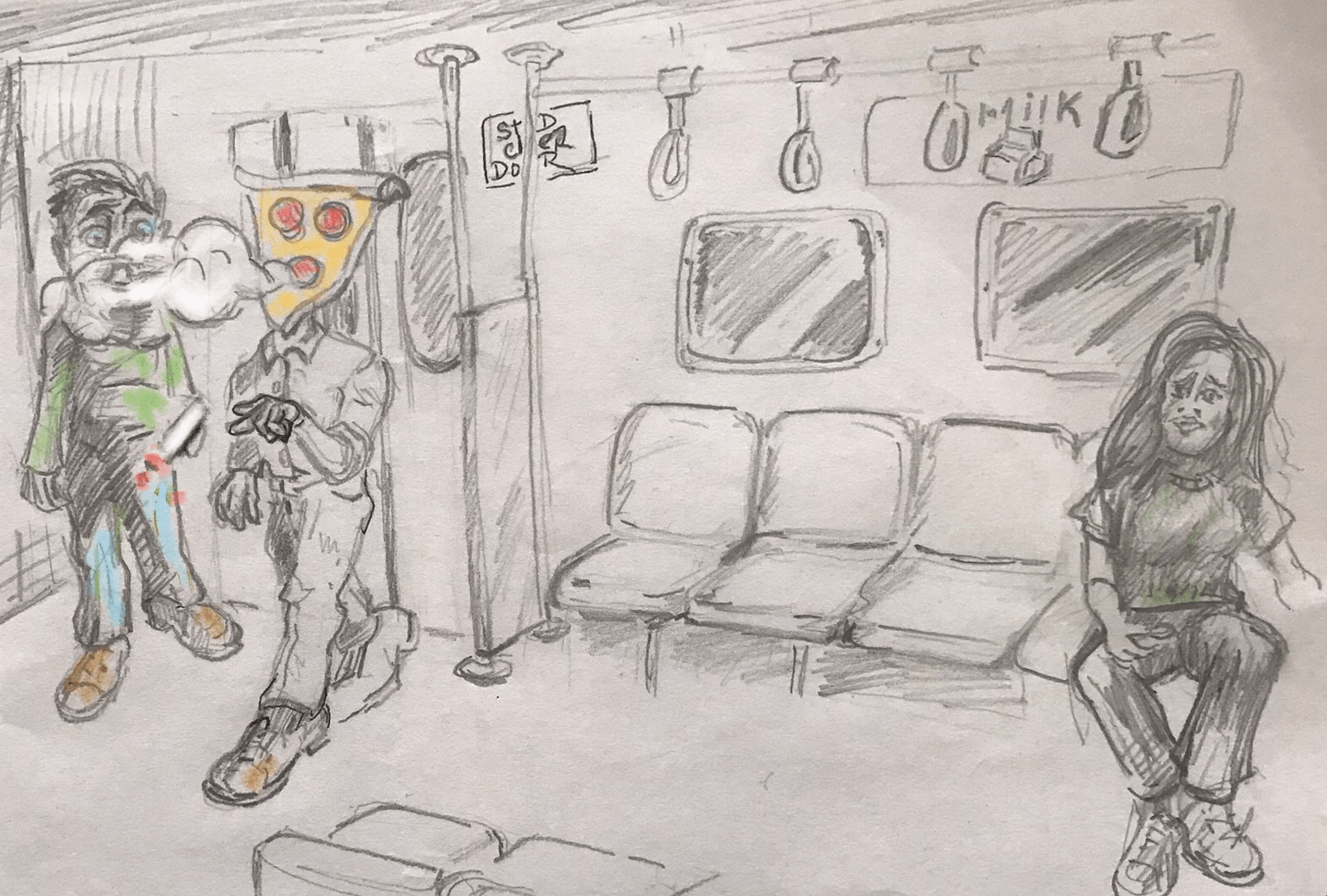
As the CTA tries to tackle the smoking on the 'L' problem, one rider is trying to at least make it easier for riders to avoid railcars with smokers.
Measuring the problem
In my experience, smoking on the 'L' isn’t a new problem. I covered the West Side for Austin Weekly News between July 2015 and January 2024 on a regular basis, and I rode the Blue and Green lines fairly frequently. Smoking was an issue on both of those lines, especially during off-peak and evening hours. But since the pandemic, when ridership plummeted, the problem has gotten worse, and it has spread to parts of the system that haven’t seen much smoking before.
The Respiratory Health Association submitted a Freedom of Information Act request to the CTA requesting smoking complaint and citation data. The transit agency didn’t provide the citation data, referring RHA to the Chicago Department of Finance and the Chicago Police Department. But the CTA did provide complaint data for a 16-month period from April 24, 2024 to August 17, 2025. The advocacy group recently shared its analysis of these statistics with Streetsblog.
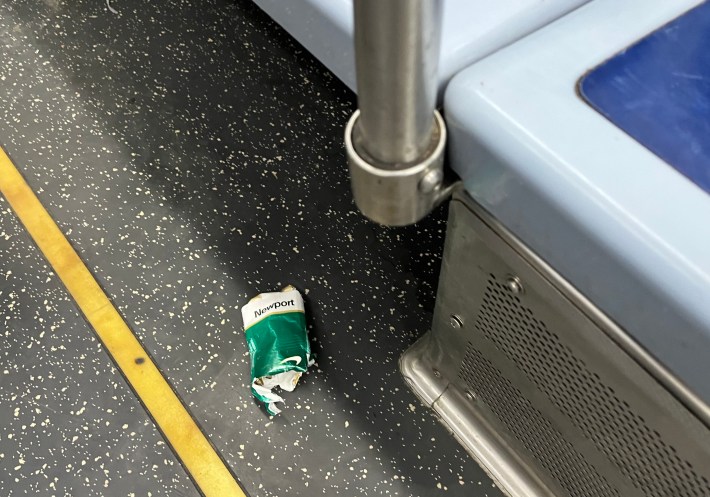
RHA looked at the reports that identified both the line and the station, which accounted for about 60 percent of the reports. Based on that analysis, about a quarter of the complaints came from just 10 of the system's 146 stations, all on the Red Line. The route's Fullerton and Belmont stops, which also serve the Brown and Purple lines, came in at the top. Clark/Division, North/Clybourn, Addison, Wilson, Cermak-Chinatown, Chicago, Grand and Sheridan, were the other complaint hot spots.
Oe thing that' not obvious: Are these the parts of the system where smokers are most prevalent? Or are these (almost entirely North Side) locations simply places where it's more common for people to report smoking?
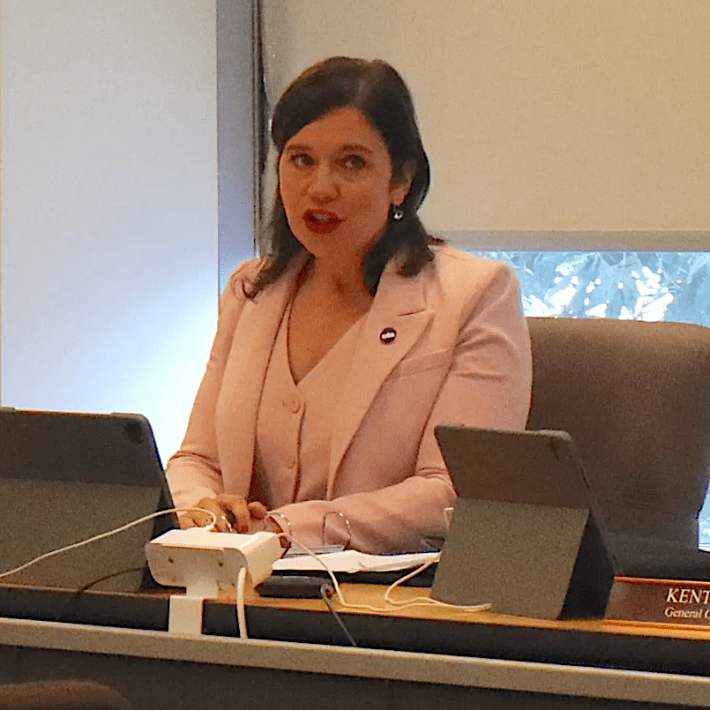
CTA Acting President Nora Leerhsen previously indicated in her reports that CTA uses its complaint data, as well as staff observations, to decide where to focus enforcement.
At the agency's January board meeting, the directors approved a year-long pilot of air filters for 'L' cars, arguably a Band-Aid solution to the cigarette problem. At that hearing, board member Roberto Requejo he wanted to see a strategy to prevent riders from smoking on trains in the first place. Leerhsen acknowledged that the agency should come up with a more comprehensive strategy. "This would be a good time to put it all together," she replied.
CTA Smokers tracker
Meanwhile, software engineer and regular CTA rider Logan Kulinski is trying to address the issue. He built the CTA Smokers website as a crowd-sourced, real-time tracker of which railcars have smokers. Anyone can submit reports, and they can to report the line, which direction the train is traveling in, the next station the train is approaching at the time of the report, and the railcar number (which is written at the end of each railcar). The reports then show up live on the front page.
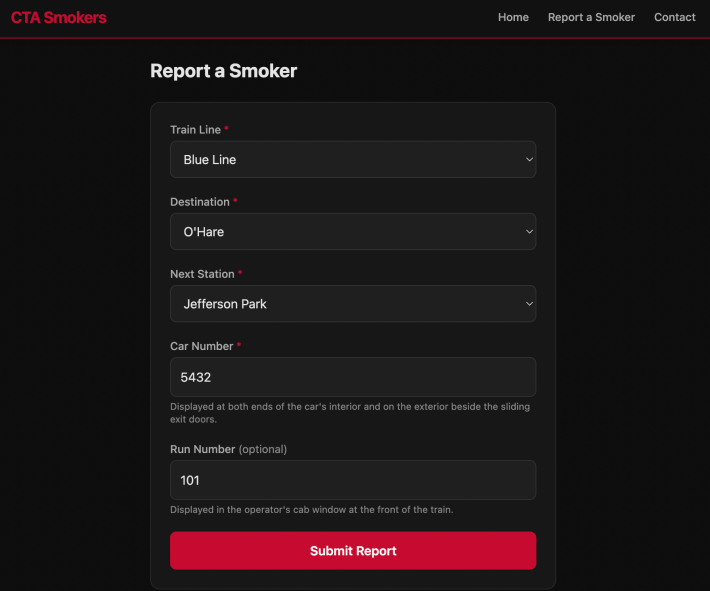
Kulinski said that what he really wants to see is for CTA to put up the complaint data in real time, or at least make that data publicly available. While the transit agency has been using the data to guide law enfocement surges, the only way anyone has been able to get the data for their own use is via a Freedom of Information Act request.
Kulinski has been riding the 'L' since he moved to Chicago in June 2021. He mostly rides Red and Blue lines, and occasionally the Brown Line. Kulinski described his experiences with smoking on the 'L' as "not great, but generally pretty okay," at least until recently. "I think definitely this year and toward the end of last year, it has gotten worse," he said.
Kulinski said that he submitted complaints to the CTA, seemingly to no avail. He also said that he was frustrated because he knew that the CTA was keeping track of smoking complaints, but the transit agency isn’t releasing them publicly.

"Even in terms of gaining access to the data, I made the FOA request to them, and they kept trying to narrow the scope," Kulinski said.
Kulinski that said he would like to see the CTA publish information about complaints in real time, but since that wasn’t happening, he decided to turn to crowdsourcing. "This sort of idea came about, to help myself and others avoid the smokers," he said.
In addition to showing complaints in real time, Kulinski said he was able to "reverse-engineer" the CTA contact page, which allows his site to forward those complaints to the agency. He added that he reached out to the agency about sharing his data directly but as of last Sunday, he hadn't received a response.
CTA Smokers has been live for about a month. Kulinski said he's received over 100 submissions. "The vast majority [of reports] has been on the [24-hour] Red Line and the Blue Line, which is not super-surprising," he said.
Kulinski said that he hopes that, as the project grows, "having this data be readily available and more public can help us hold our officials accountable."
Here's hoping that Logan's efforts to eliminate smoking in railcars are successful. If so, perhaps the CTA will honor him with an O'Hare Branch station name.
Look at the the CTA Smokers website here.
Investigate part four, in which I conduct an interview with a smoker, here.