All we are saying is give bus rapid transit a chance: Train-like service at a price we can afford
By Dan Gentile
This piece also runs on the website A City That Works, a newsletter about public policy in the Chicago region. Richard Day co-edits that publication, focusing on transportation issues.
Dan Gentile is a civil engineer.
Chicago’s bus network is the backbone of transit for many residents. CTA buses handle 40 percent more trips than the ‘L’, but rarely get equal treatment in discussions of the CTA’s woes or opportunities. That’s unfortunate, because investments in our bus network can have far-reaching benefits, especially for underserved areas of the city.
One particular investment, bus rapid transit, could dramatically improve bus speeds on some of our highest usage corridors. Investing in a BRT line on Western Avenue could dramatically increase speed, reliability, and ridership on one of our city’s key arteries. By making a targeted set of infrastructure improvements, we could get many of the benefits of a new CTA rail line at a fraction of the cost.
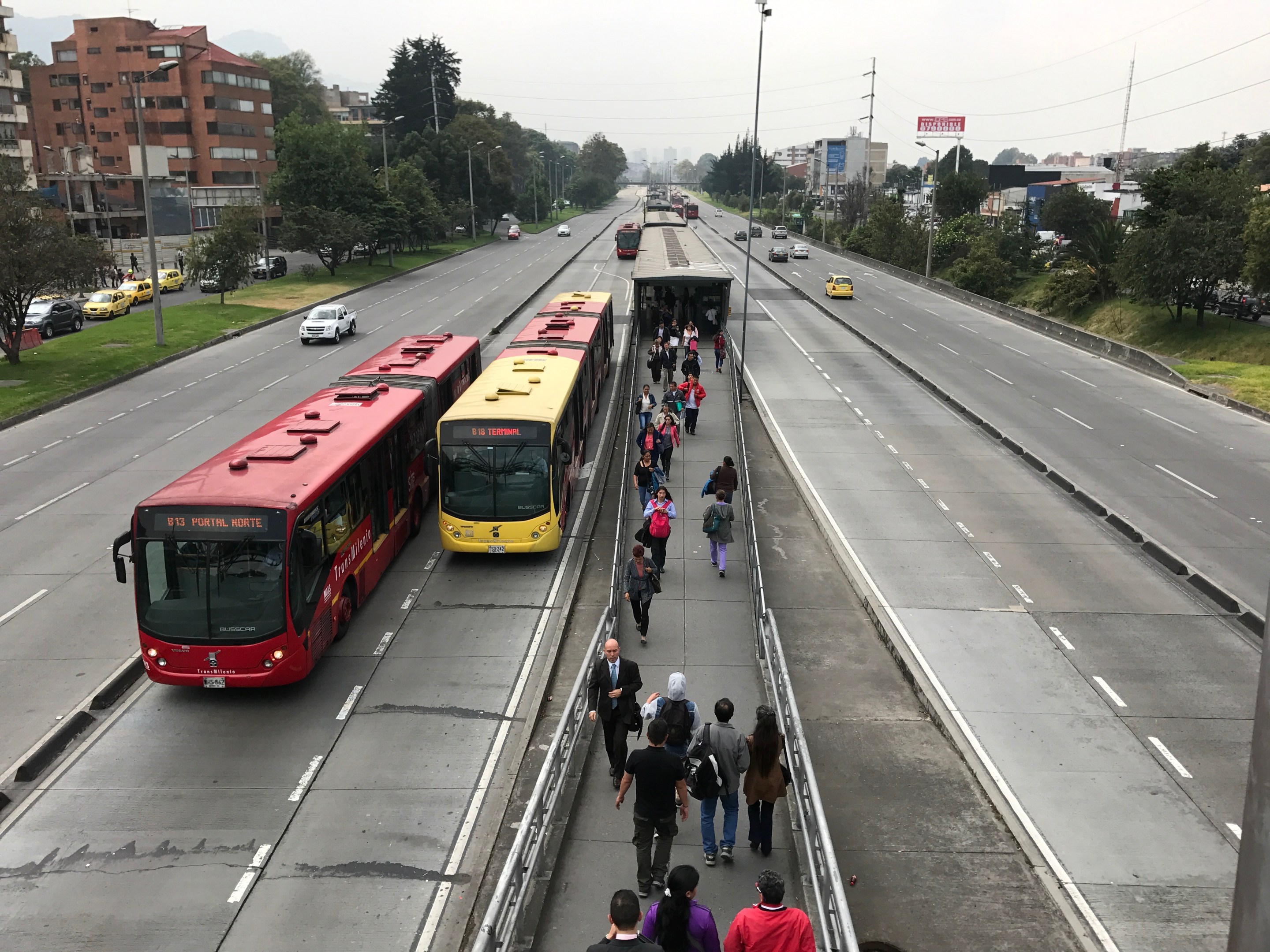
What is bus rapid transit?
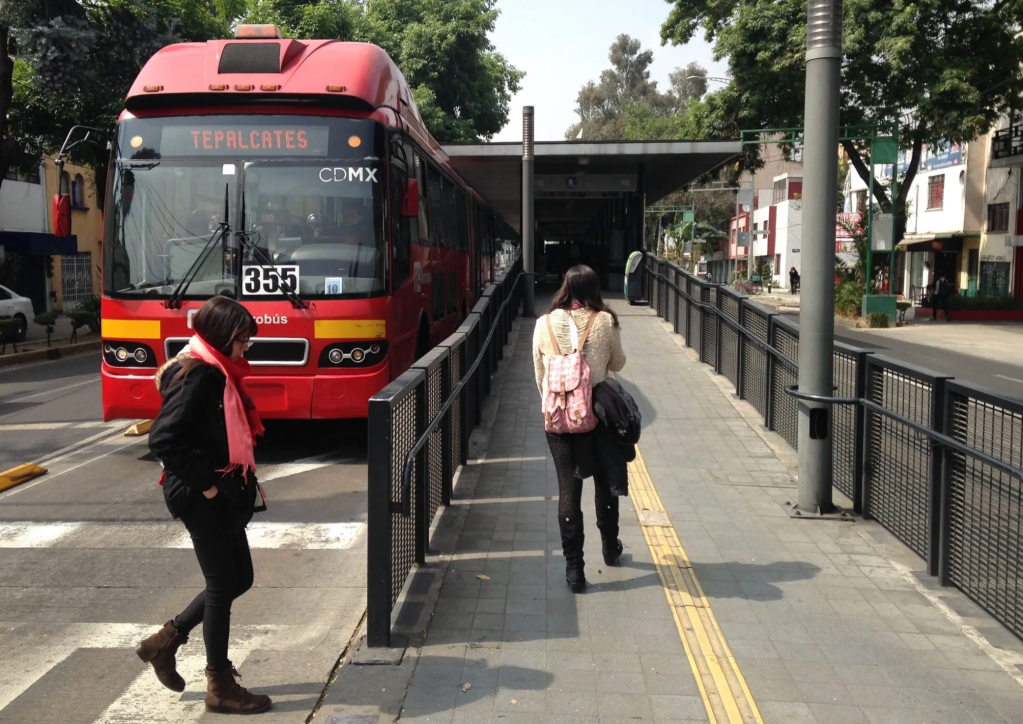
Bus rapid transit aims to deliver bus service with the speed, frequency, and reliability of train lines. Best-in-class BRT systems include five key characteristics. Those are dedicated (and enforced)1 bus lanes to speed travel, off-board fare collection to speed up boarding,2 and signal priority3 so buses spend less time stuck at red lights. Best-in-class BRT systems also need raised platforms, so buses don’t have to ‘kneel’ to allow riders with wheelchairs or strollers to board, and center-running lanes to minimize conflict with other traffic.
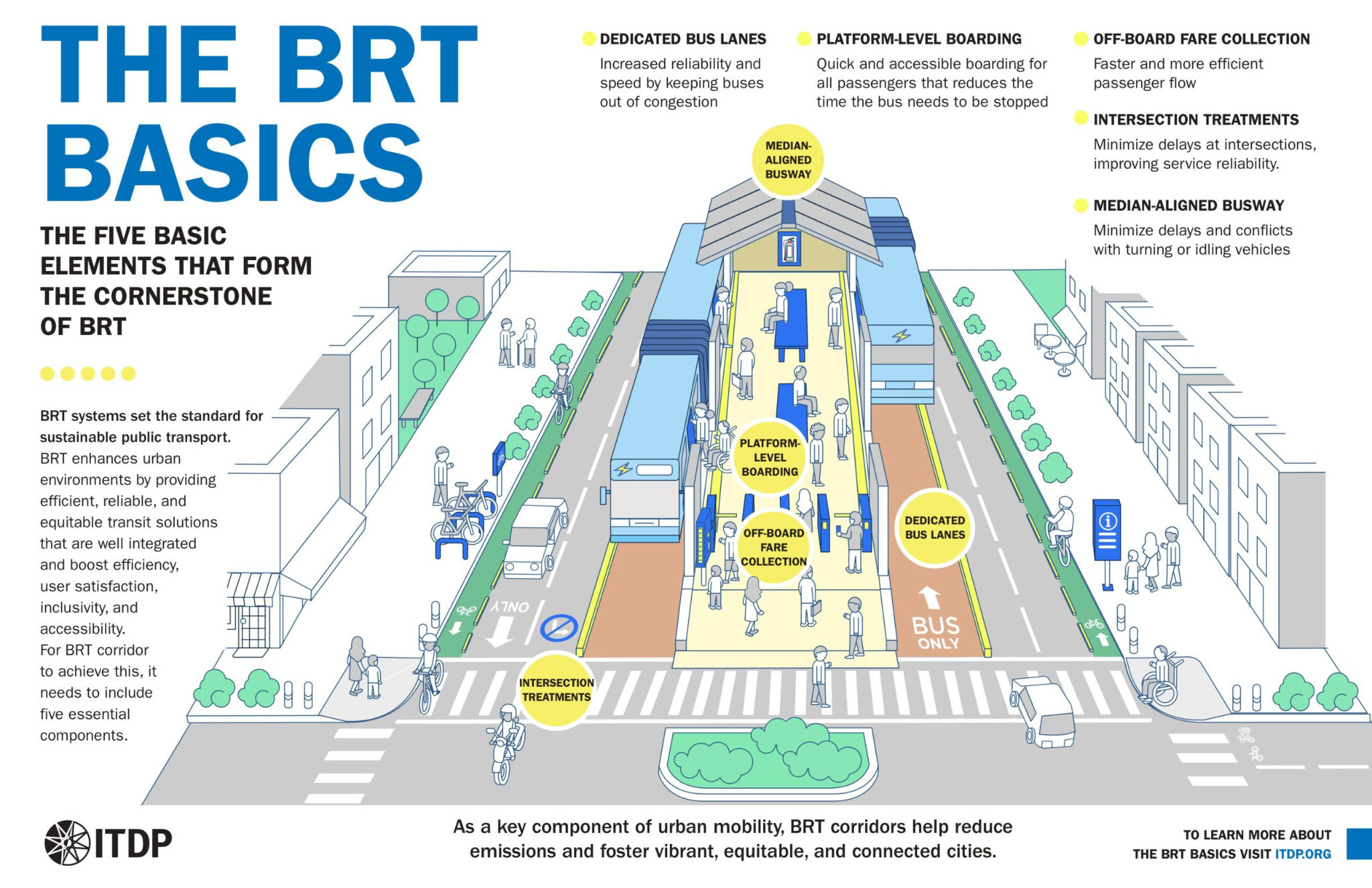
Institute for Transportation and Development Policy’s BRT Basics Diagram
Those changes net out to much faster and more reliable service. Previous studies have estimated that a BRT line on Ashland would increase reliability by 50 percent and speed by 83 percent. It would also cost less to run, because bus operators are moving riders instead of idling in traffic. A study of BRT on Western Avenue estimated that it would be 43 percent more cost effective than local bus service.
BRT is also a lot cheaper to build. BRT along Western was estimated to cost around $14M per mile (2026-adjusted from 2013), totaling ~$225M for the full 16-mile stretch. This is equivalent to roughly ¼ of one mile of the Red Line Extension, or half the renovation costs of the State/Lake Station.
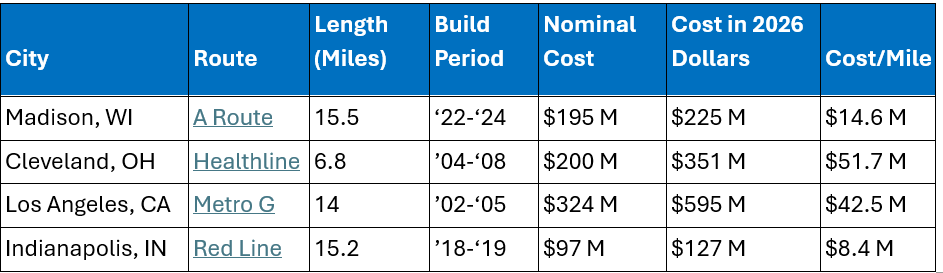
Compared to our current rail projects, this is a bargain. So what’s the catch?
Chicago’s failure and reckoning
Unfortunately, we’ve tried this before. In 2013, the CTA proposed BRT on Ashland Avenue. But the project ran into a wall of opposition.
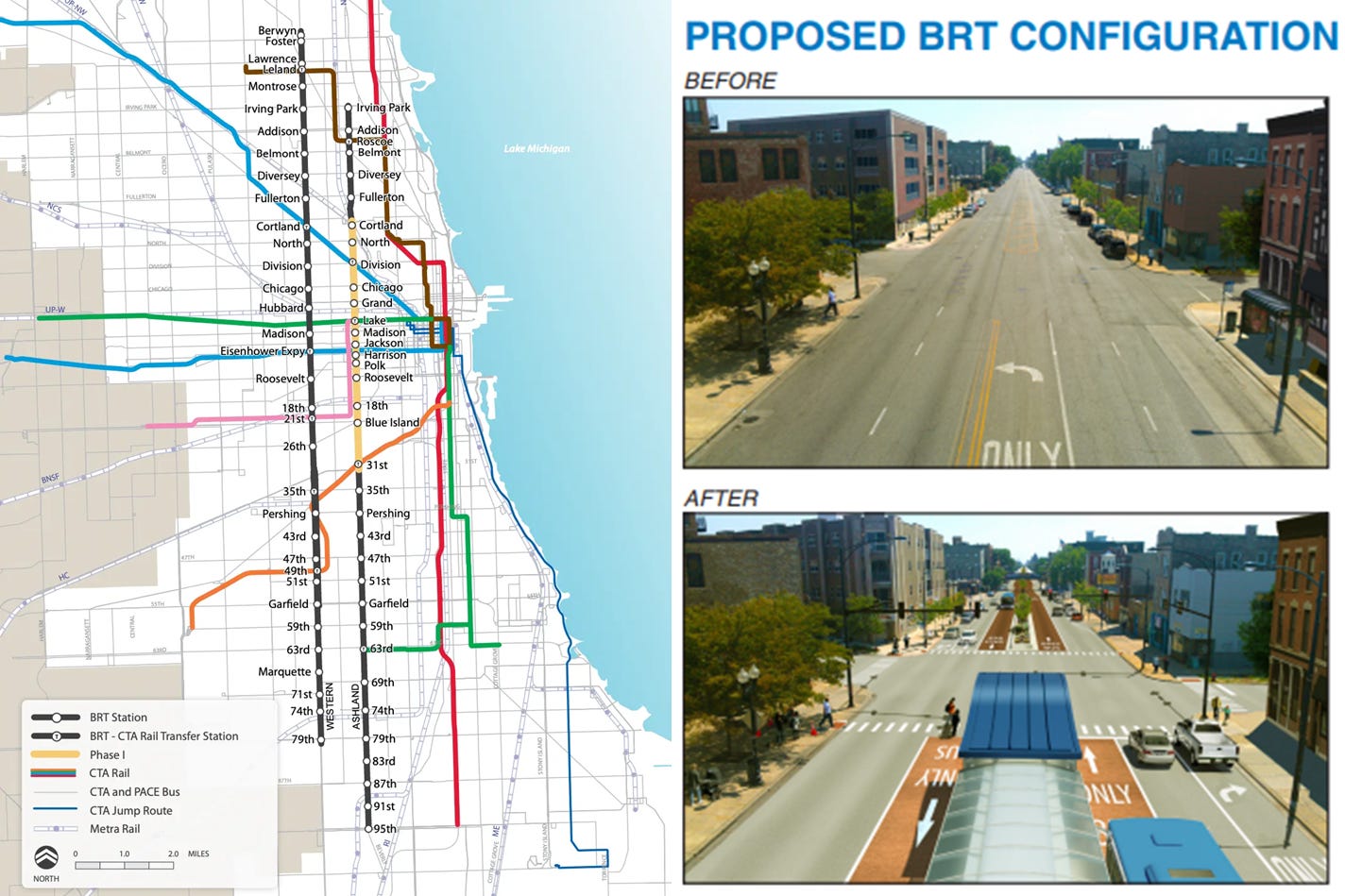
2013 Study of Western and Ashland BRT
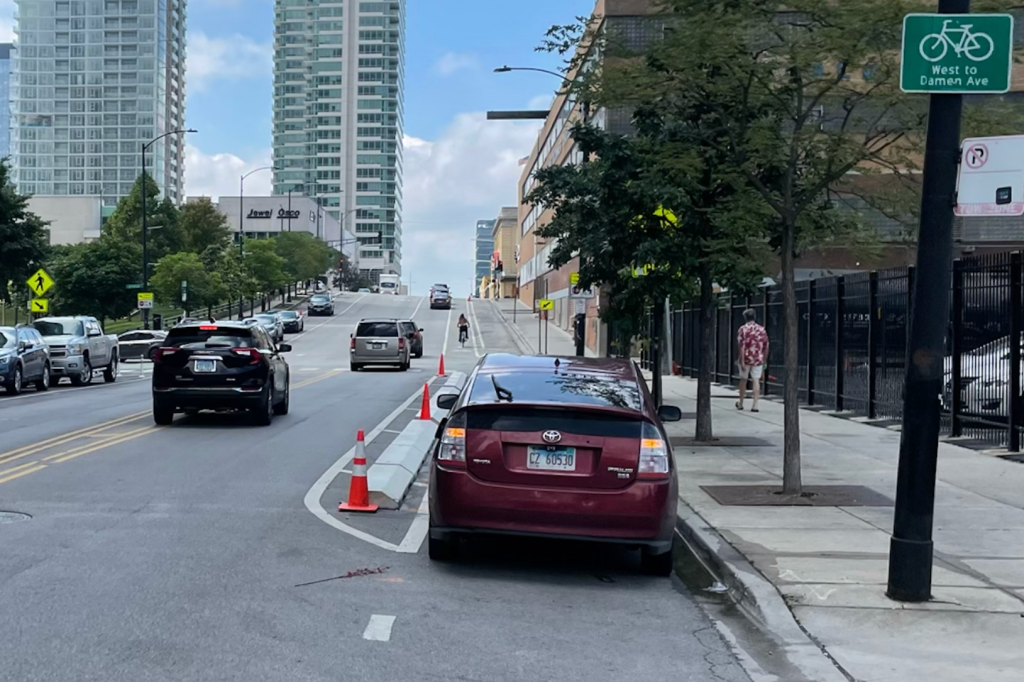
The challenge is that road space is zero-sum. To prioritize bus infrastructure, you need to reallocate space directly away from cars. Ashland’s design restricted left turns and set one lane in each direction. Although studies showed there would be a negligible reduction of vehicle speeds (1mph) and the design preserved 90 percent of parking spaces, that wasn’t enough for opponents.
Detractors worried that removing left turns and a travel lane would increase traffic and hurt business. Retailers including Costco coordinated efforts to oppose the project. Roger Romanelli, executive director of the dubious Fulton Market Association, led Not In My Back Yard-style opposition to the project under the banner The Ashland-Western Coalition.
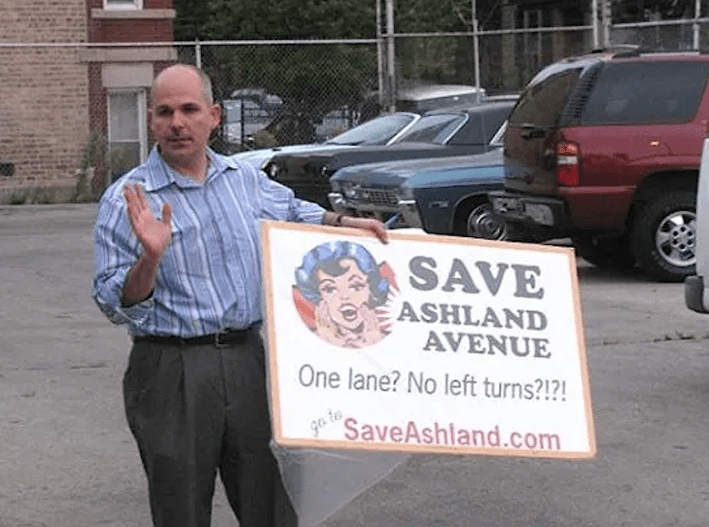
Anti-Complete Streets activist Romanelli at an Ashland BRT protest circa 2013. You didn’t think Streetsblog Chicago would publish this article without this image, did you? Photo: Mike Brockway
As negative sentiment grew, the project became a wedge issue in the 2015 elections. Aldermen from the 1st, 27th, and 32nd wards backed away from the project. After mayoral challenger Jesus ‘Chuy’ Garcia came out against the project, Mayor Rahm Emanuel essentially withdrew his support as well, and the project was indefinitely, probably permanently, back-burnered.
But while any renewed effort needs to meet Chicagoans where they’re at, it also needs to keep the crucial pieces of a BRT system. Sacrificing key elements like enforced, center-running lanes; comprehensive signal priority; and pre-paid boarding could lower community objections, but would also diminish benefits and undermine the long term value of the project. Loop Link, where these key features were left out, has not yielded consistent speed increases.
Lessons from other cities
To avoid repeating Ashland’s fate, leaders need to sell BRT as more than a bus project; it’s an economic development investment that delivers returns to businesses, residents, and the city’s tax base. We’ve seen this playbook succeed with other cities. In an assessment of Cleveland’s HealthLine BRT project, the Federal Transit Administration wrote that the project had “great political support because it was an investment not just in public transit, but also in… economic development and alleviating congestion.” The route delivers rail-like performance and has spurred billions in corridor development. An emphasis on public and business outreach helped educate and secure buy-in throughout the design and construction process.
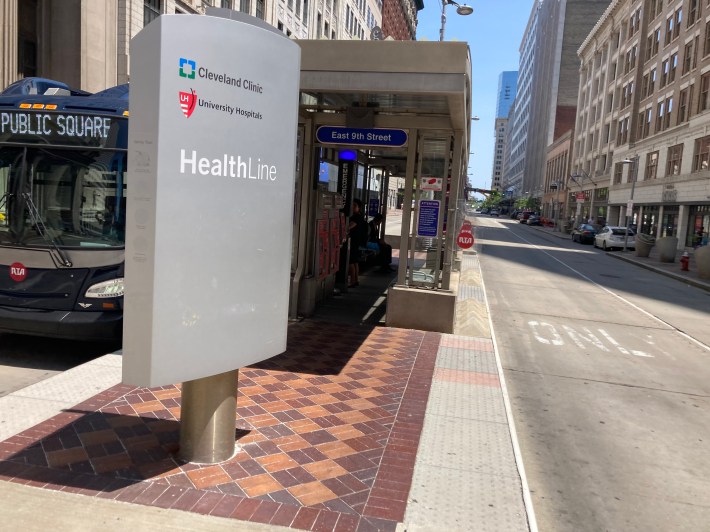
Cleveland also benefited from a strong regional approach. Cleveland’s Regional Transit Agency signed a formal interagency agreement with the City laid out a unified governance model, specifying strong design elements, directing clear roles for construction, and outlining funding contributions.4 This was crucial in getting the project moving with strong backing and accountability from the outset.

Tax-deductible donations from readers help Streetsblog Chicago continue to advocate for better walk/bike/transit in the region. Thanks for your support!
How to get BRT built this time
Fortunately, the conditions in Chicago have significantly improved since Ashland’s failure. Transit advocates are better organized, as are local advocacy groups fighting for equitable transit-oriented development. And recently, Chicago has embarked on a series of high-traffic corridor up-zonings near transit, including on Western north of Addison.
The CTA is also floating new designs as part of its ongoing Bus Priority Corridor Study that would preserve left turns at major intersections. This addresses a primary complaint about the Ashland project. Then-27th Ward alder Walter Burnett Jr. went so far as to say that “If the BRT proposal didn’t have those left turn restrictions, most of these people wouldn’t be here” opposing the idea.
Chicago also now has a stronger institutional foundation for BRT. The new Northern Illinois Transit Authority legislation has the opportunity to give a new proposal strong, unified backing that was missing in 2013. By explicitly requiring interagency BRT evaluation,5 the legislation positions NITA as the accountable champion with an opportunity to provide the sustained political cover and jurisdictional clarity that Ashland never had.6 But the success of any new BRT project will hinge on choosing the right corridor.
Western is the way
That corridor should be Western Avenue. Western already serves 4.7 million yearly bus riders. A BRT line would increase speeds by 82 percent and boost on-time performance by 50 percent. It also connects to five ‘L’ stations and four Metra lines. This is where the value of NITA might really shine – the CTA hasn’t been particularly invested in supporting Metra ridership, but the new regional capital planning agency will be.7
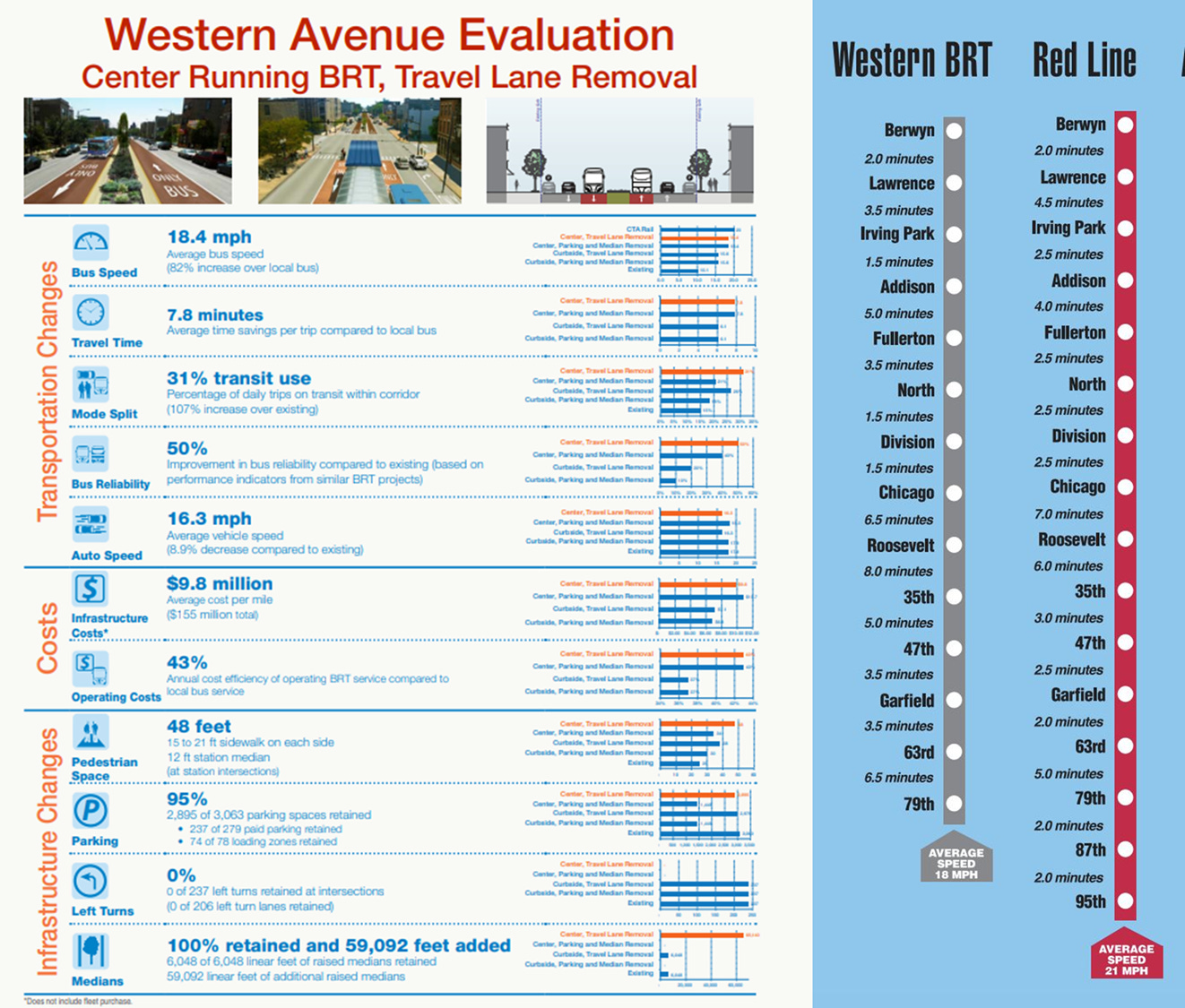
The line also has strong political support. In 2024, Aldermen Matt Martin and Andre Vasquez organized a letter from 17 of the 18 aldermen along the corridor explicitly calling for BRT. That’s a strong place to start. As they noted, a BRT line on Western would only move a couple miles per hour slower than the Red Line: effectively creating another north-south line for pennies on the dollar.
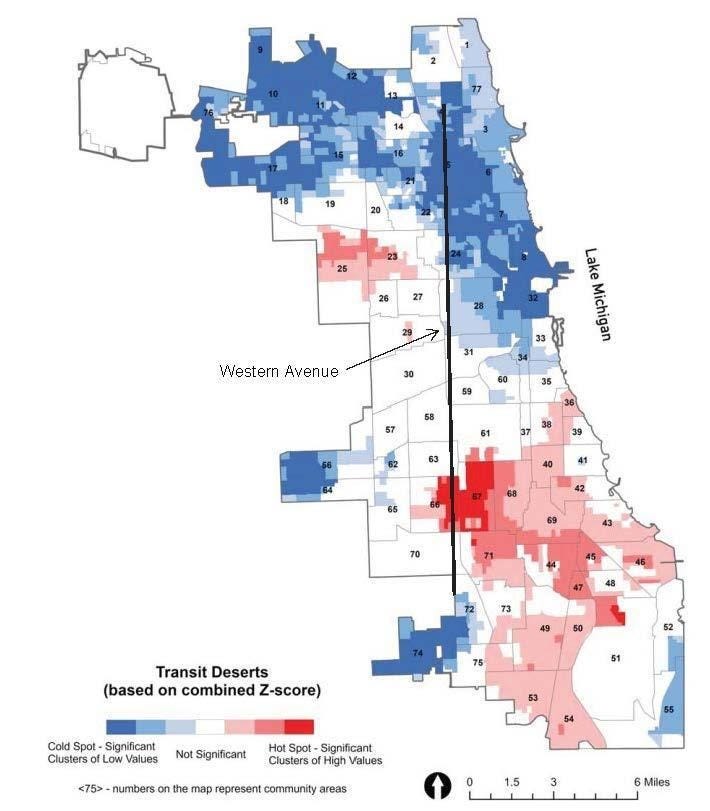
Western BRT would elevate regional mobility and create a new economic spine, supporting neighborhood‑level investment. This especially matters in areas suffering lingering consequences from decades of racialized disinvestment An analysis of socioeconomic mobility and transit deserts identified a ‘hot spot’ of poor transit access near Western Ave in Community Areas 66 and 67 (Chicago Lawn and West Englewood) that a Western route would directly address.8 Notably, this analysis just looks at the benefits of stronger connections within the city – it doesn’t account for the increased access South Side residents would have to job centers in the western suburbs, for example.
Pulling together the resources will be challenging, but it will cost a lot less than other major infrastructure investments. Given the low-price tag, federal dollars might not even be required.9 If we can keep costs even in the ballpark of the prior $225M estimate, a combination of local grants, Tax Increment Financing dollars, and new NITA capital funds can probably do the job – and allow us to move much faster than we might with federal money.
Unfortunately, since the City Council letter in 2024, neither Mayor Brandon Johnson nor the CTA has pushed to make true BRT on Western a reality. It probably doesn’t help that we’re operating without permanent leadership at both the CTA and Chicago Department of Transportation.
Now is the time to act. The CTA and CDOT should begin planning now for a new Western BRT Line, and it should be a high priority for the new NITA leadership later this year.10 As Chicago enters a new era of transportation patterns and regional oversight, a Western BRT line offers a golden opportunity to demonstrate that we’re still capable of delivering for riders.
Special thanks to the following individuals and organizations for providing their time and insights for this article:
- Richard Day at A City That Works
- Jennifer Henry and Maddie Kilgannon at CTA
- Jim Merrell at Active Transportation Alliance
- Erica Schroeder at CDOT
- Audrey Wennink and Hugo Coronado at Metropolitan Planning Council
- Noah Wright and Brian Harrington at Chicago Growth Project
- Steven Vance at Streetsblog Chicago and Chicago Cityscape
1 Without enforcement, drivers just clog the lane and speeds don’t improve. The good news is that the City’s recent Smart Streets pilot enforcement of dedicated lanes has shown some promise. Since the program began in 2024, 87% of drivers who received a warning have not committed another offense. By creating a real disincentive for the behavior, CTA data has shown it effective in reducing repeat offense.
2 Paying at a station decreases time spent scanning payment when boarding, increasing service speed. Pre-paid boarding was piloted but ultimately abandoned twice in 2016 with the Loop Link and at the Belmont Blue line stop, increasing boarding speed by 56.
3 Coordination of traffic lights, called signal priority, extends greens or shortens reds for buses. It allows faster and more reliable bus service. CTA Bus Priority Zone project includes signal priority to improve bus service, implementing light timing optimization and queue jump signals. This has been implemented in some parts of the city, like in Loop Link, 79th street, Ashland, and Chicago Ave. Notably, this is different from traffic signal preemption, which overrides signals to always move transit first like at a rail crossing. CTA is not considering this extent of priority. Signal priority directs pedestrians and turning vehicles in a safeguarded sequence. Boston’s Columbus Ave route “saw a 27 percent decrease in roadway injuries.”
4 The 2003 Interagency Agreement between the Greater Cleveland Regional Transit Authority and the City of Cleveland was pivotal. It reduced jurisdictional friction by clearly defining design requirements and implementation roles. GCRTA led transit operations, vehicle procurement, and fare systems, while the City handled street reconstructions, utility relocations, and traffic management. It enhanced accountability with enshrined dispute resolution via mediation to maintain momentum, and provisions for long-term maintenance and community revitalization tie-ins.
5 The 2025 SB2111 ‘NITA’ legislation creates the Northern Illinois Transit Authority. It was enacted as a broader effort to fund transit and reorganize management, setting the tone for continued Chicagoland investment at the state level. The bill Sec. 2705-592 includes an explicit requirement for respective agencies to support NITA “in the implementation of bus rapid transit and priority”.
6 Jurisdictional clarity is critical for Western Ave, as varying road sections fall under CDOT, the state, and Cook County. Similarly, memorandums of understanding need to be developed to clarify work around or affecting utilities like gas, electrical, and water
7 New NITA Capital Projects will be prioritized based on factors like economic improvements, equity analysis, mobility justice, additional access to key destinations, rail transfers, reliability improvements, and more (See Sec 2.39). Ashland’s proposal had the same number of CTA ‘L’ connections (5), but only 3 existing Metra connections compared to Western’s 4. Not to mention infill potential on the SWS, HC, UP-W, and UP-NW. The bill elevates the connectivity that a Western route could readily provide.
8 A Journal of Urban Planning meta-analysis determined that “these deserts disproportionately impact low-income, aging, and minority communities, exacerbating existing social and economic inequalities.”
9 Federal funding requires a complicated and lengthy undertaking to earn competitive dollars from a currently hostile administration. Use of federal grants can be more effective with quickly built BRT projects, lessening risk of disruptive political shifts during a lengthy project like with RLE. It is undetermined if federal funding would be needed to front the capital burden of gold-standard BRT, but there is precedent in meeting eligibility requirements. Under the Biden administration, Madison’s 2023 ‘A’ Line received FTA capital grants. They award funding on a variety of factors including ‘economic development’ ratings compared to their cost, and ‘mobility improvements’ for transit-dependent populations and connectivity with other transit modes. Land use reform is part of the analysis, and with the city’s 2022 corridor study and 2024 upzoning, Western BRT would easily meet these requirements.
10 NITA takes effect June 1, 2026 and will require a transition period from RTA leadership. A regional plan has not yet been created, giving an opening to include Western. Bus rapid transit on Ashland is included in CMAP’s onto 2050 regionally significant projects. With a new dedicated revenue source via motor fuel and sales tax reallocation in the $1.5B legislation and $180M/yr capital budget, there is room for new NITA capital projects that fit the bill.
On November 12, SBC launched our 2026 fund drive to raise $50K through ad sales and donations. That will complete this year’s budget, at a time when it’s tough to find grant money. Big thanks to all the readers who have chipped in so far to help keep this site rolling to the end of 2026! Currently, we’re at $29,689 with $20,311 to go, ideally by the end of April
If you value our livable streets reporting and advocacy, please consider making a tax-deductible gift here. If you can afford a contribution of $100 or more, think of that as a subscription. That will help keep the site paywall-free for people on tighter budgets, as well as decision-makers. Thanks for your support!
– John Greenfield, editor
Streetsblog has migrated to a new comment system. New commenters can register directly in the comments section of any article. Returning commenters: your previous comments and display name have been preserved, but you'll need to reclaim your account by clicking "Forgot your password?" on the sign-in form, entering your email, and following the verification link to set a new password — this is required because passwords could not be carried over during the migration. For questions, contact tips@streetsblog.org.