A conversation about Chicago pedestrian safety issues with Marc Sims from “Just a Few Questions”

Marc Sims hosts the video chat show podcast “Just A Few Questions,” with the stated goal that his interviews about recent events “will make people think.” He invited me to join him Sunday morning to talk about efforts to prevent serious and fatal pedestrian crashes in Chicago.
Here’s a transcript of our discussion, with links to previous Streetsblog Chicago articles on this topic, plus other source material. I’ve edited it for clarity and brevity, and corrected a few of numbers I misremembered during our Zoom.
Marc Sims: John Greenfield, I’m so glad you’re here. Welcome to the show.
John Greenfield: Thanks for having me.
MS: I was reading Streetsblog Chicago, and there were a lot of pedestrian deaths last year, and a lot them were a few miles from my house. Tell us about it.
2025 Chicago pedestrian fatalities
JG: Sure. We just did our final count of pedestrian fatalities on Chicago surface streets, so that doesn’t include the expressways. That’s based on a few different sources, including local news reports, which I check every weekday morning for Streetsblog Chicago’s daily headline stack. Also the Chicago Police Department’s [Media Major Incident Notifications]. And the Chicago Department of Transportation puts together reports every month on crashes. Streetsblog Chicago cofounder Steven Vance also does [the Chicago Crash Browser], and sometimes I miss things through the other sources that he finds.
So the final number for last year, 2025, was 36 pedestrian deaths, and there were also two bicycle fatalities last year. So that’s that’s slightly lower than the number of pedestrian fatalities in 2024 which was 38, plus five bike fatalities. That’s good, but we’re still a long way to go before we meet the City of Chicago’s Vision Zero goals, to completely eliminate serious and fatal crashes. [Originally the target was to do that by 2026.]
MS: And what are some of the causes for pedestrians being killed on the roads?
JG: One thing we found is about half of the fatal pedestrian crashes last year were hit-and-run collisions. The CDOT monthly crash reports often tell you what factors were involved, like whether the crash was a hit-and-run, whether there was speeding, whether there was a large vehicle involved, things like that. And so those are all things that come into play.
We really want people to go at safer speeds. Last year in City Council, there was a vote over whether to lower Chicago’s default speed limit from 30 miles an hour to 25 miles an hour. That’ what they did in New York and a few other of Chicago’s peer cities, and they found that really helped lower the number of pedestrian fatalities. Like in New York, after they did that, they found they had the lowest pedestrian fatality rate in 100 years.
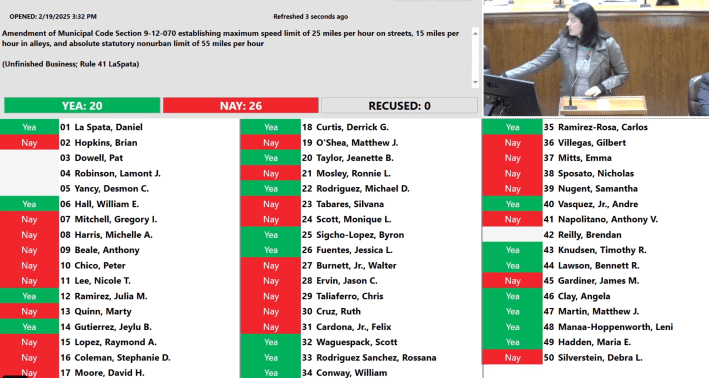
Most of the final Chicago speed limit vote last February.
Unfortunately that ordinance didn’t pass in Chicago’s City Council. A few more alders voted against it than for it. So hopefully they’ll bring back that initiative soon.
MS: Are bigger vehicles part of the problem?
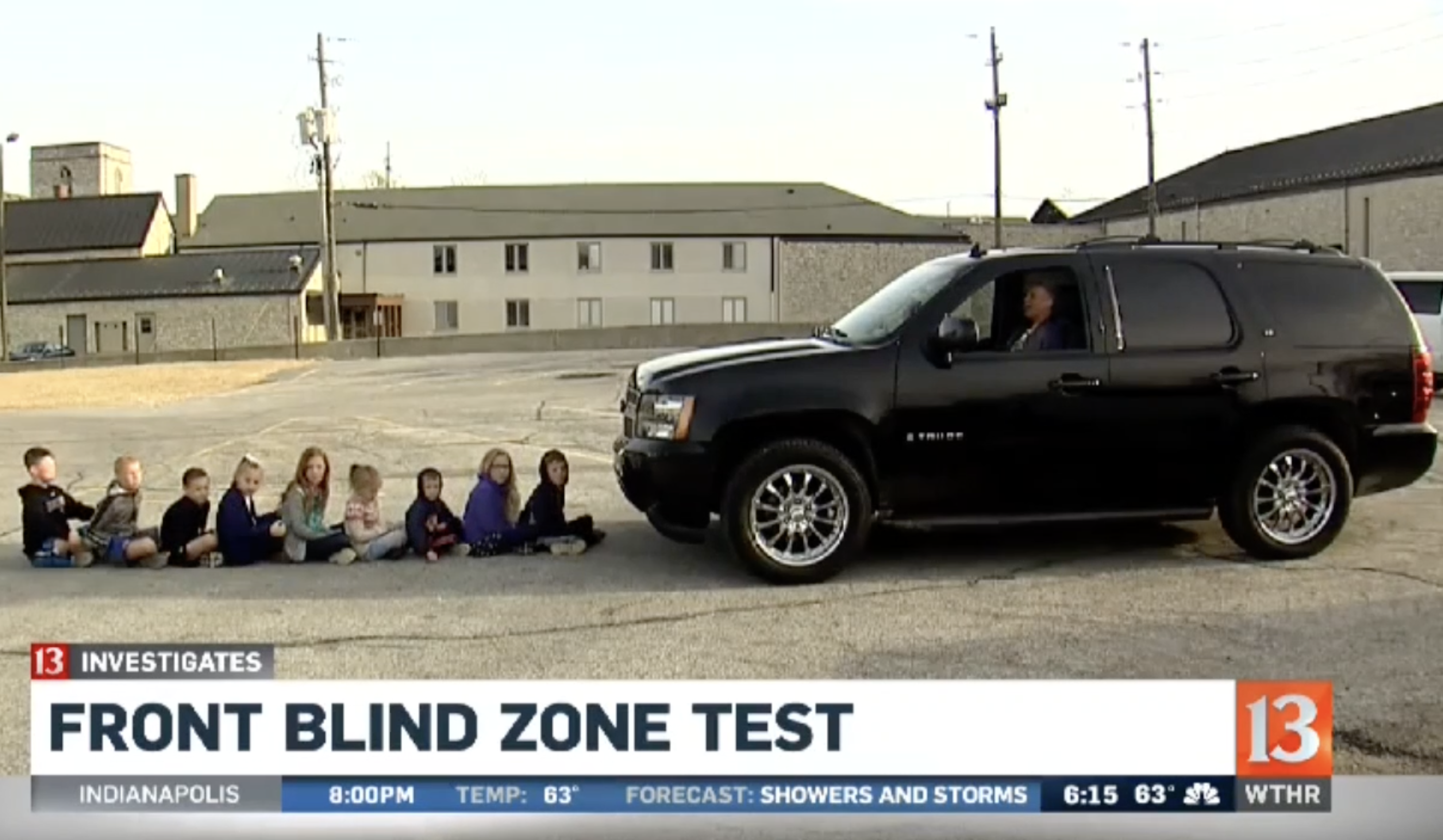
JG: Yeah, totally. There are a few different factors, but a big problem is large vehicles like SUVs with poor sight lines. Sometimes the drivers literally cannot see pedestrians underneath them. And these vehicles are more likely to kill vulnerable road users like pedestrians, bike riders, and e-scooter riders, because they’ve got the high front ends. So instead of going over the hood, people tend to go under the vehicle and get crushed.
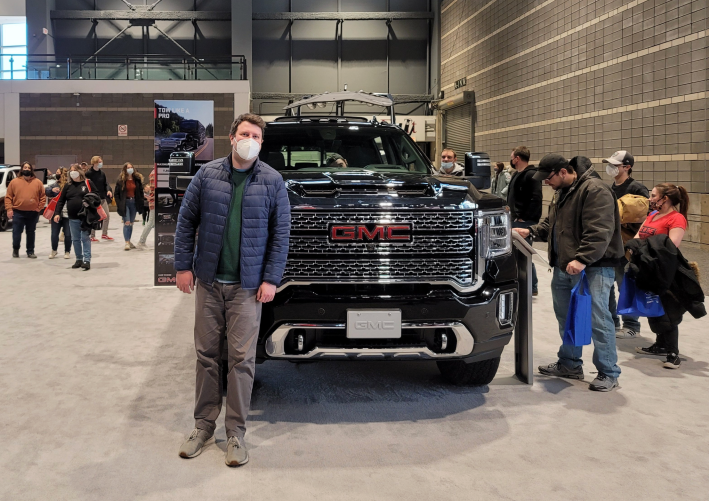
In a lot of other a lot of other wealthy countries around the world, they ban these kind of vehicles. But so far, in the United States, there hasn’t been much action to do anything like that. Not banning SUVs, but banning huge monster SUVs that just cannot see children below them.
MS: I’m scared to cross the street. It’s precarious. So what can pedestrians do to make safer for us.
JG: We need to assume there’s going to be bad behavior by road users in general, whether people are walking, biking, crossing the street to catch the bus, driving. But what we need to do is make it less likely that crashes are going to result in serious injuries and fatalities.
We also need to keep in mind that your responsibility to behave safely is a lot greater if you’re in a 9,000-pound electric Hummer compared to a 70-pound e-Divvy versus. We had a case downtown [last May] where there was a young man [Yader Castaneda, 18] who was on an e-Divvy and collided with the driver of a huge electric Hummer at Randolph and Michigan.There was evidence that the bike rider did not have a green light. But the police also cited the driver for failure to [reduce speed to] prevent a crash [and stated that he was distracted.]
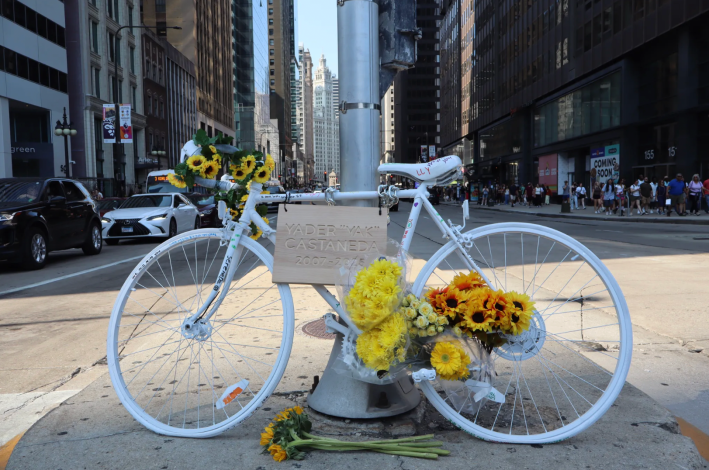
So we should expect that people are going to make mistakes, but there shouldn’t be a death sentence when people do that. So I’d like to see 9.000-pound Hummers off the street.

MS: The onus is on the driver. But when I drive, I want to tell [people on foot]… they can see the cars, but sometimes the cars, for whatever reason, we’re distracted driving, we can’t see them. And they’re like, “Don’t you see me coming? Hey, you supposed to slow down. You’re supposed to see me.” And sometimes when you drive, sometimes you don’t see people. It’s at night. They’re not wearing reflective clothing. I know the onus is on the driver, but pedestrians should, should play a little bit safer, right? And just assume crazy people are out here driving which they are.
JG: I don’t think we should expect pedestrians to wear reflective clothing. I expect that when you leave your house and go to the corner store for a newspaper or something like, you don’t want to be required to put on a reflective safety vest.
So what we need to do is create street designs and policies that make it safe even if somebody makes a mistake. Let me go over some other things we can do.
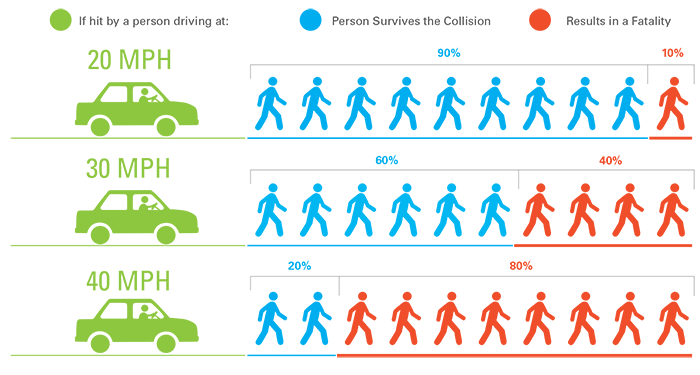
Speed is a huge factor in whether a crash has is fatal. National studies have shown that if a driver is going 20 mph and hits a vulnerable road user, like a pedestrian or person on a bike, that person almost always survives. At 30 mph which is our default speed limit in Chicago, it’s about 50/50. And if the driver is going 40 mph, the pedestrian or bike rider is almost certainly going to die. And, of course, speed also is a factor in vehicle-vehicle crashes. So lowering the speed limit would help a lot.
Another thing that encourages speeding in Chicago is our road layouts. We have a lot of major streets, arterial streets that essentially have five lanes for driving, not to mention the two for parking. A street like Ashland Avenue is generally has two travel lanes in each direction and a turn lane, so five lanes. There were four pedestrian fatalities on Ashland this year.

We’ve also seen a lot of pedestrian fatalities, and motorist fatalities too, on streets like Pulaski and Cicero. So you know, in addition to just like declaring that the speed limit is lower, that we’re changing from 30 to 25 and putting up signs – that actually would be helpful, because some drivers like to follow the letter the law or not go much more than five miles over the speed limit – we can also do stuff that requires people to go the speed limit.
Now, a very controversial thing is automated enforcement, speed cameras and red light cameras. I’ll grant you, a problem with those is that politicians like to use them as revenue sources. For example, Chicago Mayor Brandon Johnson was pretty upfront that he wanted to add more speed cameras to help address the city’s budget deficit. And I don’t think that’s a good way to do things.
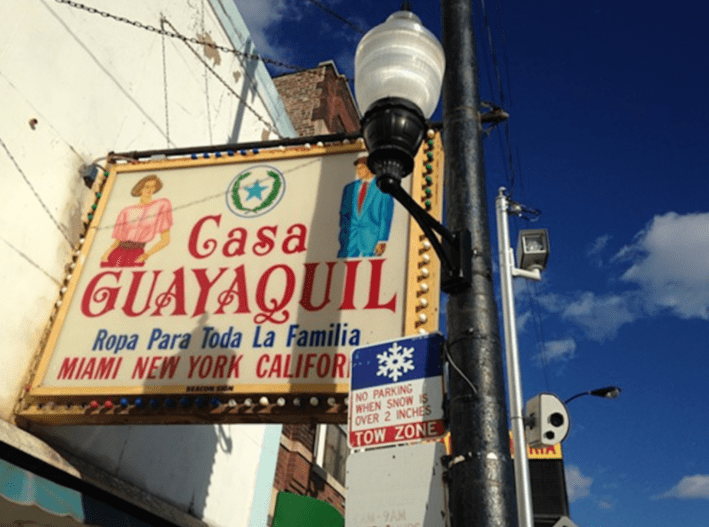
While speed cameras and red light cameras have been shown to be very effective in preventing serious and fatal crashes, we shouldn’t be using the money to balance the budget. If that’s was the the case, then we’d want as many people speeding and running rents as possible so we that we could the fix budget. But the goal of putting an automated enforcement camera in should be to lower the amount of speeding and red light running.
And you know, [the cameras do raise] revenue, we should use that revenue for strategies that help reduce speeding and red light running, use that as funding for Safe Streets projects. So the kind of things I’m talking about are safety infrastructure that helps people walking, biking, using transit and driving.
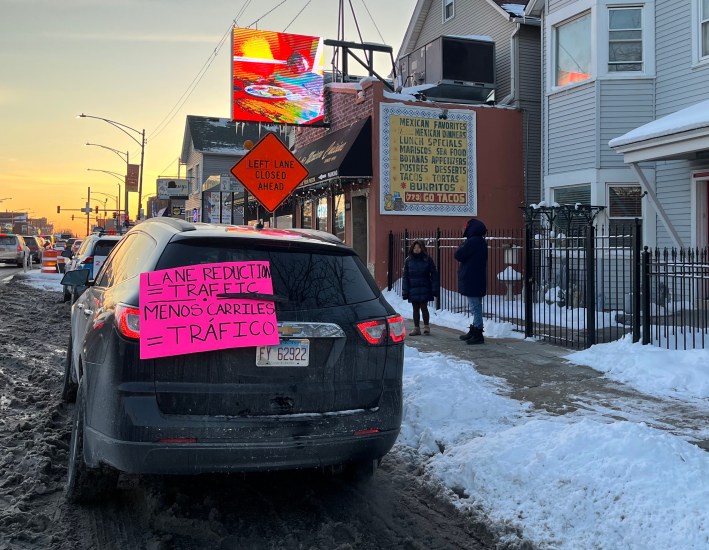
An example of what’s going on with that, and why it’s controversial, is what’s called a “four to three road diet.” That’s what’s going on on Archer Avenue on the Southwest Side. It’s a southwest-northeast diagonal street that goes from the downtown area to Midway Airport. There’s a project going on right now in the Brighton Park neighborhood between Western Avenue and 47th Street, a couple of miles.
So a four to three conversion is when you take a four lanes street, which is what Safe Streets advocates refer to as a “stroad,” a mixed word that means a street fused with a road. It’s basically like putting a highway in the middle of a dense pedestrian area like Brighton Park.
So on Archer Avenue, because of that design, which encourages speeding, there aren’t as many turn lanes there should be. And there aren’t enough marked crosswalks. There has been a fair, fairly high of crash rate on that street.
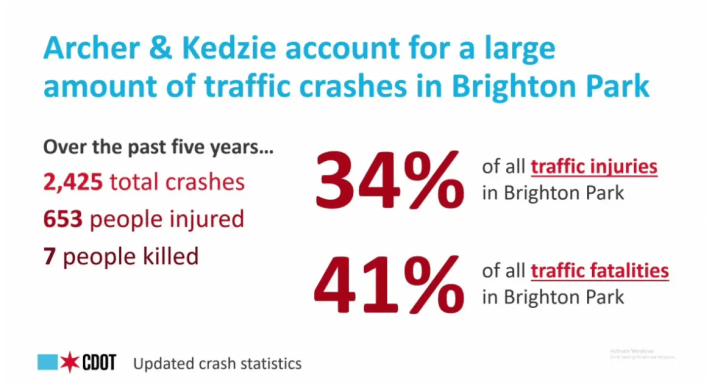
And in recent years, there have been five pedestrian and bike fatalities [on Archer on the Southwest Side], at least with four of them senior citizens. One of them took place in Brighton Park in 2024 at Pershing Road and Archer Avenue.
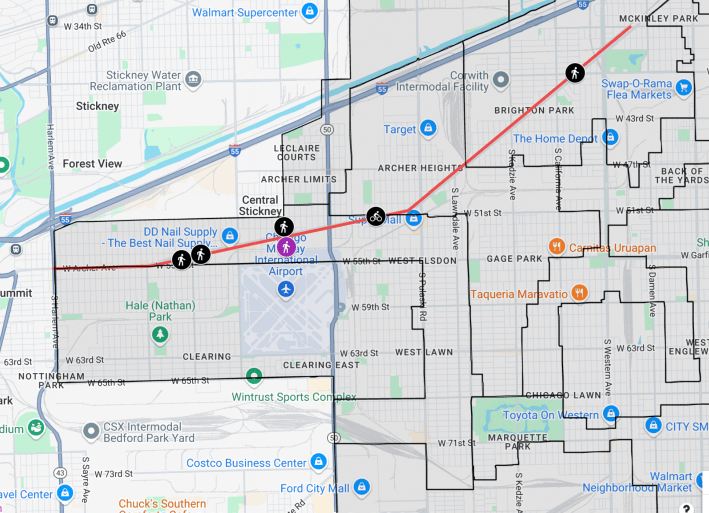
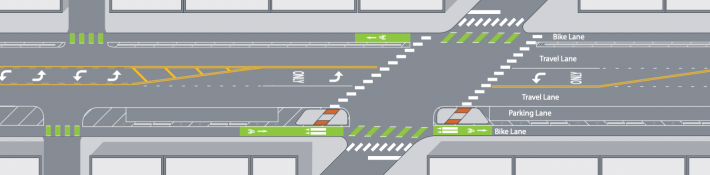
So what they’re trying to do with the Archer project is a four-to-three conversions. They’re turning the the four-lane strade into a three-lane street, with one one travel lane each direction, and then turn lanes. And the turn lanes will, you know, those will help prevent crashes.
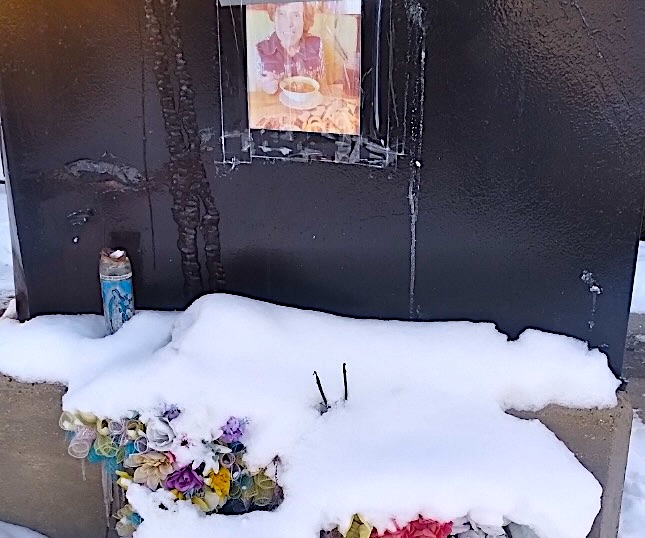
One of the five crashes I mentioned was last year. A woman in her 80s named Maria Ochoa was in the Gage Park neighborhood near Midway Airport. She was just minding her own business walking… in a crosswalk. But there was someone trying to make a left turn. [There are no left turn lanes there and] they were in a they were in a hurry to make their left turn, and they didn’t yield to oncoming traffic and struck another vehicle. One of the vehicles flipped and and struck Ms. Ochoa.
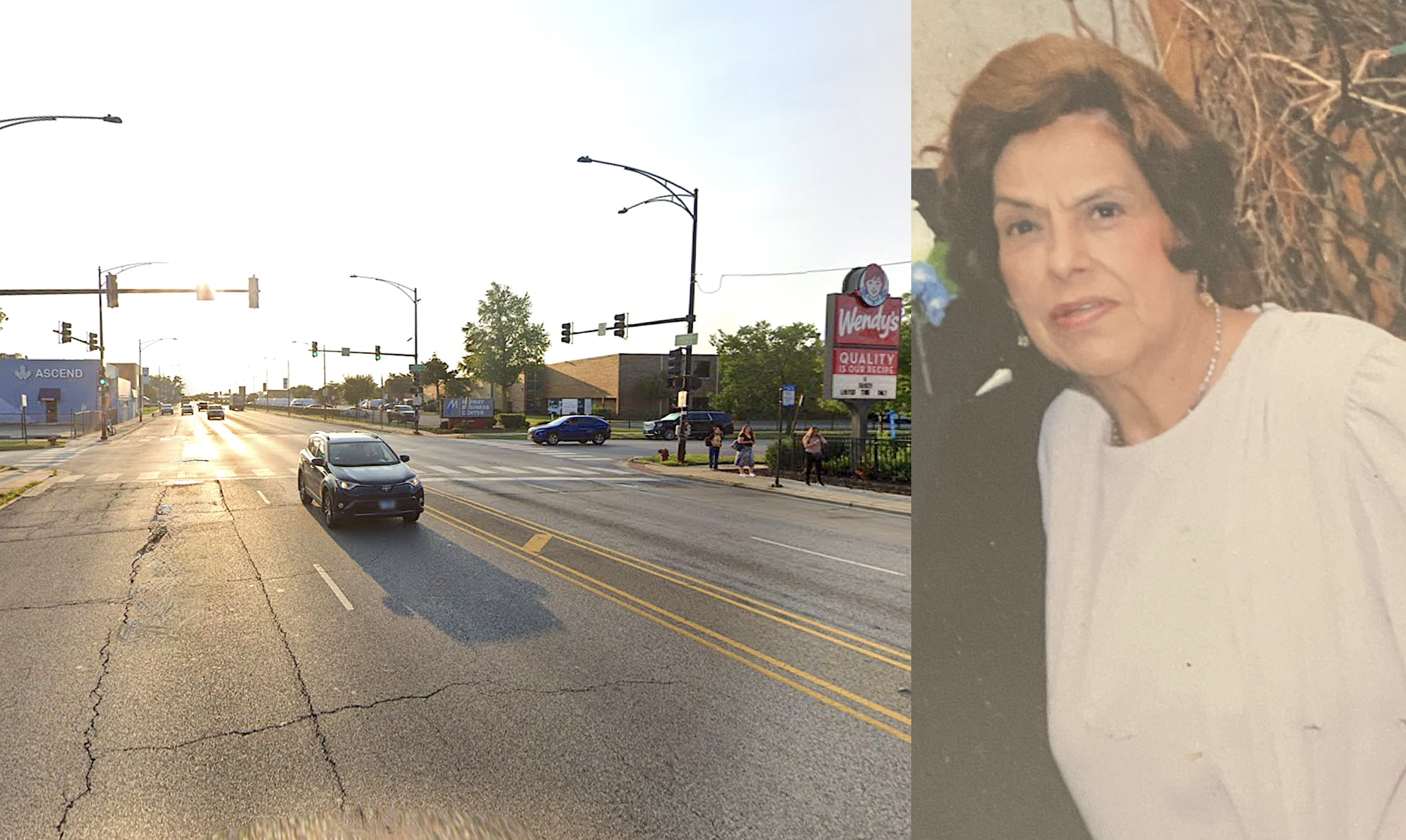
MS: That was Archer and Laramie, by the Wendy’s?
JG: Yeah, Archer and Laramie. Okay, you heard about this case?
MS: Yeah, it’s a tragedy.
JG: Yeah, but it’s not just like an act of God that that happened. There are actually things we can do about stopping tragedies like that from happening, like putting in dedicated turn lanes, doing a four-to-three conversion so there’s less less room for speeding. Drag racing is also problem on Archer.
So some other things going on with the Archer traffic safety project are, they’re doing sidewalk extensions, curb bump-outs, which means you widen the sidewalk, which makes it a shorter distance to cross the street. They’re adding pedestrian islands. They’re putting in more crosswalks and walk signals. They’re putting in bus boarding Islands… that allow bus drivers to pick up customers, without having to pull to the curb and back. And maybe it sounds like that might delay people in the travel lane, but you don’t have buses coming in and out of the travel lane. So it’s it’s not as much of a difference as you might think, and that speeds up bus trips.
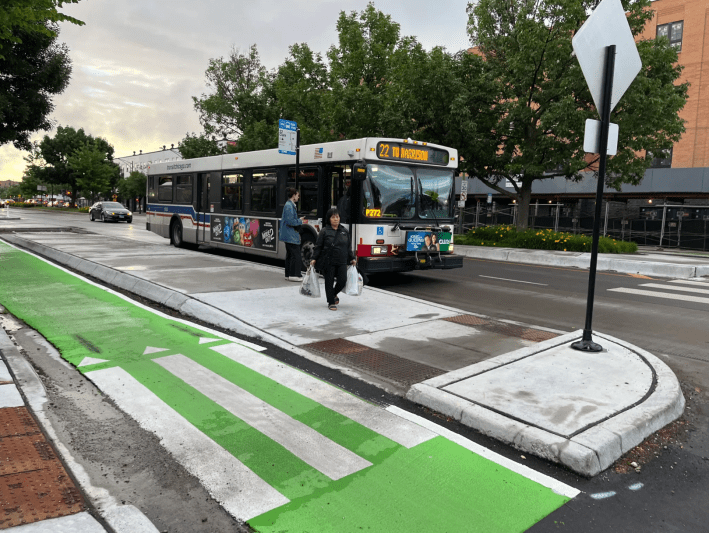
And then they’re also adding protected bike and scooter lanes. Among other things, Curie High is near there, and there are problems with high school students riding bikes and e-scooters on the sidewalk, which endangers pedestrians. But that’ll help keep people riding bikes and scooters off sidewalks. But it’s a controversial project because it’s going to make driving fast a little less convenient.
MS: [Explains that we’re running a little overtime.] I’m going to send this to some of the alderpeople here in Chicago. They might enjoy it, and hopefully they may do some legislation to slow down the speed. John Greenfield, thank you for being my guest.
JG: Sure thing, thanks again for having me.

If you value Streetsblog Chicago’s livable streets reporting and advocacy, please consider making a tax-deductible donation here to help us continue publishing through 2026. Thank you for your support.

Read More:
Streetsblog has migrated to a new comment system. New commenters can register directly in the comments section of any article. Returning commenters: your previous comments and display name have been preserved, but you'll need to reclaim your account by clicking "Forgot your password?" on the sign-in form, entering your email, and following the verification link to set a new password — this is required because passwords could not be carried over during the migration. For questions, contact tips@streetsblog.org.