Who Has Priority at Lakefront Trail Path Intersections — Pedestrians or Cyclists?


The Chicago Park District is moving along with their project to create separate paths for pedestrians and cyclists along almost the entire 18.5-mile Lakefront Trail and, as to be expected, the new set-up is raising some questions from path users. Recently Streetsblog Chicago reader Anna Weaver asked us who has the right of way at locations where the bike-only and pedestrian-only trails cross, and what’s being done to help prevent people on foot from being struck by folks on wheels.
As it happened, park district project manager Michael Lange addressed those questions at last week’s Mayor’s Bicycle Advisory Council meeting. “The first priority in terms of our users are pedestrians, so we wanted to ensure that pedestrians basically have the right of way in areas where the bike path crosses the pedestrian path,” he said. “We’re asking the bicyclists to yield instead of putting a stop sign there. We know that nobody’s going to stop — it’s not going to happen.”
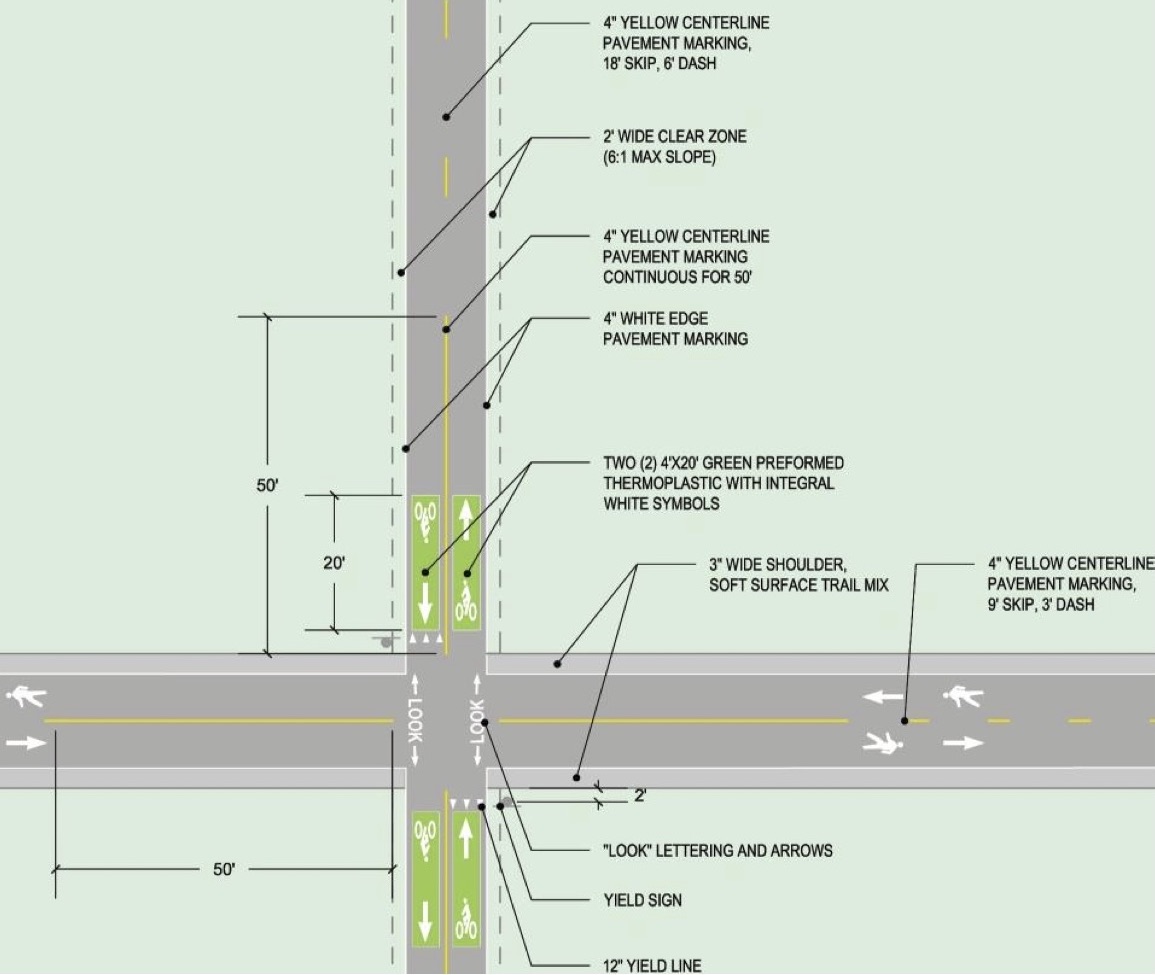
Instead, yield signs will be installed for cyclists, along with green boxes with bike symbols and arrows, plus white triangular “shark’s teeth,” which indicate that people on bikes are supposed to yield to people walking. The pedestrian paths will be marked with the word “LOOK” with arrows in each direction at intersections to warn folks on foot to check for bike traffic before crossing, just as is the case at locations where sidewalks intersect with two-way protected bike lanes on streets. The green bike boxes will also help make it obvious which trails are for cyclists.
“From the feedback we got from the bicycle community it was clear that there’s a really good understanding of biking on city streets,” Lange said. “Everybody clearly understands the striping that’s associated with that. So we wanted to bring that same language, in terms of striping and signage into the park system as well.” He added that after the full trail separation project is completed next year, the park district will go back and reevaluate all the signage to make sure it’s working and trail users aren’t being endangered or getting confused.
This post is made possible by a grant from the Illinois Bicycle Lawyers at Keating Law Offices, P.C., a Chicago, Illinois law firm committed to representing pedestrians and cyclists. The content is Streetsblog Chicago’s own, and Keating Law Offices neither endorses the content nor exercises any editorial control.

Read More:
Streetsblog has migrated to a new comment system. New commenters can register directly in the comments section of any article. Returning commenters: your previous comments and display name have been preserved, but you'll need to reclaim your account by clicking "Forgot your password?" on the sign-in form, entering your email, and following the verification link to set a new password — this is required because passwords could not be carried over during the migration. For questions, contact tips@streetsblog.org.