Sweatin’ with the alders: As Bike the Drive highlights the perks of a less car-centric shoreline, Ald. Vasquez and Ald. Manaa-Hoppenworth discuss the future of DLSD

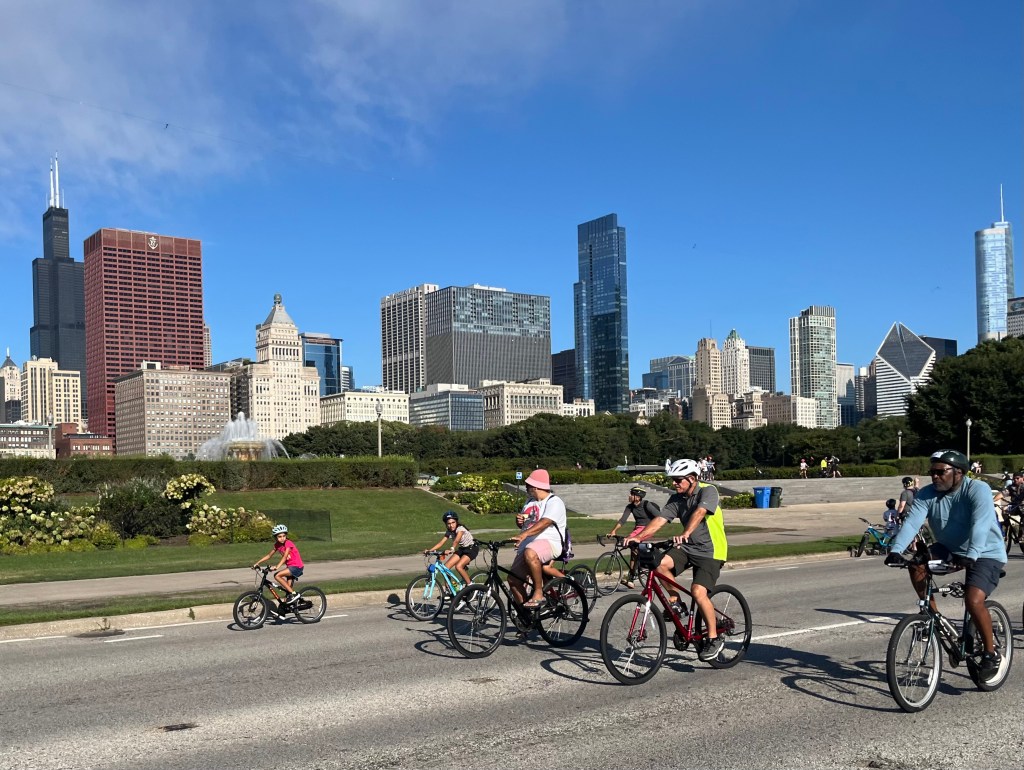
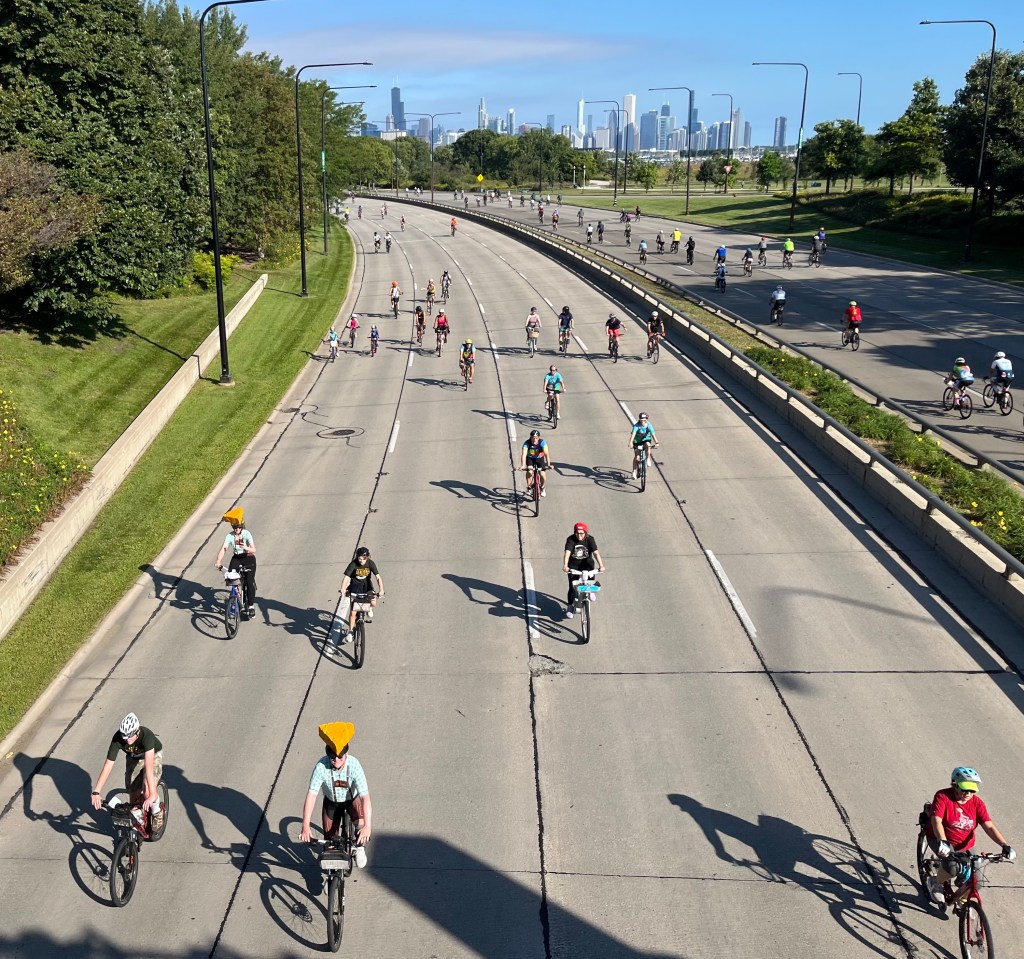
The Active Transportation Alliance’s annual Bike the Drive, which opens all eight lanes of Chicago’s DuSable Lake Shore Drive for car-free cycling, is the highlight of our city’s sustainable transportation advocacy calendar. It shines a line on the fact this wonderful metropolis could become even better if we significantly reduced the amount of motorized traffic on our lakefront, and made our shoreline a more efficient and pleasant place to walk, bike, and ride transit.
This year’s BTD was particularly special because it was the 25th anniversary of the event, which doubles as Active Trans’ main fundraiser. The group’s cofounder Randy Neufeld discussed how the ride came to be in a recent ATA blog post.
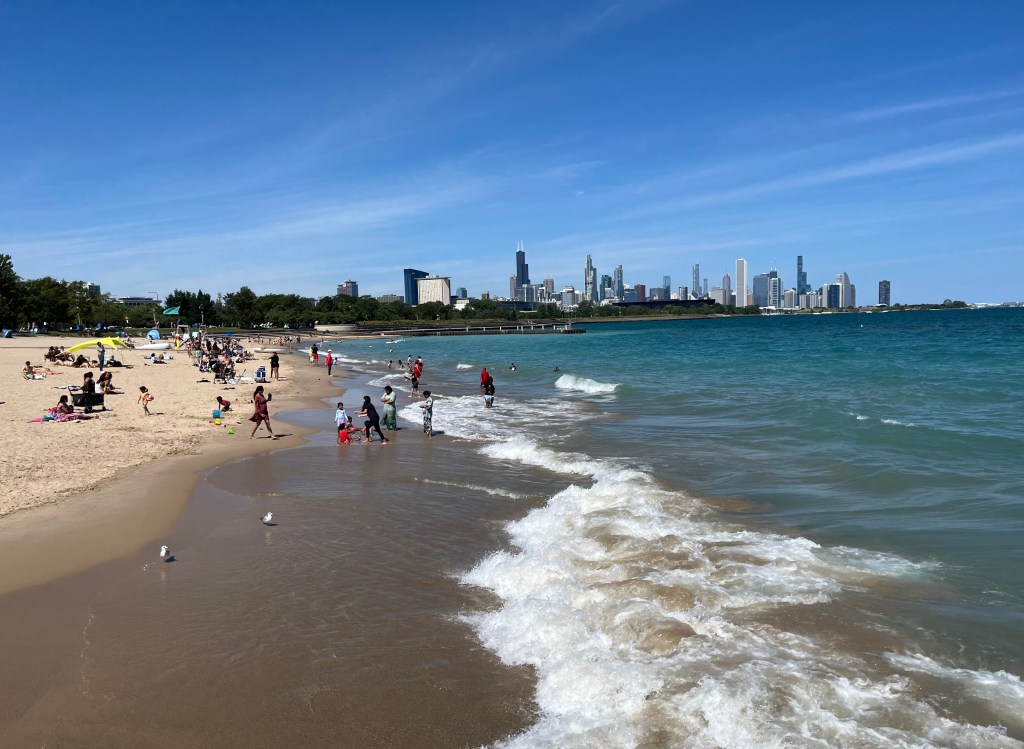
The icing on the birthday cake was absolutely perfect weather, a pleasure to pedal in, cruising along an especially sparkly Lake Michigan. After riding from Edgewater to Hyde Park on the temporarily-bike-friendly motorway, I took advantage of the brilliant sunshine and ideal temperature by beach hopping back north to Uptown.
The battle for a people-friendly DLSD
This year’s Bike the Drive was also significant because last month advocates won a small victory in the fight to make Chicago’s coastline less car-centric as part of the North DuSable Lake Shore Drive Reconstruction Plan, aka Redefine the Drive. In 2024, the Illinois and Chicago transportation departments recommended a rehab of the roadway that mostly would preserve the Drive’s eight-lane layout, identifying that as the “preferred alternative.”
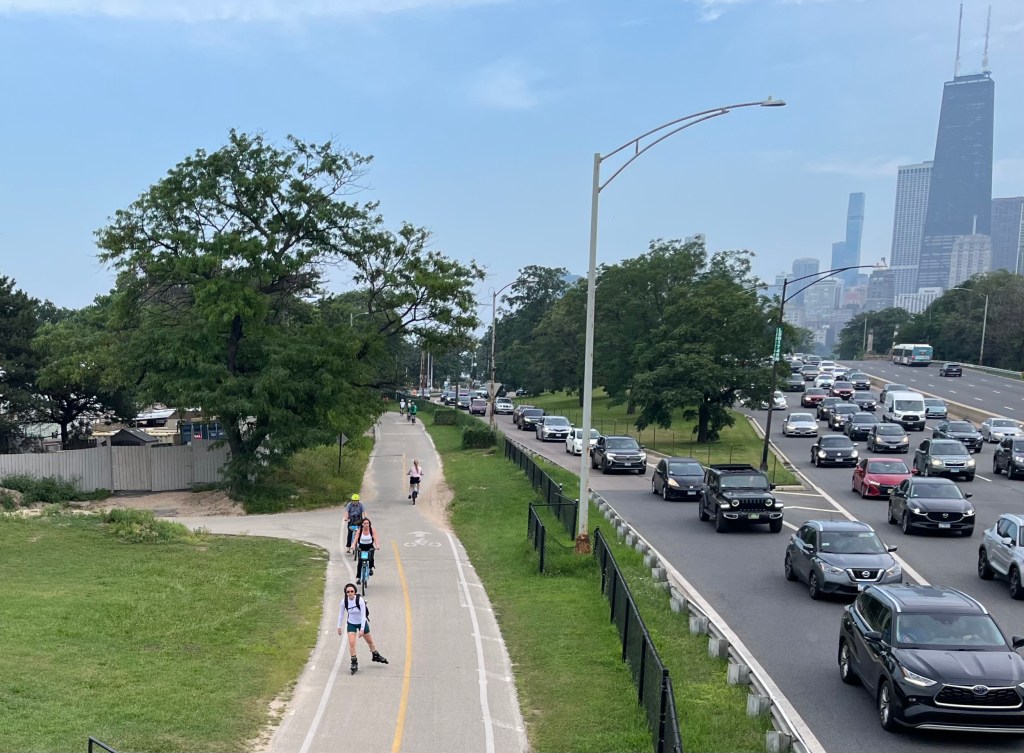
DLSD and the Lakefront Trail as seen from the North Avenue bike-ped bridge last July.
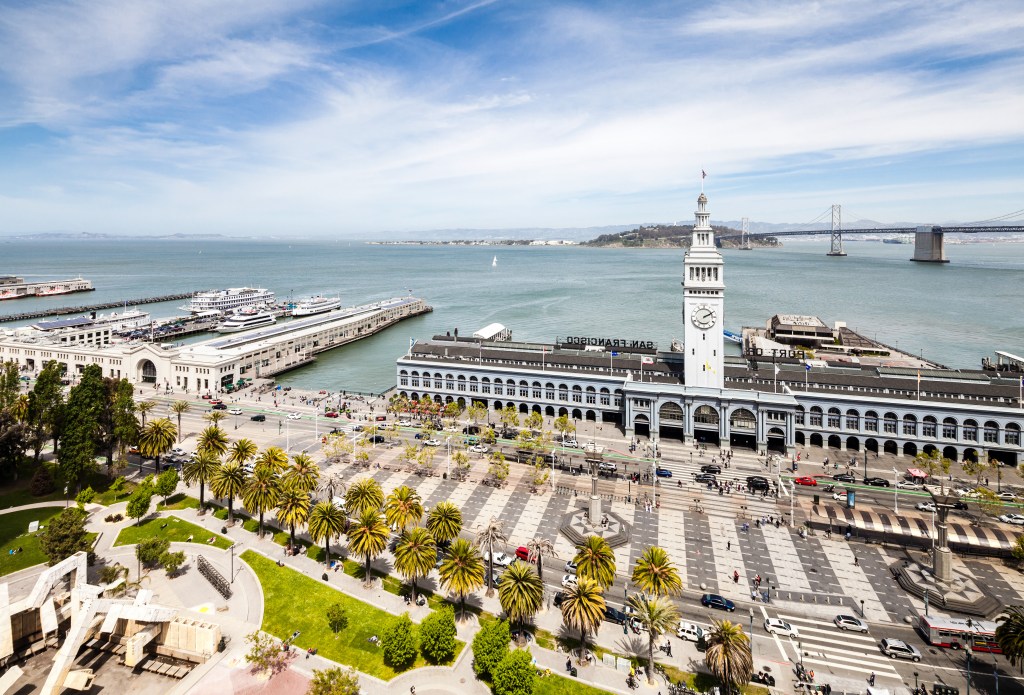
But walk/bike/transit boosters say the plan must, at the very least, convert two of the lanes currently used by motorists to dedicated transit lanes. That would prevent public transportation riders from getting stuck in traffic jams created by private, often single-occupant, car drivers. And groups like Better Streets Chicago call for transforming the highway into to a multi-modal surface-level boulevard, similar to what San Francisco did with the Embarcadero Freeway.
IDOT and CDOT recently edited the project website to acknowledge that, based on public input, no preferred alternative has been identified, so they’re going back to the drawing board. And at a public meeting in August, the Chicago Metropolitan Agency for Planning said that, after receiving feedback from more than 1,800 residents, CMAP would update its draft 2026 Regional Transportation Plan by removing “preferred alternative” language.
I was pleased to see that some of the dailies’ BTD coverage discussed the movement for a more people-friendly lakefront. For example, the Block Club Chicago article, “As Chicagoans Prepare To Bike The Drive, Some Dream Of A Car-Free Lakefront All Year,” featured quotes from Streetsblog Chicago contributing writer Ellen Steinke, who has been tirelessly lobbying about the issue. She even has an Instagram account on the subject: “More Lakeshore Less Drive.” Ellen told BCC’s Patrick Filbin, “We’re the best city in the country, if not the world, and yet we have this highway running through our public park where we have people exercising and children playing.”
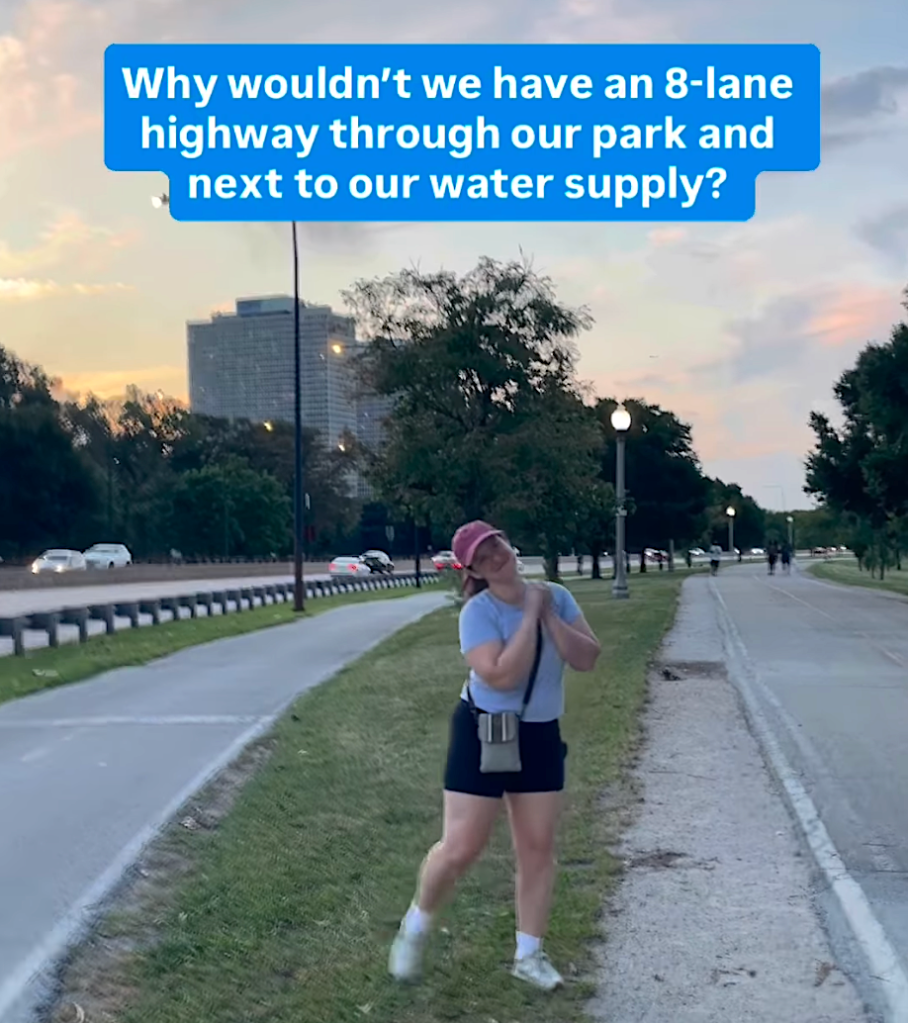
Here are some other articles about Bike the Drive that featured Livable Streets advocates:
• “Some cyclists at Bike the Drive dream of safer roads for al” by Kaitlin Washburn for the Chicago Sun-Times
• “Without cars for a morning, thousands of cyclists fill DuSable Lake Shore Drive: ‘Chicago is a bike city'” by Finnegan Belleau for the Chicago Tribune
I took a slightly different approach. I encountered a couple of sustainable transportation-friendly North Side alders during that day, so I asked them for their thoughts on how we should rebuild NDLSD.
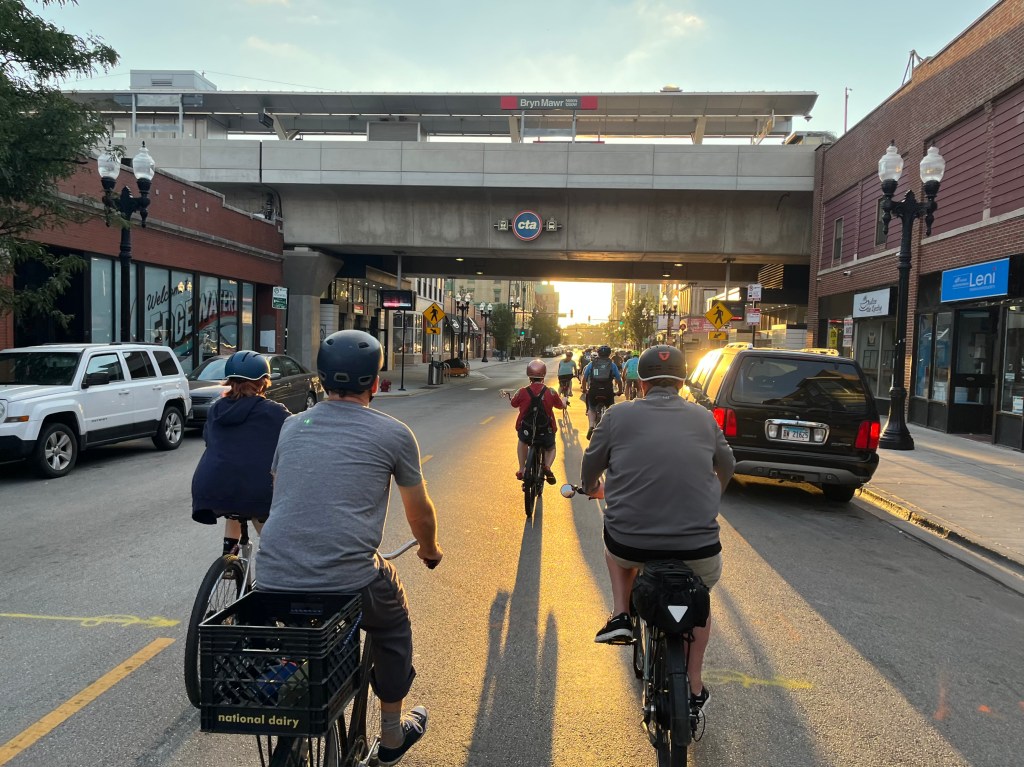
Ald. Vasquez invited his constituents to meet him at 6 a.m. that morning at the new Ainslie Arts Plaza in Lincoln Square to ride a few miles to a Bike the Drive starting point at Bryn Mawr Avenue.
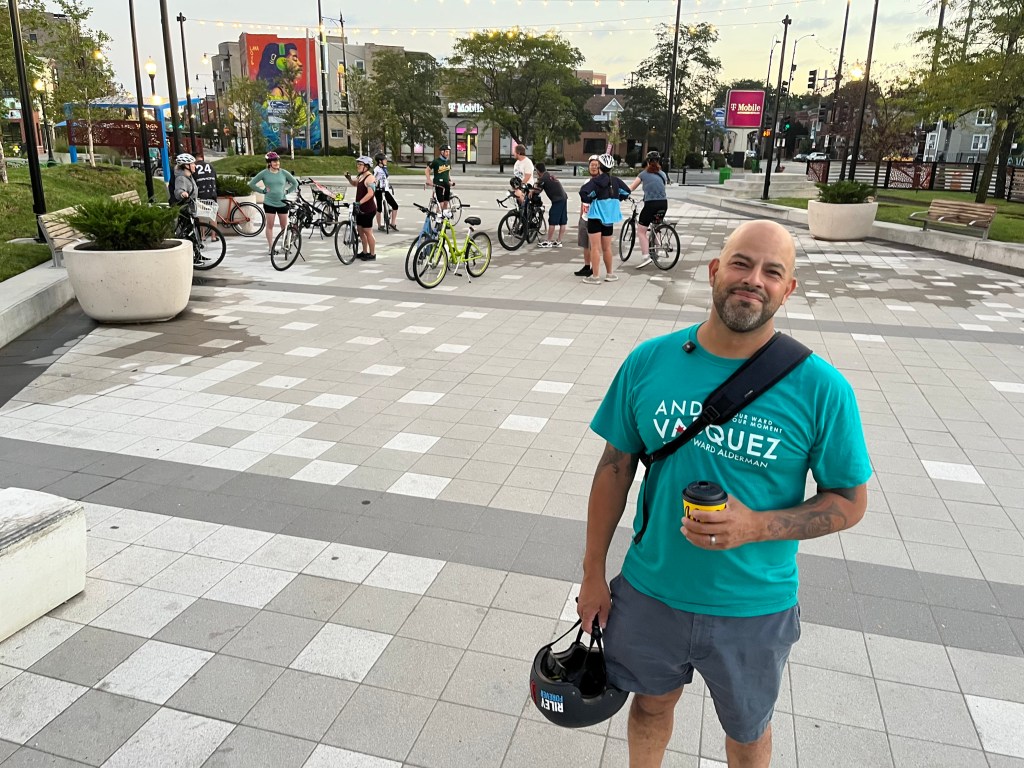
“I learned to ride a bike about five years ago,” Vasquez told me. “Bike the Drive has always been a pretty amazing experience. I like promoting it because I think there’s neighbors who may not know about it, or who may not feel comfortable joining. So it’s good to do one together as a group. This is actually the first time we’re trying it out, and my hope is that year over year we get to grow it out.”
Does he have an opinion about what street configuration he’d like to see on the new North DLSD? “We could do more than what’s currently being proposed,” he replied. “Obviously we have folks who wish we could pedestrianize the whole thing. I don’t know if that’s feasible, but I do think we can do more, and it’s worth a conversation with everyone. And a good, healthy balance between cyclists, pedestrians, transit riders, and drivers is what we should be shooting for: for everyone to be able to enjoy what is a public good.”
Ald. Leni Manaa-Hoppenworth (48th)
Later, I spotted Ald. Manaa-Hoppenworth on the DLSD bridge over the Chicago River, which itself made the headlines last week. “It’s a beautiful day,” she told me. “I’m with my friends and neighbors, and couldn’t ask for anything more… I wish this was more than once a year.”
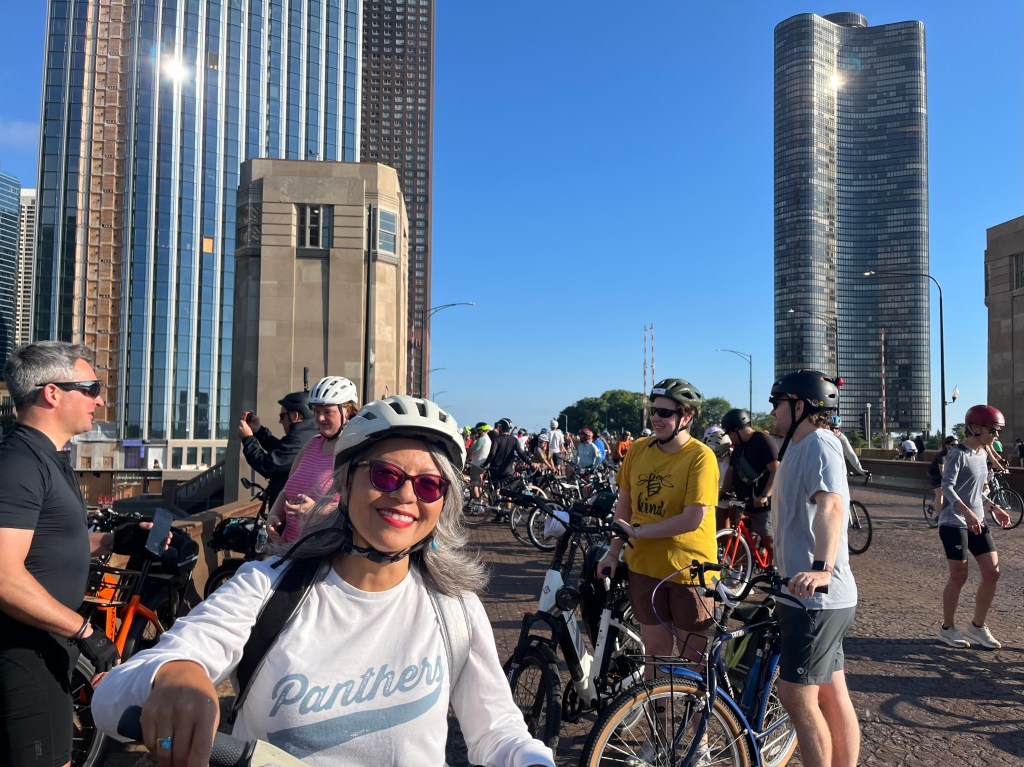
I noted that IDOT’s original plan was to rebuild DLSD as an eight-lane highway with no dedicated transit lanes, and asked Manaa-Hoppenworth what layout she would like to see. “Not that!” she replied with a laugh. “We should dream bigger. We have done incredible things in Chicago in the past, and just because something is laid in concrete doesn’t mean it’s there forever.”
What has she heard from constituents about this issue? “On my side of town, the noise pollution, the air pollution, the unfriendliness of our streets to pedestrians and cyclists and people who get around other ways, especially those with disabilities,” the alder responded. “It’s a moment right now when more and more people are loving their city in ways that they have not done in the past. They’re talking about why it’s important to to have opportunities to walk to places that they need to, or cycle to places that they need to, or take public transit.”
“And I don’t think that people have actually talked to their neighbors about that,” Manaa-Hoppenworth concluded. “I think that a lot of people take those kinds of things for granted. So we’re in a moment right now where we’re looking at the whole ecosystem and thinking, ‘How can we do this better?”
Scenes from a car-free DLSD
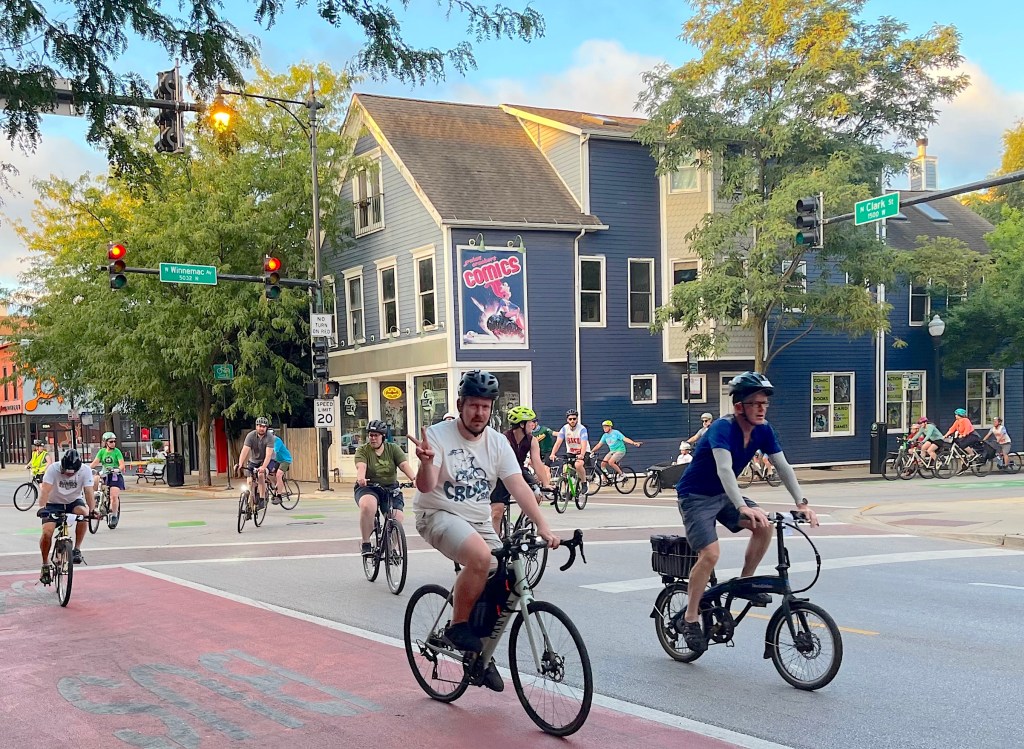
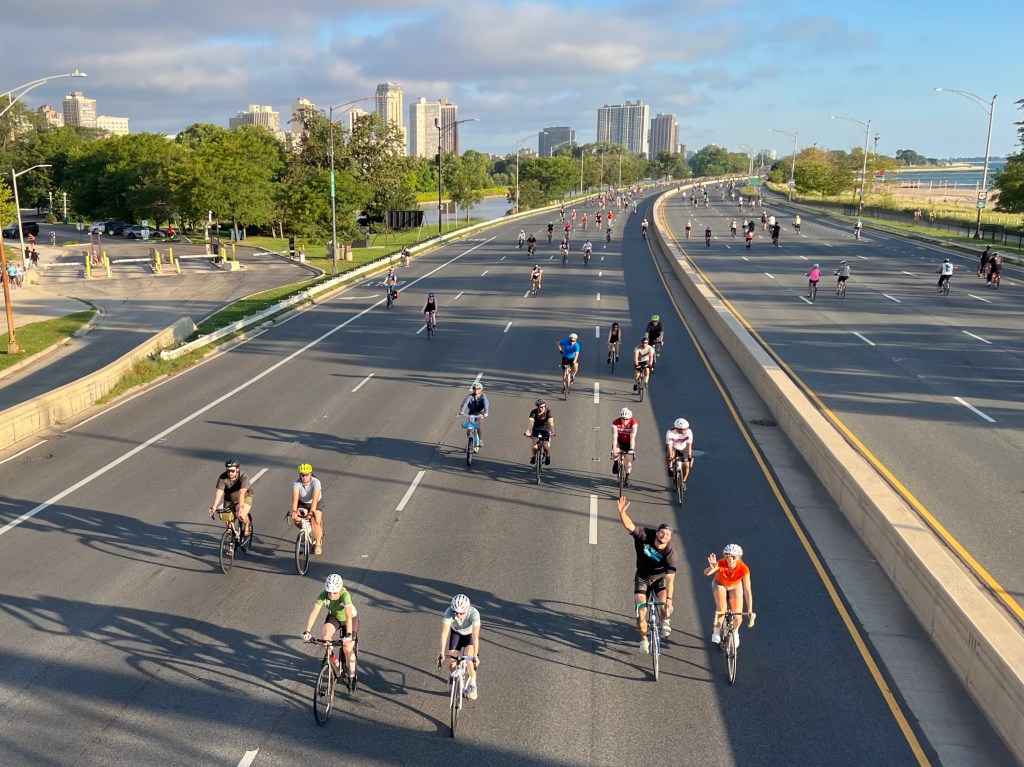
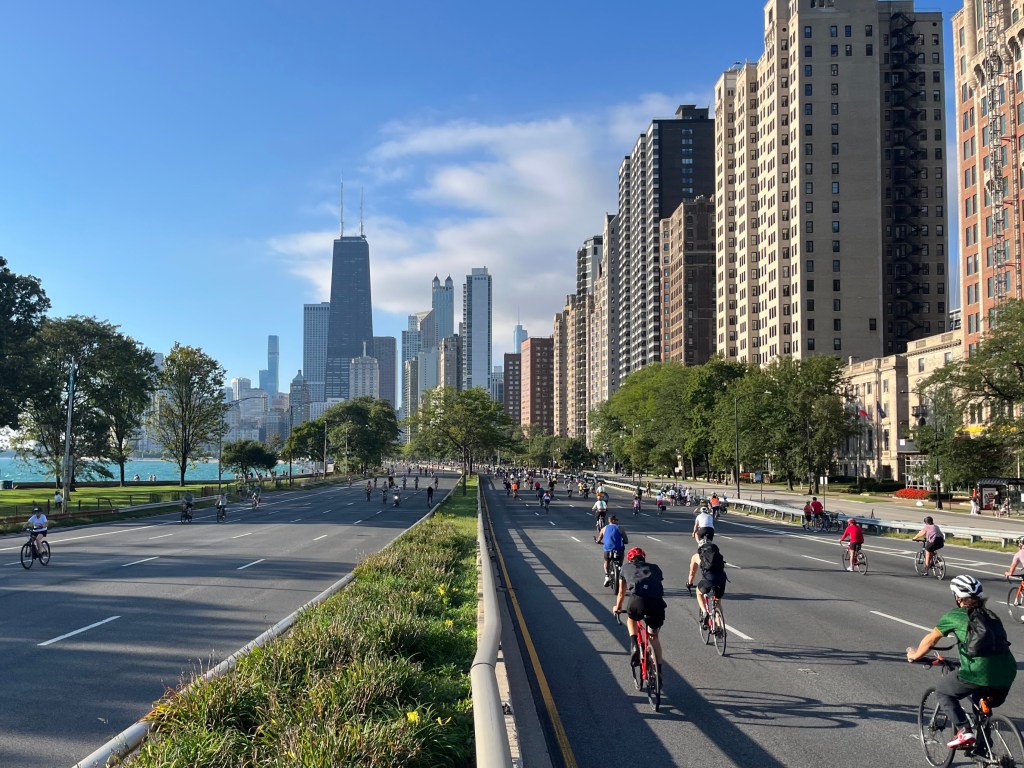
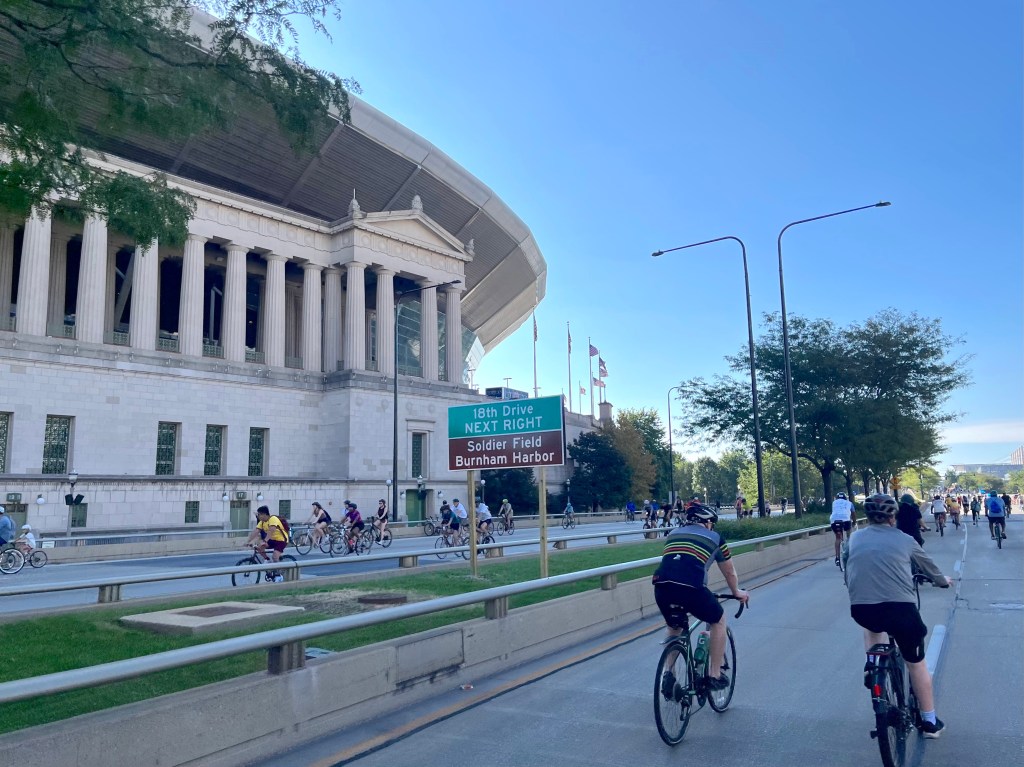
Here are some more shots I took on Sunday as I rode from the Ainslie Arts Plaza to the Museum of Science and Industry.

If you appreciate Streetsblog Chicago’s livable streets reporting and advocacy, please consider making a tax-deductible donation to support our work. Thank you!

Read More:
Streetsblog has migrated to a new comment system. New commenters can register directly in the comments section of any article. Returning commenters: your previous comments and display name have been preserved, but you'll need to reclaim your account by clicking "Forgot your password?" on the sign-in form, entering your email, and following the verification link to set a new password — this is required because passwords could not be carried over during the migration. For questions, contact tips@streetsblog.org.