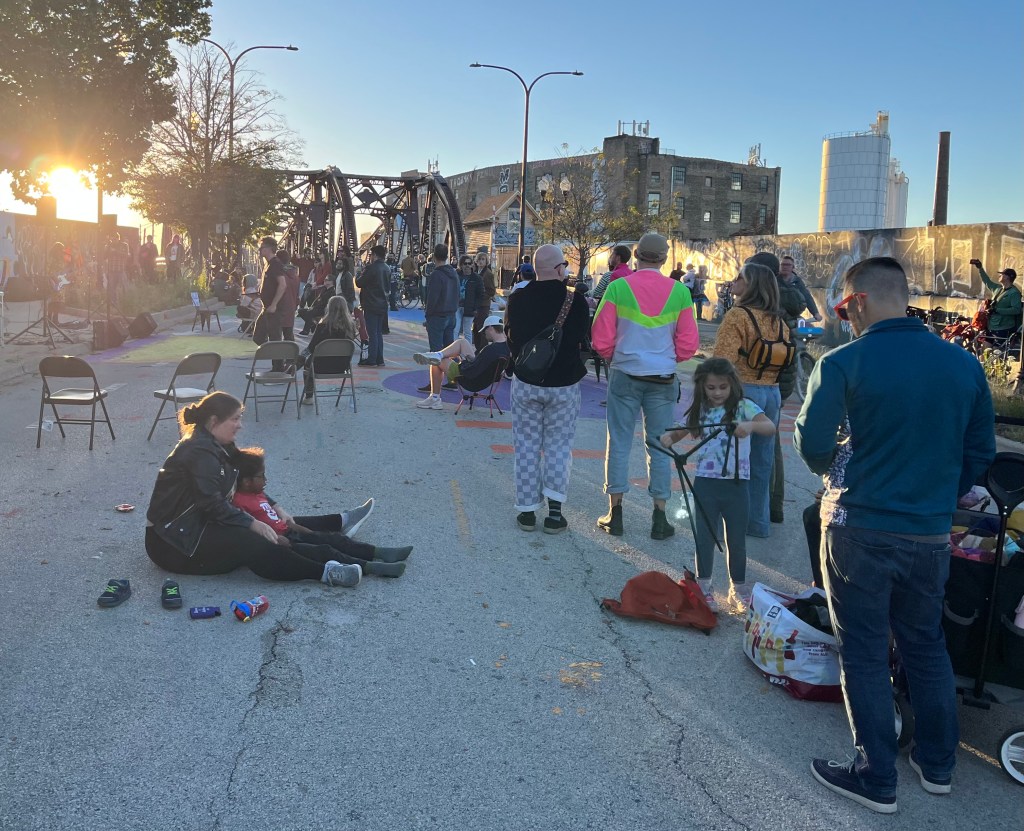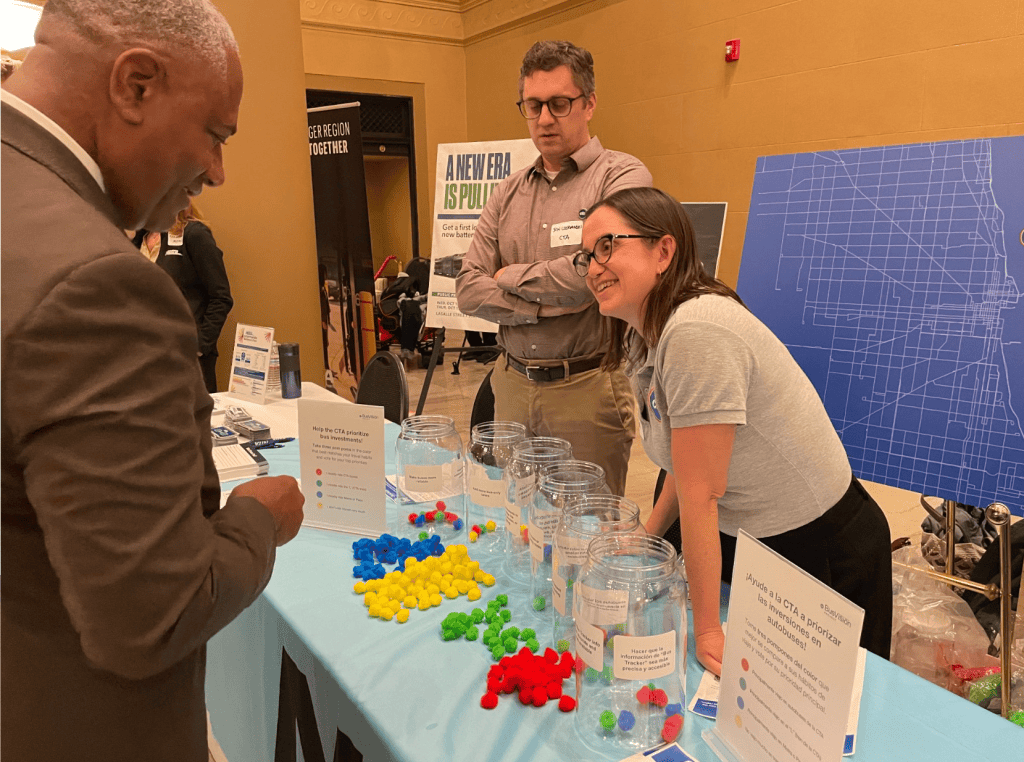
Bronzeville Trail planning turns to access, connections, and filling the gaps


Three months after the first public open house for the proposed Bronzeville Trail, residents returned Wednesday evening for the next stage of planning which involves figuring out how people will actually get onto it.
The Chicago Department of Planning and Development hosted the second Bronzeville Trail Framework Plan open house on September 23 at King College Prep High School, 4445 S. Drexel Blvd. While the June meeting at Phillips Academy introduced the broader vision for the project, Wednesday’s event focused primarily on trail access and connectivity.
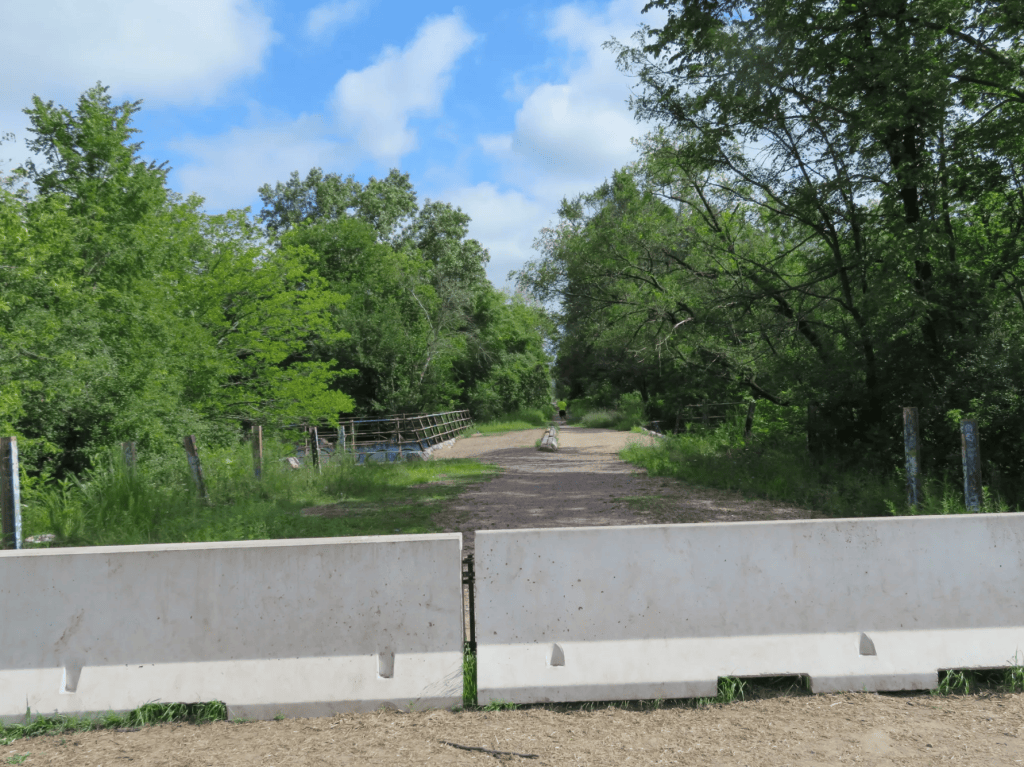
The proposed trail would transform roughly 1.5 miles of the long-abandoned Kenwood Line railroad embankment near 40th and 41st streets into an elevated walking, biking, and recreation space through Bronzeville.
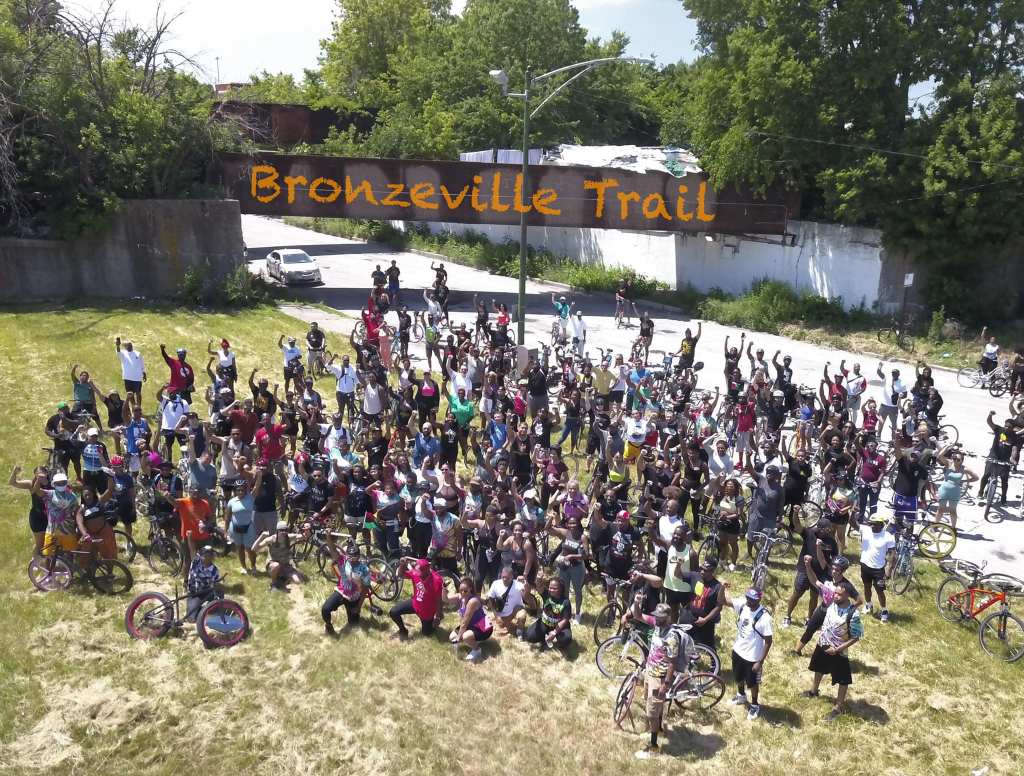
Ald. Lamont Robinson (4th), whose ward hosted Wednesday’s meeting, opened the program by highlighting the multigenerational crowd and describing the proposed trail as a major investment in the South Side.
Robinson thanked City officials and the Bronzeville Trail Task Force, saying the project is about more than recreation. “We want to make sure that we have a safe community,” he said. “We want to make sure that we have a healthy community.”
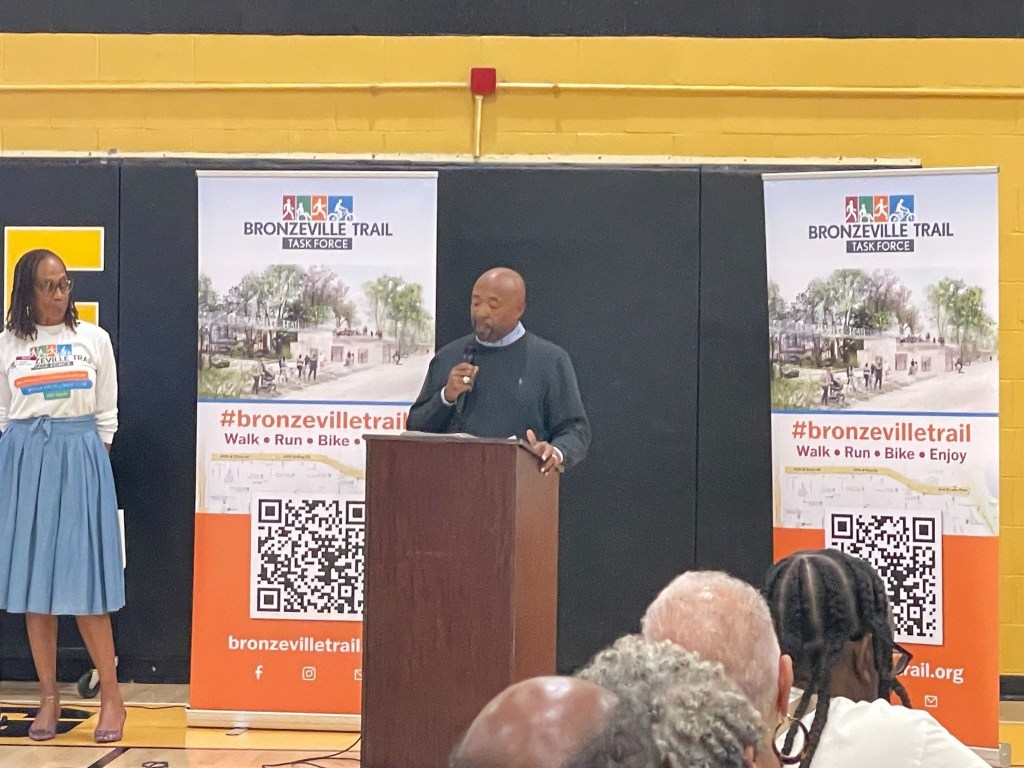
Ald. Pat Dowell (3rd), who hosted the first open house in her ward in June, said attendance at Bronzeville Trail events has continued to grow. “That is the key to making sure that what we want to see in our community has impact,” she said, emphasizing that elected officials and City agencies could not deliver the project without residents participating in the process.
Dowell acknowledged that converting the abandoned rail structure will be difficult. “This is not an easy lift,” she said. “This is a heavy lift. But we have the power, we have the energy, and we have the commitment to get this done.”
She encouraged attendees to put everything they wanted or were worried about on the table during the evening’s feedback sessions.
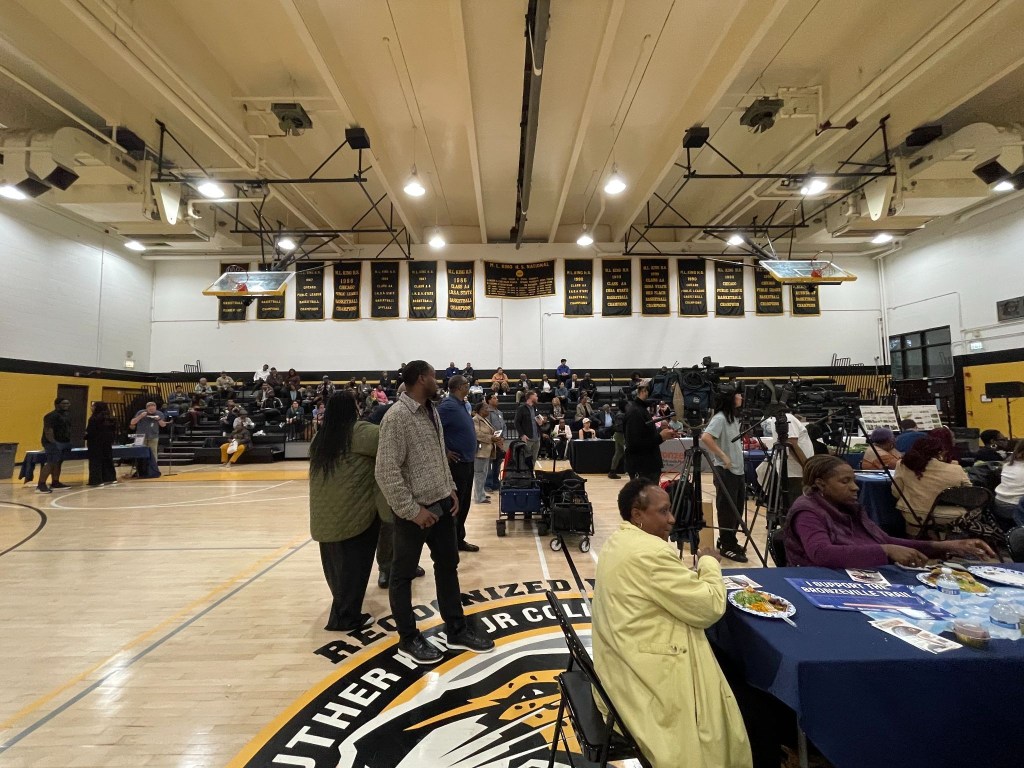
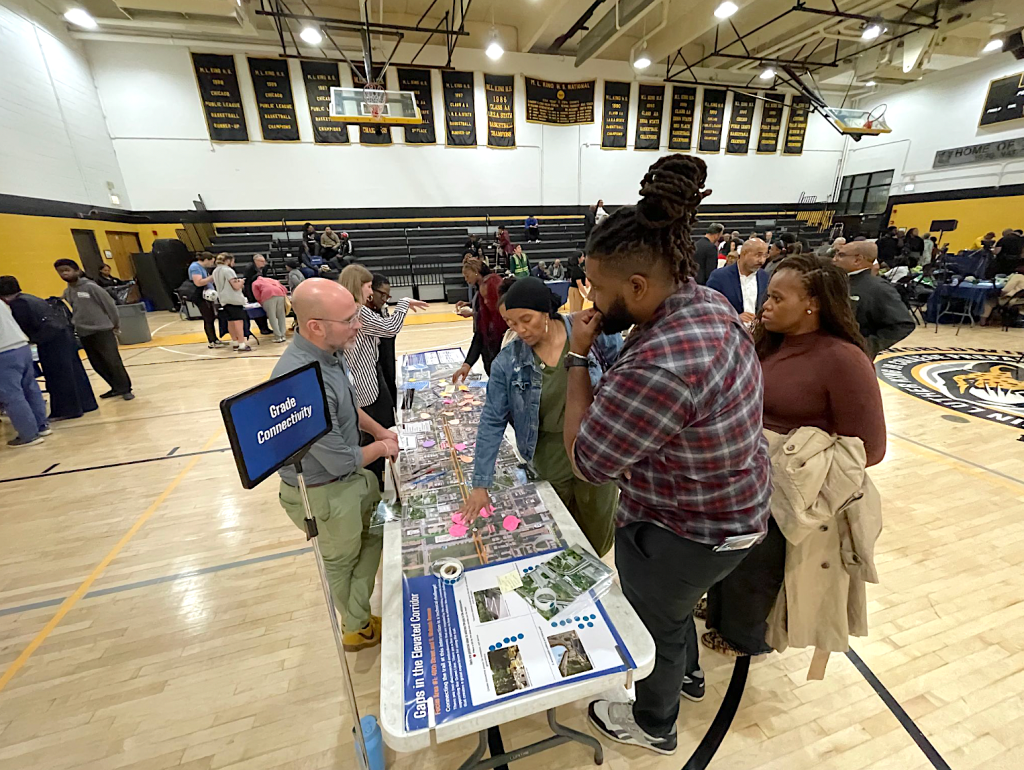
Attendees at the open house.
Bronzeville Trail Task Force Founder and Chair John Adams then spoke about the history behind the corridor and the years of organizing that brought the project to its current stage. Adams said the task force formed in 2020 around the idea of transforming the abandoned embankment, but he added that organizers have since learned how deeply the old rail corridor is connected to Bronzeville and Chicago history. He also stressed the potential for the trail to serve seniors, children, bike riders, runners, and other residents looking for a safe place to be outdoors.
Adams said the framework planning process is expected to continue into early 2027 before the project moves further into design and engineering. Because portions of the former rail embankment have been demolished, he also raised the possibility of activating intact sections of the structure before the entire trail can be built as one continuous route. That could allow residents to use portions of the future trail for walking, recreation, nature, or community programming, while planning for the larger project continues.
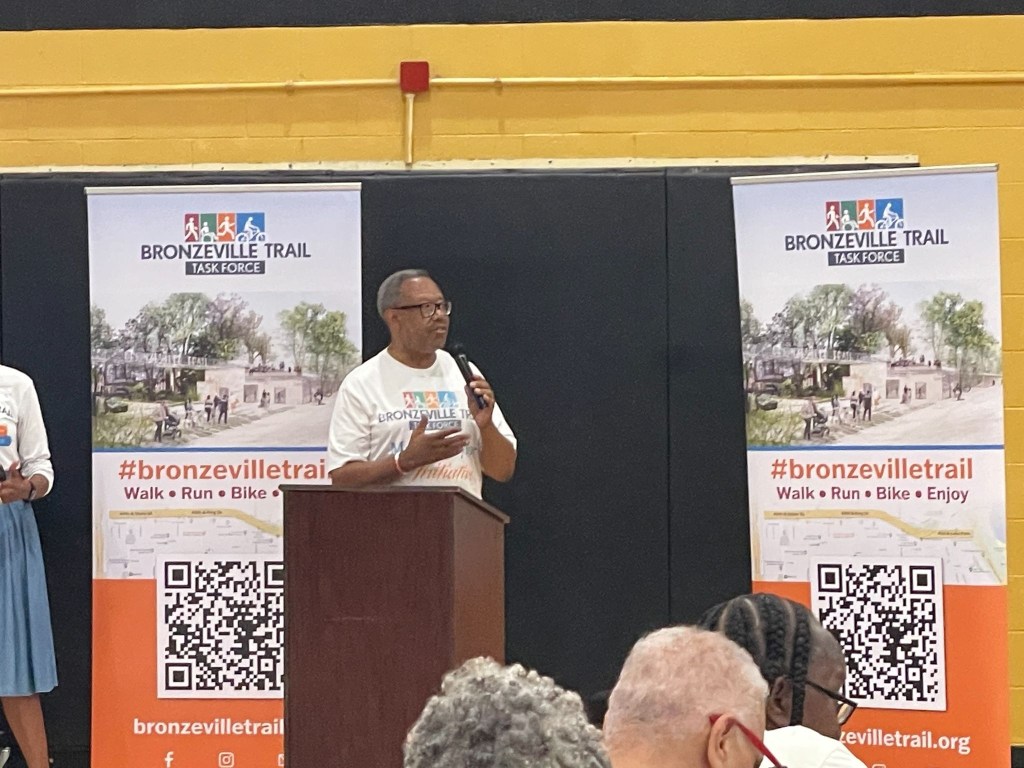
Bronzeville Trail Task Force’s John Adams.
CDOT Commissioner William Cheaks Jr. called the trail “an exciting opportunity for Bronzeville,” saying it could transform the abandoned Kenwood Line into a place to walk, bike, and gather while improving connections to neighborhood destinations and highlighting Bronzeville’s history. But he cautioned that rail-to-trail infrastructure projects are complicated and require coordination between multiple city departments. “This framework plan represents the beginning of a long journey to bring the Bronzeville Trail to fruition,” he said.
Cheaks added that feedback from Wednesday’s meeting will help inform preliminary engineering, when CDOT will more closely examine the existing structure, environmental conditions, access locations, and other design questions. That work will also be important as the City pursues future state and federal funding for the project, he said.
DPD Commissioner Ciere Boatright followed, describing the framework plan as a collaborative effort to determine how the old Kenwood embankment could improve mobility, celebrate local history, and contribute to the surrounding neighborhood. “Each of you are the local experts,” She told attendees. “So it’s important that we hear directly from you.” Boatright said future meetings will continue exploring issues beyond the physical trail itself, including housing and land use in the surrounding area.
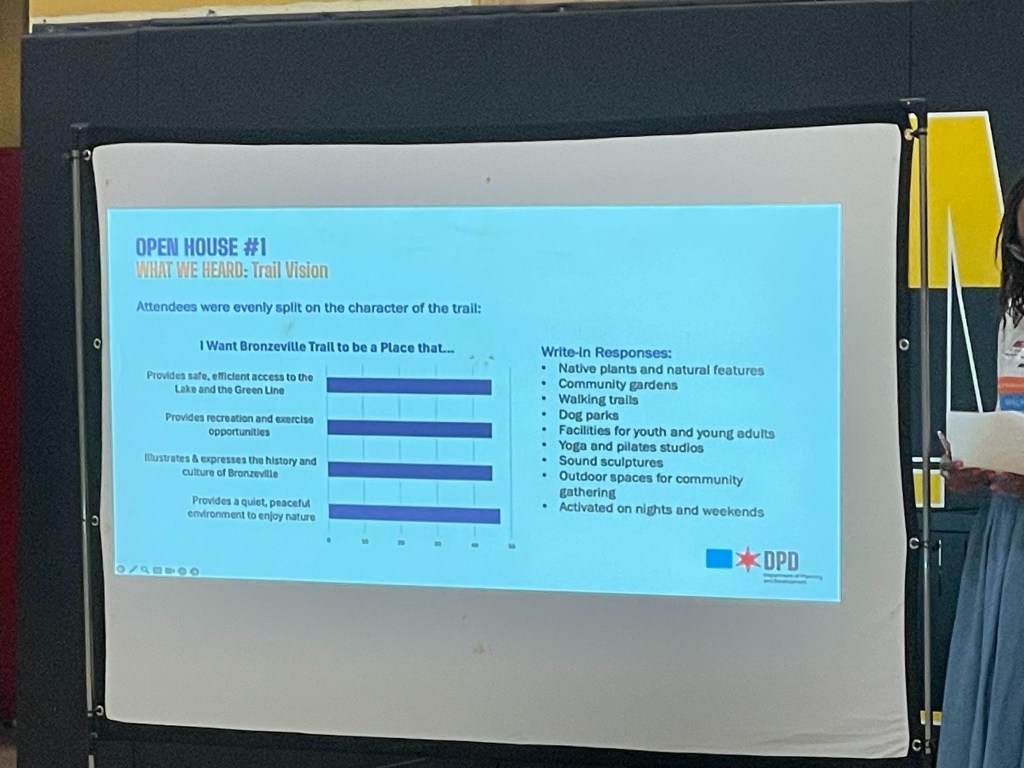
DPD Project Manager Will Holland then gave attendees the clearest look at how feedback from the first open house is shaping the plan. He noted that at the June meeting, residents were asked what kinds of activities and features they wanted on the trail. Holland said there was no single dominant answer: Attendees valued spaces for exercise and recreation; nature and relaxation; community gathering; and connections to the surrounding neighborhood.

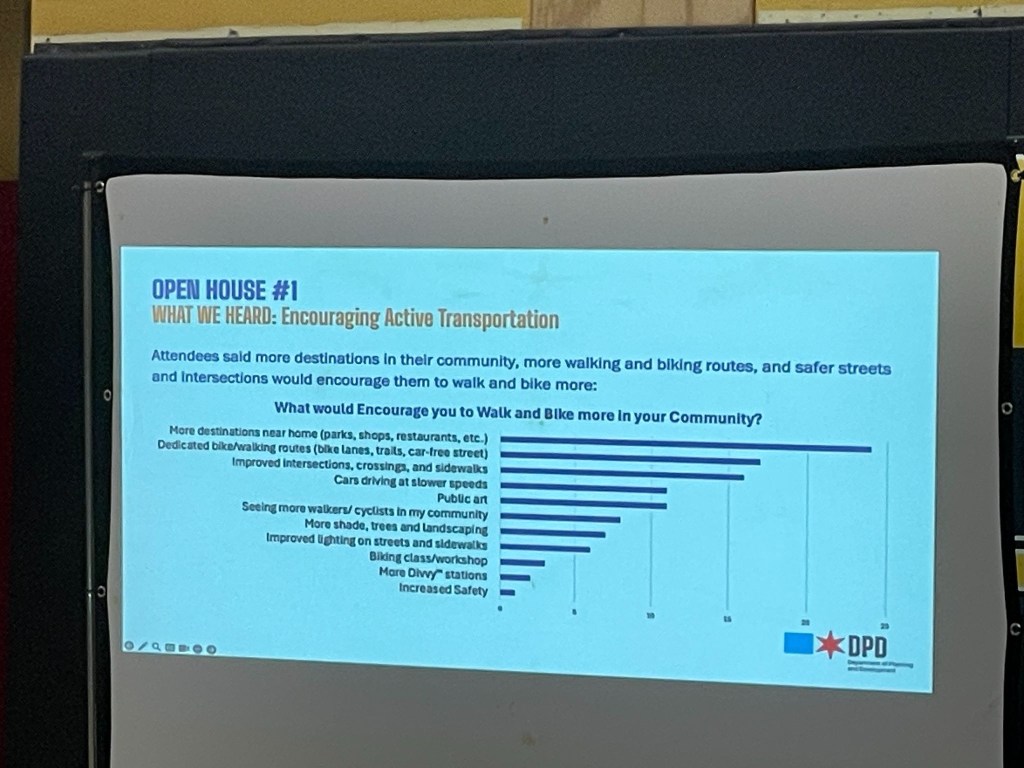
When planners asked what would encourage people to walk or bike more, the most common response was more neighborhood destinations, including shopping, parks, and housing. Dedicated walking and biking paths and safer intersections, crossings, and sidewalks also ranked highly.
Residents also told planners they wanted future development to preserve affordable housing, green space, local small businesses, and Bronzeville’s history and culture. At the same time, attendees asked for more grocery options; additional small businesses; businesses open later in the evening; development on vacant land; spaces for youth and young adults; and a possible museum dedicated to Bronzeville or the area’s railroad history.
Housing feedback included concerns about high costs, accessibility for people with disabilities, and a need for more housing types, including larger family-sized rentals, co-ops, affordable housing, and housing near transit.
Wednesday’s exercises moved from those broad priorities to the physical trail itself. Around the gym, residents studied maps and renderings and marked where they thought access ramps should go, what different portions of the trail should be used for, and how it should connect with nearby streets and destinations.
One of the largest challenges is that the old rail structure is no longer continuous. Sections have disappeared over the decades, including a substantial gap between Cottage Grove Avenue and Drexel Boulevard.
Holland asked attendees how they would prefer to navigate those missing sections and whether the route should descend to the street network before returning to the elevated trail. Planners also asked what access points should look and feel like, and where different activities such as exercise, recreation, landscaped areas, or gathering spaces would make the most sense.
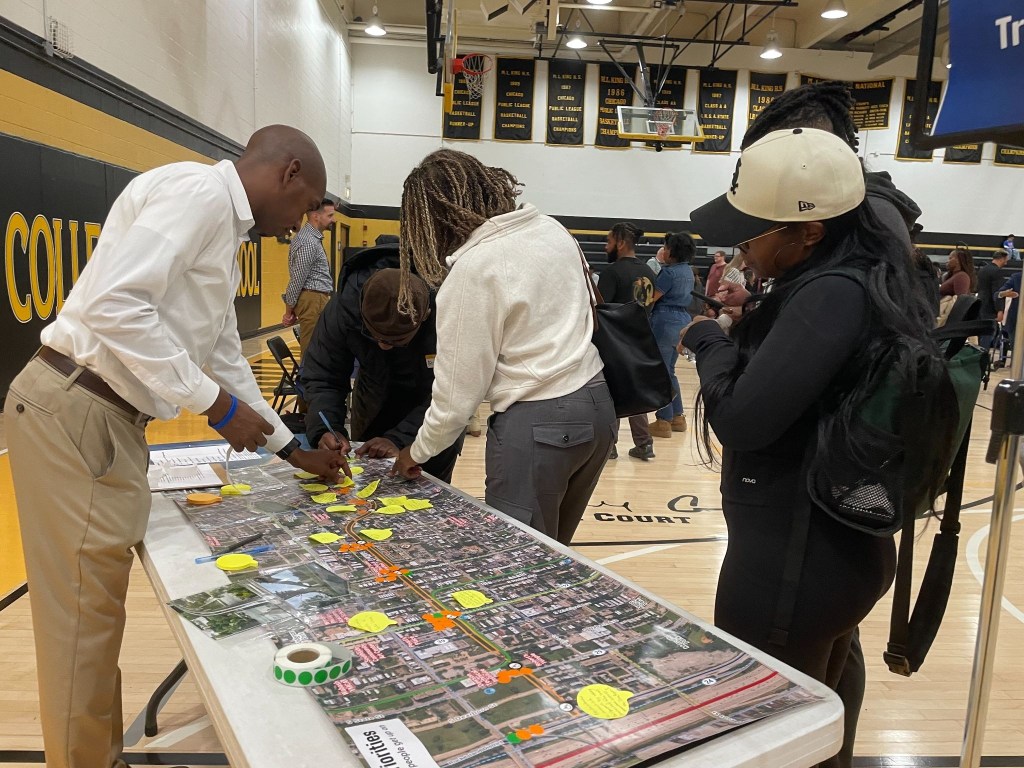
Planners asked attendees where they would want to access the future trail and what those entrances should look like.
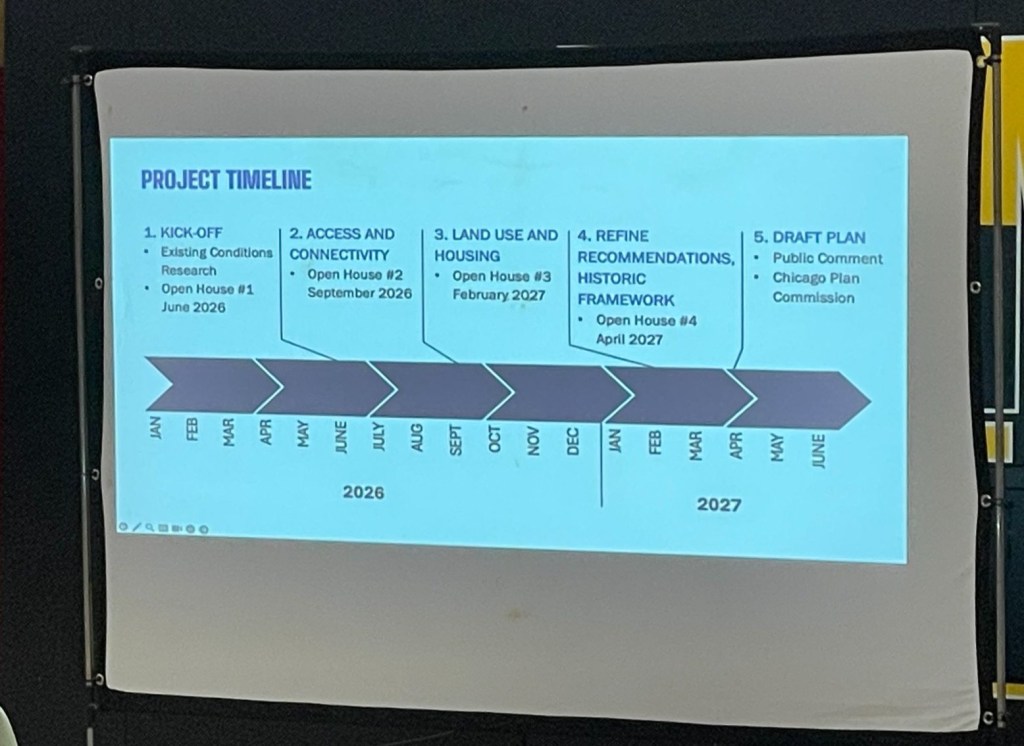
The timeline presented Wednesday calls for a third open house focused on land use and housing in February 2027, followed by a fourth meeting in April to refine recommendations and discuss the historic framework. A draft plan is then expected to be released for public comment before going to the Chicago Plan Commission.
For a project still years away from construction, Wednesday’s meeting dealt with remarkably tangible questions. Where do you get on? What happens when the old railroad disappears? What should you encounter once you are up there?
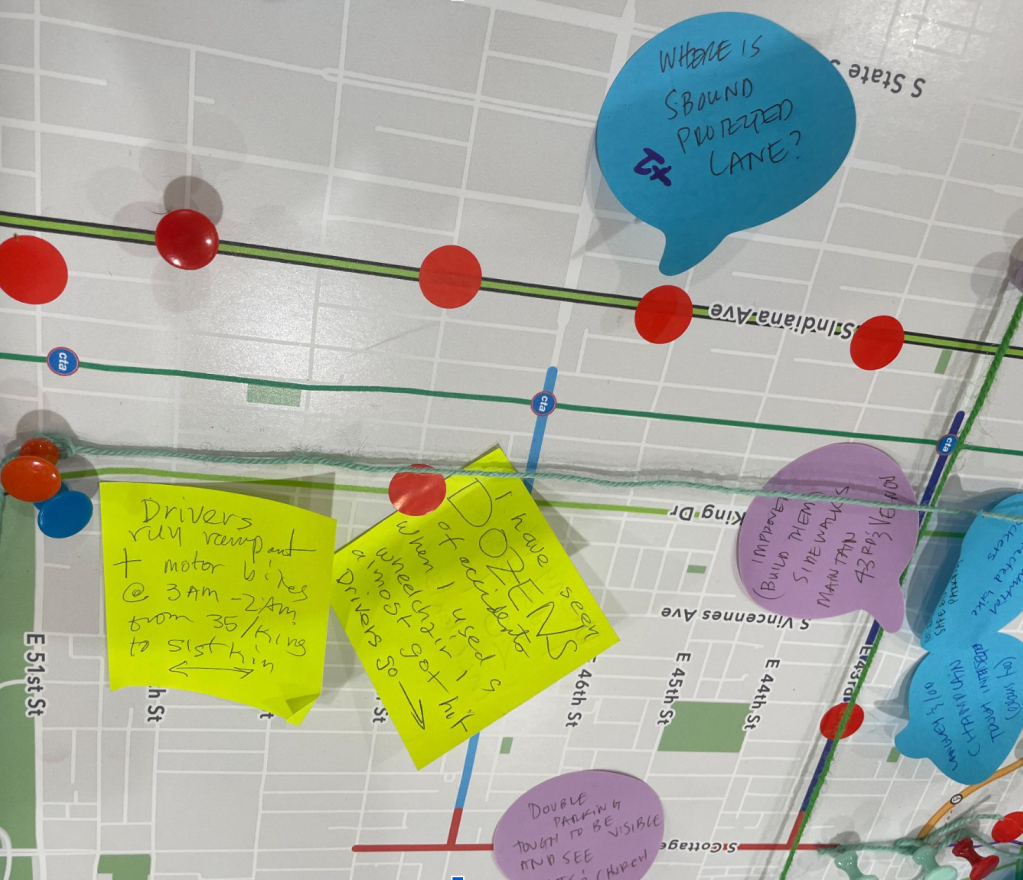
The answers residents put on maps and Post-it notes Wednesday will help determine what the Bronzeville Trail eventually looks like and how well it connects to the neighborhood around it.

Did you appreciate this post? Streetsblog Chicago is currently fundraising to help cover our 2025-26 budget. If you appreciate our reporting and advocacy on local sustainable transportation issues, please consider making a tax-deductible donation here. Thank you!

Read More:
Streetsblog has migrated to a new comment system. New commenters can register directly in the comments section of any article. Returning commenters: your previous comments and display name have been preserved, but you'll need to reclaim your account by clicking "Forgot your password?" on the sign-in form, entering your email, and following the verification link to set a new password — this is required because passwords could not be carried over during the migration. For questions, contact tips@streetsblog.org.