
After Pritzker named his NITA board picks, the agency’s leadership is largely decided. Will they use their power for good?

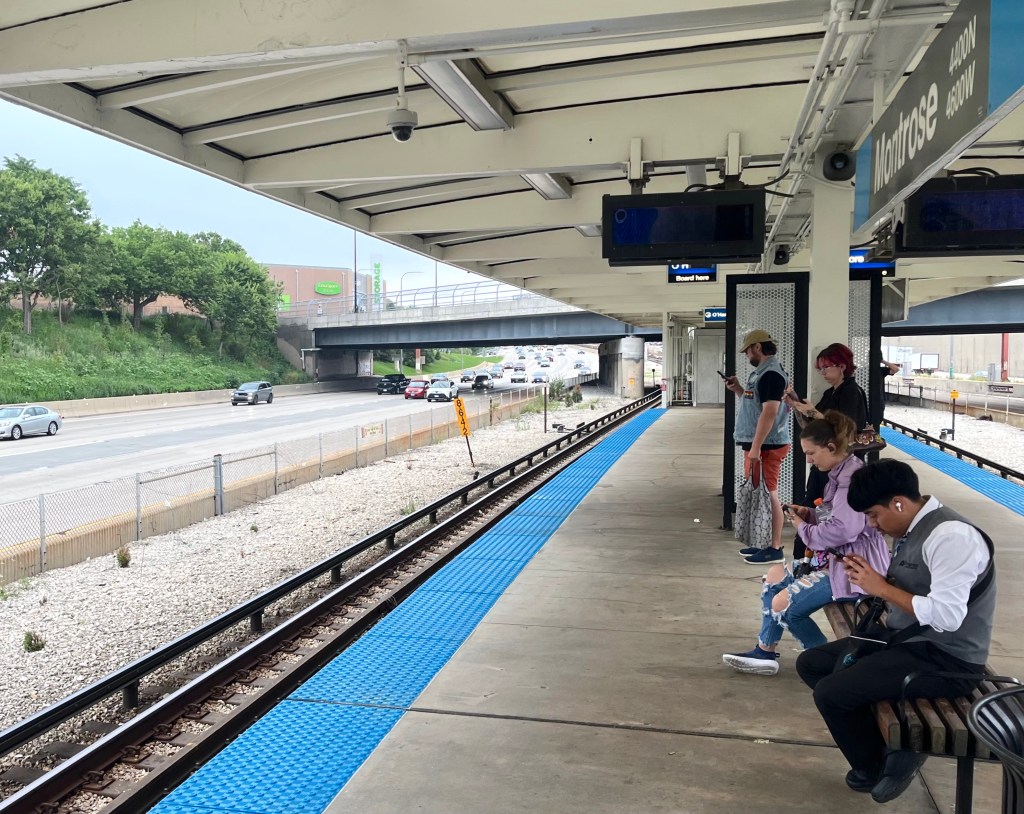

After years of fiscal-cliff warnings, legislative negotiations, and fights over who should control the region’s transit agencies, the lineup of directors who will oversee the new Northern Illinois Transit Authority is now essentially complete.
Gov. JB Pritzker announced five appointments Friday: Bashir Qaasim, Nedra Sims Fears, Nirali Shah, Rosa Ortiz, and Vanessa Uribe. He also reappointed Neema Jha to the CTA Board. The governor’s appointments still require confirmation by the Illinois Senate.
The appointments fill Pritzker’s share of the 20-member NITA board, which will replace the Regional Transportation Authority on September 1. Chicago Mayor Brandon Johnson and Cook County Board President Toni Preckwinkle each appoint five members. The remaining five come from DuPage, Kane, Lake, McHenry, and Will counties.
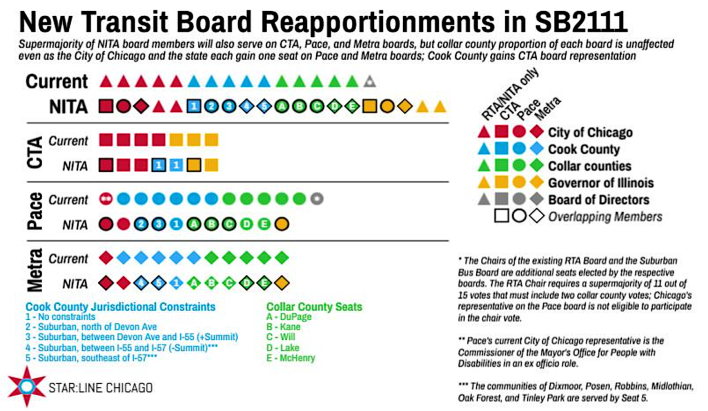
The new board has considerably more power than the Regional Transportation Authority it replaces. NITA will oversee regional planning and funding, develop integrated fares and service standards, and coordinate the CTA, Metra, and Pace. Seventeen of its 20 members will also serve on one of those agencies’ boards, a structure designed to improve coordination between NITA and the individual service boards.
Pritzker’s slate draws from urban planning, transit procurement, community development, technology and public administration.
- Ortiz, an urban planner and former Chicago Department of Housing official, has served on the CTA board since 2021. She will move to the Pace board while also serving on NITA.
- Shah previously held procurement, contract administration, and compliance positions at CTA and now oversees procurement work at the Obama Foundation.
- Fears, who will serve on both NITA and CTA, leads the Greater Chatham Initiative and has a background in community development finance, neighborhood investment, and strategic planning. She previously served on the Metropolitan Planning Council board.
- Qaasim, who will join NITA and Metra, works in technology and organizational transformation, including integrating fragmented technology systems.
- Uribe, who will serve only on NITA, has held operations, economic development, and policy roles in state and county government. She currently works at the Chicago Community Trust (a former Streetsblog Chicago funder.).
Separately, Pritzker reappointed Jha to the CTA board, where she has served since 2022. She works in technology infrastructure modernization.
The NITA Act does not require every director to have worked for a transit agency. Instead, it requires directors to have “diverse and substantial relevant experience and expertise” for overseeing the planning, operation, and funding of a regional transportation system. The law specifically lists backgrounds including urban and regional planning; large capital projects; labor and workforce development; business management; public administration; transportation; and community organizations. Appointing officials are also directed to pursue geographic, economic, racial, ethnic, and cultural diversity across the board.
The biographies released by the governor’s office show a strong emphasis on organizational management and institutional coordination. What the biographies do not identify is experience in some of the day-to-day work of running transit systems, such as transit operations; route and service planning; scheduling; or transportation engineering.
This does not make the appointees unqualified, as the NITA Act intentionally calls for directors with a broad range of backgrounds. However, it raises a question after years of debate over how to reform the region’s transit system: How much direct transit expertise should be represented on the boards now charged with carrying out that reform?
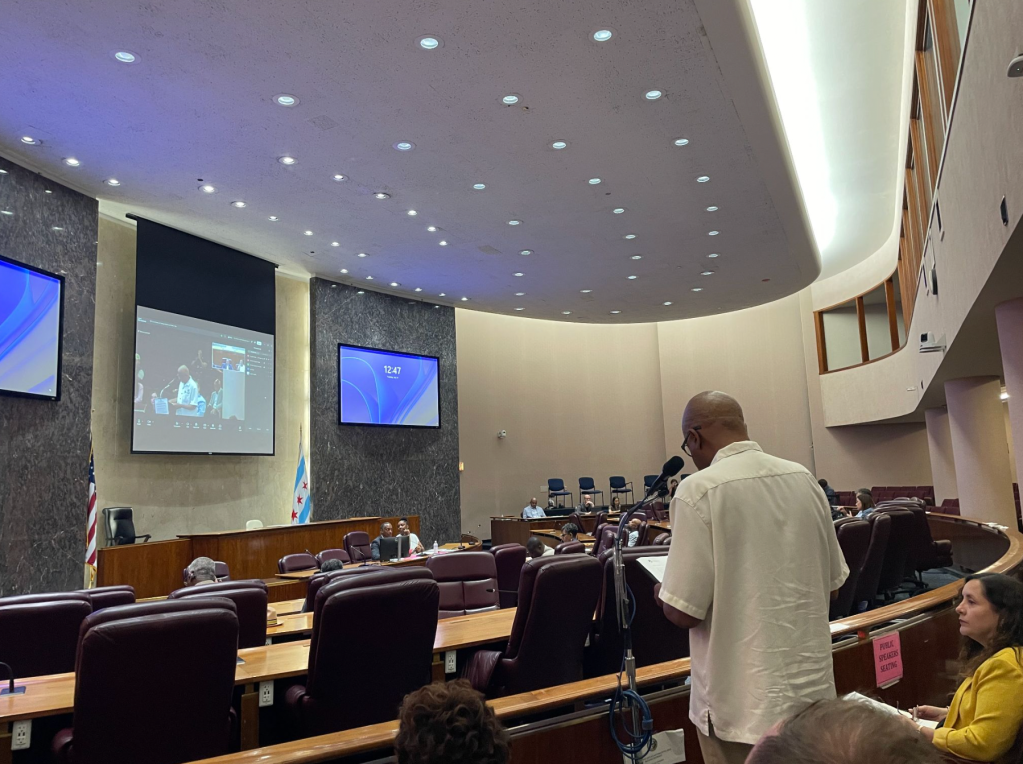
Broader questions about what experience transit board members should bring have already surfaced during the appointment process. When Chicago Mayor Brandon Johnson’s nominees went before the City’s Transportation Committee in July, advocates asked whether his nominees actually ride transit, understand how the system performs, and are prepared to hold agency leadership accountable. W. Robert Schultz III, a campaign organizer with the Active Transportation Alliance, told alderpersons that the opportunity created by NITA needed to be matched by appointing “the strongest possible champions for public transportation.”
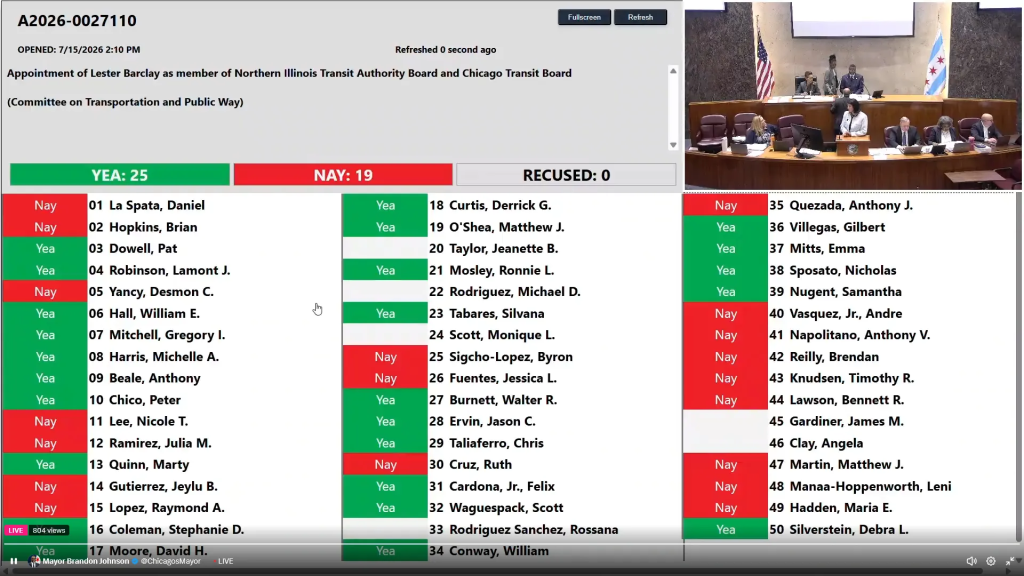
The mayor’s pick who drew the most opposition was current CTA Board Chair Lester Barclay, whom Johnson nominated to serve on both the CTA and NITA. Barclay’s appointment drew a close Council vote after advocates cited his relatively low transit use, his oversight of controversial former CTA chief Dorval Carter, and a Tribune op-ed in which Barclay raised concerns about the the new regional transit governance structure. The board chair told alderpersons that he supports the NITA Act and “fully embrace[s] the spirit of regional coordination.” Pritzker’s selections arrive against that backdrop.
NITA’s first board will choose its own chair in September. According to the governor’s office, its early work will include setting up the new governance structure, advancing regional fare programs, and developing the region’s first regional operating and capital budget.
“It’s unfortunate that none of the appointing authorities chose any disability representation and only one transportation advocate for the new NITA board,” responded Better Streets Chicago Executive Director Kyle Lucas to Pritzker’s announcement. “It will be critical that the new board members work closely alongside advocates and the community to ensure that the promise of NITA is kept. There is significant opportunity to transform our transit systems and usher them into a new era, but it will require us to be bold and to dream and plan big.”

The transition will also affect who runs the three transit systems. The new CTA board, for example, will help choose the agency’s next permanent chief executive after Acting President Nora Leerhsen has been holding the fort for more than 18 months. Advocates generally approve of her track record on improving service and safety, while successfully responding to the Trump administration’s attempts to freeze or cut funding. Under the NITA Act, the CTA board’s appointment of an executive director requires the advice and consent of the NITA Board, whose chair and executive director must also participate in the selection process.
The NITA Act paired the governance overhaul with roughly $1.5 billion a year in transit funding statewide and a promise to build a Chicagoland system that works more like one network. For riders, that is supposed to mean easier transfers, more coordinated service, a unified approach to fares, better ADA accessibility, and more accountability for whether promised service actually arrives.
On September 1, the people tasked with turning those promises into policy will start taking their seats. For advocates who spent years fighting first to prevent major service cuts and then to win structural reform, the next question is straightforward: Will the new boards use the authority they have been given?

If you appreciate Streetsblog Chicago’s livable streets reporting and advocacy, please consider making a tax-deductible donation to support our work. Thank you!

Read More:
Streetsblog has migrated to a new comment system. New commenters can register directly in the comments section of any article. Returning commenters: your previous comments and display name have been preserved, but you'll need to reclaim your account by clicking "Forgot your password?" on the sign-in form, entering your email, and following the verification link to set a new password — this is required because passwords could not be carried over during the migration. For questions, contact tips@streetsblog.org.