CDOT gives a preview of its Complete Streets design guide at Active Trans monthly meeting


On Wednesday, the Active Transportation Alliance held its monthly Advocacy Connect webinar. The hour focused on the Chicago Department of Transportation’s new Complete Streets guidelines, which were recently published on the CDOT website. CDOT Assistant Commissioner David Powe gave an overview of the design guide with input from Calvin Graham, a senior engineer with TYLin, a firm that frequently works with the City on Complete Streets projects.
Powe said he hoped the session would inspire attendees to think about ways their own street could be improved. He prompted, “Think about a particular block where you think one change could make the street better for one type of user.”
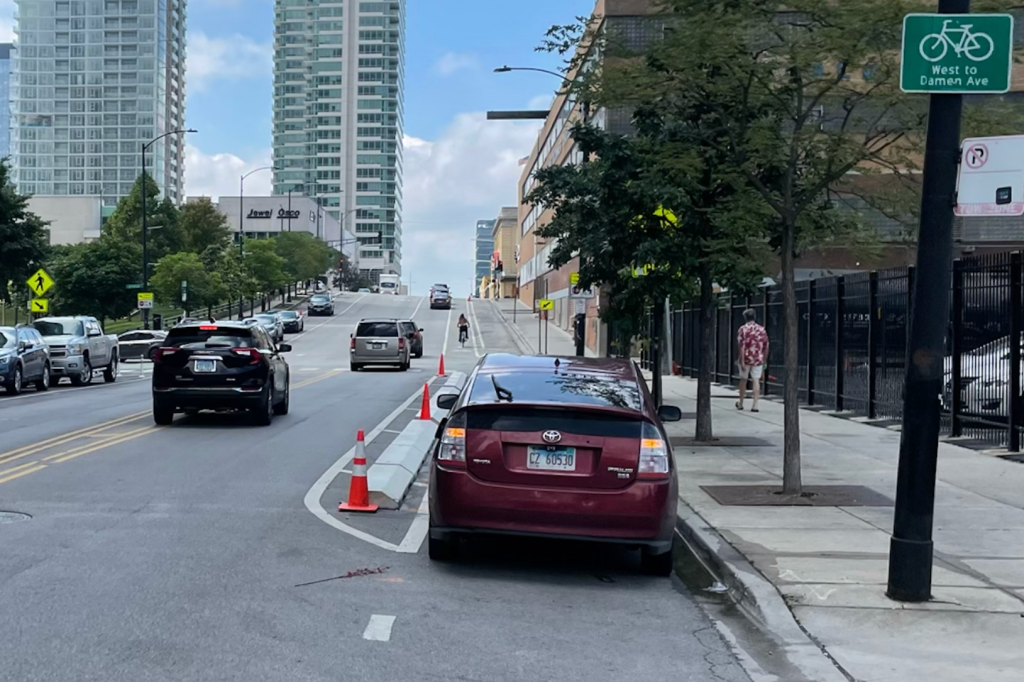
The first consideration for CDOT in assessing complete streets projects is traffic crashes. Powe mentioned the recent tragic death of his colleague Riley O’Neil, who was fatally “doored” by a driver with a suspended license while riding his bike in a paint-only bike lane on Halsted Street in Bridgeport. “We were devastated by that loss and we look at these crashes every day,” Powe said. “We’ve seen a tremendous reduction in fatalities in the last several years because we’ve built so many Complete Streets and so many protected bike lanes. Our goal is to slow down these cars in residential areas, near schools, etc. When we slow the cars down, we save lives.”
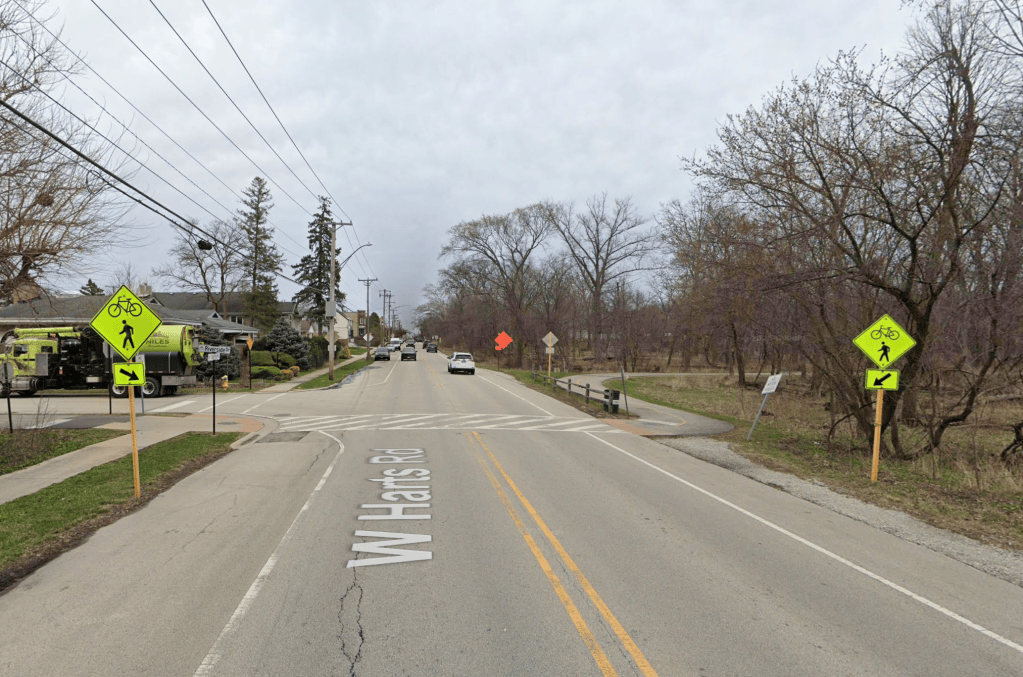
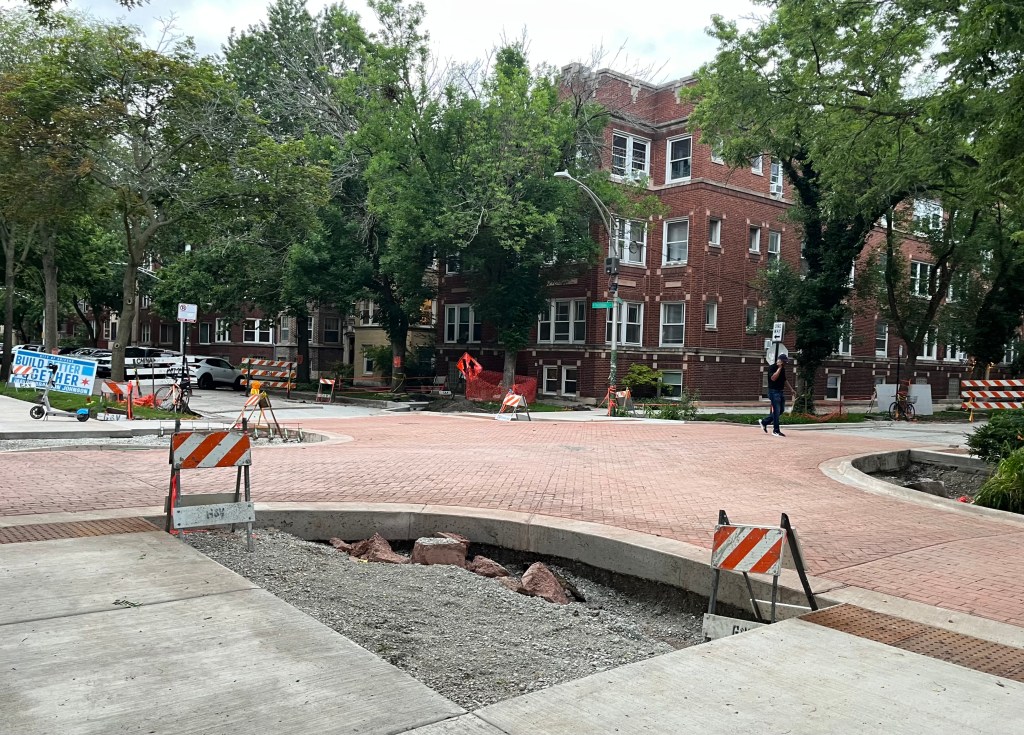
Powe then reviewed the suite of options CDOT uses to calm traffic, including speed humps, traffic circles, raised crosswalks, speed tables and more. “My personal favorite is raised intersections,” Powe said, referring to the raised change in pavement filling an entire intersection, as seen on the UIC campus. “You see them and are more likely to slow down and when your vehicle hits them, you definitely slow down.”
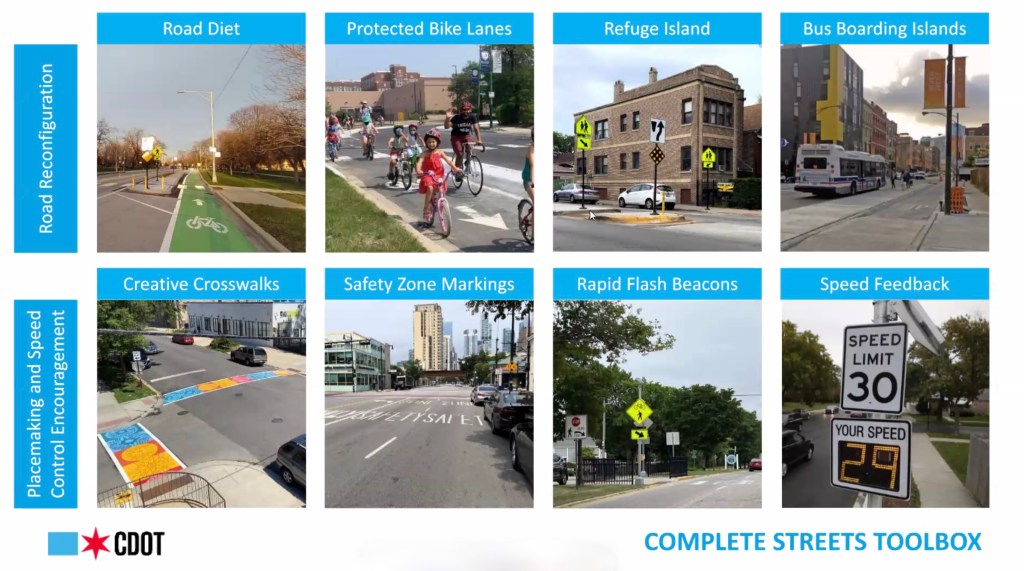
Raised intersections are relatively complex to design and implement, so simpler, cheaper interventions like curb extensions are more common. Powe shared a slide of reconfigurations CDOT considers whenever a road is due for resurfacing, that can get included in the project: road diets, curb protected bike lanes, pedestrian refuge islands and bus boarding islands.
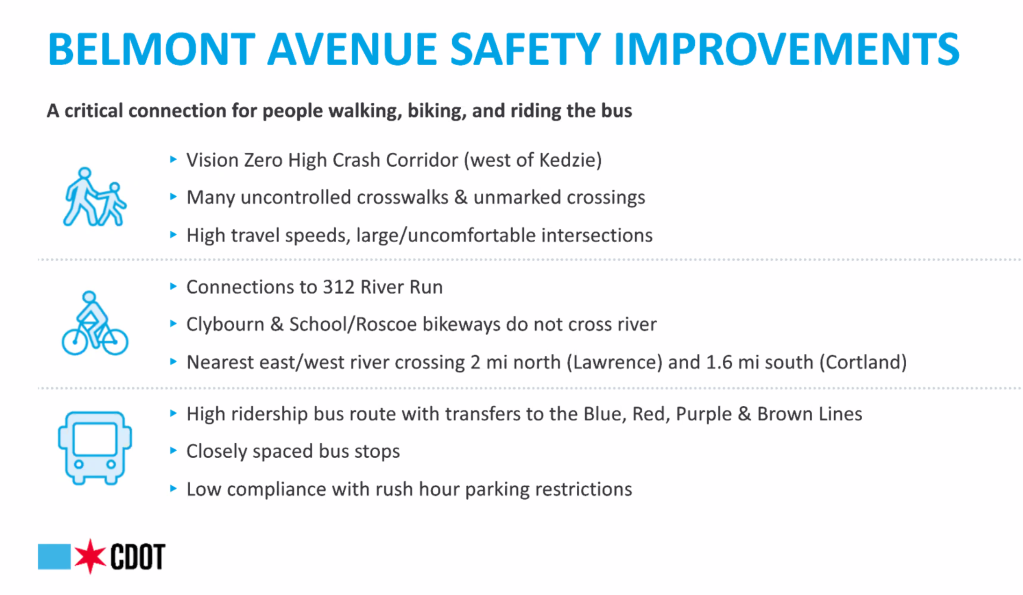
He then highlighted the Belmont Avenue improvements made in 2025, which added protected bike lanes, along with many of the improvements listed above, between Kimball and Damen avenues. The project created a safer east/west biking route over the river and connected riders to the 312 RiverRun. Powe said CDOT data shows a significant reduction in crashes “of all kinds” and a big uptick in biking since the project was installed.
A couple of wonkier, small-text slides showed CDOT’s design process and a table to calculate curbside use and the potential impact of road changes on parking and curb use.
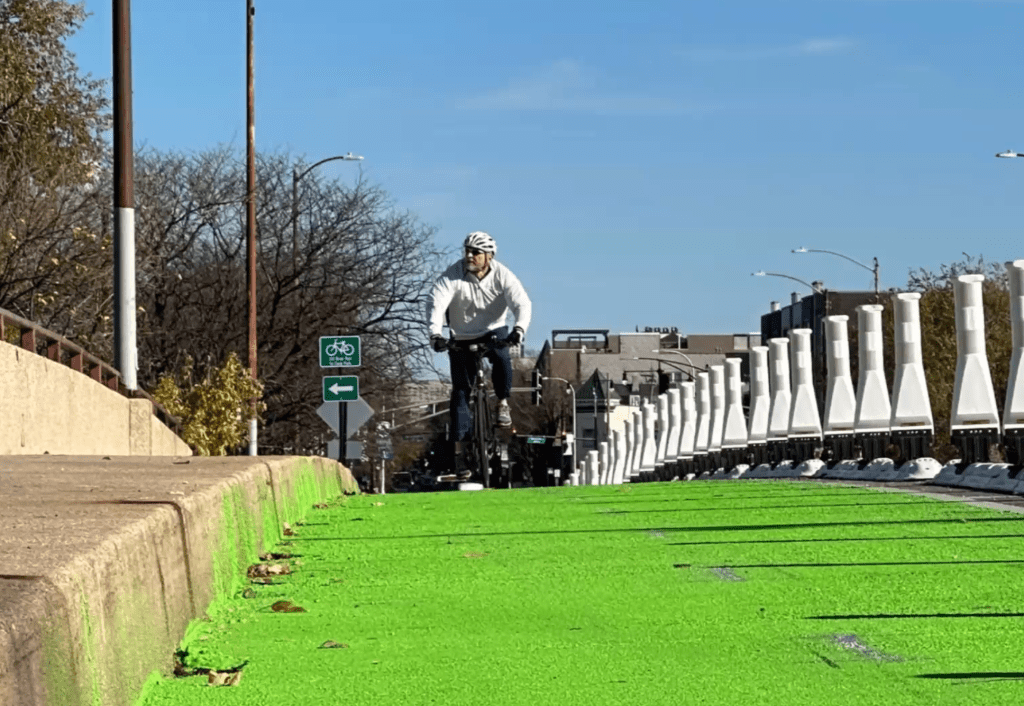
“We’ve learned so much since the first bike lanes were built in Chicago, since the first bus lanes were poured,” Powe said. For instance, protected bike lanes need to be a minimum of five feet wide. “We found out the bike lanes between Loop Link and the sidewalk downtown are not wide enough. We learned that the hard way,” he said. These requirements – and many more – are included in the complete streets guidelines, which Powe said is a “living document” which are frequently updated.
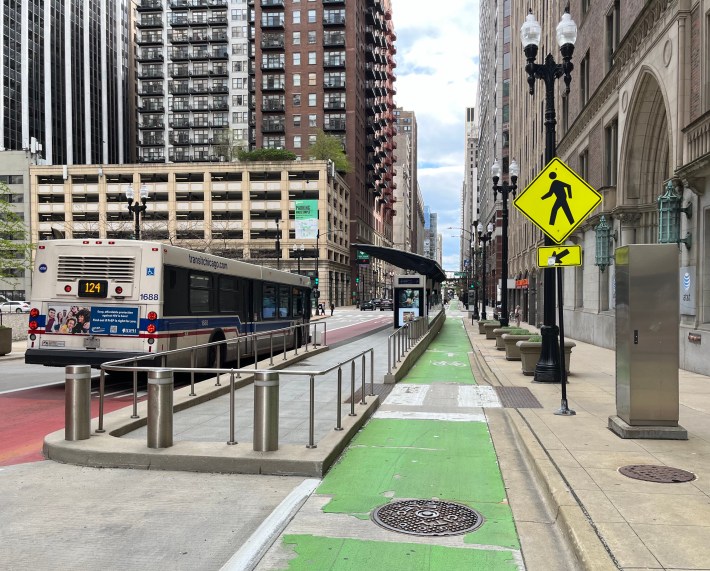
A Loop Link station and protected bike lane on Washington east of Wacker Drive, looking east, in April 2024. Photo: John Greenfield
Powe spoke briefly about curb use considerations like car parking and loading zones. Neighborhood Greenways, pedestrian- and bike-priority side street routes, are an option for providing a low-stress bikeway without converting car parking parking spaces. These greenways often have stretches which “contraflow” bike lanes, which legalize two-way biking on one-way streets. Powe noted that these projects often include curb bump outs; raised crosswalks and intersections; posted 20 mph speed limits, and other traffic-calming measures.
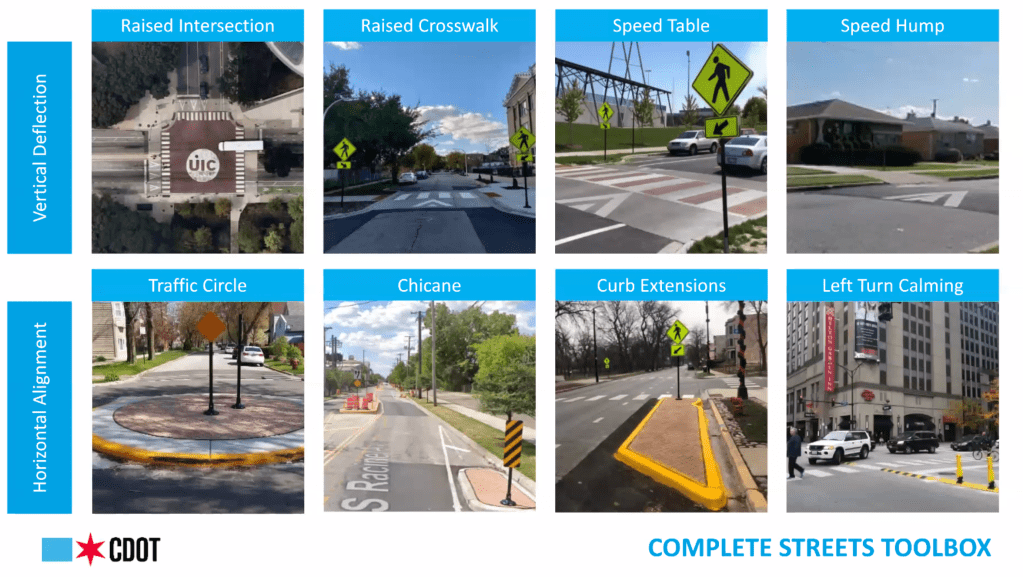
During the question-and-answer period, one attendee asked how CDOT determines the importance of car parking over other land uses. “We always give the options to decision makers,” Powe responded. “We can create the design parameters and give the most robust option, which we always do. We know protected bike lanes save lives. We are not the ultimate decision makers on the design that gets put down on the ground.”
Another attendee asked if speed bumps could be designed with cut-throughs for bikes, allowing people on two wheels to travel through more smoothly. Graham said bike-friendly “sinusoidal” speed hump are being piloted in Chicago. “It’s a little slower to install, but the idea is it’s a more gradual rise and fall that’s better for bikes,” he explained. Graham added that CDOT does not install “speed pillows” or speed bumps with a break in the center because they deteriorate more quickly, requiring extra maintenance.
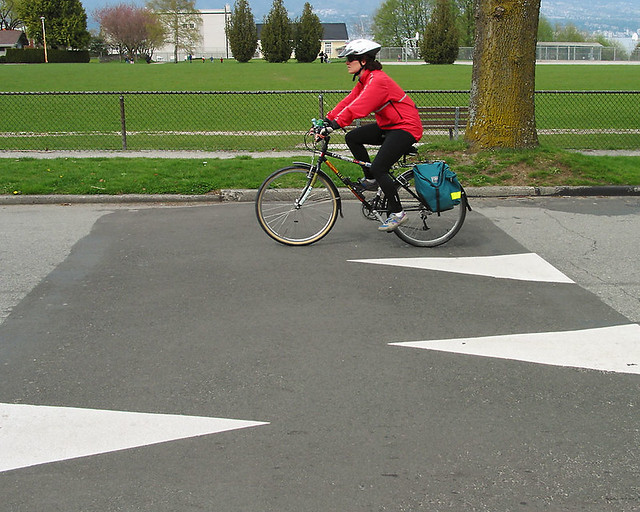
Biking over a sinusoidal speed hump. Photo: Richard Drdul
The session concluded with an overview of state legislative wins for safer streets by ATA Advocacy Director Jim Merrell. These include the new “Stop Super Speeders” bill that lays the groundwork for new technology to be installed in vehicles that prevent travel over the speed limit for repeat offenders. However, Merrell noted that “99 percent of speed violations in Chicago are from speed cameras.” The speed reduction technology can only be handed down by court order.
Video of the presentation.
Other legislative gains include a reduction in barriers for communities to lower their local speed limit and allow them to work with the Illinois Department of Transportation to lower the speed limit on state-controlled roads. The Illinois General assembly also passed new regulation on e-bikes and “e-motos” capable of speeds over 28 mph.

If you appreciate Streetsblog Chicago’s livable streets reporting and advocacy, please consider making a tax-deductible donation to support our work. Thank you!

Streetsblog has migrated to a new comment system. New commenters can register directly in the comments section of any article. Returning commenters: your previous comments and display name have been preserved, but you'll need to reclaim your account by clicking "Forgot your password?" on the sign-in form, entering your email, and following the verification link to set a new password — this is required because passwords could not be carried over during the migration. For questions, contact tips@streetsblog.org.