Pritzker signed “Stop Super Speeders” law, which will allow repeat offenders to drive if they use technology that forces them to obey posted speed limit


On May 21, the Active Transportation Alliance heralded the Illinois House and Senate passing the “Stop Super Speeders” bill (HB 4948), which spokesperson Ted Villaire wrote “will make our streets safer by reigning in repeat reckless drivers.” The legislation set the stage for using Intelligent Speed Assistance tech, which employs onboard sensors and GPS to stop the most reckless motorists from going faster than the legal speed limit..
“Research shows that a small number of ‘super speeders’ are responsible for a disproportionately large share of deadly crashes,” Villaire explained. “These drivers are several times more likely than typical motorists to be involved in deadly collisions, and traditional enforcement – such as license suspension – has proven largely ineffective. Nationally, 75 percent of drivers with a suspended license continue to drive.”
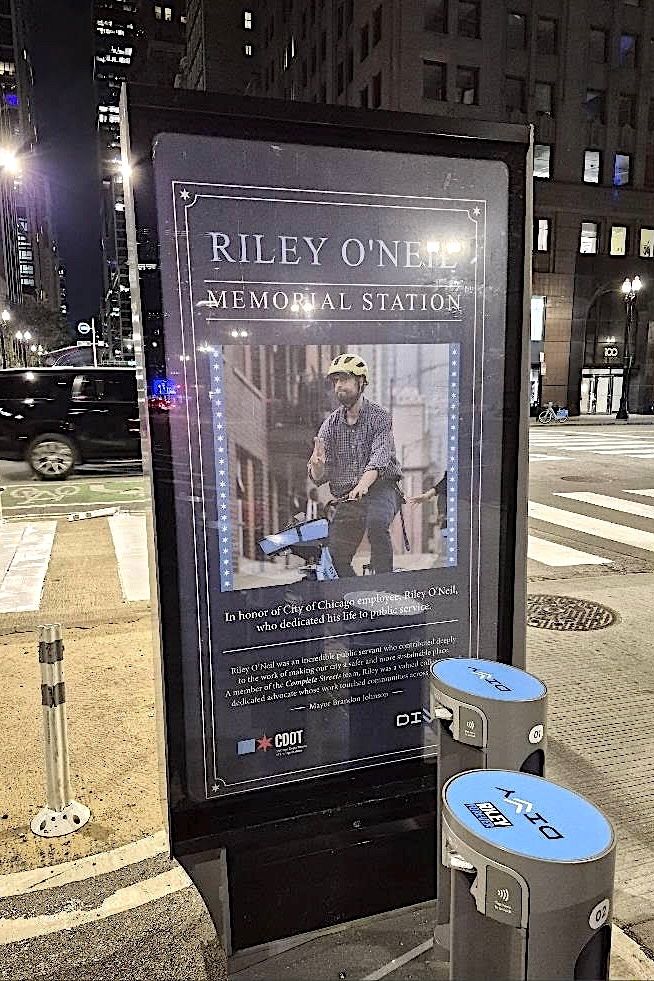
As many Streetsblog readers are aware, earlier this month in Chicago there was a tragic example of the ineffectiveness of license suspension, albeit one that didn’t involve speeding. Among the multiple citations issued to the motorist who fatally “doored” Complete Streets Planner Riley O’Neil on June 5 on Halsted Street in Bridgeport, was driving with a suspended license.
According to Villaire, the Super Speeders bill passed the full House with a 77-24 vote, and then the Senate Transportation Committee approved in a unanimous 18-0 decision after previously passing the full Illinois House with a 77-24 vote. The legislation passed the full Senate on May 20 with a super-majority of 49-9, and traffic safety boosters rejoiced.
The last step for the bill to become law was Governor JB Pritzker putting his John Hancock on it, which happened yesterday. The national advocacy group Families for Safe Streets, represented locally by transportation planner and crash survivor Rudy Faust, celebrated the win, calling it “life-saving legislation.”
“The law establishes an Intelligent Speed Assistance Program for drivers whose licenses have been suspended or revoked following repeated excessive-speeding offenses,” the organization explained in a press release. “Under the program, eligible drivers may apply for restricted driving privileges only if their vehicles are equipped with ISA technology that prevents them from exceeding posted speed limits.”
According to FFSS, the new law will apply to motorists who (FFSS’s language):
- Receive two convictions for excessive speeding within a 12-month period, defined as driving 26 miles per hour or more above the speed limit
- Have licenses revoked for reckless or aggravated reckless driving causing death
The group says low-income participants in the program will get financial help through an “indigent assistance fund.” They add that the legislation sets up “statewide certification standards for ISA devices and service providers.”
“Driving at high speeds is dangerous, plain and simple,” said Rep. Marti Deuter (D-Elmhurst), one of the bill sponsors, in a statement. “This law creates a pathway for high-risk drivers to remain connected to their communities while helping ensure our roads are safe for everyone.”
“Driving recklessly puts everyone on the road at risk,” stated Sen. Julie Morrison (D-Lake Forest), another sponsor. “This legislation gives Illinois another important tool to address dangerous driving behavior and help prevent future tragedies.”
“I survived a crash that changed my life, and I carry that reality every day,” said local FFSS advocate Rudy Faust in a statement. “Seeing this bill signed into law means that other families may be spared the pain so many of us live with. This legislation is about prevention and protecting human life.”
“The devastating impacts of speeding drivers have forever altered the lives of too many Illinoisans,” stated Ride Illinois Executive Director Dave Simmons. “This law provides Illinois with a meaningful new tool to help prevent future crashes caused by excessive speeding while still allowing people to maintain access to work, school, and daily life.”
According to FFSS, similar legislation has already passed in Washington, D.C., Virginia, Washington State, Georgia, Hawaii, and Maryland, and is moving forward in other states.
The Illinois law is expected to begin implementation after New Year’s Day 2028.

On November 12, SBC launched our 2026 fund drive to raise $50K through ad sales and donations. That will complete this year’s budget, at a time when it’s tough to find grant money. Big thanks to all the readers who have chipped in so far to help keep this site rolling to the end of 2026! Currently, we’re at $34,186 with $15,814 to go, ideally by the end of June.
If you value our livable streets reporting and advocacy, please consider making a tax-deductible gift here. If you can afford a contribution of $100 or more, think of that as a subscription. That will help keep the site paywall-free.
Share on FacebookShare on X (Twitter)Share on RedditShare via Email

Read More:
Streetsblog has migrated to a new comment system. New commenters can register directly in the comments section of any article. Returning commenters: your previous comments and display name have been preserved, but you'll need to reclaim your account by clicking "Forgot your password?" on the sign-in form, entering your email, and following the verification link to set a new password — this is required because passwords could not be carried over during the migration. For questions, contact tips@streetsblog.org.