Public opposition to plan to reconstruct DLSD as a car-centric 8-lane road intensifies at CMAP meeting, as agency weighs climate, funding risks
By Ellen Steinke
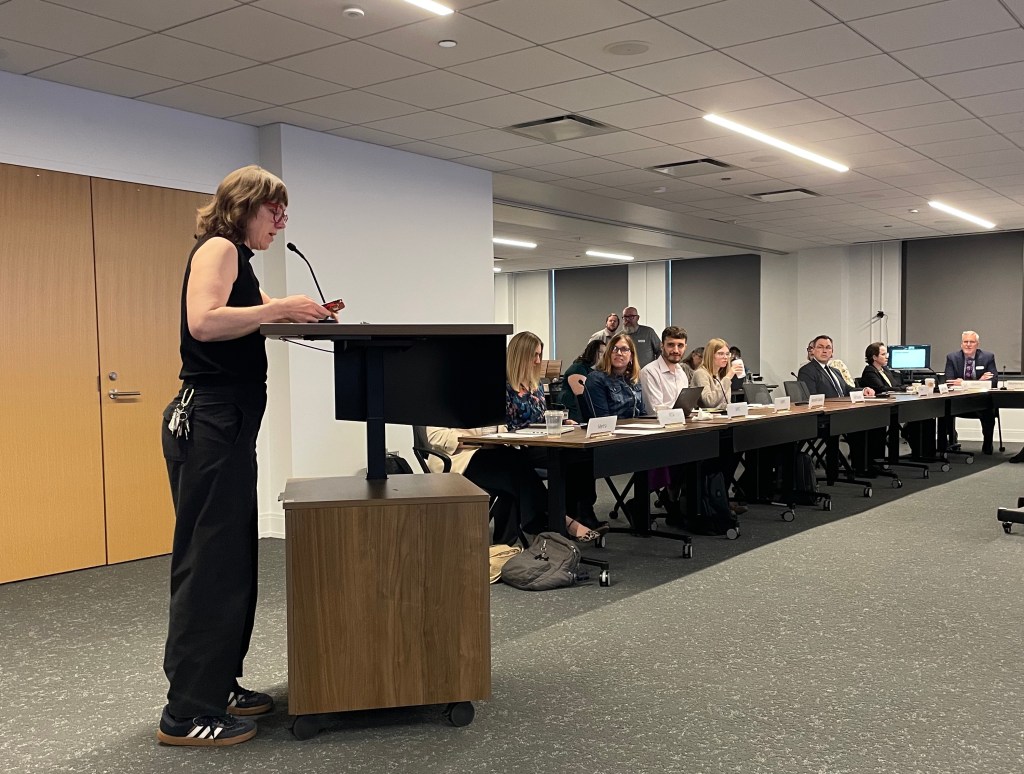
Public pressure over the future of DuSable Lake Shore Drive continued to build Friday, as dozens of residents urged the Chicago Metropolitan Agency for Planning to halt plans to move forward with the current “Redefine the Drive” proposal.
The comments came during a meeting that also included presentations on transportation funding risks, climate goals, and the long-term sustainability of the region’s road network. Some speakers warned that improving fuel efficiency and the rise of electric vehicles could reduce gas tax revenue, while others floated alternatives like a mileage-based user fee.
But when public comment opened, the focus quickly shifted back to a single issue: whether the region is about to lock in a highway-focused redesign of one of Chicago’s most valuable public spaces.
CMAP staff said the agency received 281 written comments ahead of the meeting, in addition to 33 people who made public comments in person. The volume of participation once again exceeded expectations for a mid-morning planning meeting, prompting the committee to extend the comment period multiple times to accommodate additional testimony.
The turnout echoed a similar surge of engagement at a February meeting, suggesting that public attention on the project is not fading, but intensifying.
A widening set of concerns
While opposition to the current DLSD plan has been consistent for years, Friday’s comments reflected a broadening coalition and a broader array of issues, spanning safety, climate, fiscal sustainability, transparency, and quality of life.
Some speakers focused on safety, pointing to recent crashes and the proximity of high-speed traffic to the Lakefront Trail. “Yesterday, I saw a video of a [driver] that had flown off DLSD at high speed, plowing right over the path where my child and I had been riding the day before,” said parent Clare Fauke. “This design makes our beautiful lakefront a dangerous place for families.”
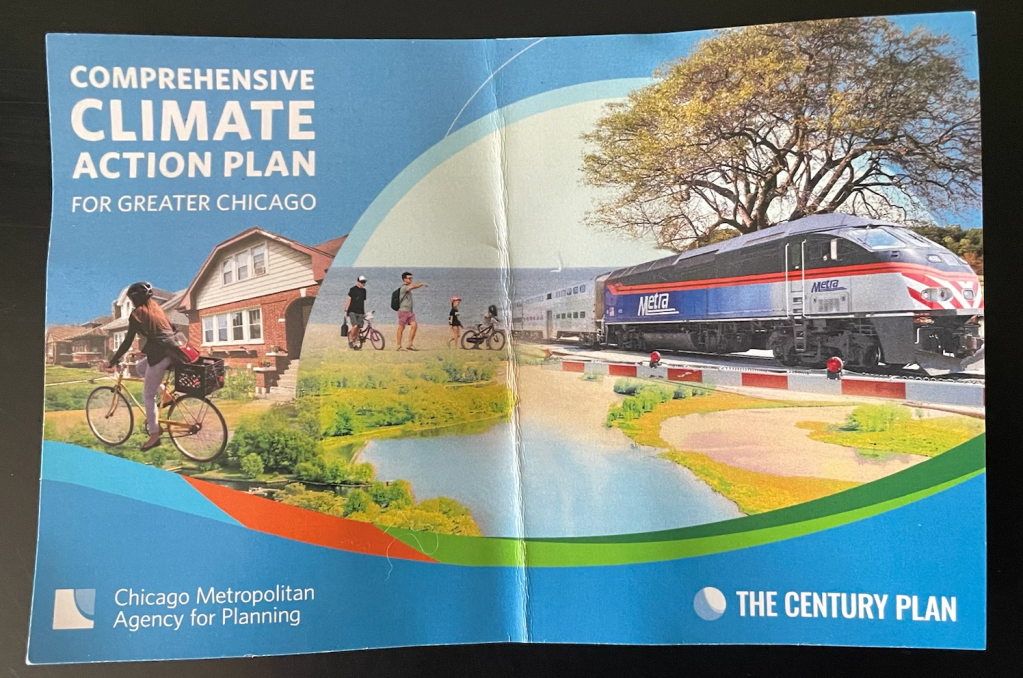
Others emphasized the disconnect between the project and CMAP’s own climate goals. Earlier in the meeting, staff presented elements of a regional climate action strategy that prioritizes reducing emissions through transit investment and reduced reliance on private vehicles.
Holding up a card distributed during the climate presentation, Better Streets Chicago Executive Director Kyle Lucas pointed to the imagery. “We were handed these cards with a nice little graphic,” he said. “It has a bike, it has people on the beach, it has a train. It does not have a highway. Because we know that highways are the opposite of how we take action on the climate, and yet we are entertaining doubling down on the mistakes, the destructive mistakes of the ’50s and the ’60s that we know are bad.”
Several commenters also questioned the assumptions underlying the project itself, arguing that the modeling relies on outdated travel patterns and unrealistic cost assumptions for driving. One speaker noted that regional models significantly underestimate the true cost of operating a vehicle, which may skew projections toward continued car dependence.
Software engineer Henry Firth raised concerns about the age and accuracy of the modeling used to justify the project, noting that key assumptions may be distorting the results. “CMAP’s travel demand model makes problematic assumptions around vehicle cost and perceived utility,” he said. “For example, it assumes operating costs of about 15 cents per mile, when AAA estimates closer to 75 cents. It also assumes parking costs of about 50 cents per trip, when we all know parking is way more expensive than that.”
Firth argued that these assumptions may explain why even the most transit-oriented proposals in the Redefine the Drive project show minimal projected mode shift. “If those assumptions are wrong, then the conclusions are wrong,” he said. “And if those conclusions are being used to justify spending billions of dollars, then the designs themselves need to be revisited with more accurate modeling.”
Together, the comments reflected growing skepticism not just about the design of the project, but about the analytical framework supporting it.
“A highway in a park”
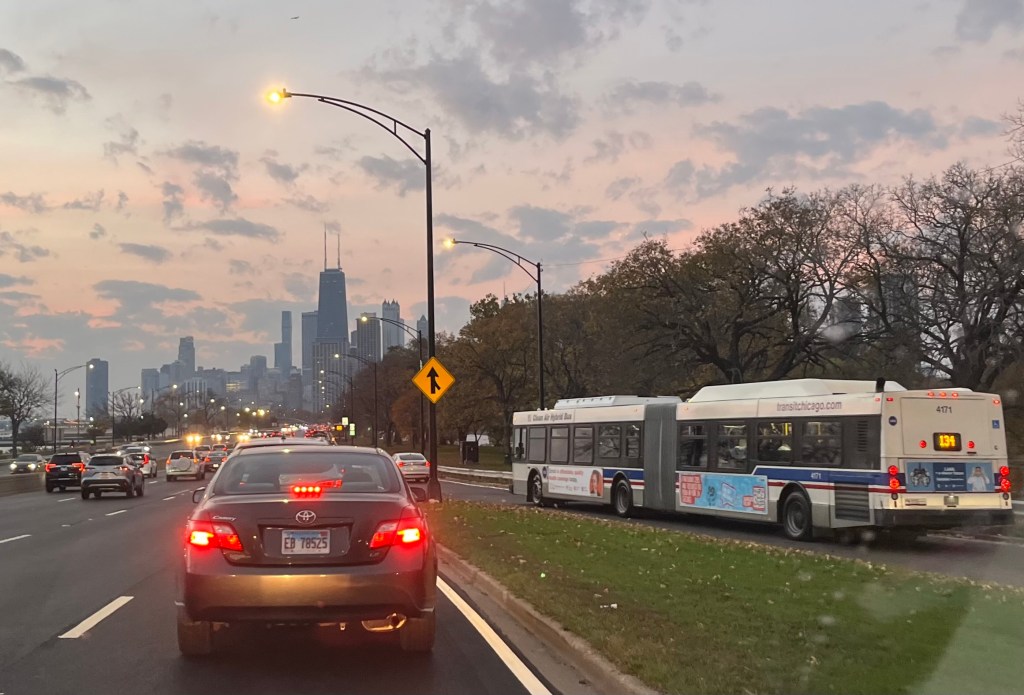
A consistent theme throughout the testimony was the fundamental mismatch between the lakefront’s role as a public space and the road’s function as a high-speed corridor. Multiple speakers described DLSD as a physical, psychological, and environmental barrier, between neighborhoods and the lake.
“The noise pollution creates a hostile and uncomfortable environment,” said Jibraan Ghani, a project manager whom Better Streets recently named Transit Advocate of the Year. He cited persistent noise levels of over 66 decibels that make it difficult to enjoy nearby parks and beaches. “It seems so ridiculous to have an eight lane expressway, bifurcating parks and the beach.”
Others pointed to the day-to-day experience of using the lakefront, noting that even when paths are technically car-free, the constant presence of high-speed traffic just feet away undermines the experience.
Several commenters also highlighted the difficulty of accessing the lakefront itself. Despite being one of Chicago’s most significant public assets, access points can be limited, indirect, or intimidating to cross, particularly for families, older adults, and people with disabilities.
A question of priorities
Friday’s debate ultimately came down to a broader question: what should Chicago’s transportation system prioritize? “We heard about the climate action plan, and we heard about the cost of maintaining our road network,” one commenter said. “Why are we doubling down on the most expensive, least efficient, and most dangerous form of transportation?”
Others framed the project as a generational decision, noting that the current redesign could shape the lakefront for the next 50 to 100 years. “This is a once-in-a-generation opportunity,” Fauke said. “No one will be proud of a highway next to the lakefront.”
Advocates also pointed to growing political opposition. Several speakers noted that a majority of lakefront alderpersons have expressed concerns about the project, and that the Illinois General Assembly has taken steps signaling opposition to the current direction.
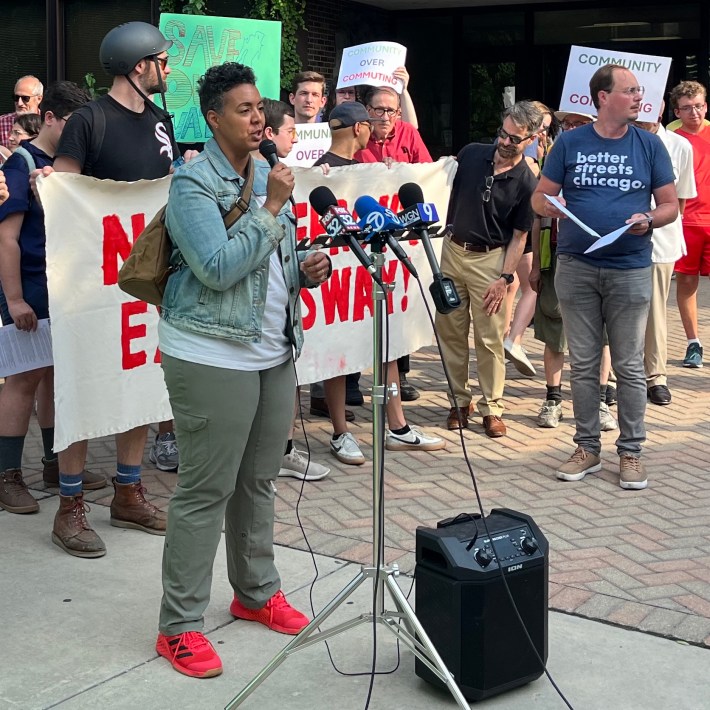
Despite this, commenters argued that the project continues to move forward without meaningful changes or updated public engagement, raising concerns about transparency and accountability.
A shift in tone and momentum.
If earlier phases of the DLSD debate focused on design details, Friday’s meeting suggested a shift toward a growing challenge to the underlying premise of the project itself. Rather than asking how to improve the current plan, many speakers questioned whether a highway-oriented design belongs on the lakefront at all.
The overall tone reflected the public’s increasing urgency and growing volume while also becoming more cohesive and harder to dismiss.
CMAP officials reiterated that inclusion in the region’s long-range transportation plan does not finalize a specific design. However, advancing the project within the plan could make it significantly harder to change course later by unlocking funding pathways and reinforcing institutional momentum.
With additional public comment opportunities expected this summer, advocates say continued engagement will be critical in determining whether the region locks in a highway-scale design or reconsiders a more transit-focused, people-centered approach.
Watch a video of Friday’s meeting here.
How to stay involved
For those looking to weigh in, there are several ways to stay engaged as the process continues.
Advocacy groups like Better Streets Chicago have created tools that make it easier to submit public comment, contact decision-makers, and stay informed about upcoming meetings.
Residents can also reach out directly to their alderperson, state legislators, and regional planning representatives to share their perspective on the future of the lakefront.

On November 12, SBC launched our 2026 fund drive to raise $50K through ad sales and donations. That will complete this year’s budget, at a time when it’s tough to find grant money. Big thanks to all the readers who have chipped in so far to help keep this site rolling to the end of 2026! Currently, we’re at $32,436 with $17,564 to go, ideally by the end of May.
If you value our livable streets reporting and advocacy, please consider making a tax-deductible gift here. If you can afford a contribution of $100 or more, think of that as a subscription. That will help keep the site paywall-free for people on tighter budgets, as well as decision-makers. Thanks for your support!
– John Greenfield, editor
Streetsblog has migrated to a new comment system. New commenters can register directly in the comments section of any article. Returning commenters: your previous comments and display name have been preserved, but you'll need to reclaim your account by clicking "Forgot your password?" on the sign-in form, entering your email, and following the verification link to set a new password — this is required because passwords could not be carried over during the migration. For questions, contact tips@streetsblog.org.