Friday’s CMAP meeting could lock in a lakefront walled off by an 8-lane highway. Here’s how to comment.
By Ellen Steinke
Update 3/4/26, 6:00 PM: Friday’s Chicago Metropolitan Agency for Planning Transportation Committee meeting drew unusually strong public participation around the future of DuSable Lake Shore Drive. More than 20 people delivered public comments in person or via Zoom, and agency staff said hundreds of written comments had been submitted ahead of the meeting. Because of the number of speakers, the committee extended the public comment period twice to accommodate additional testimony. Many commenters urged CMAP not to advance the project into the fiscally constrained portion of the regional transportation plan under its current framework, calling instead for a transit-focused boulevard alternative and stronger lakefront access.
This Friday, February 27, the Chicago Metropolitan Agency for Planning Transportation Committee will consider moving “Redefine the Drive” forward in the region’s long-range transportation plan.
If DuSable Lake Shore Drive advances onto CMAP’s “constrained” list, it clears the way for the Illinois and Chicago transportation departments to pursue major state and federal funding for the project’s current plan. Once funding pathways open and the project is positioned within the fiscally constrained portion of the Regional Transportation Plan, it will become significantly harder both politically and structurally to change course.

This meeting does not finalize the design, but it signals whether CMAP is comfortable advancing the current concept into the region’s funding pipeline.
That matters because after more than a decade of public engagement, many residents, advocates, and planners, and several lakefront elected officials, have consistently called for a fundamentally different approach: a true boulevard with dedicated transit, safer crossings, and stronger connections between neighborhoods and the lakefront.
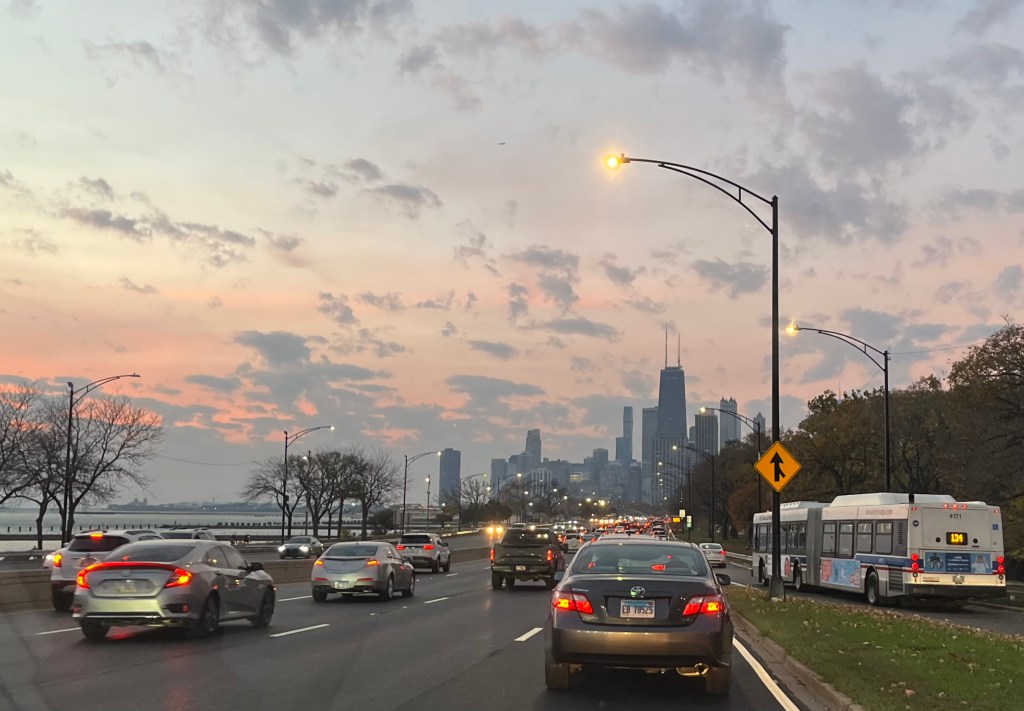
Instead, critics argue, the design direction that has continued to move forward would maintain the status quo of an eight-lane highway. This would preserve high vehicle volumes and speeds while adding only limited surface-level improvements.
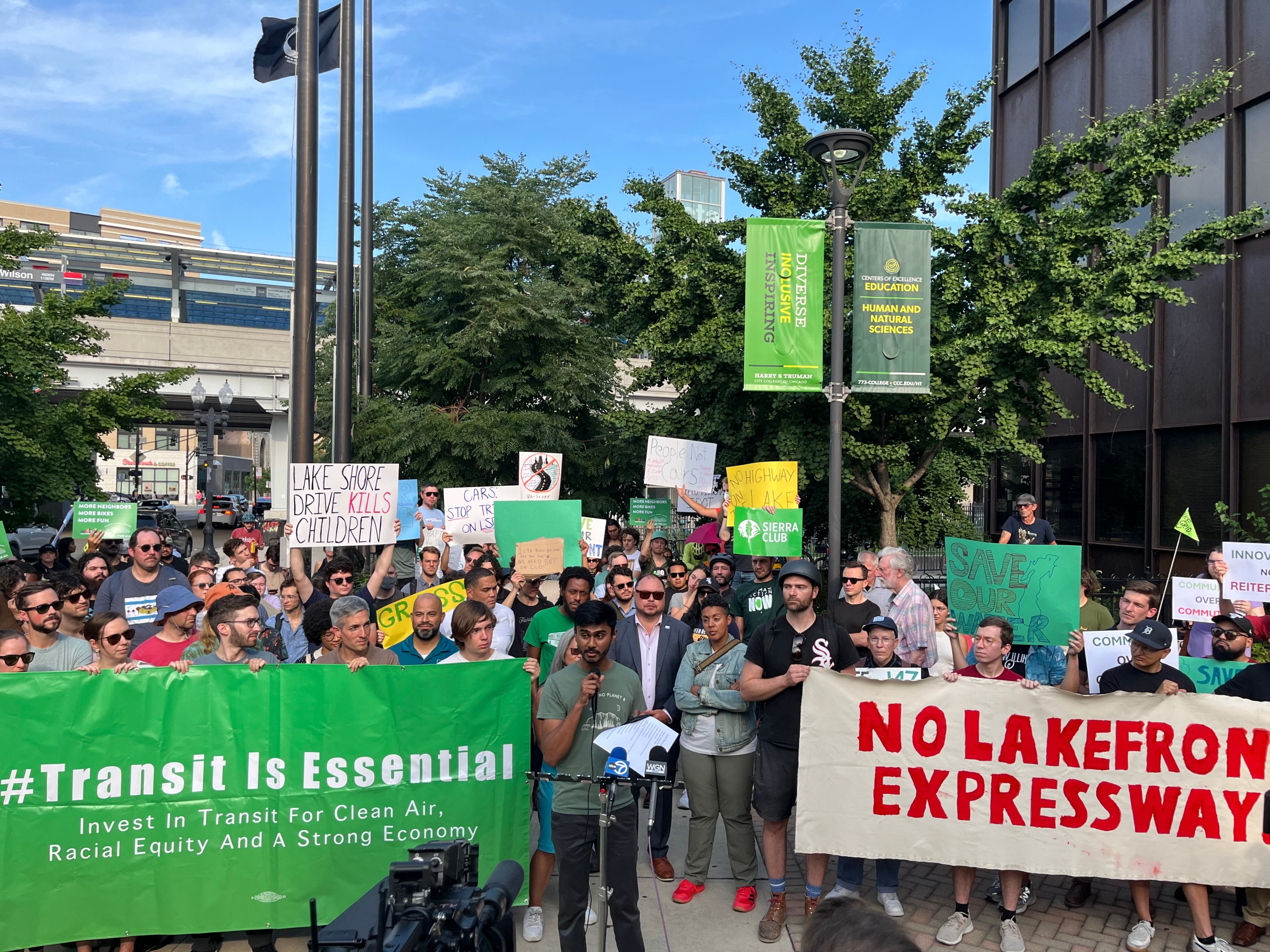
A decade of “Redefine the Drive”
The Redefine the Drive planning and public input process for the redesign of the roadway on the North Side began more than a decade ago, initially framed around rebuilding aging infrastructure and improving safety. Over time, it has evolved into a broader corridor redesign discussion.
Residents who attended public meetings and filled out surveys for the project repeatedly expressed interest in:
- Dedicated transit lanes or bus rapid transit
- Safer and more frequent pedestrian crossings
- Improved east–west connections
- Reduced speeds
- A roadway that feels more like a boulevard and less like an expressway
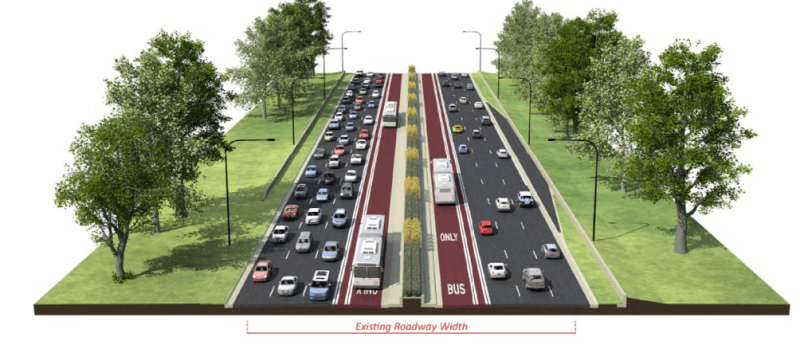
However, the modeling framework underpinning the project has largely focused on vehicle throughput. Travel demand assumptions have maintained high levels of car traffic and evaluated potential roadway layouts mostly through traffic-capacity metrics.
Transit improvements considered in formal modeling have been relatively limited and often tied to existing modernization projects such as the Red and Purple Line improvements. The project has not conducted robust testing scenarios that include strengthened regional rail, bus rapid transit, or significantly improved CTA service.
Why NITA changes the context
This moment is particularly consequential because Illinois recently moved to restructure Chicagoland transit governance through the creation of the Northern Illinois Transit Authority. While the agency is still being finalized, its purpose is to coordinate and strengthen regional transit planning across the CTA, Metra, and Pace.
Critics of the current DLSD framework argue that it would be premature to lock in a longterm highway-scale design before modeling how stronger, unified regional transit service could reshape travel patterns.
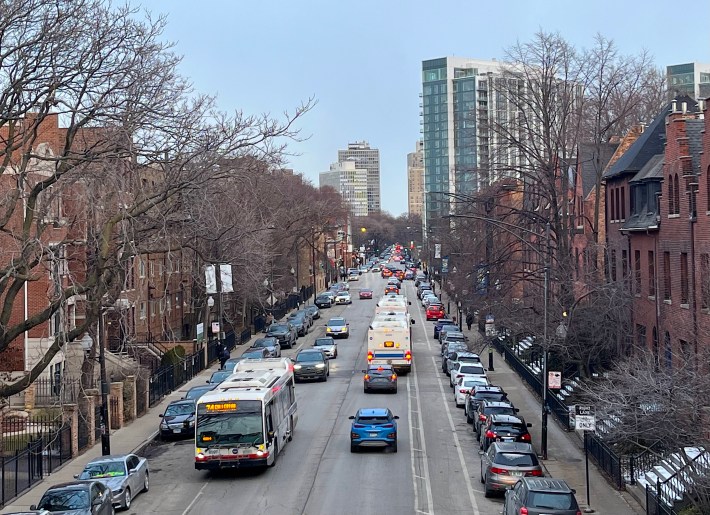
If regional rail, bus frequency, and east–west connectivity were significantly improved, demand assumptions along the lakefront corridor could look different. The question, advocates say, is whether the region should entrench a highway-dominated lakefront before fully evaluating those possibilities.
What Friday’s vote does and doesn’t do
Friday’s Transportation Committee vote does not finalize construction plans. But placing DLSD into the “constrained” portion of the Regional Transportation Plan signals that the region is prepared to prioritize and pursue funding under current assumptions. Once a project advances within that framework, institutional momentum builds around it.
For a corridor that shapes park access, neighborhood connectivity, air quality, noise exposure, and safety along Chicago’s lakefront, that decision carries long-term implications.
The core ask of CMAP
Advocates urging public comment are asking CMAP to pause.
Specifically, CMAP should not advance DLSD in the constrained list until the project is formally rescoped as a true boulevard — not a rebuilt highway — and re-evaluated using serious regional transit scenarios.
That includes modeling alternatives that incorporate stronger CTA service, regional rail coordination, bus rapid transit, and improved east–west connectivity before assuming continued high-volume, high-speed car demand.
How to comment
There are several ways to provide public comment:
- In person: The Transportation Committee meeting begins at 9:30 a.m. at the CMAP office, in the Old Chicago Main Post Office, 433 W. Van Buren St., Suite 450, in the Cook County Conference Room. Public comment typically occurs near the end of the meeting.
- Via Zoom: Participants can request a link by emailing CMAP – see details below.
- Written comment by email: No live attendance required.
- Automated email: Organizations such as Better Streets Chicago have made templates available for residents who prefer a simplified option.
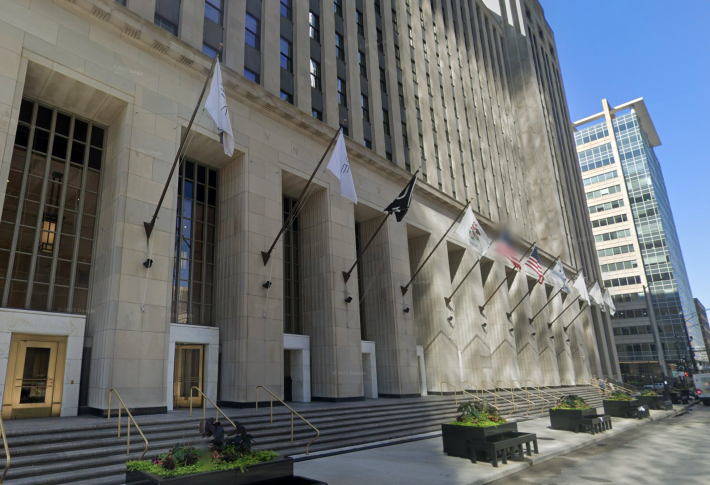
To participate, email info[at]cmap[dot]llinois[dot]gov by Thursday afternoon with the subject line: “Public Comment – CMAP Transportation Committee (Feb. 27)”. Indicate whether you plan to comment in person, via Zoom, or in writing. Include your remarks in the email body or as an attachment. Even brief comments are entered into the official record.
For a corridor that defines a full seven miles of Chicago’s most treasured public space, its lakefront, this procedural vote may seem small. But it will shape how easy or difficult it is to move toward a transit-priority, people-centered lakefront in the decades ahead.

On November 12, SBC launched our 2026 fund drive to raise $50K through ad sales and donations. That will complete next year’s budget, at a time when it’s tough to find grant money. Big thanks to all the readers who have chipped in so far to help keep this site rolling all next year! Currently, we’re at $22,502 with $27,498 to go, ideally by the end of March.
If you value our livable streets reporting and advocacy, please consider making a tax-exempt gift here. If you can afford a contribution of $100 or more, think of that as a subscription. That will help keep the site paywall-free for people on tighter budgets, as well as decision-makers. Thanks for your support!
– John Greenfield, editor
Streetsblog has migrated to a new comment system. New commenters can register directly in the comments section of any article. Returning commenters: your previous comments and display name have been preserved, but you'll need to reclaim your account by clicking "Forgot your password?" on the sign-in form, entering your email, and following the verification link to set a new password — this is required because passwords could not be carried over during the migration. For questions, contact tips@streetsblog.org.