Self-described “annoying” transit union leader Eric Basir discusses changes he wants made to CTA labor policies, and the agency responds

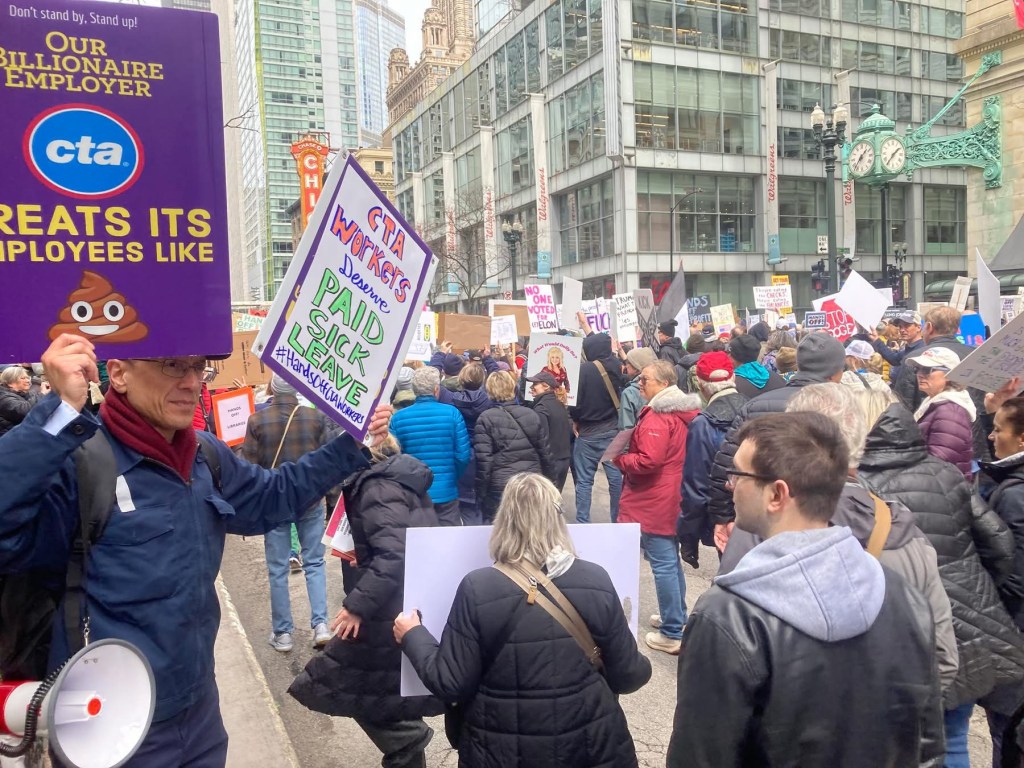

“Brother” Eric Basir has been working for the CTA since February 2018. He started as a customer service assistant, became a flagman, then a train operator, and for almost five years, he’s been a rail car repairer, currently working out of the Midway terminal.
He’s also on the grievance committee for Amalgamated Transit Union Local 308, which represents train workers. And he’s the elected Executive Board member for employees who clean and fix ‘L’ cars.
Basir’s Twitter bio reads: “An inconvenient and annoying ATU Local 308 Executive Board Member. Preacher of Revolutionary Unionism. Drug-tested. Feared. Uncompromising. Black Joe Hill.”
He often chimes in on Streetsblog posts about the CTA, especially ones involving Acting President Nora Leerhsen, highlighting labor policy chances he wants to see happen. We invited him to talk with us about his top five priorities for improving conditions for blue-collar CTA employees.
Basir gave Streetsblog permission to share a transcript of our conversation with CTA communications staff, and embed any responses they provided within the article, in italics. The interview has been edited for clarity and brevity.
John Greenfield: It was a feel-good situation for everybody concerned, in a way, when the transit bill passed and transit workers knew that they weren’t going to get pink slips immediately. And I know you feel the transit workers deserve more credit for the work you folks did to help make that happen, such as volunteering to do outreach to CTA riders at stations, to make sure everybody contacted their representatives to let them know that it’s important for them to support the bill.
So it’s great that the bill passed, and transit workers definitely deserve credit for that. I think you’re going to get some in the near future. Hopefully this article will help with that a little.
But let’s move on the five top issues you sent me in terms of things you’d like to see done differently for CTA labor policy. For example, I know that a lot of transit advocates are fans of Acting CTA President Nora Leerhsen, and that she seems to be taking a hands-on approach to improving the system. Yet, you’ve posted some criticisms of things that you feel are being overlooked. So let’s talk about those issues, the things that you want to see the CTA president, and the CTA management in general, do.
So the first one you gave me is paid sick leave for all CTA workers. Now just just looking at this issue as an outsider, it seems surprising to hear that CTA workers don’t get paid when they get sick and can’t come to work. Can you explain exactly what you feel the situation is and what you want to be different?
Eric Basir: Yes, all we have to do is look at the CTA administrative procedures, and they have two separate ones regarding non-work-related, sickness and injury. One policy is for union and the other policy is for non-union, we’ll just say management, ’cause there are non-union workers who are not management, but the majority.
The management gets what is short-term disability and paid sick leave. We [union workers] only get short-term disability. So what that means is, short term disability is basically if you get very sick or injured, you know, cancer treatment, you break your leg trying to do some installation of gutters in your garage or something, you will have some type of pay. You’ll have one week of pay if approved at the full amount, and then every week after that you get get about $200 while you recover. That’s what it’s designed for, but you have to be out seven days. They call it in our contract, Seven-Day Sick Pay, but it’s not sick leave. And you get written up for it.
So what we have, because we have no paid sick leave, we use short-term disability as our so-called sick leave. What happens is, most of us are out sick a day, two, maybe three, there’s no pay, and there’s punishment. And if you are there at the CTA less than a year and you get sick more than seven days, you get nothing, because you’ve got to be there a year.
The management, or the non-bargained-for, have paid sick leave in addition to that. So as soon as they start work, their first day of work, they accrue hours for paid sick leave. They add up to 26 days in a year that must be used that’s not vacation, that’s not holiday, that’s a benefit.
So my argument is, what makes us, the union workers, get less than what the management has? That’s especially in light of Municipal Code 6-130 [Chicago Paid Sick Leave and Paid Sick and Safe Leave Ordinance], County sick leave, and State of Illinois sick leave.
And I would like to add that 6-130 is the absolute best of the three. And I would give some credit to our boss, Mayor [Brandon] Johnson – despite our criticism or our bosses – for updating it, making it even better than it was prior to him. The City has had that since 2019.
I would like to add that we had a chance to get this in our last tentative agreement. But our current union presidents [ATU Local 308 President Pennie McCoach and ATU Local 241 President Keith Hill] signed a waiver in an Article 15.13 of our collective bargaining agreement and did not inform the membership that they made this waiver in the summaries before we voted on it. So we voted for a waiver that says, in light of the advanced sick leave benefits, that we waive the rights in 6-130.
So as a member of the grievance committee in ATU Local 308, and a representative who deals with calls from all over the system, including bus workers, I know so many CTA workers, who are really good workers with clean records, get fired because they had too many, what they call, “excessive absenteeism” marks on their records.
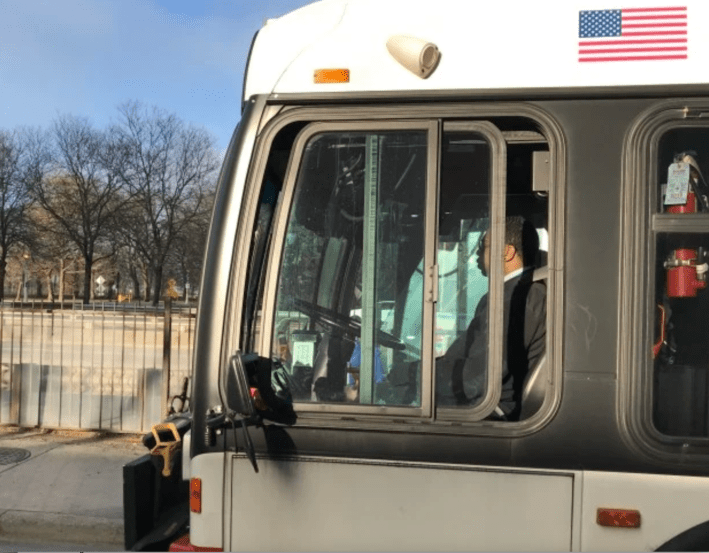
This contributes to workforce issues, staffing, and that leads to delays for the riders. And when you have a sick operator, a sick servicer, a sick terminal supervisor, sick customer assistant, whatever it is, will spread it around and cause more problems. And that’s how COVID-19, by the way, really spread in the beginning. I was part of that first wave. I got hit. It was terrible.
Response from CTA communications staff
CTA has a strong focus on supporting our employees, who are the backbone of the agency.
CTA does not unilaterally set or change policies related to union-represented employees. All rules related to union-represented employees, including sick leave, are policies that are negotiated with and approved by the union and voted on by membership.
With regards to sick leave, there are scenarios in which employees are paid for sick time off.
JG: So the next of your top priorities is full-time jobs for all CTA workers. Can you explain why you feel it’s important for them to be full-time instead of part-time?
EB: For the sake of the riders, and for the health and welfare of the communities where the workers live. When you have workers who are homeless, about to be homeless, or transitional, going back and forth from homeless, this results in delays, this results in staffing and morale issues, poor customer service. Because sometimes a rider will see a CTA worker and they’ll say, “This person is rude or asleep.” But you don’t know, this person is probably working a double shift to pay the bills, and they can’t afford to live any other way.
So we want all the CTA workers to have dental coverage. We want them to have paid vacations privileges, paid holidays, overtime, not straight pay but time-and-a-half. These kinds of things make a big difference. Also, it will help so much with recruiting experienced people. One of the major things that turn people off that I talked to about working at the CTA is like, “Oh yeah, I got to work that part-time thing. I’ve been doing customer service for years. No, I can’t take that risk.”
It hurts the CTA itself to have these part-time jobs. And they’re 40-hour part time jobs, mind you. You can choose 32 hours if you’re a customer service assistant, but these are 40-hour jobs. So if you’re working 40 hours, you might as well just make us full-time, and then we can have a pension too.
JG: Wait, if part-time is 40 hours, how many hours is full time?
EB: 40 hours. Our customer service assistants can pick 40 hour work weeks and they generally do because they’ve gotta live. Our flagmen, it’s a 40 hour job, but it’s part-time. It’s almost worse than the customer assistant job. The Second Chance program, it’s 40 hours. You work 40 hours on the midnights, doing grueling work. And then if they decide they want to keep you, they will and turn you over, or maybe not.
I would like to add to that real quick. There were layoffs on the same day that we got funding [last Halloween, when the state funding bill passed], workers who’d been at the CTA cleaning these filthy trains and buses got pink slips.
It said, “Thank you. You’ve completed the Second Chance program.
Goodbye. Your last day will be on January something, and we’ll have a celebration.’
JG: So those cuts weren’t related to the amount of funding available?
EB: Yes and no, because it’s kind of ridiculous. Here you’ve got experienced people, and you’re laying them off, and you’re going to hire a bunch of inexperienced people to replace them. So you have to ask the CTA that question, why they do that? It makes no sense.
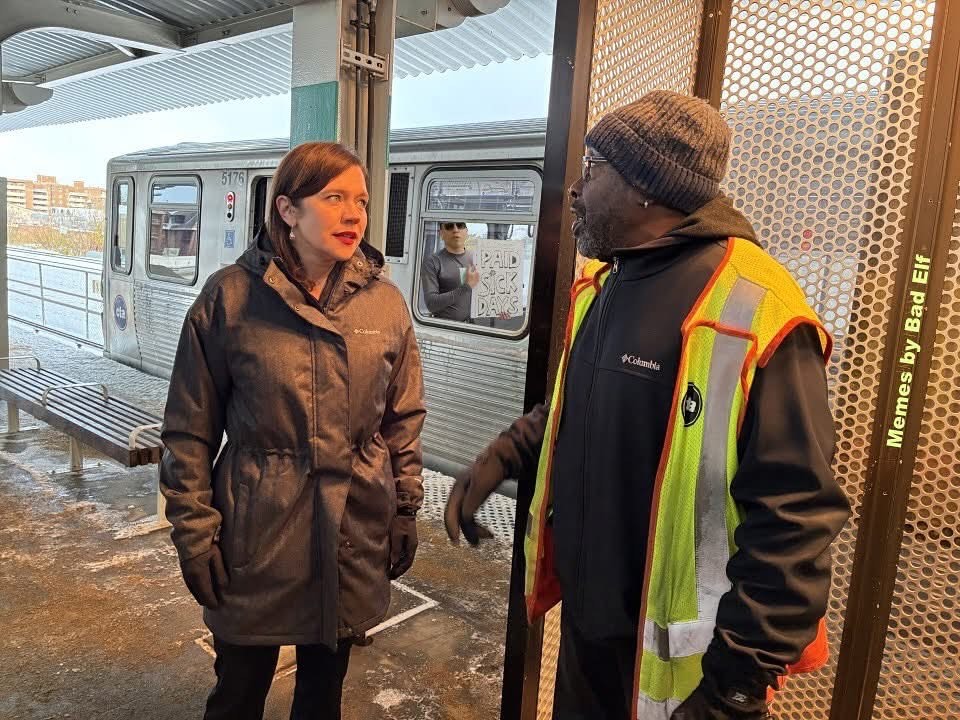
Response from CTA communications staff
The number of hours that CTA’s part-time employees work is governed by the Collective Bargaining Agreement.
It should be noted that Second Chance is a nationally recognized, structured apprenticeship program created to provide job skills and training to returning citizens and others with barriers to employment. All participants begin with a defined duration of up to one year of employment, with a potential extension of two years with a good work record.
In many cases, Second Chance Program participants go on to find permanent employment at CTA. In fact, the number of Second Chance participants hired into permanent roles increased from 110 employees in 2024 to 135 in 2025.
The instance referred to in your article was simply a reflection of program completion, not layoffs.
JG: All right. Let’s talk about your demand for two-person crews. To be honest with you, that seems pretty unrealistic. You’re asking the CTA to basically double its labor costs for people on trains, you know, double the amount of people they’re paying to run trains. Are you talking about two-person bus crews as well?
EB: Everything. You should never be alone as a worker, especially on the front line.
JG: Now there are proposals for Transit Ambassadors. That exists in LA and San Francisco, for example, where you have unarmed uniformed personnel walking around doing stuff like trying to deter crime – they’ll report to armed police If there are serious crimes going on – doing outreach to unhoused people, people with mental illness, people with addiction issues, trying to connect them with services. And just being there to make the system seem more friendly, doing outreach to customers, providing directions, and things like that.
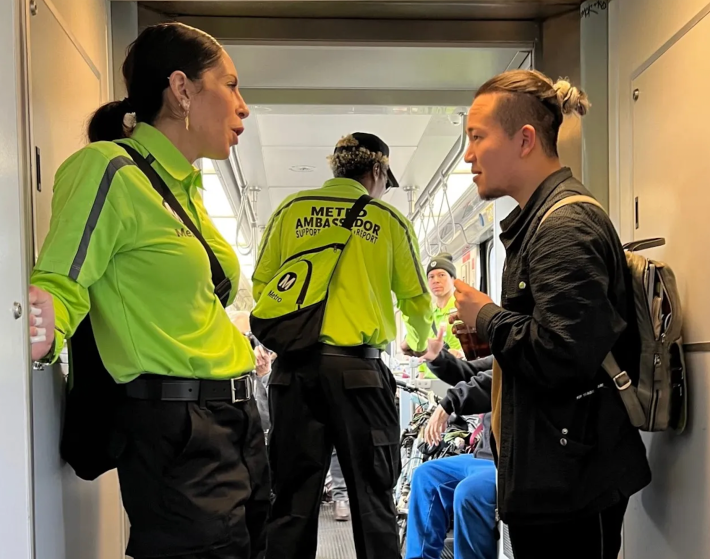
So what would be different about having two-person crews? What would this second person on each bus and each train do?
EB: I’m not sure I understand how you’re saying it’s not realistic, though. Because on Metra, you’ll have an operator, an engineer, and you’ll have at least two or three conductors.
JG: I mean, you’re asking the CTA to double their labor budget on trains and buses.
EB: But it was that way, though, and it worked very well. Let me ask you this, if
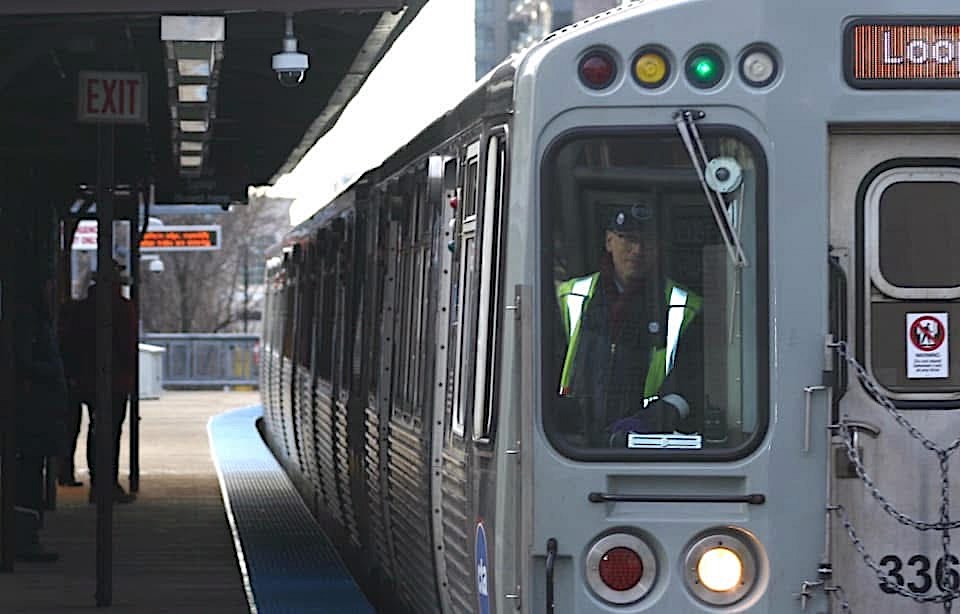
I have to stop my train, walk across to the other side of the motor cab for all the island platforms, every trip I have to stop the train to go cut out a circuit breaker in another rail car. I have to go attend to someone pressing that button in the rail car. I have a brake defect. I have to go out and cut out the brakes on the seventh car on an eight-car train, or the third car in a six-car.
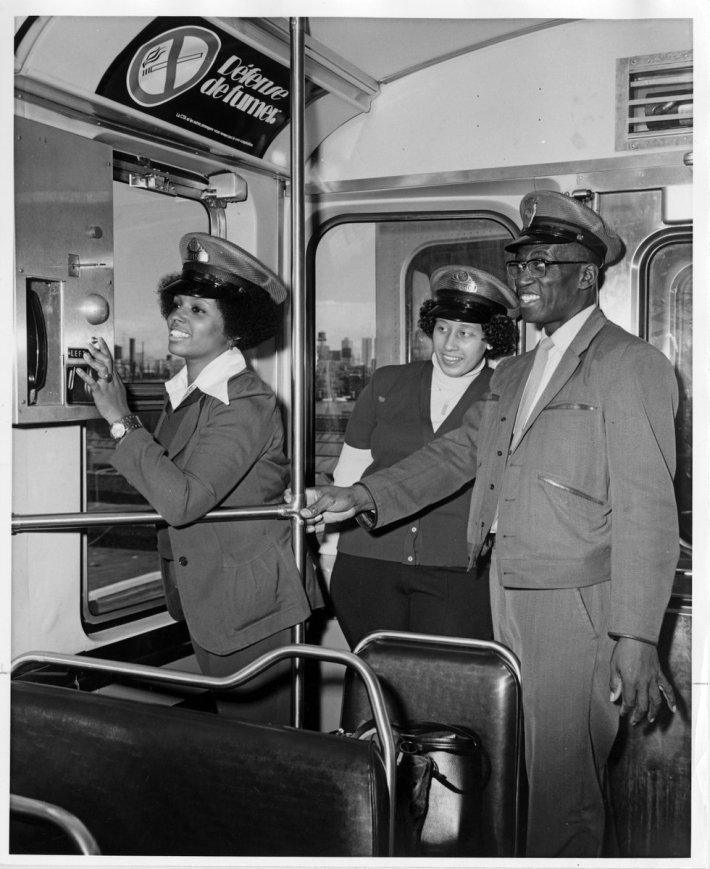
These things cause delays, lost and found. It’s not anything, because to clear train is so much easier at the end of the line, with two people. And then you have a master and an apprentice. You have someone that’s a motorman, and someone that’s a conductor. And then that conductor will learn, as opposed to being rushed in training for a couple weeks, at best, a couple months. This will save so much money in the long term. And the occupational hazard injuries will be greatly reduced for the operators. So this will save time ad money, because they won’t have such absenteeism.
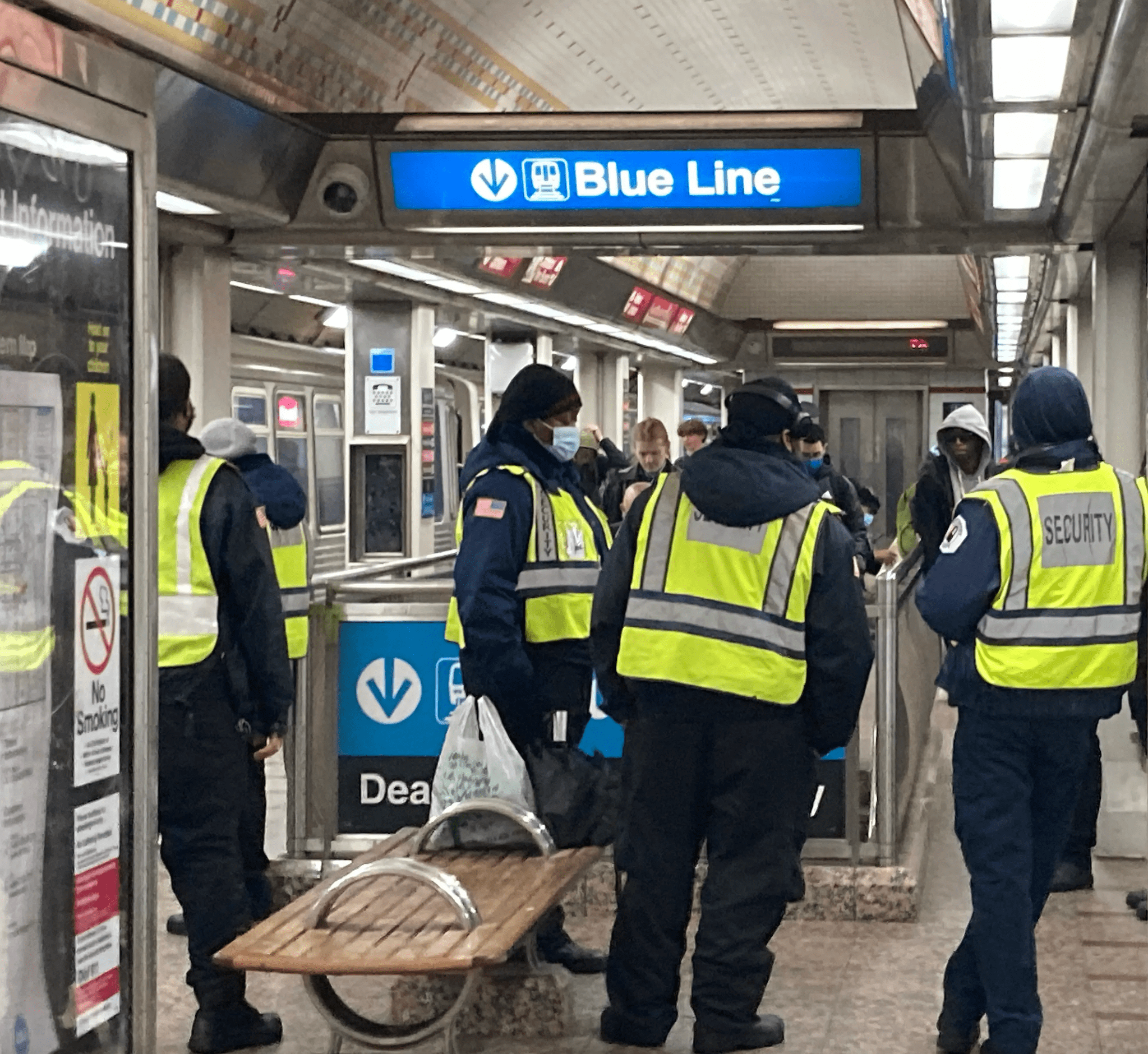
Transit Ambassadors, which are now in the transit bill that passed, are still obscure, and we already have uniformed people walking around, sometimes on the train, mostly on the platforms.
JG: Are you talking about the unarmed security guards?
EB: Yeah.
JG: They seem pretty useless to me. What’s your opinion of that?
ED: It is a presence. Some of them are helpful. Some of them were very helpful to me when I was a Customer Service Assistant. Some are not, that’s true.
JG: It’s common to see them hanging out in large groups, like six or seven people. You’ll see them standing around reading their phones in a group. It just doesn’t seem like they’re being very proactive. They’re certainly not offering directions to customers or anything like that.
But that’s another subject. Let’s move on to talk about some other stuff. You said you want brick-and-mortar bathrooms for all CTA workers. So basically, you’re opposed to workers having to use porta-johns and things like that. That seems like a reasonable request. Do all stations have a bathroom for employees?
EB: No. I’ll give you a great example. On the Brown Line, Rockwell, Francisco, Kedzie. So those workers have to go to either catch a train to Kimball or Western, or call dispatch and ask for a supervisor or manager to pick them up. They have to go to Kimball or to Western when the lines open. We can’t abandon the station, because the Brown Line is shut down for a few hours at night. Same with the Green line and the Pink line.
So it’s very difficult, especially for pregnant workers. We have some Loop stations that have the same problem. They literally walk through the streets to another station, and sometimes management gives them a hard time about these breaks.
JG: At these stations that don’t have any kind of bathrooms, like the Brown Line stations you mentioned, has there been any talk of putting porta-johns there? I mean, that might be better than nothing, and forcing them to ride the train elsewhere to use a bathroom.
EB: None that I know of. I’ve had people tell me it’s a good thing to have, because then the worker gets a longer break. I mean, it’s asinine.
JG: Workers say they like being able to take the train to use the bathroom?
EB: Yeah, I’ve been told this by management and fellow union officials.
JG: All right, now I understand the issue. Let’s move on to the last one: “The CTA must cease and desist with union busting.” Obviously, you and CTA management are gonna have different opinions about what union busting is. So could you tell me in a nutshell what you think the management is doing wrong and what could be done about that?
EB: Regarding union busting, simply put, kicking union officials out of CTA break rooms while they are assigned to be there on union payroll to assist the members. It’s illegal. You can’t do that. And you can’t write up union reps for protesting, if they work at the CTA and they’re protesting and they’re off the clock. In my case, I was I wore a uniform and covered up the logo. But then the CTA has said nothing with dozens and dozens of protests and actions of CTA workers in uniform without the logo obscured. Nah. I got so many labor charges pending on them.
JG: All right, I think I got it. Well, this was a very illuminating conversation, and you seemed to be talking pretty frankly about this stuff.
EB: I sincerely, thank you for being concerned and reporting a side of the CTA workers that many people don’t know about.

On November 12, SBC launched our 2026 fund drive to raise $50K through ad sales and donations. That will complete next year’s budget, at a time when it’s tough to find grant money. Big thanks to all the readers who have chipped in so far to help keep this site rolling all next year! Currently, we’re at $19,502 with $30,498 to go, ideally by the end of February.
If you value our livable streets reporting and advocacy, please consider making a tax-exempt gift here. If you can afford a contribution of $100 or more, think of it as a subscription. That will help keep the site paywall-free for people on tighter budgets, as well as decision-makers. Thanks for your support!
– John Greenfield, editor

Read More:
Streetsblog has migrated to a new comment system. New commenters can register directly in the comments section of any article. Returning commenters: your previous comments and display name have been preserved, but you'll need to reclaim your account by clicking "Forgot your password?" on the sign-in form, entering your email, and following the verification link to set a new password — this is required because passwords could not be carried over during the migration. For questions, contact tips@streetsblog.org.