Gimme five: First Bus Priority Corridor Study meeting floated upgrades to Pulaski, Western, Cottage Grove, Fullerton, 55th


By John Greenfield and Morgan Madderom
John Greenfield wrote the “Bus Priority Corridor Study” section of this post. Morgan Madderom, a member of Commuters Take Action (CTAction), wrote the “Gage Park community meeting” section
If you’re familiar with what’s going on with the upcoming public hearings on the five bus corridors slated for improvements, feel free to skip to the “Gage Park community meeting” section of this post.
Bus Priority Corridor Study
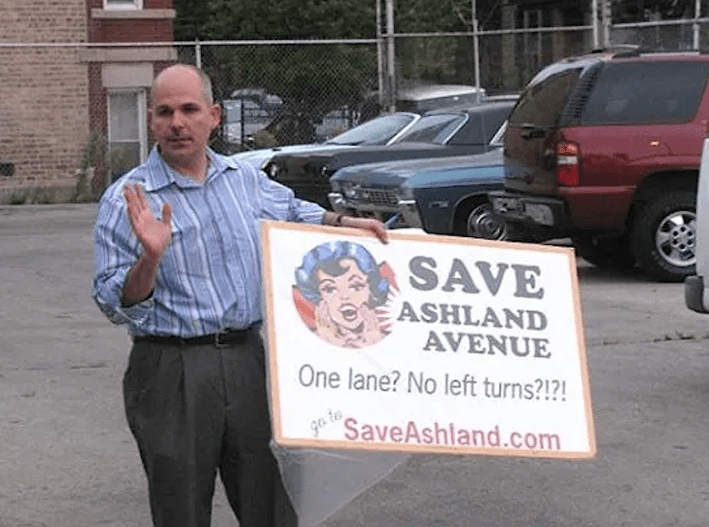
Longtime Streetsblog Chicago readers may recall the depressing story of how Not In My Back Yard opposition killed the City’s proposal for bus rapid transit on Ashland Avenue.
But in recent years there have been some glimmers of hope that Chicago may catch up with peer cities by creating effective bus-priority streets. In late 2023, the CTA and the Chicago Department of Transportation released the Better Streets for Buses plan with ideas to speed service and improve reliability. And in May 2024, almost all of the alders along Western Avenue voiced support for implementing BRT on the route.
The latest development in the quest for robust and reliable Chicago bus service is a series of community meetings for the Bus Priority Corridor Study, announced on October 30.
“We are excited to work with our community partners as we take another step in imagining the future of key bus priority corridors across our system,” said CTA Acting President Nora Leerhsen in a statement in the press release. “We are excited to move forward with this important study and look forward to hearing the many thoughts and ideas that will help guide future bus system investments and benefit bus riders for years to come.”
Here are the five corridors under consideration for upgrades.
- Pulaski Road (between Peterson Avenue and 87th Street)
- Western Avenue (between Howard Avenue and 79th Street)
- Cottage Grove Avenue (between 35th and 115th streets)
- Fullerton Avenue (between Grand/Nordica avenues and Halsted Street)
- 55th Street/Garfield Boulevard (between Cicero Avenue and South Hyde Park Boulevard )
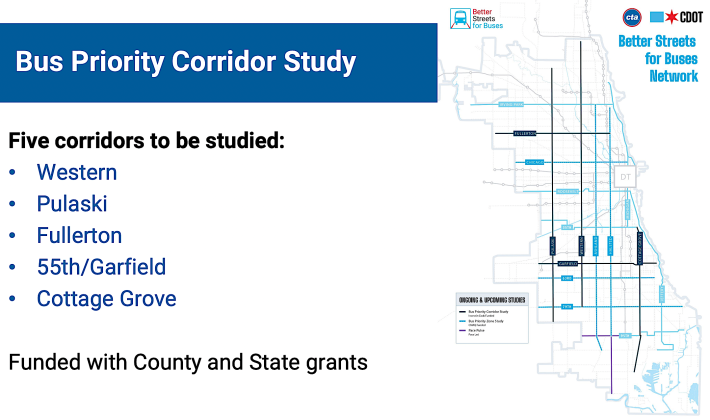
According to the transit agency, these corridors provide a total of over 80,000 rides every weekday.
“We look forward to hearing residents’ priorities and input as we work with CTA to develop plans for more efficient and reliable bus service along these high-ridership routes,” said CDOT Acting Commissioner Craig Turner.
Possible upgrades include dedicated bus lanes, improved bus stops, better pedestrian access to the stops, traffic signal priority, and other street design remixes. The options that decision-makers select will be turned into (literal) concrete plans that can be constructed once there is cash to do so.
“Bus Rapid Transit, when planned with community expertise at its core, has the potential to become an essential and equitable public transportation option in Chicago,” said Transportation at Center for Neighborhood Technology Manager Julia Hage. CNT, the Transportation Equity Network, and their member organizations are helping encourage public participation in the program.
The study also complements the Bus Vision Project, the agency’s project to assess routes, schedules, and service levels to make service more efficient and equitable.
The first community meeting on the Bus Priority Corridor Study, which we’ll discuss below, took place at Gage Park Fieldhouse, 2411 West 55th St. Here are the upcoming events.
Avondale-Logandale Elementary School: Monday, December 1, 5:30 – 7 p.m., 3212 W George St.
Washington Park Refectory: Tuesday, December 2, 5:30 – 7 p.m., 5531 Russell Drive
Virtual Meeting: Monday, December 8, 6:00 – 7:30 p.m., meeting link TBA
Gage Park community meeting
This event was open house, walk-through style and thus did not include any formal presentations or speeches. The room was broken up into three sections.
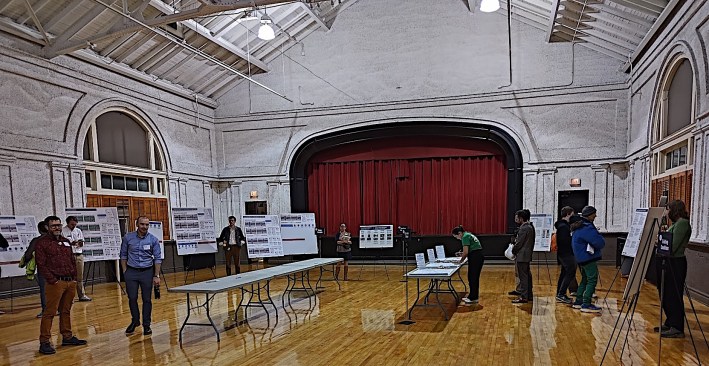
The first one was staffed by consultants from HNTB and Muse consulting and presented traffic speed and safety data and other relevant data specific to each of the corridors on poster boards. Among other data points, posters presented numbers on the bus speeds throughout the day on each corridor, and showed the extent to which buses were slowed on each corridor during rush hour due getting stuck in rush hour traffic.
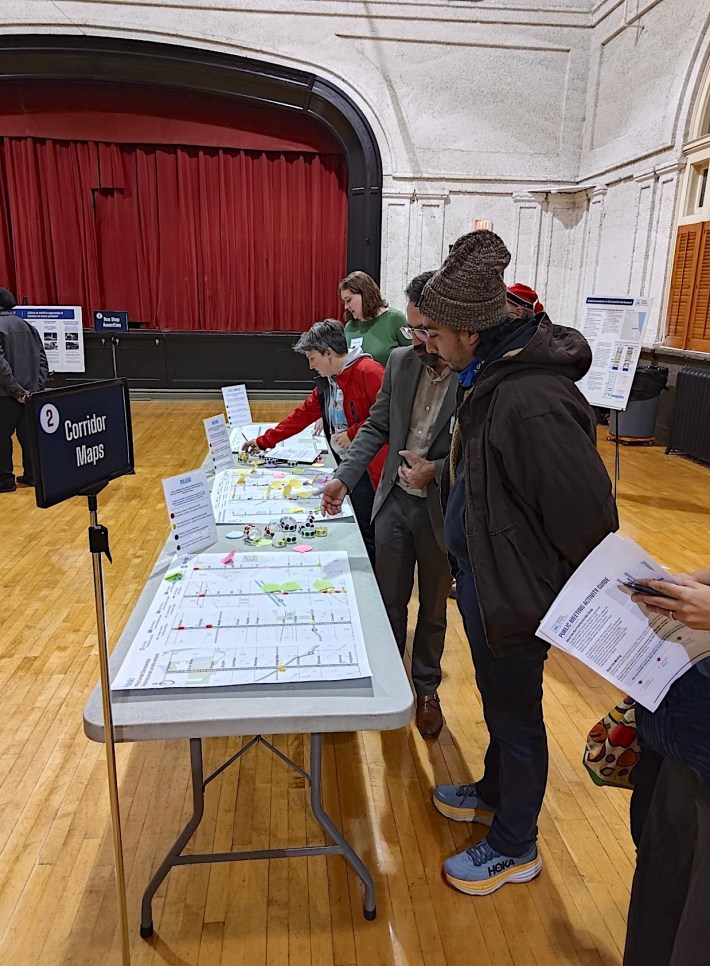
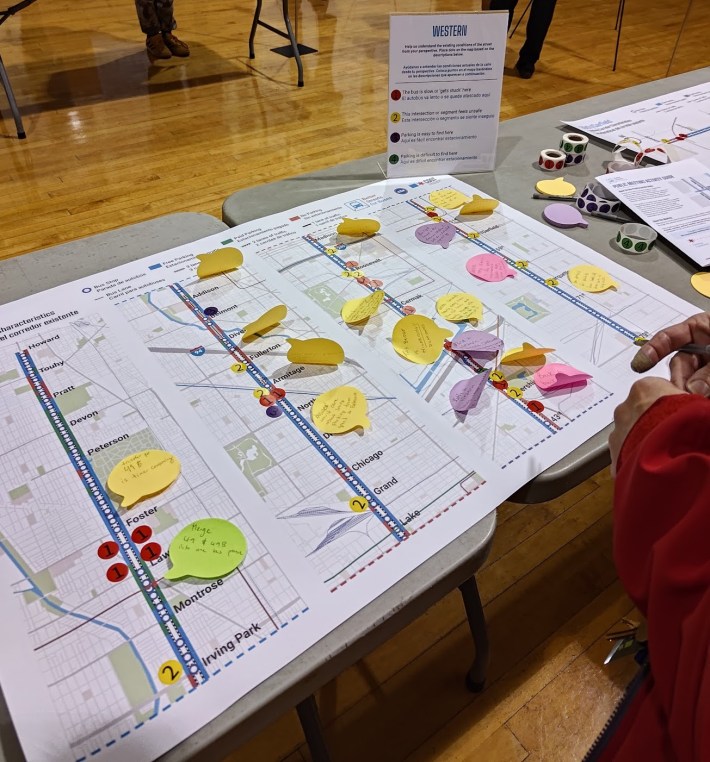
The second part of the open house involved interactive maps of each of the proposed Bus Priority corridors. The Better Streets for Buses team asked community members to place sticky notes on the map to mark areas where they feel buses particularly gets stuck in traffic, as well as areas where they feel unsafe as a pedestrian, especially in the context of accessing the bus. The posters also asked participants to mark areas of each corridor where they think parking shouldn’t be taken away and areas where they feel it is underutilized.
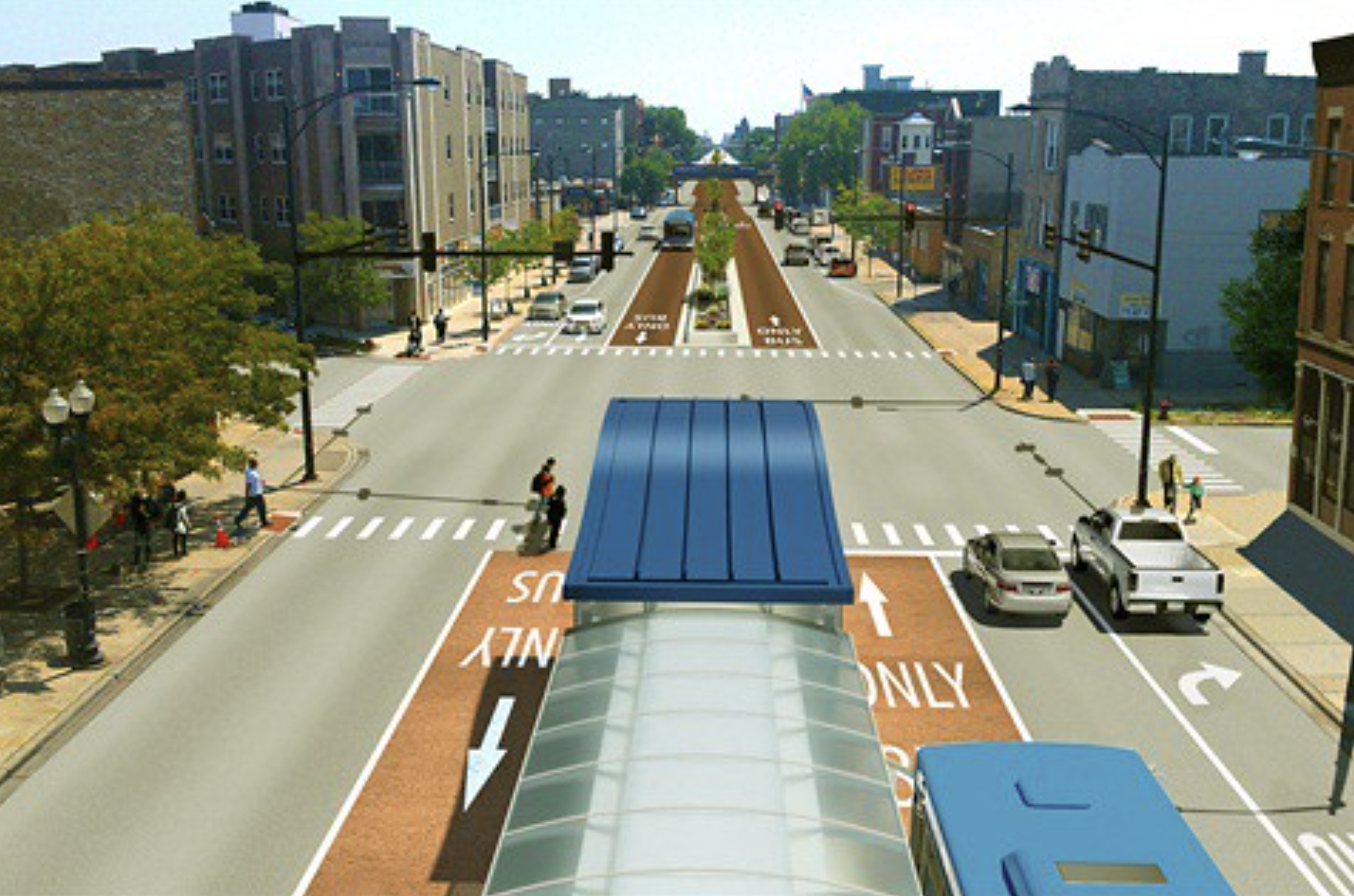
The third part of the open house involved CTA and CDOT planners presenting existing road widths on each of the corridors and possible designs for each road secrion. With narrower streets, there are less options availble due to the space constraints and difficulties of including parking, mixed-traffic, and bus lanes on limited road space. On all road widths, but especially the narrower ones, the BSFB team asked community members to rate each of the possible designs.
The planners at each board emphasized that community members should consider what is most important to them when considering the tradeoffs of each design. Are they OK with converting parking spaces to make room for faster buses? What about converting a travel lane? Some designs included center-running buses with pedestrian islands for boarding and alighting the bus and others had the bus running in a curbside lane with parking on the other side of it.
In addition to these three sections, CTA Director of Strategic Planning Jen Henry discussed bus stop amenities in front of a posterboard that presented possible options including prepaid boarding (which was planned, but never implemented, for the downtown Loop Link “BRT lite” route) as well as new freestanding bus arrival time signs for bus stops.
Henry discussed the pros and cons of different types of prepaid boarding styles, as well as what technology might need to be purchased, depending on the road designs that the BSFB team moves forward with. For example, if center-running bus lanes are part of the final design, the CTA will need to purchase buses with left aligned boarding doors.
More information about the Bus Priority Corridor Study is available here.

On November 12, SBC launched our 2026 fund drive to raise $50K through ad sales and donations. That will complete next year’s budget, at a time when it’s tough to find grant money. Big thanks to all the readers who have chipped in so far to help keep this site rolling all next year! Currently, we’re at $2,225, with $47,775 to go, ideally by the end of February.
If you value our livable streets reporting and advocacy, please consider making a tax-exempt end-of-year gift here. If you can afford a contribution of $100 or more, think of it as a subscription. That will help keep the site paywall-free for people on tighter budgets, as well as decision-makers. Thanks for your support!
– John Greenfield, editor
Streetsblog has migrated to a new comment system. New commenters can register directly in the comments section of any article. Returning commenters: your previous comments and display name have been preserved, but you'll need to reclaim your account by clicking "Forgot your password?" on the sign-in form, entering your email, and following the verification link to set a new password — this is required because passwords could not be carried over during the migration. For questions, contact tips@streetsblog.org.