Disability rights group is suing Chicago over lack of accessible pedestrian signals

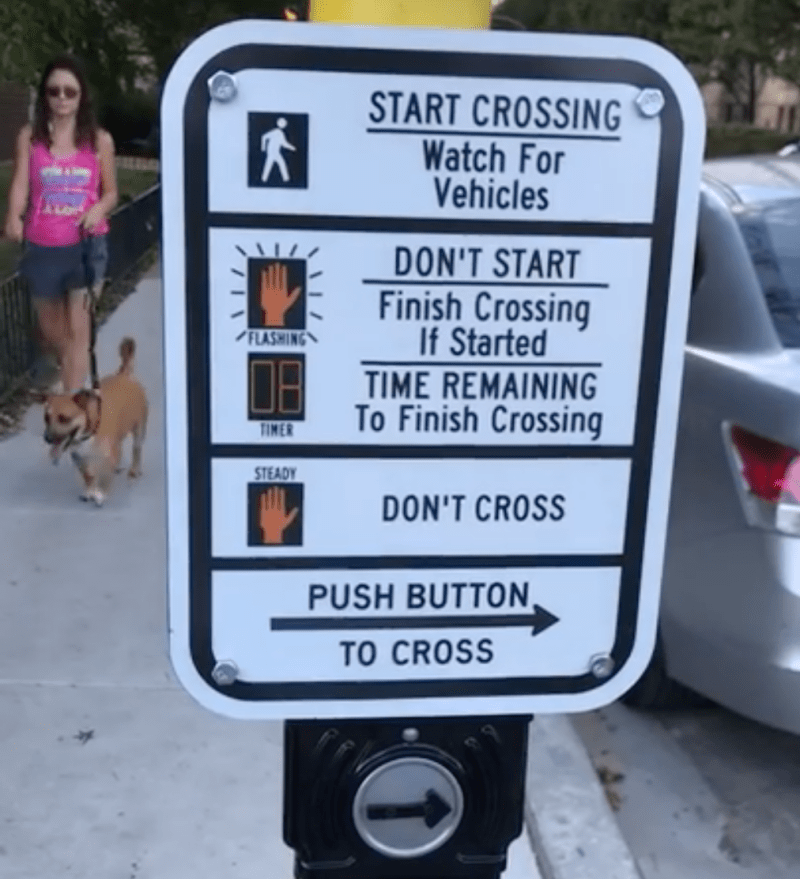
Chicago has lagged way behind peer cities when it comes to installing accessible pedestrian signals, which help people with visual impairments navigate the streets, and until recently only eleven such crosswalks had been installed across the entire city, although 2,672 of the city’s intersections have stoplights. In July, Mayor Lori Lightfoot announced plans to level the playing field by adding up to 100 new accessible signals citywide in the next two years via a partnership between the Chicago Department of Transportation and the Mayor’s Office for People with Disabilities.
However, yesterday the New York- and Berkeley, California-based group Disability Rights Advocates filed a class action lawsuit against the city of Chicago and CDOT, arguing that the pace of installations still isn’t fast enough. The lawsuit, which was filed on behalf of the American Council of the Blind of Metropolitan Chicago and three individual plaintiffs with visual impairments, claims that Chicago ignores blind pedestrians’ safety needs in its pedestrian planning, which violating federal and state civil rights laws. Read the lawsuit here.
DRA stated that, with less than half of one percent of its intersections equipped with accessible signals, Chicago may have the worst record in this department of may of any major U.S. city.
Despite their appearance, the accessible pedestrian signals are not the much-hated “beg buttons” that pedestrians are sometimes required to press in order to get permission to cross the street. The only purpose of the push buttons, which constantly emit a “tock” sound to alert people with visual impairments of their locations, is to indicate the status of the walk signal via an audible alert when pressed. Since the button doesn’t actually activate the walk signal, you don’t have to push it if you don’t need the audible cue.
“Chicago’s pedestrian safety program essentially pretends blind people don’t exist. It’s time for that to come to an end,” said Jelena Kolic, a staff attorney at DRA, said in a statement. Of course, CDOT does take the needs of blind people into account in other aspects of its street designs. For example, all new curb curb ramps include a textured “truncated dome” treatment to help warn people navigating with a cane that they are approaching the intersection.
Lawsuit plaintiff Ann Brash works in Chicago. She said her white cane was broken by a passing bus driver because Chicago’s pedestrian signals do not tell her when to cross streets. “I love working, but I don’t love walking to my job from Union Station,” she said in a statement. “I need the same street crossing information that sighted people get.”
Plaintiff Ray Campbell, second vice president of the national American Council of the Blind, said in a statement, “I have traveled with a white cane for over 40 years. Sighted people wouldn’t accept having safety information about only 11 out of 2,670 intersections. Why should I?”
Plaintiff Maureen Heneghan, a blind Chicago resident, said in a statement, “Chicago’s plans to install [accessible pedestrian signals] are too slow. They won’t make Chicago street crossings accessible to me during my lifetime.”
Plaintiffs hope that the lawsuit, which claims that Chicago has violated the federal civil rights laws designed to eliminate disability-based discrimination, including Section 504 and the Americans with Disabilities Act, will address this issue by committing the city to systemic installation of accessible pedestrian signals that will eventually make all Chicago streets accessible to blind pedestrians.
Chicago has already committed to making all CTA stations wheelchair accessible within 20 years, which is a slow timeline, but at least it’s a finite one. If this lawsuit helps light a fire under the city to make the pace of accessible pedestrian signal installation even faster than what Lightfoot promised in July, that can only be a good thing.

Read More:
Streetsblog has migrated to a new comment system. New commenters can register directly in the comments section of any article. Returning commenters: your previous comments and display name have been preserved, but you'll need to reclaim your account by clicking "Forgot your password?" on the sign-in form, entering your email, and following the verification link to set a new password — this is required because passwords could not be carried over during the migration. For questions, contact tips@streetsblog.org.