A bridge too far? As some drivers fume over the closure of Cortland, other folks propose making the historic span permanently car-free

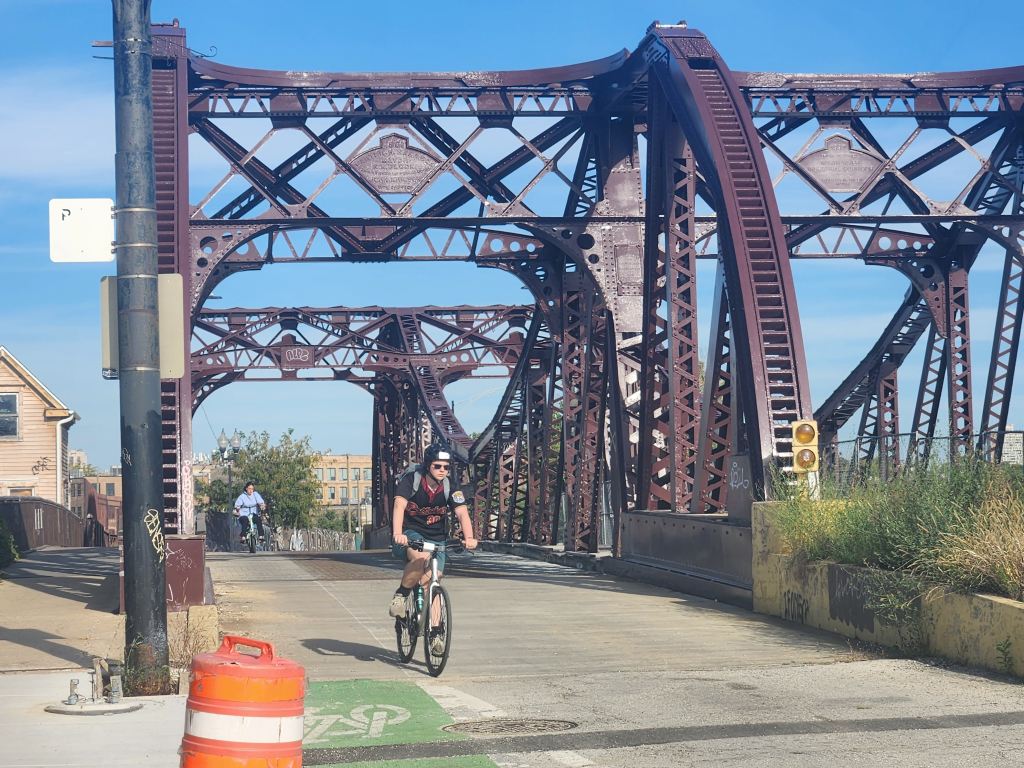

As many or most North Siders are probably aware, the Cortland Street Bridge has been closed to drivers for many months, since September 2025 to be exact. Car and truck traffic was prohibited after the span’s 125-year-old structure was deemed unsafe for use by heavy vehicular traffic.
However, the bridge’s north sidewalk remained open to people on foot, bicycles, and e-scooters. And last summer, the road across the river was reopened to allow non-motorized traffic, while motor vehicles are still blocked by barriers. That has spurred a lively debate among citizens and the media, both online and off, about the span’s future.
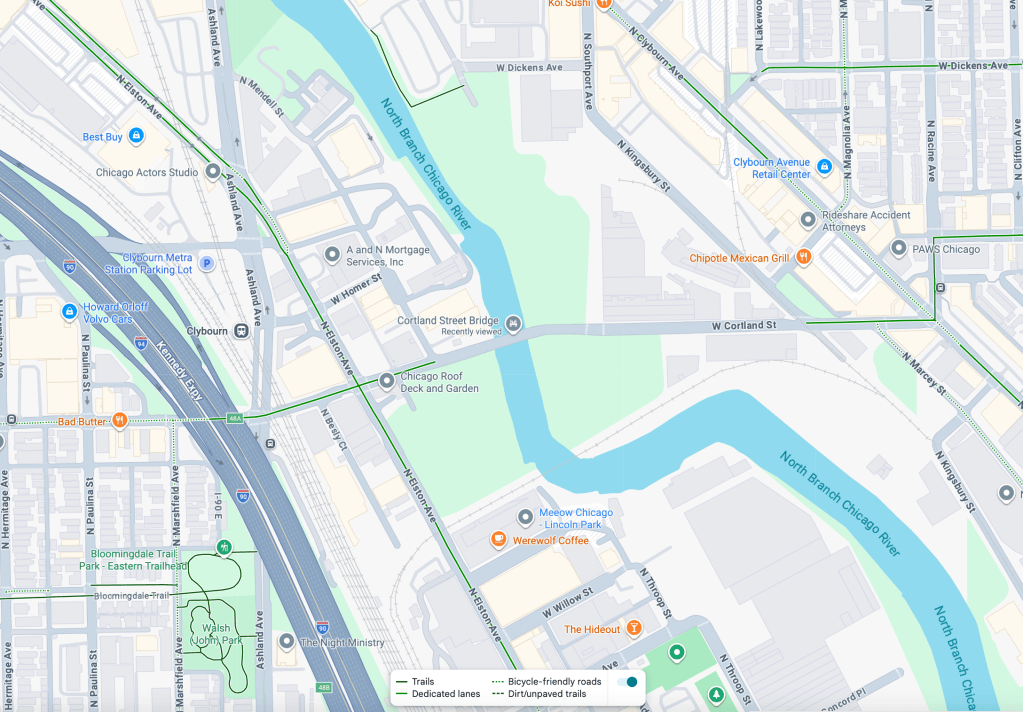
The bridge crosses two wards, the 32nd, represented by Ald. Scott Waguespack, and the 2nd, overseen by Ald. Brian Hopkins. Waguespack’s office has posted an ongoing update page on the project since its launch last year. “The scope of the project involves replacing the bridge deck, steel floor system, and counterweights, and installing new concrete-filled grating, timber sidewalks, railings, and lighting,” it originally stated. “The bridge houses will also be rehabilitated. The project will retain the character of this historic bridge and is intended to add at least 40 years of service life to the bridge.”
But in August, the Chicago Department of Transportation announced that the bridge was no longer capable of safely carrying motorized traffic. “Because of the complexity and extent of the necessary work to restore the bridge, CDOT must re-evaluate the rehabilitation approach,” the department stated. “Restoring the Cortland Street Bridge will be a multi-year effort, and it will remain closed to vehicular traffic as CDOT advances the required environmental review, engineering, and design work.”
Following that news, Waguespack first asked CDOT to rescind the structure’s landmark status. The alder followed with a request for congestion mitigation due to traffic buildup caused by the closure of multi-bridges in the area.
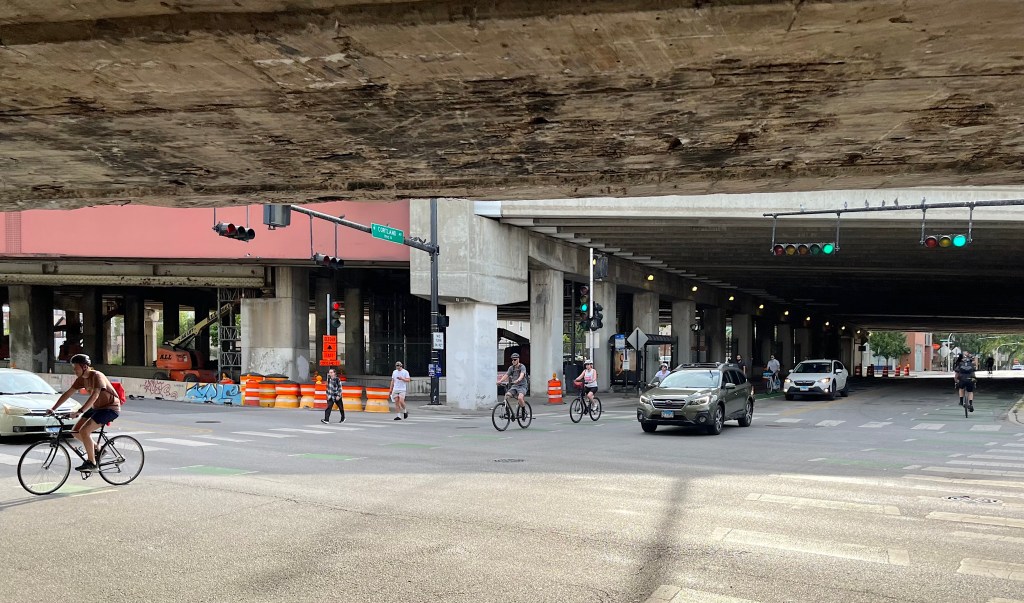
Some people who drive have been getting testy about the Cortland Bridge’s long closure. Constituents are complaining to their alders, and the City Council members are griping to and about CDOT. Last October, downtown Ald. Brendan Reilly (42nd) told reporters that the department closing multiple river spans at the same time – also including State Street, Lake Street, and Chicago Avenue – is “a clusterf—.”
Completed in 1902, the Cortland Bridge is the oldest example of a fixed-trunnion bascule bridge in the United States, and the second oldest in the world after the Tower Bridge in London. It became the example for 50 more river bridges in Chicagoland, establishing our city as a bridge engineering leader. Owing to that history, the Cortland structure was granted landmark status 30 years ago. In late September, however, Hopkins and Waguespack formally introduced legislation at City Council to rescind that status, a move the council hasn’t seen since 1987.
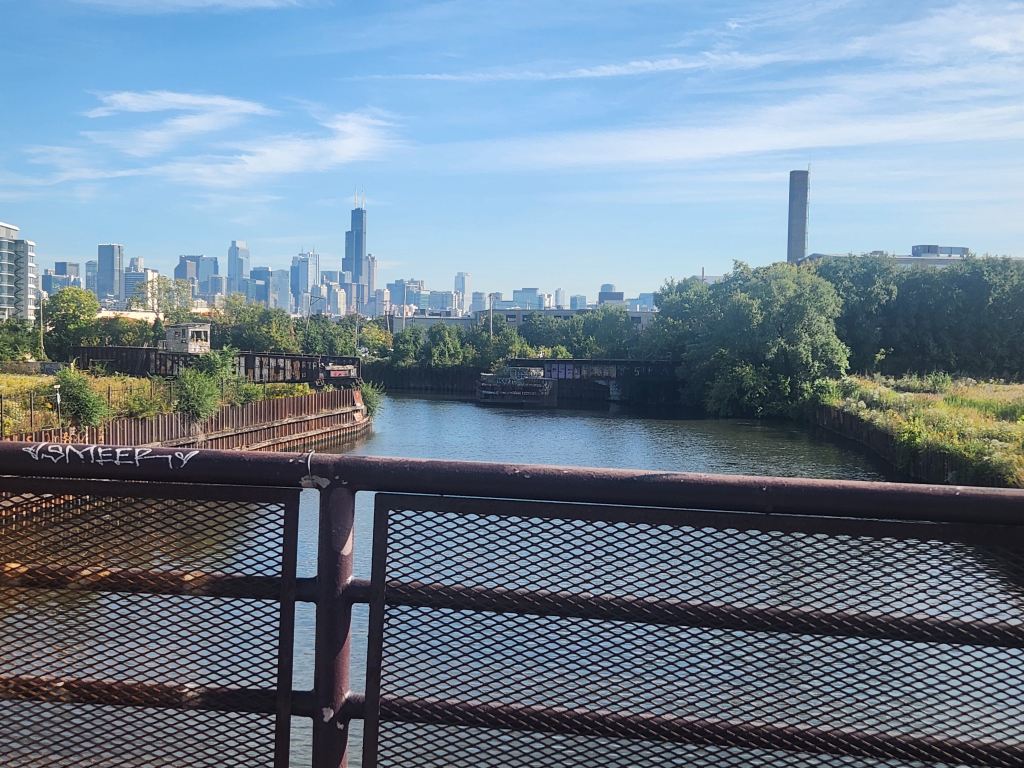
After the debacle caused by the simultaneous closures of 3 other river bridges in addition to Cortland, Hopkins had already succeeded in requiring the City to provide formal traffic mitigation plans when any bridge will be closed for more than 30 days in future. This seems like a more-than-reasonable request, and I was surprised to learn that such a policy was not already in place.
On the other hand, I’ve come across a youtube video that makes the case for permanently keeping the bridge car-free. The channel “Chicago Like a Local,” which highlights and gives recommendations on the city’s infrastructure (both good and bad) claims, “Chicago Just Created Its Best Bike Infrastructure…By Accident.” The channel’s creator, who declined to give thier name, is a Lincoln Park resident who bikes the bridge regularly, and points out the need for more and safer east-west passages for bike riders and pedestrians.
“This situation feels like a golden opportunity for the City to take a look at the incredible demand for low-stress pedestrian and cycle infrastructure that’s being demonstrated there,” they added in an email. “Even though the bridge sits in a fairly unwelcoming industrial area, people are flocking to Cortland in droves because it’s a useful connection point between neighborhoods and because it’s peaceful and safe. I would love to see CDOT put together a case study about the Cortland bridge so we could quantify the benefits/tradeoffs of that sort of pedestrian and cyclist-forward infrastructure.”
This Reddit convo has many comments in support of keeping the existing bridge as a sustainable transportation-only structure. Commenters are calling for the affected wards, or CDOT, to at least consider the possibility, and survey residents’ real needs. It’s likely the bridge could be shored up enough to support safe passage for pedestrians, cyclists, and other lighter-weight vehicles indefinitely, with a new crossing for drivers built next to it. This could still be a cost savings overall, especially when compared to demolishing the original bridge and building another, hopefully with separated non-motorized accommodations alongside the car travel lanes. (But that’s definitely not guaranteed – just look at the nearby, recently renovated Webster Street Bridge, which didn’t get protected bike lanes, although it’s on another popular bike route.)
Regular users know Cortland’s pavement along the stretch of Cortland between Elston Avenue to Clybourn has been in dire need of repaving for years. Any improvements were delayed due to the Lincoln Yards mega-development plan, which ultimately failed, and the land has sat fallow since the COVID-19 pandemic. Then on September 22, the City approved a $20 million TIF subsidy for the creation of the estimated $3 billion Foundry Park project, on the former AJ Finkl and Sons Steel Co. site.
The City’s plan includes several new buildings, as well as the extension of the Bloomingdale Trail, aka The 606, which would branch into north and south bound trails on the river’s east bank. (A 606 extension was originally proposed as part of the Lincoln Yards scheme.) $71 million is earmarked for “new roads,” though renderings show a very blurry bridge at Cortland.
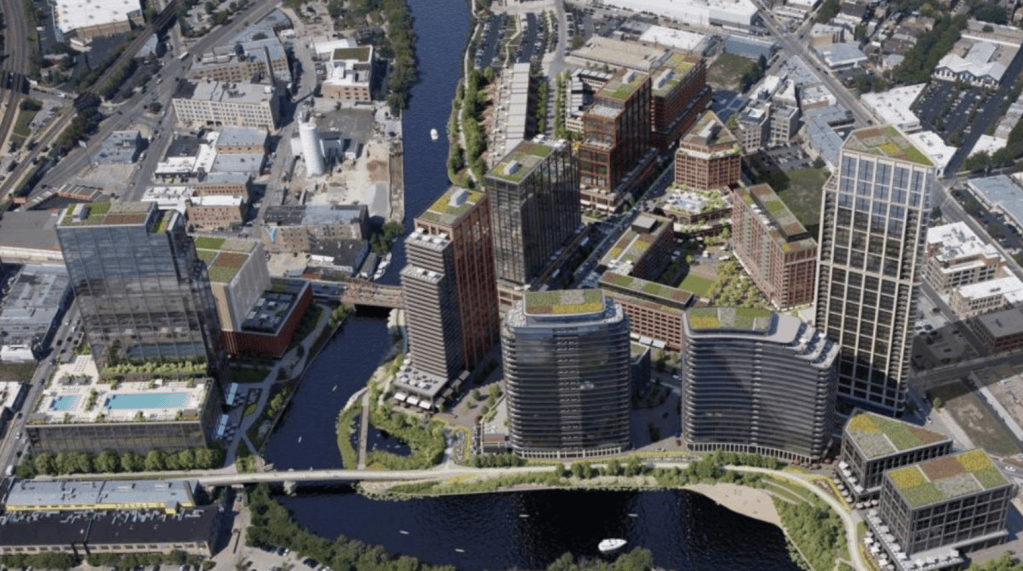
However, not all bike/pedestrian traffic should be funneled onto the Bloomingdale extension. People still need street-level access to homes and businesses to the north side of the project.
The City at minimum should conduct a feasibility study for keeping the existing, historic bridge open to pedestrians, bike riders, and scooteristas. As the land is already part of the overall project, it seems a new bridge for cars and trucks could be built very near the existing one.
In the meantime, Chicago, Bike Grid Now! is holding a gathering, “The People’s Bridge” on Sunday, October 18, “in support of the permanent pedestrianization and continuation of bicycle-only access” on the bridge. Repurposing the bridge fits with the group’s goal of making at least 10 percent of Chicago streets prioritized for walking and biking, created by traffic calming infrastructure and a lower speed limit to keep everyone safe.

If you appreciate Streetsblog Chicago’s livable streets reporting and advocacy, please consider making a tax-deductible donation to support our work. Thank you!

Streetsblog has migrated to a new comment system. New commenters can register directly in the comments section of any article. Returning commenters: your previous comments and display name have been preserved, but you'll need to reclaim your account by clicking "Forgot your password?" on the sign-in form, entering your email, and following the verification link to set a new password — this is required because passwords could not be carried over during the migration. For questions, contact tips@streetsblog.org.