Station to station: Could Metra’s Clybourn stop move? IDOT begins study of long-awaited upgrades

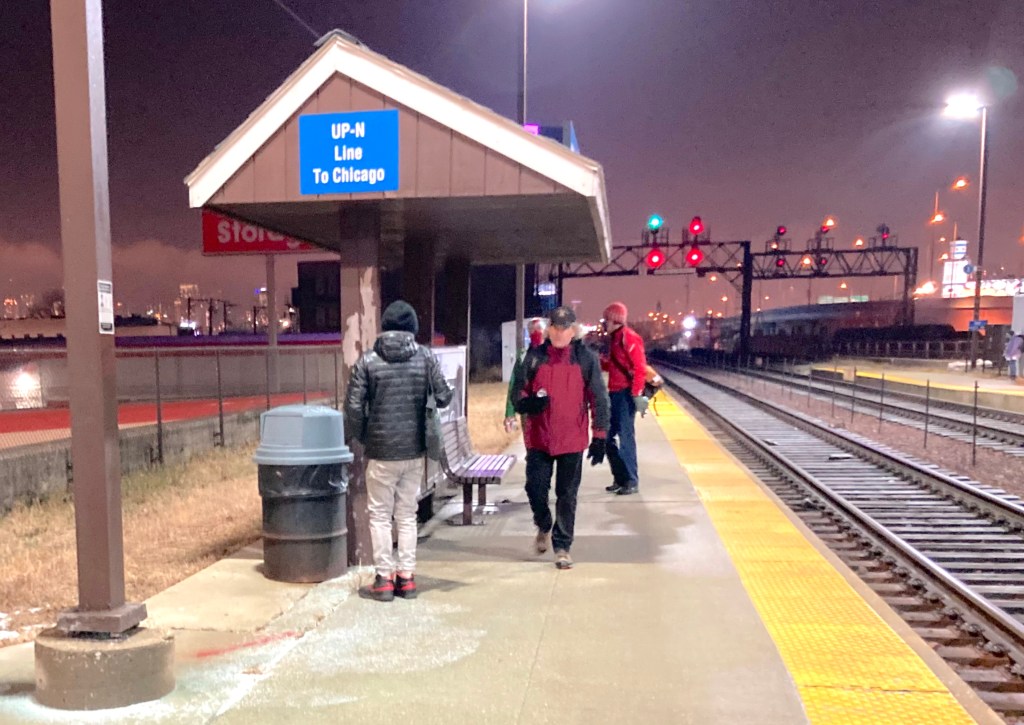

The Illinois Department of Transportation has begun studying whether Metra’s aging Clybourn station should be rebuilt where it stands or relocated nearby to create a more accessible, higher-capacity transit hub.
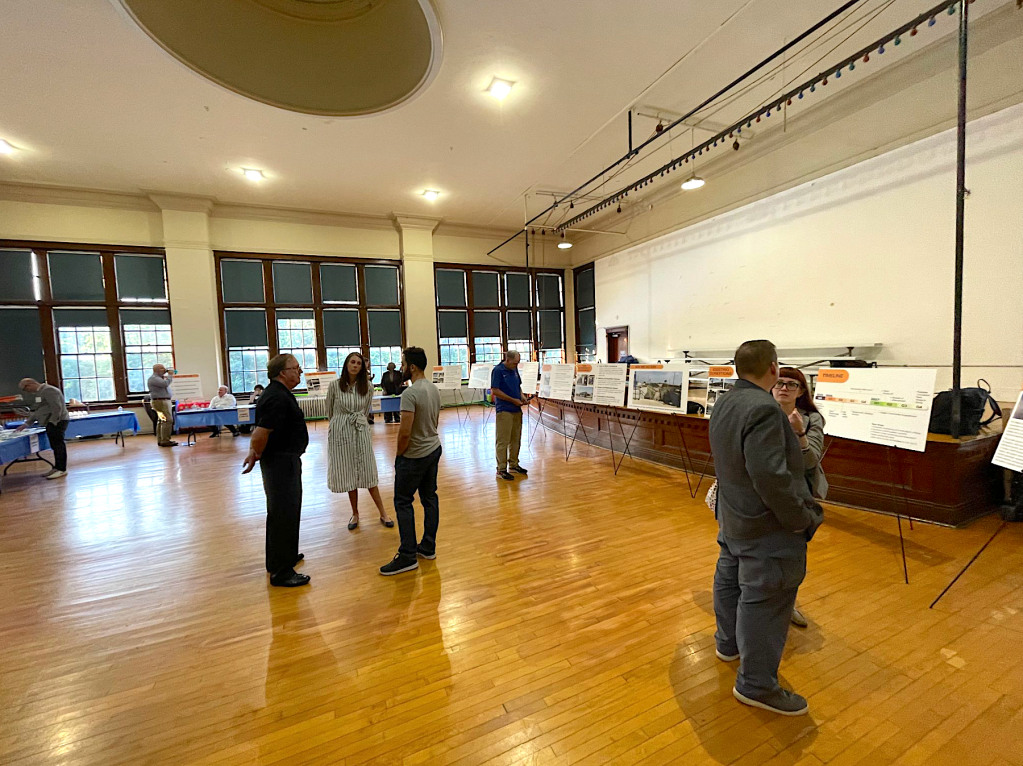
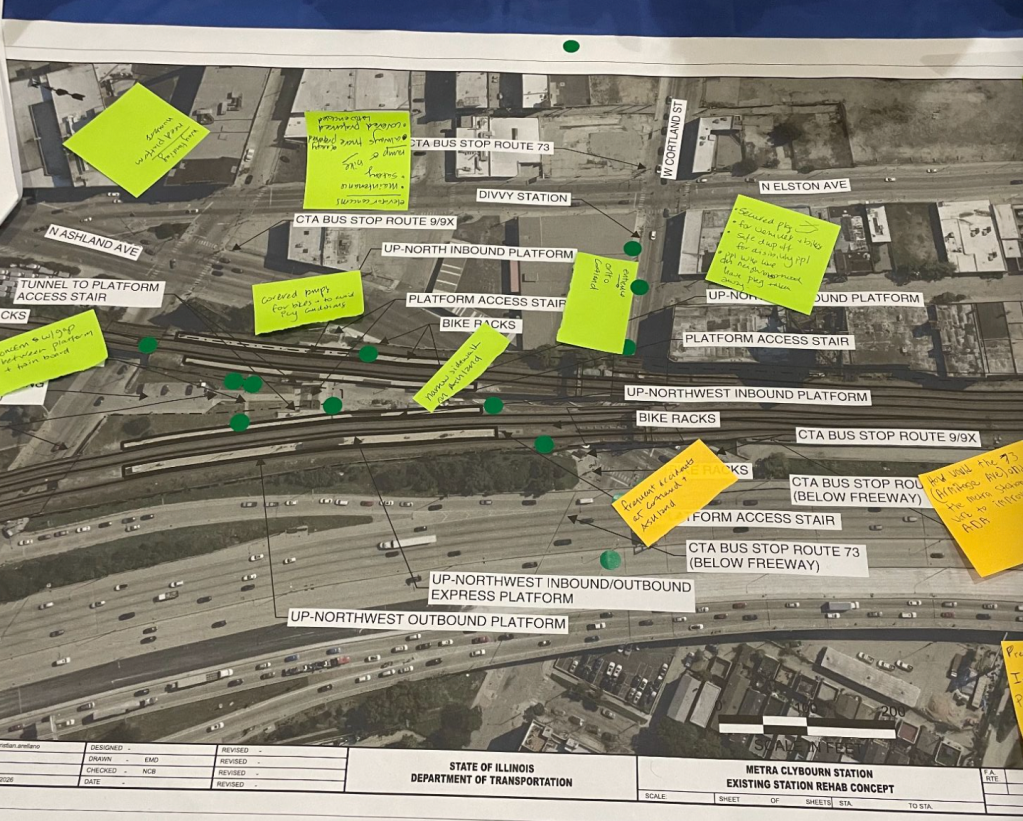
According to IDOT, more than 52 people signed in for the public open house Thursday evening at Holstein Park Fieldhouse, 2200 N. Oakley Ave. in West Town. There, attendees reviewed the station’s shortcomings, marked problem areas on aerial maps, and suggested improvements ranging from elevators and covered platforms to safer bicycle routes and better CTA connections.
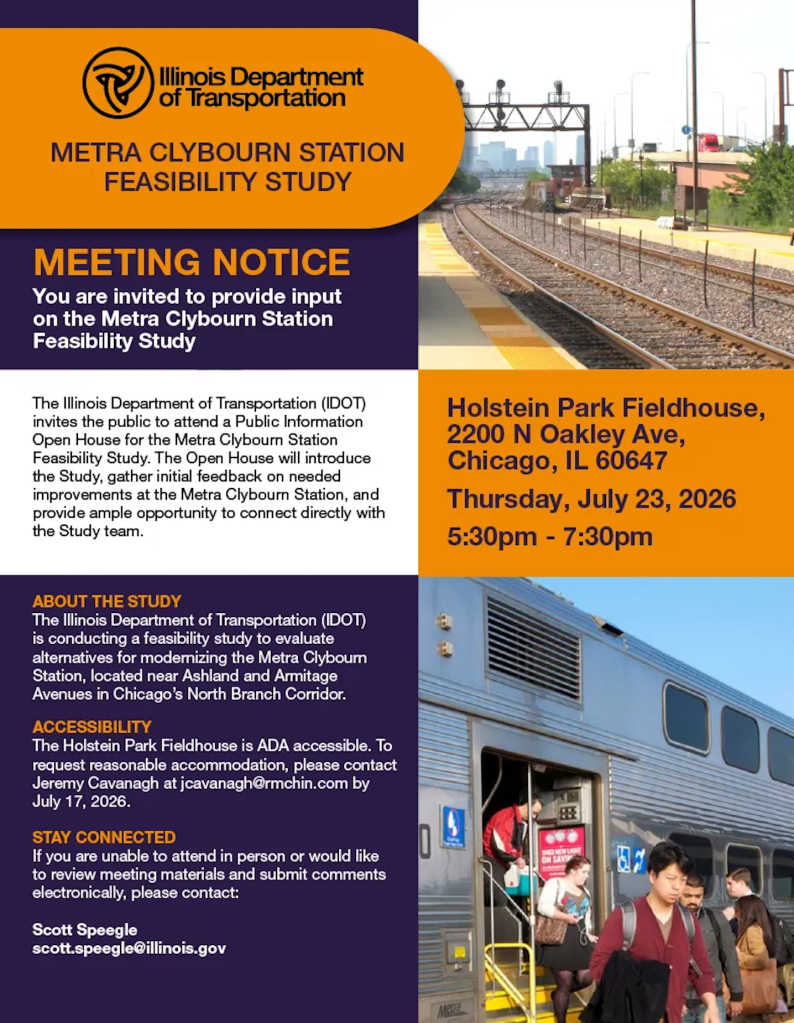
The event was the first public meeting for the Metra Clybourn Station Feasibility Study, an early-stage effort examining how to modernize the station near Ashland and Armitage avenues. Built in 1900, Clybourn serves Metra’s Union Pacific North and Union Pacific Northwest lines and remains one of the agency’s busiest stations outside downtown, despite receiving relatively little investment in recent decades.
Attendees circulated through the fieldhouse examining display boards that documented the station’s existing conditions. The boards described a station constrained not only by its age, but also by the expressway, surrounding streets, nearby buildings, and the configuration of the railroad tracks.
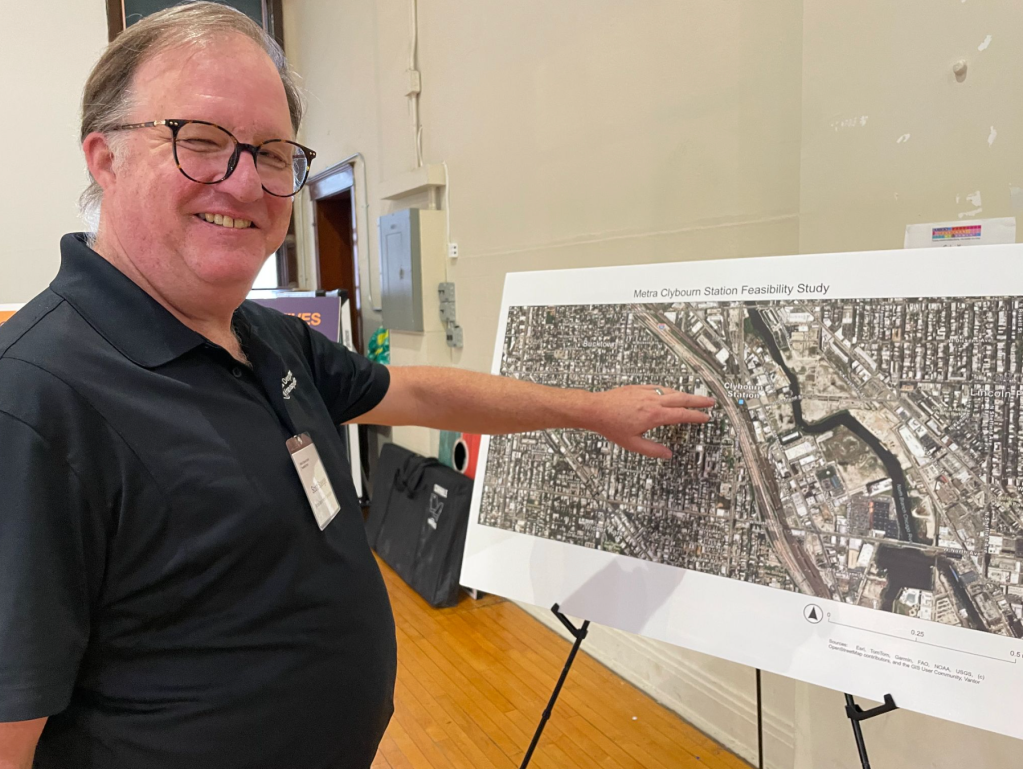
Scott Speegle, an IDOT representative serving as the project’s media contact, said the study is the first step in what would be a lengthy process. “Right now, what we’re doing is looking at the current conditions of the current station and making recommendations on what we think would be the best course of action going forward,” Speegle said. Options could include improving the existing station or building a new station nearby “that would have the amenities that the community is looking for [and] the ridership is looking for.”
At the top of that list is accessibility. The current station relies heavily on stairs and does not provide an accessible path to every platform. Speegle said ensuring that people with disabilities can use the station is one of the study’s central goals. “Probably top on that is ADA access,” he said. “How can we make sure that everyone in the community can ride the train [and] use the station?”
The station’s short platforms create another obstacle. According to one of the presentation boards, they cannot accommodate all the doors on some modern Metra trains. Conductors must selectively open doors, requiring passengers to position themselves in the correct cars and sometimes increasing dwell times.
Extending the platforms at the current site could be difficult because of adjacent tracks, structures, and limited right-of-way. Those constraints are among the reasons IDOT is examining whether rebuilding nearby could make more sense than trying to retrofit the existing station.
The boards also portrayed a challenging environment for people approaching the station on foot. Passengers must navigate complicated intersections and infrastructure surrounding the Kennedy Expressway. Poor lighting and deteriorated pathways make some routes uncomfortable, especially after dark, and planners said long-term improvements would need to address those underlying barriers rather than merely provide cosmetic repairs.
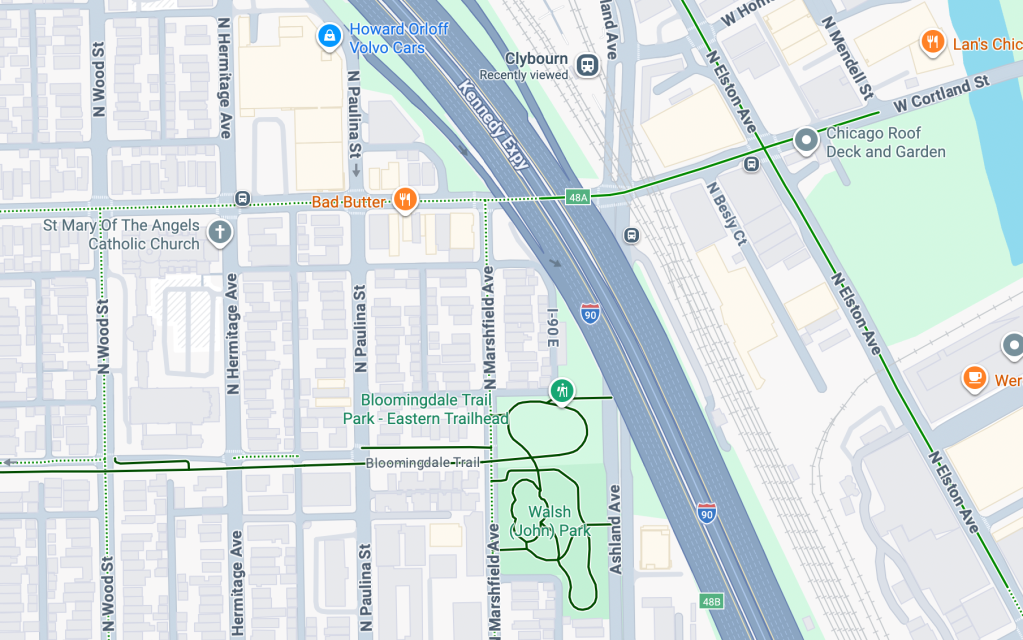
Bicycle access was another prominent topic. Clybourn is a located a stone’s throw from eastern terminus of the Bloomingdale Trail, aka The 606, and it’s near other on-street bike routes and Divvy stations that support bike-to-rail trips. But the station itself has only 14 bicycle parking rack spaces, according to IDOT, and they frequently fill during peak periods.
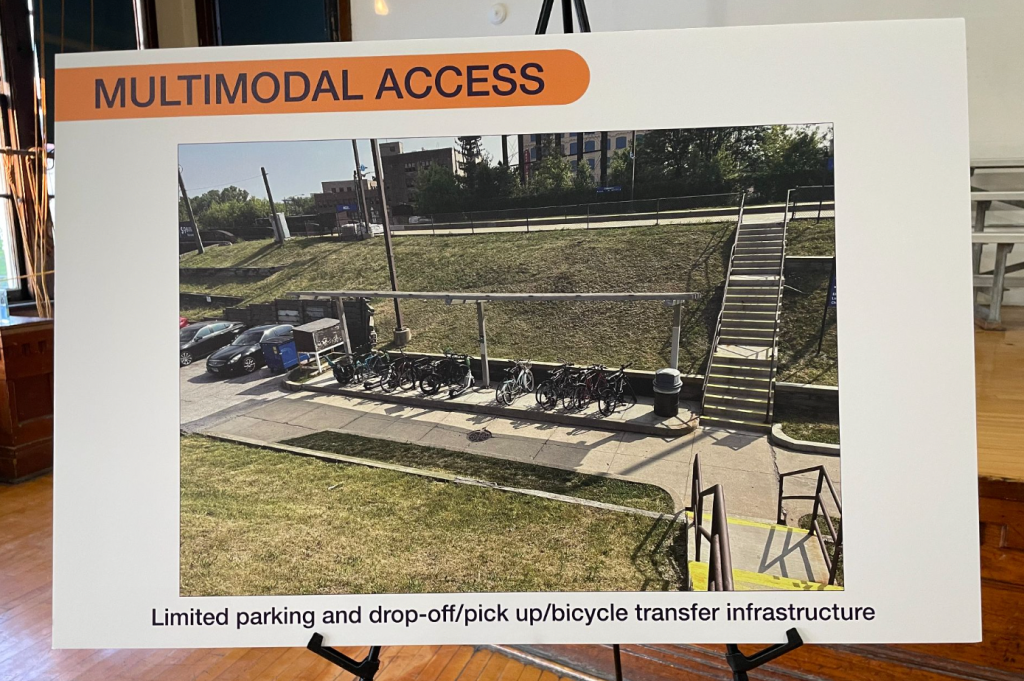
A display board called for more secure bike parking, clearer wayfinding, and more reliable routes connecting the station to the surrounding network. Another showed the small area currently devoted to bicycle parking; passenger pickup and drop-off; and transfers between transportation modes.
After reviewing the boards, attendees placed sticky notes on large aerial maps of the station area. Their comments identified difficult street crossings; poor lighting; inadequate shelter and signage; inaccessible routes; limited bicycle parking; and the need for better connections among Metra, CTA buses, walking, and biking.
Thursday’s open house did not present proposed station designs. Instead, Speegle described it as an opportunity to establish what riders and neighbors believe must change before the study team begins narrowing the possibilities. “This was more of a, ‘Here’s what it looks like. Tell us what you think,'” he said.
While the study’s first focus is on current riders and nearby residents, it is also considering how the station might serve future growth. Clybourn sits near Lincoln Yards and Foundry Park districts, where major redevelopment plans could eventually bring thousands of additional residents and workers to the area.
“This study is focused first on improving the station for the current neighborhood and the people that use it currently, and potentially new riders within the geographic area,” Speegle said. “But we are mindful of the development” and the possibility of more housing and residents.
Its location also gives Clybourn unusual potential as a multimodal connection. Both the UP-N and UP-NW lines stop there, while multiple CTA bus routes serve the surrounding streets. A rebuilt or relocated station could offer a stronger link between commuter rail, buses, biking, and walking, while reducing the need to travel downtown to transfer between Metra lines.
Speegle also pointed to proposals to extend the Bloomingdale Trail east beneath the Kennedy Expressway. (As of January 2025, that plan was delayed until late 2027.) While no trail connection is currently part of an approved station plan, he said the study could consider how a future station might connect with that broader network.
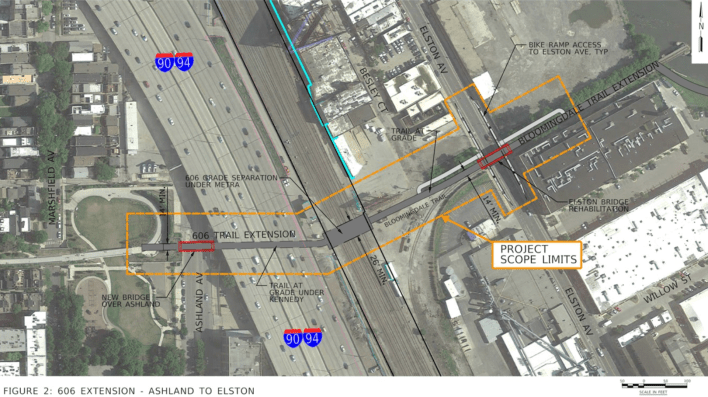
“There are a couple of potential sites that are in that general vicinity” along the tracks, Speegle said. One early idea is “perhaps trying to tie in with that development for bike access and pedestrian access to a station.”
Any coordinated project would require cooperation among IDOT, Metra, the Chicago Department of Transportation, and potentially other agencies. Speegle acknowledged the complexity but said such cooperation is possible. “These agencies can work together to get things done,” he said. A completed feasibility study could create “a nice solid base for planning” and help public agencies pursue grants or other funding.
For now, however, no money has been identified for design or construction beyond the study itself. “There’s no money right now for beyond the study,” Speegle said. After IDOT completes its recommendations, “probably the ball shifts to Metra” to determine whether and how to advance a project.
The study is expected to evaluate alternatives based on accessibility, ridership, cost, and other factors. Its cost estimates will be preliminary rather than final construction budgets. IDOT plans to hold at least one more public meeting, likely in six to eight months.
By then, Speegle said, the team expects to have a clearer sense of which alternatives merit further consideration and will return for another round of community feedback. “We had a great turnout tonight,” he said. “We’re going to compile all that, and we’ll be back out next year to get some more feedback and move forward with our study.”
The open-house boards are expected to be posted on the project page on IDOT’s website. People who could not attend may also submit questions or comments to Speegle at scott[dot]speegle[at]illinois[dot]gov.

If you value Streetsblog Chicago’s livable streets reporting and advocacy, please consider making a tax-deductible donation here to help us continue publishing through 2026. Thank you for your support.

Read More:
Streetsblog has migrated to a new comment system. New commenters can register directly in the comments section of any article. Returning commenters: your previous comments and display name have been preserved, but you'll need to reclaim your account by clicking "Forgot your password?" on the sign-in form, entering your email, and following the verification link to set a new password — this is required because passwords could not be carried over during the migration. For questions, contact tips@streetsblog.org.