At CDOT’s quarterly Chicago Mobility Collaborative meeting, a discussion of how the immigration crackdown impacted local transportation access

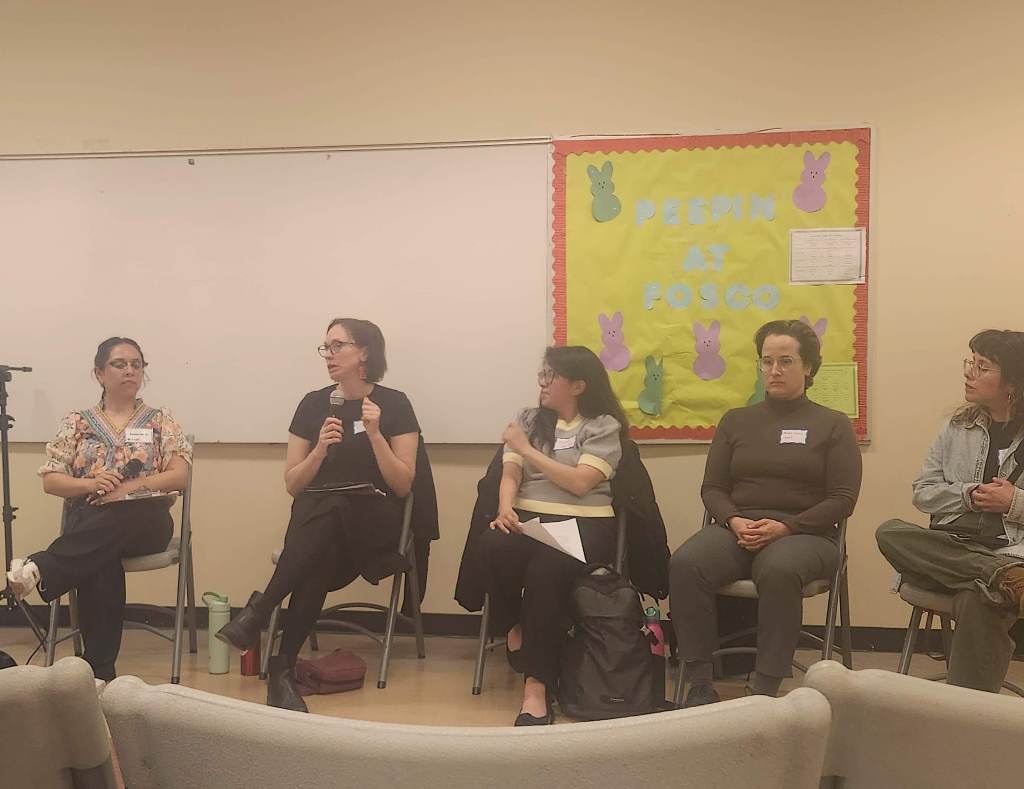
Last week’s meeting of the Chicago Mobility Collaborative, a public involvement initiative of the Chicago Department of Transportation, was held at Fosco Park, 1312 S. Racine Ave. on the Near West Side. This was this year’s second quarterly installment of the quarterly public forums, which aim to “bring residents and community organizations together with CDOT to help build a safer, equitable, and more accessible transportation system for everyone.”
The hearing stuck to the same format as previous ones, beginning with a panel discussion of current transportation concerns, followed by breakout discussions at tables around the room.
CDOT Director of Outreach and Engagement Romina Castillo, who moderated the panel discussion, introduced speakers UIC College of Urban Planning and Public Affairs Associate Professor Kate Lowe; former Streetsblog Chicago reporter Lynda Lopez, currently a Latin American and Latino Studies PhD student at UIC; CDOT Deputy Commissioner Mary Nicol; Nondrivers Alliance Director of Coalition Building Ruth Rosas, who contributes to Streetsblog; and Utah State University Civil and Environmental Engineering Assistant Professor Sarah Gradjura.
Gradjura, participating via Zoom, began by giving an overview of the research project that helped motivate and inform the panel topic, examining how ICE and U.S. Customs and Border Patrol (CBP) presence has been affecting transit ridership in Chicago. Gradjura has been working on the project with Lowe, Lopez, and Anson Stewart of the MIT Transit Lab. “[The project was] really motivated by our shared concern over how people’s daily lives and mobility have been turned upside down during these periods of heightened ICE and CBP activity in Chicago,” Gradjura said. “We really want to understand how people’s sense of safety affects their mobility, especially around taking transit, and navigating public spaces, getting to places like school and work, and just living meaningful lives in general.”
Gradjura added that the initiative is a first step towards understanding and quantifying the social harms experienced by immigrant communities and other groups affected in Chicago, “making visible how fear, surveillance and enforcement determine who feels able to move freely through the city.”
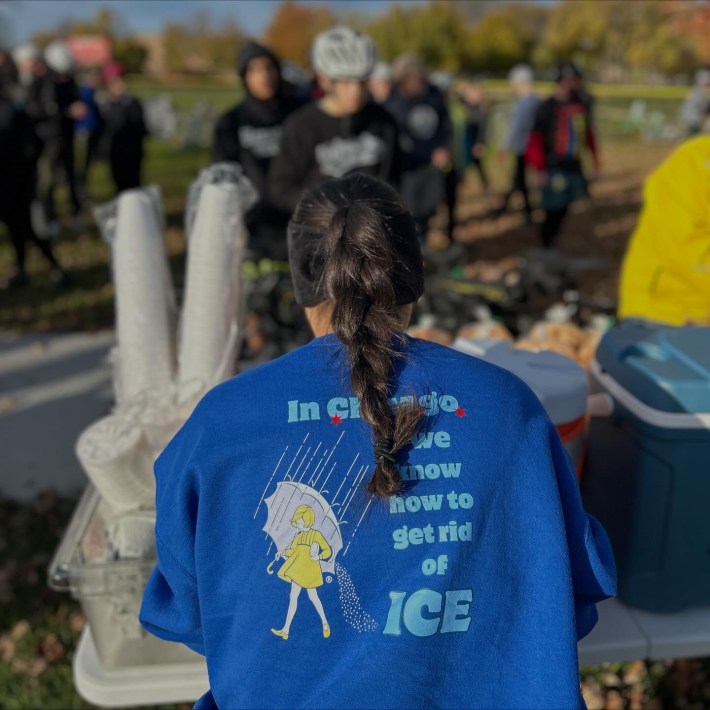
Castillo first asked the panel why Midway Blitz was a transportation mobility issue. Lowe said the heightened risk of lives being upended, especially for Black, Latino, and/or undocumented people by just being in public space, is “not a conversation we can sideline because it goes to the core of the right to mobility.”
Nicol, offering the local government perspective, said their mission at CDOT is thinking about emerging opportunities and challenges to continue to build a transportion system that doesn’t require a car to get around safely. She recalled that in 2022, when Texas Governor Greg Abott shipped tens of thousands people on buses to Chicago, the challenge was to speed up a government that usually moves slowly, in order to give those people a safe place to land. She said, “Trying to use our authority such as telling private bus companies they could not just drop people off without registering with the City first,” was among other local and state policies that were developed, all of which are made more difficult when governments have major policy differences.
Rosas talked about how, being undocumented herself for a long time, she recognized her own story playing out on the streets, and it laid bare how policies can be broken and the ripple effects of that immobility.
As Rosas discussed how the events of last fall highlighted existing problems in Chicago’s transportation system, she noted how the stressful and scary videos many of us saw “were only snippets of the entire picture of immigrants’ lives.” Therefore, she said, it is useful to extrapolate that to several months or years of fear to know what immigrants are really facing every day.
Nicol mentioned that CDOT’s SAFE Ambassadors went into Chicago’s 23 migrant shelters to help migrants better figure out how to get around without cars.
Castillo said the experience of hosting these newcomers illustrated the importance of social infrastructure to fill the safety gaps in our physical infrastructure and policies. This included some of her own family members taking kids to school in their suburb.
Nicol echoed the importance of local networks for spreading word about immigration raids via phone trees and whistles; and neighbors coming out to maintain “eyes on the street” to help protect those endangered by the operation. She said it would be helpful to have increased transit frequency so that at-risk residents could minimize their exposure.
Lopez pointed out the Blitz’s ongoing economic impacts, especially in Latino communities and business corridors that saw less foot traffic and sales. The damage done still hasn’t been fully quantified. “We knew that people were being profiled even if they were citizens, with many folks eliminating nonessential trips and just staying home,” she said.
The panel’s closing remarks included ideas for how the City can move mobility justice forward after Midway Blitz. Nicol mentioned the success of various boulevard activations (creating temporarily car-free streets to allow for more human use), to encourage people to come out and have fun.
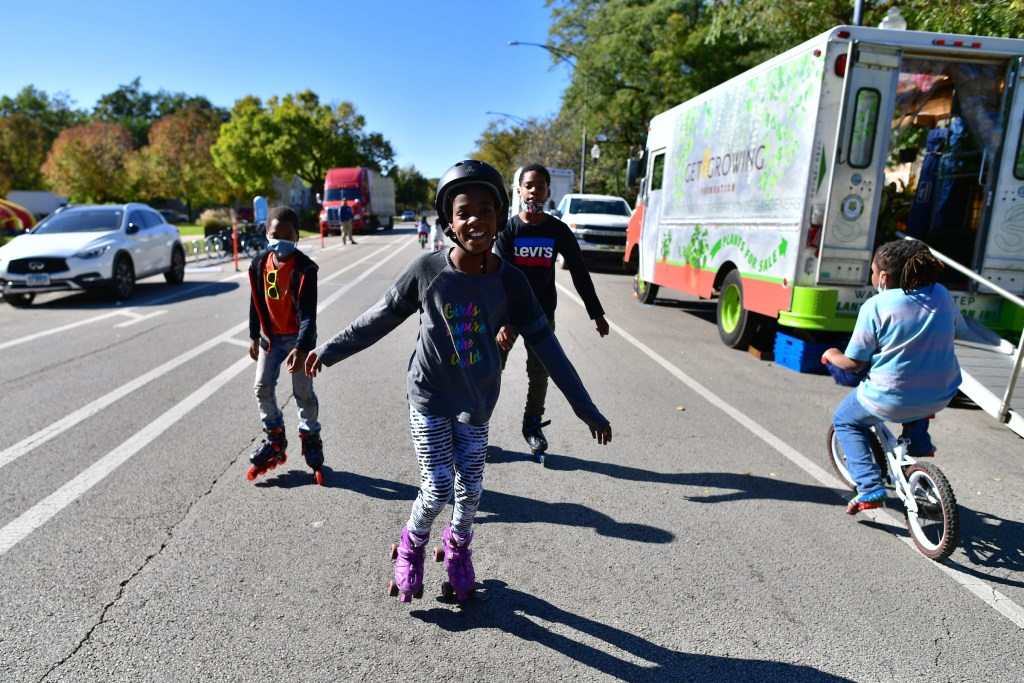
Kids skate and bike on Douglas Boulevard during an October 2021 Open Boulevards program. Photo: CDOT
Lowe reiterated the need for increased transit (especially bus) frequency, and how community based organizations lead the charge on solutions, both of which, as always, require more public investment.
Rosas encouraged everyone above all, “Don’t lose hope, get active and get to know your neighbors.”
During the Q & A, CTA Project Coordinator for Equity & Engagement Tyler James offered a reminder that her agency employs 11,000 people and many want to be more engaged, noting they may have a good perspective to offer on various planning efforts.
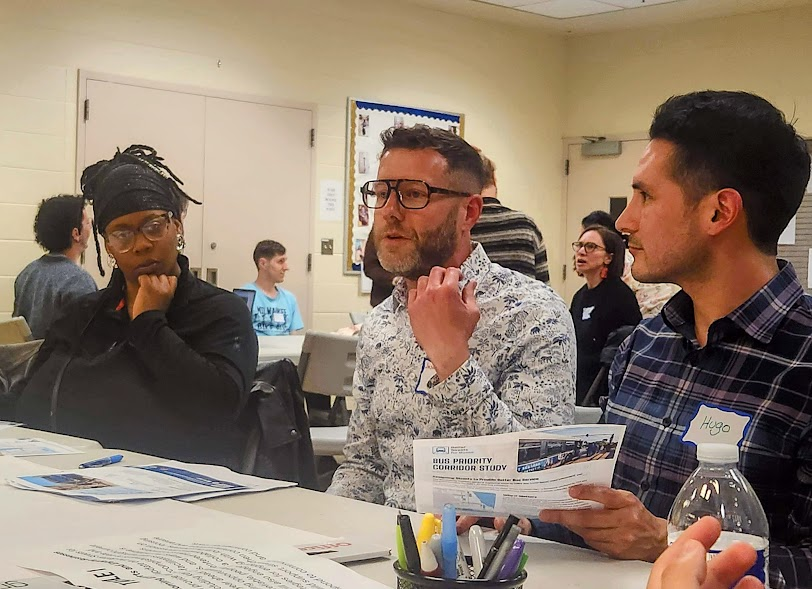
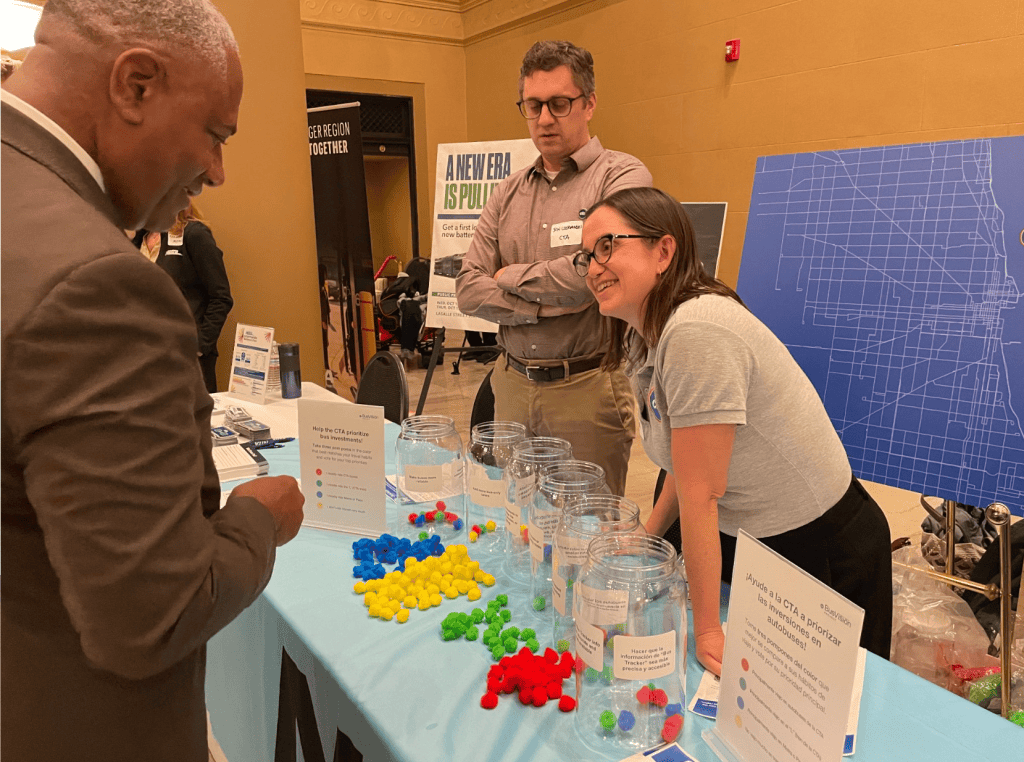
During the breakout session, one table held a discussion of Better Streets for Buses, joint CTA and CDOT planning initiative. Launched in 2025, the study is “exploring ways to make bus travel faster, more convenient, and more comfortable for riders on five key bus corridors in the Better Streets for Buses Network: Pulaski, Western, Cottage Grove, Fullerton and 55th St/Garfield Boulevard,” the BSFB website states.
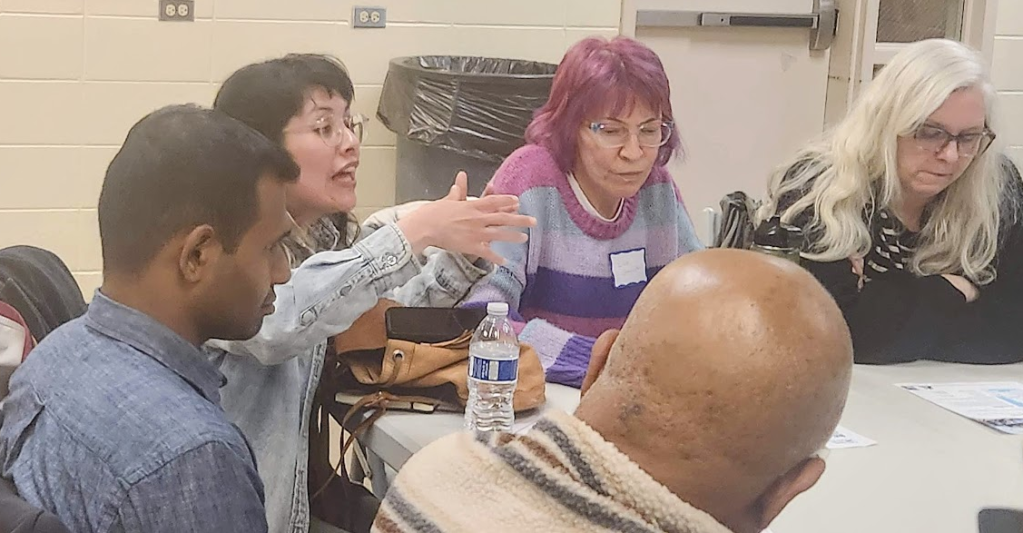
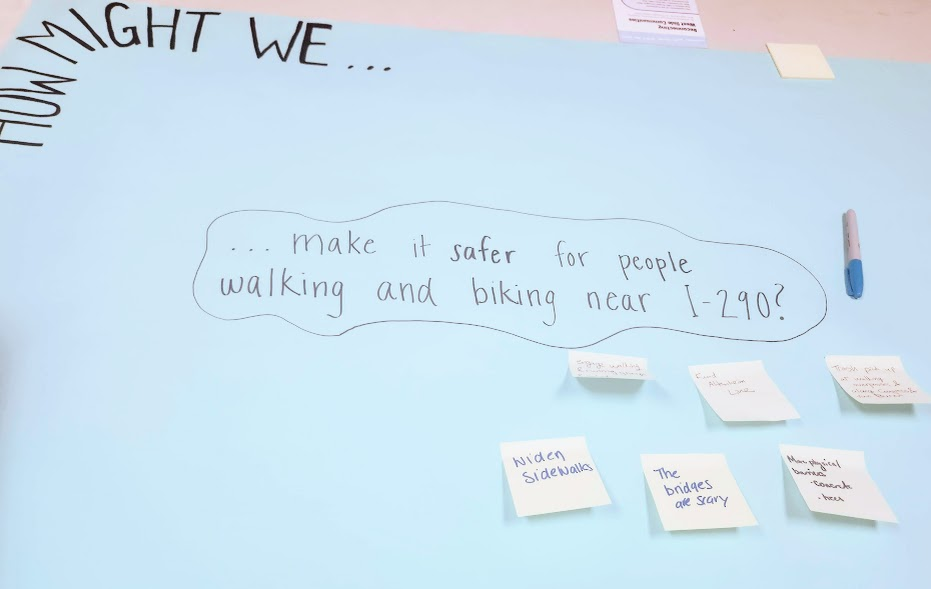
Another table held a discussion of CDOT’s Reconnecting Westside Communities project. CDOT planner Ryan Richter explained this was the agency’s soft launch of early visioning for this initiative, whose goal is to improve the quality of life in West Side communities that were negatively impacted by the installation of the Eisenhower Expressway. “It is the agency’s effort to have local voices heard and help inform [the Illinois Department of Transportation’s] plans to reconstruct the highway, from the Circle interchange to the 294 interchange,” he explained.
An Immigration Enforcement and Mobility Issues breakout continued the discussion with panelists from the earlier discussion.
The next meeting will be held on Thursday, July 23, and will focus and expand on the Reconnecting Westside Communities plan. Details and RSVP form can be found on the Chicago Mobility Collaborative website.

On November 12, SBC launched our 2026 fund drive to raise $50K through ad sales and donations. That will complete this year’s budget, at a time when it’s tough to find grant money. Big thanks to all the readers who have chipped in so far to help keep this site rolling to the end of 2026! Currently, we’re at $32,646 with $17,354 to go, ideally by the end of May.
If you value our livable streets reporting and advocacy, please consider making a tax-deductible gift here. If you can afford a contribution of $100 or more, think of that as a subscription. That will help keep the site paywall-free for people on tighter budgets, as well as decision-makers. Thanks for your support!
– John Greenfield, editor

Streetsblog has migrated to a new comment system. New commenters can register directly in the comments section of any article. Returning commenters: your previous comments and display name have been preserved, but you'll need to reclaim your account by clicking "Forgot your password?" on the sign-in form, entering your email, and following the verification link to set a new password — this is required because passwords could not be carried over during the migration. For questions, contact tips@streetsblog.org.